
Most braises are winter food: a big cut, a heavy pot and an afternoon. These braised chicken thighs are the summer version, built from one tomato, a glass of leftover white wine and whatever herbs are going soft in the refrigerator door, and they are on the table in a little over an hour.
The pink peppercorns are the part people remember about these braised chicken thighs. Crushed and dropped in near the end, they give the tomato sauce a resinous, faintly sweet edge that black pepper cannot do, and they are the reason this tastes like more than a weeknight skillet of chicken and tomatoes.
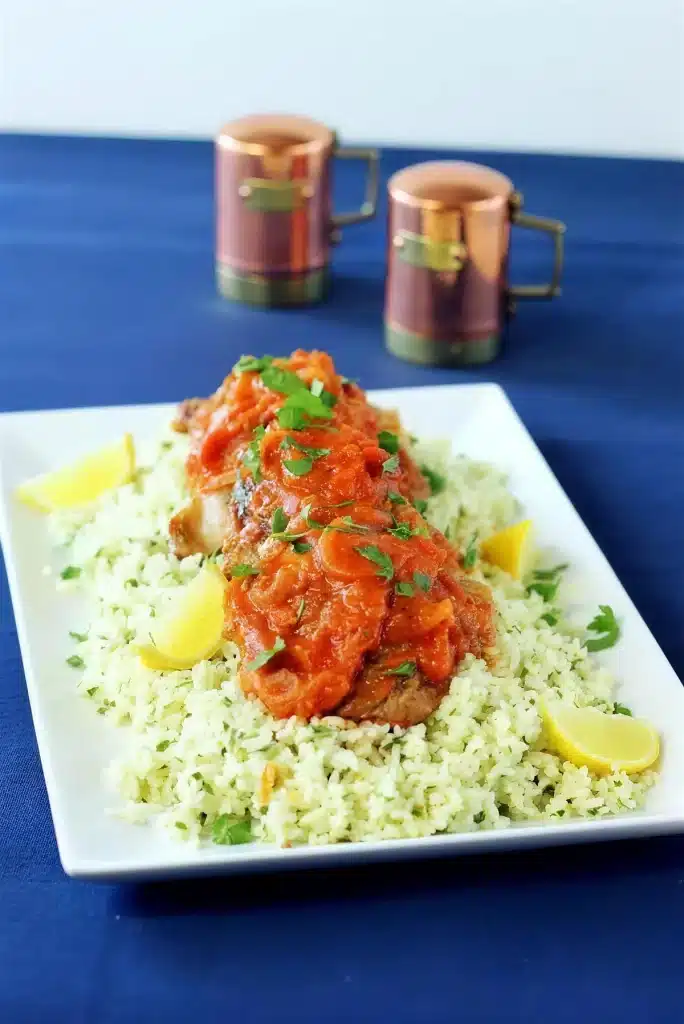
- One skillet, one hour, and most of it is the pan doing the work
- Thighs are almost impossible to dry out, which makes this very hard to ruin
- A single fresh tomato and a small can of sauce do all the heavy lifting
- The wine, herbs and garlic are all things you probably already have open
- It reheats better than it cooks, so it is a genuinely good next-day lunch
- Bright and light rather than heavy, so it works in July as well as January


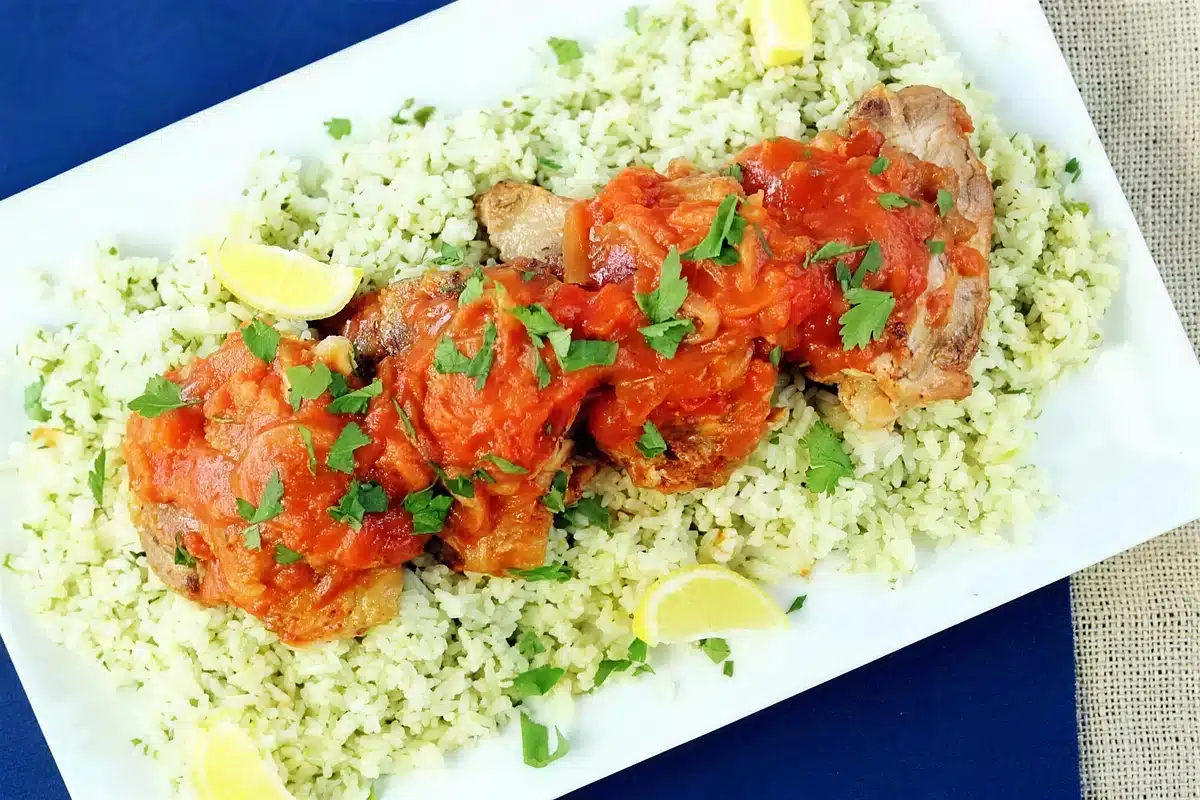
There are two things worth getting right with braised chicken thighs, and neither is the ingredient list. One is how long the pan actually needs, and the other is what to do with the skin.
- What Braising Actually Does to Chicken Thighs
- Ingredient Notes
- Pink Peppercorns Are Not Peppercorns
- How To Make Braised Chicken Thighs
- How To Tell When Braised Chicken Thighs Are Done
- Make It Ahead
- Storing Braised Chicken Thighs
- Variations and Substitutions
- What to Serve with Braised Chicken Thighs
- Braised Chicken Thighs FAQ
What Braising Actually Does to Chicken Thighs
Braising is not simmering something until it is cooked, and that is the whole difference between poached and braised chicken thighs. It is cooking past done, on purpose, until the connective tissue inside the meat gives way.
A chicken thigh is a working muscle threaded with collagen. Take it to 165F, the safe minimum, and it is technically ready to eat but still slightly springy and tight around the bone. Keep it in hot liquid for another twenty minutes and something better happens: the collagen turns to gelatin, the meat loosens off the bone, and the sauce it has been sitting in picks up body from what came out of it.
This is why the old version of this recipe was wrong. It called for twelve to fifteen minutes of covered simmering for bone-in thighs, which is barely enough to make them safe and nowhere near enough to make them good. Braised chicken thighs want twenty five to thirty minutes in the sauce, and they are far more forgiving at the top of that range than at the bottom.
Breasts cannot do this. They have almost no collagen, so the extra time buys you nothing and costs you moisture. If all you have is breast meat, this becomes a different, quicker dish, and there is a note on it further down.
Save this recipe
Enter your email and I’ll send this recipe straight to your inbox.
Ingredient Notes
These braised chicken thighs came out of a refrigerator clear-out, and the recipe still works best that way. Exact amounts are in the recipe card below.
- Chicken thighs: four, bone-in and skin-on, about two pounds. Boneless will work and will cook faster, but the bones are contributing to the sauce and the skin is contributing fat.
- Pink peppercorns: a teaspoon, lightly crushed, added late. See the section below, because they are not what their name says they are.
- Celery seed: half a teaspoon. The original called for a whole teaspoon across four thighs, which is enough to taste medicinal. It is a very loud spice.
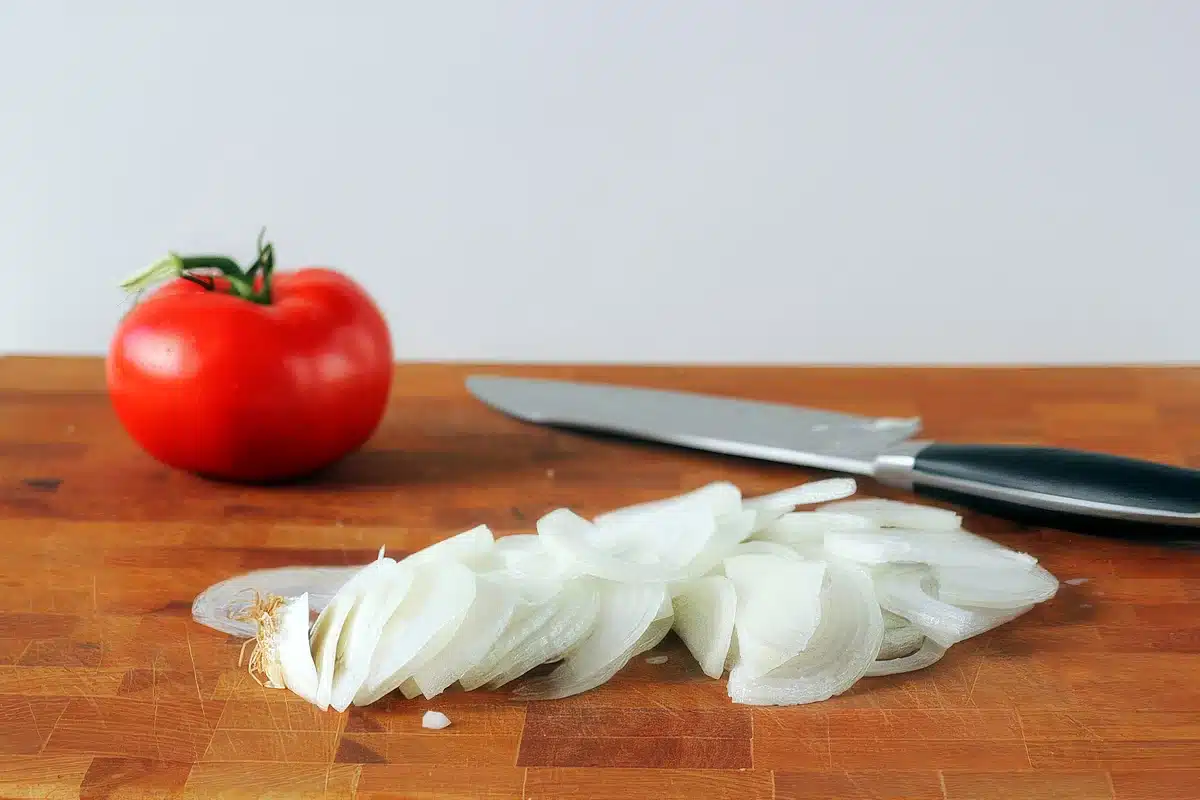
- The tomato: one large ripe one, diced, plus a small 8-ounce can of plain tomato sauce. The fresh one gives texture and acidity, the canned one gives body. Keep the fresh one on the counter, not in the refrigerator: Illinois Extension notes that flavor and texture start to deteriorate below 54F and that chilling turns the flesh mealy.
- White wine: three quarters of a cup of something dry that you would drink. It reduces to almost nothing, so anything sweet concentrates and turns the sauce cloying.
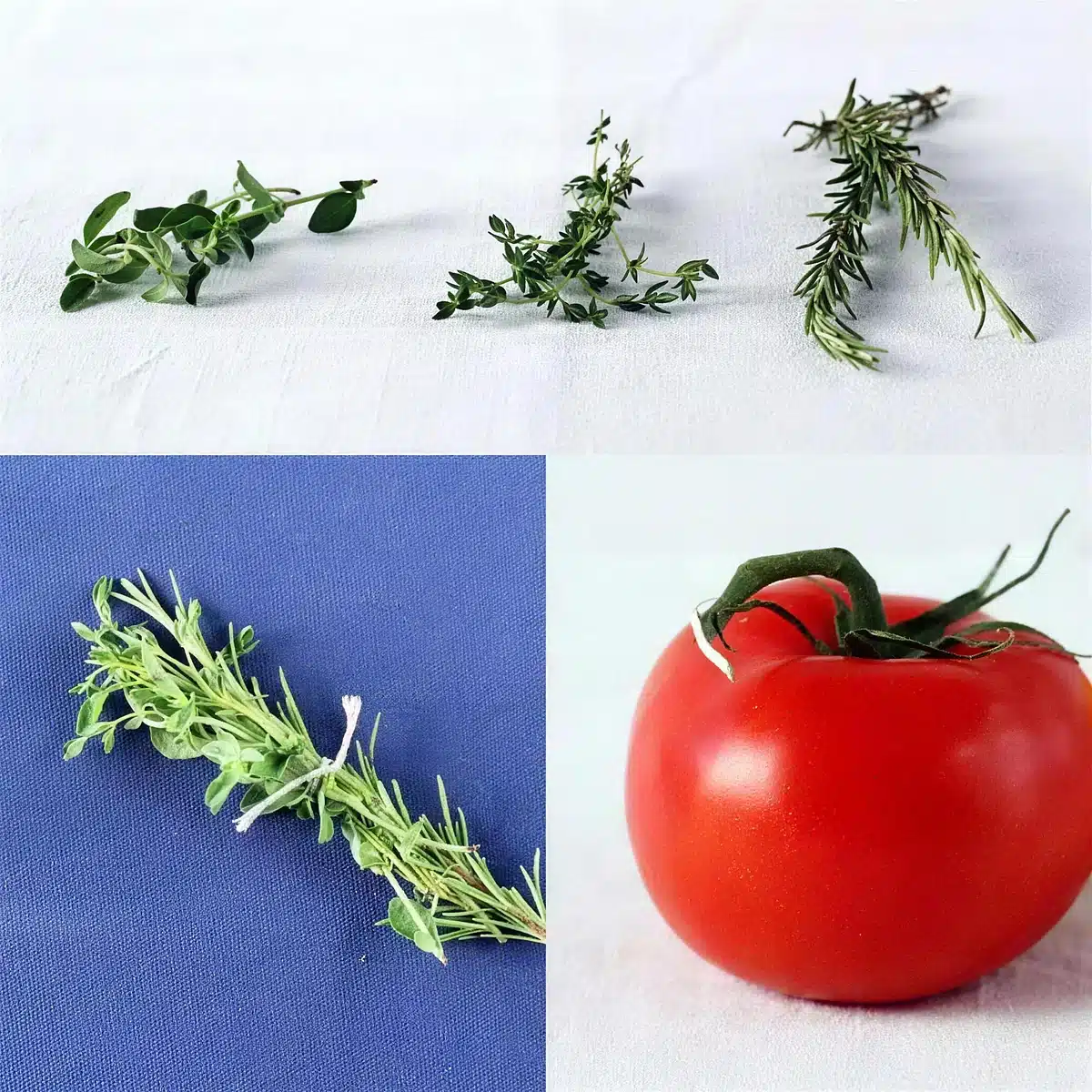
- Herb bundle: six sprigs of thyme, two of rosemary and two of oregano, tied with kitchen twine so you can lift the whole thing out at the end. Loose rosemary needles in a finished sauce are unpleasant.
- Garlic: four cloves, left in their skins. They go soft and sweet in the pan and get squeezed back into the sauce, which is gentler than minced raw garlic would be.
Pink Peppercorns Are Not Peppercorns
The seasoning that gives these braised chicken thighs their name is misnamed. Black, white and green peppercorns are all the same fruit, Piper nigrum, picked and processed differently. Pink peppercorns are not related to any of them. They are the dried berries of a South American tree in the cashew family, and the resemblance is entirely a matter of size and color.
That matters in two ways. The first is flavor: they are fragile, sweet and resinous, closer to juniper than to pepper, with only a faint bite. Grind them in a mill with black pepper and you will taste nothing. They need to be crushed lightly between your fingers or under the flat of a knife, and added in the last few minutes so the aromatics survive.
The second is an allergy note worth knowing. Because they come from the same botanical family as cashews and pistachios, people with tree nut allergies sometimes react to pink peppercorns. If you are cooking for someone with that allergy, leave them out and finish the sauce with a little lemon zest instead. Nothing else in the dish changes.
They are also the most fragile thing in your cupboard. Bought whole and kept in the dark they hold their perfume for about a year, and after that they smell like dust.
How To Make Braised Chicken Thighs
Everything happens in one wide skillet, and the sequence for braised chicken thighs matters more than any single timing.
- First, pat the thighs completely dry and season both sides with salt, pepper and the celery seed. Leave them on a rack in the refrigerator for 10 minutes while the pan heats, never on the counter.
- Next, brown them skin side down in hot oil with the garlic cloves, about 6 minutes, then turn for 2 minutes more and lift chicken and garlic out onto a plate.
- Then drop the heat, soften the onion in the fat for 5 minutes, add the diced tomato for 3 minutes, pour in the wine and scrape the pan clean while it reduces by half.
- After that, stir in the canned tomato sauce, squeeze the softened garlic out of its skins into the pan, and settle the thighs back in skin side up so the skin sits above the liquid. Tuck in the herb bundle.
- Finally, partly cover and simmer 25 to 30 minutes, until the meat reads 175F to 185F. Rest the chicken under foil for five minutes while the uncovered sauce reduces, then add the crushed pink peppercorns, lemon juice and parsley.
How To Tell When Braised Chicken Thighs Are Done
There are two different questions here and they have two different answers, which is where most recipes get vague.
Safe is 165F. The FDA’s safe food handling guidance puts poultry parts at 165F, measured with a thermometer rather than judged by color. That is the floor and it is not negotiable.
Good is 175F to 185F. Push the probe into the thickest part without touching bone. Somewhere in that range the collagen finishes converting and the texture changes from springy to yielding. Braised chicken thighs held there for a few extra minutes get better, not worse, which is the whole appeal of the cut.
The visual test backs it up. The meat should have pulled back slightly from the end of the bone, and a fork twisted into the thickest part should separate the fibers without a fight. If it resists, give it five more minutes and check again.
The sauce is the other half. When the chicken comes out to rest, the pan should still be a little loose. Five minutes uncovered over medium heat takes it to a sauce that coats the back of a spoon.
Make It Ahead
Braised chicken thighs are one of the rare braises that is genuinely better on day two, because the sauce keeps taking on flavor from the bones and the herbs.
Cook it completely, then cool it and refrigerate the chicken sitting in its sauce. Hold back the pink peppercorns, the lemon juice and the parsley, which all fade overnight, and add them fresh when you reheat.
To reheat, bring the pan back to a bare simmer over medium-low with a splash of water, spooning sauce over the thighs for about eight minutes. The skin will not be crisp, but it was never going to be after a braise, and nobody minds.
The herb bundle can be tied a day ahead and kept in a damp paper towel in the refrigerator. The onion can be sliced ahead too, though a tomato diced in advance weeps and goes watery, so leave that until the pan is hot.
Storing Braised Chicken Thighs
Refrigerated: three to four days in a sealed container, with the chicken kept under the sauce so it does not dry at the edges. Get it into the refrigerator within two hours of cooking, as the same FDA guidance advises.
Frozen: three months. Braised chicken thighs freeze unusually well because they are already sitting in liquid, which insulates the meat from ice crystals. Freeze them on the bone in their sauce and thaw overnight in the refrigerator.
Reheating: a covered pan on low, not a microwave, which drives the moisture out of the meat and splits the sauce. Eight to ten minutes with the lid on and a spoonful of water is enough.
The leftover sauce is worth keeping on its own if the chicken goes first. Stripped of the meat it is a very good quick pasta sauce, or a base for eggs the following morning.
Variations and Substitutions
- Boneless, skinless thighs: brown them for three minutes a side and cut the braise to 18 to 20 minutes. Add a splash more wine, since there is no skin rendering fat into the pan.
- Chicken breast: not a braise. Brown it, make the sauce without it, then return it for eight minutes only and pull it at 160F. Different dish, still good.
- No wine: half a cup of chicken stock with a tablespoon of white wine vinegar. The acidity is doing more work here than the alcohol.
- Deeper and more wintry: add a strip of orange zest and a handful of olives with the tomato sauce, and skip the pink peppercorns.
- More vegetables: a sliced fennel bulb with the onion, or a handful of the roasted vegetables from my quinoa with roasted vegetables stirred through at the end.
- Spicier: a pinch of red pepper flakes with the onion. Pink peppercorns bring aroma rather than heat, so nothing else in the pan is doing that job.
What to Serve with Braised Chicken Thighs
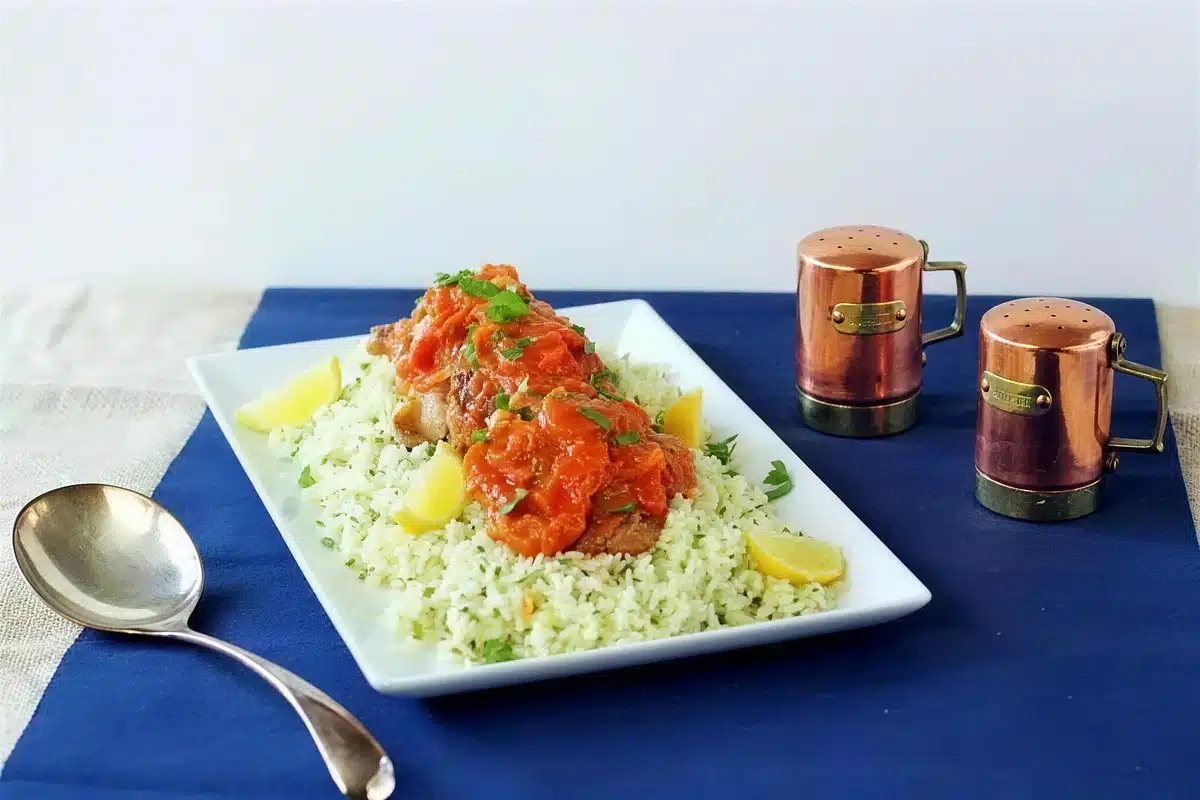
Braised chicken thighs come with a lot of sauce, so the first job of anything else on the plate is to soak it up.
- Herbed couscous, which is what the photographs show and what takes five minutes.
- Soft polenta, if you want the same job done more richly.
- Plain bread, torn rather than sliced, for the last of the pan.
- A green vegetable with some bitterness in it, like my braised kale and cannellini beans, which uses the same slow method on the other half of the plate.
If you like this cut and want it in a completely different register, my Indian spiced chicken wings use yogurt and garam masala instead of wine and tomato.
Here is what readers ask most often.
Braised Chicken Thighs FAQ
Frequently Asked Questions
Are chicken thighs good for braising?
They are the best part of the bird for it. Thighs are a working muscle with far more collagen and intramuscular fat than breast meat, so long moist cooking improves them instead of drying them out. The window between cooked and overcooked is roughly twenty minutes wide rather than two, which is why braised chicken thighs are so forgiving. Bone-in is better still, because the bone slows the heat and adds body to the sauce.
What liquid is best for braising chicken thighs?
Something acidic plus something savory. Here it is dry white wine reduced hard, then tomato in two forms, and the acid is what keeps a rich cut from tasting flat. Chicken stock alone works but tastes one-dimensional; add a tablespoon of vinegar or a squeeze of lemon if that is your route. The volume matters as much as the liquid: you want it to come part way up the thighs, not to cover them.
Do you braise chicken thighs covered or uncovered?
Partly covered, with the lid set slightly ajar. Fully covered traps steam and turns crisped skin soft while diluting the sauce with condensation. Fully uncovered lets the pan reduce too fast and can leave the meat dry at the top. A gap of an inch or so is the compromise, and the last five minutes after the chicken comes out should be completely uncovered so the sauce tightens.
More Questions About the Sauce and the Skin
Good to Know
Can I get crisp skin on a braise?
Not properly, and it is worth deciding which you want. If crisp skin is the point, brown the thighs hard, cook the sauce separately and spoon it under rather than over. If you want the sauce to taste of chicken, accept that the skin will be burnished rather than crisp. Keeping the thighs skin side up above the liquid line, as written here, gets you most of the way to both.
My sauce is thin. What do I do?
Lift the braised chicken thighs out, turn the heat to medium and let the pan reduce uncovered for five to eight minutes. That is almost always all it needs, because a covered pan cannot lose water. Do not add flour or cornstarch, which will flatten the flavor you just spent half an hour building. If it is still loose, mash the diced tomato against the side of the pan to release its pectin.
What can I use instead of pink peppercorns?
Nothing tastes quite the same in braised chicken thighs, but a strip of lemon zest plus a few crushed juniper berries gets close to the resinous, faintly sweet effect. Plain black pepper is not a substitute, it is a different seasoning. Leave them out entirely if you are cooking for someone with a tree nut allergy, since pink peppercorns come from the cashew family.
More Questions About Timing and Temperature
Good to Know
Can you overcook braised chicken thighs?
Eventually, but you have to work at it. Braised chicken thighs are the most forgiving thing on the bird. Past about forty minutes in the sauce the meat starts shredding off the bone, which is a texture some people want and others do not. Past an hour it goes stringy and the last of the fat has rendered out. Within the twenty five to thirty minute window written here you have no realistic chance of overcooking them, which is why this is a good recipe to cook while doing something else.
Should I let the chicken come to room temperature first?
No. That advice gets repeated for steaks and it should not be carried over to poultry. Take the thighs straight from the refrigerator, pat them dry and season them, and give them ten minutes on a rack in the refrigerator rather than on the counter while the pan heats. The FDA is explicit that raw poultry belongs at 40F or below, and a bone-in thigh gains almost nothing from tempering anyway.
One Last Question About Texture
Good to Know
Why did my thighs come out tough after fifteen minutes?
Because fifteen minutes is not a braise. At that point the meat has just passed 165F and is safe, but none of the collagen has converted, so it eats tight and rubbery near the bone. This is the single most common failure with braised chicken thighs and the fix is simply more time. Put the lid back on and give it another fifteen minutes.
Made properly, braised chicken thighs are the sort of dish that rewards being left alone: one pan, half an hour of simmering, and a sauce that gets better every hour it sits. For the same cut turned into something you can eat with a spoon, there is my chicken lentil stew.
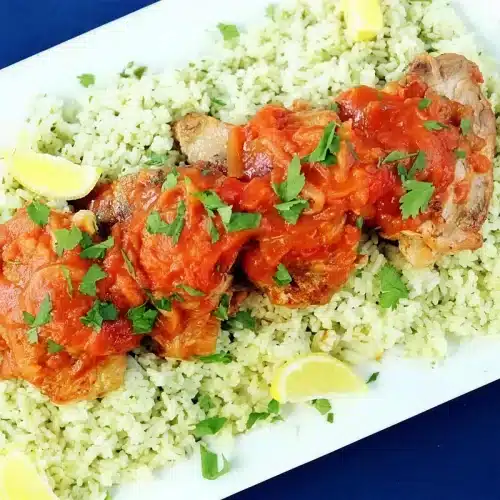
Braised Chicken Thighs in Pink Peppercorn Tomato Sauce
Save this recipe
Enter your email and I’ll send this recipe straight to your inbox.
Ingredients
For the Chicken
- 4 bone-in, skin-on chicken thighs about 2 pounds
- 1 1/2 teaspoons kosher salt Diamond Crystal; use half as much Morton
- 1/2 teaspoon freshly ground black pepper
- 1/2 teaspoon ground celery seed
- 2 tablespoons olive oil
The Tomato and Wine Sauce
- 1 small yellow onion thinly sliced
- 4 cloves garlic left in their skins
- 1 large ripe tomato diced, about 8 ounces
- 3/4 cup dry white wine
- 1 can plain tomato sauce 8 ounces
- 1 bundle fresh herbs 6 sprigs thyme, 2 rosemary and 2 oregano, tied with twine
- 1 teaspoon pink peppercorns lightly crushed
To Finish
- 2 teaspoons lemon juice plus wedges to serve
- 2 tablespoons chopped flat-leaf parsley
Instructions
Season and Sear
- Pat the thighs completely dry and season both sides with the salt, black pepper and celery seed. Set them on a rack in the refrigerator for 10 minutes while the pan heats, not on the counter.
- Heat the oil in a wide skillet over medium-high. Lay the thighs in skin side down along with the whole garlic cloves and brown for about 6 minutes, turn for 2 minutes more, then lift the chicken and garlic onto a plate.
Build the Sauce
- Lower the heat to medium, pour off all but a tablespoon of the fat, and cook the onion in it until translucent, about 5 minutes.
- Add the diced tomato and cook for 3 minutes, pressing it a little so it starts to break down.
- Pour in the wine and scrape the browned bits off the base of the pan, then let it reduce by half, about 3 minutes.
Braise the Thighs
- Stir in the canned tomato sauce, then squeeze the softened garlic out of its skins into the pan and mash it into the sauce.
- Set the thighs back in skin side up, high enough that the sauce comes only part way up them, and tuck the herb bundle alongside.
- Simmer with the lid slightly ajar for 25 to 30 minutes, until the thickest part of a thigh reads 175F to 185F and the meat has pulled back from the end of the bone.
Rest and Finish
- Move the chicken to a plate and tent it with foil. Leave the pan uncovered over medium heat for about 5 minutes, until the sauce coats the back of a spoon.
- Discard the herb bundle, then stir the crushed pink peppercorns and the lemon juice into the sauce off the heat and check the seasoning.
- Spoon the sauce over the thighs, scatter with parsley and serve with lemon wedges over couscous or soft polenta.