Sheet pan pancakes solve the problem every pancake breakfast has, which is that the cook eats last and eats cold. One bowl of batter goes into one dish, the oven does the work in twenty minutes, and everybody sits down at the same time with something hot in front of them.
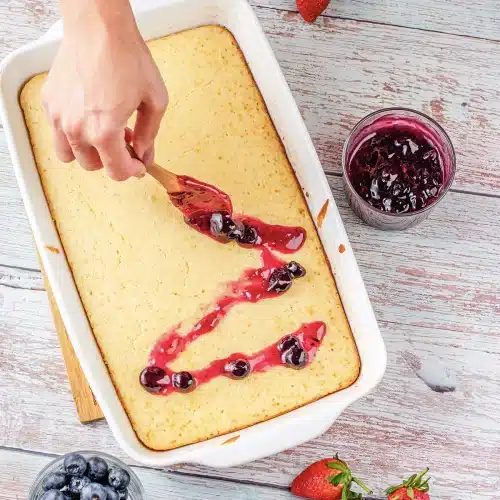
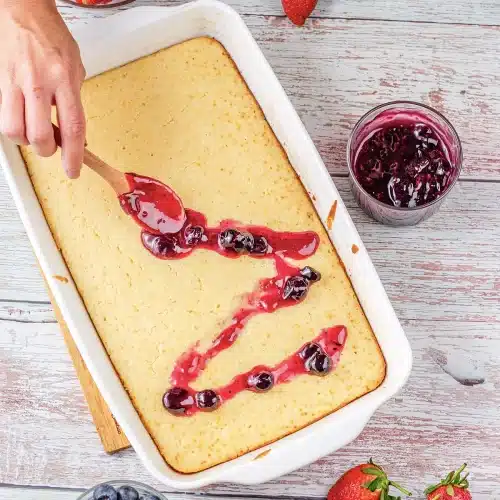
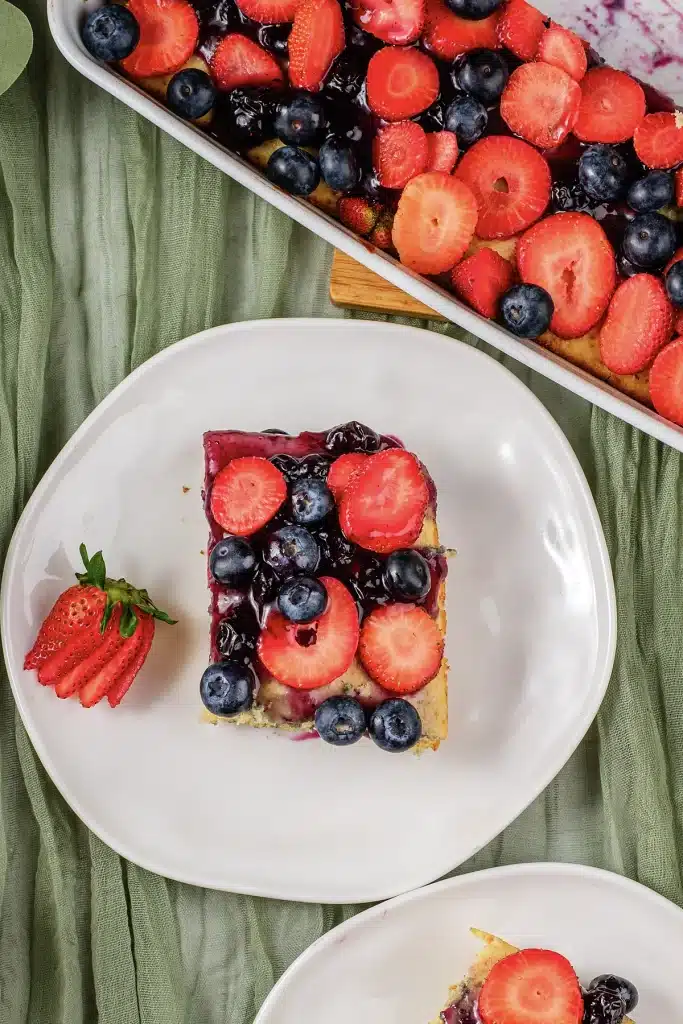
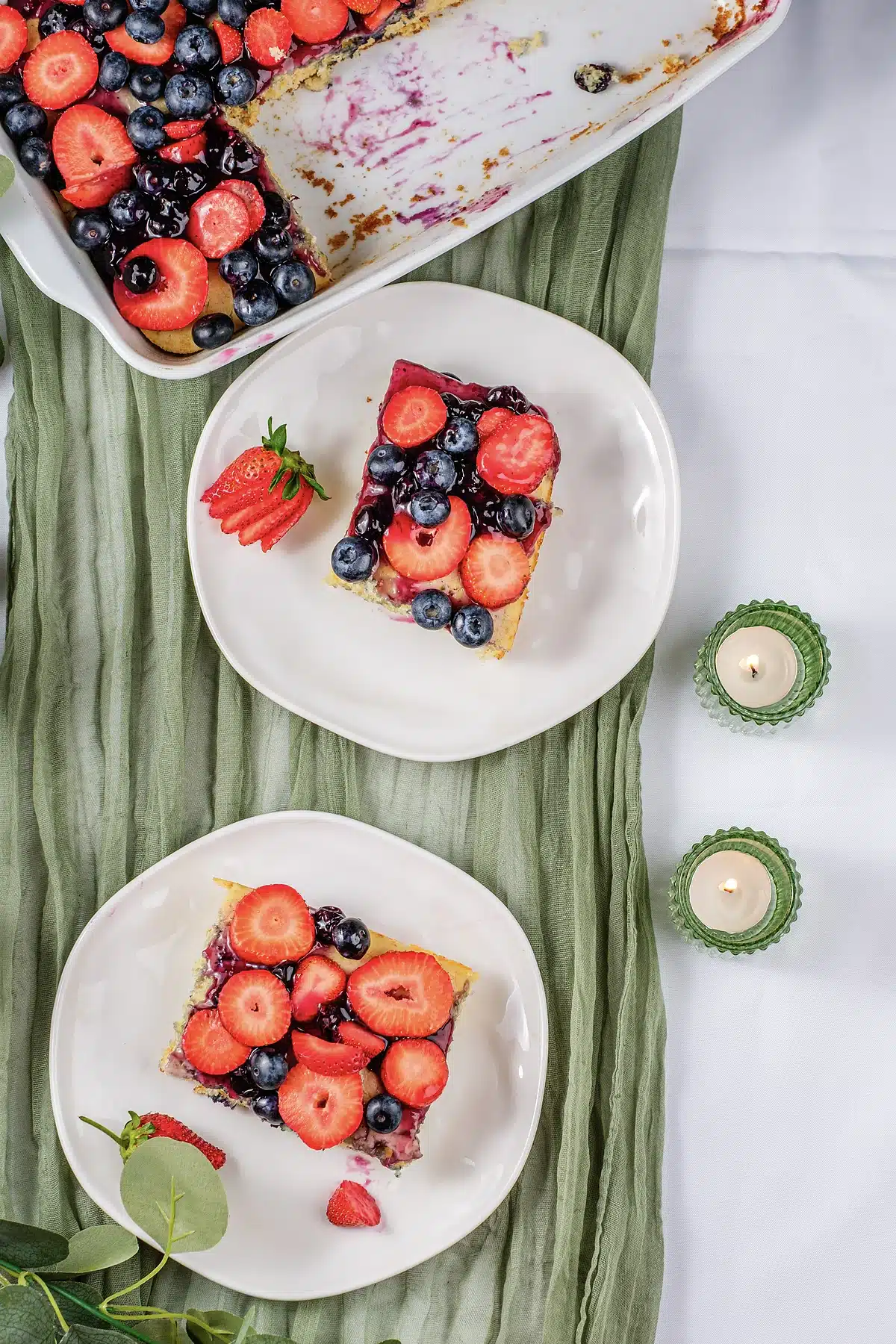
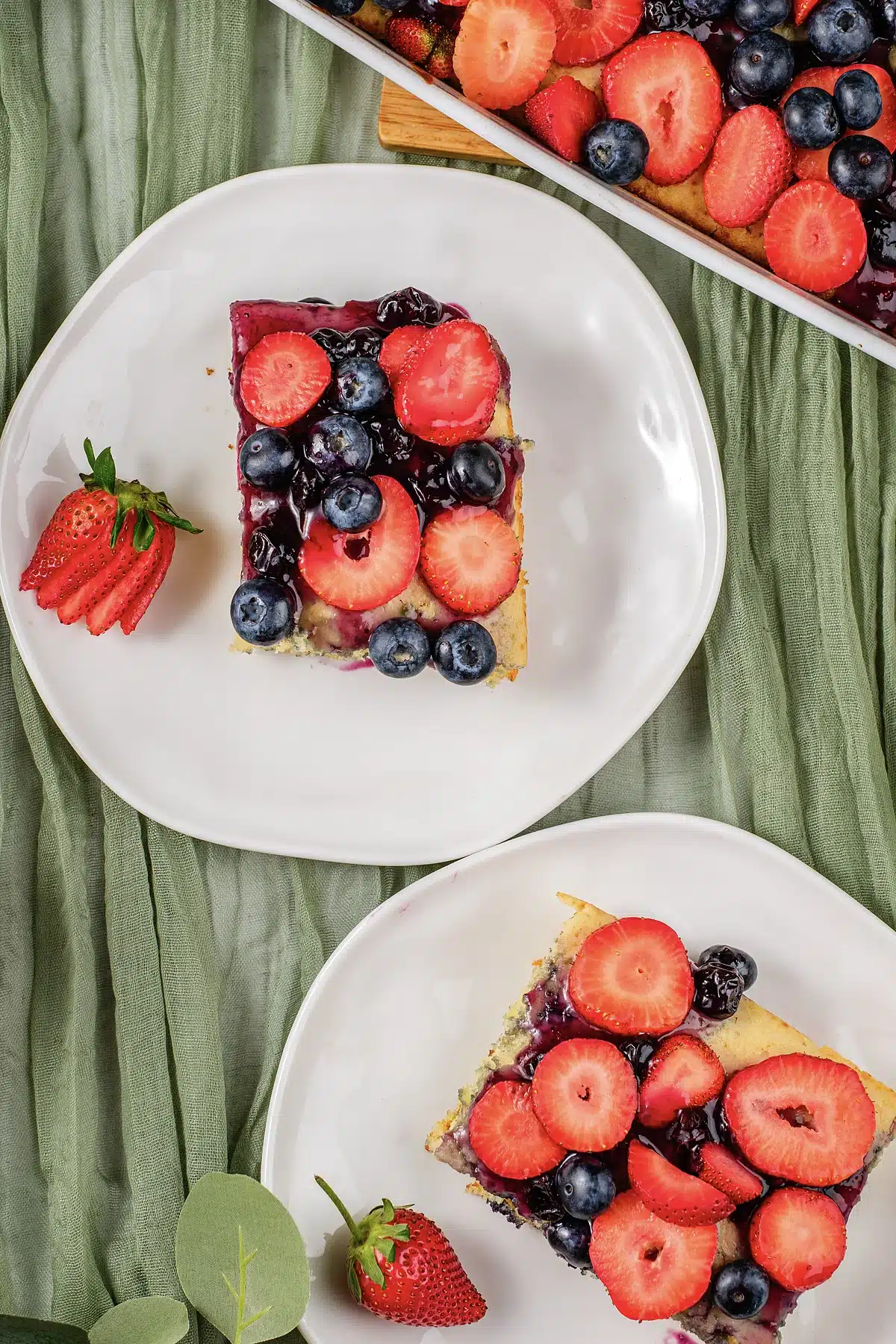
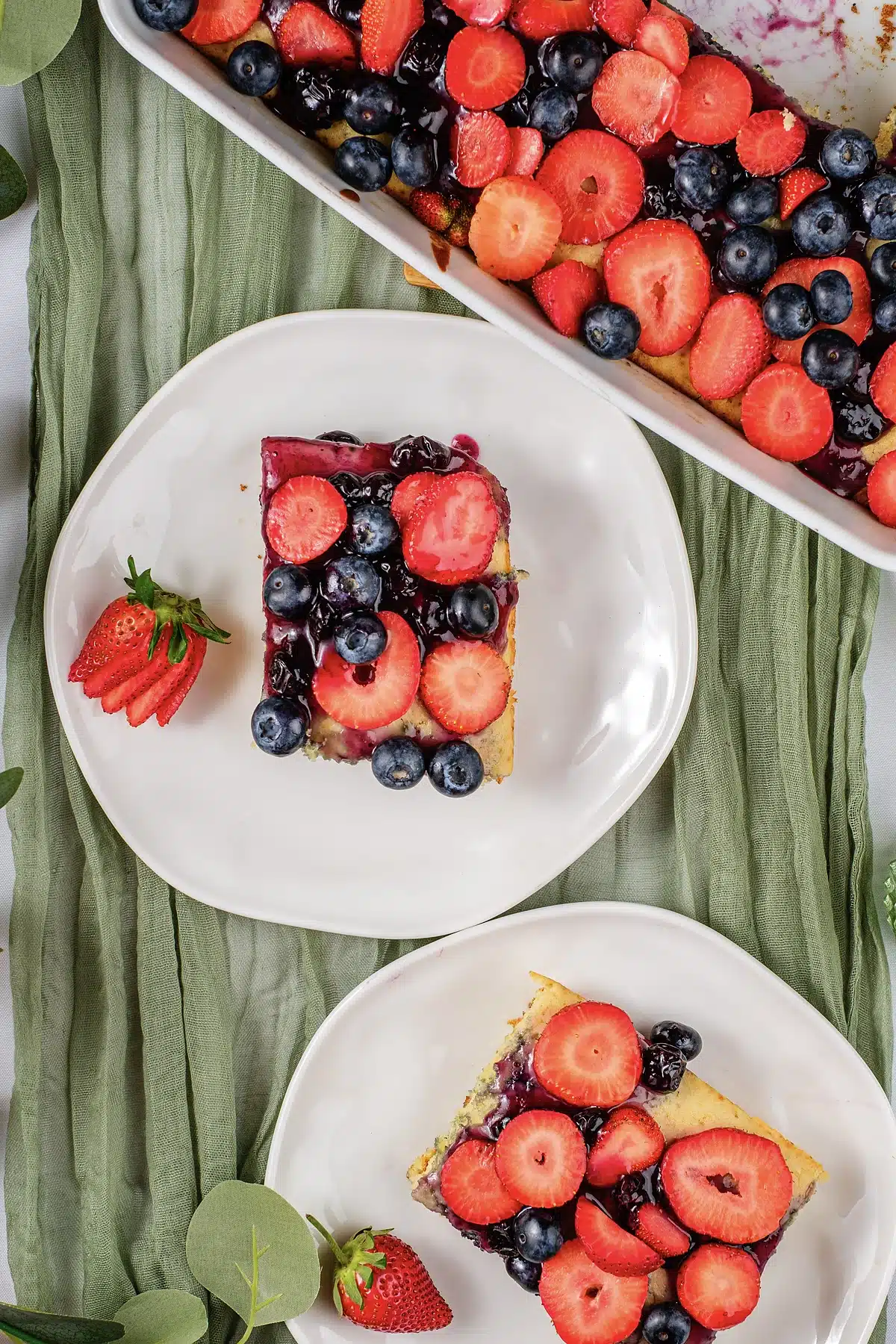
What you see in these photos is the version I have settled on after making it a dozen ways: baked in a white ceramic dish rather than a metal tray, and topped with warm berry compote and fresh fruit after it comes out of the oven instead of before it goes in. Both choices are deliberate, and both are explained below.
- One bowl, one dish, and nobody stands at the stove flipping
- Twenty minutes of baking instead of forty minutes of batches
- Every square is the same size, which makes portioning simple
- Squares freeze and reheat better than stacked rounds do
- The berry topping goes on warm, so nothing goes soggy underneath

- What Sheet Pan Pancakes Actually Are
- Sheet Pan or Ceramic Baking Dish
- Ingredient Notes
- How To Make Sheet Pan Pancakes
- Topping After the Bake, Not Before
- How To Tell When Sheet Pan Pancakes Are Done
- Make It Ahead
- Storing Sheet Pan Pancakes
- Variations and Substitutions
- What to Serve with Sheet Pan Pancakes
- Sheet Pan Pancakes FAQ
What Sheet Pan Pancakes Actually Are
Sheet pan pancakes start from an ordinary pancake batter: flour, sugar, baking powder, salt, milk, eggs, melted butter and vanilla. Nothing about it is unusual. What changes is the cooking method. Instead of ladling it onto a griddle in rounds, you pour the whole lot into a rimmed dish and bake it as one slab, then cut it into squares.
The texture that comes out is not identical to a griddle pancake, and it would be dishonest to claim otherwise. There is no browned, slightly crisp face on both sides, because only the top surface meets dry heat. What you get instead is a soft, even, faintly custardy crumb all the way through, closer to a very light cake than to a diner stack.
Most people prefer sheet pan pancakes anyway. The slab holds syrup without collapsing, it travels in a lunchbox, and it reheats without going leathery. The one thing it will never do is give you those lacy crisp edges, so if that is what you are after, make rounds.
Save this recipe
Enter your email and I’ll send this recipe straight to your inbox.
Sheet Pan or Ceramic Baking Dish
The name says sheet pan, and a rimmed metal quarter sheet roughly 9 by 13 inches is what most recipes for sheet pan pancakes call for. It works. Metal conducts heat quickly, the edges set fast, and you get a slightly firmer base.
I bake mine in a white ceramic dish of about the same footprint, which is what the photographs here show, and I would encourage you to use whichever you own rather than buying anything. Ceramic heats more slowly and holds heat longer, so the slab bakes a couple of minutes longer and comes out marginally softer in the middle. It also goes straight from the oven to the table, which a scorched half sheet does not.
What actually matters is depth and area, not material. You are aiming for a slab about three quarters of an inch thick before baking. Spread the same batter over a full half sheet and it bakes into a cracker; pour it into a loaf pan and the center will still be raw when the edges are brown.
Ingredient Notes
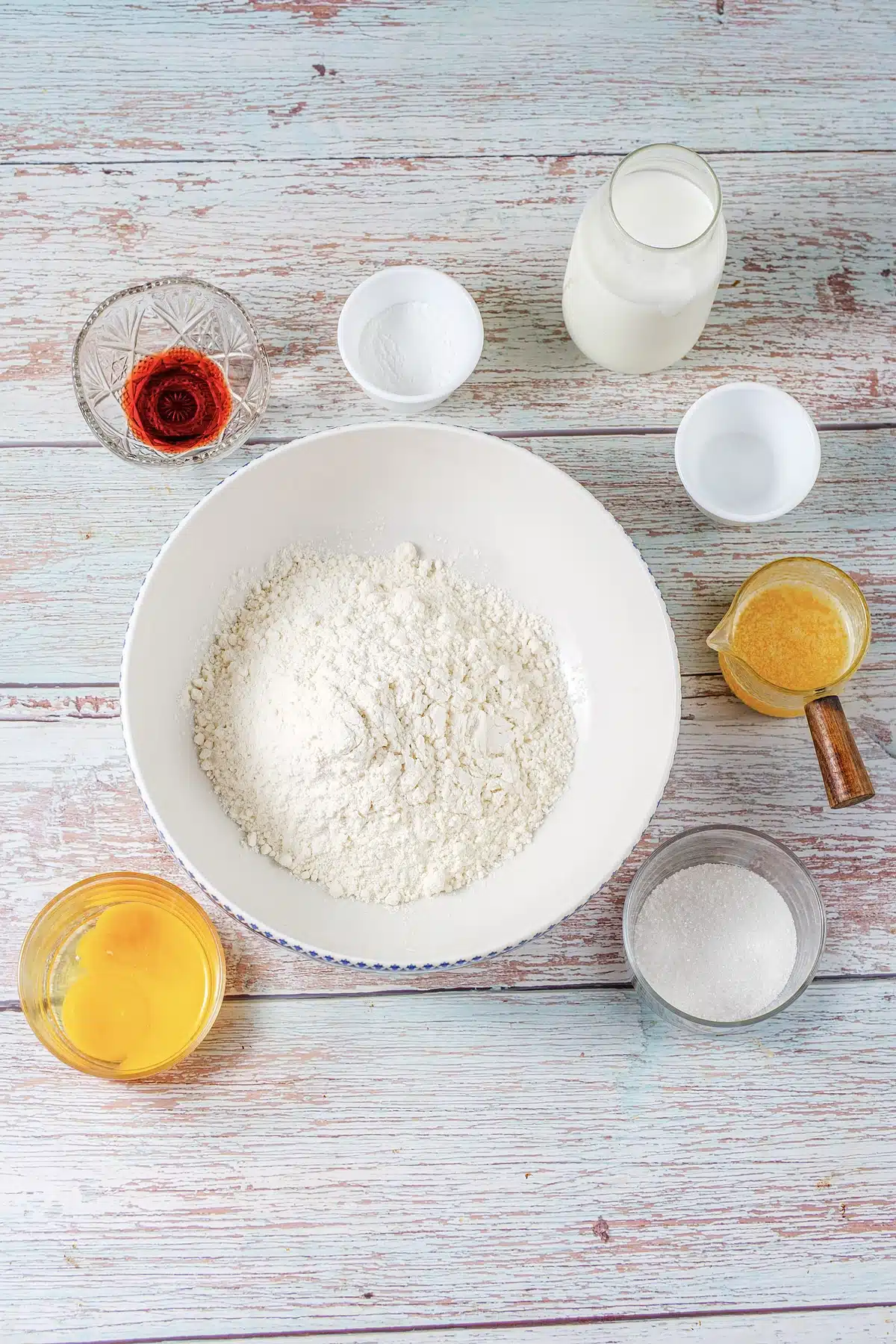
- All-purpose flour. Two cups, spooned into the cup and leveled rather than scooped. Scooping packs in an extra ounce or so and the slab bakes up dense and dry.
- Baking powder. A full tablespoon, which looks like a lot and is not. A thick slab needs far more lift than a thin round does, because the gas has to travel much further before the structure sets.
- Milk. Two cups. Whole milk gives the softest crumb, but any milk works, and buttermilk is excellent if you cut the baking powder to two teaspoons and add half a teaspoon of baking soda.
- Eggs. Two large. They are doing structural work here rather than just enriching, so do not leave them out.
- Melted butter. Four tablespoons, cooled slightly before it meets the eggs. Butter poured in hot will scramble them in streaks.
- Vanilla extract. A teaspoon, and worth including. In a plain batter there is very little else carrying flavor.
For the Topping
- Berry jam or compote. Warmed until it is loose enough to spoon. Raspberry and blueberry are what the photos show, and a mixed berry conserve works just as well.
- Fresh berries. Sliced strawberries and whole blueberries, added last so they stay bright. Frozen fruit weeps and stains the surface, so thaw and drain it first if that is what you have. Penn State Extension has a useful primer on blueberries in the garden and the kitchen if you are working through a big pick.
- Optional extras. Chocolate chips, warmed peanut butter, or a spoonful of Biscoff loosened with a splash of milk.
How To Make Sheet Pan Pancakes
First, heat the oven and line the dish. Set it to 425 degrees and line a 9 by 13 dish with parchment, or butter it well if you are using ceramic and plan to serve from it.
Next, whisk the dry ingredients. Flour, sugar, baking powder and salt in a large bowl, mixed properly so the leavening is evenly distributed. Lumps of baking powder leave bitter spots.
Then combine wet and dry. Whisk the milk, eggs, melted butter and vanilla in a second bowl until smooth, pour that into the flour, and fold with a spatula until the flour has just disappeared. A few small lumps are correct. Beating this batter smooth develops gluten and gives you a rubbery slab.
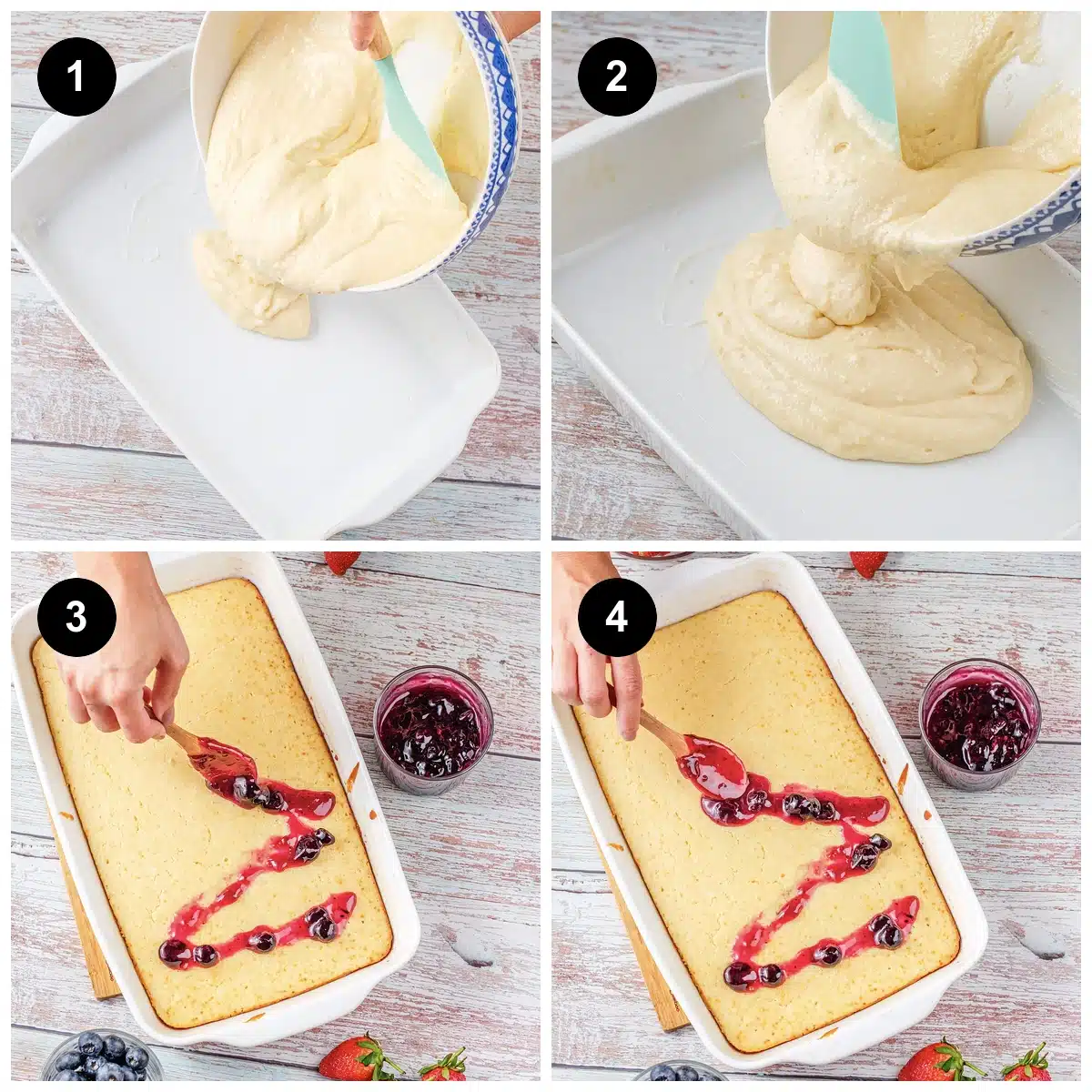
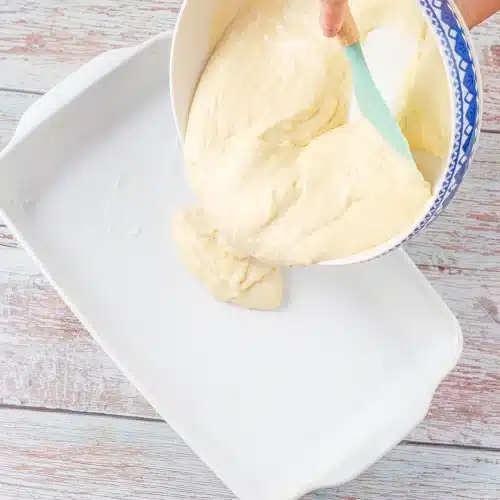
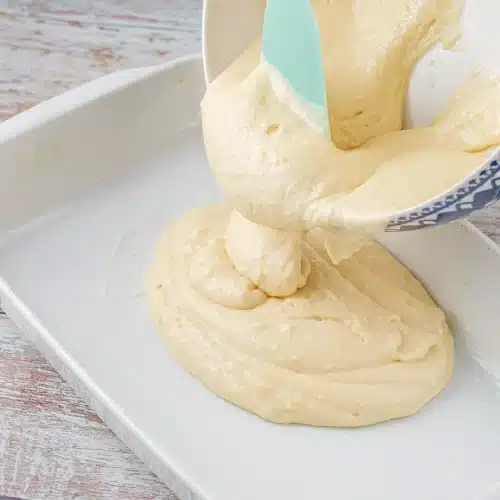
After that, pour and level. Scrape the batter into the dish, spread it into an even layer with the back of the spatula, and tap the dish once on the counter to settle it. Bake 18 to 22 minutes.
Finally, top and cut. Let the slab sit five minutes, spoon warm jam over it in loose ribbons, scatter the fresh fruit, and cut into eight squares. Serve with syrup on the side rather than poured over.
Topping After the Bake, Not Before
Plenty of sheet pan pancakes recipes tell you to swirl jam through the raw batter and scatter fruit on top before it goes in. I did it that way for a long time. The problem is that jam is mostly sugar and water, so it sinks, caramelizes against the base of the dish and welds the slab to the pan in exactly the places you want to cut.
Fresh berries have the same issue from the other direction. Twenty minutes at 425 degrees turns a sliced strawberry gray and collapses a blueberry into a purple crater. The fruit gives up its water into the batter around it and leaves a wet ring.
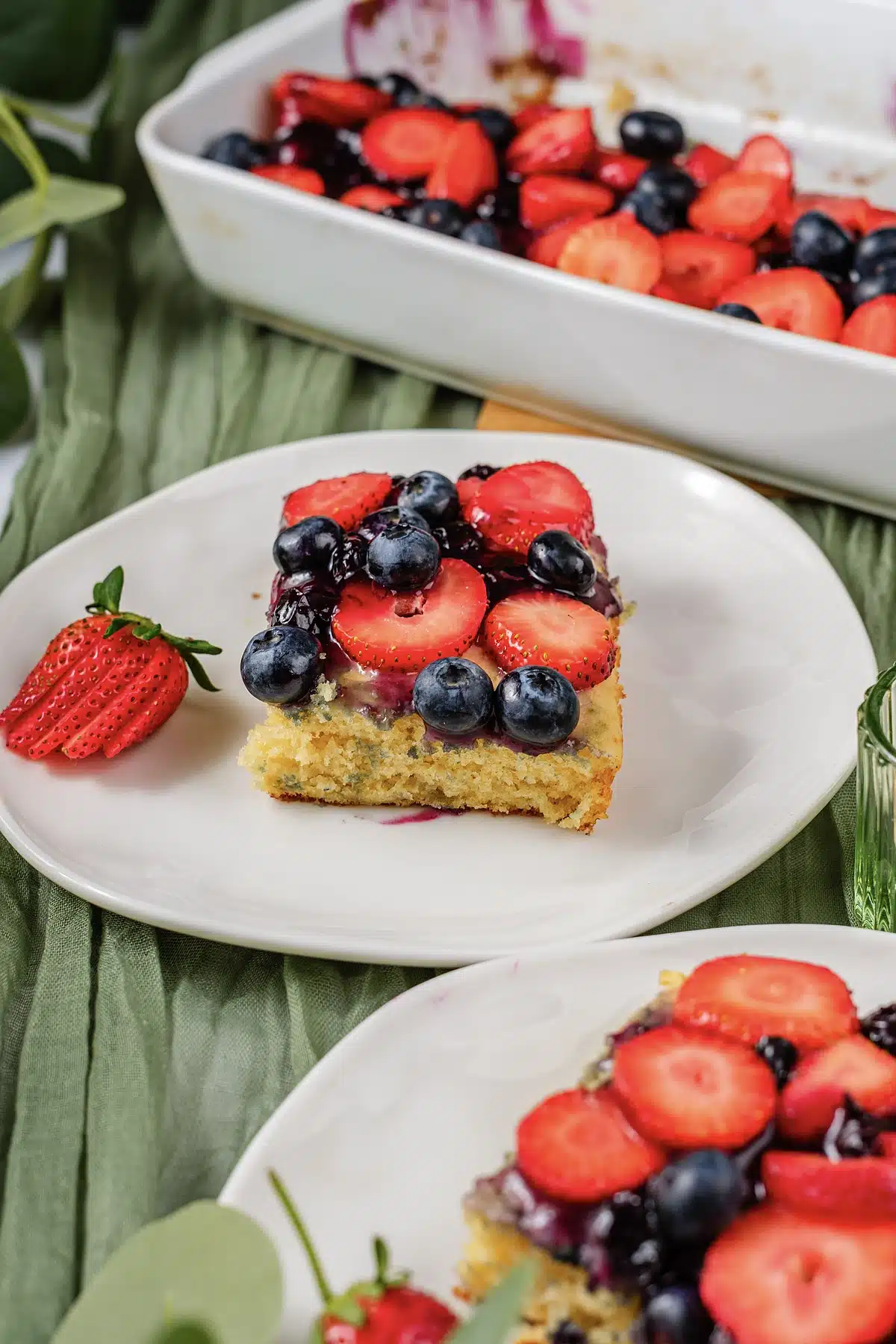
Warm the jam separately, spoon it over the baked slab while both are still hot, and add the fresh fruit at the very end. The jam soaks in just far enough to flavor the top layer, the berries keep their color and their bite, and nothing sticks to the dish.
How To Tell When Sheet Pan Pancakes Are Done
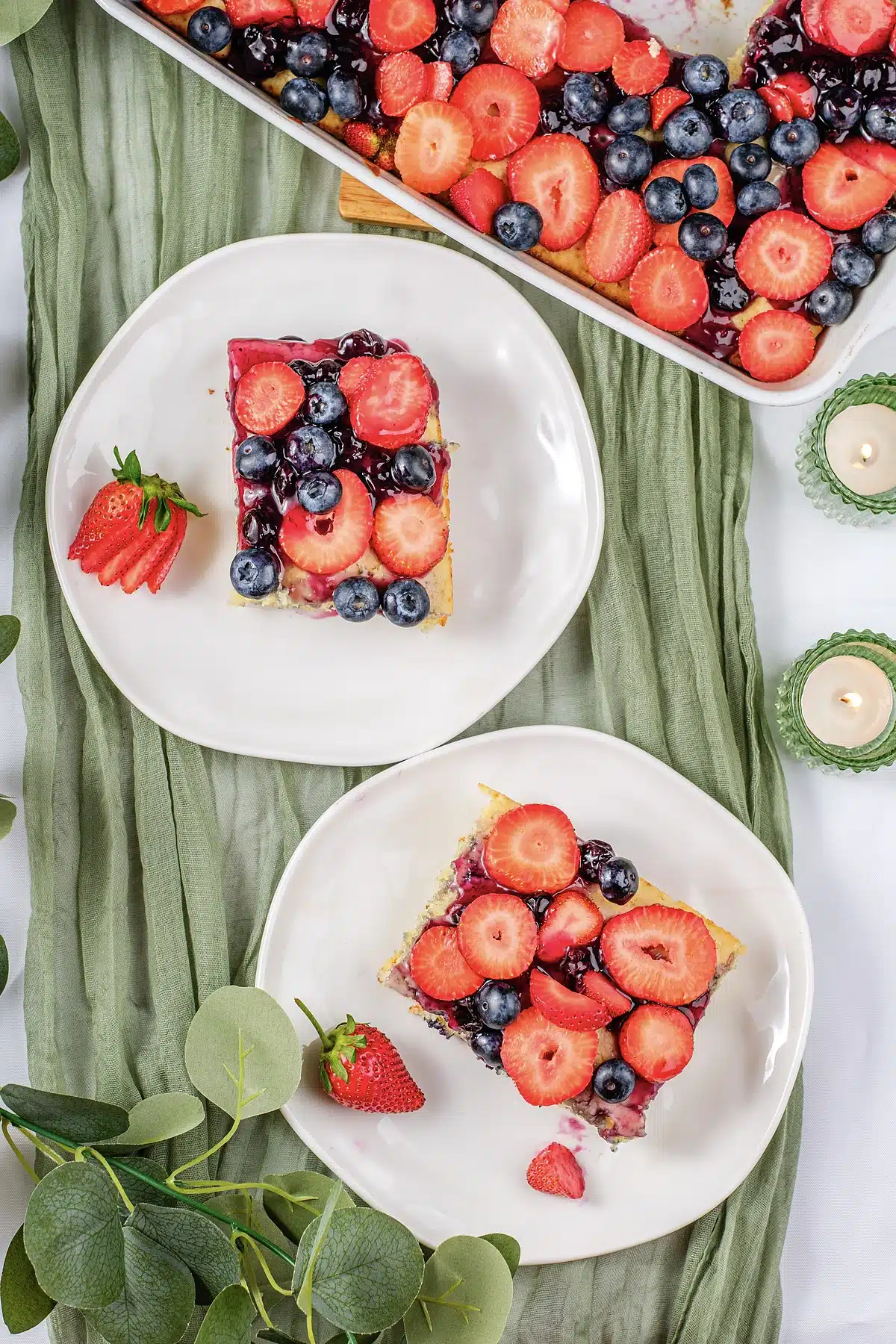
The top should be evenly pale gold with slightly darker edges pulling away from the sides of the dish. Press the middle with a fingertip and it should spring back rather than hold a dent. A toothpick pushed into the center comes out with a crumb or two clinging to it but no wet batter.
Underbaking is the common mistake, because the surface looks set several minutes before the middle is. If the center still wobbles when you nudge the dish, give it another three minutes and check again. Overbaking is harder to do at this temperature, though past about twenty-five minutes the edges start to dry out.
Make It Ahead
Sheet pan pancakes are a friendlier make-ahead than a griddle stack, because the batter can be mixed the night before, covered and refrigerated. It loses a little lift overnight, so whisk in an extra half teaspoon of baking powder in the morning and let the bowl stand on the counter for fifteen minutes before it goes into the dish.
Baking the whole slab a day early works better than you would expect. Cool it completely, cover the dish, and refrigerate it bare, with no topping. Reheat covered with foil at 325 degrees for about twelve minutes, then top and cut as usual.
The compote is the easiest part to move ahead. Warm the jam with a splash of water, cool it, and keep it in a jar in the fridge for a week. A short burst in the microwave brings it back.
Storing Sheet Pan Pancakes
Cut sheet pan pancakes keep in an airtight container in the refrigerator for three days. Store them plain and add the fruit when you serve, because topped squares go soft on the surface within a day.
They freeze very well, which is the real argument for making a full slab when there are only two of you. Cool them completely, wrap each square in parchment, and freeze in a bag for up to two months. Reheat straight from frozen in a toaster oven at 325 degrees for about eight minutes, or thirty seconds in the microwave if you want soft rather than lightly crisp.
Refrigerated squares reheat best in a dry skillet over medium-low heat for a minute a side. It puts back a little of the browned surface that oven baking never gave them in the first place.
Variations and Substitutions
Buttermilk. Swap the milk one for one, drop the baking powder to two teaspoons, and add half a teaspoon of baking soda. Tangier and slightly more tender.
Savory. Leave out the sugar and vanilla, fold in cooked crumbled bacon and chopped chives, and finish with grated cheddar for the last five minutes.
Whole wheat. Replace up to half the flour with white whole wheat and add two extra tablespoons of milk. The slab is nuttier and a little heavier.
Dairy-free. Oat milk and melted coconut oil both work without any other change. Almond milk is thinner, so hold back a quarter cup.
Chocolate chip. Scatter half a cup over the surface as soon as the slab comes out. Residual heat melts them into a thin layer you can spread with an offset spatula.
Cinnamon roll. Drizzle a mixture of melted butter, brown sugar and cinnamon over the batter in loose spirals before baking, then glaze with confectioners’ sugar and milk once it is out. This is the one topping that genuinely belongs on before the bake.
What to Serve with Sheet Pan Pancakes
Something salty, and something with protein in it. Sheet pan pancakes are generous and sweet, so the rest of the table should not be. A slab of sweet batter with fruit and syrup on top is a lot of carbohydrate on its own, and bacon or breakfast sausage balances the plate properly.
Scrambled eggs work for the same reason and cook in the time the slab is in the oven. If you want everything to come out of one oven, pancake sausage balls bake alongside on a second rack and cover the salty end of the table.
For drinks, coffee for the adults and a jug of cold milk for everyone else. A bowl of extra berries in the middle of the table gets picked at by everybody and stops the whole thing feeling quite so sweet.
Sheet Pan Pancakes FAQ
Frequently Asked Questions
Can I use pancake mix instead of making the batter?
Yes. Prepare enough boxed mix for about sixteen pancakes, which is usually three cups of dry mix, and add an extra teaspoon of baking powder to compensate for the depth of the slab. Bake it exactly the same way.
Why did the middle stay raw?
The batter was too deep, or the dish was too small. Aim for about three quarters of an inch of batter in a 9 by 13 dish. A smaller dish gives you a thicker slab that browns on top long before the center cooks.
Do I need to line the dish?
Parchment makes lifting the whole slab out in one piece easy, which is handy for cutting neat squares. If you are serving from a ceramic dish at the table, butter it well instead and cut the squares in place.
Can I double the recipe?
Use two dishes rather than one large one. Two slabs of the correct depth bake in the same twenty minutes; one deep slab needs closer to forty and dries out at the edges before the middle sets.
More Questions About Oven Pancakes
Good to Know
Is this the same as a Dutch baby?
No. A Dutch baby is a thin eggy batter poured into a screaming hot skillet, and it puffs dramatically and collapses. This is a leavened pancake batter baked gently, and it holds its shape.
Can I bake it at a lower temperature?
You can, at 375 degrees for about twenty-eight minutes. The slab rises a little less and the surface stays paler, but it is more forgiving if your oven runs hot.
How many does one dish feed?
Eight generous squares, which is four adults with two each or a family of six with some left for the freezer. Cut into twelve if it is part of a larger brunch spread.
If your household would rather have rounds after all, fluffy blueberry pancakes are the griddle version of the same idea, and a blueberry French toast casserole takes the make-ahead logic one step further.
Sheet Pan Pancakes
Save this recipe
Enter your email and I’ll send this recipe straight to your inbox.
Ingredients
Sheet Pan Pancakes
- 2 cups (240 g) all-purpose flour
- 2 tbsp (25 g) granulated sugar
- 1 tbsp (15 g) baking powder
- 1/2 tsp (2.5 g) salt
- 2 cups (480 ml) milk whole milk preferred, but any milk works
- 2 large eggs
- 4 tbsp (56 g) unsalted butter melted and slightly cooled
- 1 tsp (5 ml) vanilla extract optional
Topping Options
- raspberry jam for swirling on top
- fresh berries like blueberries, sliced strawberries, or banana
- chocolate chips optional
- warmed peanut butter or spreads Nutella, Biscoff, or additional jam; for drizzling
Equipment
- sheet pan (13x18-inch)
- Parchment Paper or Silicone Mat
- Mixing bowls
- Whisk
- Spatula
Instructions
Mix the Batter
- Whisk the dry ingredients: Heat the oven to 425 degrees. In a large bowl, whisk the flour, granulated sugar, baking powder and salt until the leavening is evenly distributed.
- Whisk the wet ingredients: In a second bowl, whisk the milk, eggs, melted butter and vanilla until smooth. Let the butter cool a little first so it does not scramble the eggs.
- Fold them together: Pour the wet mixture into the dry and fold with a spatula only until the flour disappears. A few small lumps are correct. Let the batter rest while the oven finishes heating.
Fill and Bake
- Pour into the dish: Line a 9 by 13 sheet pan with parchment, or butter a ceramic baking dish of the same size if you plan to serve from it. Scrape the batter in.

- Spread it level: Push the batter into an even layer with the back of the spatula, right into the corners, then tap the dish once on the counter to settle it.
- Bake: Bake for 18 to 22 minutes, until the top is pale gold, the edges pull away slightly and the center springs back when pressed. Let it sit 5 minutes.
Top and Cut
- Spoon over the warm jam: Warm the jam with a splash of water until it is loose enough to spoon, then lay it over the hot slab in ribbons rather than spreading it flat.
- Add fresh fruit and cut: Scatter sliced strawberries and blueberries over the top, cut into 8 squares, and serve with syrup on the side.