
Chicken cobbler is the casserole that broke TikTok in 2023 and then quietly moved into everybody’s weeknight rotation. Melted butter goes in the bottom of a baking dish, then shredded rotisserie chicken, then frozen vegetables, then a loose biscuit batter, then a whole quart of seasoned liquid on top. Nothing gets stirred. It looks wrong right up until it comes out of the oven.
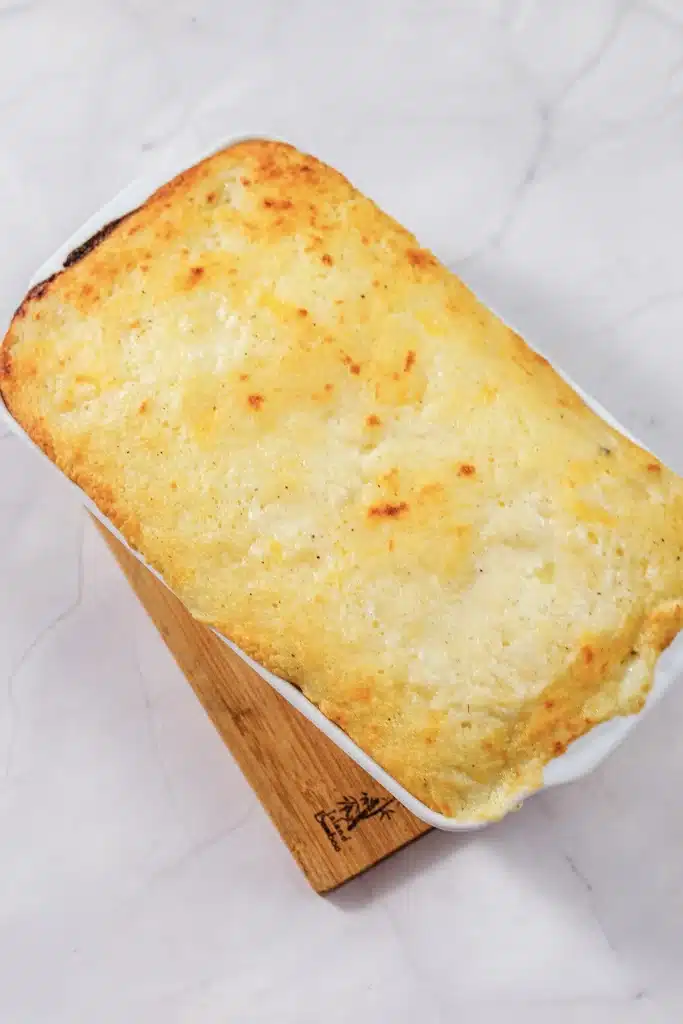
- Chicken cobbler in ten minutes of assembly, with nothing cooked before it goes in the oven
- A rotisserie chicken and a bag of frozen vegetables do most of the work
- The topping and the gravy both come from ingredients you just pour in
- One dish feeds six, and it reheats better than most casseroles do
- No stirring at any point, which is the whole trick
What it produces is closer to a chicken pot pie that made its own gravy. The batter rises through the liquid and sets into a soft, cheesy topping, the stock and the condensed soup thicken into a sauce underneath, and the whole thing takes ten minutes of assembly and no cooking at all before it goes in.

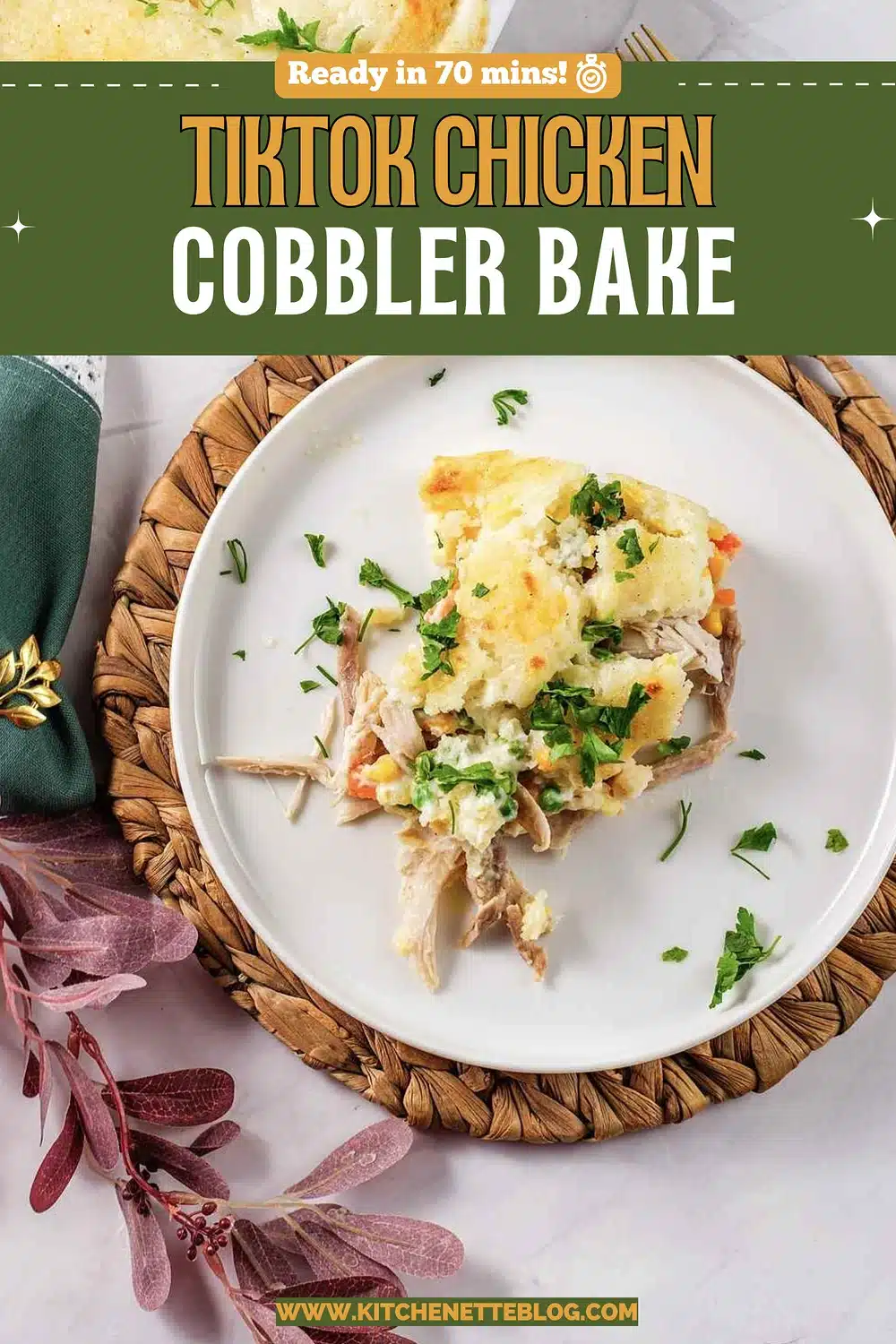
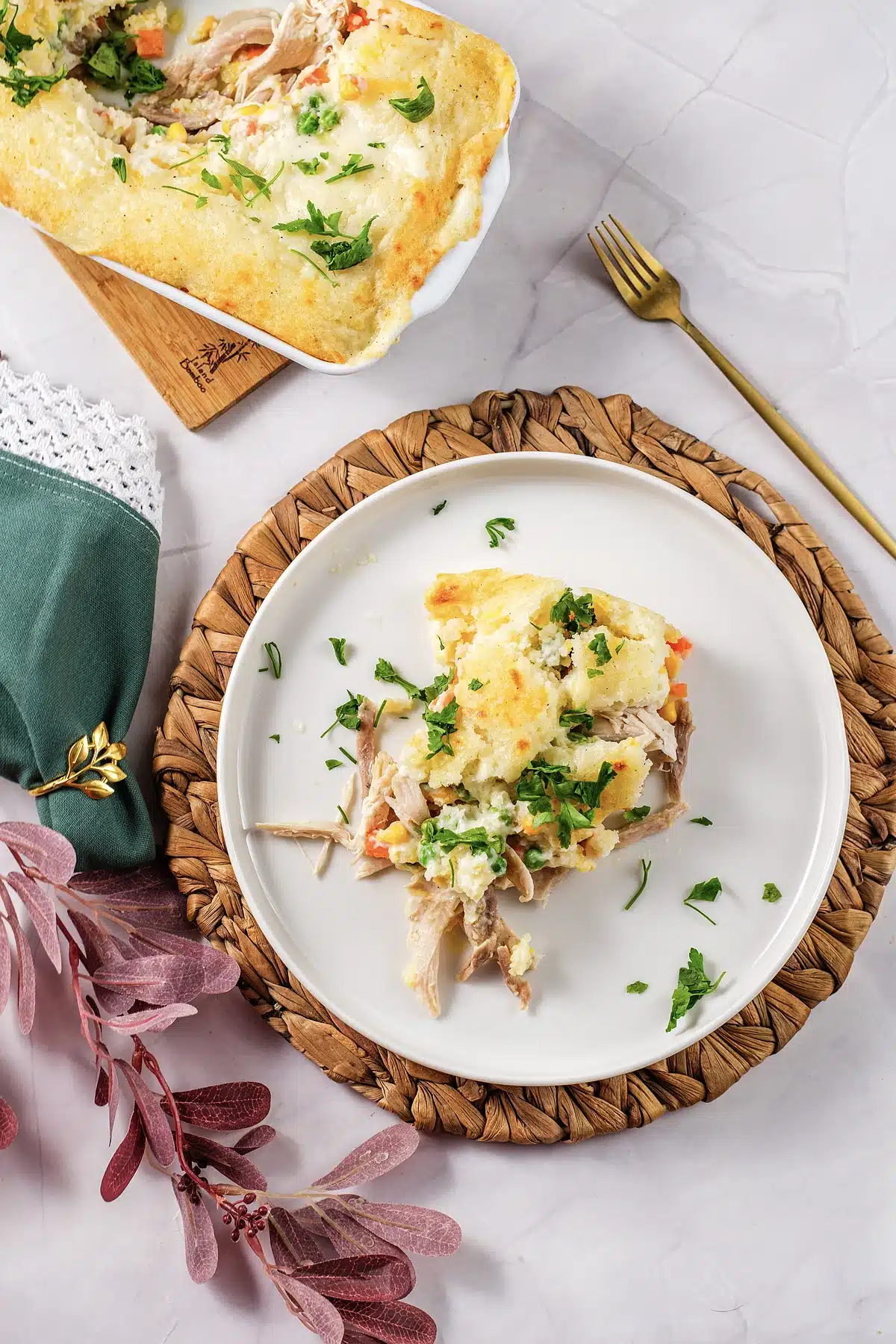
What Is Chicken Cobbler?
A cobbler is normally a fruit dessert: fruit on the bottom, a spoonable batter on top, baked until the batter sets into something between a biscuit and a cake. Chicken cobbler takes that structure and makes it savory. The filling is chicken and vegetables in gravy, the topping is a cheese and garlic biscuit batter, and the two stay separate because the layers are never mixed.
It is often called a dump-and-bake casserole, which undersells it slightly. There is a real technique here, and the technique is restraint. Every layer has to be poured on top of the last one and then left alone, because stirring turns a cobbler into a thick, gluey chicken soup with lumps of dough in it.
Chicken cobbler sits somewhere between a pot pie, a fruit cobbler and a dumpling stew. It is spoonable rather than sliceable, and it goes onto a plate in a scoop rather than a wedge.
Save this recipe
Enter your email and I’ll send this recipe straight to your inbox.
Where the TikTok Version Came From
The recipe went viral in early 2023 after a video showing the layering process racked up millions of views in a week. The hook was visual: watching two cups of milk-thick batter and then a quart of pale broth get poured into a dish full of chicken with no stirring is genuinely alarming, and people made it to find out whether it worked.
It works. The specific choice that made the original spread was using the boxed Red Lobster biscuit mix instead of a plain baking mix, because the cheddar and garlic already in the box do all of the seasoning for the topping.
Since then the recipe has picked up dozens of variations, most of which involve swapping the vegetables or the soup. The core structure has not changed, and it does not need to.
Ingredient Notes
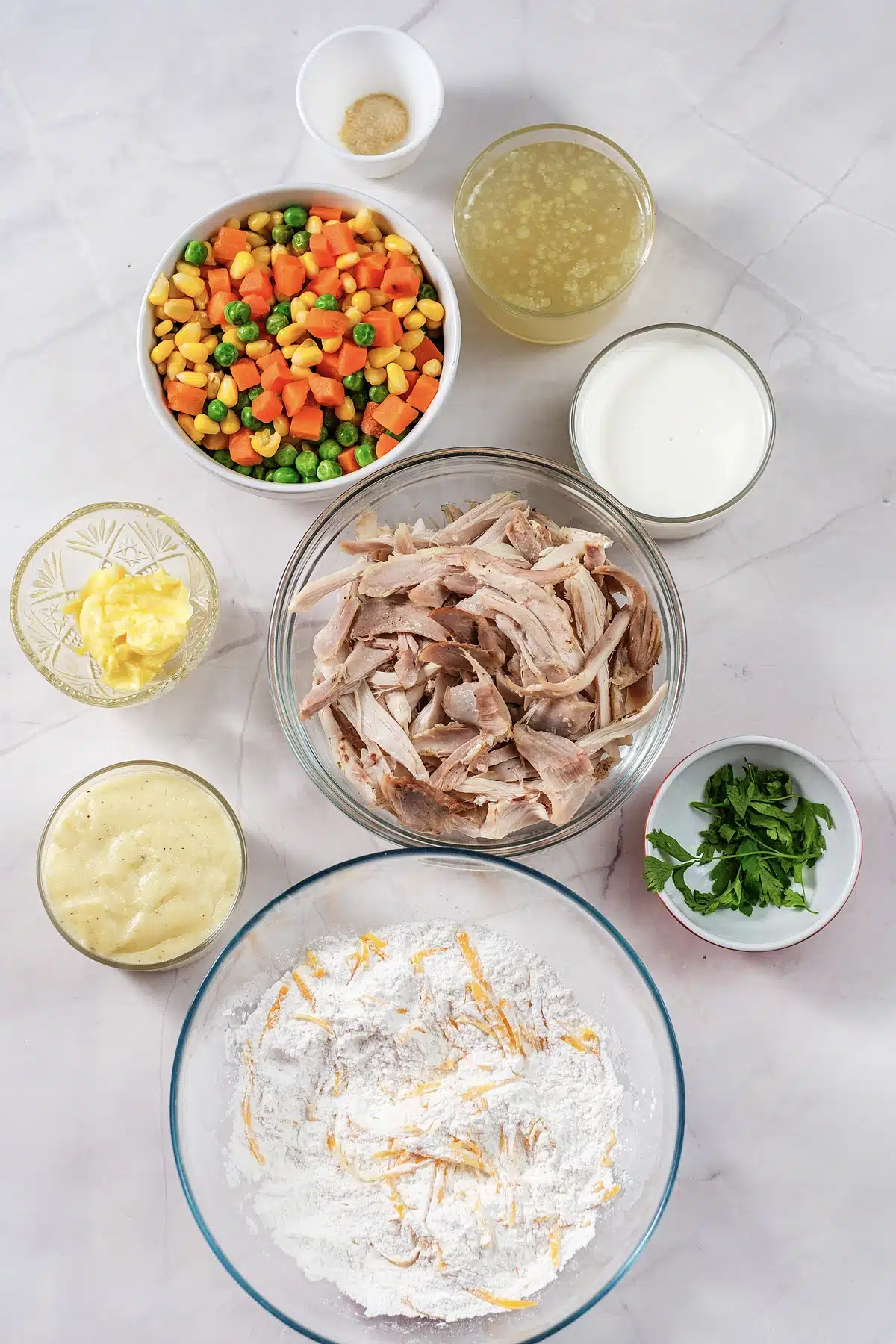
- Rotisserie chicken. Three cups, pulled into shreds, from one supermarket bird. Use a mix of white and dark meat. Poached chicken breast works and tastes noticeably plainer, because a rotisserie bird brings its own seasoning and rendered fat.
- Salted butter. One stick, melted in the dish while the oven heats. It is not a greasing step. That butter becomes part of the sauce and it is why the bottom layer never sticks.
- Frozen mixed vegetables. Two cups, straight from the freezer, no thawing. Peas, carrots and corn is the standard mix and it is what the photographs here use. Thawed vegetables release water and loosen the sauce.
- Cheddar Bay biscuit mix. One box, seasoning packet included, both stirred into the milk. The packet is where the garlic and herb flavor of the topping comes from, so do not hold it back for a butter glaze.
- Milk. Two cups, whole or two percent. Whisked with the mix, it makes a batter thick enough to pour but too loose to spread, which is exactly right.
- Chicken stock. Two cups, low sodium. The box mix and the condensed soup are both salty, and full-strength stock on top of them makes the finished dish hard to eat.
- Condensed cream of chicken soup. One can, whisked into the stock rather than spooned in. Lumps of condensed soup do not disperse in the oven.
- Fresh parsley. Chopped, scattered over at the end. It is a garnish, but on a dish this pale and rich it does real work.
Do Not Stir the Layers
This is the one chicken cobbler instruction people ignore and then write in about. Each layer goes on top of the one below and stays there.
The reason is physical. The batter is denser than the stock mixture but lighter than the chicken, so in the oven it floats up through the liquid and sets as a topping while the starch it sheds thickens the gravy underneath. Stir it in at the start and the flour disperses evenly, so instead of a topping and a sauce you get one uniform, pasty layer.
The same goes for the broth. Pour it slowly over the back of a spoon if you are worried about disturbing the batter, and accept that the surface will look like a mess going in. It sorts itself out in the first fifteen minutes.
How To Make Chicken Cobbler
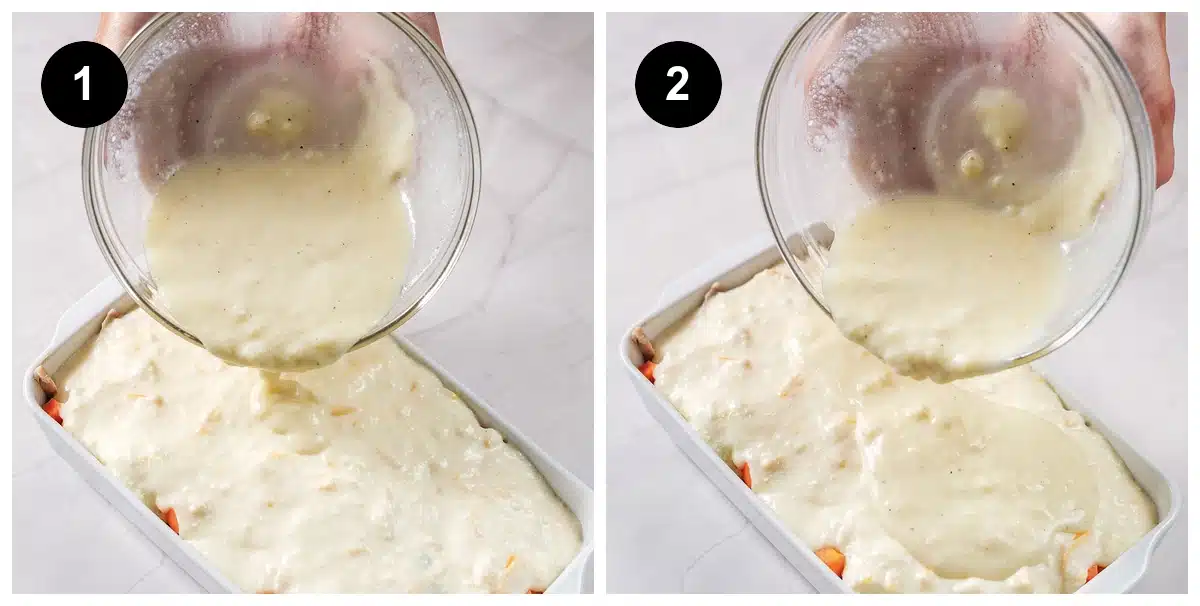
First, melt the butter in the dish. Put the stick of butter in a 9-by-13-inch baking dish and slide it into the oven while it heats to 350 degrees. Take it out once the butter has melted and coats the bottom.
Next, layer the chicken and the vegetables. Scatter the shredded chicken evenly over the butter, then the frozen vegetables over that. Season with salt, pepper and a pinch of garlic powder. Do not stir.
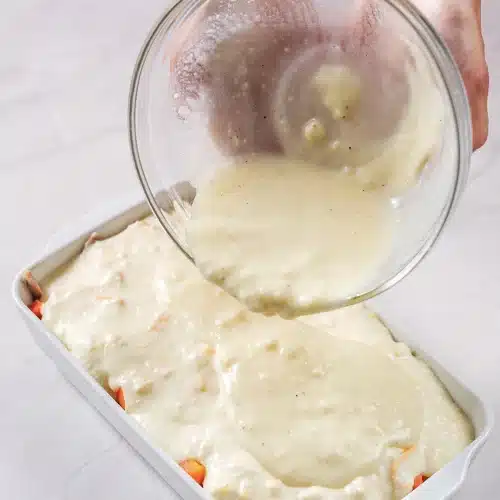
Then pour on the batter. Whisk the biscuit mix, its seasoning packet and the milk together until smooth, then pour it over the vegetables in an even layer across the whole surface. Again, do not stir.
Why the Layers Work
Think of it as three densities finding their own level. Chicken and vegetables are heavy, so they stay at the bottom. In the middle sits the batter, which rises as its leavening activates. Thin liquid on top sinks past all of it, hits the hot dish, and reduces into gravy. Every layer ends up where you want it without you doing anything except keeping the spoon out.
After that, add the broth layer. Whisk the chicken stock and the condensed soup together in a separate bowl until there are no lumps, then pour it slowly and evenly over the batter. The dish will look alarmingly full and alarmingly wet. That is correct.
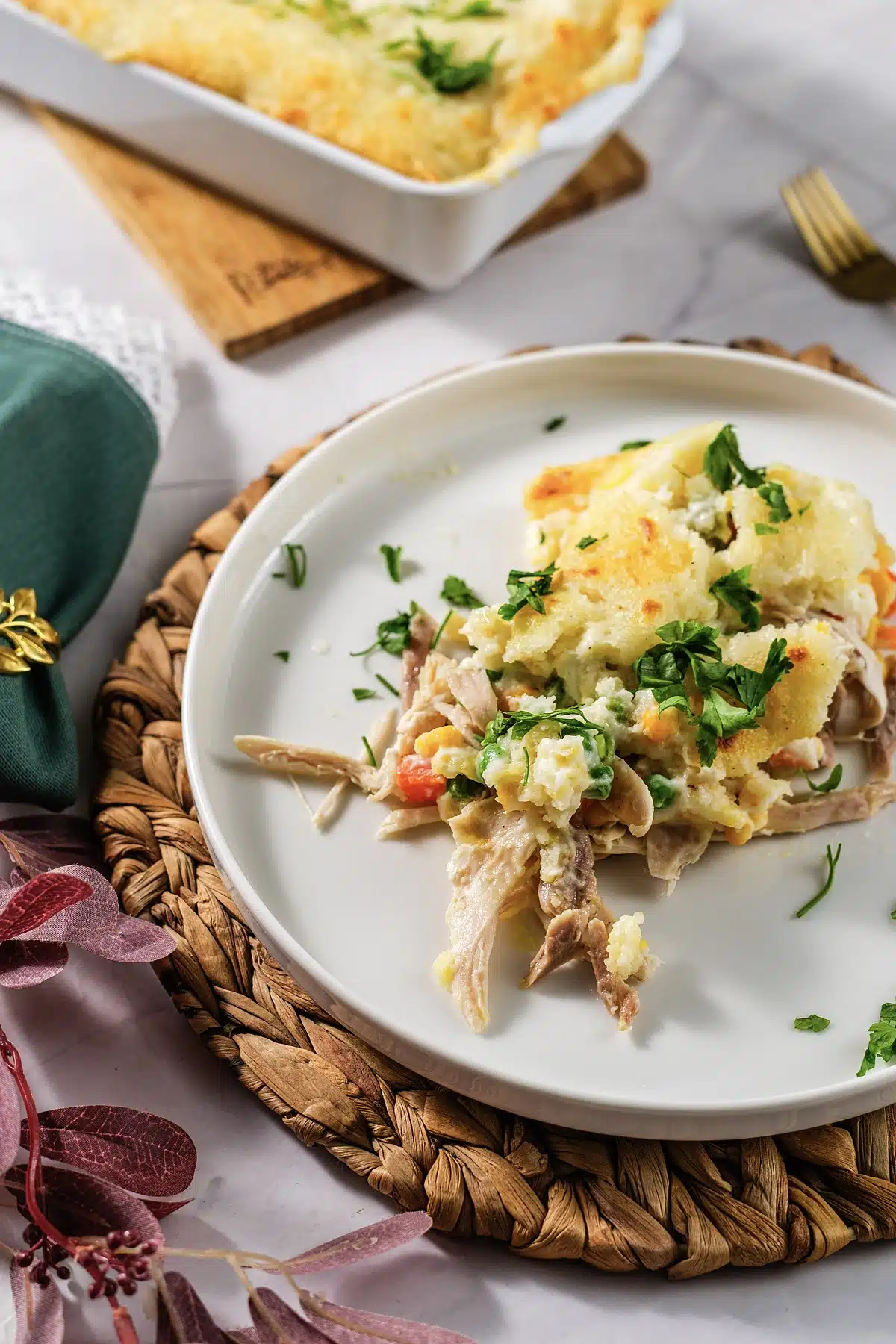
Finally, bake uncovered for forty-five to fifty minutes, until the top is puffed and golden and the edges are bubbling. Let it sit for ten to fifteen minutes before serving, because the sauce needs that time to set, then scatter the parsley over the top.
How To Tell When Chicken Cobbler Is Done
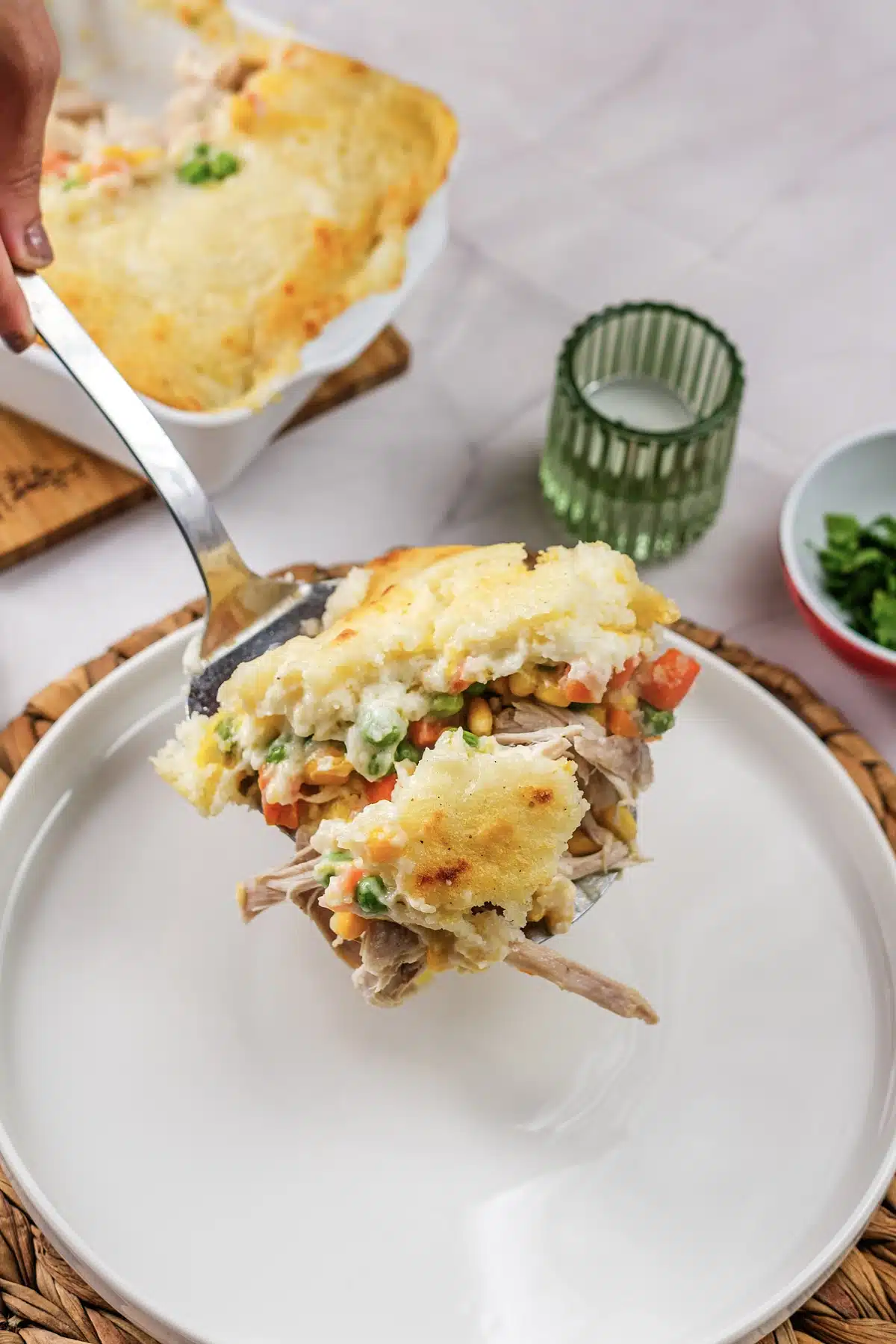
The top should be domed, set and golden at the edges, with no wet or shiny patches in the middle. Press it gently with the back of a spoon and it should spring back rather than dent.
The edges are the other tell. You want to see the sauce actively bubbling around the sides of the dish, not just steaming. If the top is coloring too fast but the middle is still loose, tent it with foil and give it another ten minutes.
A knife slid into the center should come out with thick sauce clinging to it rather than thin liquid running off. If it runs, the cobbler needs longer, and no amount of resting will fix an underbaked one.
Make It Ahead
Chicken cobbler comes together so fast that making the whole thing ahead is rarely worth it, and the batter starts losing its lift within an hour of being mixed. What you can do is prep the components.
Shred the chicken up to two days early and keep it covered in the fridge. Whisk the stock and the condensed soup together and refrigerate that too. On the night, all that is left is melting the butter and mixing the batter, which takes about four minutes.
If you want to bake it fully in advance, do it the same day and reheat it. It holds up well, and the sauce is arguably better on the second heating because it has had time to thicken properly.
Storing Chicken Cobbler
Cool the chicken cobbler, cover it, and refrigerate for up to four days. Illinois Extension’s food safety guidance is the usual reference point here: get leftovers into the fridge within two hours and reheat them thoroughly rather than just warm them through.
Reheat in the oven at 325 degrees, covered with foil, for twenty minutes. The topping softens in a microwave and never quite recovers, so the oven is worth the wait for anything more than a single plate.
Freezing is possible but it is not the version I would serve to guests. The topping goes slightly spongy and the sauce can split on thawing. If you do it, freeze it in portions, thaw overnight in the fridge, and reheat covered.
Variations and Substitutions
Different vegetables. Broccoli florets, green beans, or a mixed bag with green beans and lima beans. Keep the total at two cups and keep them frozen.
Cream of mushroom. Swap the condensed soup and you get something earthier that reads more like a stroganoff. Cream of celery works too.
Turkey. This is one of the best uses for leftover roast turkey there is, and it takes the same three cups.
Without the boxed mix. Use two and a quarter cups of plain biscuit baking mix, one cup of grated sharp cheddar and a teaspoon of garlic powder whisked into the milk. It is close enough that most people will not notice.
Extra cheese. A cup of grated cheddar scattered over the chicken layer melts into the gravy and makes the whole thing richer.
Spicier. A diced jalapeno with the vegetables, or a teaspoon of hot sauce whisked into the stock. The base recipe is comforting rather than interesting, and a little heat helps.
What to Serve with Chicken Cobbler

Serve chicken cobbler with something green and sharp, because the dish is soft, rich and beige from edge to edge. A plain salad with a vinegar dressing does more for it than any side dish that involves the oven.
Steamed green beans, roasted broccoli or a bowl of buttered peas all work if you want something hot. Skip the bread. There is already a biscuit topping and a gravy, and adding a roll to that is one starch too many.
If you are cooking through a run of comfort food, Cracker Barrel chicken and dumplings is the closest relative on this site, chicken and wild rice casserole covers the same weeknight slot with a completely different texture, and shake and bake chicken is what to make on the night you want something crisp instead.
Chicken Cobbler FAQ
Frequently Asked Questions
What is a chicken cobbler?
A savory casserole built like a fruit cobbler: chicken and vegetables on the bottom, a loose biscuit batter poured over them, and seasoned liquid poured over that. It bakes into a soft cheese and garlic topping over a thick gravy, and nothing is stirred at any stage.
What kind of sauce is in chicken cobbler?
The sauce makes itself. Chicken stock whisked with condensed cream of chicken soup goes on last, and in the oven it combines with the melted butter and the starch shed by the batter to thicken into a gravy under the topping.
Why is my cobbler soupy?
Almost always not enough resting time. It needs ten to fifteen minutes out of the oven for the sauce to set. The other causes are thawed rather than frozen vegetables, or pulling it out before the surface is fully set in the middle.
Can I really not stir it?
Correct. Stirring disperses the batter through the liquid, and instead of a topping and a sauce you get one thick, pasty layer. Pour each layer on and leave it, however wrong the dish looks going into the oven.
More Questions About Weeknight Casseroles
Good to Know
Can I use raw chicken instead?
Not in this method. The bake time is set by the topping, not the meat, and raw chicken would release water into the sauce as it cooked. Poach and shred it first if you are not using a rotisserie bird.
What size dish do I need?
A 9-by-13-inch dish, and a deep one. The liquid comes close to the rim before baking and it puffs as it cooks, so set the dish on a sheet pan if yours is shallow.
Can I halve it?
Halve everything into an 8-inch square dish and start checking at thirty-five minutes. The layering rules do not change.
Chicken cobbler earned its moment online by looking impossible and then working anyway, which is a rare combination. Make it once and you will stop measuring it against a pot pie and start making it on its own terms.

Chicken Cobbler
Save this recipe
Enter your email and I’ll send this recipe straight to your inbox.
Ingredients
Bottom Layer
- 1/2 cup salted butter 1 stick, melted in the dish
- 3 cups rotisserie chicken shredded, white and dark meat
- 2 cups frozen mixed vegetables peas, carrots and corn, straight from the freezer
- kosher salt and black pepper to taste
- 1/2 tsp garlic powder optional
Biscuit Batter
- 1 box Red Lobster Cheddar Bay Biscuit Mix about 11 oz, seasoning packet included
- 2 cups milk whole or 2 percent
Broth Layer
- 2 cups chicken stock low sodium
- 10.5 oz condensed cream of chicken soup 1 can
To Finish
- 2 tbsp fresh parsley chopped, for serving
Equipment
- 9x13 inch Baking Dish
- Mixing bowls
Instructions
Butter and Layer
- Melt the butter in the dish. Put the stick of butter in a 9-by-13-inch baking dish and slide it into the oven as it heats to 350°F (175°C). Take it out once the butter has melted and coated the bottom.
- Add the chicken and vegetables. Scatter the shredded chicken evenly over the melted butter, then the frozen vegetables over that. Season with salt, pepper and the garlic powder if you are using it. Do not stir.
Pour the Batter
- Whisk and pour the batter. Whisk the biscuit mix, its seasoning packet and the milk together until smooth. The batter will be thick. Pour it evenly over the vegetables so it covers the whole surface, and do not stir.

Add the Broth Layer
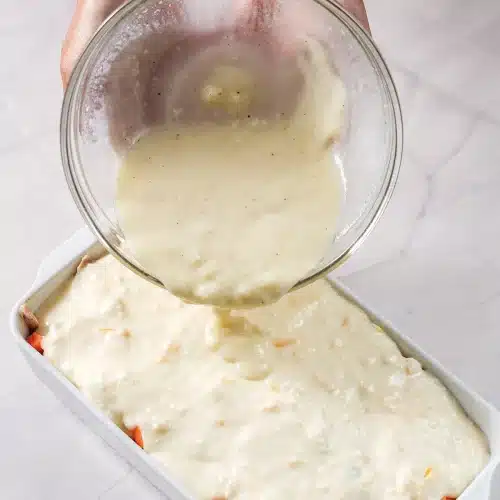
- Whisk the stock and the soup. Whisk the chicken stock and the condensed soup together in a separate bowl until there are no lumps left, then pour it slowly and evenly over the batter. The dish will look full and very wet, which is correct. Do not stir.
Bake and Rest
- Bake uncovered. Bake for 45 to 50 minutes, until the top is puffed and golden with no wet patches in the middle and the sauce is bubbling around the edges. Tent it with foil if the top colors before the center sets.
- Rest, then serve. Let it stand for 10 to 15 minutes so the sauce thickens into gravy, then scatter the chopped parsley over the top and serve it in scoops.