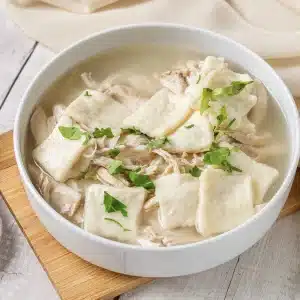
Cracker Barrel chicken and dumplings is not stew with biscuits floating in it. The dumplings are rolled flat, cut into squares, and dropped into plain chicken stock, where the flour they shed does all the thickening. There is no roux, no cream and no cornstarch anywhere in it.
- Seven ingredients, and you probably have five of them already
- Rotisserie chicken turns it into a weeknight dinner
- The broth thickens itself, so there is no roux to make
- One pot, and the dough is mixed with a fork
- Better on the second day, which makes it a good Sunday project
That is also why the copycat version is so easy to get right. Seven ingredients, one pot, and a dough you stir together with a fork. The hard part is not technique, it is resisting the urge to add carrots and celery to something that was never meant to have them.
What follows is the version I make at home after a lot of side-by-side bowls. It gets the flat squares right, it gets the self-thickened broth right, and it does it in under an hour with a rotisserie chicken doing the heavy lifting.


- What Makes Cracker Barrel Chicken and Dumplings Different
- Ingredient Notes
- Rolled Dumplings vs Drop Dumplings
- How the Broth Thickens Itself
- How To Make Cracker Barrel Chicken and Dumplings
- How To Tell When the Dumplings Are Done
- Make It Ahead
- Storing Cracker Barrel Chicken and Dumplings
- Variations and Substitutions
- What to Serve with Cracker Barrel Chicken and Dumplings
- Cracker Barrel Chicken and Dumplings FAQ
What Makes Cracker Barrel Chicken and Dumplings Different
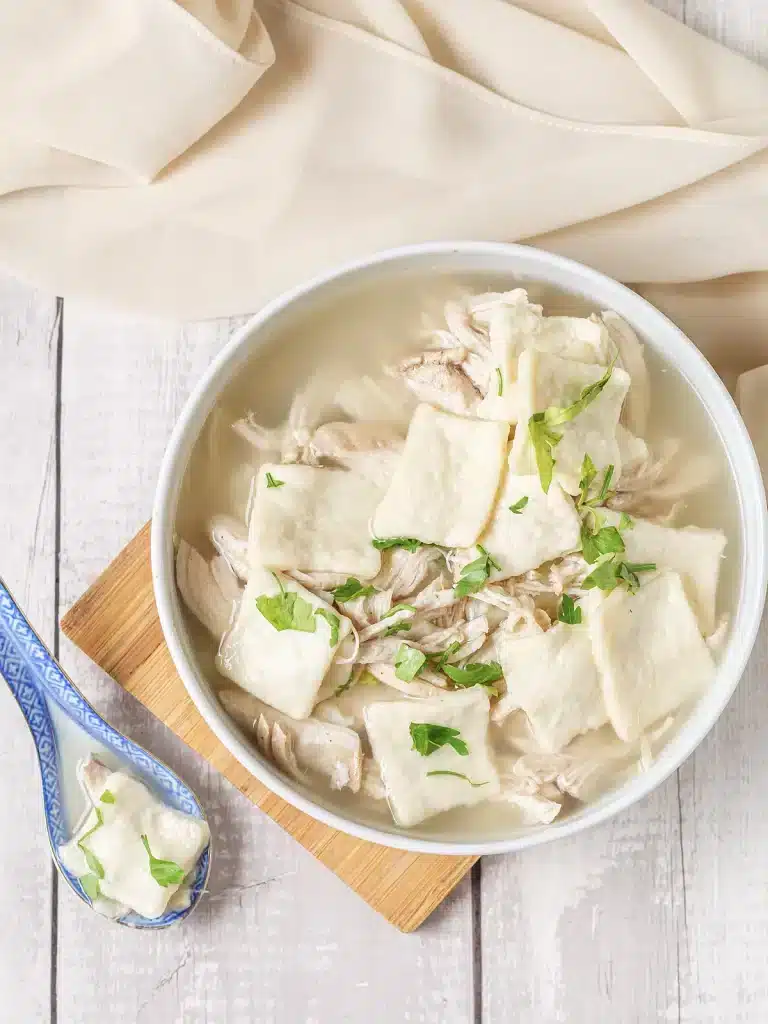
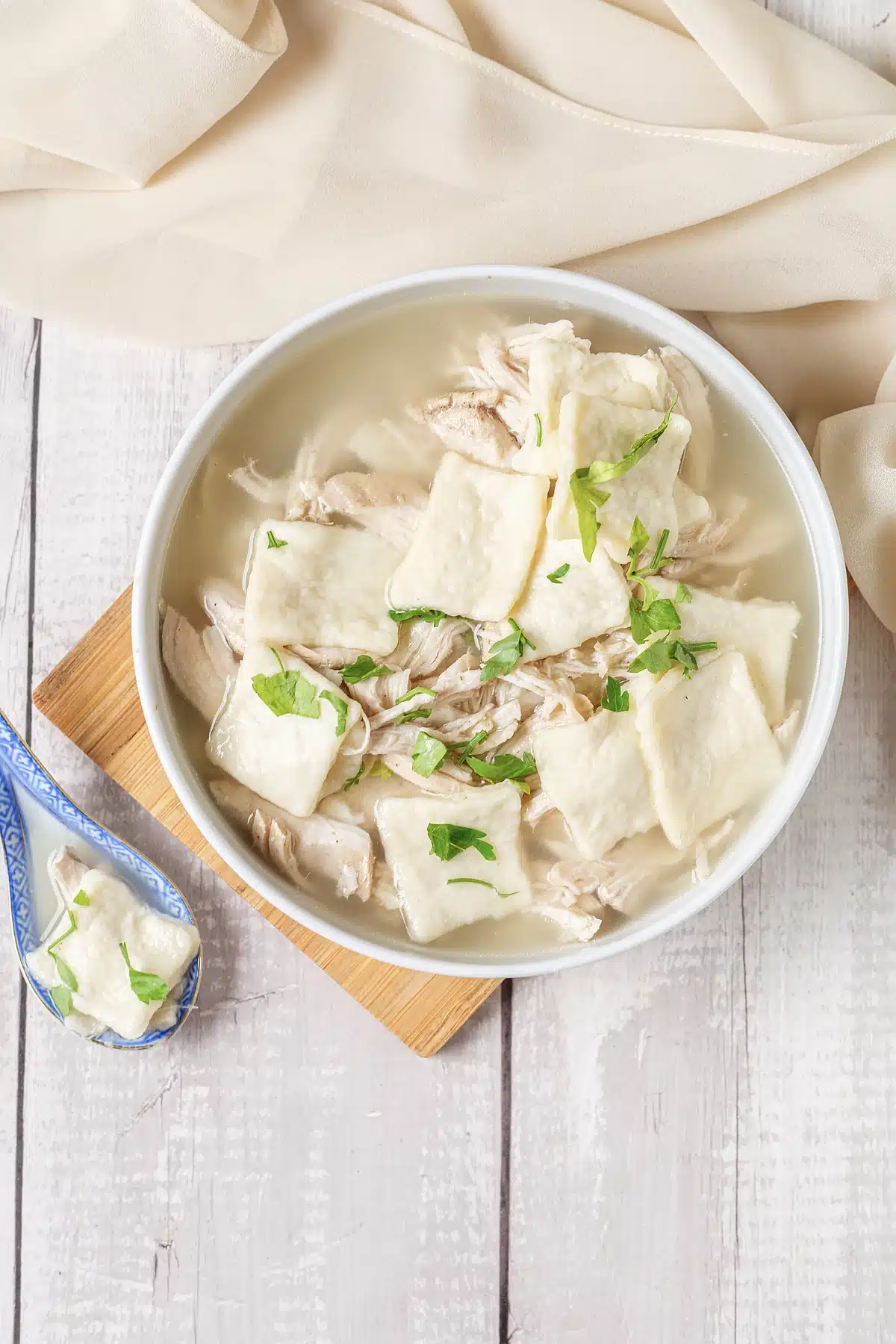
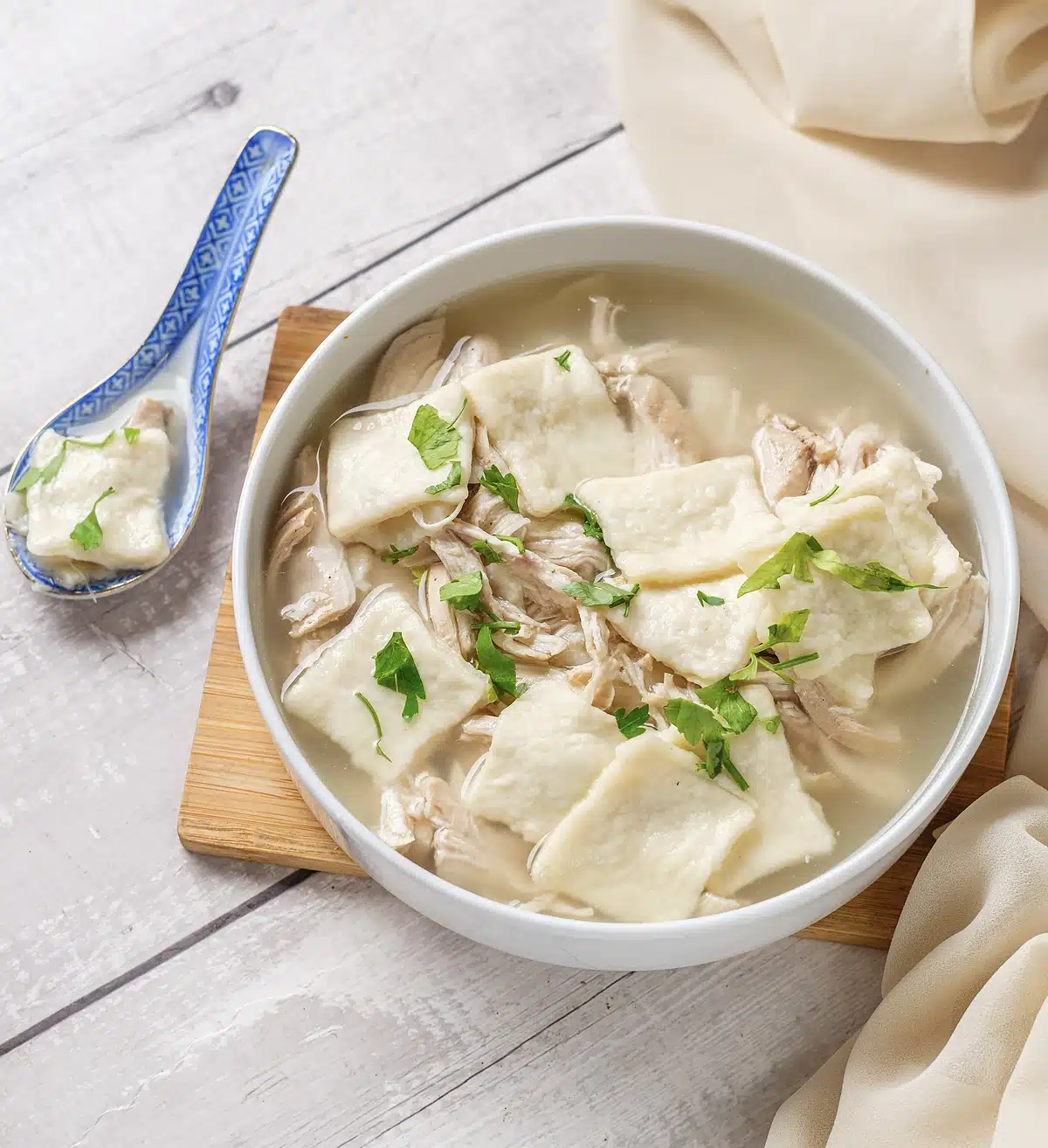
Most chicken and dumpling recipes are essentially chicken soup with a scoop of biscuit dough dropped on top. Cracker Barrel chicken and dumplings is a different dish entirely. The dumplings are rolled thin and cut into flat squares, so they cook up dense and slightly chewy, closer to a thick noodle than to a dumpling.
There are also no vegetables in the restaurant version. No carrots, no celery, no peas. That sounds like an omission until you eat it, and then you understand: the dish is chicken, flour, salt and fat, and every one of those flavors is there because nothing else is crowding it out.
The broth is the third difference. It goes into the pot as ordinary stock and comes out looking like gravy, and nothing was added to make that happen. The dumplings do it themselves as they simmer, which is the single most satisfying part of making this at home.
Save this recipe
Enter your email and I’ll send this recipe straight to your inbox.
Ingredient Notes
Cracker Barrel chicken and dumplings runs on seven items, and there is nowhere for a weak one to hide.

- Chicken stock. Six cups, and this is the flavor of the finished dish. Use a good boxed low-sodium stock or homemade, and taste it before you start.
- Cooked chicken. A pound, shredded. Rotisserie meat is the shortcut everyone uses, and poached breasts or leftover roast chicken work just as well.
- All-purpose flour. Two cups. Not bread flour, which has more protein and makes the squares tough, and not self-rising, which already carries leavening and salt.
- Baking powder. A teaspoon and a half. It gives the squares a slight lift so they read as dumplings rather than as pasta, without puffing them into biscuits.
- Salt. A teaspoon in the dough. Unsalted dumplings in salted broth taste hollow, because the seasoning never gets inside them.
- Cold butter. Three tablespoons, cubed and worked in until the mixture looks like coarse crumbs. Cold is the operative word; softened butter smears and you lose the tenderness.
- Buttermilk. One cup. It reacts with the baking powder and keeps the dough tender, and it adds a faint tang that plain milk cannot. A cup of milk with a tablespoon of lemon juice stirred in stands in at short notice.
Rolled Dumplings vs Drop Dumplings
This is the fork in the road, and it is the reason a lot of copycat attempts miss. Rolled dumplings are what Cracker Barrel serves in its chicken and dumplings. The dough is rolled to about a quarter-inch thick, cut into squares, and simmered flat. They come out dense and a little chewy, and they hold their shape in the bowl.
Drop dumplings are the other tradition, common further north. Spoonfuls of a wetter dough go straight into the pot and steam into round, fluffy pillows. Both are good, and they are not interchangeable in this recipe, because the dough here is deliberately stiff enough to roll.
If you want fluffy dumplings, add another quarter cup of buttermilk to loosen the dough and drop it in by tablespoons instead. Skip the rolling entirely. You will lose the thickened broth, though, because a wetter dough sheds far less flour into the pot.
The flat squares are also the reason leftovers behave the way they do. A dense square keeps absorbing liquid overnight, which is why day-two portions need a splash of extra stock when you reheat them.
How the Broth Thickens Itself
This is the part of Cracker Barrel chicken and dumplings that surprises people. Every square you cut carries a light dusting of flour from the work surface, and the dough itself keeps giving up starch as it cooks. That starch disperses into the simmering stock, swells, and turns it silky. It is the same principle as pasta water, running for twenty minutes instead of ten.
Do not rinse the flour off, and do not shake the squares clean before they go in. That surface flour is the thickener. Wheat flour is roughly seventy percent starch, and all-purpose sits in the mid-range for protein, which is exactly why it is the right choice here. The Wheat Foods Council lays out how the protein content differs across flour types.
Keep the pot at a lazy simmer rather than a rolling boil. A hard boil batters the squares apart and clouds the broth with torn dough, which thickens it in the wrong way and leaves a gritty texture.
Twenty minutes is the number, and it is longer than it sounds when you are watching a pot. Ten minutes gets you cooked dough in thin stock; twenty gets you gravy. The difference between the two is most of what separates a good bowl from a forgettable one, so set a timer and walk away.
How To Make Cracker Barrel Chicken and Dumplings

The whole sequence takes about 55 minutes, and 20 of those are hands-off simmering. First, warm the stock. Pour it into a large pot and set it over low heat while you make the dough. It does not need to boil yet, and starting it now saves five minutes later.
Next, make the dough. Whisk the flour, baking powder and salt together, then cut in the cold butter with a pastry cutter or two forks until the mixture looks like coarse crumbs. Pour in the buttermilk and stir gently until a shaggy dough forms. It should not be smooth.
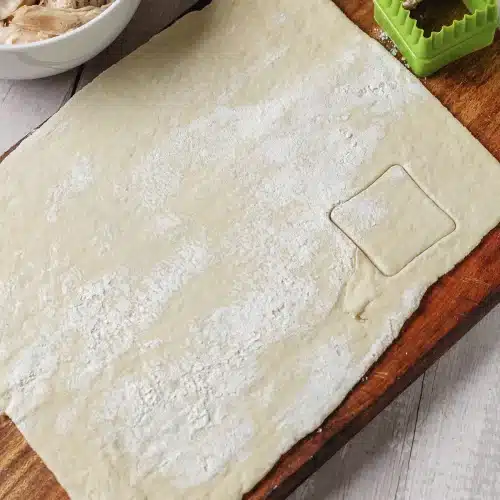
Then roll and cut. Flour the counter generously, roll the dough to about a quarter-inch thick, and cut it into squares 1 to 2 inches across with a pizza wheel or a sharp knife. They do not need to be tidy.
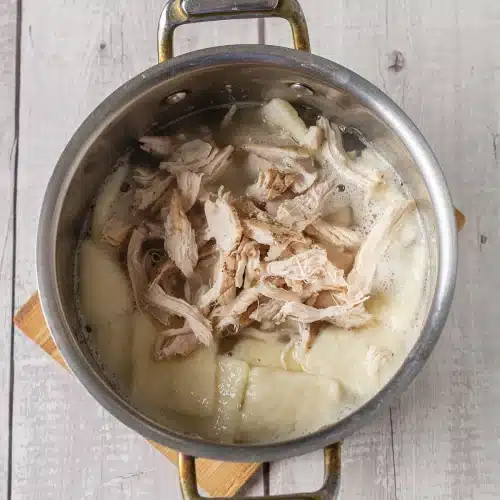
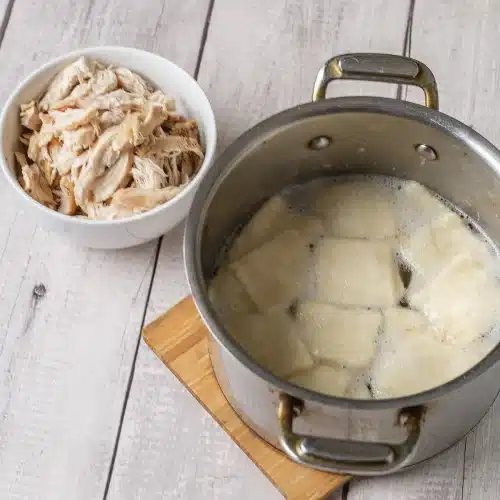
After that, simmer. Bring the stock to a gentle boil and drop the squares in a few at a time, stirring after each addition so they do not stick together. Cook for 20 minutes at a bare simmer, stirring occasionally, until they have puffed slightly and the broth has thickened.
Finally, add the chicken. Stir in the shredded meat and simmer 5 to 10 minutes more, until it is heated through. Taste, adjust the salt, and ladle it out with plenty of broth.
How To Tell When the Dumplings Are Done

Cracker Barrel chicken and dumplings gives you two tests, and the first one is a knife. Cut one in half. The center should be the same matte white as the edges, with no shiny, translucent line running through it. That line is uncooked dough, and it means the pot needs another few minutes.
The broth tells you as much as the dumplings do. When it coats the back of a spoon and holds a line drawn through it with your finger, it is done. Thin broth means either not enough time or too much liquid to begin with.
Texture should be soft but with resistance, like a thick noodle cooked a shade past al dente. If they have gone to mush, they simmered too hard rather than too long.
One more thing worth knowing: the pot keeps thickening off the heat. If it looks slightly loose when you turn the burner off, leave it five minutes and check again before you reach for more flour, because it will almost certainly have caught up on its own.
Make It Ahead
Almost every part of Cracker Barrel chicken and dumplings can be done in advance, which is the reason it works for company. The dough can be mixed, rolled, cut and refrigerated on a floured sheet pan up to a day ahead. Cover it loosely and keep the squares in a single layer so they do not fuse.
You can also freeze the cut squares. Freeze them flat on the pan first, then bag them, and drop them into the pot straight from the freezer with about four extra minutes of simmering. This is the version worth making on a slow afternoon for a weeknight later in the month.
Shredding the chicken ahead is the other easy win. A rotisserie bird picked on Sunday keeps three or four days in the fridge and turns this into a fifteen-minute dinner.
What does not work is assembling the whole dish early and reheating it for guests. The dumplings go on absorbing broth the entire time they sit, so a pot made at noon for a seven o’clock dinner arrives thick and heavy. Cook the dumplings when you plan to eat.
Storing Cracker Barrel Chicken and Dumplings

Cooled and covered, Cracker Barrel chicken and dumplings keeps three to four days in the refrigerator. Expect the dumplings to drink most of the broth overnight, so add a splash of stock or water when you reheat, and warm it gently on the stove rather than in bursts in the microwave.
Freezing the finished dish is possible and it is a compromise. The squares soften on thawing and the broth can separate slightly. If you plan to freeze, undercook the dumplings by about five minutes and stop before the broth is fully thick, then finish it during reheating.
Reheat frozen portions overnight in the fridge first, then in a covered pan over low heat with extra stock. Stir as little as possible; the squares are fragile once they have been frozen and thawed.
Variations and Substitutions
Bone-in chicken. Simmer bone-in thighs in the stock for 40 minutes, pull the meat, and use that stock. It is a longer route and a much richer bowl.
Herbed dumplings. A tablespoon of chopped parsley, thyme or chives in the dry mix. It changes the look as much as the taste, which is not a bad thing in a dish this pale.
With vegetables. Not authentic, and plenty of people prefer it. Soften diced carrot and celery in the pot before the stock goes in, and add frozen peas in the last two minutes.
Black pepper. The restaurant version is peppery. A full teaspoon of coarse black pepper stirred into the broth at the end is closer to the original than most copycats admit.
Turkey. This is the best thing to do with the last of a roast turkey, and the dark meat is better here than the breast.
Self-rising flour. If it is what you have, use two cups of it and leave out both the baking powder and the salt.
What to Serve with Cracker Barrel Chicken and Dumplings
Cracker Barrel chicken and dumplings is rich and pale, so the sides should be neither. Something green and sharp is the right counterweight to a bowl this soft and starchy. Green beans cooked with bacon, collards, or a plain vinegary slaw all work, and none of them need much attention.
Bread is optional and hard to resist. 7 Up biscuits bake in the time the dumplings simmer, and they are the obvious partner if you are already leaning Southern with the menu.
If you want to build a whole Cracker Barrel evening around it, Cracker Barrel meatloaf and a stack of biscuits covers the table. For a lighter finish, stewed apples or a fruit cobbler is the traditional close.
Cracker Barrel Chicken and Dumplings FAQ
Frequently Asked Questions
What are Cracker Barrel dumplings made of?
Flour, baking powder, salt, butter and buttermilk, and nothing else. The dough is rolled flat and cut into squares rather than dropped in by the spoonful, which is why they come out dense and noodle-like instead of fluffy.
Are there vegetables in it?
No. Cracker Barrel chicken and dumplings is chicken, dumplings and broth, with nothing else in the bowl. Adding carrots and celery makes a good soup, and it stops being a copycat at that point.
Why is my broth still thin?
Usually too much liquid or too short a simmer. Give it another ten minutes uncovered, and do not brush the flour off the squares before they go in, because that flour is what thickens the pot.
Can I use canned biscuit dough?
You can, and it is a real shortcut. Roll the biscuits flat, cut them into strips, and simmer as usual. The texture is softer and saltier than the real thing, though nobody at the table will complain.
More Questions About Southern Dumplings
Good to Know
Why did my dumplings fall apart?
The pot was boiling rather than simmering. Hard bubbles tear the edges off flat dumplings. Keep the surface barely moving, and stir with a wooden spoon rather than a whisk.
Can I make it in a slow cooker?
Partly. Heat the stock and the chicken on high for two hours, then add the cut squares and cook another hour on high with the lid on. The broth thickens less than it does on the stove.
How many does this serve?
This batch of Cracker Barrel chicken and dumplings makes six generous bowls as a main course, or eight smaller ones if there are sides on the table. It scales up cleanly as long as your pot is wide enough to keep the squares in a loose layer.
If the flat-dumpling texture is the part you like, Amish chicken and noodles works on the same principle, and a chicken pot pie pasta skillet gets you somewhere similar on a night when there is no time to roll anything.
Cracker Barrel Chicken and Dumplings
Save this recipe
Enter your email and I’ll send this recipe straight to your inbox.
Ingredients
For the Stew
- 6 cups (1.4 liters) chicken stock preferably low-sodium or homemade
- 1 pound (300 g) cooked chicken shredded (rotisserie or leftover roast)
For the Dumplings
- 2 cups (250 g) all-purpose flour
- 1 1/2 tsp (6 g) baking powder
- 1 tsp (6 g) salt
- 3 tbsp (42 g) cold butter cut into small cubes
- 1 cup (240 ml) buttermilk
Equipment
- Large pot
Instructions
Start the Broth and Mix the Dough
- Warm the stock: Pour the chicken stock into a large pot and set it over low heat while you make the dough. It does not need to boil yet.
- Cut in the butter: Whisk the flour, baking powder and salt together in a large bowl. Add the cold cubed butter and work it in with a pastry cutter or two forks until the mixture looks like coarse crumbs.
- Add the buttermilk: Pour in the buttermilk and stir gently until a soft, shaggy dough comes together. It should not be smooth, and a few dry clumps are fine.
Roll and Cut the Dumplings
- Roll and cut: Flour the work surface generously and roll the dough out to about a quarter-inch thick. Cut it into squares 1 to 2 inches across with a pizza wheel or a sharp knife. They do not need to be neat.

Simmer the Dumplings
- Drop them in: Bring the stock to a gentle boil. Add the squares a few at a time, stirring after each addition so they do not clump together.
- Simmer 20 minutes: Lower the heat to a bare simmer and cook for 20 minutes, stirring occasionally. The squares puff slightly and the broth thickens to the consistency of gravy.

Add the Chicken and Serve
- Stir in the chicken: Add the shredded chicken and simmer 5 to 10 minutes more, until it is heated through and the broth has thickened further. Taste and adjust the salt.
- Serve: Ladle into bowls with plenty of broth and finish with coarse black pepper and chopped parsley. Serve hot.