
An instant pot carrot cake is not a compromise you make because the oven is broken. Steam does something to a carrot cake that dry heat cannot, and the result is closer to a sticky toffee pudding than to a bake sale sheet cake.
I started making it this way in a rental with an oven that ran forty degrees cold, and I kept making it after I moved. An instant pot carrot cake comes out damp in the good sense, the apricots stay soft instead of turning to leather, and the whole thing takes forty-five minutes on a worktop with no preheating and no heat in the kitchen. In August that last part matters more than any of the others.
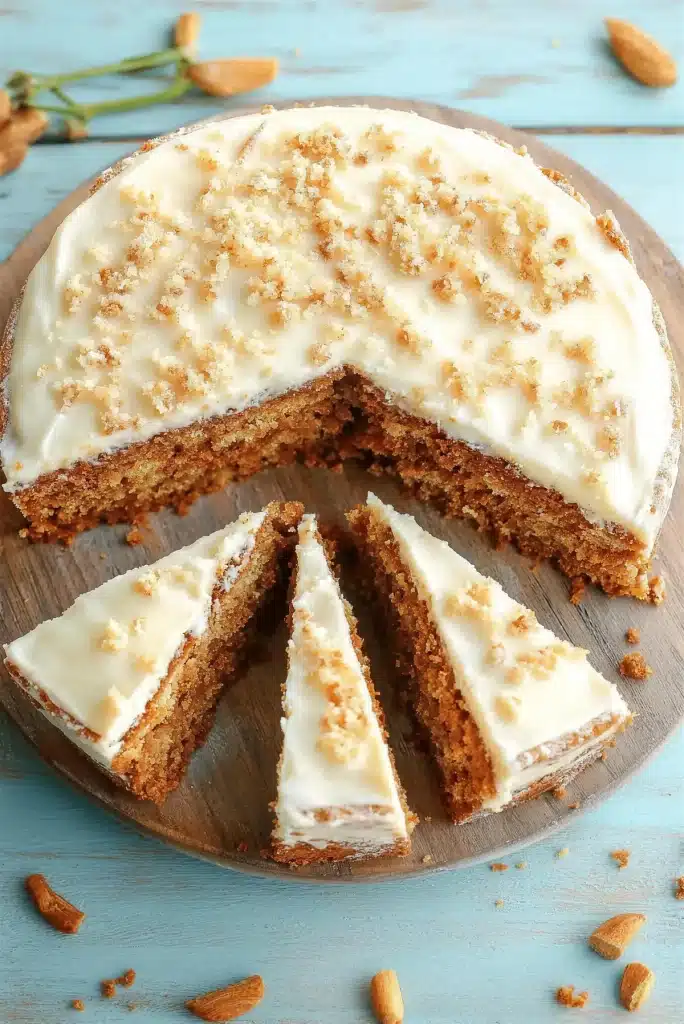
- Forty-five minutes, no preheating and no hot kitchen in summer
- Steam keeps it damp, so it never dries out at the edges the way an oven cake can
- Whole wheat flour and only 100 grams of sugar, which makes it a breakfast cake
- Dried apricots instead of raisins, and they stay plump rather than going chewy
- One bowl, a whisk and a 7-inch tin, with no creaming and no mixer
- It keeps five days and freezes for three months, frosted or bare


Two things decide whether an instant pot carrot cake works: the pan you use and what you do about condensation. Everything below is built around those.
- Why an Instant Pot Carrot Cake Works at All
- Ingredient Notes
- The Pan, the Sling and the Water
- How To Make Instant Pot Carrot Cake
- Foil On or Foil Off: Why Instant Pot Carrot Cake Comes Out Wet
- How To Tell When It Is Done
- Frosting, or Not
- Make It Ahead
- Storing Instant Pot Carrot Cake
- Variations and Substitutions
- What to Serve with Instant Pot Carrot Cake
- Instant Pot Carrot Cake FAQ
Why an Instant Pot Carrot Cake Works at All
An instant pot carrot cake sounds wrong until you realize that a pressure cooker is a steamer with the lid clamped down. Steamed puddings and steamed cakes are older than home ovens, and carrot batter is exactly the sort of wet, heavy mixture they suit.
The moisture stays in. An oven pulls water out of the surface of a cake and builds a crust. A sealed pot has nowhere for that water to go, so an instant pot carrot cake keeps the moisture the carrots brought with them.
The heat is gentle and even. There is no hot back wall and no element cycling on and off. The whole tin sits in saturated steam at one temperature, which is why the sides do not overbake while the middle catches up.
The carrots go sweeter, not just softer. Illinois Extension makes the point that raw carrots are naturally sweet but lightly cooked carrots are sweeter still, which is why this cake tastes sweeter than its 100 grams of sugar suggests.
What you give up is browning. No dry heat means no Maillard reaction, so the top of an instant pot carrot cake stays pale and slightly tacky. That is not a fault. It is the reason frosting exists.
Save this recipe
Enter your email and I’ll send this recipe straight to your inbox.
Ingredient Notes
An instant pot carrot cake needs eleven ingredients, and the only one you might not have is the apricots. Exact amounts are in the recipe card below.
- Carrots: 250 grams, about three medium, grated on the coarse side of a box grater. Pre-shredded bagged carrot is dry and woody and will not release enough moisture.
- Dried apricots: half a cup, diced small. They soften in the steam in a way they never do in an oven, which is the single best argument for making carrot cake this way.
- Whole wheat flour: 200 grams. It drinks more liquid than white flour and brings a nutty edge that suits the spice. White flour works, and gives a lighter, blander cake.
- Butter: 5 tablespoons, melted and cooled. Melted rather than creamed, because there is no oven spring to protect and no air to lose.
- Eggs: three, at room temperature. Cold eggs seize the melted butter into little beads.
- Sugar: 100 grams, white or light brown. Brown gives a darker crumb and a faint caramel note.
- Baking powder and baking soda: a teaspoon and a half teaspoon. Two leaveners, because the soda needs the lemon juice to react and the powder covers everything else.
- Lemon zest and juice: half a teaspoon of zest and a tablespoon of juice. The juice is structural, not decorative. It is what wakes the baking soda up.
- Cinnamon and nutmeg: half a teaspoon each. Grate the nutmeg if you can, since the pre-ground stuff loses everything within a month.
Use a 7-inch round tin, either a push-pan or a springform wrapped in foil. It should hold about 6 cups.
The Pan, the Sling and the Water
This is where most attempts at an instant pot carrot cake fail, and none of it is difficult.
Pan size. A 7-inch round tin fits a 6-quart pot with room for steam to circulate. A 6-inch tin also works and gives a taller cake that needs another five minutes. An 8-inch tin does not fit a 6-quart pot at all, and a loaf tin will not steam evenly.
Water. An instant pot carrot cake wants a cup and a half in the base, with the trivet standing in it. Less and the pot may not reach pressure before the water boils dry. More and it can splash over the trivet legs.
The sling. Tear a 24-inch length of foil, fold it lengthways into a strip about three fingers wide, and sit the tin in the middle of it. The two ends fold down beside the tin while it cooks and become handles when you lift a very hot, very heavy tin out of a deep pot. Do this before you fill the tin, not after.
Lining. Butter the tin, then cut a disc of parchment for the base. Steamed cakes stick harder than baked ones because there is no dry crust between the crumb and the metal.
How To Make Instant Pot Carrot Cake
Have the tin lined and the sling made before you start mixing an instant pot carrot cake, because this batter should go straight into the pot once the baking soda meets the lemon juice.
- First, melt the butter and let it cool while you grate the carrots and dice the apricots. Warm butter is fine, hot butter will scramble the eggs.
- Next, whisk the eggs and sugar together for 1 minute, until pale and slightly foamy, then whisk in the melted butter and the lemon juice.
- Then fold in the flour, baking powder, baking soda, cinnamon, nutmeg and salt, followed by the carrots, apricots and lemon zest. Stop the moment there is no dry flour left.
- After that, scrape it into the lined tin, level the top, and cover the tin tightly with foil. Lower it onto the trivet using the sling, over a cup and a half of water.
- Finally, pressure cook on high for 20 minutes, then let the pressure release naturally for 10 minutes before venting the rest. Lift the tin out and leave it, foil off, for ten minutes before turning out.
Foil On or Foil Off: Why Instant Pot Carrot Cake Comes Out Wet
This is the complaint I get about instant pot carrot cake more than any other, and there is a real trade-off here that most recipes gloss over.
Foil on. The lid of the pot runs with condensation, and every drop of it falls straight onto whatever is underneath. Sealing the tin with foil keeps that water off the cake. The cost is that steam trapped under the foil leaves the top pale, tacky and slightly damp to the touch.
Foil off. The top sets more like a proper cake surface and the crumb cooks a touch drier. The cost is that the drips land on it, and you will have two or three wet patches to blot with kitchen paper.
What I do. Foil on, tightly crimped, and then off with the foil the moment the tin comes out of the pot. The residual heat in the tin dries the surface in about ten minutes, which fixes the tackiness without any drips ever reaching the cake.
If the top is still wet after that, the cake is underdone rather than damp. Put the foil back, return it to the pot and give it another five minutes at pressure with a five-minute natural release.
How To Tell When It Is Done
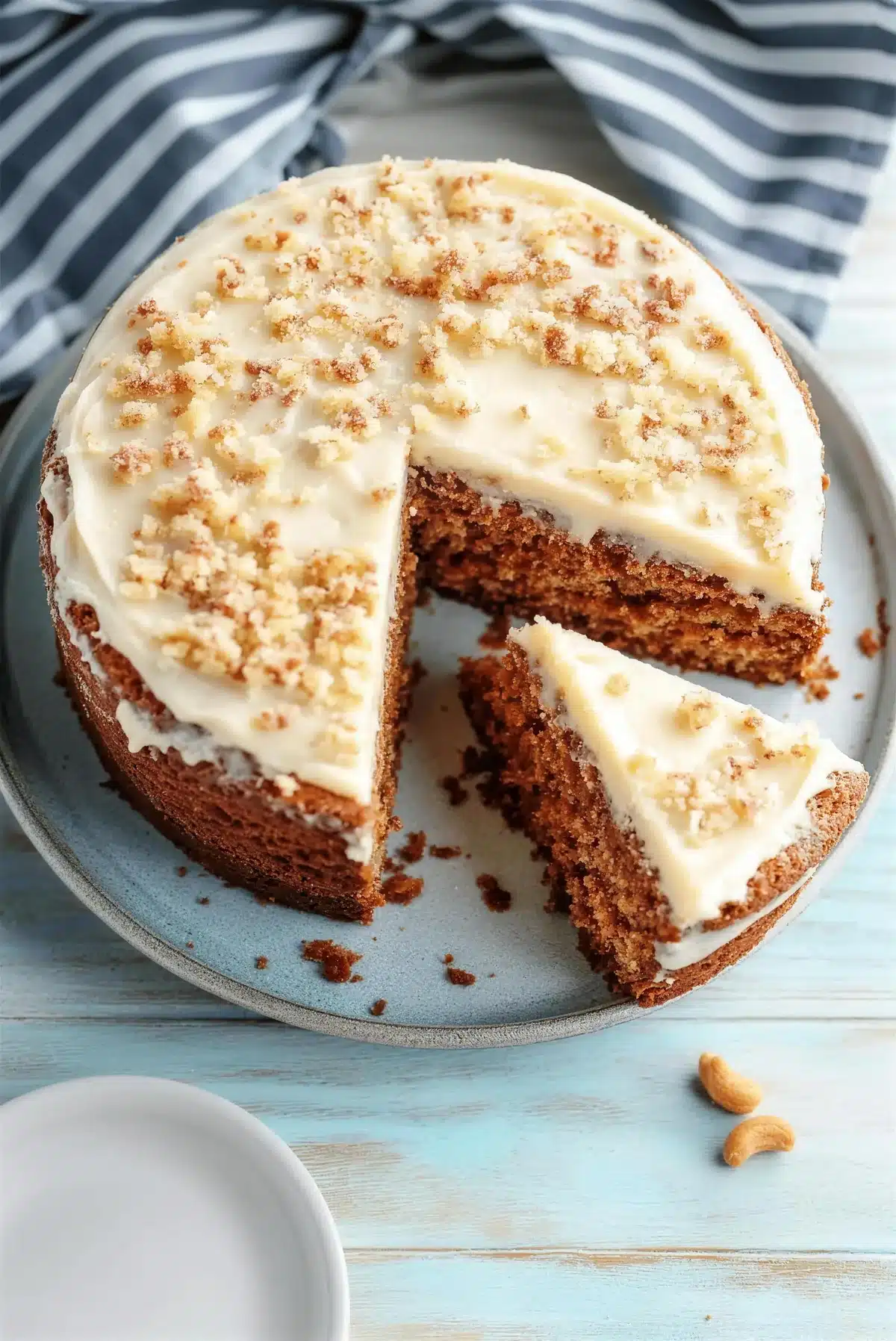
A toothpick lies in an instant pot carrot cake. Everything in the pot is saturated with water vapor, so a skewer can come out with crumbs clinging to it purely because the crumb is wet, not because it is raw.
Three better tests, in order of reliability.
Press the middle. A finished cake springs back and leaves no dent. An underdone one holds the impression of your fingertip and feels loose underneath.
Look at the edge. The batter should have pulled very slightly away from the side of the tin all the way around. If any part of the edge is still touching, it needs longer.
Use a thermometer. The center should read 200F to 205F. This is the only test that never lies, and it takes four seconds.
If it needs more time, it costs you nothing to add it. Reseal, five minutes at high pressure, five minutes of natural release, check again.
Frosting, or Not
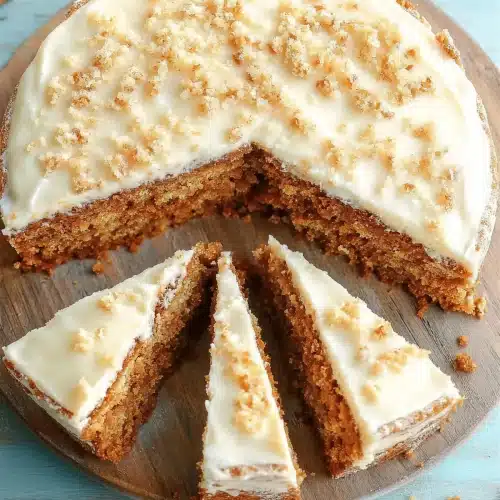
Because the top stays pale, an instant pot carrot cake looks unfinished bare and looks excellent frosted. Both are legitimate.
The classic is cream cheese frosting: 4 ounces of cream cheese, 4 tablespoons of soft butter, 2 cups of confectioners sugar, a teaspoon of vanilla and a pinch of salt, beaten until smooth. Wait until the cake is genuinely cold or it will slide off.
A lighter option is a lemon glaze, made from a cup of confectioners sugar and enough lemon juice to make it pourable. It sets to a thin crust and keeps the cake firmly in breakfast territory.
Bare is best if you are eating it warm with a spoonful of creme fraiche, which is how I eat most of it. If you want something richer alongside, my sweet potato sheet cake uses the same frosting in a much bigger format.
Make It Ahead
An instant pot carrot cake is better on day two, which is true of most spiced cakes and especially true of steamed ones. The cinnamon and nutmeg need overnight to move through the crumb.
Bake it up to three days ahead, leave it unfrosted, and wrap it in plastic once it is completely cold. Frost it on the day you serve it.
You can grate the carrots and dice the apricots a day early too. Keep the carrots in a sealed bag in the refrigerator, because they dry out quickly on a plate and dry carrot is the enemy of this cake.
What you cannot do is mix the batter ahead. The baking soda starts reacting with the lemon juice immediately and a batter left sitting for an hour rises noticeably less.
Storing Instant Pot Carrot Cake
- Room temperature: 2 days under a dome if it is unfrosted. Any longer and the damp crumb starts to go sticky on top.
- Refrigerator: 5 days in a sealed container, and this is compulsory once cream cheese frosting is on it.
- Freezer: 3 months. Freeze it whole and unfrosted, or in slices with parchment between them so you can take one at a time.
- Thawing: overnight in the refrigerator still wrapped, so the condensation forms on the plastic rather than on the cake.
- Reviving a cold slice: fifteen seconds in the microwave. A steamed cake takes to reheating far better than a baked one does.
Variations and Substitutions
The carrots, the eggs and the flour are structural in an instant pot carrot cake. Everything else can move.
- Raisins or sultanas: half a cup, in place of the apricots. Soak them in hot water for ten minutes first or they will pull moisture out of the crumb.
- Walnuts or pecans: half a cup, chopped and folded in at the end. They stay softer than they would in an oven, which some people love and some do not.
- Crushed pineapple: a well-drained half cup, in place of two of the tablespoons of butter. Wetter, sweeter and very close to a diner carrot cake.
- Dairy-free: coconut oil in place of the butter, measured melted. The coconut flavor disappears completely under the spice.
- All white flour: use 180 grams rather than 200, since white flour absorbs less liquid.
- Warmer spicing: add a quarter teaspoon each of ground ginger and ground cloves, which pushes it toward a spice cake.
What to Serve with Instant Pot Carrot Cake
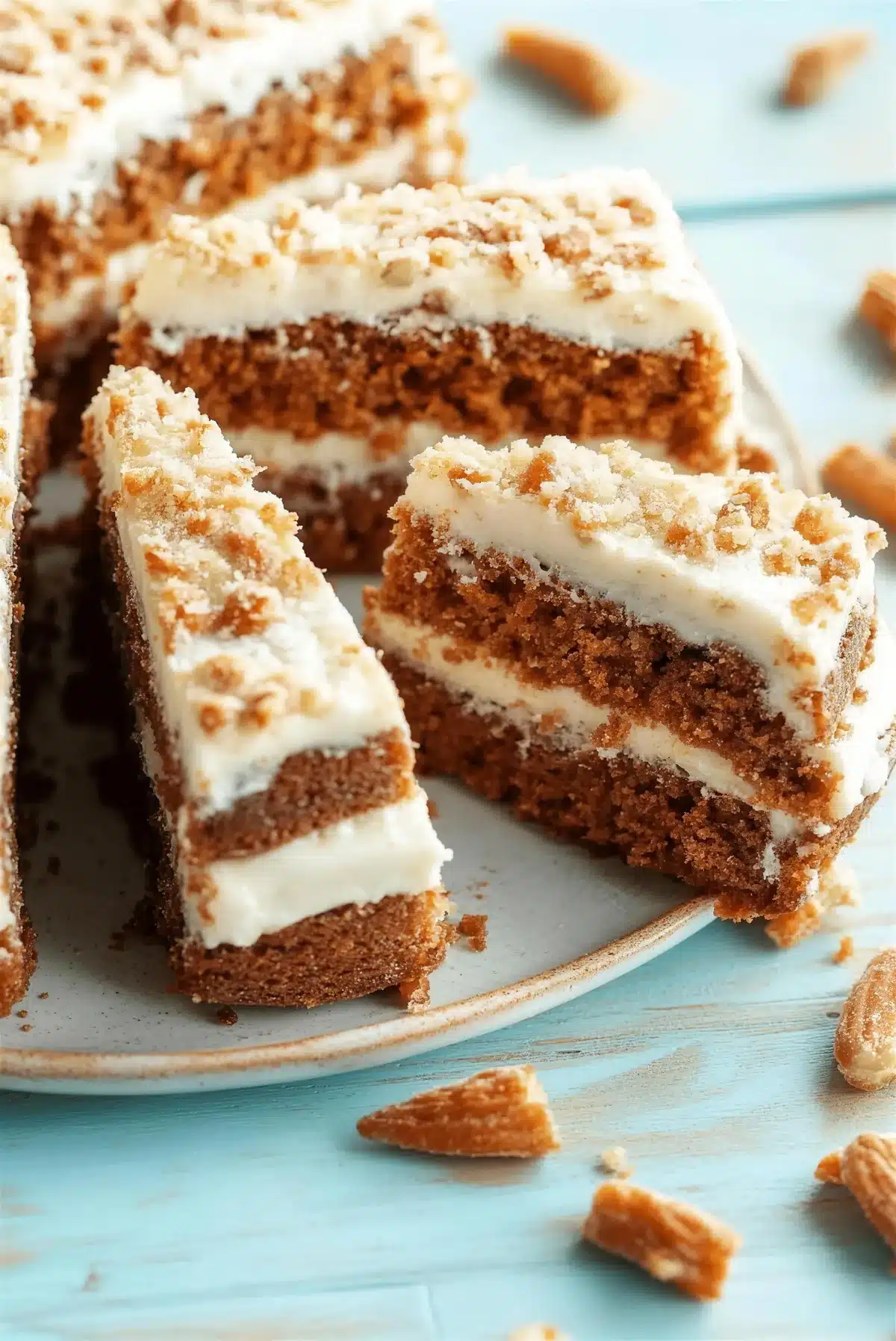
An instant pot carrot cake is plain, damp and spiced, so it takes well to anything sharp or cold.
- Creme fraiche or thick Greek yogurt, unsweetened, which cuts the spice better than whipped cream does.
- Strong black coffee, because the cake is not sweet enough to fight it.
- A scoop of vanilla ice cream on a warm slice, which is the version children vote for.
- Alongside baked pumpkin spice donut holes on an autumn table, since they share a spice cupboard.
- As part of a breakfast spread with fruit and yogurt, where the whole wheat flour finally earns its keep.
For a cake that needs even less equipment, my bread machine cake recipes use the same principle of borrowing an appliance that was built for something else.
Here is what readers ask most often.
Instant Pot Carrot Cake FAQ
Frequently Asked Questions
How long does a cake take in an Instant Pot?
An instant pot carrot cake needs twenty minutes at high pressure for a 7-inch round, plus ten minutes of natural release, plus the eight to ten minutes the pot needs to come up to pressure in the first place. Call it forty minutes of pot time inside a forty-five minute recipe. A 6-inch tin gives you a taller cake and needs about twenty-five minutes, and a shallower 8-inch tin, if yours fits, needs about fifteen.
Why is my Instant Pot cake wet on top?
Condensation from the lid, almost always. The underside of the lid runs with water and it drips onto whatever is directly beneath it. Cover the tin tightly with foil and it cannot reach the cake. If you covered it and the top is still tacky, take the foil off as soon as the tin comes out of the pot and let the residual heat dry the surface for ten minutes. If it is still wet after that, it is underdone rather than damp.
Do you need to cover a cake in the Instant Pot?
Yes, in practice. Uncovered, the top sets a little better but you will be blotting drips off it with kitchen paper. Foil, crimped around the rim, is the simplest answer, and a silicone lid does the same job without the waste. What matters more than the choice is taking the cover off the moment the tin leaves the pot.
More Questions About Pans and Timing
Good to Know
What size pan fits in a 6-quart Instant Pot?
A 7-inch round is the standard, with a 6-inch as the taller alternative. An 8-inch will not go in a 6-quart pot. Push-pans are easier than springforms because they do not leak, but a springform works if you wrap the base and sides in foil. Whatever you use should hold about 6 cups and leave a finger of space around it for steam.
Can I use a regular carrot cake recipe?
Not straight across. Oven recipes are usually built for a 9-inch tin, roughly twice the volume of the 7-inch an instant pot carrot cake uses, and they carry more sugar and more oil because they need to survive dry heat. Halve an oven recipe by volume, cut the sugar by a quarter, and expect to add five to ten minutes to the times here.
Why did my cake sink in the middle?
Usually a fast release. Dropping the pressure quickly makes the steam inside the crumb expand and rush out before the structure has set, and the middle collapses behind it. Ten minutes of natural release solves it. The other cause is overmixing after the flour goes in, which develops gluten and then lets it slump.
Can I freeze it?
Yes, for up to three months, and it freezes better than most cakes because it starts out damp. Freeze it unfrosted and whole, or in slices with parchment between them. Thaw overnight in the refrigerator with the wrapping still on so the condensation forms on the plastic rather than the crumb.
Forty-five minutes, one tin and no oven is a fair trade for an instant pot carrot cake this damp. If you like the appliance-borrowing approach, my banana pudding cupcakes are the oven version of the same idea.
Instant Pot Carrot Cake
Save this recipe
Enter your email and I’ll send this recipe straight to your inbox.
Ingredients
The Wet Mix
- 5 tablespoons unsalted butter melted and cooled, or coconut oil for a dairy-free cake
- 3 eggs at room temperature
- 100 grams sugar white or light brown, about 1/2 cup
- 1 tablespoon lemon juice this is what activates the baking soda
The Dry Mix and Fruit
- 200 grams whole wheat flour about 1 2/3 cups, or 180 grams white flour
- 1 teaspoon baking powder
- 1/2 teaspoon baking soda
- 1 pinch fine salt
- 1/2 teaspoon ground cinnamon
- 1/2 teaspoon freshly grated nutmeg
- 250 grams carrots coarsely grated, about 3 medium
- 1/2 cup dried apricots diced small, about 75 grams
- 1/2 teaspoon lemon zest finely grated
Equipment
- nstant Pot
- Trivet
- 7.5-inch (or smaller) cake tin suitable for the Instant Pot
- Mixing bowl
- Whisk
- Small pan or microwave-safe bowl (for melting butter)
- Pastry brush
Instructions
Line the Tin and Build the Sling
- First, butter a 7-inch round tin and line the base with a disc of parchment. Steamed cakes stick harder than baked ones, because there is no dry crust between the crumb and the metal.
- Tear a 24-inch length of foil, fold it lengthways into a strip about three fingers wide, and sit the empty tin in the middle of it. Doing this before the tin is full is the whole difference between easy and dangerous.
Mix the Batter
- Next, whisk the eggs and sugar together for 1 minute, until pale and slightly foamy, then whisk in the melted butter and the lemon juice. The butter should be warm at most, since hot butter scrambles the eggs.
- Then fold in the flour, baking powder, baking soda, salt, cinnamon and nutmeg, followed by the carrots, apricots and lemon zest. Stop the moment no dry flour is left, because overmixing whole wheat flour makes it tough.
Pressure Cook
- After that, scrape the batter into the tin, level the top and cover it tightly with foil. Pour 1 1/2 cups of water into the pot, stand the trivet in it, and lower the tin down using the sling.
- Lock the lid, set the valve to sealing and pressure cook on high for 20 minutes. Let the pressure release naturally for 10 minutes before venting the rest, or the middle will sink as the trapped steam rushes out.
Cool and Finish
- Finally, lift the tin out by the sling, take the foil straight off, and leave it for 10 minutes. The residual heat in the tin dries the tacky top without any drips ever reaching it.
- Turn the cake out onto a rack and cool it completely before frosting. Warm cake and cream cheese frosting is a mess, and it is worth the wait.