
Cheap, fast, and far more impressive than the effort behind them, mussels in white wine steam open in a covered pot in about five minutes and leave behind a broth of butter, shallots, herbs and dry wine that you will want to drink with a spoon.
This is the dish that made me brave in the kitchen. Julia Child made moules marinieres look like something anyone could manage, beards and all, and she was right. Mussels in white wine ask nothing of you technically: there is no browning to judge, no thermometer to read and no sauce that can break. You build a shallow pool of aromatic liquid, tip in two pounds of shellfish, clamp the lid on and wait for the shells to open.
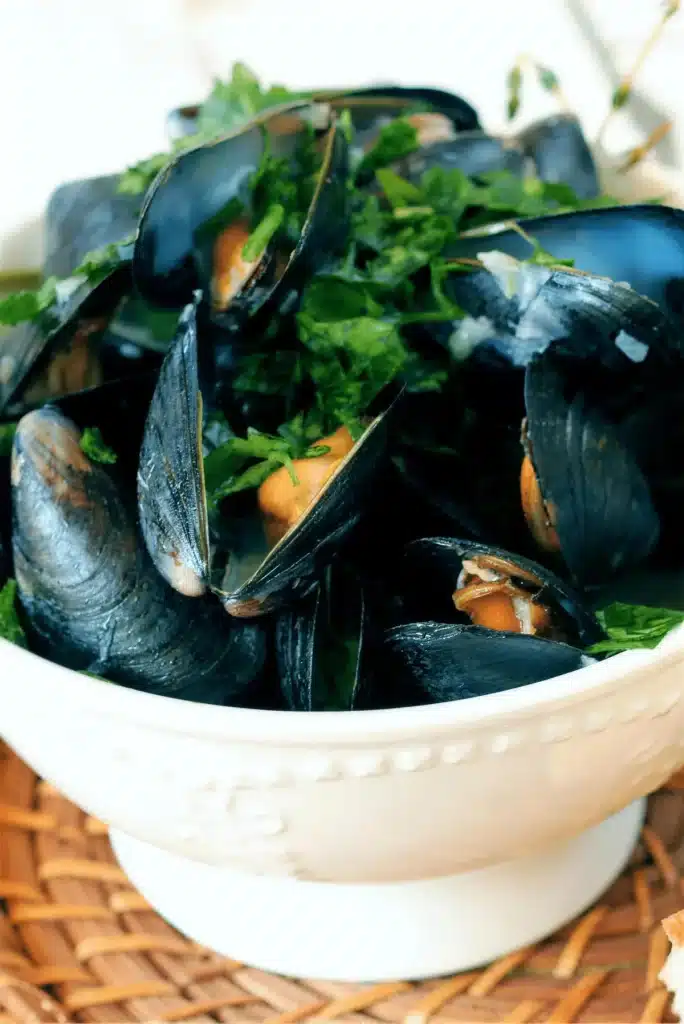
- About ten minutes of real cooking, most of it spent waiting for shells to open
- Two pounds feeds four as a starter or two as a very generous dinner
- One pot, one lid and an empty bowl for the shells is the whole setup
- The broth is the point, and good bread is the only side it needs
- Pound for pound the cheapest shellfish at the counter, by a wide margin
- Almost impossible to overcook if you take the pot off the heat as they open


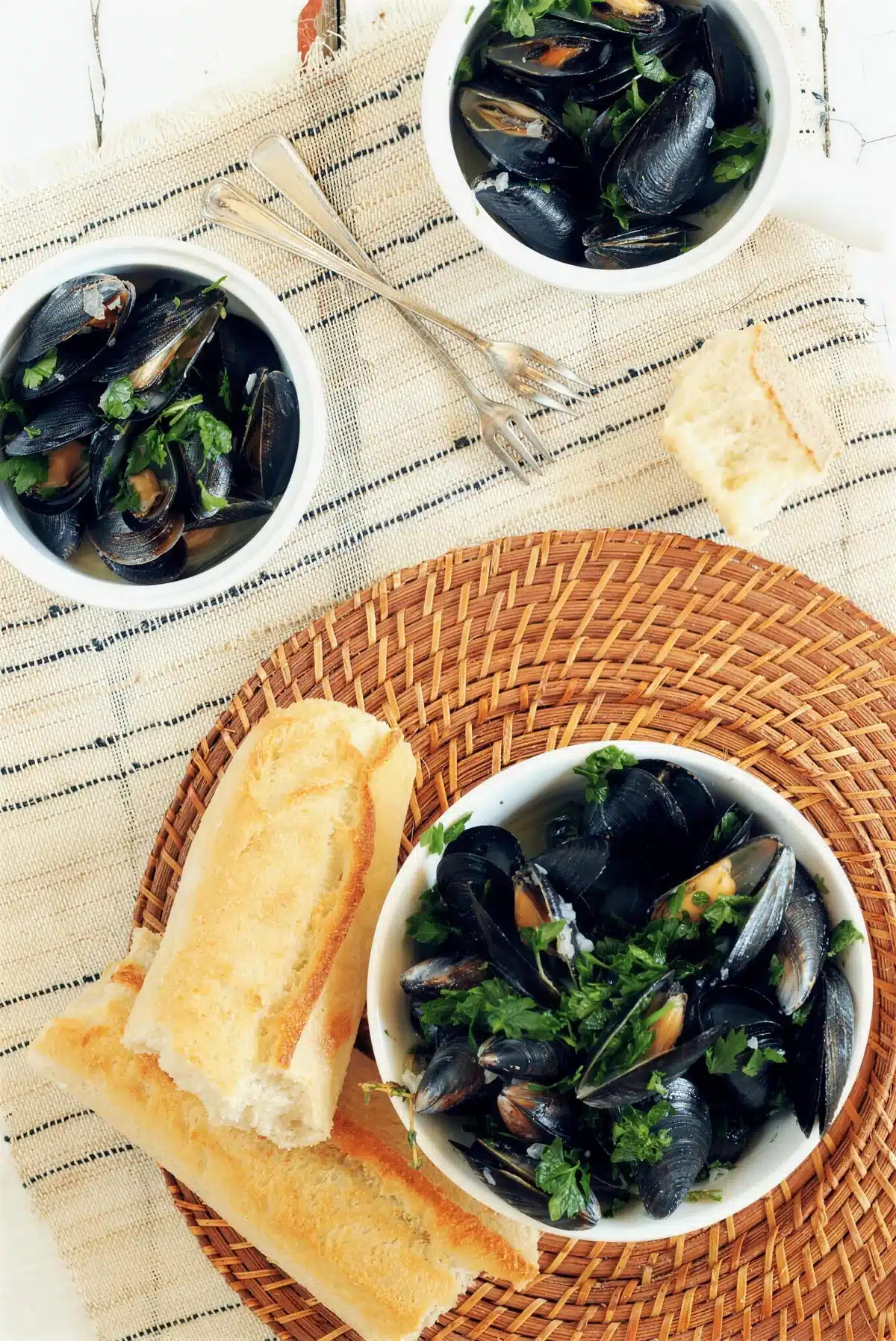
Restaurants charge a small fortune for this; it costs perhaps eight dollars at home. That is the honest appeal. The rest of what follows is really about the twenty minutes of shopping and cleaning that happen before the pot ever goes on the stove, because that is where mussels in white wine either succeeds or turns gritty.
- What Is Moules Marinieres?
- Buying and Cleaning Mussels
- Ingredient Notes
- The Best White Wine for Mussels
- How To Make Mussels in White Wine
- How To Tell When Mussels in White Wine Are Done
- Make It Ahead
- Storing Mussels in White Wine
- Variations and Substitutions
- What to Serve with Mussels in White Wine
- Mussels in White Wine FAQ
What Is Moules Marinieres?
Moules marinieres is the French original, and it is barely a recipe at all. Shallots soften in butter, dry white wine goes in with a few herbs, the shellfish steam in that vapor, and the liquid they release becomes the sauce. Belgium and northern France both claim it, and both serve mussels in white wine in a deep bowl with a second empty bowl for the shells.
Almost every version online, this one included, is a variation on that skeleton: some add cream, some garlic, some tomato. The classic keeps it lean so the flavor of the shellfish itself comes through, and that restraint is why mussels in white wine have lasted three hundred years.
One detail from the French tradition is worth borrowing. The wine reduces for a couple of minutes before the shellfish arrive, which cooks off the raw alcohol edge and concentrates the shallots. Skip that step and the broth tastes sharp rather than round.
Save this recipe
Enter your email and I’ll send this recipe straight to your inbox.
Buying and Cleaning Mussels
Nearly every complaint about mussels in white wine traces back to what happened at the fish counter rather than to anything that happened at the stove. Most of the mussels sold in American markets are farmed blue mussels, grown on ropes or on the sea floor. The NOAA Fisheries profile on blue mussels notes that they need no feed at all, since they filter phytoplankton straight from the water, which is also why rope-grown ones carry so much less grit than wild-harvested ones.
Ask for that distinction out loud. Rope-grown mussels never touch the bottom, so they arrive with almost no sand and only a wisp of beard, and the small premium buys back fifteen minutes at the sink.
Buy them the day you cook. At home, tip them into a bowl, cover with a damp cloth and refrigerate. Never seal them in a plastic bag or submerge them in fresh water, because they are alive and both will suffocate them.
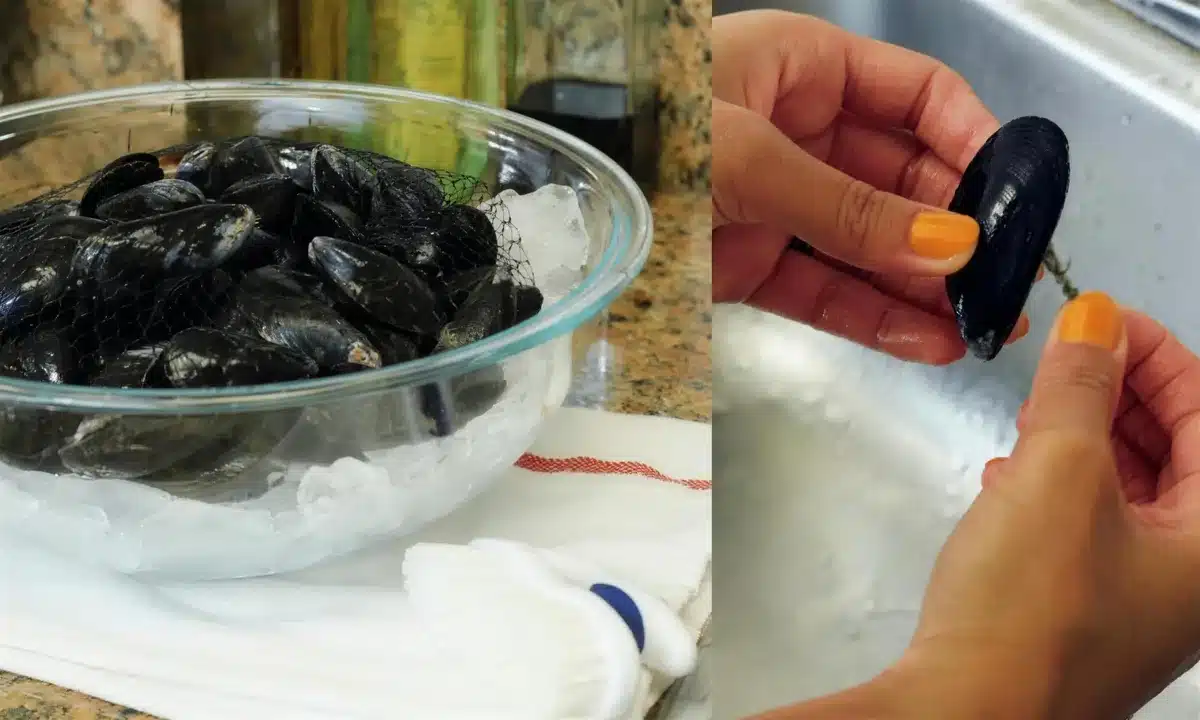
Cleaning is three quick jobs.
- Sort. Any shell that is cracked, or gaping open and refuses to close when you tap it firmly on the counter, is dead. Throw it out. A live one closes, slowly and grudgingly, within about thirty seconds.
- Debeard. That tuft of dark fibers is the byssus, the thread the animal uses to anchor itself. Grip it and pull sharply toward the hinge, not toward the opening. Do this right before cooking, since pulling the beard kills them.
- Soak and scrub. Whisk a third of a cup of cornmeal or flour into a large bowl of very cold water and let them sit for thirty minutes to two hours. They spit out sand and plump up slightly. Lift them out into a colander rather than pouring, so the grit stays behind.
Ingredient Notes
Mussels in white wine runs on seven things, and four of them are already in your kitchen. Exact quantities are in the recipe card below.
- Fresh mussels: Two pounds. Buy an extra half pound if you are shopping the day before, since a few always have to be discarded.
- Cornmeal or flour: For the soak, not for the pot. It gives the shellfish something to filter so the sand comes out.
- Butter: Three tablespoons. It emulsifies into the wine as the broth reduces, which is what makes it cling to bread instead of running off.
- Shallots and garlic: A quarter cup of minced shallot, plus two sliced cloves if you want them. Shallots are sweeter than onion and melt away rather than staying crunchy.
- Dry white wine: A cup and a quarter. See the next section, because this choice matters more than any other.
- Parsley, thyme and bay: Whole sprigs in the pot, chopped parsley over the top at the end. Fresh, not dried, for anything going in whole.
- Lemon zest: Stirred in off the heat. Zest rather than juice, so you get perfume without adding more acid to an already acidic broth.
You need one wide pot with a tight lid, a colander and a large bowl. A Dutch oven is ideal because the shells need room to move.
The Best White Wine for Mussels
The broth in mussels in white wine is more or less reduced wine with butter stirred through it, so a poor bottle produces a poor dinner. That said, an expensive bottle is wasted here as well.
Look for dry, high acid and unoaked. Muscadet is the traditional partner and comes from the same stretch of Atlantic coast; it is bone dry, faintly saline and usually cheap. Sauvignon Blanc, Picpoul de Pinet, Pinot Grigio and dry Vinho Verde all work for the same reasons.
Avoid oaked Chardonnay, which turns buttery on buttery and reads heavy. Avoid anything off-dry, because residual sugar and briny shellfish liquor make a strange combination. Steer clear of so-called cooking wine entirely, since it is salted, and this broth concentrates as it reduces.
Open a bottle you would happily pour into a glass, use a cup and a quarter for the pot, and drink the rest with dinner. A twelve dollar bottle is the sweet spot for mussels in white wine, and paying more buys you nothing once it has reduced.
How To Make Mussels in White Wine
Have everything chopped and within arm’s reach before the pot goes on. Once the shellfish hit the heat, mussels in white wine are over in five minutes, and there is no time to go looking for the lemon.
- First, whisk the cornmeal into a large bowl with about ten cups of cold water and soak the cleaned shellfish for 30 minutes to 2 hours. Lift them into a colander and rinse well.
- Next, melt the butter in a wide pot over medium heat and cook the shallots until translucent, about three minutes. Do not let them color.
- Then pour in the wine and add the parsley sprigs, thyme sprigs, bay leaf and plenty of black pepper. Bring it to a boil over high heat and let it reduce for 2 to 3 minutes.
- After that, tip in the shellfish all at once and clamp the lid on tightly.
- Every minute or so, hold the lid down hard and toss the whole pot with a short up and down jerk. This is the Julia Child move, and it swaps the top layer with the bottom layer so everything cooks evenly.
- After 4 to 5 minutes the shells will have opened. Take the pot off the heat immediately.
- Finally, stir in the lemon zest, ladle into bowls with plenty of the broth, and scatter chopped parsley over the top. Serve the bread at the same moment, not after.
Serving Mussels in White Wine
This serves 4 as a starter or 2 as a main course. Set an empty bowl on the table before anyone sits down, because the shells pile up faster than people expect.
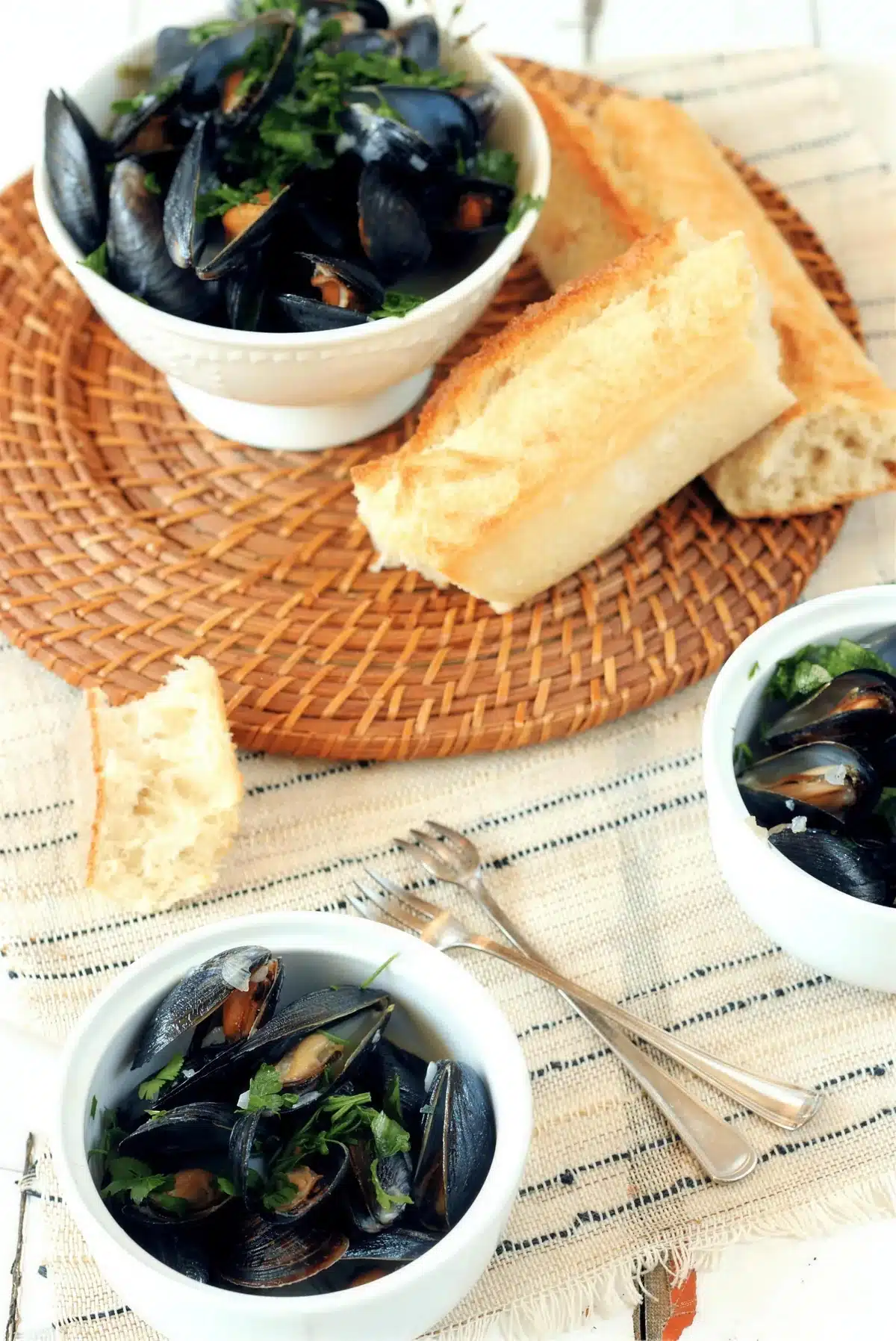
How To Tell When Mussels in White Wine Are Done
Open shells, and that is genuinely the whole test. Mussels in white wine give you no internal temperature to chase and no color change to watch for.
Lift the lid at four minutes. If most of the shells have swung open and the meat inside has gone from translucent to opaque and firm, the pot comes off the heat. Waiting for the last stubborn few to catch up will turn the other thirty into rubber, which is the single most common way this dish goes wrong.
The old kitchen rule says any shell still shut must be thrown away because the animal was dead beforehand. In practice a closed shell usually just means a strong adductor muscle that needed another minute. Prise one open with a knife: if it smells clean and briny and the meat looks normal, it is fine. If there is any off smell at all, or the shell is full of mud, bin it without hesitating.
The reverse rule matters more and hardly anyone mentions it. A shell that was already gaping open before cooking, and did not close when tapped, was dead in the bag. That is the one to worry about, and it should have been sorted out at the sink.
Make It Ahead
The cooking of mussels in white wine cannot be done in advance, but almost everything around it can, which is what makes the dish workable for company.
Clean and soak in the afternoon, then drain and keep the shellfish in the fridge under a damp cloth for up to six hours. Mince the shallots, pick the herbs and zest the lemon at the same time and hold them in small bowls.
You can also build the base ahead. Soften the shallots in butter, add the wine and herbs, reduce it, then take the pot off the heat and leave it at room temperature for up to two hours. Bring it back to a hard boil before the shellfish go in, or the pot will not carry enough heat to steam them quickly.
Slice the bread and leave it under a cloth, then warm it in the oven while the pot comes back to the boil.
Storing Mussels in White Wine
Mussels in white wine is a dish to cook and eat at once, so leftovers are always a compromise. Still, throwing away good shellfish is worse.
- Fridge: pull the meat out of the shells, cover it with the strained broth and refrigerate for up to 2 days in an airtight container. Storing them in the shell dries the meat out.
- Reheating: warm the broth in a pot until it steams, take it off the heat, then drop the meat in for thirty seconds. Boiling the meat a second time makes it tough beyond saving.
- Freezer: the broth alone freezes beautifully for up to 3 months and makes a superb base for seafood chowder. The meat does not freeze well, however, and comes back watery.
- Second life: cold shelled meat is excellent tossed through pasta with the broth, olive oil and parsley.
Variations and Substitutions
The shallot, wine and butter base under mussels in white wine takes almost any direction, so treat these as departures from the classic rather than improvements on it.
- Creamy: stir a third of a cup of heavy cream into the broth after the pot comes off the heat, which is how Normandy does it.
- Garlic butter: four sliced cloves with the shallots, double what the card lists. Slices rather than mince, so they do not scorch.
- Spicy: half a teaspoon of crushed red pepper flakes in the butter at the start.
- Tomato: a cup of halved cherry tomatoes with the wine turns it into something closer to a Provencal stew.
- Beer instead of wine: a Belgian witbier is the traditional swap and makes the broth rounder and slightly sweeter.
- Other herbs: tarragon leans French, dill leans Nordic, and cilantro with lime takes the whole pot somewhere else entirely.
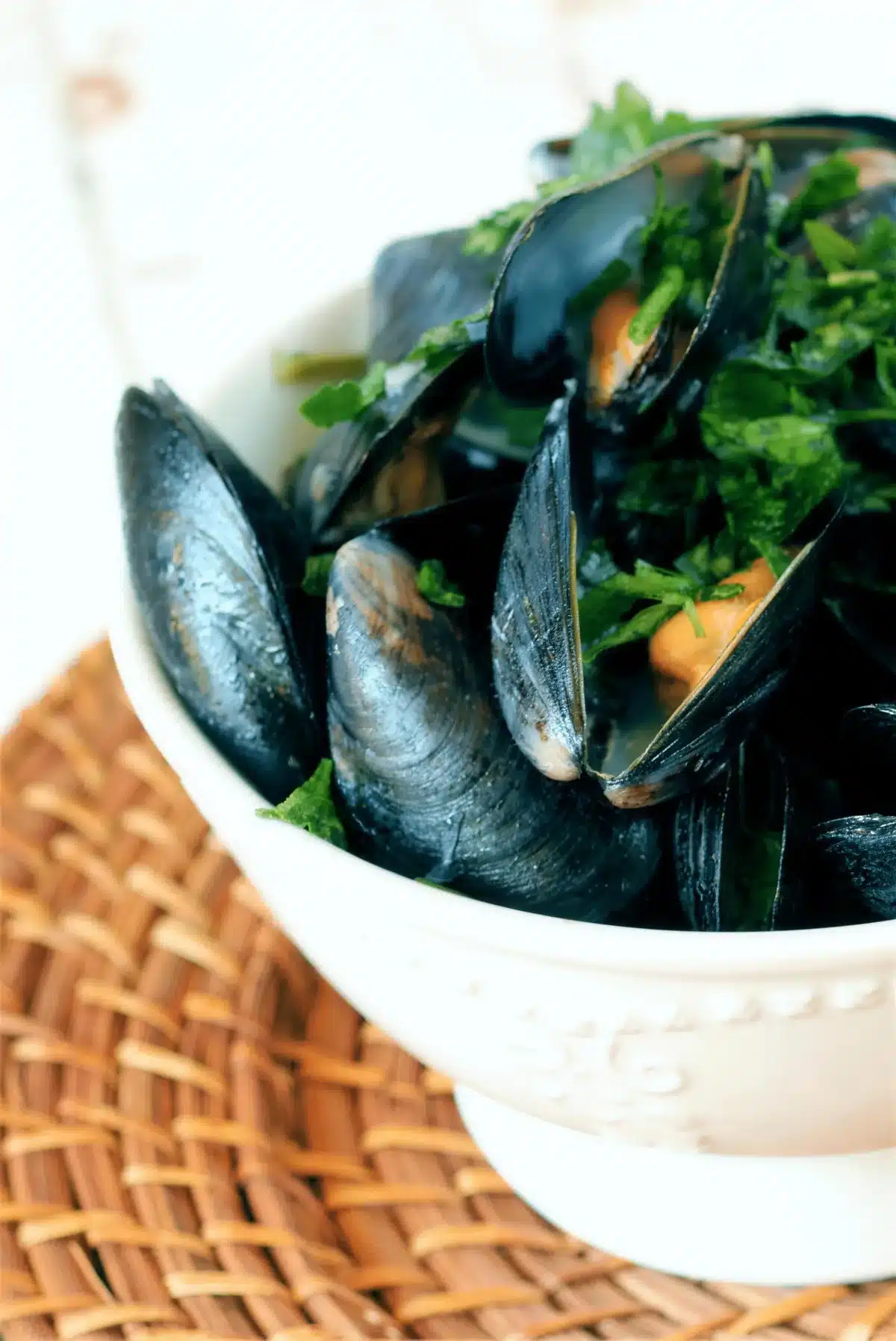
What to Serve with Mussels in White Wine
Bread alongside mussels in white wine is not optional. Everything else on this list is.
- A crusty loaf, torn rather than sliced. Cheesy garlic bread is the indulgent version and disappears fastest.
- Fries, which makes it moules frites and turns a starter into a proper dinner. Oven baked fries save you a pot of hot oil.
- Something sharp and green to cut the butter, like a lemony Caesar salad.
- The rest of the bottle you cooked with, well chilled.
Here is what readers ask most often about mussels in white wine.
Mussels in White Wine FAQ
Frequently Asked Questions
How many mussels do I need per person?
Buy one pound per person for a main course and half a pound per person for a starter. Two pounds, the amount in this mussels in white wine recipe, will serve four as a first course or two as dinner with bread and fries. Shells account for most of that weight, so a pound yields surprisingly little meat.
Do I have to throw away mussels that did not open?
Not automatically. A shell that stayed shut after cooking usually just had a stronger muscle than the rest. Open it with a knife and look: clean smell and normal-looking meat means it is fine to eat. The shells to be strict about are the ones that were already gaping before cooking and would not close when tapped, since those were dead.
What wine should I use?
Something dry, high in acid and unoaked. Muscadet is the classic pairing, and Sauvignon Blanc, Picpoul, Pinot Grigio or dry Vinho Verde all do the same job. Avoid oaked Chardonnay, anything off-dry, and bottles labeled cooking wine, which are salted and will make the reduced broth far too salty.
More Questions About Cooking Mussels
Good to Know
How do I get rid of the sand?
Soak them for thirty minutes to two hours in cold water whisked with cornmeal or flour, which gives them something to filter and encourages them to spit out grit. Then lift them out into a colander rather than tipping the bowl, so the sand stays at the bottom. Rope-grown mussels barely need it, while bottom-harvested ones need the full two hours.
Can I make it without wine?
Yes. Use chicken or vegetable stock in the same quantity, then add two tablespoons of lemon juice and a splash of white wine vinegar to replace the acidity the wine would have brought. The broth will be rounder and less bright, so season it a little more firmly at the end.
Why are my mussels rubbery?
They cooked too long, almost every time. Mussels in white wine go from silky to springy to rubbery inside about ninety seconds. The meat firms up and then tightens within about a minute, so the pot has to come off the heat as soon as most of the shells have opened. Waiting for a few stragglers overcooks everything else. Reheating leftovers over direct heat does the same damage.
Can I cook them from frozen?
Frozen cooked mussel meat can be dropped into the finished broth off the heat, which is a reasonable shortcut. Frozen shellfish still in the shell have already been cooked and will not swing open the way live ones do, so you lose the theater of the dish.
Once mussels in white wine are in your repertoire, the whole fish counter starts looking less intimidating. For another fast seafood dinner built on one pan and a handful of ingredients, try my easy crab cakes.
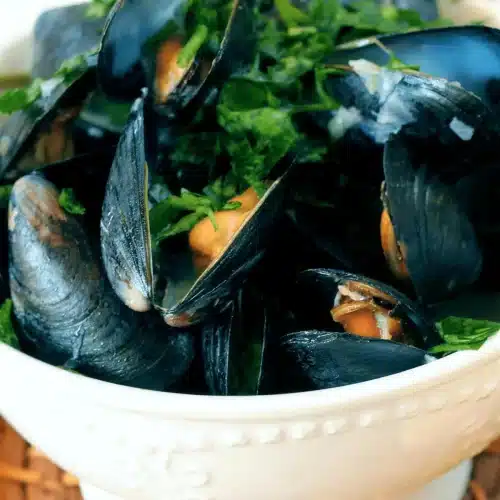
Mussels in White Wine
Save this recipe
Enter your email and I’ll send this recipe straight to your inbox.
Ingredients
For the Soak
- 2 pounds fresh mussels scrubbed and debearded
- 1/3 cup cornmeal or flour for the soaking water
- 10 cups cold water for the soaking water
For the Pot
- 3 tbsp butter
- 1/4 cup shallots minced
- 2 cloves garlic thinly sliced, optional
- 1 1/4 cups dry white wine Muscadet, Sauvignon Blanc or Pinot Grigio
- 4 sprigs fresh parsley whole
- 3 sprigs fresh thyme whole
- 1/2 small bay leaf
- freshly ground black pepper to taste
To Finish
- 1 lemon zest only
- 1/4 cup parsley roughly chopped
- French bread for dipping
Equipment
- Large Bowl
- Colander
- Large pot with lid
Instructions
Clean and Soak
- First, sort the mussels. Discard any shell that is cracked, or gaping open and unwilling to close within about 30 seconds of being tapped firmly on the counter. Pull the beard off each one toward the hinge, not toward the opening, and do this right before cooking.
- Next, whisk the cornmeal or flour into a very large bowl with 10 cups of cold water. Soak the cleaned mussels for at least 30 minutes and up to 2 hours, which lets them disgorge their sand. Lift them out into a colander rather than pouring, so the grit stays behind, and rinse well.
Build the Broth
- Then melt the butter in a wide pot over medium heat. Add the shallots, and the garlic if using, and cook until translucent, about 3 minutes. Do not let them color.
- After that, pour in the wine and add the parsley sprigs, thyme sprigs, bay leaf and plenty of black pepper. Bring to a boil over high heat and let it reduce for 2 to 3 minutes.
Steam and Serve
- Tip in the mussels all at once and clamp the lid on tightly. Every minute or so, hold the lid down hard and toss the whole pot with a short up and down jerk so the top layer swaps with the bottom layer and everything cooks evenly.
- After 4 to 5 minutes the shells will have opened. Take the pot off the heat straight away, because waiting for the last few stragglers turns the rest rubbery.
- Finally, stir in the lemon zest. Ladle into bowls with plenty of the broth, leaving the last half inch in the pot in case any sand escaped the soak. Scatter the chopped parsley over the top and serve with French bread.