
American goulash is the one-pot supper that a lot of American households already make without knowing it has a name. Two pounds of ground beef, two cans of tomatoes, a tablespoon of soy sauce and two cups of dry elbow macaroni go into a single Dutch oven, and thirty minutes later the pasta has cooked in the sauce rather than in a separate pot of water. American goulash asks almost nothing of you and feeds eight.
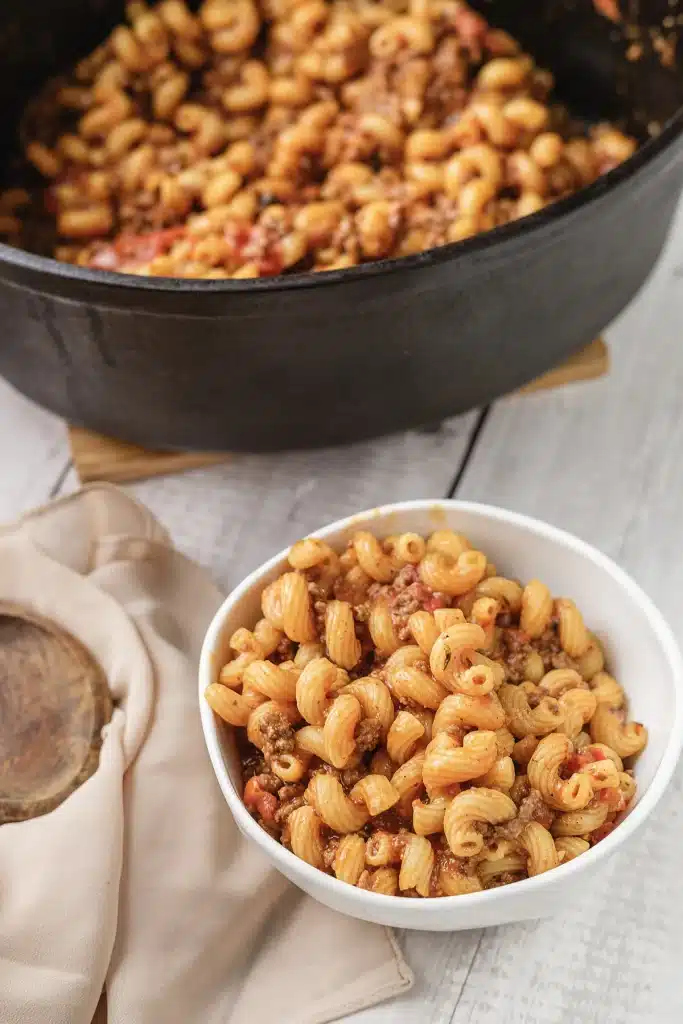
- American goulash needs one pot and one spoon, and the pasta never gets drained
- Feeds eight for the price of two pounds of ground beef
- The soy sauce is the secret nobody guesses
- Better after it rests, and better again the next day
- Freezes and reheats without falling apart
That last detail is the whole trick of American goulash. Boiling macaroni separately and stirring it in gives you beef sauce with pasta sitting in it. Cooking it in the tomato base means the starch it releases thickens everything around it, so the sauce clings instead of pooling, and every piece tastes of the pot rather than of salted water.

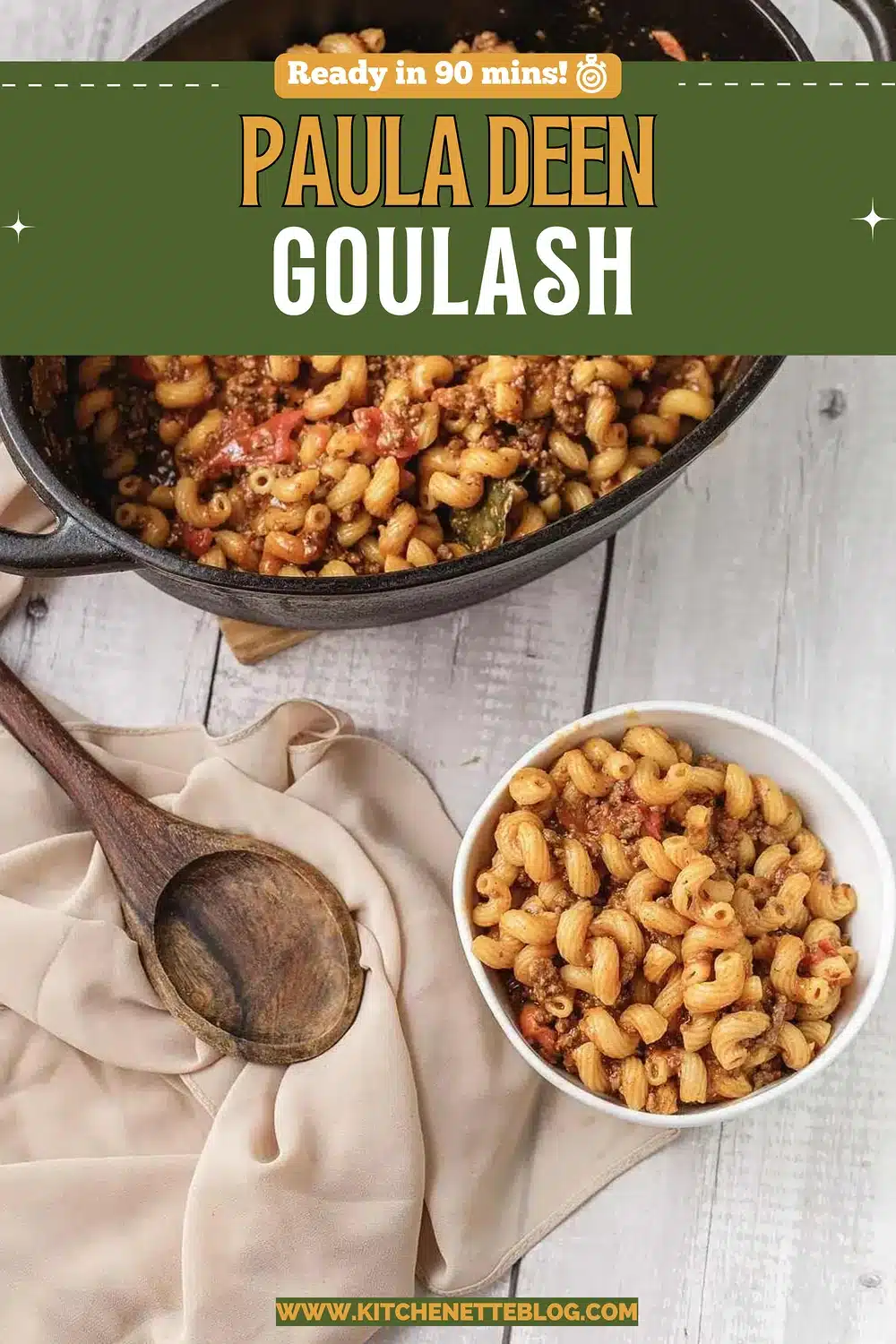
What Is American Goulash?
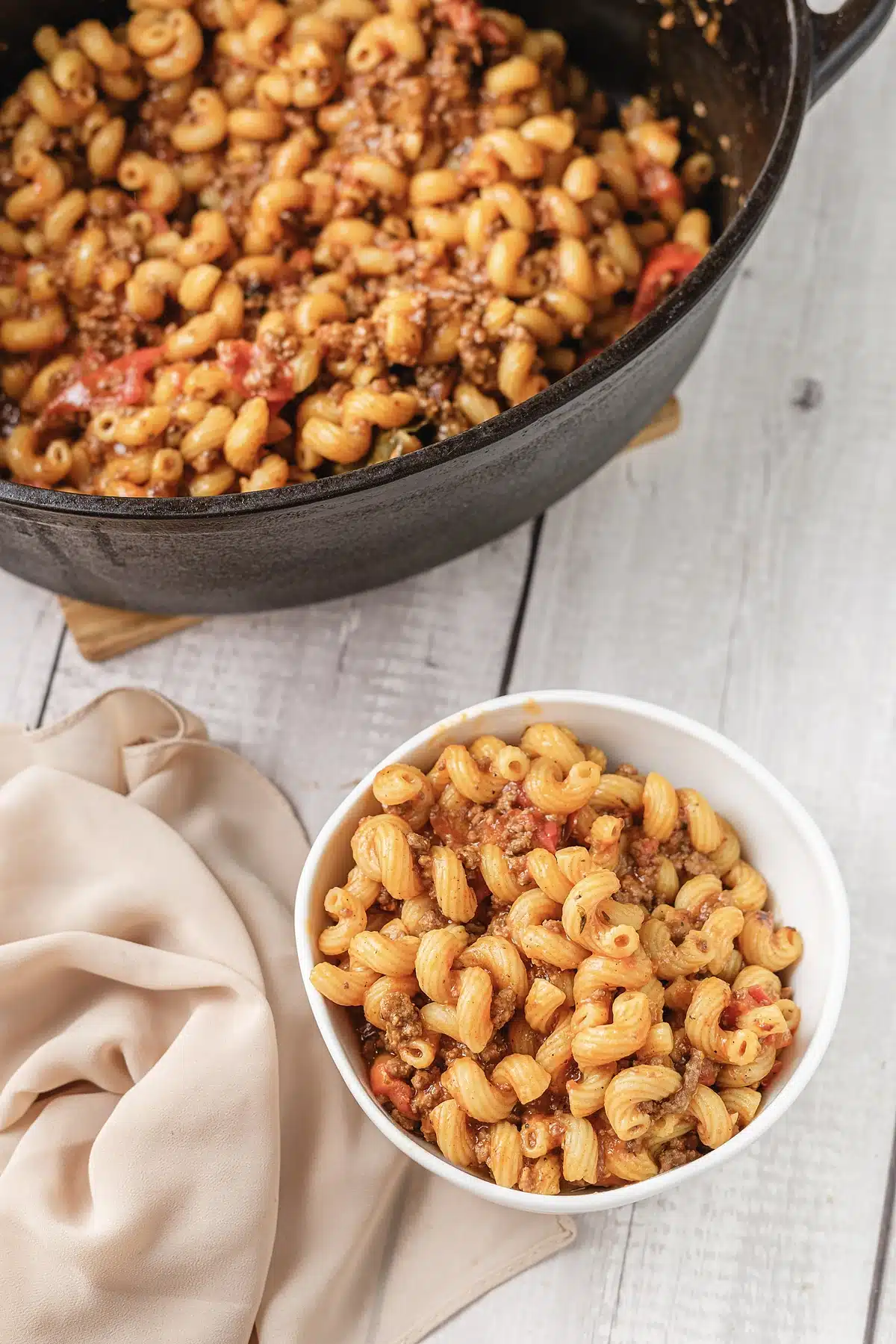
American goulash is American goulash, which is a different animal from the Hungarian dish that lent it the name. American goulash appears on her show and in her books as Bobby’s Goulash, credited to her son, and it is ground beef simmered with tomato sauce, diced tomatoes, Italian seasoning and elbow macaroni.
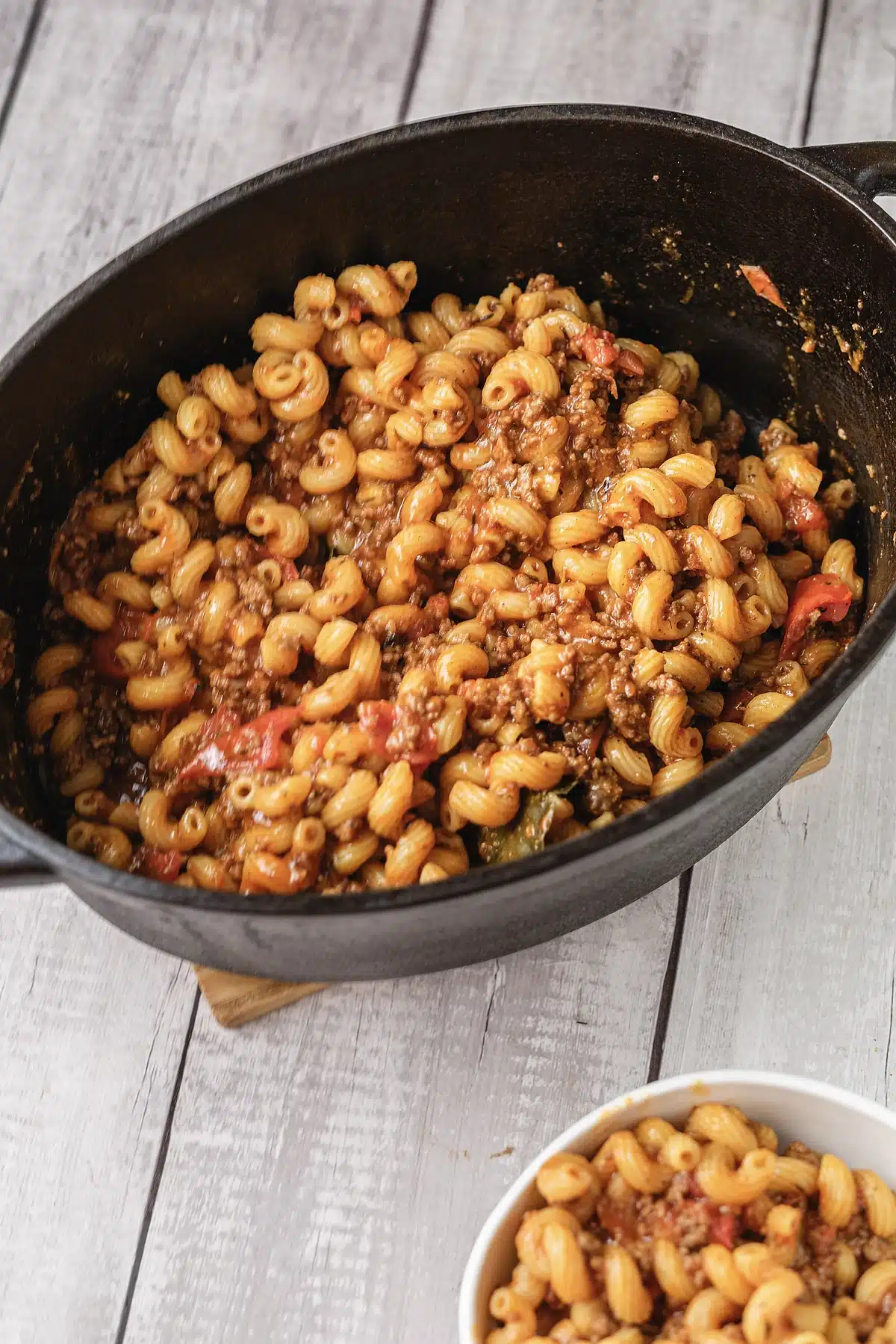
Two things set American goulash apart from every other skillet beef and macaroni recipe. The first is a homemade house seasoning of salt, black pepper and garlic powder that goes in alongside a spoonful of seasoned salt. The second is soy sauce, which sounds out of place and is doing exactly what a splash of Worcestershire does in a chili.
What nobody says out loud is that American goulash is deliberately plain food. There is no wine, no stock, no browning of tomato paste. It is a weeknight dish that a family of eight can eat for under fifteen dollars, and it has stayed popular for twenty years because it delivers on that promise every time.
Save this recipe
Enter your email and I’ll send this recipe straight to your inbox.
American Goulash vs Hungarian Goulash
Hungarian gulyas is a beef and paprika stew, thin enough to be served as a soup, built on cubed chuck, onions and a great deal of sweet paprika. It has no pasta in the pot, no tomato sauce and no cheese anywhere near it.
The American version, the one American goulash belongs to, borrowed the word and almost nothing else. It arrived through Midwestern church cookbooks in the early twentieth century, where a cheap ground beef and macaroni supper picked up a foreign-sounding name. In parts of the Midwest the same dish is called American chop suey, which is equally unrelated to anything Chinese.
Neither version is a corruption of the other, and it is worth being clear about that. They are two separate dishes that happen to share a label. If you want paprika and cubed beef, make gulyas. If you want a pot of macaroni that feeds a crowd on a Tuesday, American goulash is the correct answer, and the two dishes are not in competition.
Ingredient Notes
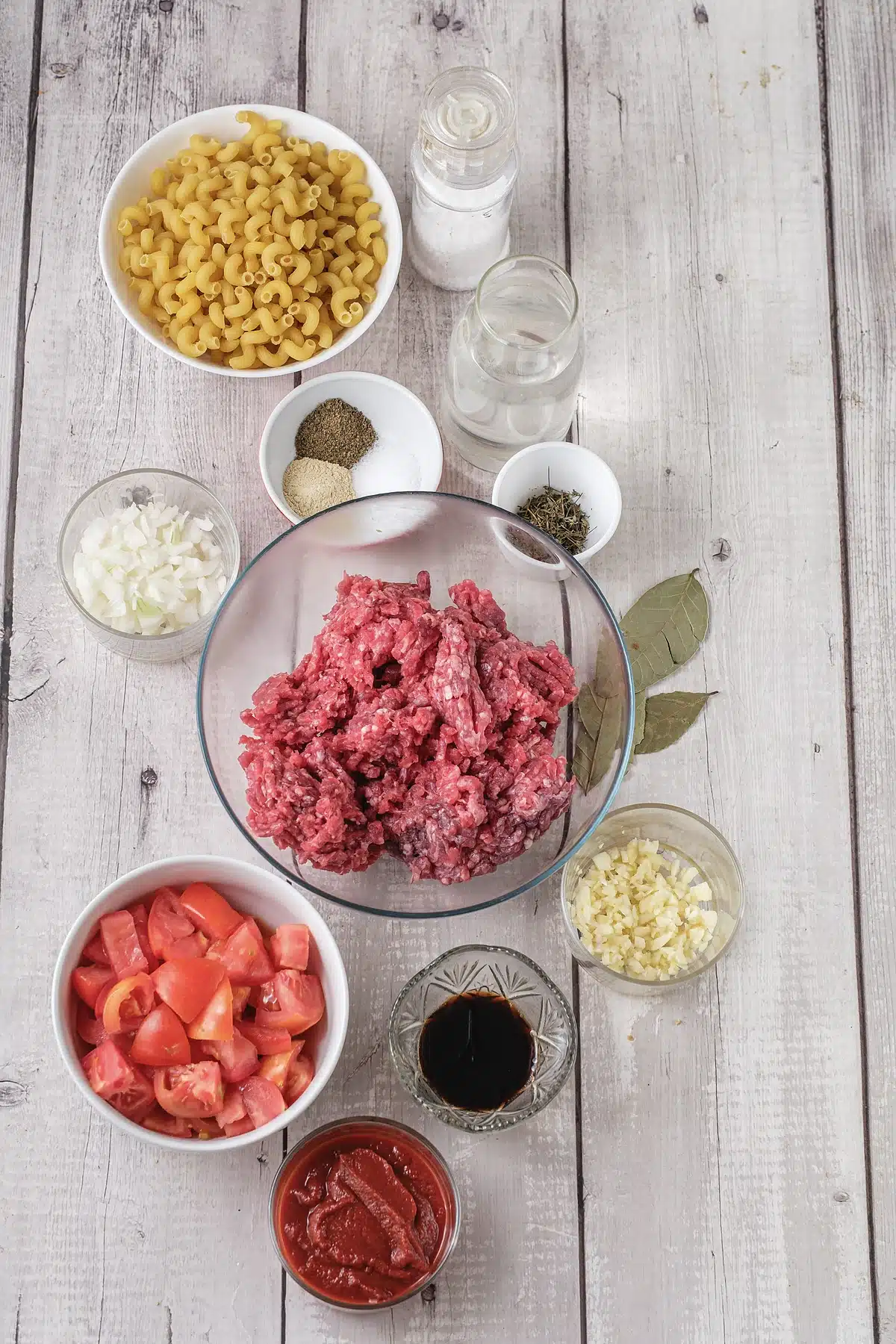
- Lean ground beef. Two pounds, and 85 percent lean is the sweet spot. Anything leaner goes dry over a thirty-minute simmer, and anything fattier leaves a slick on the surface you will want to spoon off.
- Yellow onions. Two, chopped. That is a lot of onion for one pot, and it is correct. They collapse into the sauce over the simmer and provide most of the sweetness.
- Elbow macaroni. Two cups, uncooked, added dry. Cooking it in the pot is what makes American goulash a single-pan job. Cavatappi and small shells work just as well. Do not use a delicate shape, because thirty minutes in simmering sauce is punishing.
- Tomato sauce and diced tomatoes. One 15-ounce can of sauce and two 14.5-ounce cans of diced tomatoes, undrained. The juice from the diced tomatoes counts toward the liquid the pasta needs, so do not pour it away.
- Water. Two cups. It looks like too much when it goes in and it is exactly right once the macaroni has drunk its share.
- Soy sauce. Two tablespoons. It adds glutamates rather than an Asian flavor, which is why nobody ever identifies it and everybody notices when it is missing.
- House seasoning. A tablespoon of the salt, pepper and garlic powder blend below. Making it as a mix rather than adding the three separately keeps the ratio consistent every time.
- Seasoned salt. A tablespoon of a brand like Lawry’s. Between this and the house seasoning the pot is well salted, so taste before adding any more.
- Bay leaves. Two, and fish them out before serving. They round off the tomato acidity over a long simmer.
The House Seasoning
Paula Deen’s goulash calls for a house seasoning, which is one tablespoon of salt, one and a half teaspoons of freshly ground black pepper and one and a half teaspoons of garlic powder, stirred together in a small bowl. You use a single tablespoon of the mix in the pot and keep the rest in a jar.
It is worth making a larger batch, because the same blend goes on roast chicken, into meatloaf and over potatoes before they hit the oven. Four parts salt to one part pepper to one part garlic powder scales cleanly in any quantity.
Freshly ground pepper matters here more than it usually does. Pre-ground pepper loses its volatile oils within weeks, and in a mix that sits in a jar for a month there is not much left to contribute.
How To Make American Goulash
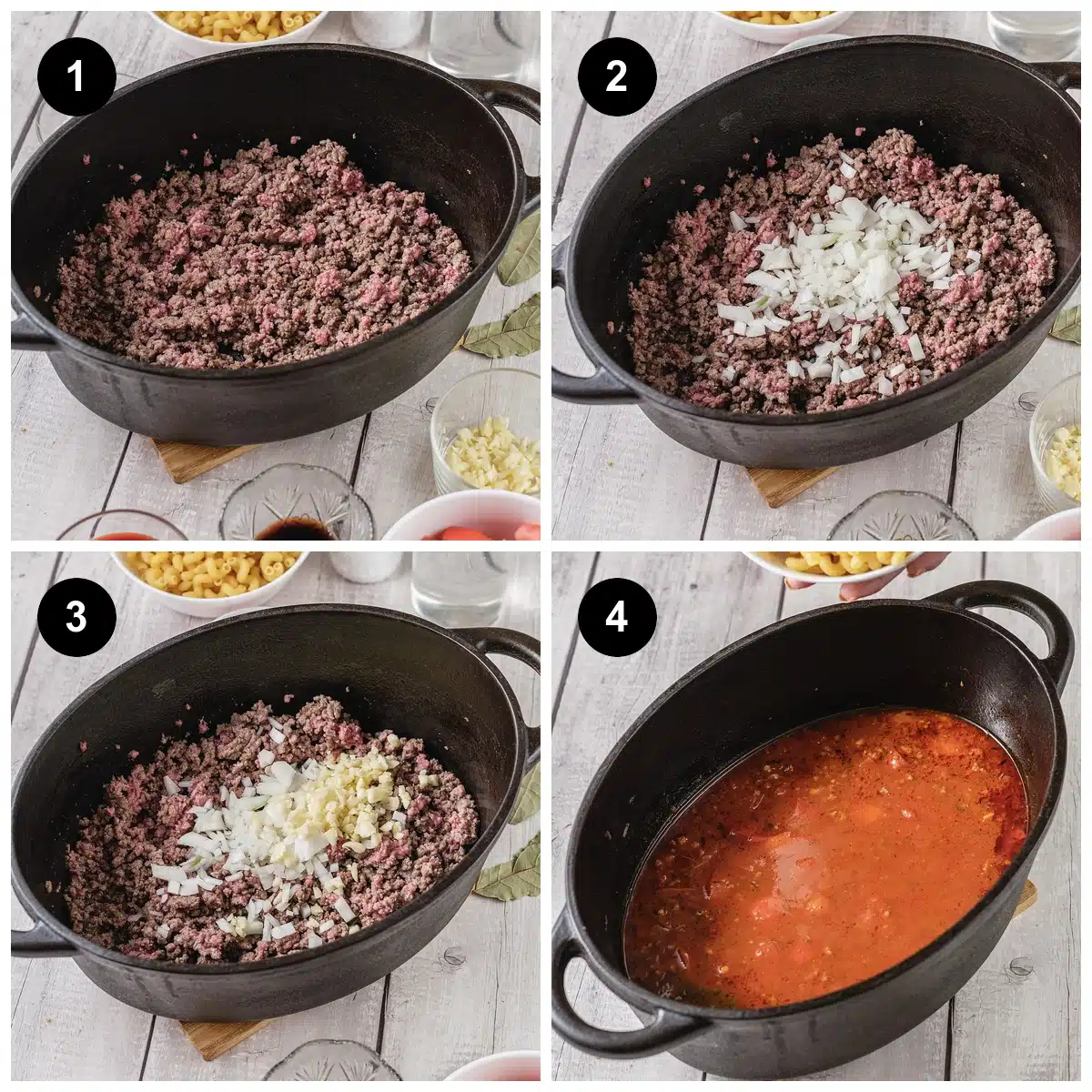
this goulash comes together in five moves. First, mix the house seasoning. Stir the salt, black pepper and garlic powder together in a small bowl and set it aside so it is ready when the pot needs it.
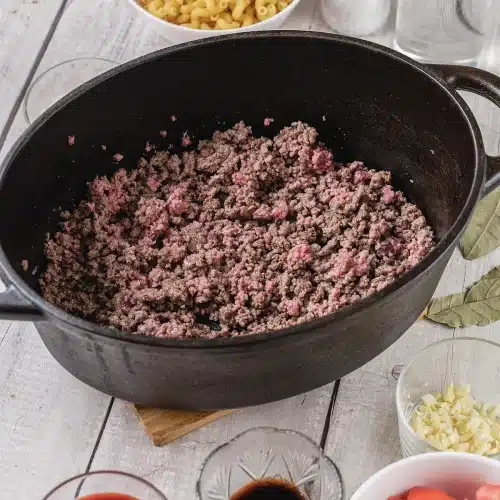
Next, brown the beef. Put the ground beef into a large Dutch oven over medium-high heat and break it up with a wooden spoon until no pink remains. Spoon off most of the rendered grease, leaving a little behind for flavor.
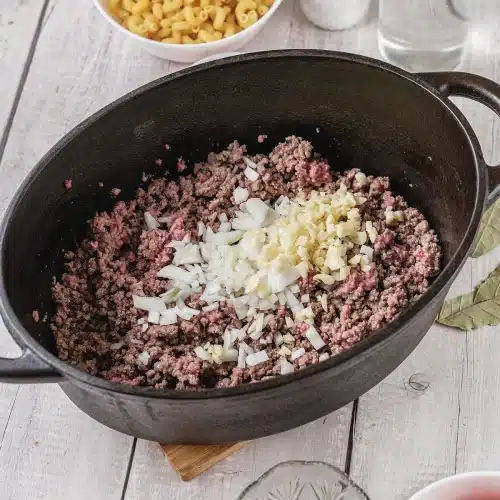
Then soften the aromatics. Add the chopped onions and minced garlic to the beef and cook for about five minutes, until the onions have gone soft and the pot smells sweet rather than sharp.
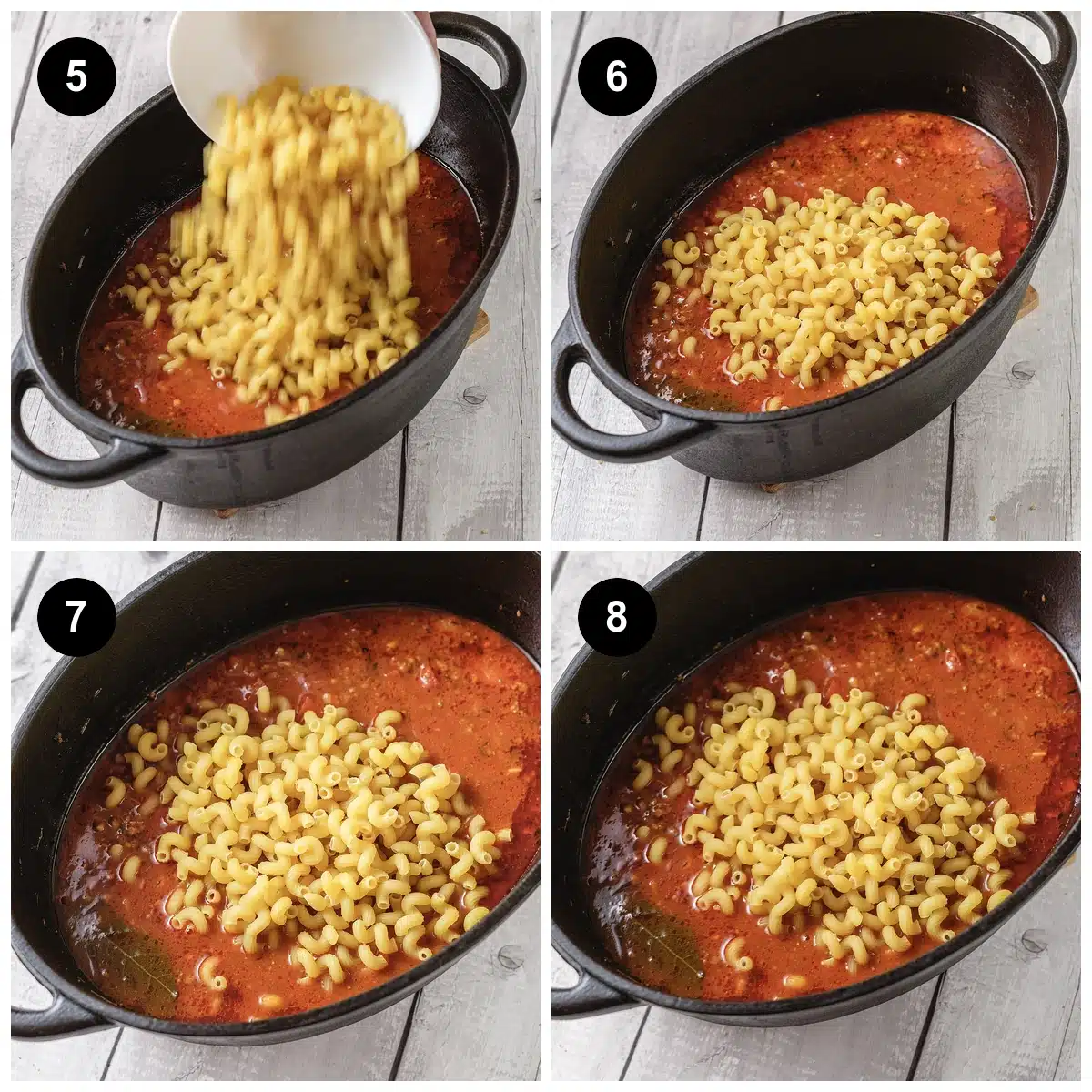
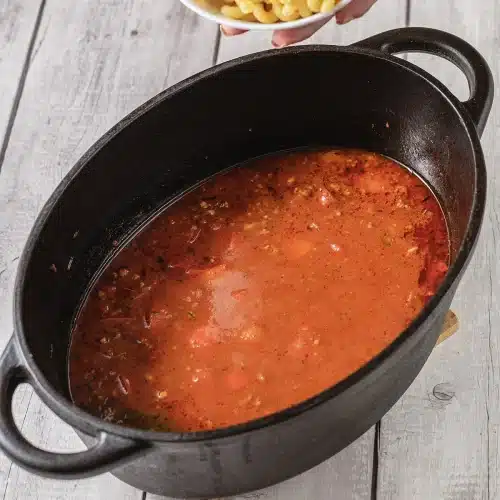
After that, build the sauce. Pour in the tomato sauce, both cans of diced tomatoes with their juices and the water, then add the Italian seasoning, bay leaves, soy sauce, seasoned salt and a tablespoon of house seasoning. Stir it well and bring it to a gentle simmer.
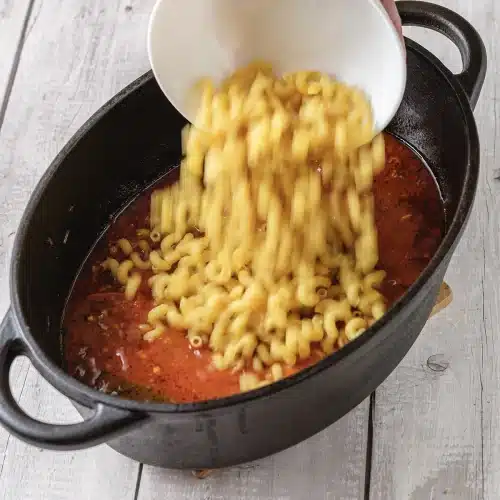
Finally, cook the macaroni in the pot. Stir the dry elbow macaroni through, cover the Dutch oven and simmer gently for thirty minutes, stirring every few minutes so nothing sticks to the bottom. Take it off the heat, remove the bay leaves and let it stand uncovered for thirty minutes before serving.
How To Tell When the Macaroni Is Done
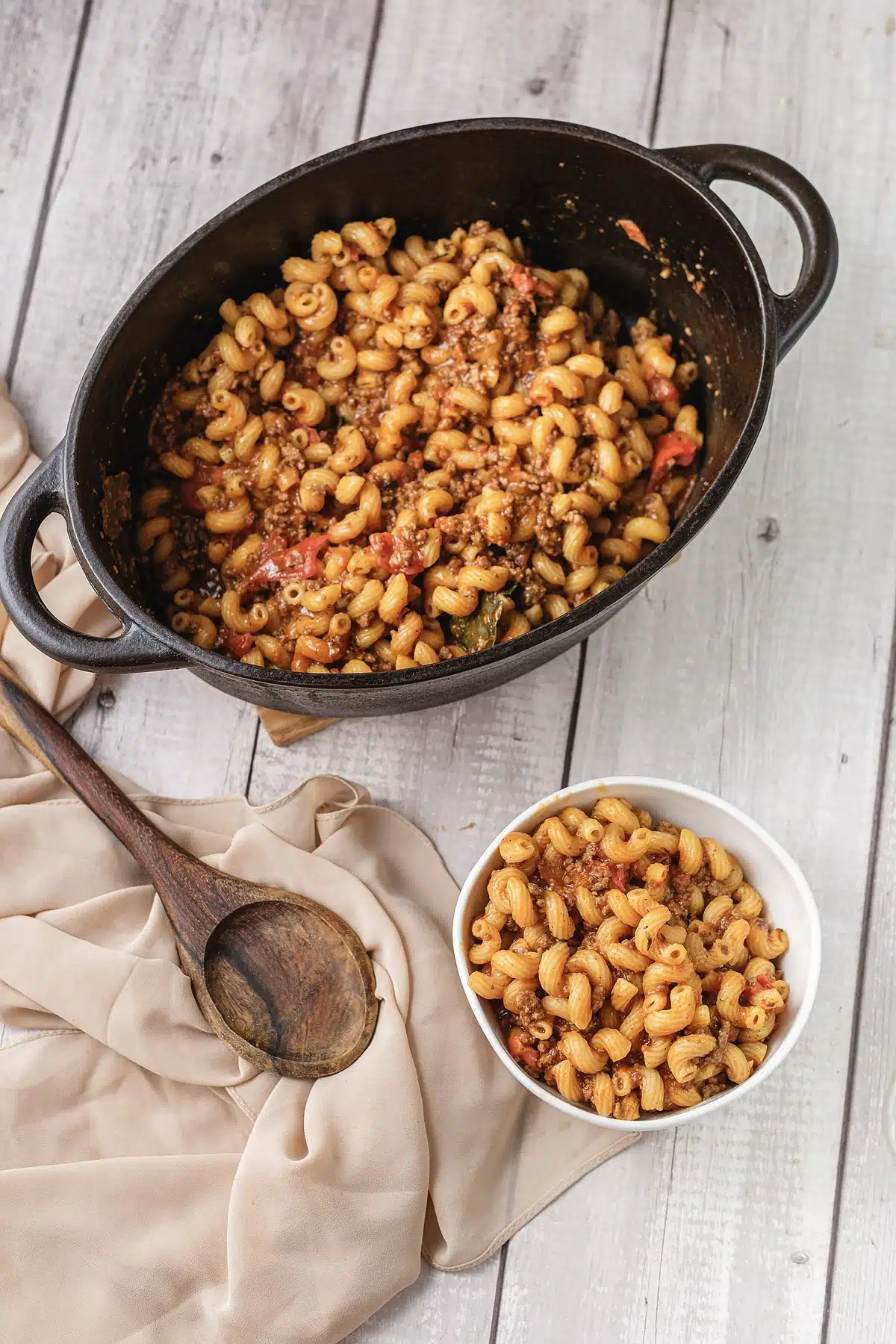
the goulash is ready when the macaroni is. Bite a piece at the twenty-five minute mark. It should be tender all the way through with no chalky center, and it should still hold its shape rather than falling apart between your teeth. Elbow macaroni is made from durum wheat semolina, which is why it survives a long simmer that would destroy a softer flour pasta, and the Wheat Foods Council explains how durum differs from bread and cake flour in more detail.
The sauce is the other half of the answer. It should coat the back of a spoon and leave a trail that closes slowly. If it is still watery at thirty minutes, take the lid off and simmer for another five, because the resting period will thicken it further but it will not rescue a genuinely thin pot.
Make It Ahead
Cook the Paula Deen’s goulash a day early and it improves. The macaroni keeps absorbing sauce in the fridge, the onions settle into the background and the tomato acidity mellows. Reheat gently on the stove with a splash of water to loosen it.
If you want to get ahead without cooking the pasta, make everything through the sauce, cool it and refrigerate it. On the night, bring the sauce back to a simmer, stir in the dry macaroni and give it the usual thirty minutes. The pasta is much better cooked fresh in the pot than reheated twice.
Browning two pounds of ground beef in advance is the single biggest time saver. It is the messiest ten minutes of the recipe, and cooked beef keeps three days in the fridge or three months in the freezer.
Storing American Goulash
Covered in the fridge, this goulash keeps four days. It thickens into something almost sliceable overnight, so reheat it with a quarter cup of water per portion, stirring until the sauce comes back together. Low heat and patience beat high heat and speed here, because the pasta scorches easily once the sauce has tightened.
Freezing Paula Deen’s version is possible, with one caveat. Frozen and thawed macaroni comes back softer than it went in, and after two rounds of heating it can turn mushy. If you know a batch is destined for the freezer, cook the pasta separately, freeze the sauce alone for up to three months and combine after reheating.
Portion the the goulash into single servings before it goes into the freezer rather than freezing the whole pot. A shallow container freezes and thaws faster, and it means you are not reheating eight servings to eat one.
Variations and Substitutions
Ground turkey. Swap it pound for pound. Turkey is much leaner, so start with a tablespoon of oil in the pot and add an extra half teaspoon of seasoned salt.
More vegetables. A diced green bell pepper with the onions, or eight ounces of sliced mushrooms browned before the beef, both disappear into the sauce and stretch the pot further.
Cheesy. Two cups of shredded cheddar stirred through at the end, or scattered over the top and melted under a lid for five minutes, turns it into something closer to a casserole.
Spicy. A teaspoon of red pepper flakes with the Italian seasoning, or a chopped jalapeno with the onions, adds heat without disturbing anything else.
Gluten-free. Use a corn and rice blend macaroni and check it at twenty minutes rather than thirty. Gluten-free pasta goes from firm to mush in a much narrower window.
Baked. Transfer the finished Paula Deen’s goulash to a baking dish, top with mozzarella and bake at 350 degrees for twenty minutes for a browned, bubbling crust.
What to Serve with American Goulash
this goulash wants garlic bread, and it is not a close contest. A rich tomato sauce wants something to mop it up, and a crusty loaf with butter and garlic is what most people at this table are hoping for.
A sharp green salad earns its place beside it too. The pot is soft, sweet and heavy, so a vinaigrette with plenty of mustard and some bitter leaves resets the palate between forkfuls. Steamed green beans with lemon do the same job with less effort.
For something more substantial on a cold night, a bowl of old fashioned beef stew is the natural next recipe in the same register, and stovetop beefaroni is the quicker weeknight cousin when thirty minutes of simmering is more than you have.
American Goulash FAQ
Frequently Asked Questions
Do I cook the macaroni first?
No. The dry macaroni goes straight into the simmering sauce and cooks there for thirty minutes. That is what thickens the sauce and puts flavor into the pasta, and boiling it separately loses both.
Why is there soy sauce in it?
For savory depth. Soy sauce is loaded with glutamates, the same compounds that make Worcestershire and anchovy work in a beef dish. Nobody tastes soy sauce in the finished pot; they taste a sauce that seems to have simmered for longer than it did.
My goulash came out watery. What happened?
Almost always the resting period. Paula Deen’s version needs it. Take the pot off the heat, remove the lid and leave it for a full thirty minutes. If it is still thin after that, simmer uncovered for another five minutes.
How many people does this feed?
the goulash makes eight generous servings from one Dutch oven. Halve it cleanly for four, though the simmering time stays the same because it depends on the pasta rather than the volume.
More Questions About One-Pot Pasta
Good to Know
Can I make it in a slow cooker?
Brown the beef and onions on the stove first, then transfer everything except the macaroni to the slow cooker for four hours on low. Stir the dry pasta in for the last thirty minutes with the lid on.
What pasta shapes hold up best?
Short, thick shapes: elbows, cavatappi, small shells and ditalini. Avoid thin or delicate shapes, which break down long before the sauce is ready.
Can I double it?
Yes, if the pot is wide enough to stir properly. Keep the simmering time the same, stir more often because a deeper pot scorches more readily, and taste for salt before adding more seasoned salt.
If a pot of Paula Deen’s goulash is the sort of thing your week needs, Johnny Marzetti is the Ohio cousin of this dish and works on exactly the same logic, with cheese baked over the top.
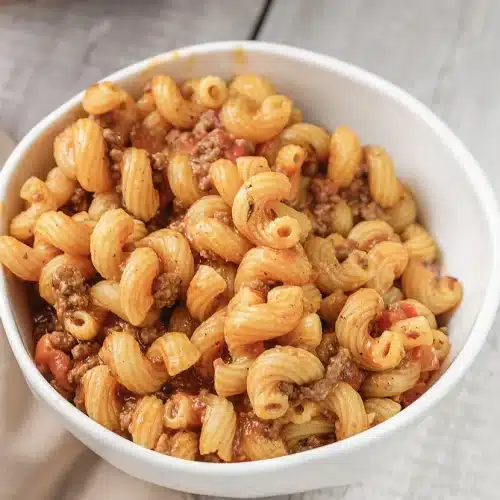
Paula Deen Goulash
Save this recipe
Enter your email and I’ll send this recipe straight to your inbox.
Ingredients
House Seasoning
- 1 tbsp (15 g) salt
- 1 1/2 tsp black pepper freshly ground
- 1 1/2 tsp garlic powder
Goulash
- 2 lbs (900 g) lean ground beef
- 2 yellow onions chopped
- 3 garlic cloves minced
- 2 cups (480 ml) water
- 1 can (15 oz) (425 g) tomato sauce
- 2 cans (14.5 oz) (822 g) diced tomatoes undrained
- 2 tbsp (30 ml) soy sauce
- 2 tsp (4 g) Italian seasoning
- 2 bay leaves
- 1 tbsp (15 g) house seasoning see above
- 1 tbsp (15 g) seasoned salt such as Lawry's
- 2 cups (200 g) elbow macaroni uncooked
Equipment
- Large Dutch Oven or Soup Pot
- wooden spoon
Instructions
Mix the Seasoning
- Make the house seasoning: In a small bowl, stir together the salt, freshly ground black pepper and garlic powder. Set it aside. You will use 1 tablespoon of the mix in the pot.
Brown the Beef
- Brown the ground beef: In a large Dutch oven over medium-high heat, cook the ground beef, breaking it up with a wooden spoon, until no pink remains. Spoon off most of the rendered grease, leaving a little behind for flavor.

- Soften the aromatics: Add the chopped onions and minced garlic to the beef and cook about 5 minutes, until the onions have softened and the pot smells sweet rather than sharp.
Simmer with the Macaroni
- Build the sauce: Add the tomato sauce, both cans of diced tomatoes with their juices, the water, Italian seasoning, bay leaves, soy sauce, seasoned salt and 1 tablespoon of the house seasoning. Stir well and bring to a gentle simmer.
- Cook the pasta in the pot: Stir in the dry elbow macaroni, cover the pot and simmer gently for 30 minutes, stirring every few minutes so nothing sticks to the bottom.
Rest and Serve
- Rest off the heat: Remove the pot from the heat and lift out the bay leaves. Let it stand uncovered for about 30 minutes so the pasta finishes absorbing liquid and the sauce tightens around it.
- Serve: Ladle into bowls and serve hot, with garlic bread, cornbread muffins or a sharp green salad alongside.