
Homemade beefaroni is ground beef, onion and garlic simmered in a seasoned tomato sauce, tossed with short pasta and finished under a blanket of melted cheddar and mozzarella, all in one pot on the stovetop in about 45 minutes. It is the canned classic made with real ingredients, and it tastes the way you remember the can tasting, only it actually does.
The sauce is the whole point. A can of beefaroni is sweet, soft and one-note, and a from-scratch version fixes that with browned beef, a splash of beef broth, Worcestershire and a pinch of sugar to round out the tomato. The pasta cooks separately so it stays firm, and the cheese goes on top with the lid on for the last few minutes so it melts into a stretchy layer instead of disappearing into the sauce.
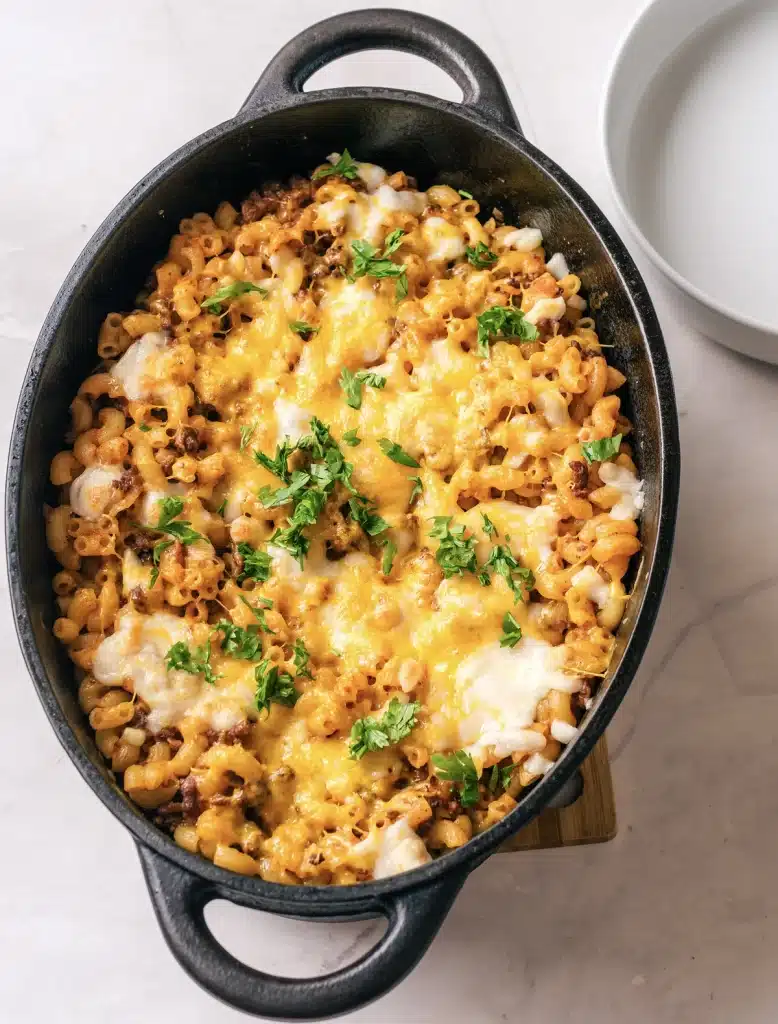
- Homemade beefaroni with a real meat sauce: browned beef, onion, garlic, Worcestershire and beef broth
- One pot for the sauce and 45 minutes start to finish
- Cheddar and mozzarella melted on top under the lid, no oven needed
- Pasta cooked separately so it stays firm instead of going mushy
- Feeds six, reheats well and freezes for two months
- Kids eat it without negotiation

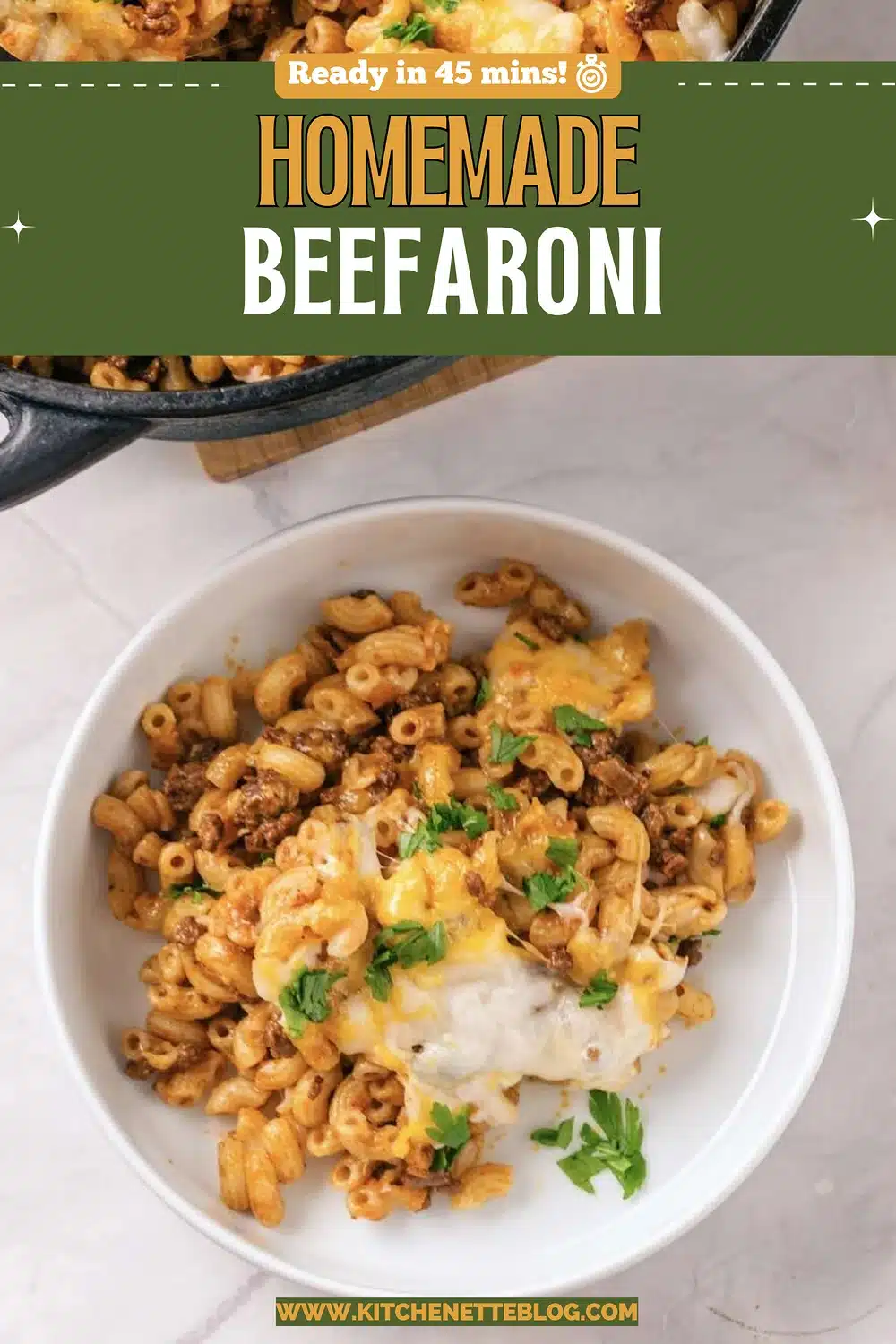
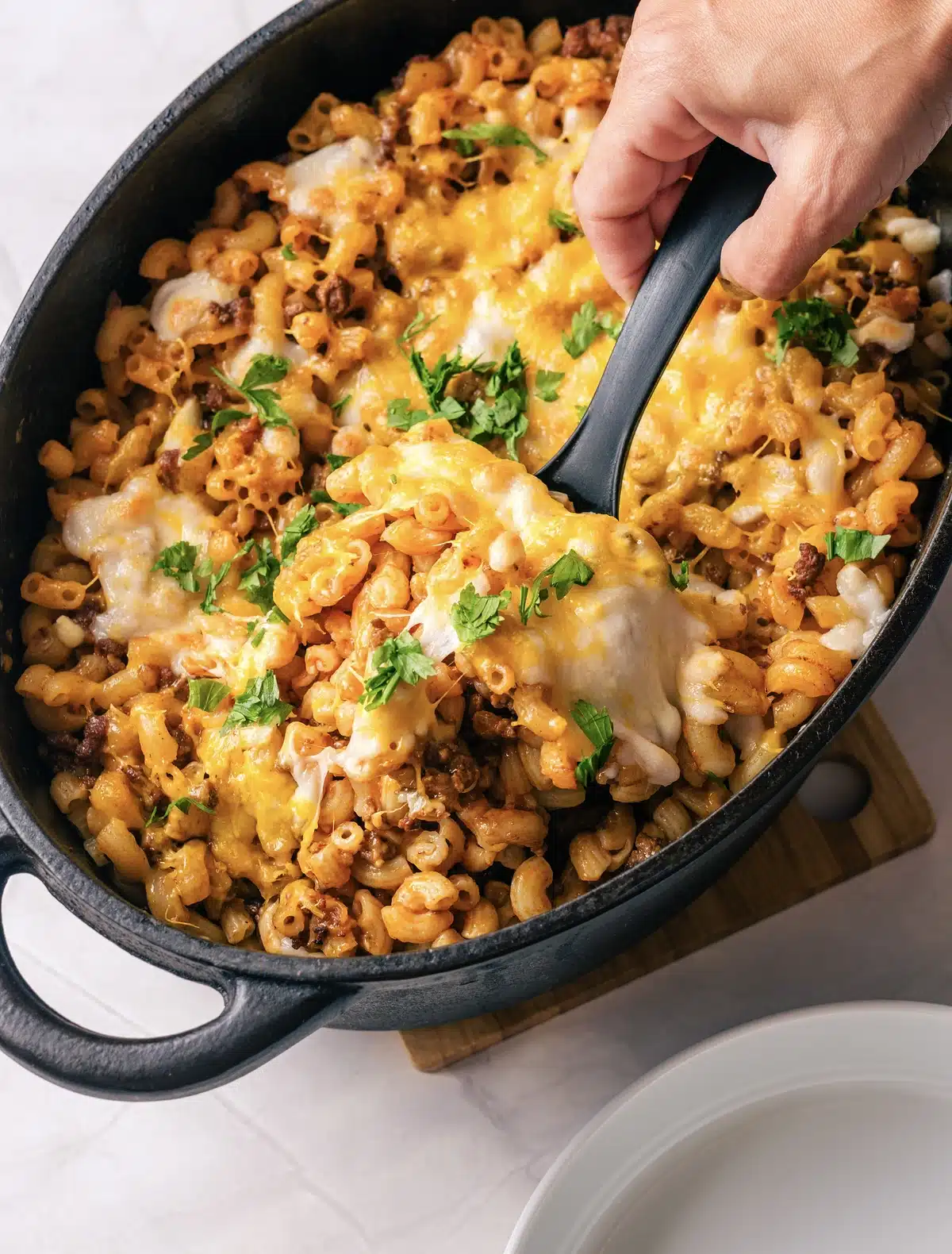
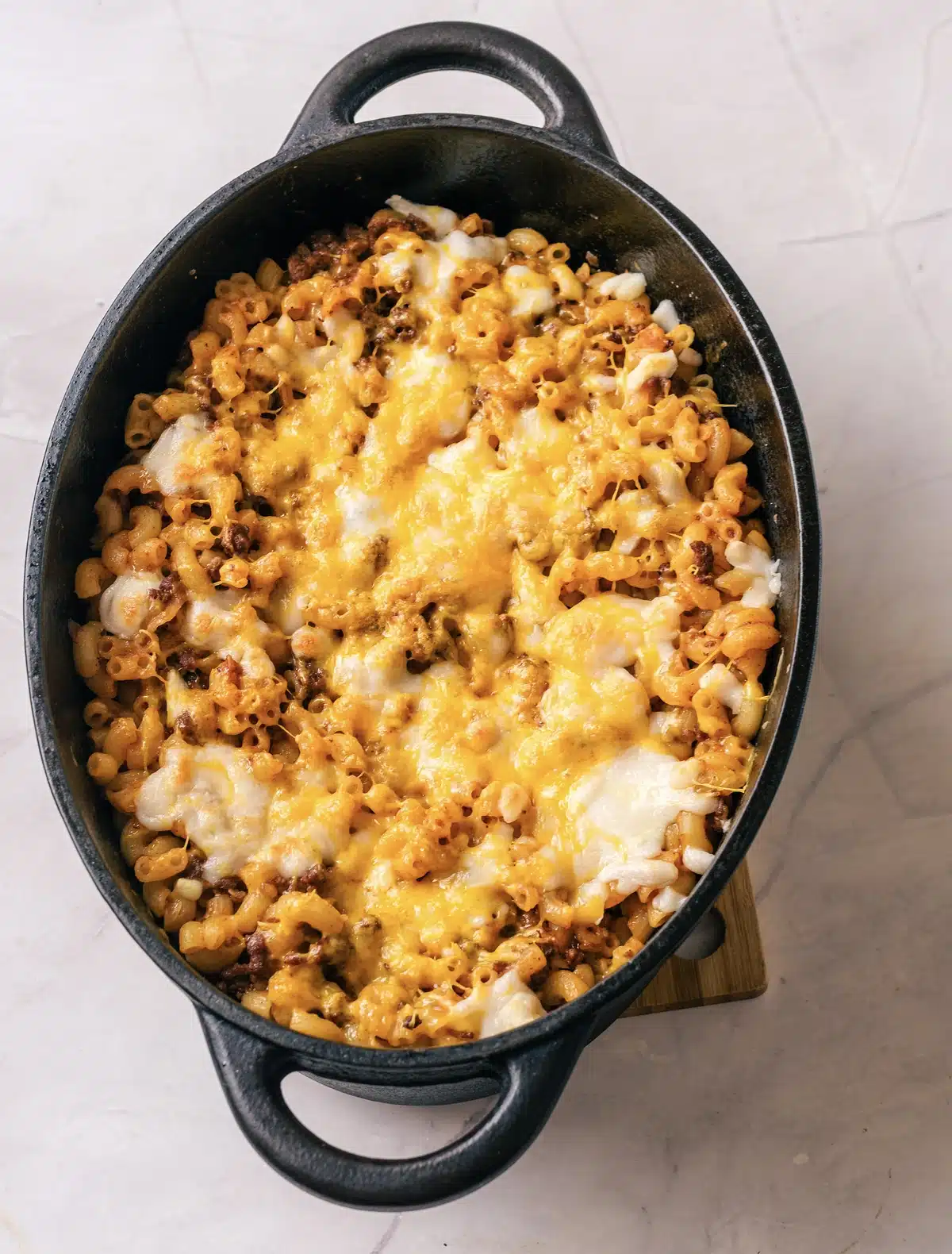
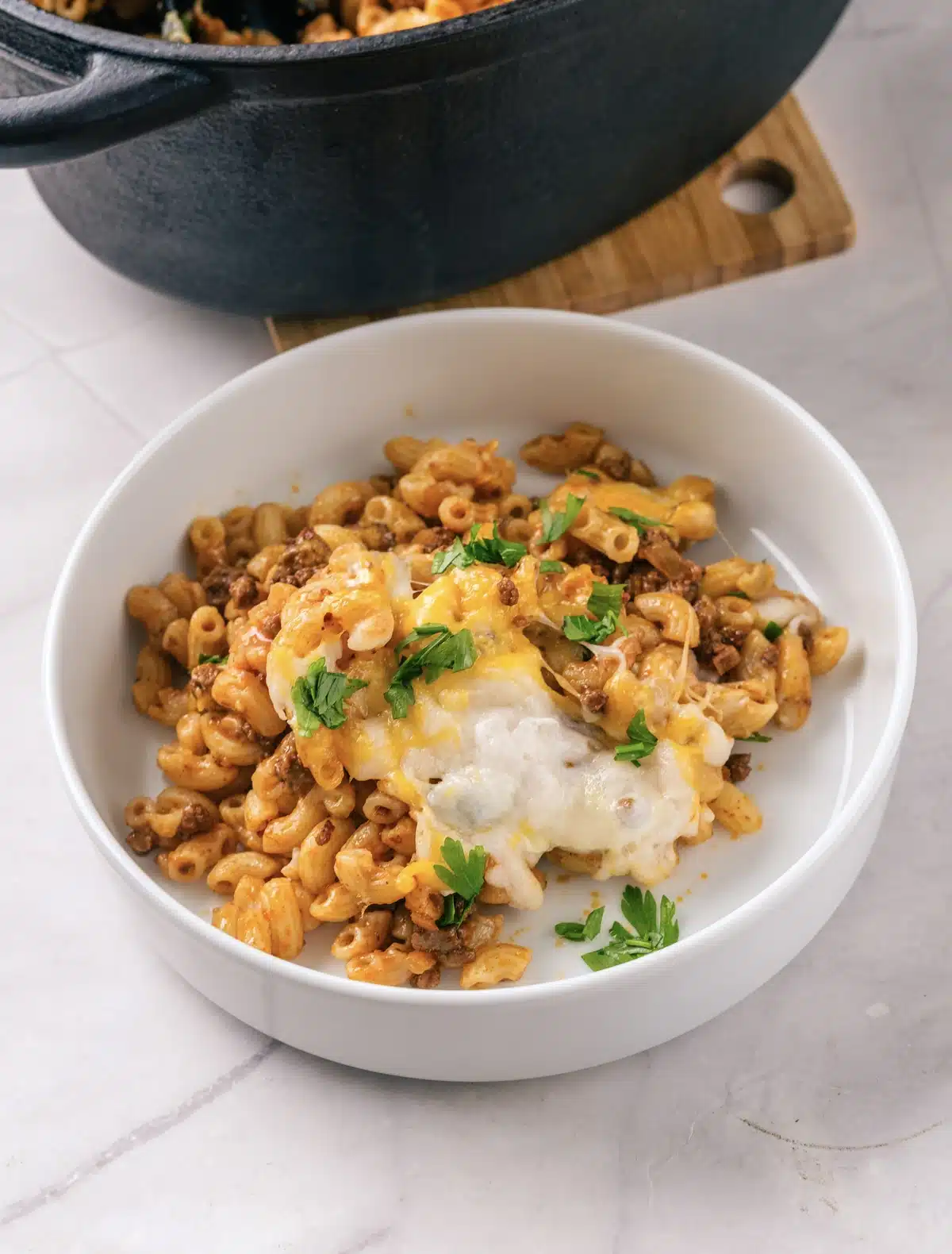
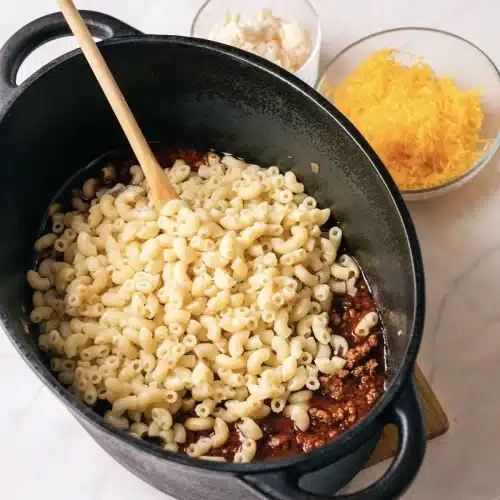
Pictured: made with cavatappi, the corkscrew pasta, in an oval cast-iron pot. Elbow macaroni is the classic shape and works exactly the same way; both are in the recipe card.
- What Makes Homemade Beefaroni Better Than the Can
- Ingredient Notes
- Beefaroni vs Goulash vs Hamburger Helper
- How To Make Homemade Beefaroni
- How To Tell When Homemade Beefaroni Is Done
- Make It Ahead
- Storing Homemade Beefaroni
- Variations and Substitutions
- What to Serve with Homemade Beefaroni
- Homemade Beefaroni FAQ
What Makes Homemade Beefaroni Better Than the Can
The canned version is pasta and ground beef in a thin, sweet tomato sauce, cooked soft enough to survive on a shelf. Homemade beefaroni keeps the same idea and fixes the three things the can gets wrong. The beef is browned properly, so it has some crust and flavor rather than steaming gray in the sauce. Onion, garlic, beef broth and Worcestershire give the sauce depth, and just a teaspoon of sugar takes the sharp edge off the tomato. Finally, the pasta is cooked to just under al dente and stirred in at the end.
Then there is the cheese, which the can does not have at all. Sharp cheddar for flavor and mozzarella for the stretch, scattered over the top and melted under the lid so every scoop pulls up a layer of it. It turns a pantry supper into something worth photographing.
Nothing about it is difficult. If you can brown beef and boil pasta, you can make this, and the whole thing fits in a 45-minute window on a weeknight.
Save this recipe
Enter your email and I’ll send this recipe straight to your inbox.
Ingredient Notes
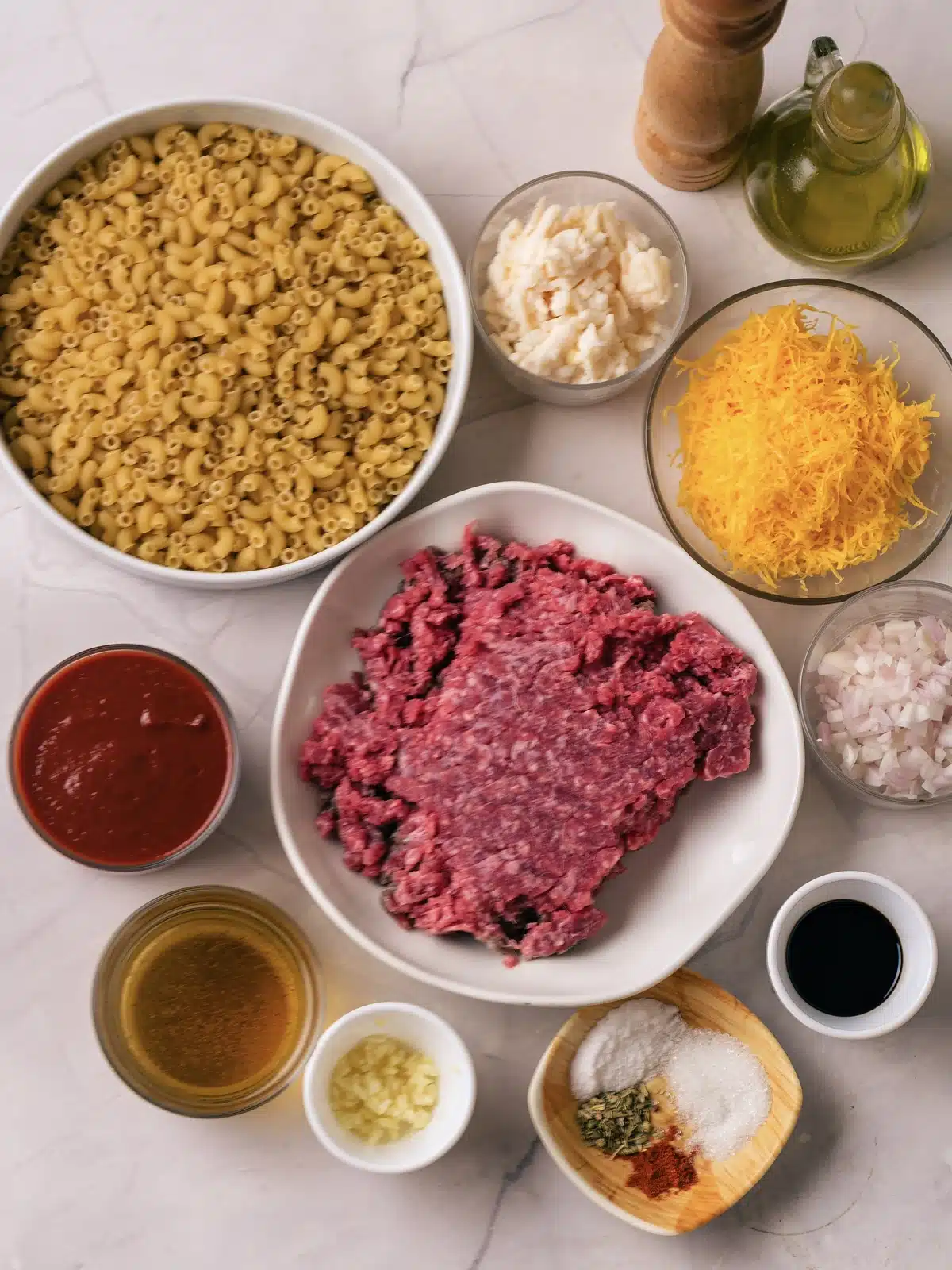
- Short pasta. Twelve ounces of cavatappi, as pictured, or elbow macaroni. Both are made from durum wheat, which the Wheat Foods Council calls the hardest wheat and the best for pasta, and that is why they hold their shape in a thick sauce.
- Ground beef. One pound of 85 percent lean. Leaner beef goes dry and grainy in the sauce; fattier beef needs draining and can make it greasy.
- Yellow onion and garlic. One onion, finely chopped, and three cloves of garlic. They are the base of the sauce, so do not skip the few minutes it takes to soften them.
- Tomato sauce. Twenty-four ounces of plain canned tomato sauce, not marinara and not pasta sauce, which are already seasoned.
- Beef broth. One cup. It loosens the sauce enough to coat the pasta and adds a savory depth that water cannot.
- Worcestershire sauce. A tablespoon. It is the ingredient that makes the sauce taste like it simmered for longer than it did.
- Italian seasoning and paprika. A teaspoon and a half teaspoon. The paprika is optional and adds color and a faint sweetness.
- Sugar. One teaspoon, to balance the acidity of the tomato sauce. It should not taste sweet, only rounded.
- Sharp cheddar. A cup and a half, grated from a block. Pre-shredded cheese is coated in starch and melts into a grainy film.
- Mozzarella. One cup, low-moisture, for the stretch on top.
- Parsley. A couple of tablespoons, chopped, to cut the richness and make it look like dinner.
Beefaroni vs Goulash vs Hamburger Helper
These three get mixed up constantly, and they are different dishes. Beefaroni is ground beef and short pasta in a smooth tomato sauce, usually with cheese. American goulash is closer to a stew: diced tomatoes, bell pepper, often a bay leaf, and the macaroni cooked right in the pot so it drinks up the liquid. It is chunkier and more savory, and it rarely has cheese on top.
Hamburger Helper is the boxed mix, with a powdered cheese sauce and pasta that cooks in milk and water in the same skillet. A homemade version of that is creamier and paler than homemade beefaroni, and it leans on the dairy rather than the tomato.
If you want the pasta cooked in the pot rather than separately, this recipe can do it: add an extra cup and a half of broth with the tomato sauce, stir in the dry pasta, and simmer covered for twelve to fourteen minutes, stirring often. The texture is softer and the sauce thicker, which some people prefer.
How To Make Homemade Beefaroni
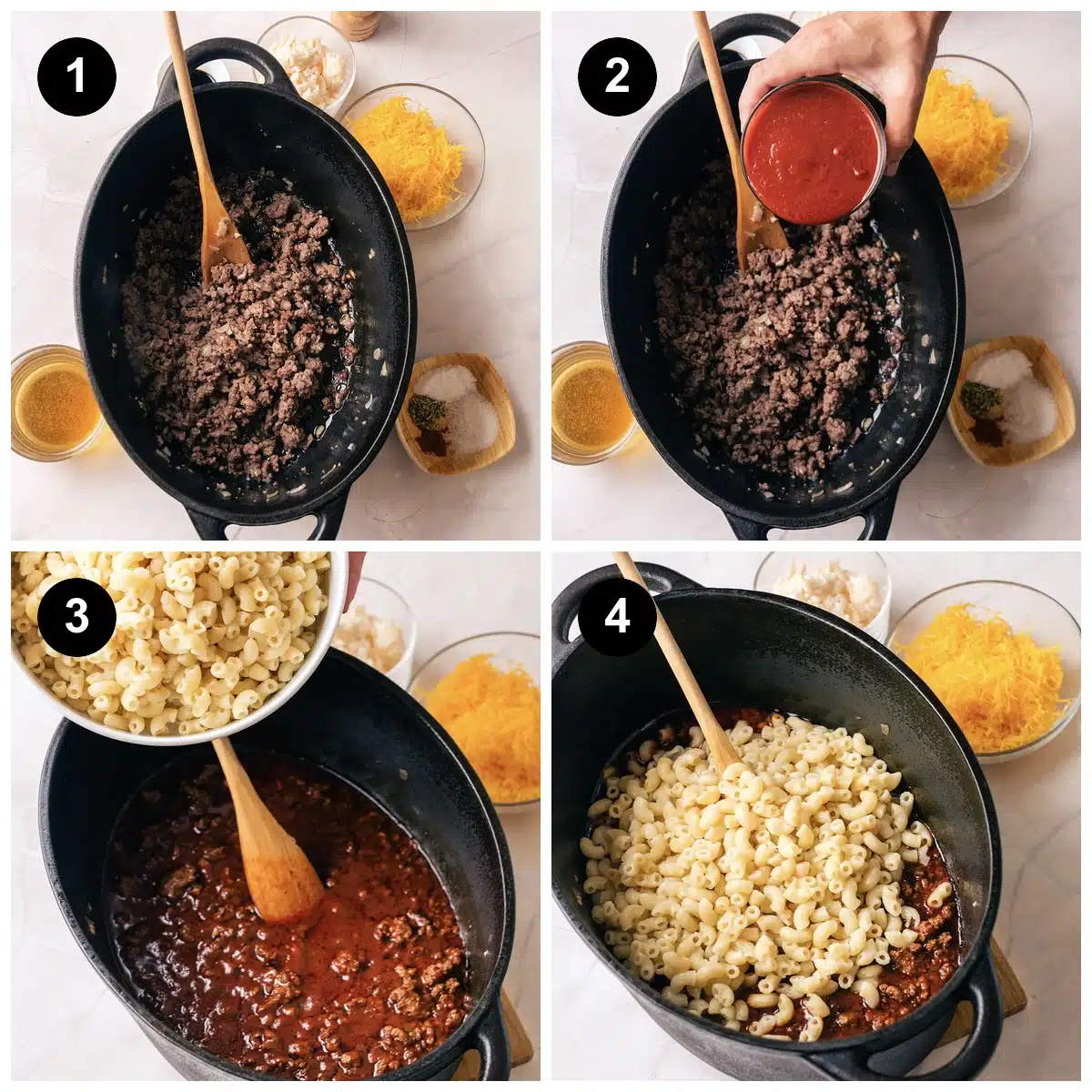
First, bring a large pot of well-salted water to a boil and cook the pasta for two minutes less than the package says. It will finish cooking in the sauce. Drain it and set it aside.
Next, heat the olive oil in a Dutch oven over medium heat and cook the onion for three to four minutes, until soft and just turning gold at the edges. Stir in the garlic for thirty seconds. Add the ground beef and cook, breaking it up with a wooden spoon, for six to eight minutes, until browned all over with no pink left. Spoon off the fat if there is more than a tablespoon or two.
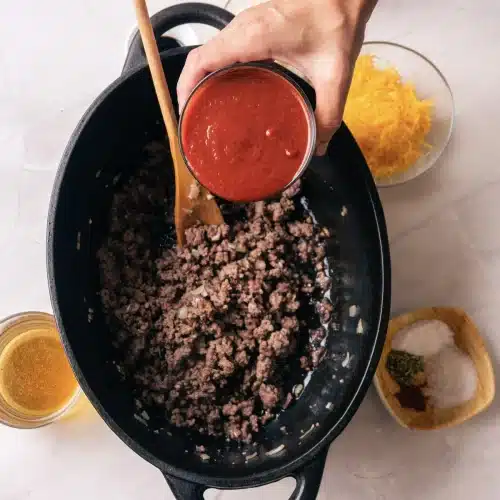
Then pour in the tomato sauce and broth and add the Worcestershire, Italian seasoning, paprika, sugar, salt and pepper. Bring it to a simmer, lower the heat, and let it bubble gently for ten minutes so the sauce thickens and the flavors settle. Taste it and adjust the salt before the pasta goes in, because the pasta will dilute it.
Finishing with the Cheese
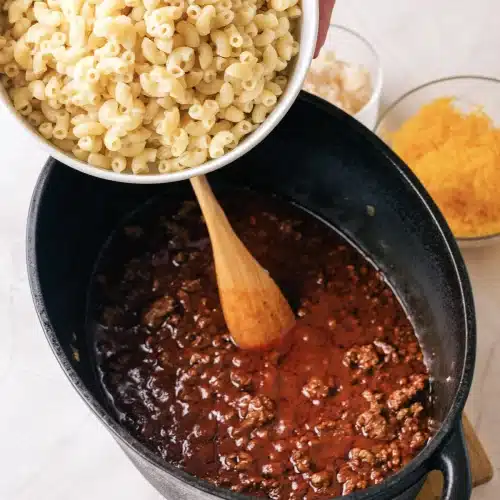
After that, tip the drained pasta into the sauce and stir until every piece is coated. Finally, scatter the cheddar and mozzarella evenly over the top, put the lid on, and leave it over low heat for three to four minutes, until the cheese has melted into a soft layer. Do not stir it in. Scatter the parsley over the top and serve straight from the pot.
If you would rather have a browned, bubbling top, the pot can go under the broiler for two to three minutes instead of under the lid, as long as the handles are oven-safe.
How To Tell When Homemade Beefaroni Is Done
The beef is done when there is no pink left and the crumbles have browned edges, which takes six to eight minutes over medium heat. Ground beef needs to reach 160°F, and by the time it is browned and then simmered for ten minutes in sauce it is well past that, so a thermometer is not necessary here.
The sauce is ready when it has thickened enough that a spoon dragged across the bottom of the pot leaves a trail for a second before it closes. Too thin and it will pool in the bottom of the bowl; if that happens, simmer it uncovered for five more minutes before adding the pasta.
The cheese is the last check. Homemade beefaroni is ready to serve when the mozzarella has gone from white and matte to glossy and soft, and a spoon pushed in pulls up a stretch of it. That is three to four minutes under the lid over low heat. Longer than that and the pasta underneath keeps cooking.
Make It Ahead
The sauce can be made up to three days ahead and kept in the fridge, or frozen for three months. Reheat it in the pot with a splash of broth, cook the pasta fresh, and finish with the cheese as written. This is the version that makes homemade beefaroni a fifteen-minute dinner on the night.
The whole dish can also be assembled ahead, without the cheese. Combine the sauce and the slightly undercooked pasta, cool it, and refrigerate it in the pot or a baking dish for up to two days. Reheat it covered over low heat or in a 350°F oven with a splash of broth until hot through, then add the cheese and melt it.
Storing Homemade Beefaroni
Leftovers keep in an airtight container in the fridge for up to four days. The pasta soaks up sauce as it sits, so reheat it with a spoonful of water or broth, either in a covered pan over low heat or in the microwave in one-minute bursts with a stir in between. It reheats better than most pasta dishes, because the sauce is loose enough to begin with.
Homemade beefaroni freezes well for up to two months. Portion it into freezer containers, leave the parsley off, and thaw overnight in the fridge before reheating. The cheese on top loses a little of its stretch after freezing but the flavor is unchanged. If you know a batch is headed for the freezer, undercook the pasta by an extra minute so it has room to soften on the reheat.
Variations and Substitutions
Which Pasta Shape to Use (Cavatappi Pictured)
Cavatappi is the corkscrew pasta in the photographs, and it is a very good choice here, because the ridges and the hollow twist hold both the sauce and the melted cheese. Elbow macaroni is the shape the canned version uses and the one most people picture when they hear the word, and it works identically; use the same twelve ounces and the same cooking time minus two minutes. Shells, rotini and small penne all work too. Avoid long pasta and anything so small it turns to mush, like orzo or ditalini.
Other Ways to Change It
Ground turkey or chicken. A straight swap for the beef. Add an extra tablespoon of oil for browning and a little more Worcestershire, because the meat is milder.
Extra vegetables. Diced bell pepper or zucchini in with the onion, or a couple of handfuls of spinach stirred in with the pasta. Mushrooms are good browned with the beef.
Creamy. Stir a half cup of heavy cream or a few spoonfuls of cream cheese into the sauce before the pasta goes in. It brings the dish closer to a stroganoff in richness.
Spicy. A half teaspoon of red pepper flakes with the garlic, or swap the paprika for hot paprika. Pepper jack in place of the mozzarella carries it further.
Different cheeses. Monterey Jack, Colby, Gouda or a spoonful of Velveeta all melt well. Parmesan on top is a good addition but does not melt into a layer on its own.
Gluten-free. Use a gluten-free short pasta and check the label on the Worcestershire, which sometimes contains malt vinegar.
What to Serve with Homemade Beefaroni
This is a rich, cheesy bowl, so the side should be something crisp and cool. A simple green salad with a sharp vinaigrette, a plate of raw cucumber and carrot sticks, or steamed green beans with lemon all do the job. Garlic bread is the obvious extra if the table is hungry.
If you are building a rotation of easy pasta dinners, million-dollar spaghetti casserole is the baked cousin of this dish, and Outback mac and cheese covers the nights when you want the cheese without the tomato.
Homemade Beefaroni FAQ
Frequently Asked Questions
What kind of sauce is used in beefaroni?
A smooth tomato sauce, not a chunky one. This recipe uses plain canned tomato sauce loosened with beef broth and seasoned with Worcestershire, Italian seasoning, paprika and a little sugar. Marinara works in a pinch, but reduce the salt and skip the Italian seasoning, since it is already seasoned.
Can I cook the pasta in the sauce?
Yes. Add an extra cup and a half of broth with the tomato sauce, stir in the dry pasta, cover and simmer for twelve to fourteen minutes, stirring often so it does not stick. The result is softer and the sauce thicker, closer to goulash in texture.
Are goulash and beefaroni the same thing?
No. American goulash is chunkier, with diced tomatoes and often bell pepper, and the macaroni cooks in the pot. Homemade beefaroni has a smoother tomato sauce, pasta cooked separately, and cheese melted over the top.
What can I add to make beefaroni taste better?
Brown the beef properly, use beef broth instead of water, and do not skip the Worcestershire or the pinch of sugar. A tablespoon of tomato paste cooked with the beef for a minute deepens the tomato flavor further, and sharp cheddar rather than mild makes the biggest difference of all.
More Questions About Beefaroni
Good to Know
Can I double the recipe?
Yes, in a large enough pot. Brown the beef in two batches so it browns rather than steams, then double everything else and simmer the sauce for fifteen minutes instead of ten. Melt the cheese under the lid for a minute or two longer.
Why is my beefaroni watery?
The sauce was not simmered long enough, or the pasta was not drained well. Simmer the sauce uncovered until a spoon leaves a trail across the bottom of the pot, and shake the colander before the pasta goes in.
Can I make it in a slow cooker?
Brown the beef and onion first, then cook the sauce on low for four hours. Cook the pasta separately, stir it in for the last twenty minutes, and add the cheese on top with the lid on until melted.
Make the sauce on Sunday and homemade beefaroni becomes a Tuesday dinner that takes fifteen minutes. When the same crowd wants something a little chunkier next week, American goulash is the natural next pot.

Homemade Beefaroni
Save this recipe
Enter your email and I’ll send this recipe straight to your inbox.
Ingredients
For the Sauce and Pasta
- 12 oz cavatappi or elbow macaroni cavatappi pictured
- 1 tbsp olive oil
- 1 medium yellow onion finely chopped
- 3 cloves garlic minced
- 1 lb ground beef 85 percent lean
- 24 oz tomato sauce plain canned, not marinara
- 1 cup beef broth low sodium
- 1 tsp Italian seasoning
- 1/2 tsp sweet paprika optional
- 1 tbsp Worcestershire sauce
- 1 tsp sugar
- salt and black pepper 1 teaspoon salt and 1/2 teaspoon pepper, plus salt for the pasta water
Cheese and Garnish
- 1 1/2 cups sharp cheddar cheese grated from a block
- 1 cup mozzarella cheese low-moisture, shredded
- 2 tbsp fresh parsley chopped
Equipment
- Dutch oven or deep skillet
- Large pot
- Spoon
- Colander
- Baking dish or oven-safe pot (optional)
Instructions
Cook the Pasta
- Boil the pasta. Bring a large pot of well-salted water to a boil and cook the pasta for 2 minutes less than the package says. Drain and set aside.
Make the Meat Sauce
- Soften the onion. Heat the olive oil in a Dutch oven over medium heat and cook the onion for 3 to 4 minutes, until soft and just turning gold. Stir in the garlic for 30 seconds.
- Brown the beef. Add the ground beef and cook, breaking it up with a wooden spoon, for 6 to 8 minutes, until browned with no pink left. Spoon off any fat beyond a tablespoon or two.

- Add the sauce. Pour in the tomato sauce and beef broth, then add the Italian seasoning, paprika, Worcestershire, sugar, salt and pepper.
- Simmer. Bring to a simmer, lower the heat, and cook gently for 10 minutes, until the sauce thickens enough that a spoon leaves a trail across the pot. Taste and adjust the salt.
Combine
- Add the pasta. Tip the drained pasta into the sauce.
- Stir to coat. Stir until every piece of pasta is coated in sauce, then spread it level in the pot.
Melt the Cheese and Serve
- Melt the cheese. Scatter the cheddar and mozzarella evenly over the top, cover, and leave over low heat for 3 to 4 minutes, until the cheese is melted and glossy. Do not stir it in. For a browned top, broil for 2 to 3 minutes instead.
- Serve. Scatter the parsley over the top and serve hot from the pot.