
Potato soup lives or dies on one decision, and it is not which potato you buy. It is how much of the pot you blend. Puree the whole thing and you get something smooth and slightly gluey that nobody asks for twice. Blend about half and you get a bowl that is thick and velvety around chunks of potato that still have bite. That is what anyone who asks for potato soup is actually picturing.

- Thick and velvety without a single extra cup of cream
- A whole pound of bacon, and the rendered fat becomes the base
- About an hour start to finish, with maybe twenty minutes of hands-on work
- Reheats better than it tastes on the first day
- The best potato soup texture comes from blending half the pot, not all of it
- Feeds six generously out of one Dutch oven
This potato soup starts with a pound of thick-cut bacon and never lets the rendered fat go to waste. A small roux made in a separate pan carries cream, tarragon and cilantro into the pot, then two cups of sharp cheddar go in off the heat so nothing breaks. From cold stove to full bowls is about an hour, and most of that is unattended simmering.



What Is Potato Soup, Exactly?
At its plainest, potato soup is potatoes simmered in stock until they collapse enough to thicken their own broth. Every regional version builds from there. Irish cooks lean on leeks and butter, New England cooks push it toward chowder with milk and salt pork, and American diners load it with bacon, cheddar and sour cream until it reads like a baked potato in a bowl. All of them are potato soup, and all of them are thickened by the same mechanism.

This potato soup sits firmly in that last camp. The bacon is not a garnish sprinkled on at the end; it is cooked first, and its fat becomes the cooking medium for the onion, celery and garlic. That single move puts smoke into every spoonful rather than only the top inch.
What separates a good bowl from a forgettable one is body. Flour alone gives you paste. Cream alone gives you something rich but thin. The combination used here, a roux plus blended potato starch, gives a texture that coats a spoon and still tastes like vegetables rather than sauce.
Save this recipe
Enter your email and I’ll send this recipe straight to your inbox.
Which Potatoes Work Best
Yukon Golds are the right potato for this soup, and it is worth understanding why. They sit in the middle of the starch range, so they hold their shape in cubes but still release enough starch to thicken the pot. Their flesh is naturally buttery and pale yellow, which makes the finished bowl look richer than it is.
Russets are the high-starch option. They break down fast and thicken beautifully, but the cubes disappear, so you end up closer to a puree whether you wanted one or not. If Russets are what you have, cut them larger and shorten the simmer. Waxy reds sit at the other end: they hold their cubes perfectly and contribute almost no thickening, which leaves the broth loose. Neither one ruins a pot of potato soup, but neither gives you the texture this recipe is built around.
Potatoes USA keeps a useful breakdown of the seven potato types and how each one behaves, and it is worth two minutes if you have ever wondered why one bag turns to mush and the next stays firm.
Peel them. This is one of the few places where skins genuinely hurt, because they separate during the simmer and float around as papery flecks. Save the rustic skin-on treatment for a chunky soup that never meets a blender.
Ingredient Notes
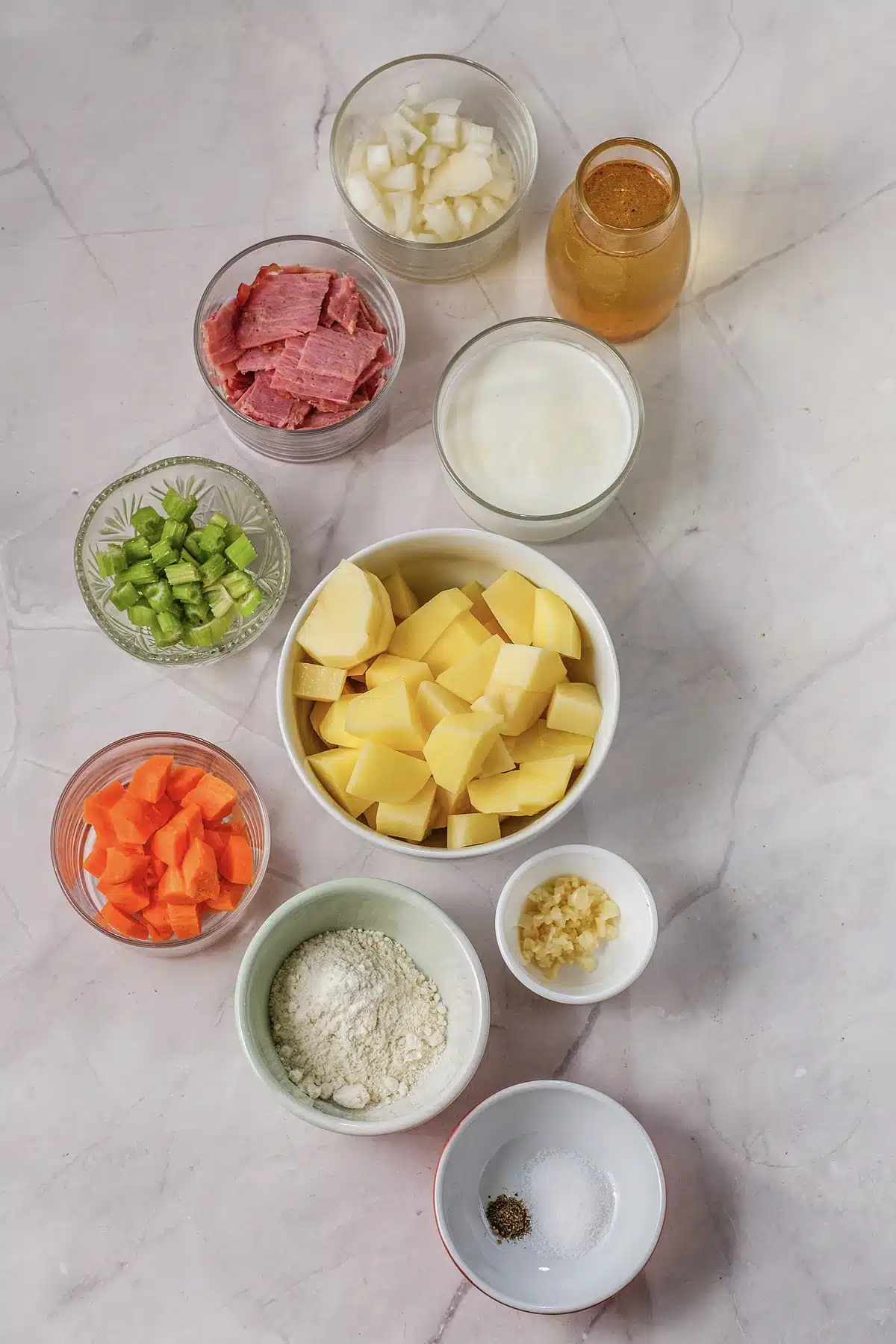
- Thick-cut bacon. A full pound, cut into half-inch pieces. Thin bacon crisps to nothing and gives up far less fat, and the fat is the point. Reserve a quarter cup of it in the pot and drain the rest.
- Yukon Gold potatoes. Two and a half pounds, peeled, in three-quarter-inch cubes. They are the backbone of the potato soup and the only ingredient worth being fussy about. Cut them evenly or the small ones dissolve while the large ones stay raw.
- Onion, celery and garlic. The aromatic base goes straight into the bacon fat. Give the onion and celery a full five minutes before the garlic joins them, because garlic burns long before onion softens.
- Low-sodium chicken stock. Five cups, and low-sodium matters here. Between the bacon and two cups of cheddar there is already plenty of salt in play.
- Butter and all-purpose flour. Four tablespoons and a quarter cup, cooked together for a minute or two in a separate skillet. Making the roux apart from the pot means you can whisk out lumps without fighting the potatoes.
- Heavy cream. A cup and a quarter, whisked into the roux rather than poured into the pot. Half-and-half works, though the finish is noticeably lighter.
- Sharp cheddar. Two cups, grated from a block. Bagged shredded cheese is coated with starch to stop it clumping, and that coating turns grainy in a hot liquid.
- Fresh tarragon and cilantro. An unusual pairing and the reason this tastes like more than the sum of its parts. Tarragon brings a faint anise note, cilantro brings brightness. Use parsley and a pinch of dried thyme if the combination is not for you.
How To Make Potato Soup
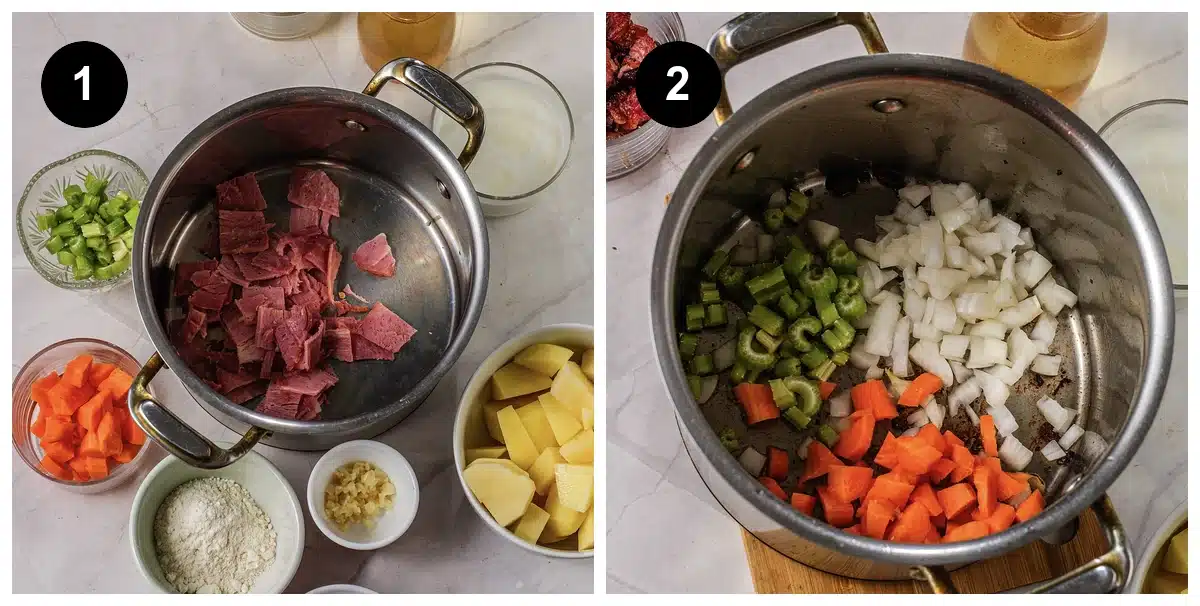
First, render the bacon. Cook it in a Dutch oven over medium-high heat for five to ten minutes until crisp, stirring now and then. Lift it out onto paper towels and pour off all but about a quarter cup of the fat.
Next, build the aromatics. Add the diced onion and celery to the reserved fat and cook them for five minutes, until they soften and turn translucent at the edges. Stir in the minced garlic and give it another minute or two, just until you can smell it.
Then add the potatoes. Toss the cubes in the fat for three or four minutes so they pick up flavor before any liquid arrives. Return the bacon, pour in enough stock to cover everything, cover the pot and simmer for fifteen to twenty minutes until a cube gives way easily to a fork.
After that, make the roux. Melt the butter in a separate skillet, whisk in the flour and cook it for a minute or two, then add the cream gradually while whisking. Stir in the tarragon and cilantro, bring it barely to a boil and let it thicken for five minutes.
Finally, combine and finish. Pour the cream mixture into the pot, then blend about half the potato soup until silky and stir it back through. Take the pot off the heat, add the cheddar a handful at a time, and season with salt and pepper once the cheese has melted.
How Thick Should It Be?

Good potato soup coats a spoon without gluing it in place. Drag a spoon across the surface and the trail should close slowly rather than snapping shut. If it closes instantly the pot needs more blending, and another minute with an immersion blender usually fixes it. If the spoon stands up on its own you have gone too far, and a splash of warm stock brings it back.
Remember that it keeps thickening as it cools, and it thickens again overnight in the fridge. Leave it very slightly looser than you want it at the table, because the difference between right and stodgy is about two minutes of standing time.
Make It Ahead
Potato soup is a strong candidate for cooking ahead, as long as you stop at the right point. Everything up to the cheese can be done a day early. Cook the bacon, build the base, simmer the potatoes and blend, then cool the pot and refrigerate it. The next day, reheat gently, whisk the cream mixture in fresh and add the cheddar off the heat.
Splitting the work that way protects the two things that suffer from a second heating: dairy separates and cheese goes grainy. It also turns a weeknight dinner into a fifteen-minute job, which is usually the whole reason for cooking ahead.
Chop the bacon, dice the onion and celery and cube the potatoes the night before if a full head start is not practical. Cubed potatoes will darken in air, so keep them submerged in cold water and drain them well before they hit the fat.
Storing Potato Soup

Covered in the fridge, potato soup keeps three to four days and honestly improves on day two. Reheat it low and slow in a saucepan, stirring often, and add a splash of stock or milk to loosen it. A microwave works if you stop and stir every thirty seconds, though the edges will always heat faster than the middle.
Freezing is the harder question. Cream and cheese separate on thawing, and cooked potato turns mealy. If you want a freezer stash, stop before the cream and cheese go in, freeze the base flat in a bag for up to three months, then thaw it overnight and finish it fresh.
Never leave the pot on a warm stove for hours to cool. Dairy-rich soups sit in the temperature danger zone longer than you would expect, so decant it into shallow containers and refrigerate within two hours.
Variations and Substitutions
Smoked sausage. Swap the bacon for a pound of sliced kielbasa browned in a tablespoon of oil. You lose some rendered fat, so add butter to make up the difference.
Vegetarian. Use vegetable stock, skip the bacon and start with three tablespoons of butter. Half a pound of sliced cremini mushrooms browned hard in that butter restores most of the savory depth.
Loaded baked style. Finish each bowl with sour cream, extra cheddar, scallions and more bacon. It is the version children ask for and it takes ninety seconds.
Leek and potato. Replace the onion with two large leeks, white and pale green parts only, and leave out the cheddar. It is the oldest potato soup in the book for a reason. Blend the whole pot for a closer approximation of a classic French soup.
Greens. Two big handfuls of chopped kale or spinach stirred in during the last five minutes add color and stop the bowl feeling quite so heavy.
Spicy. A chopped jalapeno with the onion, or a teaspoon of chipotle in adobo with the garlic, cuts through the dairy without turning the pot into chili.
What to Serve with Potato Soup

Potato soup wants bread, and there is no point pretending otherwise. A crusty sourdough, a torn baguette or warm cheddar bay sausage balls all do the same job, which is giving you something to chase the last inch around the bowl with.
Beyond bread, a sharp green salad earns its place. This is a rich bowl, and something acidic alongside it resets the palate between spoonfuls. A simple vinaigrette with plenty of mustard is enough; do not bring a creamy dressing to a creamy table.
Portion the potato soup as a main course for six or as a starter for ten. If it is the whole dinner, half a sandwich on the side is traditional for a reason, and a grilled cheese cut into fingers is hard to argue with.
Potato Soup FAQ
Frequently Asked Questions
Why is my potato soup gluey?
Over-blending. Potato starch granules burst under a blender blade and release long chains that turn slick and elastic, which is the same reason mashed potatoes go wrong in a food processor. Blend half the pot at most, and use short pulses rather than a continuous run.
Can I use milk instead of cream?
Yes, though whisk it into the roux rather than adding it to the pot, and keep the heat low afterwards. Milk has far less fat to protect it, so it curdles more readily against acid or high heat.
How do I thicken potato soup without flour?
Blend more of it, or mash a cup of the cooked cubes against the side of the pot. Potato soup thickens perfectly well on its own starch. A slurry of one tablespoon of cornstarch in two tablespoons of cold water, stirred in and simmered for a minute, also works and keeps the recipe gluten-free.
Do I have to peel the potatoes?
For this recipe, yes. Skins loosen during a long simmer and float free as thin flecks that feel unpleasant against a smooth base. Skins are fine in a chunky, rustic version that never sees a blender.
More Questions About Creamy Soups
Good to Know
Why did my cheese go grainy?
Either the pot was too hot or the cheese was pre-shredded. Add cheese off the heat, and grate it yourself from a block so there is no anti-caking starch involved.
Can I make this in a slow cooker?
Cook the bacon and aromatics on the stove first, then transfer everything except the cream and cheese to the slow cooker for four hours on low. Blend, then stir the dairy in at the end.
How many servings does one pot make?
Six generous bowls as a main, or ten smaller cups as a first course. The recipe doubles cleanly if your pot is large enough to leave headroom for blending.
If this bacon-and-cheddar style of potato soup is what you are after, a creamy Cajun potato soup takes the same base somewhere spicier, and a creamy shrimp chowder uses the identical roux trick with seafood instead of pork.

Creamy Potato Soup with Bacon and Cheddar
Save this recipe
Enter your email and I’ll send this recipe straight to your inbox.
Ingredients
Soup Base
- 1 lb (450 g) thick-cut bacon cut into 1/2-inch pieces
- 1 medium yellow onion finely diced
- 2 stalks celery diced
- 3 cloves garlic minced
- 2 1/2 lb (1.13 kg) Yukon Gold potatoes peeled and cut into 3/4-inch cubes (about 5 medium)
- 5 cups (1.2 l) low-sodium chicken stock plus more as needed
Roux & Cream
- 4 tbsp (60 g) unsalted butter
- 1/4 cup (32 g) all-purpose flour
- 1 1/4 cups (300 ml) heavy cream
- 1 tbsp fresh tarragon finely chopped (or 1 tsp dried)
- 2 tbsp fresh cilantro finely chopped
- 2 cups (200 g) sharp cheddar cheese freshly grated, divided
- salt and black pepper to taste
- extra chopped cilantro, cheddar, and bacon for serving
Equipment
- Dutch Oven
- Skillet
- Blender or Potato Masher
Instructions
Bacon and Aromatics
- Cook the bacon: In a Dutch oven over medium-high heat, cook the chopped bacon until crisp, 5 to 10 minutes, stirring occasionally. Lift it onto paper towels and pour off all but about 1/4 cup of the rendered fat.

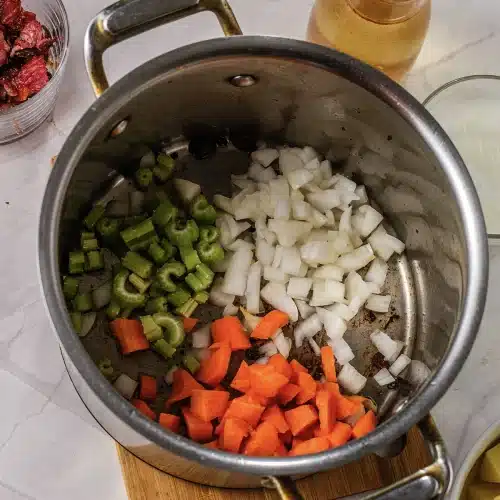
- Soften the vegetables: Add the diced onion and celery to the reserved bacon fat. Cook for 5 minutes, until softened and translucent at the edges, then stir in the minced garlic and cook 1 to 2 minutes more, just until fragrant.
Build and Simmer
- Build the base: Stir in the cubed potatoes and cook 3 to 4 minutes so they pick up flavor. Return the bacon to the pot, pour in enough chicken stock to cover, cover the pot and simmer 15 to 20 minutes, until a cube gives way easily to a fork.
- Make the roux: In a separate skillet, melt the butter over medium heat. Whisk in the flour and cook 1 to 2 minutes, then add the heavy cream gradually, whisking until smooth. Stir in the tarragon and cilantro, bring barely to a boil and cook 5 minutes, until slightly thickened.
Blend and Finish
- Combine and blend: Pour the cream mixture into the pot and stir well. Blend about half the soup until silky, using an immersion blender or a countertop blender in batches, then stir it back through.
- Finish with cheese: Take the pot off the heat and wait 30 seconds. Stir in most of the cheddar a handful at a time, reserving some for topping, until fully melted. Season with salt and black pepper to taste.
- Serve: Ladle into bowls and top with the reserved cheddar, the crisp bacon and plenty of chopped cilantro or scallions. Serve hot with crusty bread.