
There is no mozzarella in these meatball sandwiches and no cheese pull at the end, which sounds like a loss until you taste what goat cheese does instead. It goes in twice, once into the meatball mixture and once into the sauce.
Inside the meat it behaves like ricotta but with an edge, keeping everything tender while cutting the richness of an equal split of beef and hot Italian sausage. Stirred into the marinara off the heat, it turns the tomatoes a pale coral and gives the sauce enough body to cling to bread instead of running down your wrist. Fennel seeds in the mix tie the two halves together.
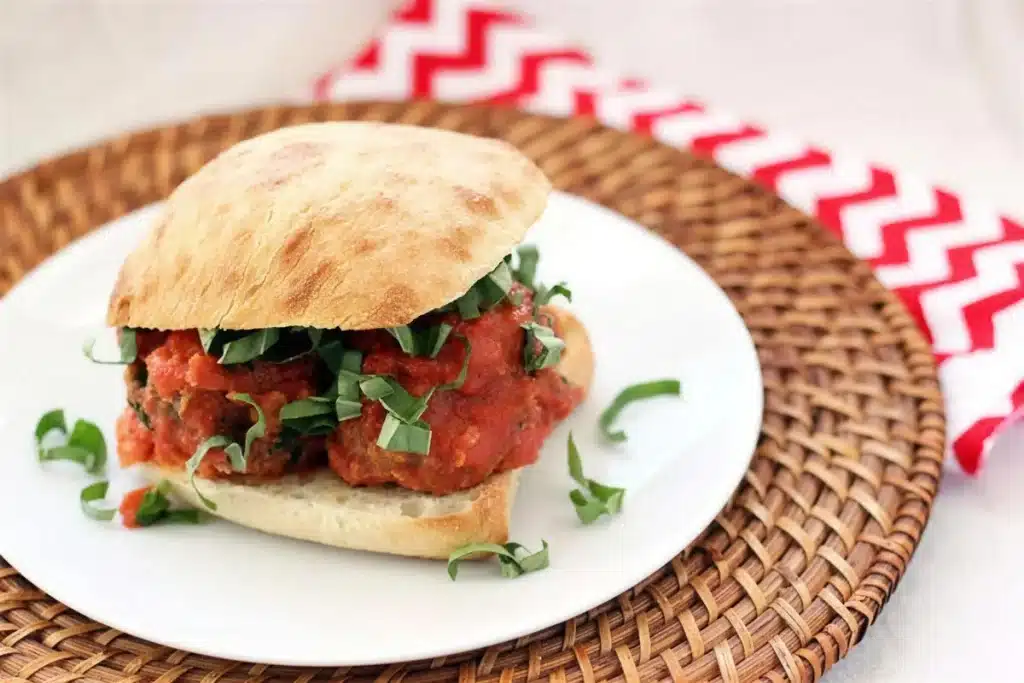
- Goat cheese working two jobs, in the meat and in the sauce
- Baked rather than fried, so one sheet pan replaces a spattering skillet
- Hot Italian sausage brings the seasoning, so the spice list stays short
- The meatballs and sauce both freeze, which makes this a stocked-freezer dinner
- Toasted ciabatta rubbed with raw garlic, the one step nobody skips twice
- Four sandwiches in under an hour, most of it hands-off

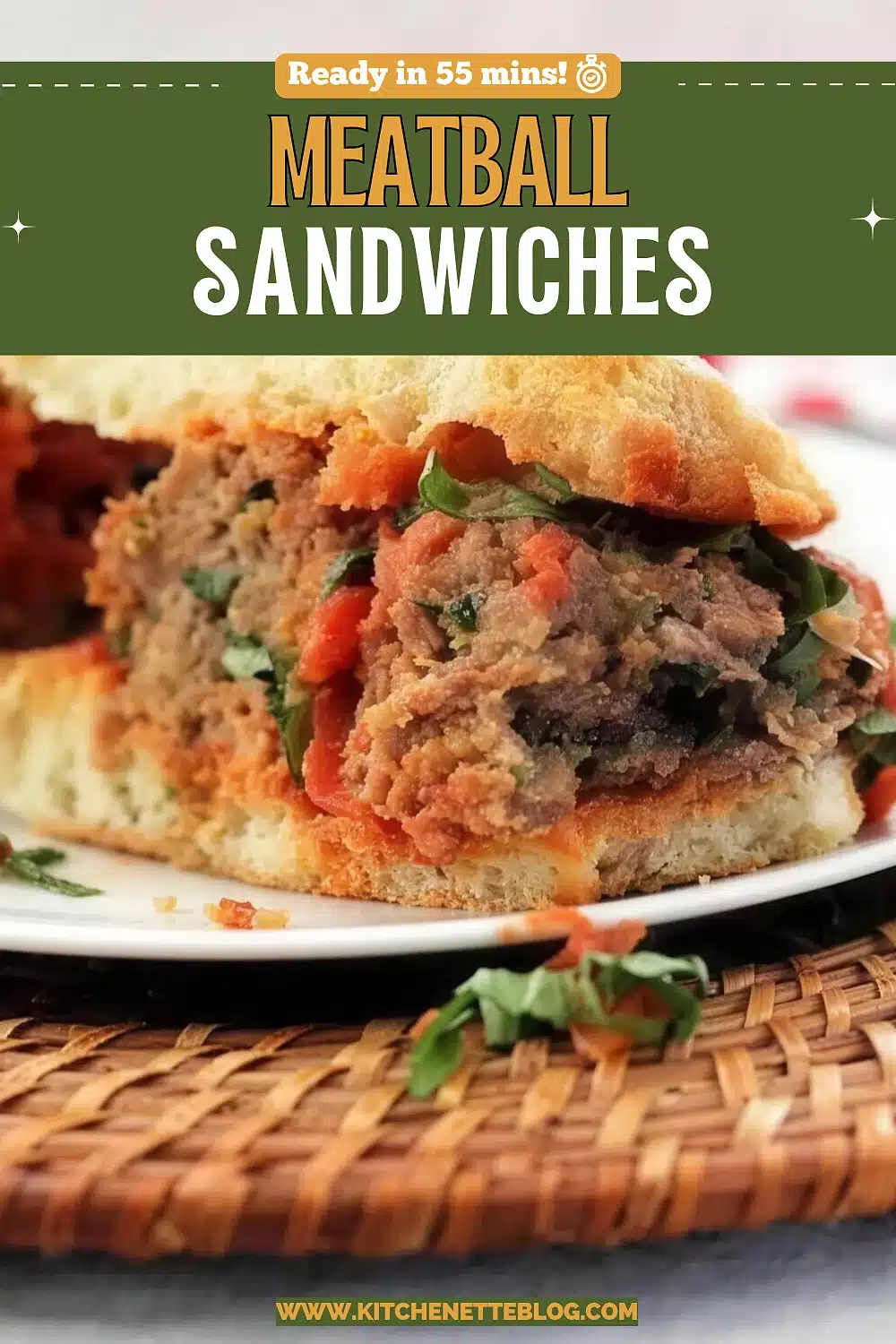

Everything below assumes you want them for dinner tonight. Skip to the make-ahead section if you are cooking for a crowd, because almost all of this can be done days in advance.
- What Makes These Meatball Sandwiches Different
- Ingredient Notes
- Why Goat Cheese Goes In Twice
- Choosing the Bread
- How To Make Meatball Sandwiches
- How To Tell When the Meatballs Are Done
- Make It Ahead
- Storing Meatball Sandwiches
- Reheating Without a Soggy Roll
- Variations and Substitutions
- What to Serve with Meatball Sandwiches
- Meatball Sandwiches FAQ
What Makes These Meatball Sandwiches Different
The standard formula is beef, breadcrumbs, jarred marinara and a blanket of melted mozzarella under the broiler. It works. It is also the reason most meatball sandwiches taste like each other.
Three things change here. The meat is half hot Italian pork sausage, which arrives already seasoned with fennel, garlic and chile, so you are not building flavor from a spice rack. The binder is panko plus goat cheese rather than milk-soaked bread, which keeps the interior loose without turning it pasty. And the sauce is finished with more goat cheese, so it behaves like a light vodka sauce without any cream or vodka.
The result eats softer than a classic sub, and these meatball sandwiches lean on bread and basil where others lean on cheese. There is no elastic cheese layer holding it together, so the bread has to do more work, which is why the next few sections spend time on it.
Save this recipe
Enter your email and I’ll send this recipe straight to your inbox.
Ingredient Notes
Quantities are on the recipe card. These are the ones worth thinking about.
- Ground beef, 80/20: One pound. Leaner than that and baked meatballs go dry, since there is no frying fat to baste them.
- Hot Italian pork sausage: Three quarters of a pound, squeezed out of its casings. Sweet Italian works if you would rather not have heat, but add a pinch of red pepper flakes to the sauce to compensate.
- Goat cheese: A quarter cup in the meat, a quarter cup in the sauce. Plain fresh chevre from a log, at room temperature so it disappears when stirred.
- Fennel seeds: A teaspoon and a half, and do not skip them. They echo the sausage and are the single ingredient people cannot identify but always notice.
- Panko: Dry, straight from the box. Regular breadcrumbs pack tighter and give you a denser ball.
- Crushed tomatoes: One 28 ounce can. Crushed rather than whole, because the sauce only simmers ten minutes and there is no time to break tomatoes down.
- Ciabatta: See the bread section. It matters more than the cheese.

Why Goat Cheese Goes In Twice
Fresh goat cheese is roughly half water and it has no melting stretch at all, which is exactly why it is useful in both places.
In the meat, it holds moisture the way ricotta does in a classic polpette, but it is acidic, so it also seasons. A quarter cup across nearly two pounds of meat does not read as goat cheese in the finished ball. It reads as tenderness and a faint tang behind the fennel.
In the sauce, stirred in at the end over low heat, it emulsifies rather than melting into strings. The tomatoes lose their sharp front edge, the color shifts from red to coral, and the sauce thickens just enough to stay on bread. Add it while the pan is boiling and it will split into curds, so pull the heat down first.
Use the same log for both. Anything aged, ash-ripened or pre-crumbled has been dried out and will stay grainy.
Choosing the Bread
This is where most meatball sandwiches fail, and it is worth being fussy.
You want a roll with a crisp crust and an open, chewy crumb: ciabatta first, then a sturdy Italian sub roll, then a demi baguette split lengthways. What you are avoiding is soft supermarket hoagie rolls, which are already close to saturated before the sauce arrives.
Toast the cut sides properly. Under a broiler for two minutes, in a dry skillet, or in a 400F oven for five is all the same to the bread. What matters is that the surface dries and browns, because a toasted face resists liquid for far longer than a soft one.
Then rub the hot cut side with a peeled raw garlic clove. The rough toasted surface grates the clove as you drag it, and it perfumes the whole sandwich in a way that garlic cooked into the sauce never manages. Do it while the bread is still hot, since a cooled roll barely takes any.
How To Make Meatball Sandwiches
The meatballs bake while the sauce simmers, so both finish at the same moment.
- First, combine the panko, goat cheese, basil, parsley, eggs, garlic, milk, fennel seeds, salt and pepper in a large bowl, then add the beef and sausage and mix gently with your hands until just combined.
- Next, roll or scoop into balls about 2 1/4 inches across, set them on parchment-lined sheets and bake at 400F for 18 to 20 minutes, to an internal 160F.
- Then warm the olive oil in a wide pan, soften the onion with a pinch of salt until translucent, and add the red pepper flakes for a minute.
- After that, pour in the crushed tomatoes with salt, sugar and pepper and simmer for 10 minutes, then taste and adjust.
- Drop the heat to low and stir in the goat cheese until the sauce turns pale coral and looks glossy rather than grainy.
- Slide the baked meatballs into the sauce and turn them gently to coat, leaving them there over the lowest heat while you deal with the bread.
- Finally, split and toast the ciabatta, rub each hot cut face with a raw garlic clove, pile on three or four meatballs with plenty of sauce, and finish with a heap of torn basil.
Baking the Meatballs Instead of Frying
Frying gives a better crust, but it also means standing over spitting fat and turning thirty meatballs by hand. A hot oven browns the tops and bottoms well enough, and every one of them ends up in sauce anyway, where a fried crust would soften within minutes. Use two sheets rather than crowding one, or they steam.

How To Tell When the Meatballs Are Done
Use a thermometer, because a mixed beef and pork ball gives you no reliable visual cue.
The National Pork Board’s guidance on pork cooking temperatures puts ground pork at 160F, which is higher than whole cuts like tenderloin because grinding distributes surface bacteria throughout the meat. Ground beef lands at the same number, so 160F covers both. Probe the center of the largest ball on the sheet, not one at the edge.
Twenty minutes at 400F is right for balls around 2 1/4 inches. Smaller ones can be done at fifteen. If you are unsure, pull the tray at eighteen and check, since they carry over a few degrees while you build the sauce and then sit in hot tomato afterwards.
The one thing to avoid is leaving them in until they look dark and crusted. That is well past 160F, and no amount of sauce brings a dry meatball back.
Make It Ahead
Almost every part of these meatball sandwiches can be done in advance, which is what makes them a good recipe for feeding people.
Mix and roll the meatballs up to a day ahead and keep them raw on a covered tray in the fridge. They hold their shape better after a rest, and a cold ball spreads less in the oven.
Make the sauce up to three days ahead, but hold back the goat cheese. Reheat gently and stir it in at the end, since a sauce that has already been finished with cheese and then reboiled will look grainy.
The only part that has to happen at the last minute is the bread. Toast, rub with garlic and fill within about ten minutes of eating, and carry the sauce to the table in the pan so nobody assembles early.
Storing Meatball Sandwiches
Store the parts, never the assembled sandwich.
- Fridge: meatballs in their sauce, airtight, up to 4 days. They improve on day two.
- Freezer: meatballs and sauce together, up to 3 months. Freeze flat in bags and thaw overnight.
- Raw: freeze rolled uncooked balls on a tray, then bag them. Bake from frozen at 400F for about 28 minutes.
- Bread: keep rolls in a paper bag at room temperature and toast to order. Assembled meatball sandwiches are soggy within an hour.
Reheating Without a Soggy Roll
Reheat the filling and the bread separately, always. Meatball sandwiches are the one thing sub shops get right and home cooks skip.
Warm the meatballs and sauce in a covered pan over medium-low with a splash of water, turning them every couple of minutes, for about eight minutes from cold. A microwave works but heats unevenly and can burst a meatball, so go in thirty second bursts at half power.
Meanwhile toast fresh bread. If you must reheat an already-built sandwich, wrap it in foil and give it fifteen minutes at 350F, then unwrap and give it three more so the crust dries out again. It will never be as good as it was, but it will be a great deal better than a microwave leaves it.
Variations and Substitutions
Meatball sandwiches take changes well as long as the fat ratio in the meat stays roughly where it is.
- All beef: use a full 1 3/4 pounds of 80/20 and add a teaspoon of fennel seeds, a fat pinch of chile flakes and an extra clove of garlic to replace the sausage seasoning.
- Turkey: dark meat only, plus an extra tablespoon of olive oil in the mix. Breast meat bakes into something closer to a cork.
- Ricotta instead: a scant half cup of whole milk ricotta in the meat, and mozzarella on top under the broiler. This is the traditional route and it is very good.
- Spicier: a whole teaspoon of chile flakes in the sauce and a drizzle of chili oil over the finished sandwich.
- Baked open faced: lay the halves cut side up on a sheet, top with meatballs and sauce and grill for three minutes so the edges char.
- Party size: roll the mixture into 1-inch balls for about forty cocktail meatballs and serve them out of the pan with toothpicks.

What to Serve with Meatball Sandwiches
Meatball sandwiches are heavy and soft, so everything alongside should be sharp, crisp or cold.
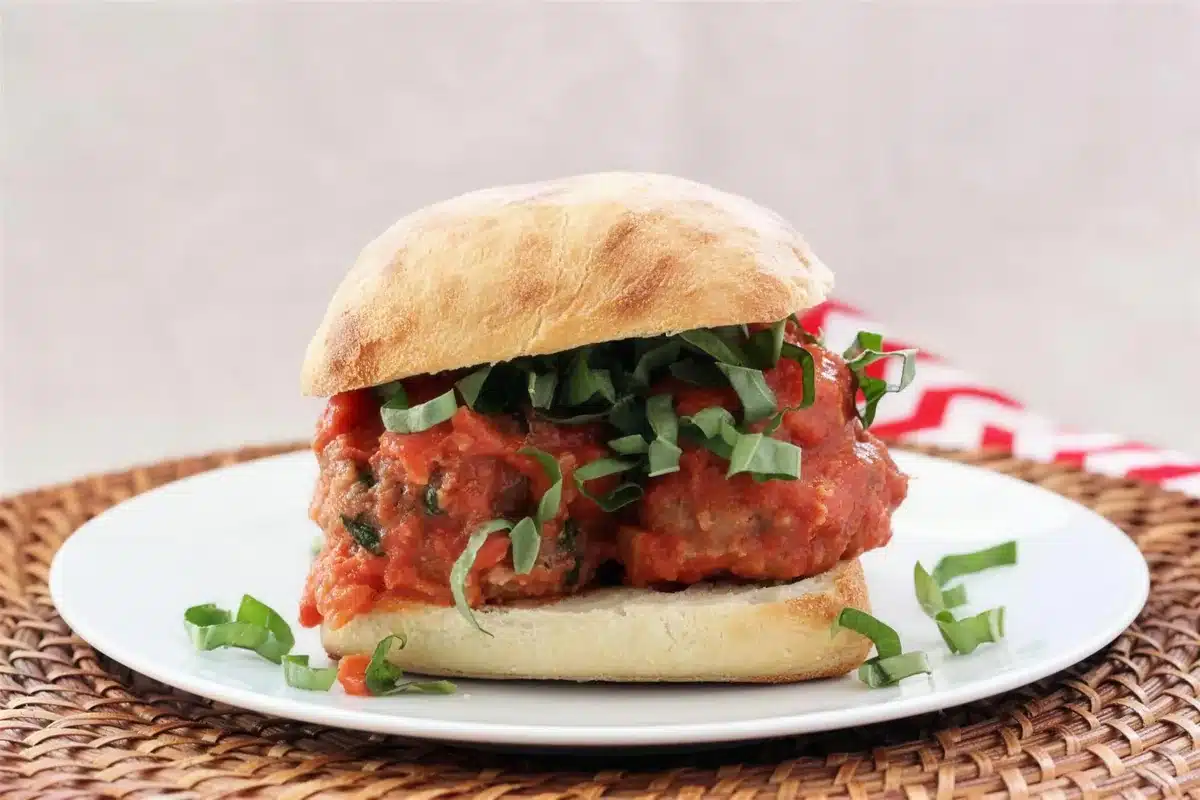
- A bitter salad with a hard vinaigrette. Escarole, radicchio and a lot of lemon.
- Salt and vinegar chips, which sounds lazy and is genuinely the best pairing here.
- Giardiniera or pickled peppers straight from the jar, on the side or tucked into the roll.
- If you are feeding a crowd, add a second, lighter sandwich to the table, like this grilled chicken panini.
- Something small and Italian to start, such as stuffed prosciutto meatballs with drinks.
Here is what readers ask most often about meatball sandwiches.
Meatball Sandwiches FAQ
Frequently Asked Questions
What goes on a meatball sub?
Traditionally, meatballs in tomato sauce, melted mozzarella or provolone, grated parmesan and sometimes sauteed onions and peppers, all in a toasted Italian roll. This version drops the melted cheese and puts goat cheese into the sauce instead, then finishes with raw garlic on the bread and torn basil on top. The structure is identical; only the dairy changes.
What cheese goes on a meatball sub?
Low-moisture mozzarella is standard because it melts into sheets, with provolone for sharpness and parmesan for salt. Fresh mozzarella looks better than it works, since it releases water into the bread. Fresh goat cheese cannot do a cheese pull at all, which is why it goes into the sauce here rather than on top.
How do you keep meatball sandwiches from getting soggy?
Toast the cut faces of the bread until they are dry and browned, let the meatballs drain for a moment before they go in, and assemble within ten minutes of eating. If you are packing them, keep the sauce in a separate container. A layer of cheese or a thin smear of butter on the toasted face also buys you time by waterproofing the crumb.
More Questions About the Meatballs
Good to Know
Can I use jarred marinara?
Yes, and it is a reasonable shortcut on a weeknight. Warm 24 ounces of a good jar, then stir a quarter cup of goat cheese in off the heat exactly as written, which does most of the work of making it taste homemade. Taste for sugar, because jarred sauces vary wildly.
Why are my meatballs tough?
Almost always overmixing. Work the meat with your fingertips only until the panko and egg disappear, roughly twenty seconds, then stop. Compacting the mixture as you roll does the same damage, which is why wet hands and a light touch matter more than technique.
Can I make them gluten-free?
Yes. Swap the panko for the same volume of gluten-free panko or two tablespoons of almond flour, and use gluten-free rolls. The sauce and the meat mixture contain nothing else that needs changing.
How many meatballs per sandwich?
Three or four at this size, which fills a standard ciabatta roll without anything falling out of the back. The recipe makes about sixteen, so four generous sandwiches with a couple left over for the cook.
Make these meatball sandwiches once and you will start keeping a bag of the meatballs in the freezer. For a completely different take on the same idea, my oven-baked Swedish meatballs go the cream gravy route, and the buffalo chicken meatballs are the ones that disappear fastest at a party.
Sausage & Goat Cheese Meatball Sandwiches
Save this recipe
Enter your email and I’ll send this recipe straight to your inbox.
Ingredients
Meatballs
- 1 pound ground beef 80/20
- 3/4 pound hot Italian pork sausage casings removed
- 1/2 cup panko breadcrumbs
- 1/4 cup fresh goat cheese at room temperature
- 2 large eggs
- 2 tablespoons milk
- 1/4 cup basil chopped
- 1/4 cup parsley minced
- 2 cloves garlic minced
- 1 1/2 teaspoons fennel seeds
- 1 teaspoon kosher salt
- freshly ground black pepper to taste
Goat Cheese Marinara
- 2 tablespoons olive oil
- 1 yellow onion finely diced
- 1 pinch red pepper flakes
- 28 ounces crushed tomatoes one can
- 1 pinch granulated sugar plus more to taste
- 1/4 cup fresh goat cheese at room temperature
- kosher salt and freshly ground black pepper to taste
To Assemble
- 4 ciabatta rolls split
- 1 clove garlic peeled, for rubbing
- 1/4 cup basil torn, for finishing
Instructions
Make the Meatballs
- First, heat the oven to 400F. In a large bowl, combine the panko, goat cheese, basil, parsley, eggs, garlic, milk, fennel seeds, salt and plenty of pepper. Add the beef and the sausage and mix with your fingertips only until the panko disappears, about 20 seconds.
- Next, with wet hands, roll or scoop the mixture into balls about 2 1/4 inches across and set them on two parchment-lined baking sheets. Bake for 18 to 20 minutes, until browned and an instant-read thermometer reads 160F in the center of the largest one.
Make the Goat Cheese Marinara
- Then, while the meatballs bake, warm the olive oil in a wide pan over medium heat. Add the onion with a good pinch of salt and cook, stirring now and then, until translucent. Add the red pepper flakes and cook for 1 minute more.
- After that, pour in the crushed tomatoes with a pinch each of salt, sugar and pepper. Simmer for about 10 minutes, then taste and adjust the salt and sugar until the tomatoes stop tasting sharp.
- Drop the heat to low and stir in the goat cheese until the sauce turns pale coral and looks glossy rather than grainy. Slide the baked meatballs in and turn them gently to coat, then hold them over the lowest heat.
Toast and Build
- Meanwhile, split the ciabatta rolls and toast the cut faces until dry and browned, under a broiler, in a dry skillet or in the oven alongside the meatballs. Rub each hot cut face with the peeled garlic clove.
- Finally, pile 3 or 4 meatballs into each roll with plenty of sauce, scatter the torn basil over the top and serve straight away, while the bread is still crisp.