
Split pea soup is a pound of dried green split peas, a smoked ham hock and a handful of vegetables simmered on the stovetop for about ninety minutes until the peas collapse into something thick, creamy and deeply savory without a drop of cream. It costs very little, it feeds six, and it is one of the few soups that is genuinely better on the second day.
There are two ways to get there in this post. The recipe card is the classic split pea soup with the ham hock and the long simmer. The bowls in the photographs are the quick green pea version from the Variations section: frozen peas, onion and carrot simmered in broth for twenty minutes and blended smooth. Both are worth knowing, and which one you make depends on how much time you have.
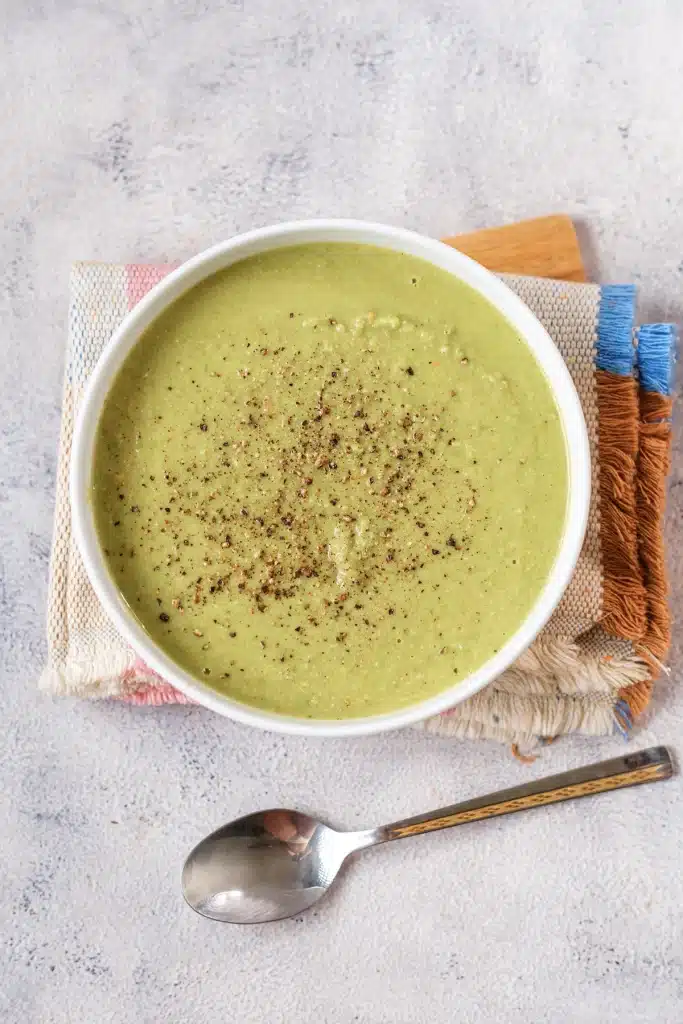
- Split pea soup that is thick and creamy from the peas alone, with no cream or flour
- One pot, ten minutes of chopping, and the stovetop does the rest
- A smoked ham hock gives it depth that diced ham cannot quite match
- Costs a few dollars to make and feeds six generously
- Better on day two, so it is the ideal make-ahead lunch
- A quick 20-minute green pea version for the nights you cannot wait

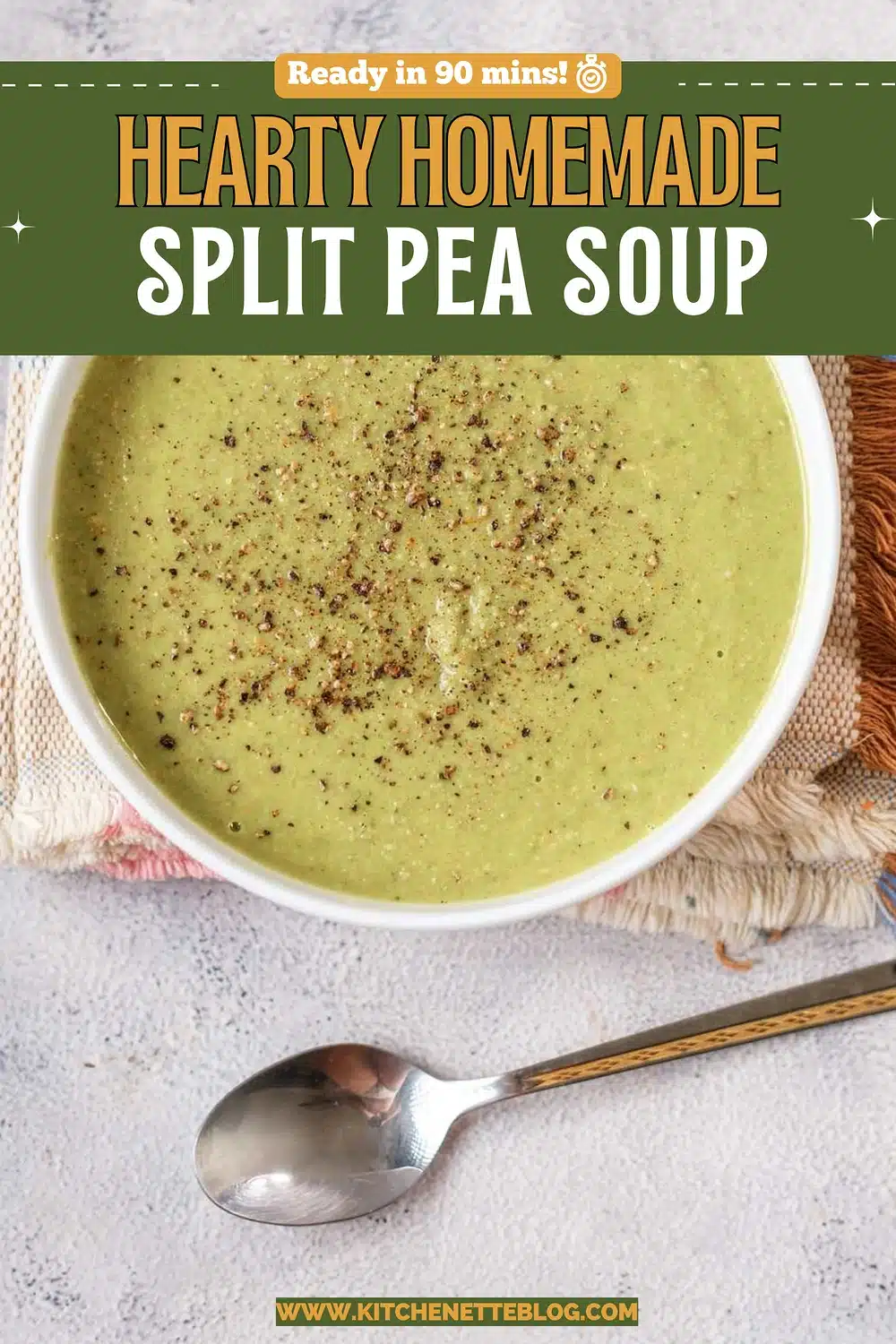
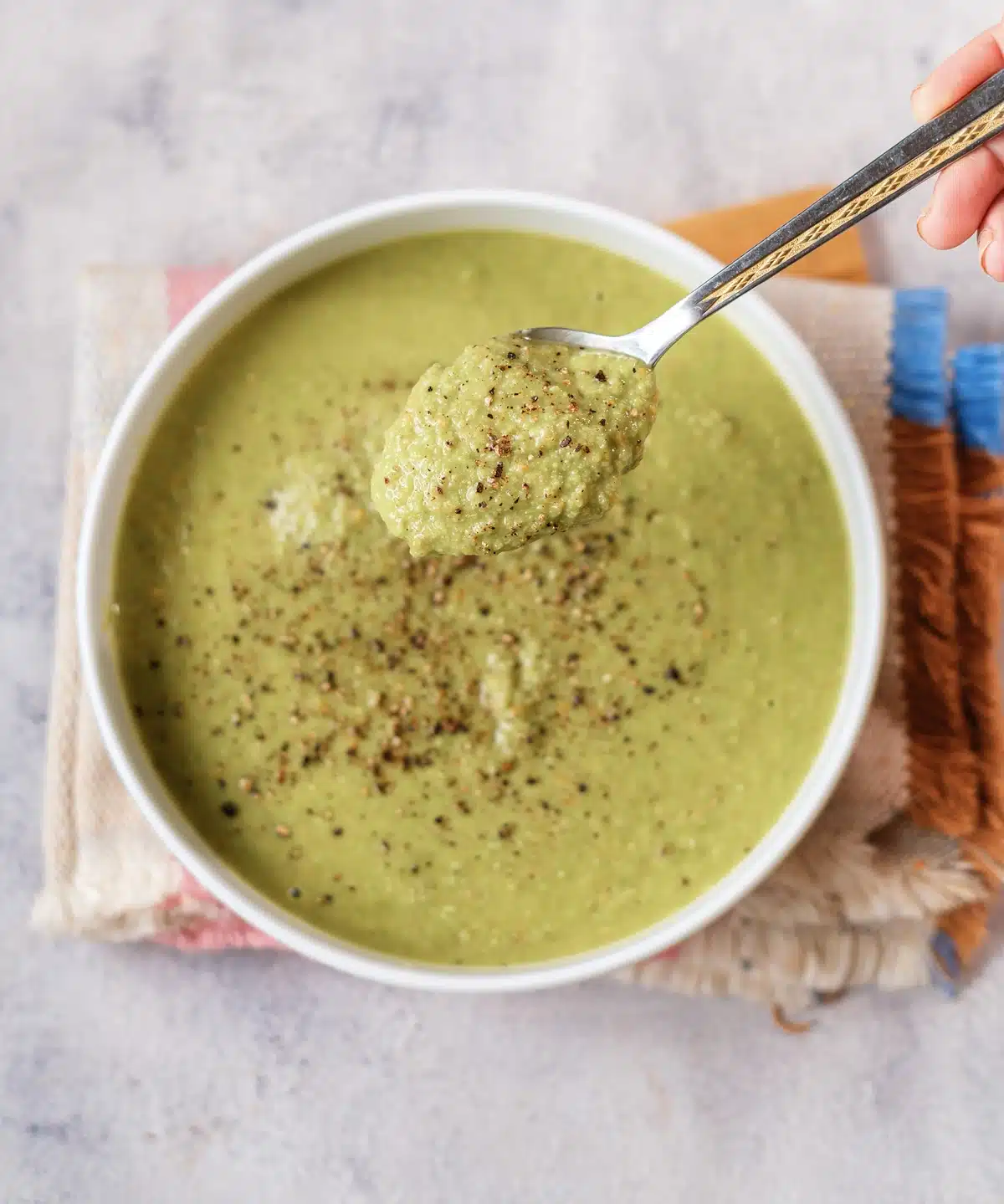
Pictured: the quick green pea version, made with frozen peas, onion and carrot and blended smooth with a stick blender, no ham hock. The recipe card below is the classic dried split pea and ham hock soup.
What Makes Split Pea Soup Thick Without Cream
Split peas are field peas that have been dried, skinned and split in half along the natural seam. Taking the skin off is what makes them different from a whole dried pea, because there is nothing left to hold the pea together once it softens. Simmer them long enough and they simply fall apart into the broth, and the starch they release is what thickens split pea soup into that spoon-coating texture. No roux, no cream, no potato.
That also explains why the soup keeps thickening after it comes off the heat. A pot that looked right at the stove can be nearly solid by morning, and a splash of broth or water when you reheat it brings it straight back.
The USA Dry Pea and Lentil Council groups dry peas with lentils and chickpeas as pulses, and points out that dry peas need no soaking at all. Rinse them, pick out any small stones, and they go straight into the pot.
Save this recipe
Enter your email and I’ll send this recipe straight to your inbox.
Ingredient Notes
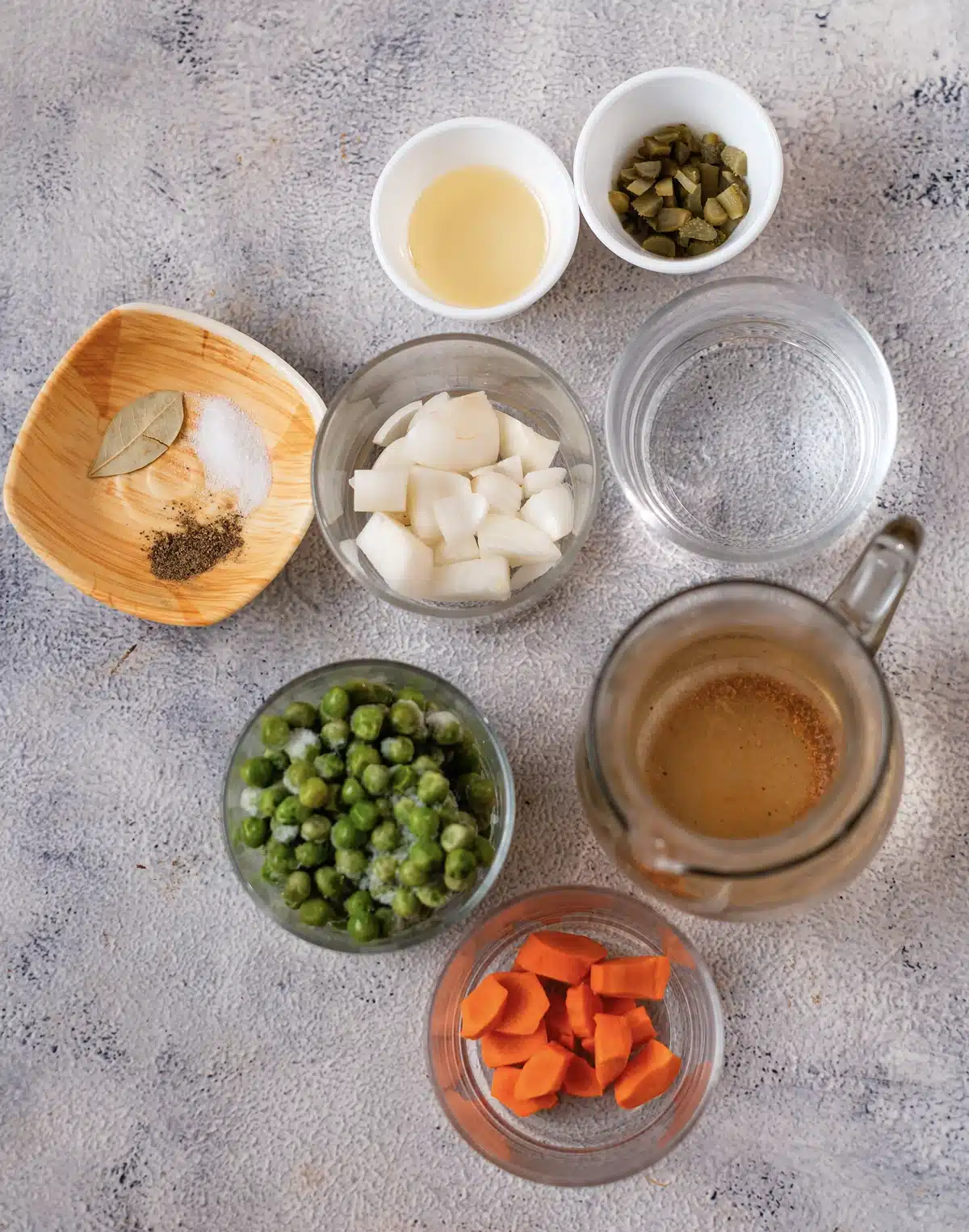
The flat lay above shows the quick green pea version. The classic split pea soup uses the same aromatics with dried split peas and a ham hock in place of the frozen peas, plus celery and garlic. Exact amounts for the classic are in the recipe card, and the quick version is written out in full under Variations.
- Dried green split peas. One pound, rinsed and picked over. Green split peas cook down softer and sweeter than yellow, and a very old bag will take noticeably longer to soften.
- Smoked ham hock. One, and it does two jobs: the smoke and salt season the whole pot as it simmers, and the meat that comes off the bone at the end is the reward for the wait.
- Onion, carrots and celery. One medium onion, two carrots and two celery stalks, all diced small so they soften into the soup rather than sitting in it as chunks.
- Garlic. Two cloves, minced. It goes in with the vegetables, not at the end.
- Olive oil. One tablespoon for the initial saute. Butter works and adds a little richness.
- Bay leaf and dried thyme. One leaf and one teaspoon. Thyme is the herb that reads as split pea soup; a sprig of fresh works if you have it.
- Chicken broth. Eight cups, low sodium, because the ham hock brings plenty of salt of its own.
- Salt and black pepper. Season at the end, once you know how salty the hock has made the soup.
For the Quick Green Pea Version
One pound of frozen green peas replaces the dried split peas, one carrot and one onion replace the full mirepoix, and the ham hock is left out. A spoonful of chopped dill pickle stirred in at the end is optional, and it adds the sharp note the smoked hock would otherwise provide.
Ham Hock, Ham Bone or Diced Ham?
A smoked ham hock is the cut most recipes call for, and for good reason. It is the lower part of the leg, mostly bone, skin and connective tissue with a modest amount of meat, and all of that collagen melts into the broth over ninety minutes and gives split pea soup a body no other cut can match. Most hocks give a cup or so of shredded meat, which is enough to run through six bowls.
A leftover ham bone from a baked ham is the other classic route, and arguably the better one, because there is usually far more meat on it. Use it exactly the same way, and expect to need less salt.
Diced ham or bacon works when you have neither. Stir a cup of diced ham in with the broth, or render four slices of chopped bacon in the pot before the onions go in, and add a half teaspoon of smoked paprika to make up for the missing bone. Leftover ham from that route goes into ham tetrazzini.
How To Make Split Pea Soup on the Stovetop
Rinse the peas in a sieve under cold water and pick through them for the occasional stone. Everything else is heat and patience.
First, heat the olive oil in a Dutch oven over medium heat and add the onion, carrots, celery and garlic. Cook them for five to seven minutes, stirring now and then, until they soften and smell sweet. You are not looking for color.
Next, stir in the thyme and the bay leaf and let them warm in the oil for thirty seconds. Add the rinsed split peas and stir so they pick up the oil and the aromatics.
Then nestle the ham hock into the middle of the pot and pour in the broth. Bring it to a boil over medium-high heat, then drop the heat to low, cover, and let it simmer for sixty to ninety minutes. Stir every twenty minutes or so, because the peas sink and can catch on the bottom.
After that, check the texture. The peas should have broken down completely and the split pea soup should coat a spoon. If it is thicker than you like, add broth or water a half cup at a time. If it is thinner, simmer it uncovered for another ten minutes.
Finishing the Pot
Finally, lift out the hock, let it cool for a few minutes, and pull the meat off the bone. Discard the bone, the skin and the bay leaf, shred the meat and stir it back in. Taste, then season with salt and pepper. It usually needs less salt than you expect.
Serve it hot with a drizzle of olive oil and some chopped parsley, or croutons if you want crunch. The pot serves six, and the recipe doubles without any change to the timing.
How To Tell When Split Pea Soup Is Done
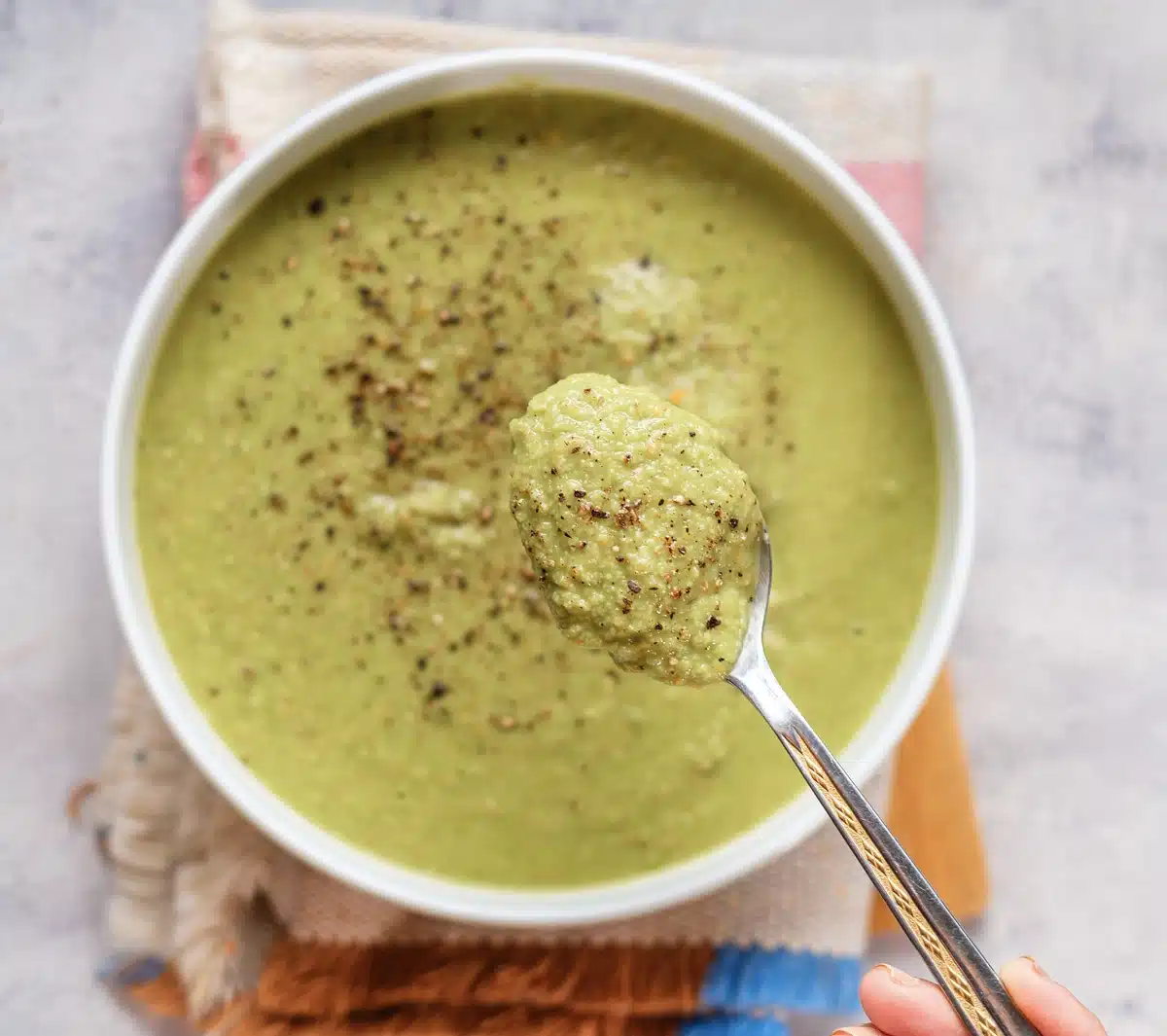
The peas are the tell, not the clock. Press a few against the side of the pot with a spoon. Done split pea soup gives no resistance at all; the peas smear into a paste rather than holding their shape. If you can still see individual half peas floating whole, it needs more time, however long it has already been on the stove.
The second tell is the surface. A finished pot looks thick and uniform, with the vegetables barely visible, and a spoon dragged through it leaves a trail for a second before the soup closes over it. Split pea soup that still looks brothy is not ready, and giving it another twenty minutes with the lid on costs nothing.
Old peas are the usual reason for a slow pot, and a bag that has sat in the cupboard for a couple of years can take two hours. Do not add salt or anything acidic until the peas are soft, because both can keep them firm.
Make It Ahead
This is the soup to make the day before. Overnight in the fridge the flavors settle and the smoke from the hock works its way through the whole pot, and the texture sets into something closer to a stew. Loosen it with broth or water when you reheat it, a quarter cup at a time, until it moves the way you like.
Reheat split pea soup gently over medium-low heat and stir from the bottom, because thick soup scorches easily. A microwave works too, in two-minute bursts with a stir in between.
Storing Split Pea Soup
Cool the soup to room temperature within a couple of hours, then refrigerate it in airtight containers for up to five days. It will thicken considerably; that is normal, and a splash of liquid when reheating fixes it.
Split pea soup freezes very well, better than most cream-based soups, precisely because there is no dairy in it to separate. Freeze it in portions, in freezer bags laid flat or in containers with an inch of headroom, for up to three months. Thaw overnight in the fridge and reheat on the stovetop with a little broth.
The quick green pea version stores the same way in the fridge, but it loses some of its bright color in the freezer. It still tastes right, so freeze it if you need to and expect it to come out a shade duller.
Variations and Substitutions
The Quick Green Pea Version (Pictured)
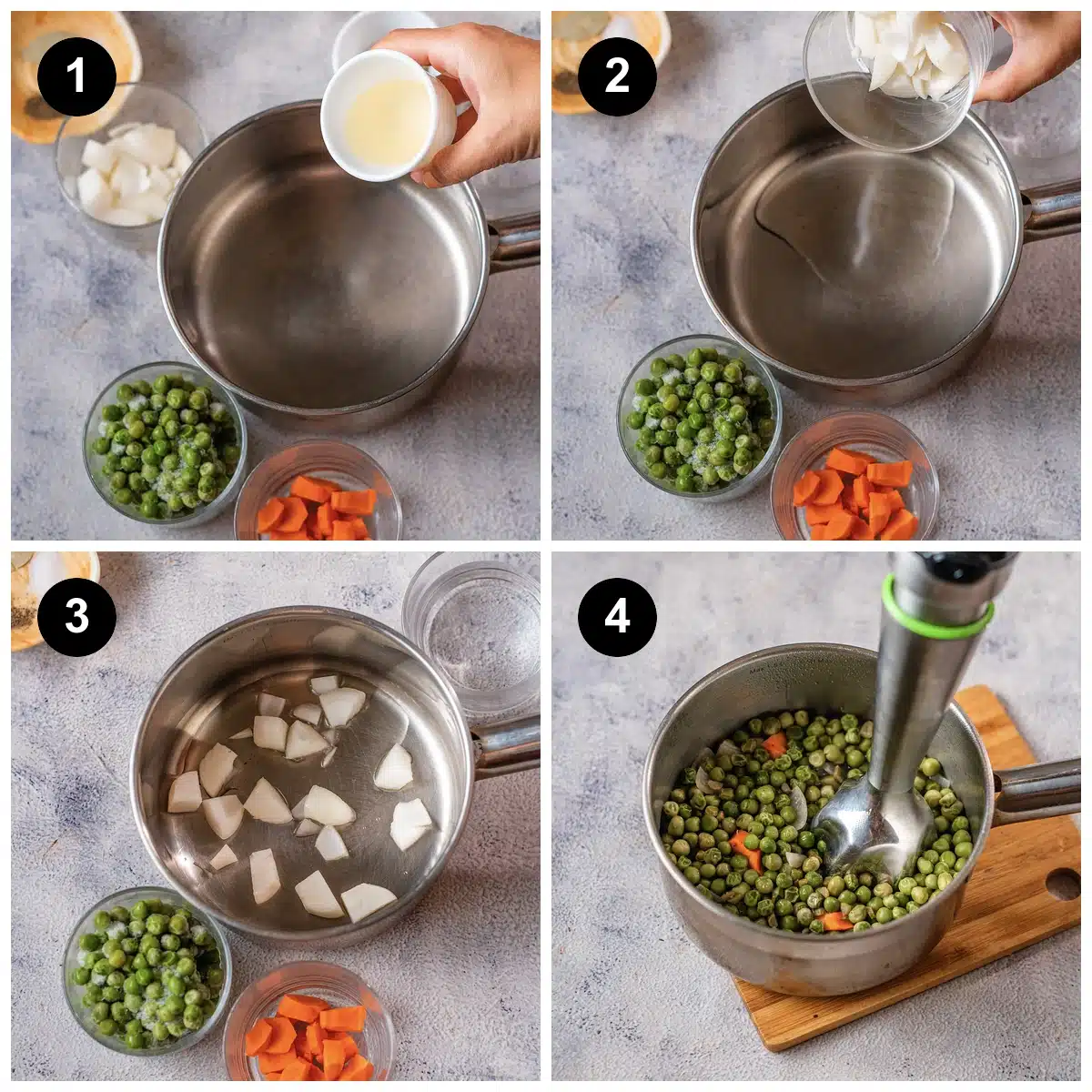
This is the soup in every photograph on this page, and it is the version to make when you want a bowl in twenty minutes rather than ninety. Frozen peas replace the dried split peas, there is no ham hock, and a stick blender does in thirty seconds what the long simmer does for classic split pea soup. It is vegetarian as written, vegan if you use olive oil, and the color is a much brighter green.
Ingredients. 1 tablespoon olive oil; 1 medium onion, roughly chopped; 1 medium carrot, cut into chunks; 3 cups vegetable or chicken broth; 1 cup water; 1 bay leaf; 1 pound frozen green peas; salt and black pepper; and 1 tablespoon chopped dill pickle to finish, which is optional.
Method. Heat the oil in a medium saucepan over medium heat and cook the onion for four to five minutes until soft. Add the carrot, broth, water and bay leaf, bring it to a boil, and simmer for eight minutes until the carrot is tender. Add the frozen peas straight from the bag and simmer for four to five minutes, no longer, so they keep their color. Fish out the bay leaf, then blend the soup in the pot with a stick blender until it is completely smooth. Season with salt and plenty of black pepper, stir in the chopped pickle if you are using it, and serve. It makes four bowls.
The chopped pickle is not a joke. Without the smoke and salt of a ham hock the soup can taste a little flat, and a spoonful of something sharp and briny at the end does the job. A squeeze of lemon works the same way if pickle is a step too far.
Other Ways to Change It
Vegetarian classic. Leave out the hock, use vegetable broth, and add a teaspoon of smoked paprika with the thyme. A tablespoon of soy sauce at the end adds back some of the savory depth.
Yellow split peas. A straight swap. Yellow peas are a touch milder and the soup comes out golden rather than green. They take about the same time to cook.
Potatoes. One large potato, diced and added with the broth, makes the soup even thicker and stretches it to eight bowls.
Herbs and heat. Rosemary or sage can replace the thyme; use half as much rosemary, because it is much stronger. A pinch of red pepper flakes with the vegetables adds a little warmth.
Crockpot and Instant Pot Methods
Crockpot. Saute the vegetables in a skillet first, then put everything into the slow cooker with only six cups of broth, since nothing evaporates. Cook on low for seven to eight hours or on high for four, and shred the hock meat back in at the end.
Instant Pot. Use the saute setting for the vegetables, add everything else with six cups of broth, and pressure cook on high for fifteen minutes. Let the pressure release naturally for fifteen minutes before opening. The split pea soup will look thin at first and thickens as it sits.
What to Serve with Split Pea Soup
Bread is not optional. A thick slice of crusty sourdough or a warm bacon basil cornbread muffin is the classic pairing, and either one is built for dragging through a bowl this thick. A grilled cheese sandwich turns split pea soup into the kind of dinner nobody complains about.
Something sharp on the side balances the richness: a green salad with a lemony vinaigrette, a few pickled onions, or a spoonful of plain yogurt swirled over the top.
If you are building a whole week of soups, curry lentil soup sits in the same thick, spoonable family and uses the same pantry logic of dried pulses and one pot.
Split Pea Soup FAQ
Frequently Asked Questions
Do I need to soak split peas before making soup?
No. Split peas have had their skins removed, so they soften without soaking. Rinse them in a sieve, pick out any stones, and add them straight to the pot. Soaking overnight shortens the simmer by twenty minutes or so, but it is not necessary.
Why is my split pea soup still hard after two hours?
Old peas, hard water, or salt and acid added too early. Keep simmering with the lid on and add a cup of water if the pot is getting dry.
How do I make split pea soup thicker or thinner?
To thicken it, simmer it uncovered for ten to fifteen minutes, or blend a cup of it and stir it back in. To thin it, add broth or water a half cup at a time. It thickens as it cools, so stop a little looser than you want the finished bowl.
Can I use frozen peas instead of split peas?
Yes, and that is the quick green pea version pictured in this post. Frozen peas cook in five minutes and need blending to become a smooth soup, and the result is brighter, sweeter and lighter than classic split pea soup. The full method is in the Variations section above.
More Questions About Split Peas
Good to Know
Is split pea soup healthy?
It is one of the better-balanced soups you can make. A bowl carries around twenty grams of protein and fifteen grams of fiber from the peas alone, with very little fat. The ham hock adds sodium, so use low-sodium broth and taste before you salt.
Should I blend split pea soup?
The classic is not blended; the long simmer breaks the peas down on its own. Blend it if you prefer it completely smooth, and always blend the quick frozen pea version, because whole peas will not break down in five minutes.
Can I double the recipe?
Yes, in a large enough pot. Double everything, keep the same simmer time, and use two small hocks so there is enough meat to go round.
Make the classic on a Sunday and eat it all week, or make the quick green pea version tonight. Either way, once there is a pot of split pea soup in the fridge, lunch is solved, and a batch of cornbread muffins alongside makes it a meal.
Split Pea Soup with Ham Hock
Save this recipe
Enter your email and I’ll send this recipe straight to your inbox.
Ingredients
For the Soup
- 1 tbsp olive oil or butter
- 1 medium onion diced
- 2 medium carrots diced
- 2 stalks celery diced
- 2 cloves garlic minced
- 1 tsp dried thyme or 1 sprig fresh thyme
- 1 bay leaf
- 1 lb dried green split peas rinsed and picked over
- 1 smoked ham hock or a meaty ham bone, or 1 cup diced ham
- 8 cups chicken broth low sodium, or vegetable broth
- salt and black pepper to taste, added at the end
To Serve (Optional)
- 2 tbsp fresh parsley chopped
- 1 cup croutons
- 1 tbsp olive oil for drizzling
Equipment
- Dutch Oven
- Cutting board
- Chef’s knife
- Ladle
Instructions
Build the Base
- Soften the vegetables. Heat the olive oil in a Dutch oven over medium heat. Add the onion, carrots, celery and garlic and cook for 5 to 7 minutes, stirring now and then, until softened and fragrant but not browned.
- Add the herbs and peas. Stir in the thyme and bay leaf and let them warm in the oil for 30 seconds. Add the rinsed split peas and stir to coat them in the aromatics.
- Simmer with the ham hock. Nestle the ham hock into the middle of the pot and pour in the broth. Bring to a boil over medium-high heat, then reduce the heat to low, cover, and simmer for 60 to 90 minutes, stirring every 20 minutes or so, until the peas have completely broken down.
Finish the Soup
- Check the texture. The soup should coat a spoon. If it is thicker than you like, add broth or water a half cup at a time. If it is thinner, simmer uncovered for another 10 minutes.
- Shred the ham. Lift out the hock and let it cool for a few minutes. Pull the meat off the bone, discard the bone, skin and bay leaf, shred the meat and stir it back into the soup.
Season and Serve
- Season and serve. Taste, then season with salt and black pepper. Ladle into bowls and finish with parsley, croutons or a drizzle of olive oil.