
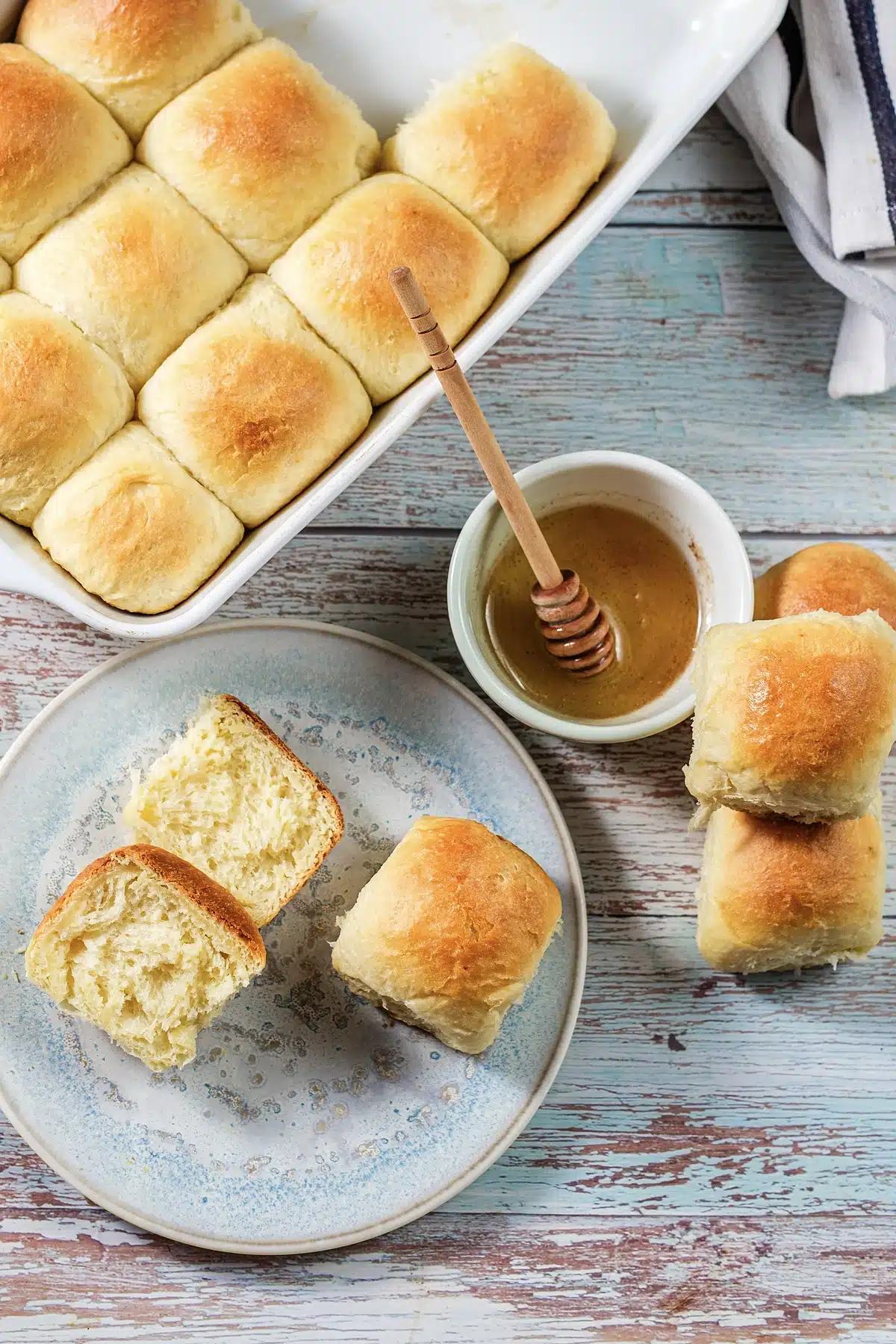
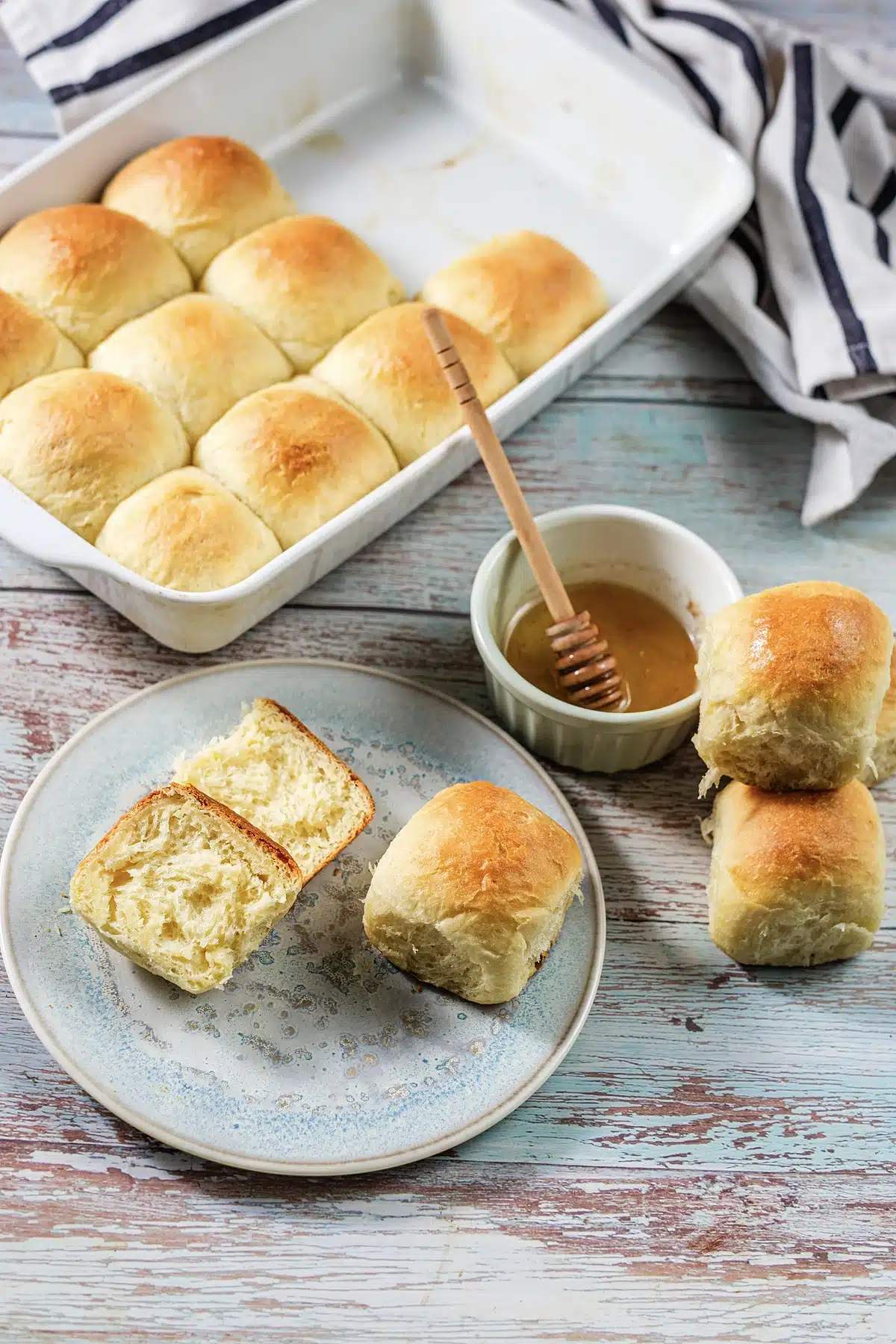
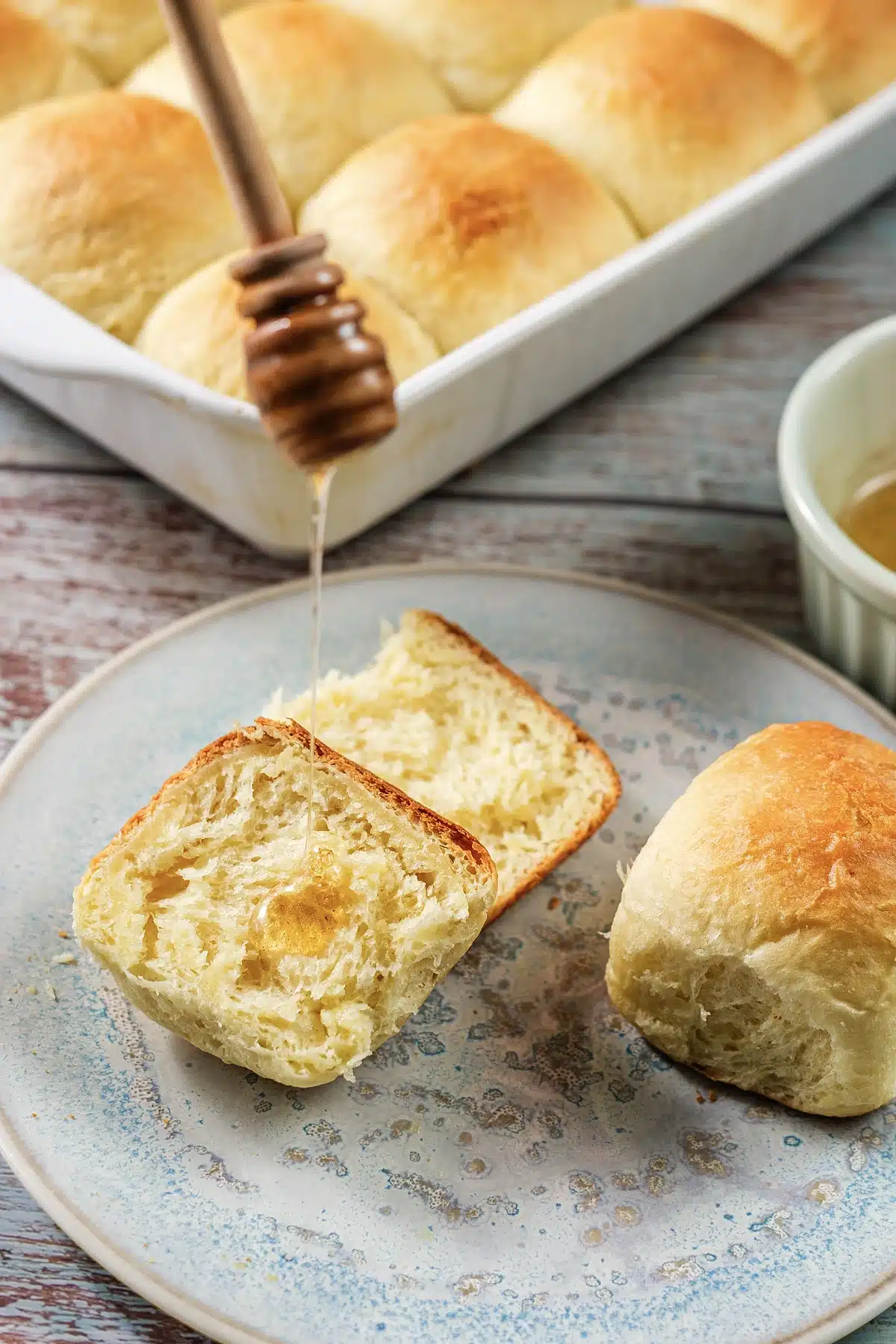
Texas Roadhouse rolls are the reason the bread basket at that restaurant never lasts five minutes. They arrive square, pale gold, warm enough to steam when you tear one open, and they come with a tub of whipped cinnamon honey butter that people have been known to ask for by the pint.
The recipe is not a secret and it is not difficult. It is an enriched yeast dough with milk, eggs, butter and a generous amount of sugar, shaped into balls, crowded into one dish so they bake into squares, and brushed with butter the second they come out. The only thing standing between you and a dozen of them is two hours of mostly unattended rising.
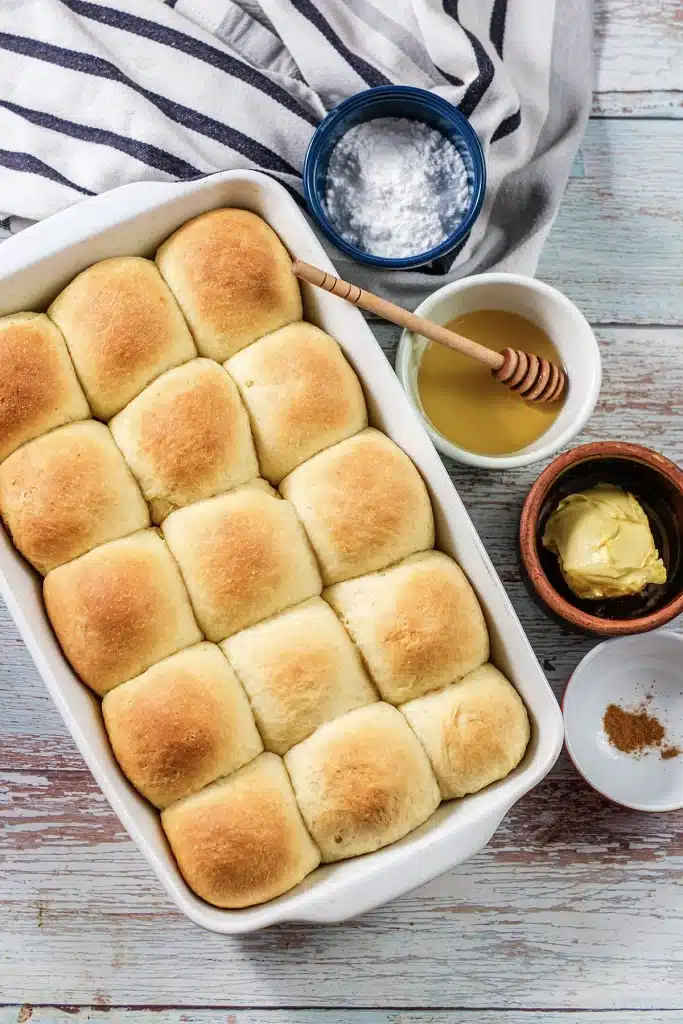
- Texas Roadhouse rolls in the exact square, pull-apart shape you get at the restaurant
- Cinnamon honey butter included, because the rolls are only half the point
- Twenty-five minutes of hands-on work, then the dough does the rest
- One 9-by-13-inch dish makes twelve, which is one family dinner or one very good breakfast
- The dough can rest overnight in the fridge and bake the next day

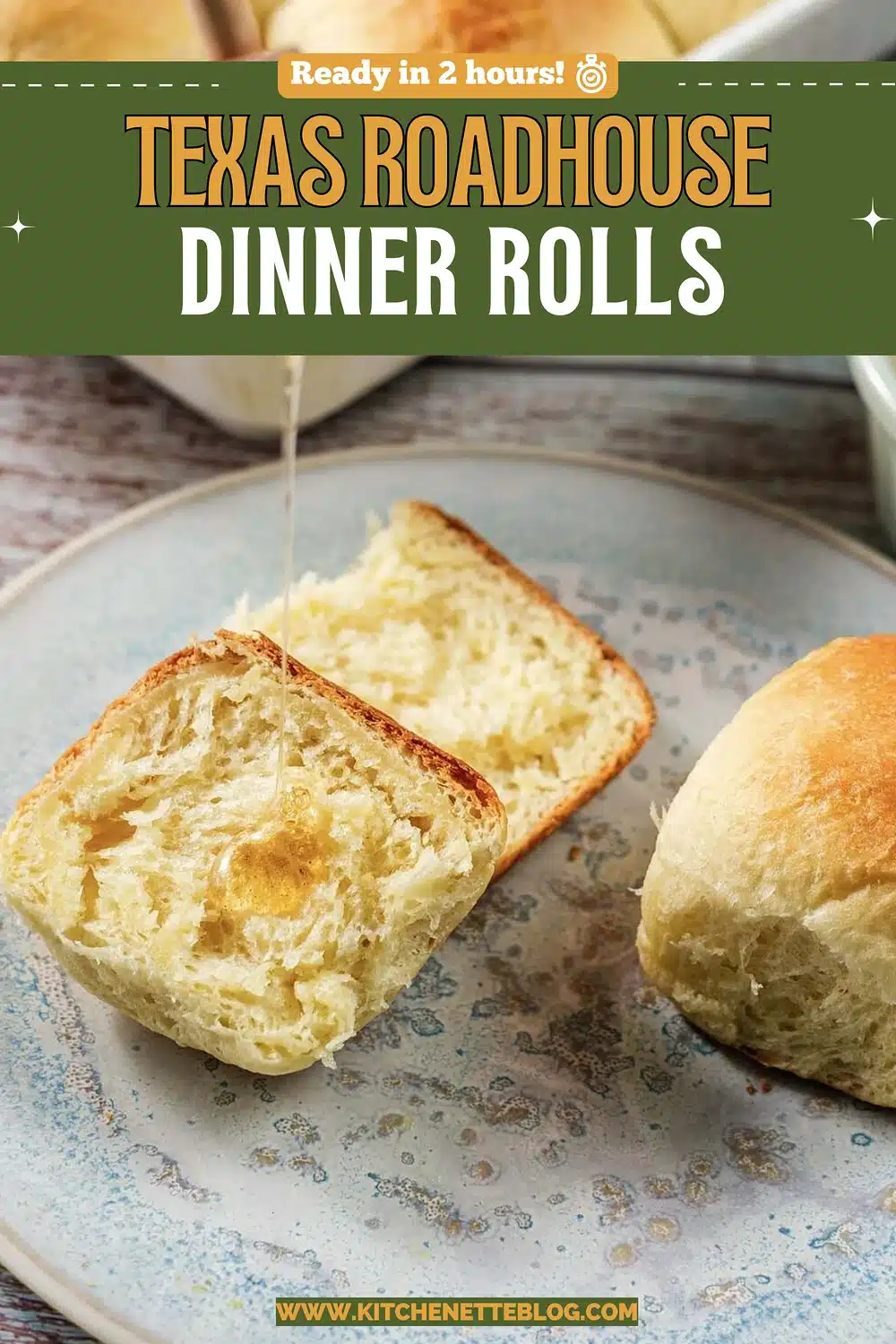
- What Makes Texas Roadhouse Rolls Different
- Ingredient Notes
- Bread Flour or All-Purpose Flour
- How To Make Texas Roadhouse Rolls
- The Cinnamon Honey Butter
- How To Tell When Texas Roadhouse Rolls Are Done
- Make It Ahead
- Storing Texas Roadhouse Rolls
- Variations and Substitutions
- What to Serve with Texas Roadhouse Rolls
- Texas Roadhouse Rolls FAQ
What Makes Texas Roadhouse Rolls Different
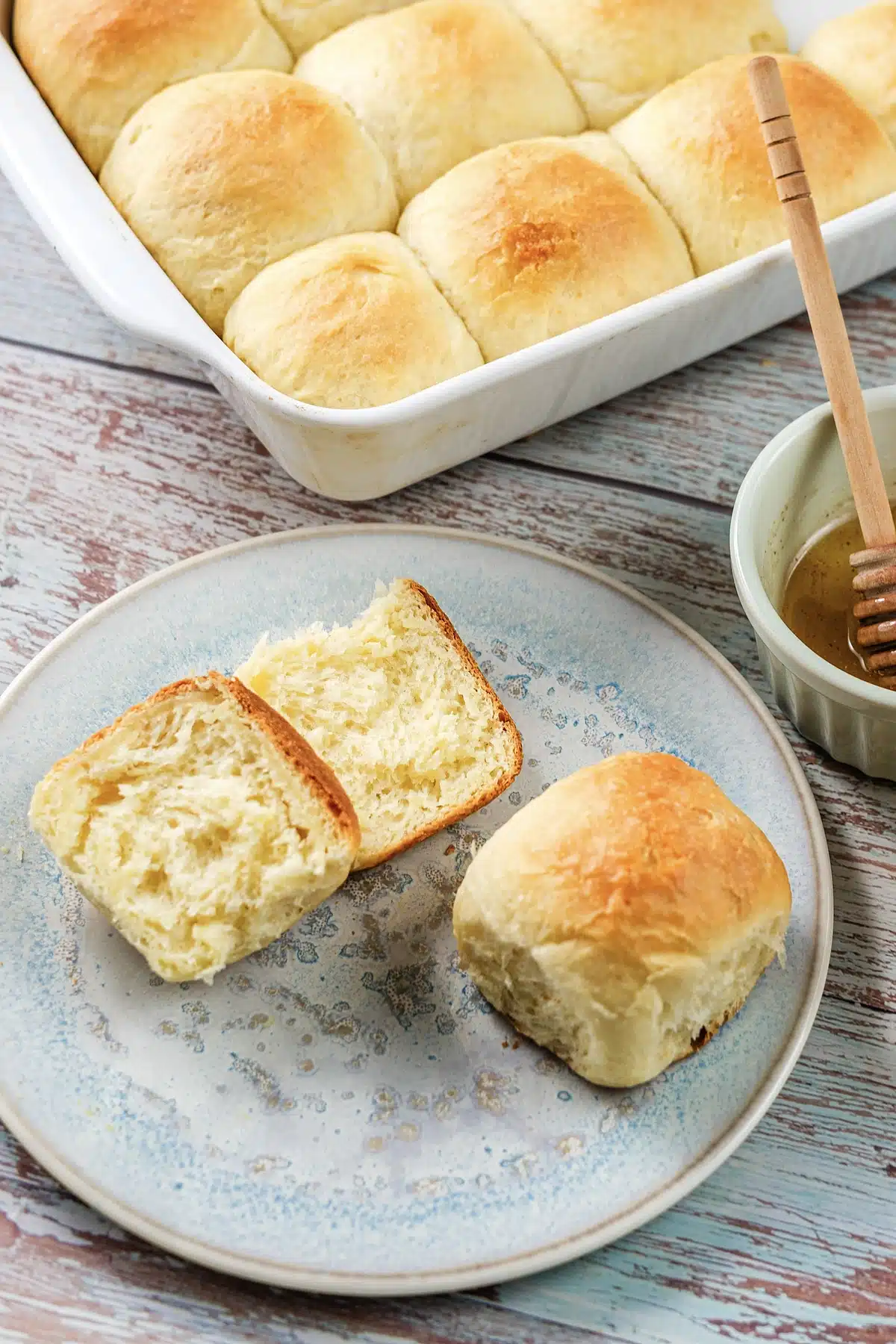
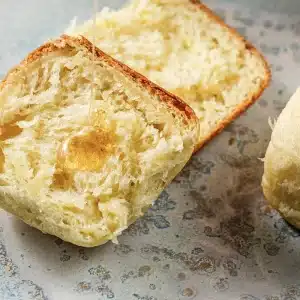
Most dinner rolls are round because they are baked with space around them. Texas Roadhouse rolls are square because they are not. You crowd twelve balls of dough into a single 9-by-13-inch dish, they rise into each other, and the sides that touch stay soft and pale while only the tops brown. That is where the pull-apart texture comes from.
The dough itself is sweeter than a standard dinner roll. Half a cup of sugar in a batch this size is closer to a sweet bread than to sandwich bread, and it does two things: it feeds the yeast, so the rise is fast and reliable, and it leaves a faint sweetness that makes the honey butter feel like a continuation rather than a contrast.
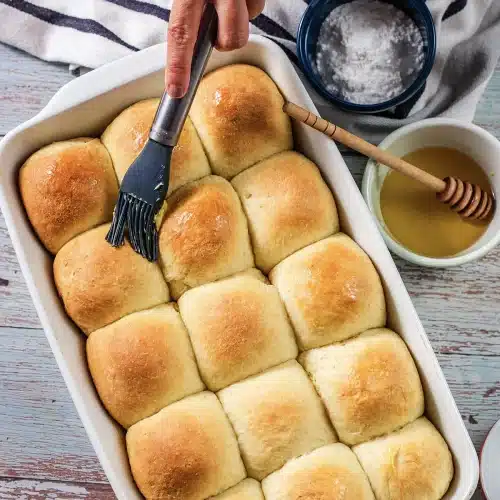
The last difference is the finish. A brush of melted butter goes on while the rolls are still too hot to handle, which softens the crust as it cools. Skip it and you get a perfectly good roll with a slightly crisp top. Do it and you get Texas Roadhouse rolls the way they arrive at the table.
Save this recipe
Enter your email and I’ll send this recipe straight to your inbox.
Ingredient Notes
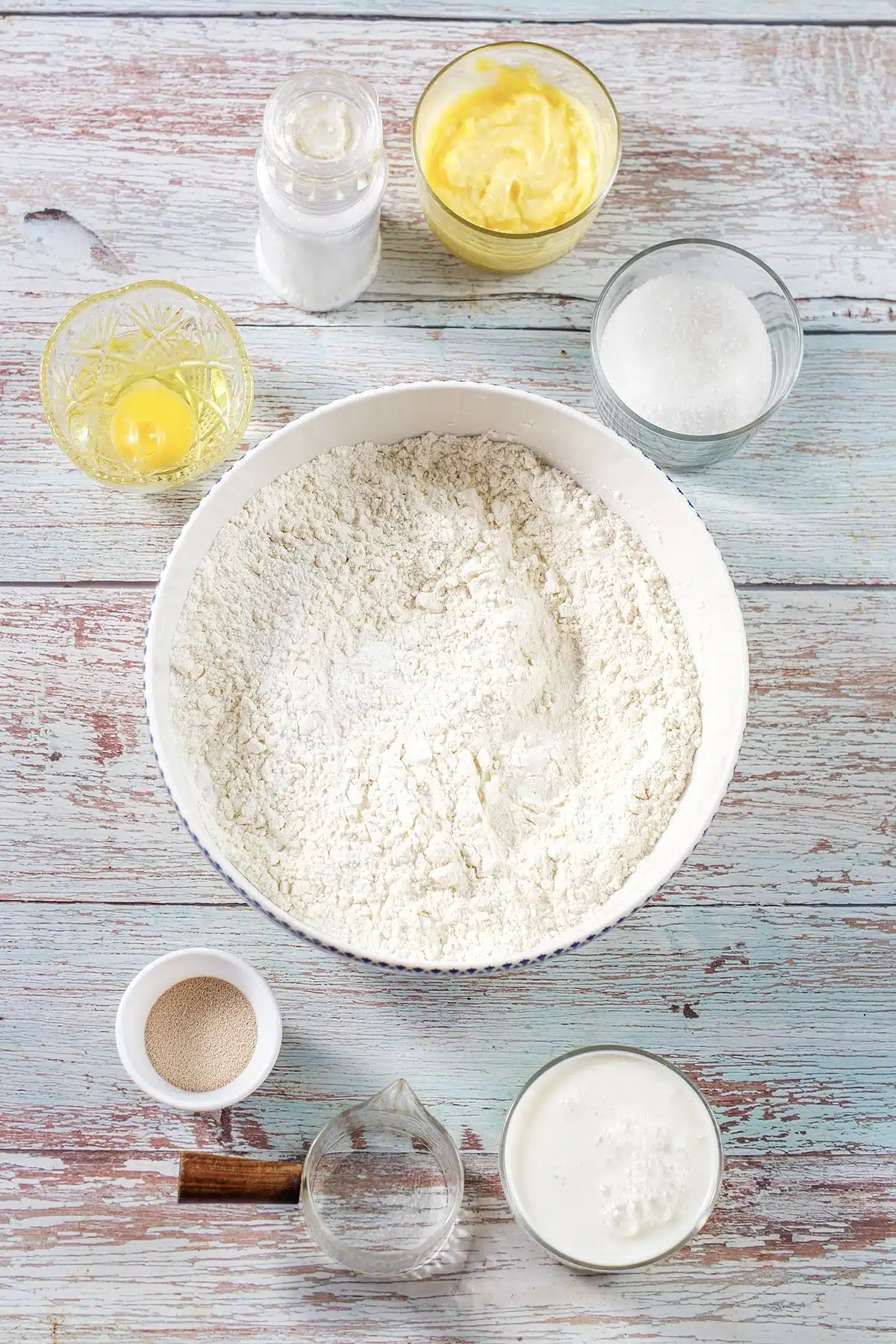
- Active dry yeast. One standard packet, which is two and a quarter teaspoons. Proof it in warm water with a spoonful of the sugar first. If it does not foam within ten minutes the yeast is dead, and you will have found that out for the price of half a cup of water rather than after four hours.
- Warm water. Between 100 and 105 degrees, which feels like a comfortable bath. Hotter than 120 kills yeast outright.
- Whole milk. Scalded, then cooled to lukewarm. Scalding is worth the extra pan, and there is more on why below.
- Granulated sugar. Half a cup, split between proofing the yeast and the dough. It is not a typo. These are meant to be sweet.
- Unsalted butter. Six tablespoons melted into the dough and three more for brushing. Unsalted lets you control the seasoning, which matters when the butter spread is also going to be sweet.
- Eggs. Two, at room temperature. Cold eggs seize the melted butter into flecks. Sit them in warm water for five minutes if you forgot.
- All-purpose flour. Four and a half to five cups, scooped and leveled. Add the last half cup only if the dough is still sticking to the sides of the bowl after five minutes of kneading.
- Salt. One teaspoon. Add it with the flour, never directly onto the proofing yeast.
- Powdered sugar, honey and cinnamon. The three additions that turn softened butter into the spread. Powdered sugar dissolves cold, which granulated will not do.
Bread Flour or All-Purpose Flour
Several copycat versions call for bread flour, and it does produce a chewier roll with a bit more pull. All-purpose flour gives you the softer, more tender crumb that I think is closer to the original, and it is what most people already have.
The difference comes down to protein. Bread flour is milled from hard wheat and runs around 12 to 14 percent protein, while all-purpose sits closer to 10 or 11, as the Wheat Foods Council explains in its guide to the types of wheat flour. More protein means more gluten, and more gluten means chew.
Texas Roadhouse rolls work with either, so use whichever you have. If you go with bread flour, hold back a quarter cup, because it absorbs more liquid and the dough can tighten up on you.
How To Make Texas Roadhouse Rolls
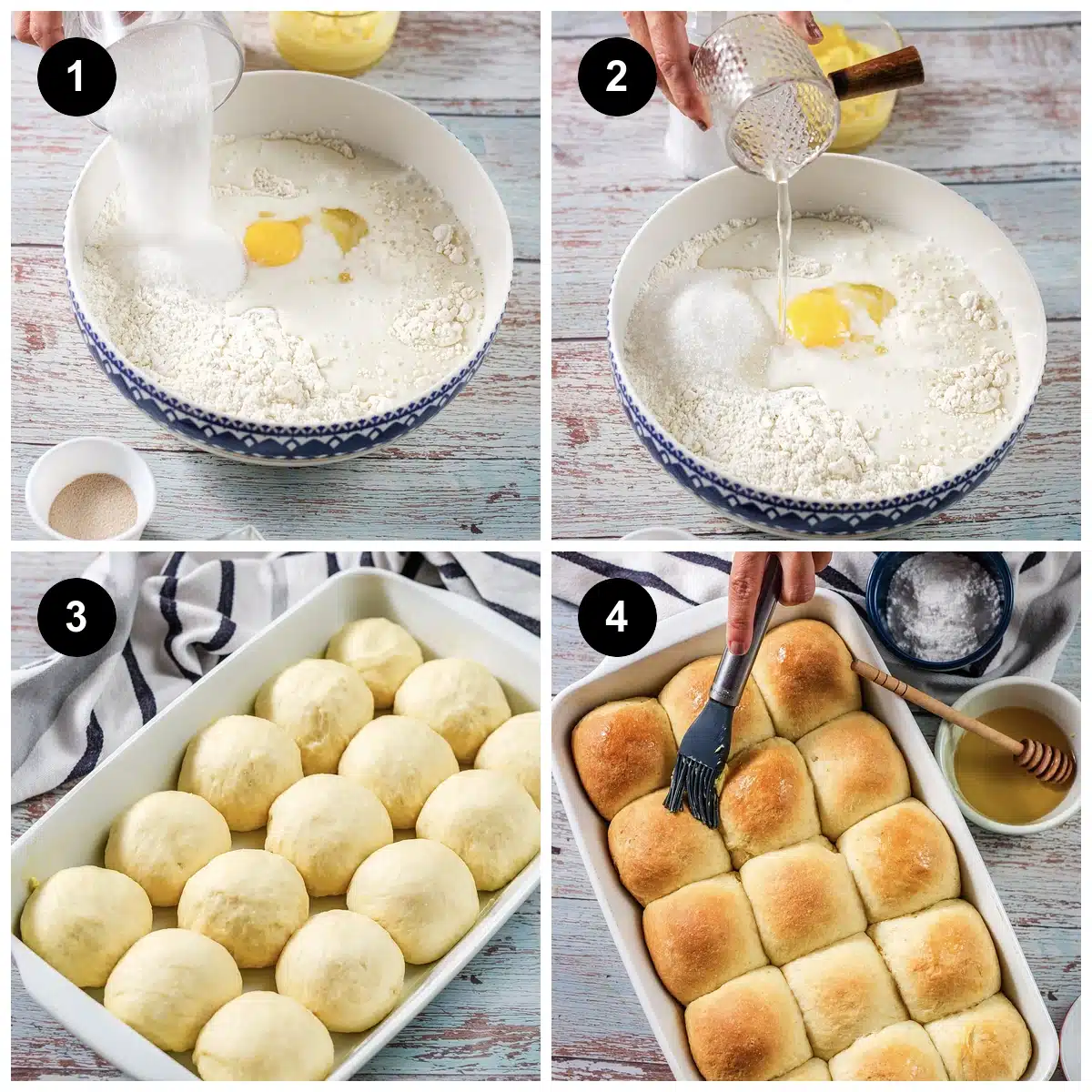
First, wake the yeast. Stir the yeast, the warm water and a teaspoon of the sugar together and leave it alone for five to ten minutes. It should look foamy and smell faintly of beer.
Next, build the dough. Whisk the flour and the salt together in a large bowl and make a well in the middle. Add the rest of the sugar and the eggs, then pour in the yeast mixture, the scalded milk and the melted butter. Stir until a soft dough comes together that is slightly tacky but not wet.
Then knead and rise. Five minutes with a dough hook, or eight to ten by hand, until the dough is smooth and pulls away from the bowl. Cover it and leave it somewhere warm until it has doubled, about an hour to an hour and a half.
Why the First Rise Matters
An underproofed dough bakes into a dense roll no matter how long you leave it in the oven. The test is not the clock, it is the dough: press two fingers into it, and if the dent stays put rather than springing back, it is ready. In a cold kitchen this can take two full hours, so give it the time it asks for.
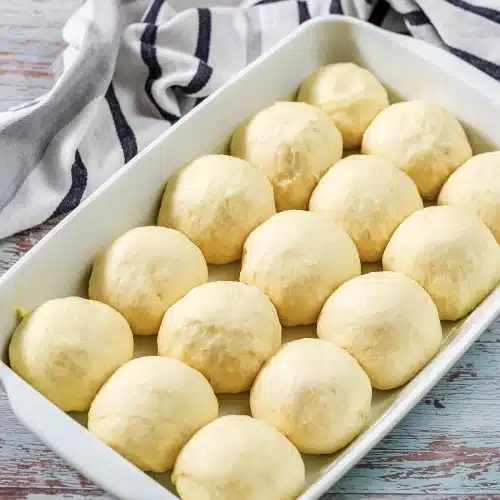
After that, shape and rise again. Punch the dough down, divide it into twelve equal pieces, and roll each into a smooth ball. Arrange them in a buttered 9-by-13-inch dish in three rows of four, leaving a small gap between them. Cover and let them puff for thirty to forty-five minutes, until they are touching.
Finally, bake and butter. Twelve to fifteen minutes at 350 degrees, until the tops are lightly golden and the sides are still pale. Brush the melted butter over them the moment the dish comes out, then serve them warm with the cinnamon honey butter.
The Cinnamon Honey Butter
Half a cup of butter, three tablespoons of powdered sugar, three tablespoons of honey and a teaspoon of cinnamon, beaten until it is pale and fluffy. That is the whole thing. The only real rule is that the butter has to be genuinely soft, not softened in the microwave until half of it has melted, because melted butter will not whip and the spread turns grainy.
Beat it for a full two minutes. It should lighten in color and roughly double in volume, which is what makes it spread onto a warm roll instead of tearing it.
Make a double batch. It keeps for two weeks in the fridge, and it is as good on toast and cornbread as it is on the Texas Roadhouse rolls it was made for.
How To Tell When Texas Roadhouse Rolls Are Done
The tops go from pale to light gold and the whole batch will have risen into one connected slab. If you are unsure, an instant-read thermometer pushed into the center roll should read 190 degrees. Bread is done at 190 and dry at 210, and the gap between those two numbers is about four minutes in a hot oven.
The other tell is sound. Tap the top of a center roll with a fingertip and it should sound hollow rather than dull. A dull thud means the middle is still wet, which happens more often than you would think when twelve rolls bake as one mass.
Make It Ahead
The dough for Texas Roadhouse rolls is happy to wait. After the first rise, punch it down, cover the bowl tightly and refrigerate it for up to twenty-four hours. Pull it out, shape the rolls, and let them come back to room temperature and puff before baking, which takes about an hour and a half rather than the usual forty-five minutes.
You can also shape the rolls, arrange them in the dish, cover and refrigerate overnight. Take them out in the morning and give them two hours on the counter before they go in the oven. This is the version I use for a holiday table, because the only job left on the day is baking.
Unbaked shaped rolls freeze too. Freeze them on a tray until solid, bag them, and thaw them in the baking dish overnight in the fridge before the final rise.
Storing Texas Roadhouse Rolls
Baked rolls keep for two days in an airtight bag at room temperature. Do not refrigerate them. Cold air stales bread faster than a counter does, and an enriched dough like this one goes from soft to crumbly in a single night in the fridge.
For longer storage, freeze them baked and cooled, wrapped tightly and bagged, for up to three months. Reheat straight from frozen, wrapped in foil, at 300 degrees for fifteen minutes. They come back remarkably close to fresh.
The cinnamon honey butter lives in the fridge in a covered jar for two weeks. Bring it back to room temperature before serving, because cold butter will shred a soft roll.
Variations and Substitutions
Instant yeast. Use the same amount and skip the proofing step. Stir it in with the flour and expect the first rise to run about fifteen minutes shorter.
Whole wheat. Swap up to two cups of the all-purpose flour for whole wheat. The rolls will be nuttier and slightly denser, which some people prefer with a roast.
Garlic butter. Skip the cinnamon and honey, and beat softened butter with two cloves of grated garlic, chopped parsley and a pinch of salt instead. It turns the same dough into a side for pasta night.
Buttermilk. Replace the whole milk with buttermilk for a slight tang and an even softer crumb. There is no need to adjust anything else.
Bigger squares. Divide the dough into nine pieces instead of twelve for larger rolls, and add three minutes to the bake.
Maple butter. Maple syrup in place of the honey, with the cinnamon left in. It is a small change that reads as a completely different spread.
What to Serve with Texas Roadhouse Rolls
They belong next to something with a sauce worth mopping up. A pot roast, a bowl of chili, a Sunday chicken, or a steak dinner with Texas Roadhouse seasoned rice if you are building the whole restaurant order at home.
They also work as breakfast, split and toasted under the broiler with more of the cinnamon butter. My honest opinion is that day-two rolls are better this way than they are fresh.
If you want a second bread on the table for a crowd, Olive Garden breadsticks cover the savory end while these cover the sweet, and a tray of garlic butter potatoes keeps everything anchored to the meal.
Texas Roadhouse Rolls FAQ
Frequently Asked Questions
What type of rolls does Texas Roadhouse use?
They are square yeast rolls made from a sweet enriched dough, baked crowded together in a sheet so they pull apart. They are not biscuits and there is no baking powder involved, which is why the recipe needs rising time rather than a hot oven and a quick hand.
Can I buy the rolls from Texas Roadhouse without a meal?
Most locations sell them by the half dozen or dozen to go, and a frozen version turns up in some grocery stores. Neither comes out of the oven at your table, which is most of the appeal of making them yourself.
Why did my rolls turn out dense?
Texas Roadhouse rolls turn out dense for one of two reasons: an underproofed dough, or too much flour. Add flour a half cup at a time and stop while the dough is still slightly tacky, and judge both rises by how the dough looks rather than by the clock.
Do I have to scald the milk?
It helps. Heating milk to just below a simmer deactivates a protein that interferes with gluten development, and the result is a noticeably softer crumb. Cool it to lukewarm before it goes anywhere near the yeast.
More Questions About Copycat Restaurant Bread
Good to Know
Can I make the dough in a bread machine?
Yes. Add the ingredients in the order your machine specifies, run the dough cycle, then shape and do the second rise by hand. The bake still happens in the oven.
Can I halve the recipe?
Halve everything and use an 8-inch square dish for six rolls. Use one whole egg rather than trying to split two, and pull back a couple of tablespoons of the milk to compensate.
Why is the dough so sticky?
An enriched dough with this much butter and sugar is meant to be tacky. Resist adding more flour to fix it. Oil your hands instead, and the dough will behave once it has had its first rise.
Texas Roadhouse rolls reward a little planning more than a little effort. If you like a bread that does most of its work while you are doing something else, TikTok cinnamon rolls follow the same overnight logic and land on the breakfast table instead of the dinner one.
Texas Roadhouse Rolls with Cinnamon Honey Butter
Save this recipe
Enter your email and I’ll send this recipe straight to your inbox.
Ingredients
For the Rolls
- 2 1/4 tsp active dry yeast 1 standard packet
- 1/2 cup warm water 100 to 105°F
- 1 cup whole milk scalded, then cooled to lukewarm
- 6 tbsp unsalted butter melted and slightly cooled
- 1/2 cup granulated sugar divided
- 2 large eggs room temperature
- 1 tsp salt
- 4 1/2 to 5 cups all-purpose flour scooped and leveled, divided
- 3 tbsp unsalted butter melted, for brushing the baked rolls
Cinnamon Honey Butter
- 1/2 cup unsalted butter very soft, room temperature
- 3 tbsp powdered sugar
- 3 tbsp honey plus more to taste
- 1 tsp ground cinnamon
- 1 pinch salt optional
Equipment
- Stand Mixer (optional)
- Mixing bowls
- Bench scraper or knife
- Baking sheet
- Rolling Pin
Instructions
Mix the Dough
- Proof the yeast. Stir the yeast, the warm water and 1 teaspoon of the sugar together in a small bowl. Leave it for 5 to 10 minutes, until it is foamy. If nothing happens, the yeast is dead and the batch will not rise, so start again with a fresh packet.
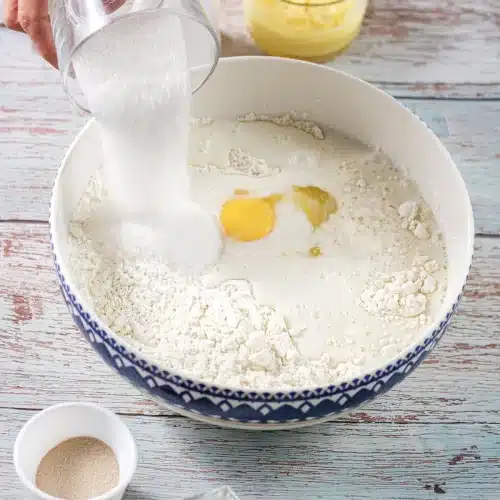
- Combine the dry and the sweet. Whisk 4 1/2 cups of the flour and the salt together in a large bowl. Make a well in the middle, then add the remaining sugar and the eggs.

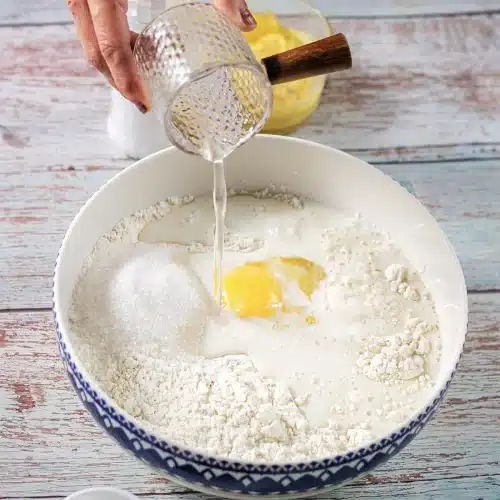
- Pour in the liquids. Add the yeast mixture, the cooled scalded milk and the 6 tablespoons of melted butter. Stir until a soft dough comes together that is slightly tacky but not wet, adding the last half cup of flour only if it still sticks to the bowl.
- Knead and rise. Knead 5 minutes with a dough hook, or 8 to 10 minutes by hand, until the dough is smooth. Cover it and leave it somewhere warm until doubled, about 1 to 1 1/2 hours. It is ready when a dent pressed with two fingers stays put.
Shape and Rise Again
- Shape twelve rolls. Punch the dough down, divide it into 12 equal pieces and roll each one into a smooth ball. Arrange them in a buttered 9-by-13-inch dish in three rows of four, leaving a small gap between them.
- Second rise. Cover the dish and leave the rolls somewhere warm for 30 to 45 minutes, until they are puffed and touching. Heat the oven to 350°F (175°C) toward the end of this rise.
Bake and Butter
- Bake. Bake for 12 to 15 minutes, until the tops are pale gold and the sides where the rolls touch are still light. An instant-read thermometer in the center roll should read 190°F.
- Brush with butter. Brush the 3 tablespoons of melted butter over the tops the moment the dish comes out of the oven, then let the rolls sit for 5 minutes before serving them warm.
Cinnamon Honey Butter
- Whip the spread. Beat the very soft butter, powdered sugar, honey, cinnamon and the pinch of salt for a full 2 minutes, until the mixture is pale and roughly doubled in volume. Serve it at room temperature so it spreads without tearing the rolls.