
Homemade vanilla pudding is seven ingredients and fifteen minutes at the stove: whole milk, sugar, cornstarch, egg yolks, a little butter, real vanilla and a pinch of salt, whisked together in one saucepan and cooked until thick. It sets in the refrigerator into something silky and spoonable that tastes like vanilla and cream rather than like the box, and it costs about a dollar a glass.
The method here does not temper the yolks. Everything goes into the cold pan together, the cornstarch protects the eggs from scrambling, and you whisk over medium heat until the pudding bubbles and thickens. It is the way the pastry cream in a bakery is made, only simpler, and it is very hard to get wrong. The glasses in the photographs are finished with whipped cream and a spoonful of cranberry compote, which are two of the toppings covered below.
- Seven pantry ingredients and one saucepan, no tempering and no double boiler
- Fifteen minutes at the stove, then the refrigerator does the rest
- Thick, silky and creamy from egg yolks and whole milk, with real vanilla flavor
- Makes four generous glasses and doubles without changing the method
- Keeps for four days, so it is a genuine make-ahead dessert
- Dresses up with whipped cream, cranberry compote, berries or crushed cookies

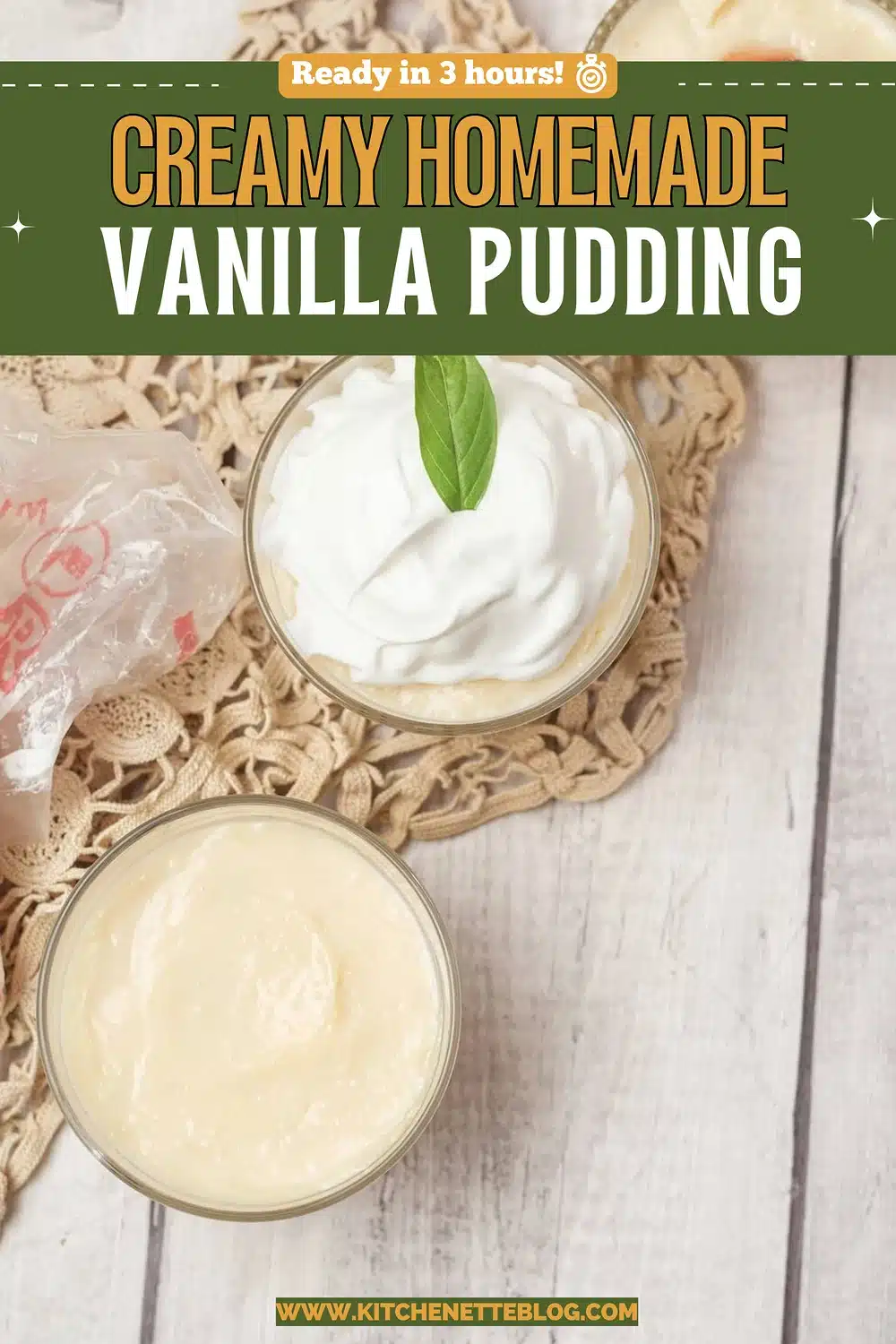
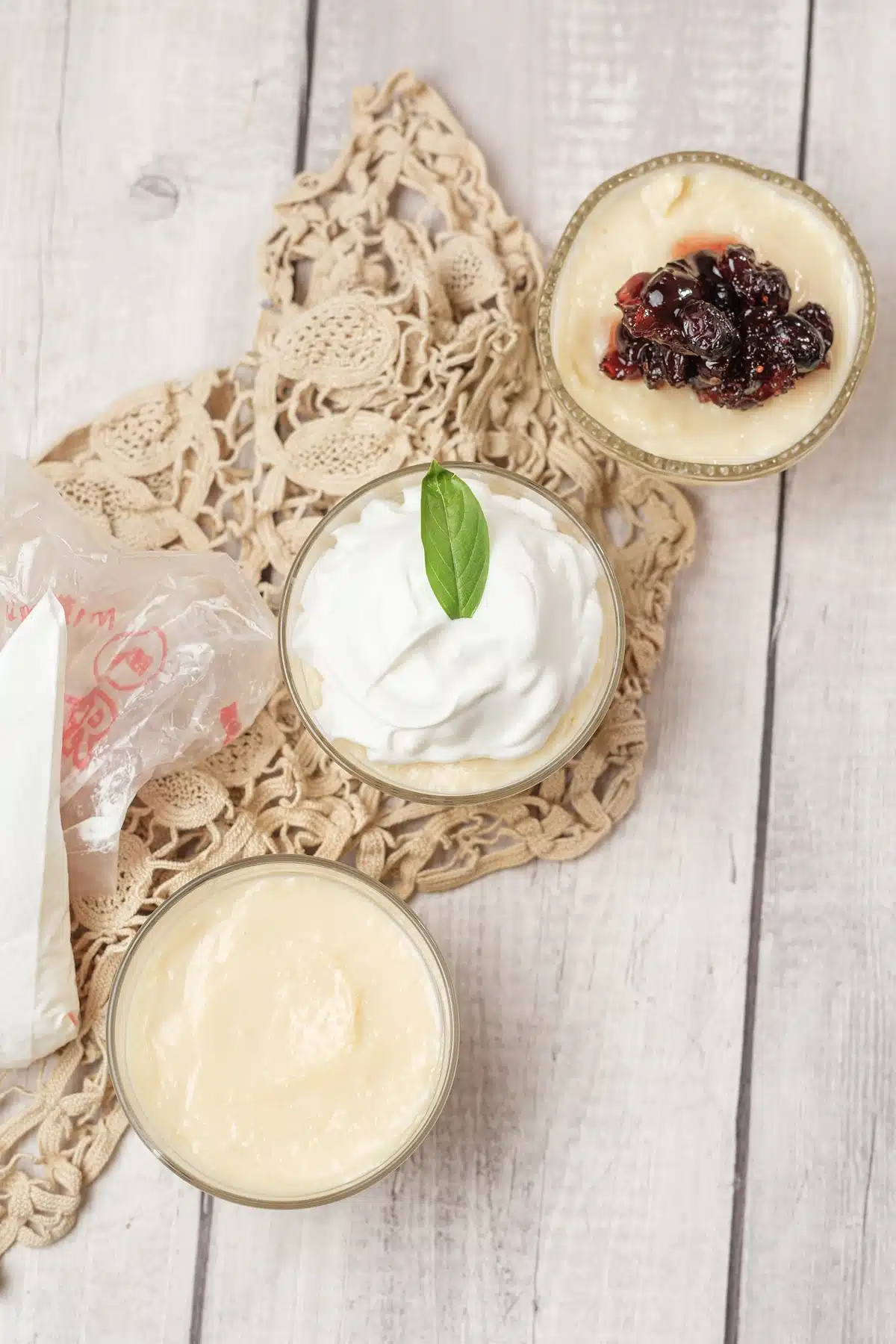
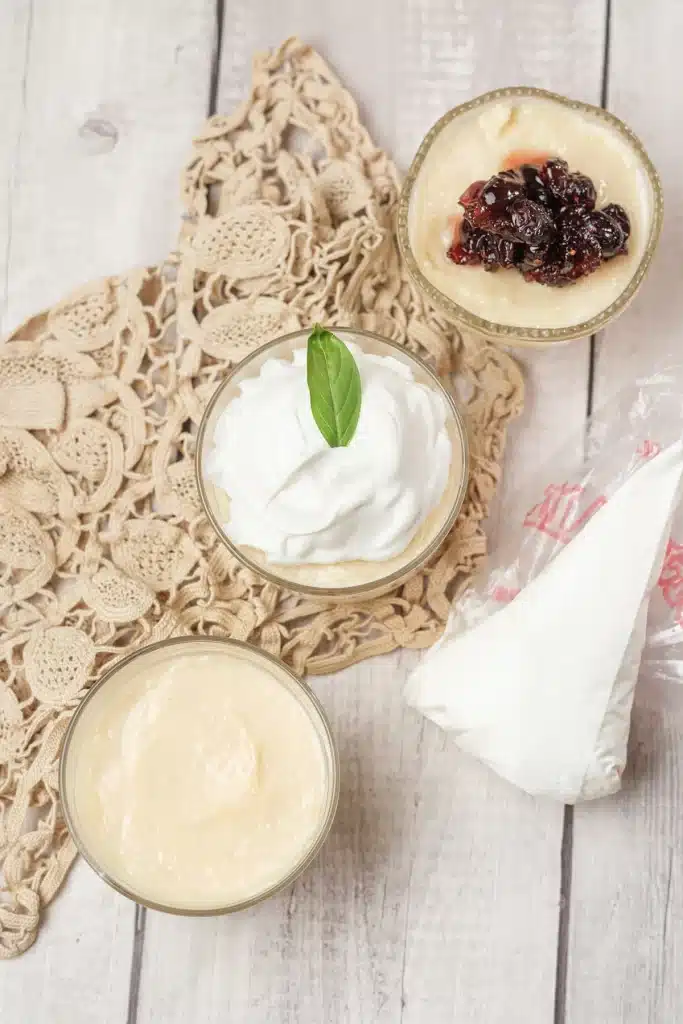
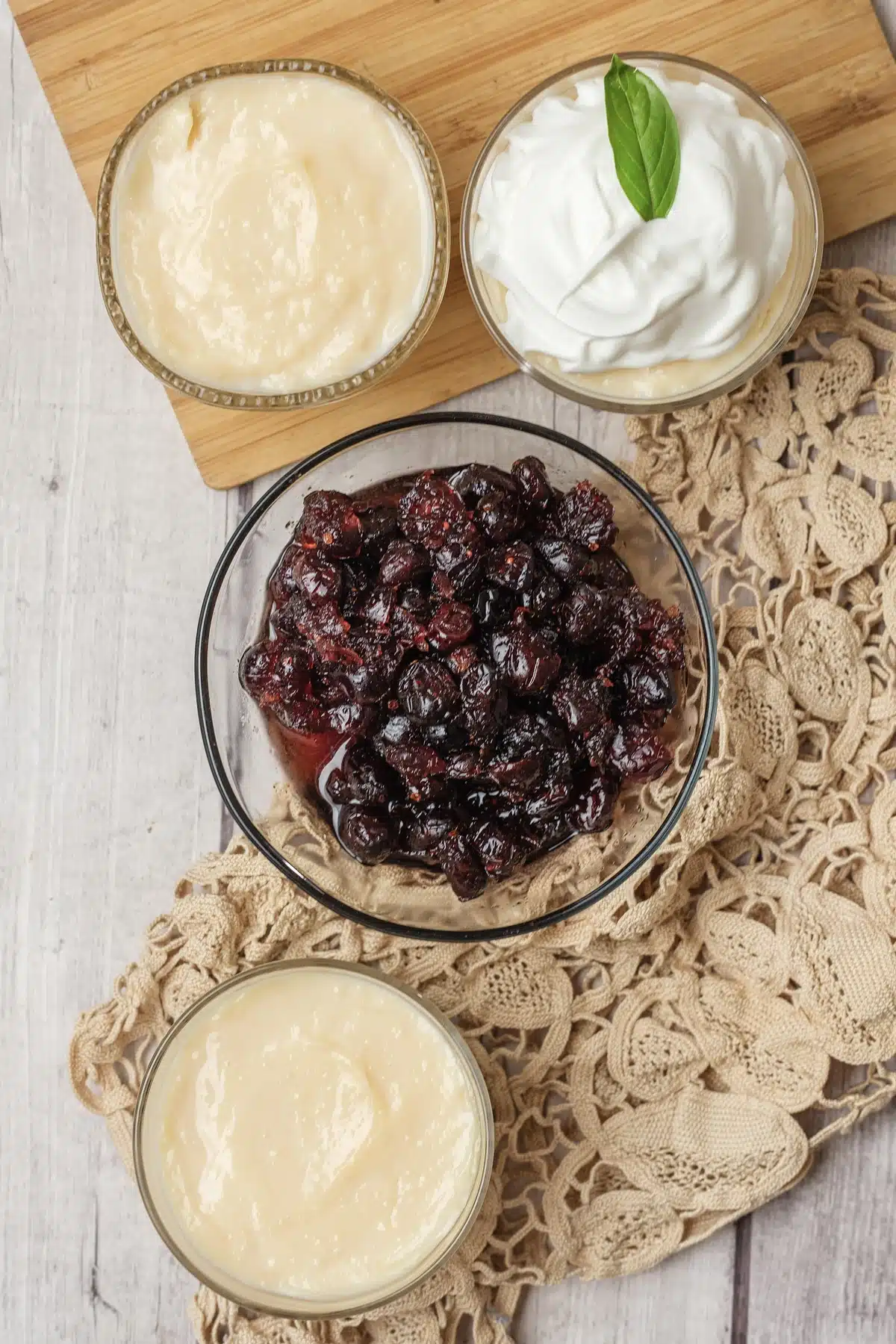
Pictured: the pudding chilled in glasses and served three ways, plain, with a swirl of whipped cream and a mint leaf, and with a spoonful of cranberry compote. All three toppings are in the Variations section, and the recipe card lists them as optional.
- What Makes Homemade Vanilla Pudding Better Than the Box
- Ingredient Notes
- Pudding or Custard?
- How To Make Homemade Vanilla Pudding
- How To Tell When Homemade Vanilla Pudding Is Done
- Make It Ahead
- Storing Homemade Vanilla Pudding
- Variations and Substitutions
- What to Serve with Homemade Vanilla Pudding
- Homemade Vanilla Pudding FAQ
What Makes Homemade Vanilla Pudding Better Than the Box
Boxed pudding is cornstarch, sugar, salt, flavoring and coloring, and the instant version adds modified starch so it sets without heat. It tastes sweet and vaguely of vanilla. Homemade vanilla pudding uses the same thickener, cornstarch, but it also has egg yolks and butter, and those two ingredients are the whole difference. The yolks give the pudding a custard richness and a pale gold color; the butter gives it a glossy, rounded finish on the tongue.
The vanilla is the other half. A box has a few drops of artificial flavor. Two teaspoons of real vanilla extract, stirred in off the heat so it does not cook away, is what makes people ask what you did differently.
Cost is not a reason to buy the box either. Two and a half cups of milk, three yolks and a few spoonfuls of sugar and cornstarch come to less than a box of pudding mix once you add the milk it needs, and the whites from the yolks can go into an omelet the next morning.
Save this recipe
Enter your email and I’ll send this recipe straight to your inbox.
Ingredient Notes
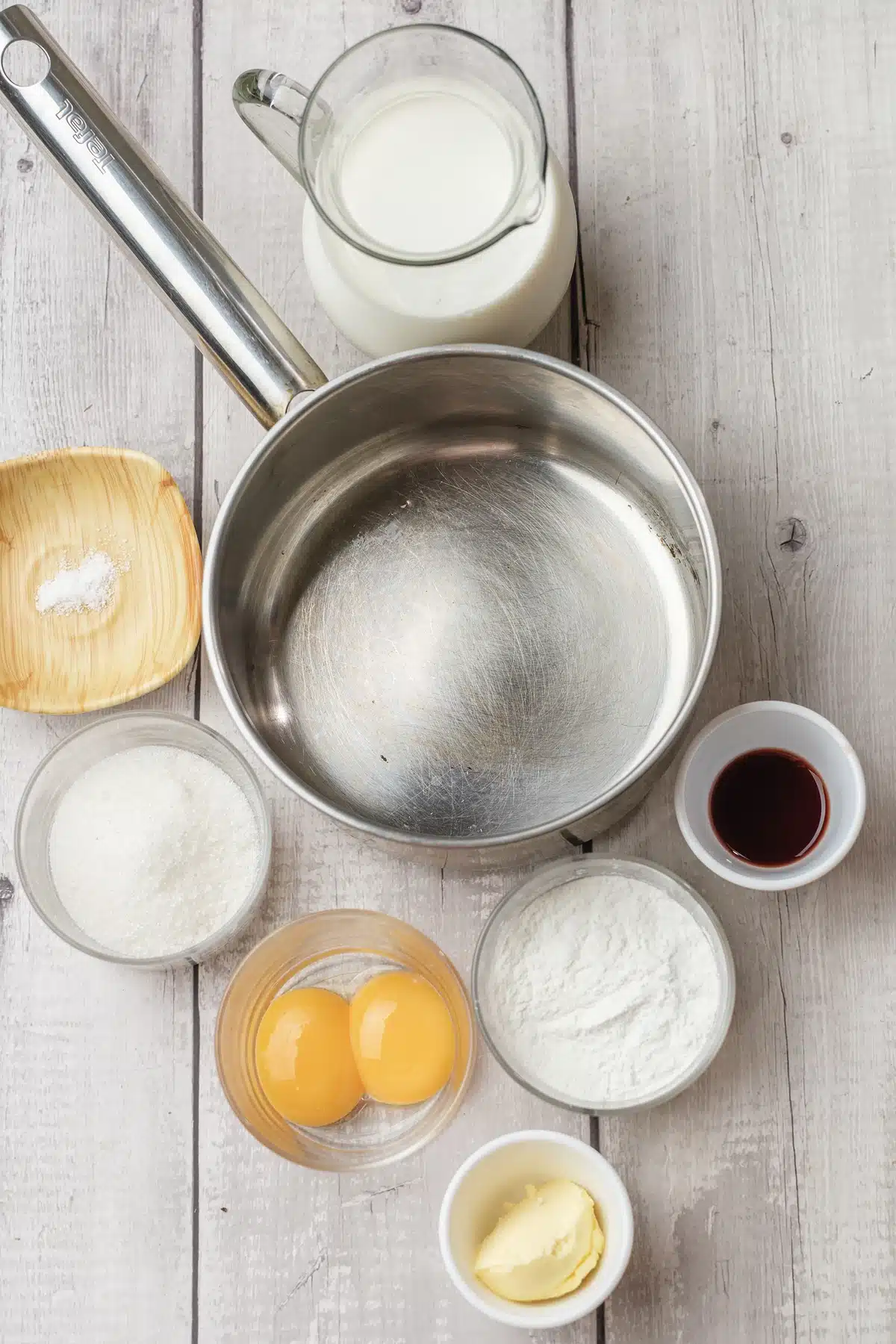
- Whole milk. Two and a half cups. The fat in whole milk is what makes the pudding creamy; 2 percent works but sets a little thinner and paler. Skim is not worth it.
- Granulated sugar. Half a cup. This is a medium-sweet pudding. Drop it to a third of a cup if you plan on a very sweet topping.
- Cornstarch. Three tablespoons. It thickens the pudding and it also protects the yolks from curdling, which is why the whole thing can be whisked together cold.
- Egg yolks. Three large. They make homemade vanilla pudding rich and give it that faint gold color. Save the whites for meringue or breakfast.
- Salt. A quarter teaspoon. It does not make the pudding salty; it makes the vanilla taste bigger.
- Unsalted butter. Two tablespoons, whisked in at the end for gloss and body. If you only have salted, use it and skip the added salt.
- Vanilla extract. Two teaspoons of the real thing, added off the heat. Vanilla bean paste is even better, and the flecks look the part.
- To serve. Whipped cream, a mint leaf and a spoonful of cranberry compote are in the photographs. Berries, crushed cookies and caramel all work too.
Pudding or Custard?
The two words get used for the same bowl, and the difference is the thickener. A true custard, like creme anglaise or a baked custard, is thickened by eggs alone and has to be cooked gently so the eggs set without curdling. American pudding is thickened mostly by starch, with eggs added for richness, and the starch makes it far more forgiving. The American Egg Board puts it plainly: starch is added to custard to slow coagulation and prevent overcooking, which is exactly why this recipe can be whisked together in a cold pan.
So homemade vanilla pudding sits between the two. It has the yolks of a custard and the starch of a pudding, which means it is rich but it is also nearly impossible to scramble. If you have been nervous about tempering eggs, this is the recipe to make.
How To Make Homemade Vanilla Pudding
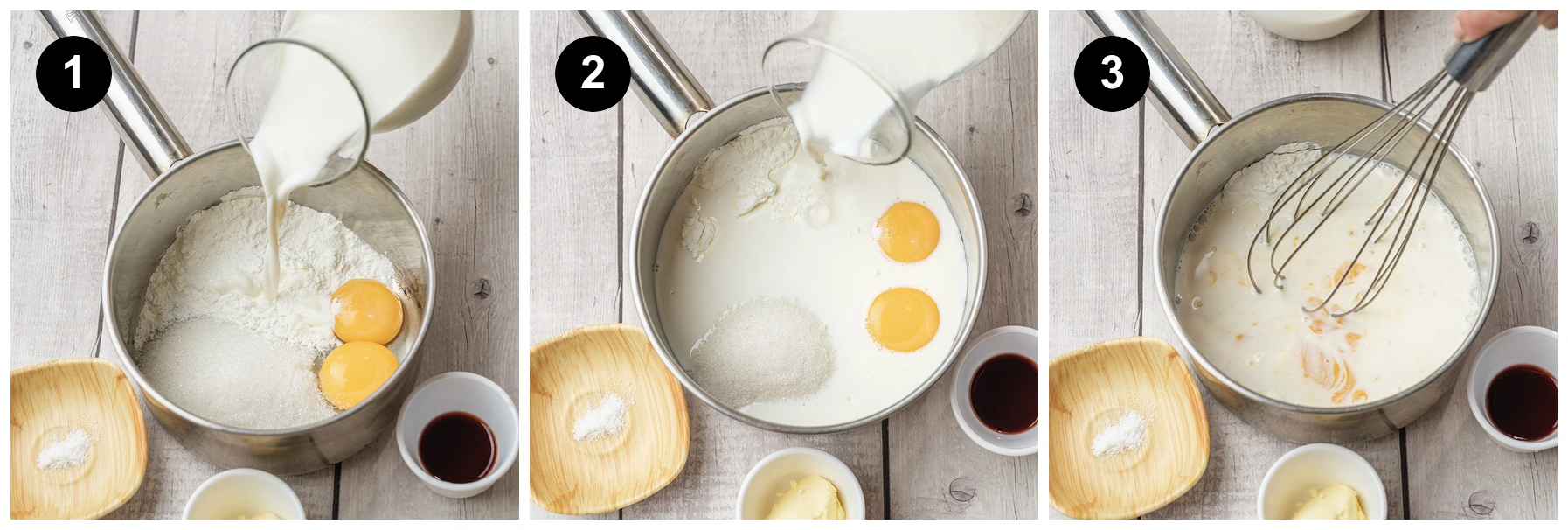
Homemade vanilla pudding wants a medium saucepan with a heavy bottom, because a thin pan scorches the milk in the corners before the middle thickens. Have a whisk, a fine sieve if you want extra insurance, and four glasses ready.
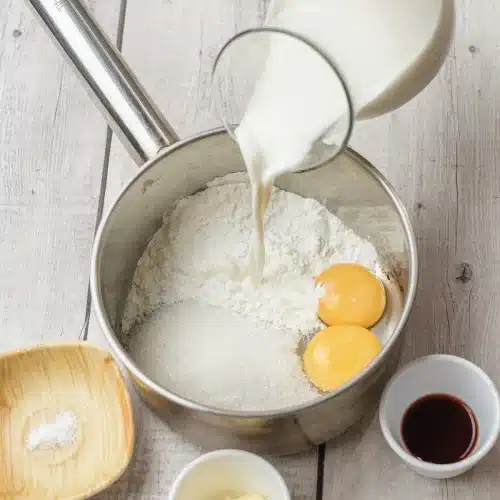
First, whisk the sugar, cornstarch and salt together in the saucepan, off the heat. Add the egg yolks and about half a cup of the milk and whisk until you have a smooth, thick paste with no dry pockets of cornstarch. Starting with a small amount of liquid is what keeps the pudding lump-free.
Next, pour in the rest of the milk, whisking as you go, until the mixture is thin, smooth and evenly pale yellow.
Then set the pan over medium heat and cook, whisking constantly and scraping the bottom and the corners, for eight to ten minutes. It will look like nothing is happening for most of that time, then it will thicken quite suddenly. Keep whisking until it comes to a full bubble, then cook it for one more minute so the cornstarch finishes thickening and loses its raw taste.
Finishing and Chilling
After that, take the pan off the heat and whisk in the butter and vanilla until the butter has melted and the pudding is glossy. If you see any specks of cooked egg, pour the pudding through a fine sieve into a bowl; most of the time it will not need it.
Finally, divide the pudding between four glasses or small bowls. Press a piece of plastic wrap directly onto the surface of each one so no skin forms, let them cool for twenty minutes on the counter, then refrigerate for at least two hours, and ideally three, until fully set. Top just before serving.
How To Tell When Homemade Vanilla Pudding Is Done
On the stove, the tell for homemade vanilla pudding is the bubble. Cornstarch does not reach its full thickening power until the mixture boils, so a pudding taken off the heat when it merely looks thick can set soft and loose in the refrigerator. Wait for large, slow bubbles to break the surface, then count a full minute while you keep whisking.
At that point the pudding should coat the back of a spoon thickly, and a finger dragged across the coated spoon should leave a clean line that does not run back together. It will look a little thinner than the finished pudding, because it thickens more as it cools, so do not keep cooking in search of the final texture.
In the refrigerator, homemade vanilla pudding is set when the surface is firm to a light touch and a spoon leaves a clean edge. Two hours is enough for glasses; a single large dish takes closer to four.
Make It Ahead

Homemade vanilla pudding is a dessert that improves with a night in the refrigerator, because the flavor rounds out and the texture settles. Make it the day before a dinner, keep the plastic wrap pressed on the surface, and add toppings at the table.
The whipped cream can be made an hour or two ahead and kept cold; whip it a little stiffer than usual if it needs to hold. The cranberry compote keeps for a week, so it is the easiest part to have waiting.
Storing Homemade Vanilla Pudding
Covered with plastic wrap on the surface and refrigerated, homemade vanilla pudding keeps for four days. After that it starts to weep a little liquid around the edges. It is still safe, but the texture is past its best.
Do not freeze it. Cornstarch puddings turn grainy and separate when thawed, and no amount of whisking brings them back. If you want a frozen version, churn the cooled pudding in an ice cream maker instead, where it makes a very good custard-style ice cream.
Serve it cold from the refrigerator. It can be warmed gently in short bursts in the microwave with a stir in between, and warm pudding with a crushed cookie on top is a fine thing on a cold night, but never let it boil again.
Variations and Substitutions
Toppings (Pictured)
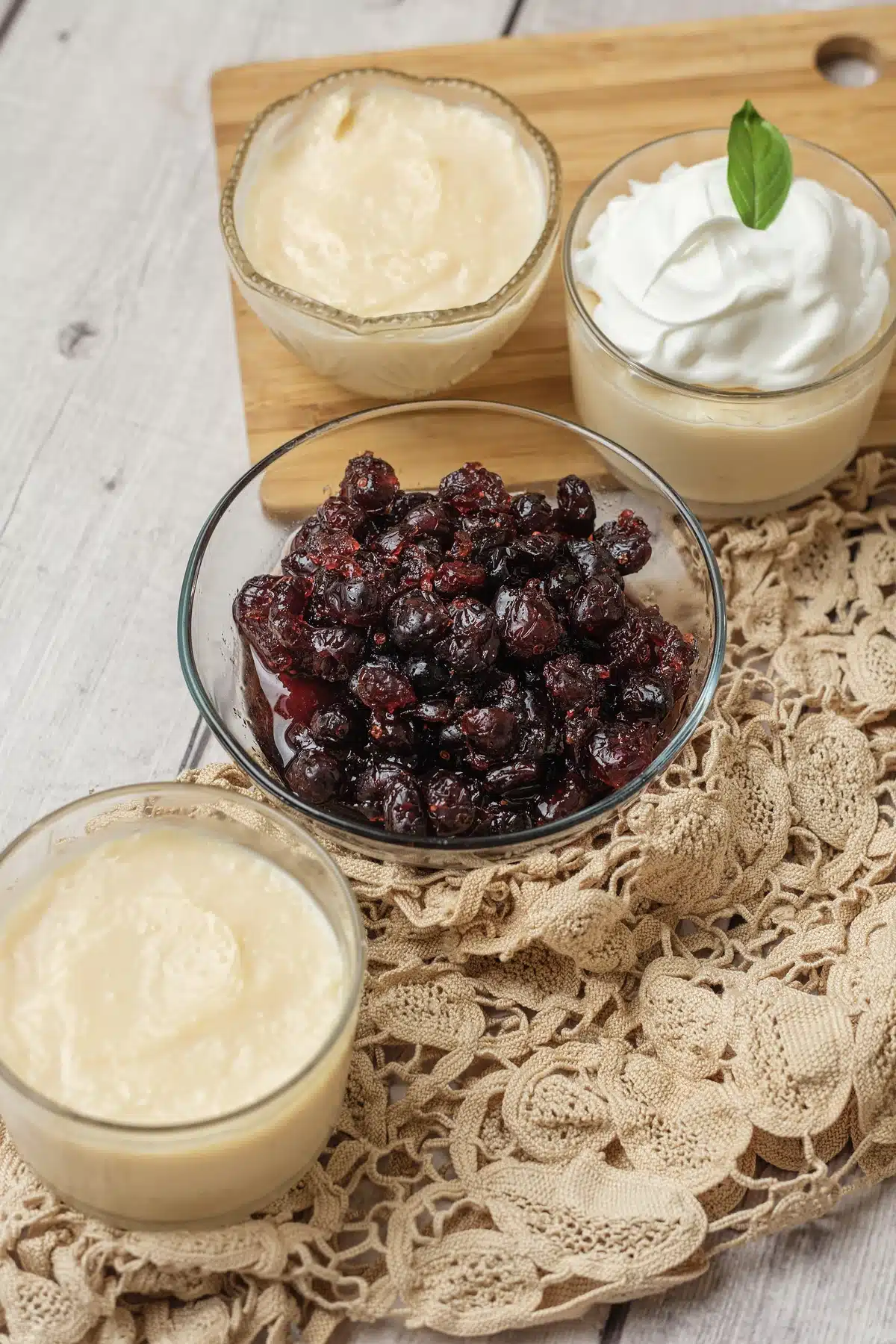
Whipped cream. Half a cup of cold heavy cream whipped with a teaspoon of sugar to soft peaks, piped or spooned over the set pudding. A mint leaf on top, as in the photographs, is optional but it makes the glass look finished.
Cranberry compote. The dark, glossy spoonful in the photographs. Simmer a cup of dried cranberries with a half cup of orange juice, a quarter cup of water and a tablespoon of sugar for eight to ten minutes, until the berries are plump and the liquid is syrupy, then cool. It is sharp and chewy against the sweet, smooth pudding. Dried cherries work the same way.
Everything else. Fresh berries, sliced banana, crushed vanilla wafers or graham crackers, a spoonful of caramel or a shaving of dark chocolate. Layer the pudding with cookies and cream in a glass and it becomes a small trifle.
Flavor Swaps
Vanilla bean. Split half a bean, scrape the seeds into the milk and drop the pod in too. Fish out the pod before portioning, and skip the extract.
Chocolate. Whisk two tablespoons of cocoa powder in with the sugar and cornstarch, and stir two ounces of chopped dark chocolate in with the butter.
Butterscotch. Use packed light brown sugar instead of white and add a quarter teaspoon more salt. It tastes like the filling of a butterscotch cookie.
Dairy-free. Full-fat canned coconut milk in place of the whole milk, and coconut oil or a plant butter at the end. Oat milk works but sets softer; add a half tablespoon more cornstarch.
Egg-free. Leave out the yolks and increase the cornstarch to four tablespoons. It is closer to the box in texture but still tastes of real vanilla and butter.
What to Serve with Homemade Vanilla Pudding
Something crisp is the classic partner to homemade vanilla pudding. A plate of almond joy cookies or chocolate chip pudding cookies for dipping turns four glasses into a proper dessert course, and shortbread or biscotti do the same job.
It is also a good finish after a heavy dinner precisely because it is cold and light. After a rich main it needs nothing more than the whipped cream. If you like the pudding family and want a warm one for winter, slow cooker rice pudding uses the same milk, sugar and vanilla logic with rice doing the thickening.
Homemade Vanilla Pudding FAQ
Frequently Asked Questions
Why is my pudding lumpy?
Either the cornstarch was not fully dissolved before the pan went on the heat, or the pudding sat still long enough in one spot to cook faster than the rest. Make the paste with a small amount of milk first, whisk constantly and reach into the corners. A pass through a fine sieve fixes lumps after the fact.
Why did my homemade vanilla pudding not set?
It did not boil. Cornstarch needs a full bubble and about a minute at that temperature to thicken completely. A pudding pulled early will look thick in the pan and turn loose in the refrigerator. Return it to the pan, bring it to a boil while whisking, and chill again.
Do I need to temper the egg yolks?
No. The cornstarch in the mixture protects the yolks, so everything can be whisked together cold and heated gently. Tempering is only necessary in recipes with no starch, like creme anglaise.
Can I use 2 percent or skim milk?
2 percent works and sets slightly thinner. Skim makes a pale, watery pudding and is not worth it. For a richer result, replace a half cup of the milk with heavy cream.
More Questions About Pudding
Good to Know
How do I stop a skin forming?
Press plastic wrap directly onto the surface of the warm pudding before it cools. The skin forms where the surface meets the air, so no air means no skin. Some people like the skin; if you do, leave it uncovered for the first twenty minutes.
Can I double the recipe?
Yes, in a larger pan. Double every ingredient and expect the cooking time to run a few minutes longer before it bubbles. The chilling time for a large dish is closer to four hours.
What is the topping in the photos?
Whipped cream with a mint leaf on one glass, and a spoonful of cranberry compote on another: dried cranberries simmered in orange juice and water until plump and syrupy. Both are in the Variations section and both are optional.
Once you have made homemade vanilla pudding from scratch, the box stops being a shortcut, because this takes fifteen minutes and one pan. Keep a batch in the refrigerator for the week, and for a bigger make-ahead dessert in the same cold, creamy family, a lemon icebox pie is the next one to try.
Homemade Vanilla Pudding
Save this recipe
Enter your email and I’ll send this recipe straight to your inbox.
Ingredients
Pudding
- 1/2 cup granulated sugar
- 3 tbsp cornstarch
- 1/4 tsp salt
- 3 large egg yolks
- 2 1/2 cups whole milk divided
- 2 tbsp unsalted butter cut into pieces
- 2 tsp vanilla extract or vanilla bean paste
To Serve (Optional)
- 1/2 cup heavy cream whipped with 1 teaspoon sugar
- 1/2 cup cranberry compote see notes, the pictured topping
- 4 mint leaves
Equipment
- Medium saucepan
- Whisk
- Fine mesh sieve (optional)
- Mixing bowl
Instructions
Make the Pudding
- Start the paste. Whisk the sugar, cornstarch and salt together in a medium heavy-bottomed saucepan, off the heat. Add the egg yolks and about 1/2 cup of the milk and whisk to a smooth, thick paste with no dry pockets.

- Add the rest of the milk. Pour in the remaining 2 cups of milk, whisking as you go, until the mixture is thin, smooth and evenly pale yellow.
- Cook until thick. Set the pan over medium heat and cook, whisking constantly and scraping the corners, for 8 to 10 minutes, until the pudding thickens and comes to a full bubble. Keep whisking and cook 1 minute more.


Finish and Chill
- Butter and vanilla. Remove from the heat and whisk in the butter and vanilla until glossy. Strain through a fine sieve if you see any specks of cooked egg.
- Chill. Divide between 4 glasses, press plastic wrap onto the surface of each, cool 20 minutes, then refrigerate for at least 2 hours, ideally 3, until set.
Serve
- Top and serve. Serve cold, plain or topped with whipped cream and a mint leaf, or a spoonful of cranberry compote, as pictured.
I made this earlier and I had a banana getting over ripe, so I mashed it up and put in the pudding, it was very good! This is a very good recipe and only took about 5 minutes to make! I will be making this again!