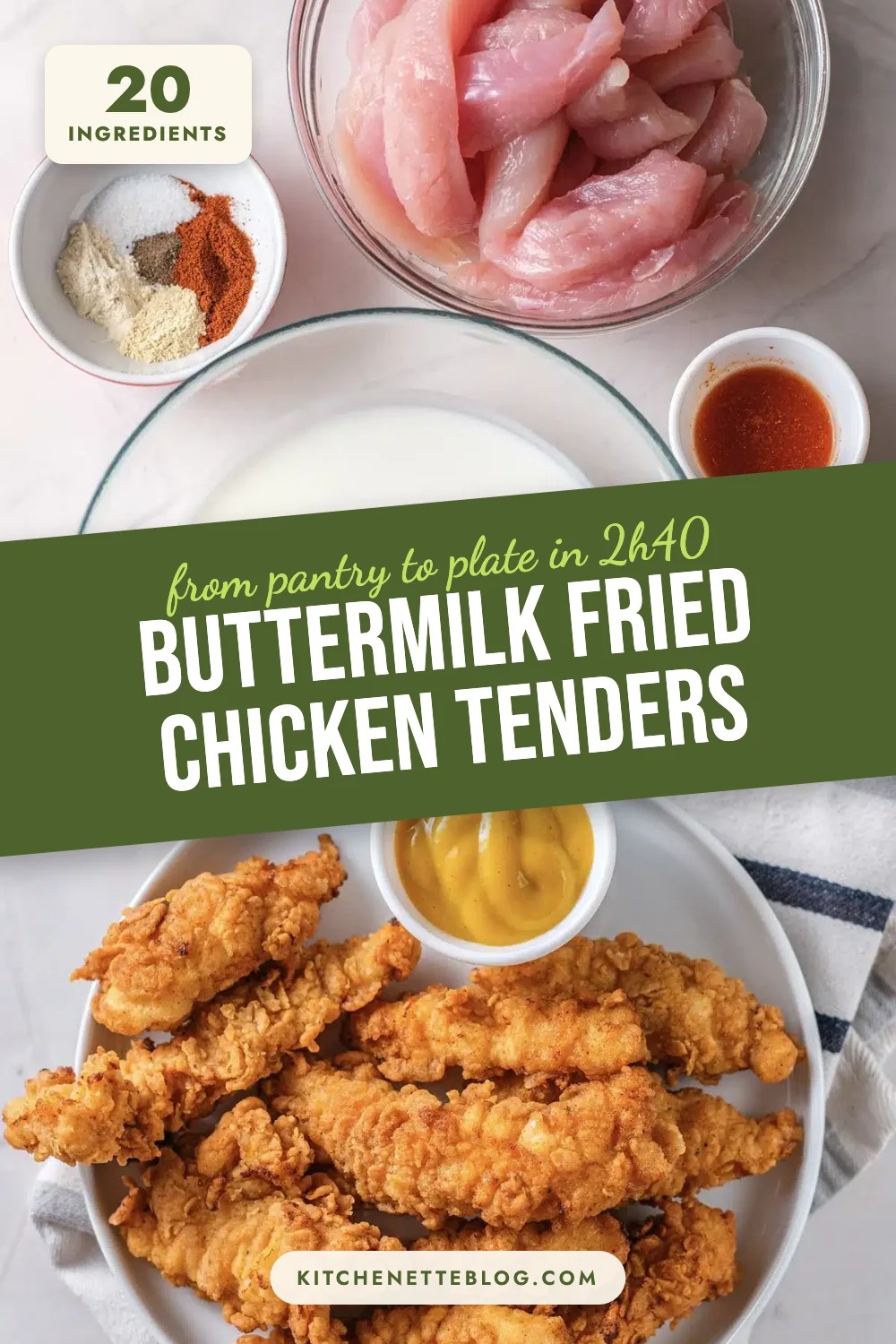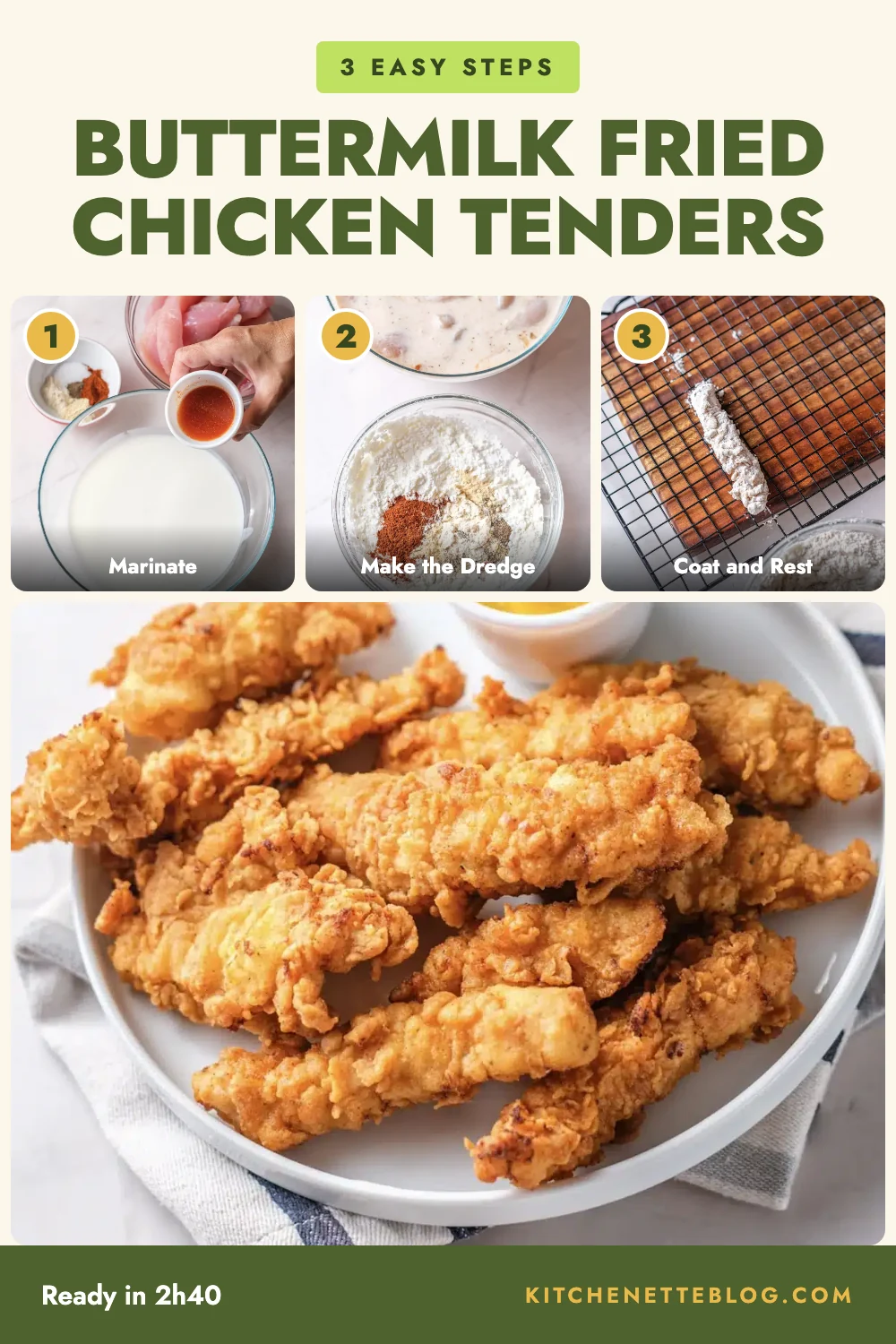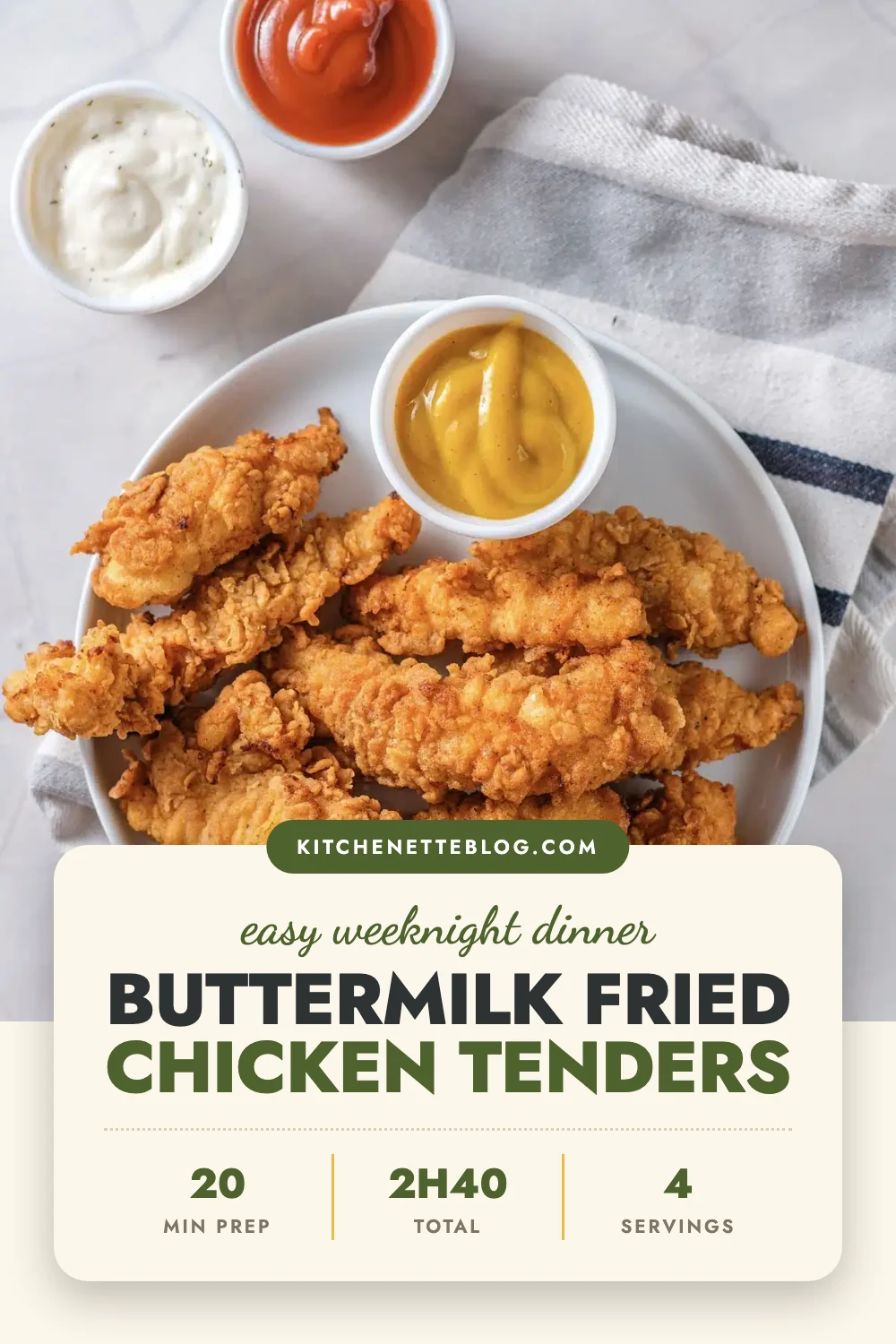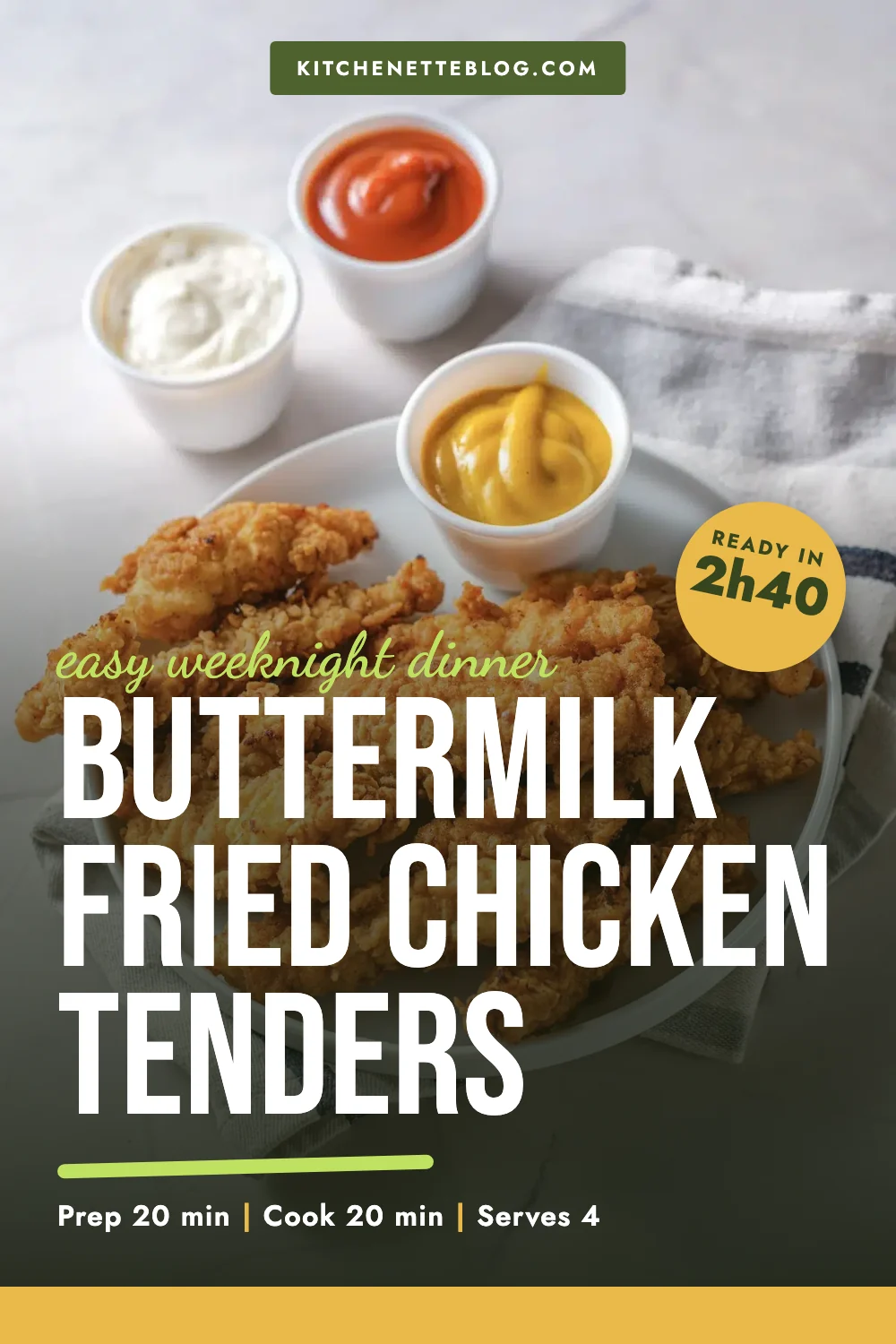
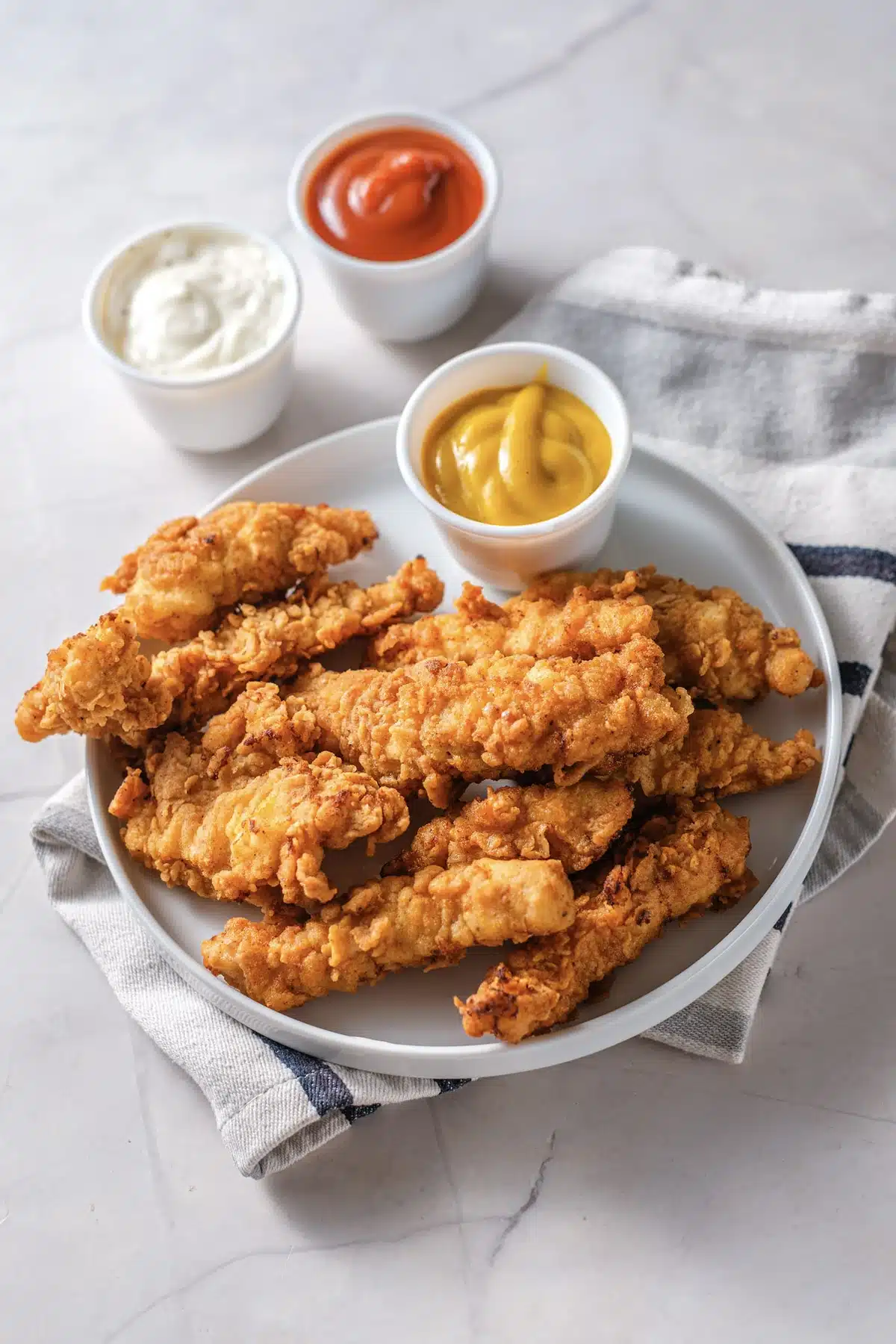
Fried chicken tenders made this way are soaked in a buttermilk and hot sauce marinade, dredged in seasoned flour with cornstarch and baking powder, and fried in a skillet until the crust is craggy and deep gold. The marinade takes 2 hours in the fridge, the frying takes about 20 minutes, and the recipe makes four generous servings, pictured with ketchup, ranch and honey mustard.
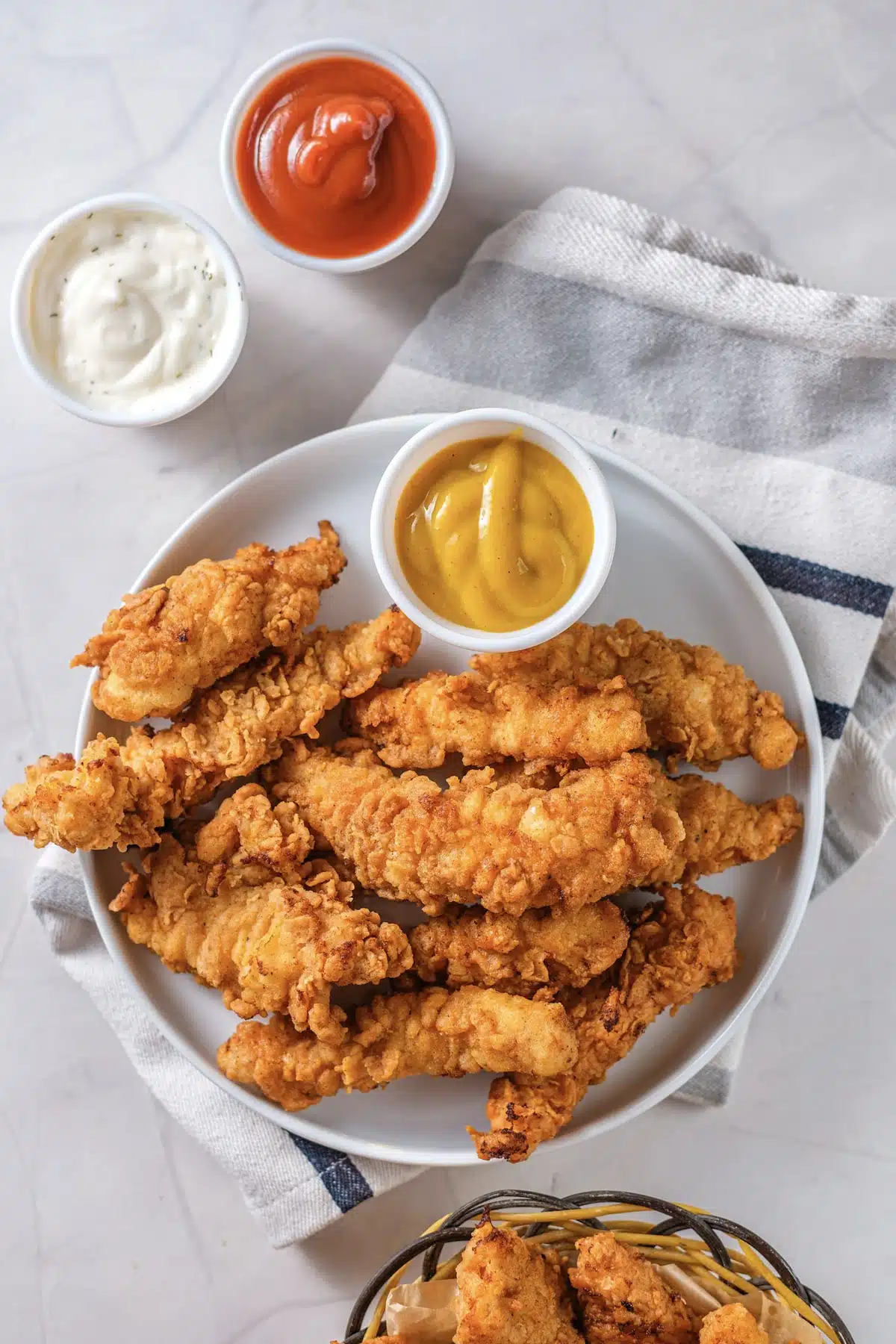
The crust is the whole point of a chicken tender, and this one comes from three small decisions. Buttermilk tenderizes the meat and gives the flour something to cling to. Cornstarch in the dredge keeps the coating light and shatteringly crisp instead of bready. And a teaspoon of baking powder makes the coating puff and crackle in the oil, which is where the craggy ridges in the photos come from.
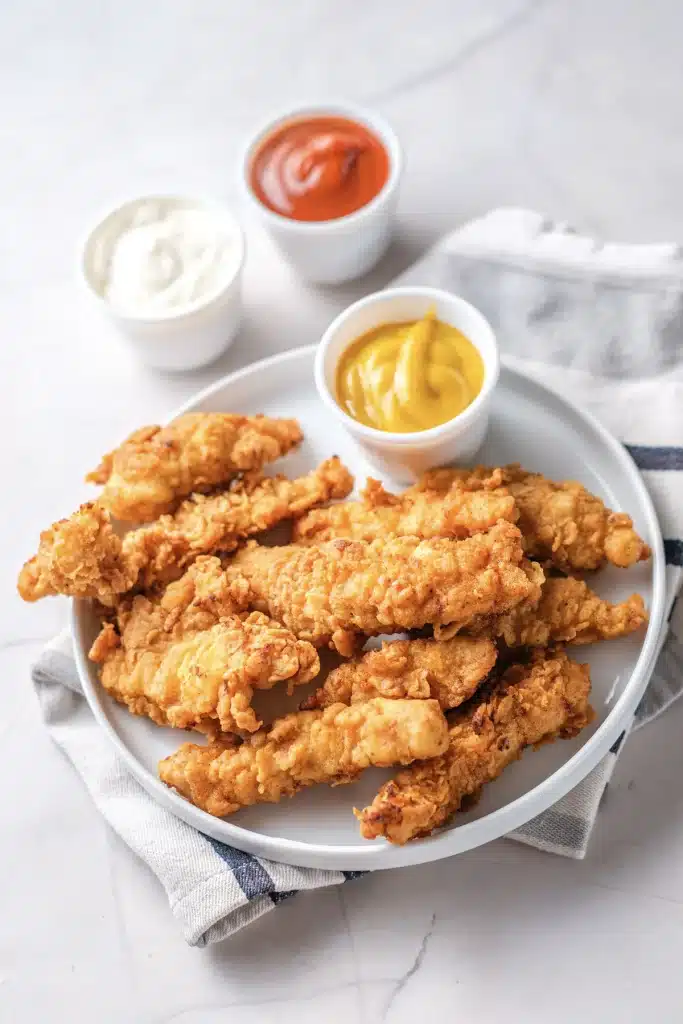
- A buttermilk and hot sauce marinade that keeps the meat juicy and seasons it through
- Fried chicken tenders with a craggy, crackling crust from cornstarch and baking powder
- Skillet frying in two inches of oil, so no deep fryer and less oil to deal with
- Twenty minutes at the stove once the marinade has done its work
- Ketchup, ranch and honey mustard on the side, as pictured, or any dip you like
- Reheat in the oven or air fryer and the crust comes back crisp

- What Makes These Fried Chicken Tenders Crispy
- Ingredient Notes
- How Long To Marinate Chicken Tenders in Buttermilk
- How To Make Fried Chicken Tenders
- How To Tell When Fried Chicken Tenders Are Done
- Make It Ahead
- Storing Fried Chicken Tenders
- Variations and Substitutions
- What to Serve with Fried Chicken Tenders
- Fried Chicken Tenders FAQ
What Makes These Fried Chicken Tenders Crispy
A buttermilk marinade plus cornstarch and baking powder in the dredge are what make these fried chicken tenders crispy. Most fried chicken tenders are dipped in egg and plain flour, and the crust comes out smooth and a little tough. This recipe does two things differently. The chicken sits in buttermilk, which is acidic enough to tenderize the meat over a couple of hours and thick enough to leave a coating that the flour grabs onto. And the dredge is not plain flour: half a cup of cornstarch lightens it, and a teaspoon of baking powder reacts in the hot oil to lift the coating into ridges and bubbles.
The other trick is in the dredge bowl. Before you coat the chicken, drizzle a tablespoon of the marinade into the flour and toss it with your fingers until small clumps form. Those clumps stick to the chicken and fry into the extra-craggy bits that make restaurant tenders look the way they do. Then the coated tenders rest on a rack for 10 minutes so the flour hydrates and stays put in the oil instead of floating off.
Seasoning goes in both the marinade and the dredge, because the marinade seasons the meat and the dredge seasons the crust, and a crust that tastes only of flour wastes the effort.
Save this recipe
Enter your email and I’ll send this recipe straight to your inbox.
Ingredient Notes
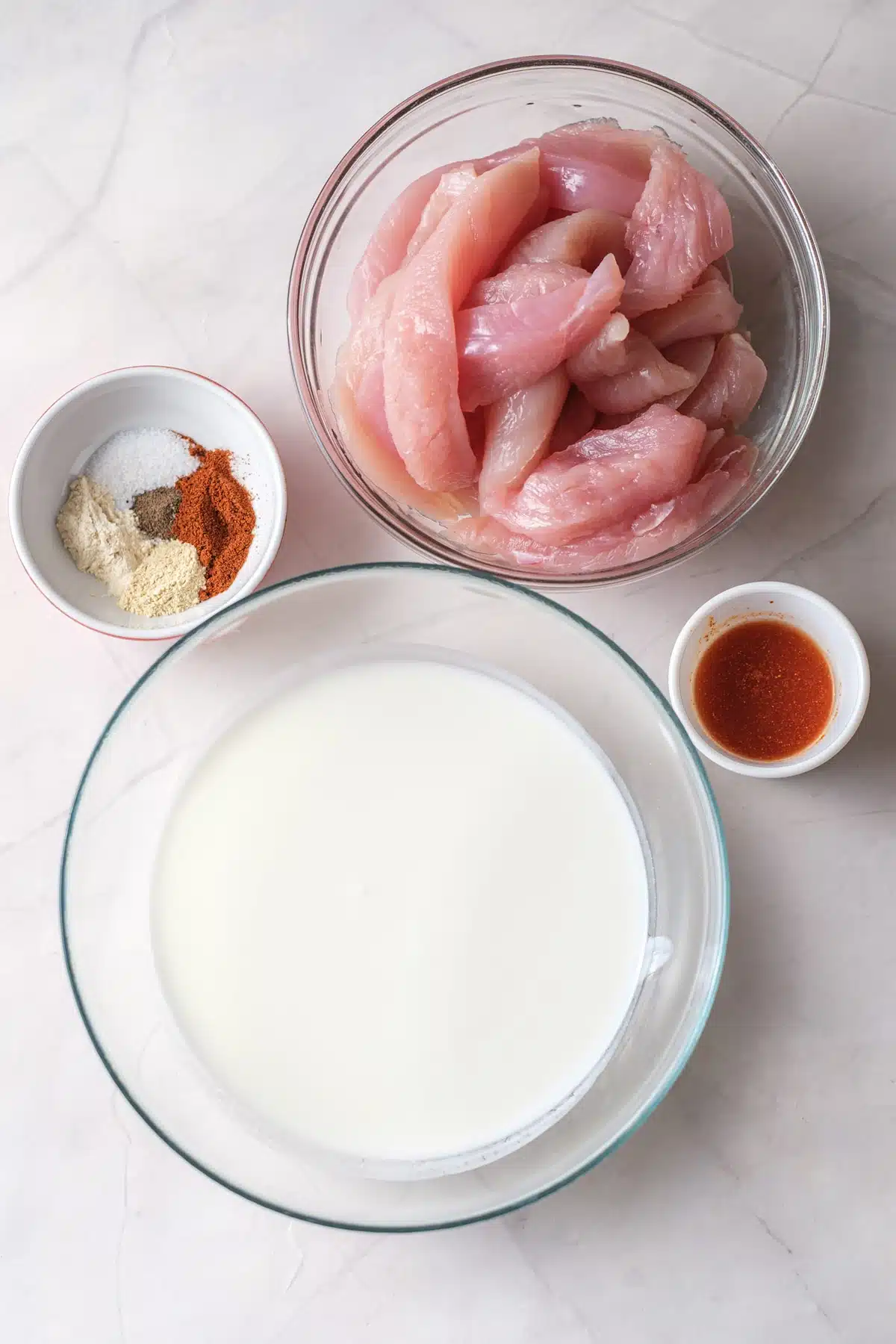
- Chicken tenders. One and a half pounds, which is 10 to 12 tenders. Boneless skinless breasts cut lengthwise into one-inch strips work the same way; cut them evenly so they finish together.
- Buttermilk. One cup. Real buttermilk is thicker and clings better, but a cup of milk with a tablespoon of lemon juice or vinegar, left for 5 minutes, is a fair stand-in.
- Hot sauce. One to two tablespoons of a vinegar-based sauce like Frank’s. It seasons more than it heats; two tablespoons gives a gentle warmth, not a spicy tender.
- Garlic powder, onion powder and smoked paprika. A teaspoon of each in the marinade and a teaspoon of each in the dredge. Smoked paprika is what gives the crust its deep color and a faint smokiness.
- Kosher salt and black pepper. A teaspoon of salt and half a teaspoon of pepper in the marinade; one and a half teaspoons of salt and a teaspoon of pepper in the dredge. If you use table salt, use about two thirds as much.
- All-purpose flour. One and a half cups. The base of the dredge.
- Cornstarch. Half a cup. It is the difference between a crisp crust and a bready one. Do not skip it.
- Baking powder. One teaspoon in the dredge. It lifts the coating and makes it crackle.
- Cayenne. Half a teaspoon, optional. Leave it out for children and double it for a Nashville lean.
- Vegetable oil. Two to three cups, enough to come 2 to 3 inches up a heavy skillet or Dutch oven. Peanut oil and canola both work; anything with a high smoke point and no flavor of its own.
- Dips. Ketchup, ranch and honey mustard are in the photos. Honey mustard is two tablespoons of mustard, two of honey and one of mayonnaise, stirred together.
Check each tender for the thin white tendon running out of the thick end. It tightens in 350°F oil and stays chewy and hard to bite through, however crisp the crust and however juicy the meat around it.
Hold the tip of the tendon with a paper towel, slip it between the tines of a fork, press the fork flat against the board and pull the tendon toward you. It slides out and the meat stays behind. Do this before the tenders go into the buttermilk, while the meat is cold and firm.
Nayla — kitchen note
How Long To Marinate Chicken Tenders in Buttermilk
Two hours is the sweet spot for fried chicken tenders, and up to overnight is fine. In 30 minutes the buttermilk has done enough to help the flour stick but not much for the meat. By 2 hours the acid and the salt have worked into the tenders and they come out noticeably juicier. Past 24 hours the surface starts to turn mealy, so do not push it further than one night.
Do not rinse the buttermilk off. Lift each tender out, let the excess drip back into the bowl for a second or two, and go straight into the flour. The thin coating of buttermilk left on the chicken is what the dredge clings to, and rinsing it away is the fastest way to a crust that slides off in the oil.
How To Make Fried Chicken Tenders
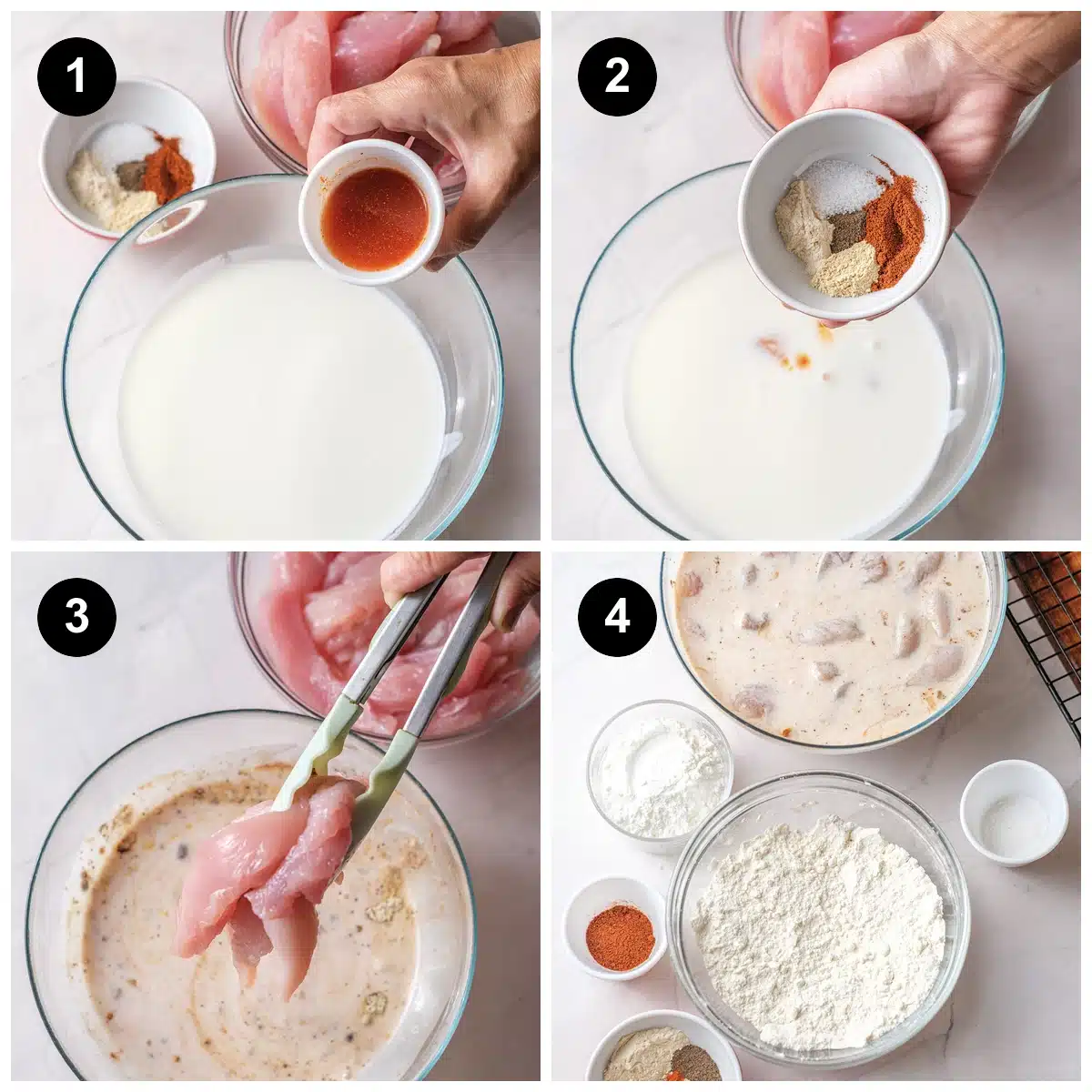
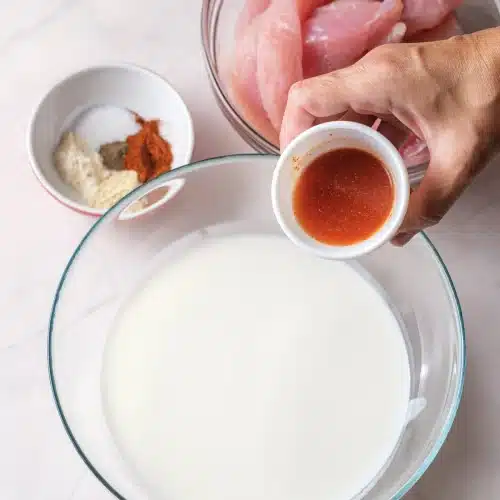
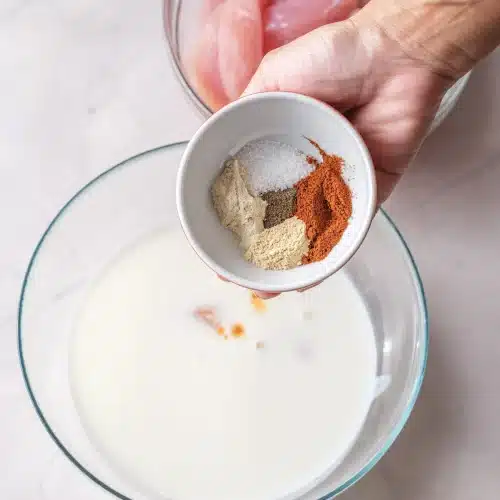
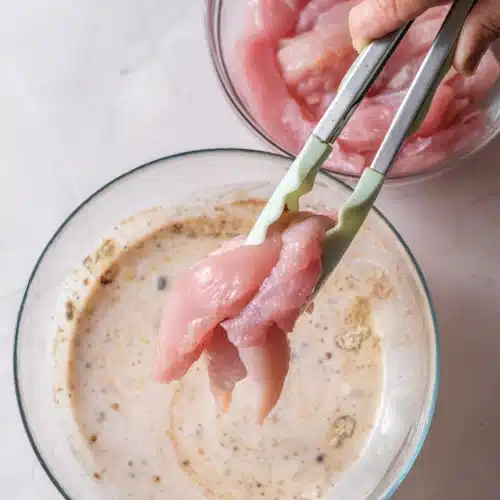
First, pour the buttermilk into a large bowl and add the hot sauce. Next, add the garlic powder, onion powder, smoked paprika, salt and pepper and whisk until the marinade is smooth and pale orange. Then add the chicken tenders, turn them with tongs until every piece is coated, cover the bowl and refrigerate it for at least 2 hours or up to overnight.
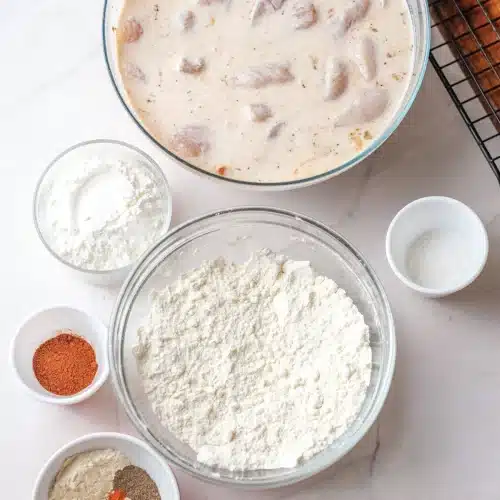
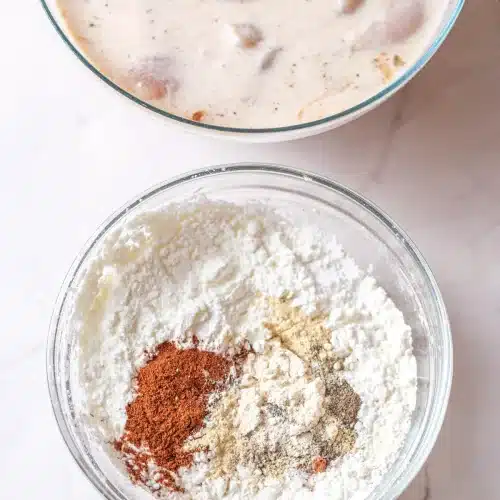
After that, set out the dredge: the flour, cornstarch, smoked paprika, garlic powder, onion powder, cayenne, salt, pepper and baking powder, measured and ready beside the bowl of marinating chicken.
Dredging and Resting
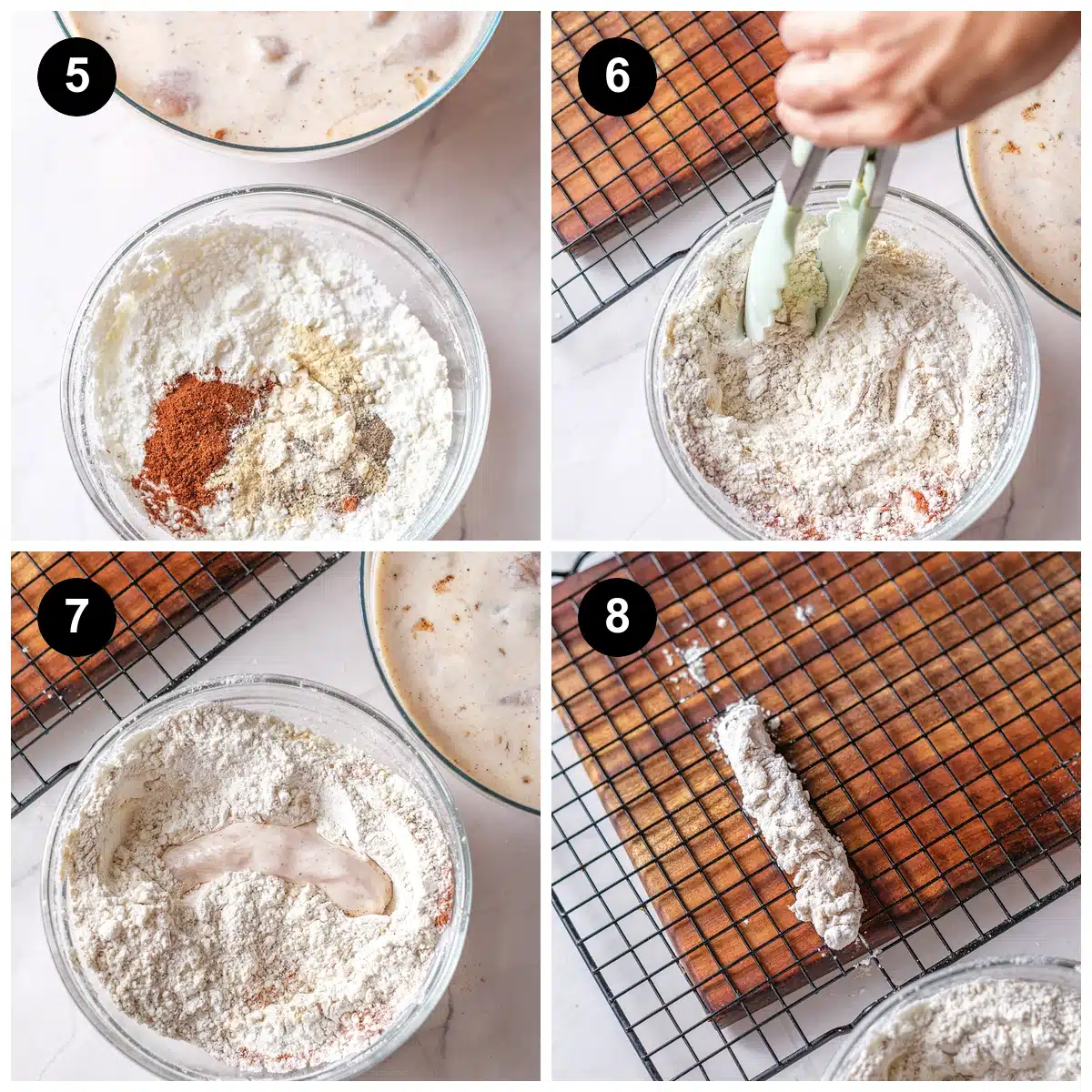
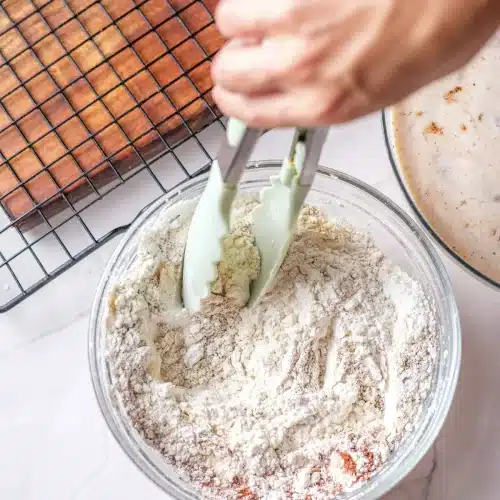
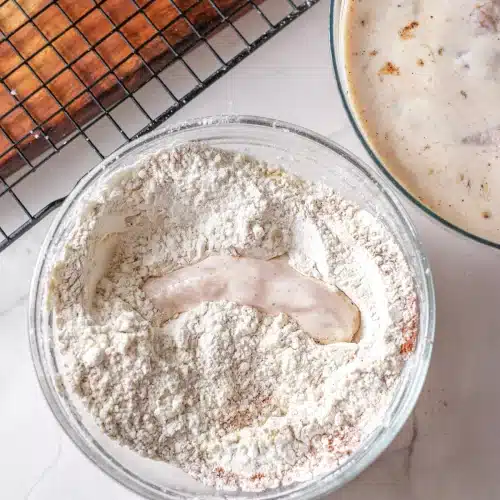
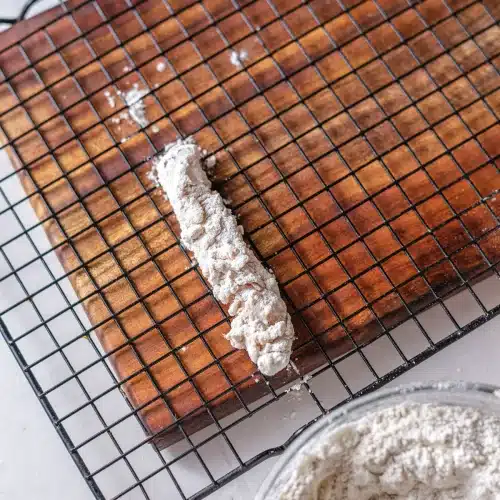
Tip the spices and baking powder into the flour and cornstarch and toss them together with tongs or a fork until the color is even. Drizzle in a tablespoon of the marinade and work it through with your fingertips to make small clumps. Lift one tender out of the buttermilk, let it drip for a second, lay it in the flour and press the flour onto it from all sides, turning it over, until it is thickly coated. Set it on a wire rack over a baking sheet and repeat with the rest.
Let the coated tenders rest on the rack for 10 minutes while the oil heats. The flour turns from powdery to slightly pasty, which is what you want; that paste fries into a crust that stays attached.
Frying
Pour 2 to 3 inches of oil into a heavy skillet or Dutch oven and heat it over medium-high to 350°F (175°C). Use a thermometer if you have one; without one, a pinch of flour should sizzle at once and a cube of bread should brown in about 60 seconds.
Finally, lower the tenders in one at a time, away from you, and fry for 4 to 5 minutes per side, turning once with tongs, until they are deep golden and an instant-read thermometer in the thickest one reads 165°F (74°C). Move them to a clean wire rack over a sheet pan to drain, sprinkle them with a pinch of salt while they are hot, and keep them in a 200°F oven if you are frying more than one batch.
How To Tell When Fried Chicken Tenders Are Done
Fried chicken tenders are done when the thickest one reads 165°F (74°C) on an instant-read thermometer, which takes 8 to 10 minutes in total at 350°F. That is the safe minimum for all poultry according to the National Chicken Council, and tenders are thin enough that the crust reaches deep gold at almost exactly the same moment.
Without a thermometer, cut the thickest tender in half. The meat should be white all the way through with no pink or translucent streak, and the juices should run clear. Color alone is not enough, because a crust can go dark in oil that is too hot while the center is still raw. If the outside is browning faster than 4 minutes a side, lower the heat.
Make It Ahead
The marinade is the make-ahead step, and it is a good one. Chicken can sit in the buttermilk overnight, so the evening before is the ideal time to start. The dredge can be mixed a week ahead and kept in a jar; just leave the tablespoon of marinade out until you are ready to coat.
Fried chicken tenders can also be dredged up to an hour ahead and held on the rack in the fridge, uncovered. The coating sets firmer the longer it sits, and tenders fried from the fridge need about one extra minute per side. Fully cooked tenders reheat well, which is covered next, but they are at their best within 15 minutes of leaving the oil.
Storing Fried Chicken Tenders
Cool leftovers completely, then refrigerate them in an airtight container lined with a paper towel for up to 3 days. Reheat them on a rack in a 375°F oven for 10 to 12 minutes or in an air fryer at 375°F for 5 to 6 minutes, and the crust comes back nearly as crisp as the first day. The microwave makes them soft, so avoid it.
To freeze, lay cooked, cooled tenders in a single layer on a sheet pan until solid, then move them to a freezer bag for up to 3 months. Reheat from frozen in a 375°F oven for 18 to 20 minutes, or in the air fryer for 10 to 12, until hot in the center.
Variations and Substitutions
Extra crispy. Double dredge: flour, back into the buttermilk for a quick dip, and flour again. The crust is thicker and shaggier. Add a minute per side to the frying time.
Spicy. Double the cayenne in the dredge and use the full two tablespoons of hot sauce. For a Nashville-style finish, whisk a tablespoon of cayenne into a quarter cup of the hot frying oil with a teaspoon of brown sugar and brush it over the fried tenders.
Air fryer. Coat as written, spray the tenders generously with oil on both sides and air fry at 400°F for 12 to 14 minutes, flipping halfway. The crust is crisp but less craggy than fried.
Oven. Set the coated tenders on a rack over a sheet pan, spray them with oil and bake at 425°F for 18 to 20 minutes, flipping once. Good for a crowd; not the same as frying.
Dairy-free. Use a cup of unsweetened plant milk with a tablespoon of lemon juice in place of the buttermilk. It is thinner, so press the flour on firmly.
Gluten-free. A measure-for-measure gluten-free flour blend in place of the all-purpose flour, with the same cornstarch and baking powder. Check the hot sauce label too.
What to Serve with Fried Chicken Tenders
The dips come first. Ketchup, ranch and honey mustard are in the photos, and the three together cover the whole table. A spoonful of coney sauce is the unexpected one that works, and hot honey is a close second. For sides, fries or a bacon potato salad go with the dips, and a crunchy slaw with a sharp dressing cuts the richness.
Fried chicken tenders also make a dinner on their own. Pile them on a waffle, tuck them into a soft roll with pickles and mayonnaise, or slice them over a Caesar salad. If you are cooking for a crowd that likes chicken, Indian chicken wings alongside give the table a second flavor, and the chicken cobbler is the comfort dish for the week after.
Fried Chicken Tenders FAQ
Frequently Asked Questions
What does buttermilk do to chicken tenders?
Two things. Its mild acid and the salt in the marinade tenderize the meat over 2 hours and season it through, so the tenders stay juicy inside a crisp crust. And because it is thick, it leaves a coating that the seasoned flour clings to, which is why the crust stays attached in the oil.
Why does the coating fall off my fried chicken tenders?
Usually one of three things: the buttermilk was rinsed or wiped off, the coated tenders went into the oil without resting, or they were moved too much in the pan. Leave the buttermilk on, rest the dredged tenders on a rack for 10 minutes, and turn them only once.
Do you dip chicken tenders in egg or buttermilk?
Buttermilk, for this recipe. It does the job of an egg wash and tenderizes the meat at the same time, so there is no separate egg step. Egg and flour works for a smoother, more even crust; buttermilk and the clumped flour here give the craggy restaurant-style one.
What oil is best for frying chicken tenders?
A neutral oil with a high smoke point: peanut, canola or plain vegetable oil. You need 2 to 3 inches in the pan, which is 2 to 3 cups in a 12-inch skillet. Strain and reuse it once or twice for frying, then discard it.
More Questions About Chicken Tenders
Good to Know
Can I make fried chicken tenders from chicken breasts instead of tenders?
Yes. Cut boneless skinless breasts lengthwise into strips about one inch wide and the length of your hand, and marinate and fry them exactly as written. Thicker strips need an extra minute per side; check them with a thermometer.
Can I make a smaller batch of fried chicken tenders?
Yes. Halve everything except the oil, which depends on the pan rather than the amount of chicken. A half batch of three quarters of a pound marinates and fries in the same times and makes two servings.
How many calories are in fried chicken tenders?
About 410 calories per serving, with roughly 33 g protein, 31 g carbohydrates and 16 g fat, when the 1 1/2 pounds of chicken is split four ways. The estimate comes from the recipe card and does not include the dips.
How long do fried chicken tenders keep in the fridge?
Up to 3 days in an airtight container lined with a paper towel. Reheat them on a rack at 375°F for 10 to 12 minutes, or in an air fryer at 375°F for 5 to 6 minutes, so the crust crisps again, and skip the microwave.
Start the marinade the night before and these fried chicken tenders are a 30-minute dinner the next day, with three dips on the table and a crust that crackles. On a Sunday, the Cracker Barrel chicken and dumplings is the slower, softer chicken supper to make instead.
Buttermilk Fried Chicken Tenders
Save this recipe
Enter your email and I’ll send this recipe straight to your inbox.
Ingredients
Buttermilk Marinade
- 1 cup buttermilk or milk plus 1 tablespoon lemon juice
- 1 tsp garlic powder
- 1 tsp onion powder
- 2 tbsp hot sauce such as Frank's; use 1 for milder
- 1 tsp smoked paprika
- 1 tsp kosher salt
- freshly ground black pepper, about 1/2 teaspoon
Chicken
- 1 1/2 lb chicken tenders or boneless skinless breasts cut into 1-inch strips
Seasoned Dredge
- 1 1/2 cups all-purpose flour
- 1 tsp baking powder
- 1 tsp smoked paprika
- 1/2 cup cornstarch
- 1 tsp garlic powder
- 1 tsp onion powder
- 1 tbsp buttermilk marinade spooned from the chicken bowl, for craggy clumps
- 1 1/2 tsp kosher salt
- 1/2 tsp cayenne pepper optional
- freshly ground black pepper, 1 teaspoon
For Frying and Serving
- 3 cups vegetable oil or peanut or canola, enough for 2 to 3 inches
- ketchup, ranch and honey mustard for dipping, as pictured
Equipment
- Mixing bowls
- Whisk
- Shallow Dish
- Heavy Skillet or Dutch Oven
- Tongs
- Wire rack
- Baking sheet
- Meat Thermometer (optional)
Instructions
Marinate
- Start the marinade. Pour the buttermilk into a large bowl and add the hot sauce.

- Season it. Whisk in the garlic powder, onion powder, smoked paprika, salt and pepper until smooth.
- Add the chicken. Put the tenders in and turn them with tongs until coated. Cover and refrigerate for at least 2 hours, or up to overnight.
Make the Dredge
- Set out the dredge. Measure the flour, cornstarch and the dredge spices into bowls beside the marinating chicken.
- Add the seasoning. Tip the smoked paprika, garlic powder, onion powder, cayenne, salt, pepper and baking powder into the flour and cornstarch.
- Toss and clump. Toss with tongs or a fork until the color is even, then drizzle in a tablespoon of the marinade and work it through with your fingertips to make small clumps.
Coat and Rest
- Dredge the chicken. Lift each tender from the buttermilk, let the excess drip off, and press it into the flour on all sides until thickly coated.
- Rest on a rack. Set the coated tenders on a wire rack over a baking sheet and rest for 10 minutes while the oil heats, so the coating sets.
Fry
- Heat the oil. Pour 2 to 3 inches of oil into a heavy skillet or Dutch oven and heat over medium-high to 350°F (175°C).
- Fry in batches. Fry four or five tenders at a time for 4 to 5 minutes per side, turning once, until deep golden and 165°F (74°C) inside. Let the oil return to 350°F between batches.
- Drain and serve. Move to a clean wire rack, sprinkle with a pinch of salt and serve hot with ketchup, ranch and honey mustard.