
The reason most vegan oatmeal chocolate chip cookies come out dry and cakey has nothing to do with leaving the eggs out. It is the sugar, and it is the fifteen minutes nobody wants to spend chilling the dough.
The version that used to live on this page called for coconut sugar, no chill and ten minutes in the oven, and it produced exactly that: pale, sandy discs that went stale by the next afternoon. These vegan oatmeal chocolate chip cookies use dark brown sugar for the molasses, a flax egg for the bind, and half an hour in the refrigerator, and they come out with crisp edges and a genuinely soft middle.
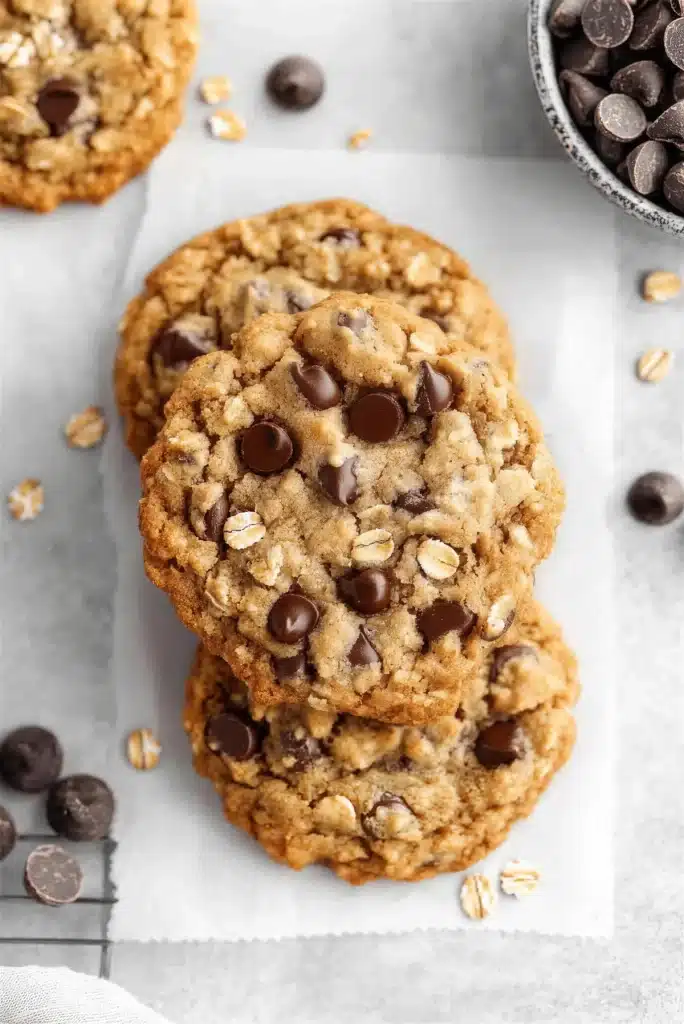
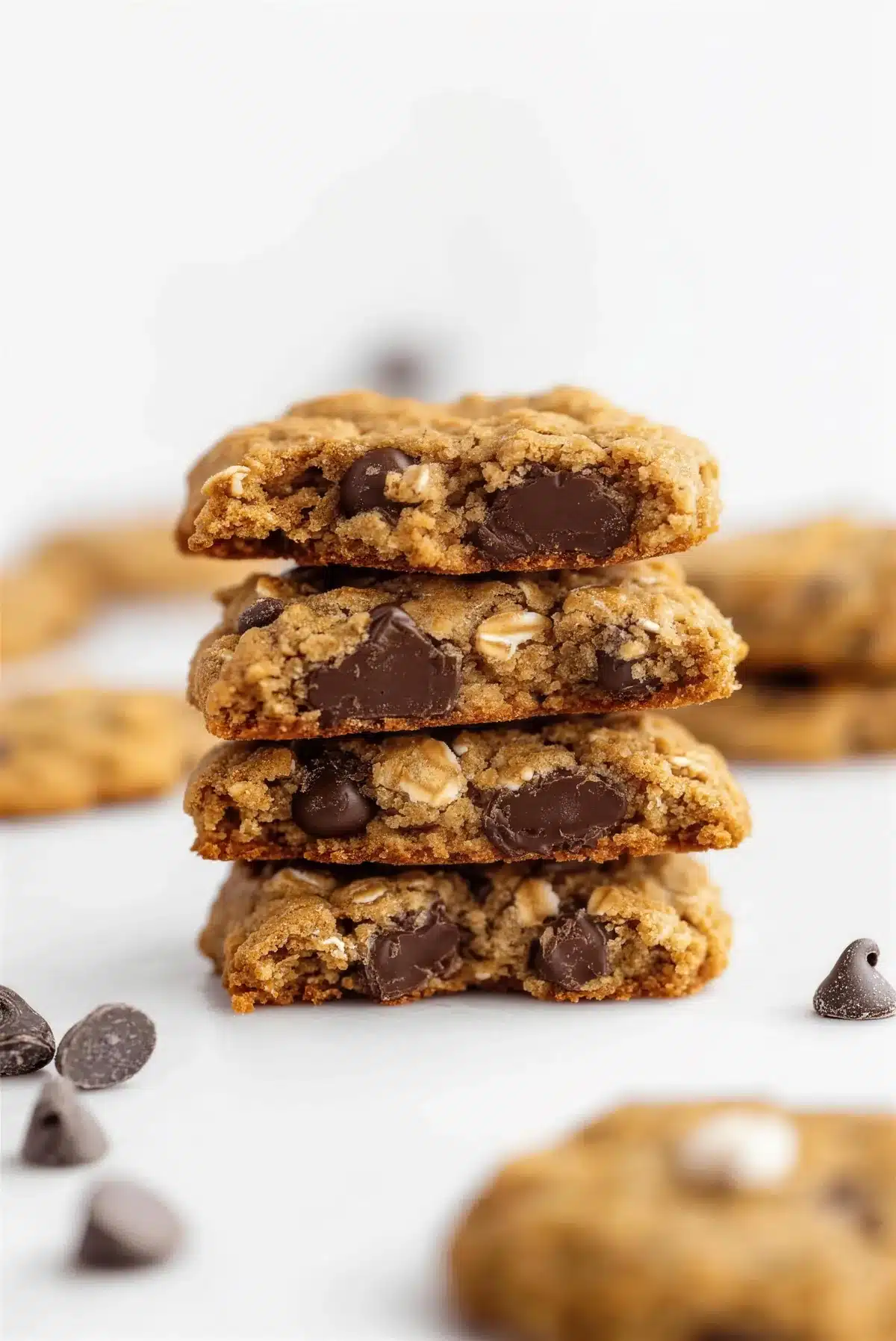
- Crisp at the edge, soft in the middle, and still soft on day three
- One bowl and a spatula, with no mixer needed anywhere
- No eggs, no dairy, and nobody at the table can tell
- Fifteen cookies from a half cup of vegan butter, so it is a cheap bake
- The dough balls freeze raw, which means two cookies on a Tuesday
- Oats do the work that a second egg would do in a regular cookie

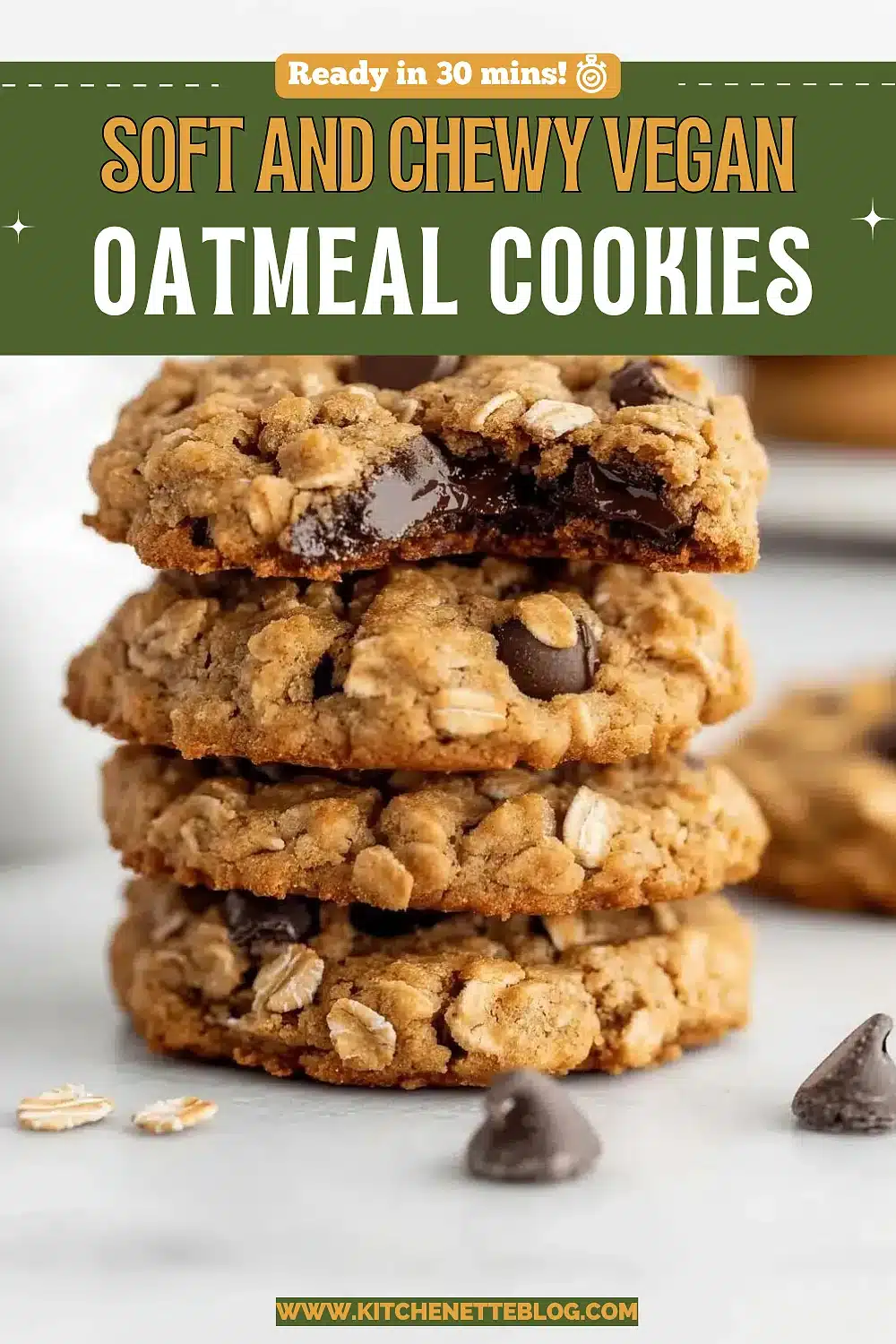
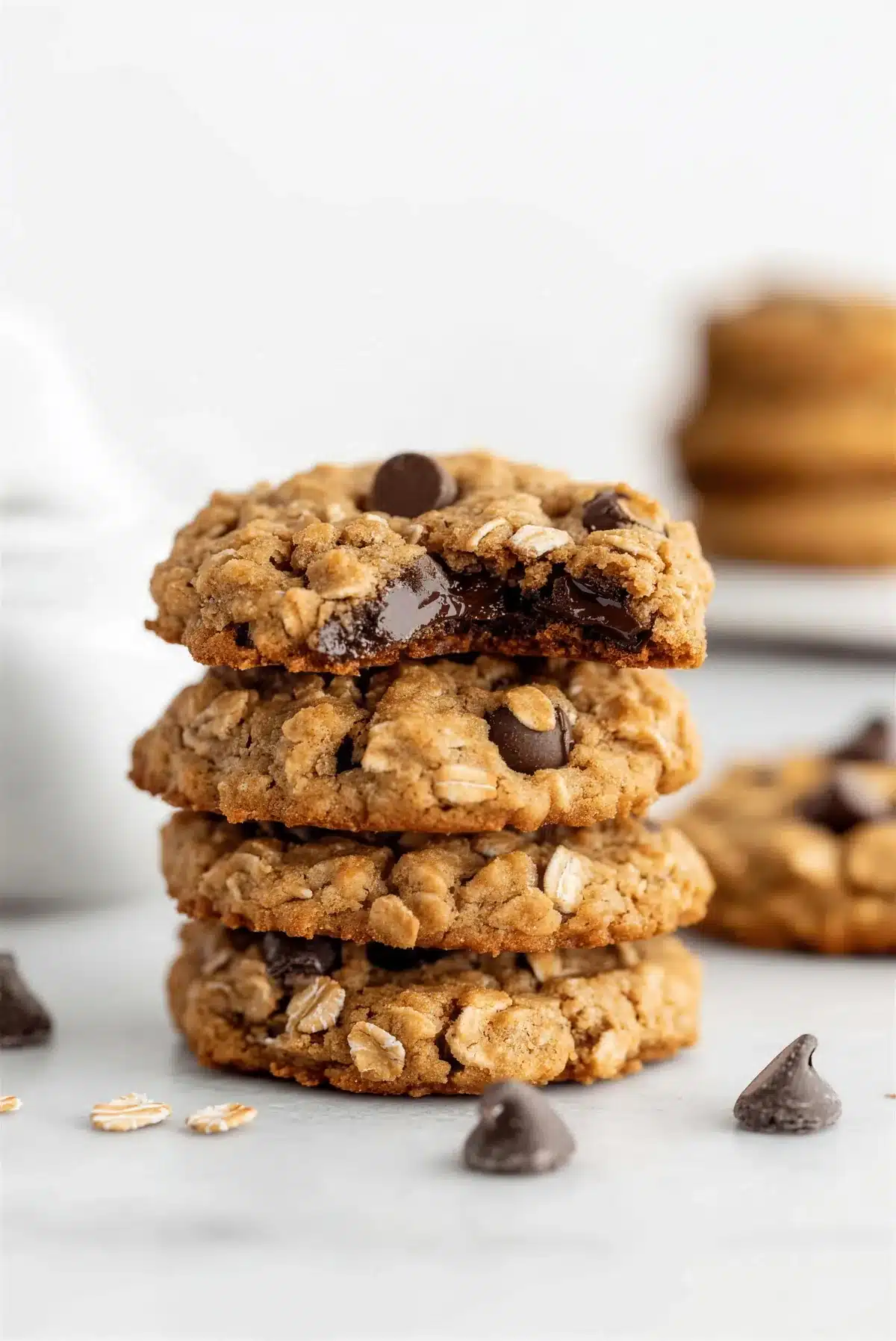
Everything below is written for old-fashioned rolled oats and a block-style vegan butter, which is what the timings assume.
- What Makes Vegan Oatmeal Chocolate Chip Cookies Different
- Ingredient Notes
- Which Oats To Use
- How To Make Vegan Oatmeal Chocolate Chip Cookies
- How To Tell When Vegan Oatmeal Chocolate Chip Cookies Are Done
- Make It Ahead
- Storing Vegan Oatmeal Chocolate Chip Cookies
- Variations and Substitutions
- What to Serve with Them
- Vegan Oatmeal Chocolate Chip Cookies FAQ
What Makes Vegan Oatmeal Chocolate Chip Cookies Different
An egg does three jobs in a cookie: it binds, it adds water, and it sets as it bakes so the middle stops flowing. Vegan oatmeal chocolate chip cookies have to find all three somewhere else. Here is where each one comes from.
Binding comes from ground flaxseed stirred into water and left for ten minutes until it turns slippery. It is not a gimmick; it holds the crumb together in a way that applesauce does not.
Water comes from a splash of oat milk and from the molasses in brown sugar, which is hygroscopic and pulls moisture back into the cookie as it cools.
Setting is where the oats earn their place. They swell, absorb the loose fat and keep the cookie from spreading into a wafer, which is why vegan oatmeal chocolate chip cookies work when a plain vegan chocolate chip cookie often does not.
There is one more difference worth knowing. Vegan butter is wetter and softer than dairy butter, so the dough is slack when you mix it and it needs the refrigerator before it goes anywhere near an oven.
Save this recipe
Enter your email and I’ll send this recipe straight to your inbox.
Ingredient Notes
Vegan oatmeal chocolate chip cookies need nine ingredients, all of them supermarket items. Exact amounts are on the recipe card below.
- Vegan butter: half a cup of a block-style brand rather than a tub spread. Tub spreads carry more water and the cookies spread thin.
- Dark brown sugar: a full cup, and this is the change that matters most. The molasses gives chew, color and the acidity the baking soda needs to react against.
- Ground flaxseed: one tablespoon with three of water, left ten minutes. Buy it ground, or grind it yourself, because whole seeds do nothing.
- Rolled oats: old-fashioned, not instant. Instant oats are cut and rolled thinner and dissolve into the dough instead of staying visible.
- All-purpose flour: a cup and a quarter, spooned into the cup and leveled. Scooping straight from the bag adds up to 20 percent more.
- Baking soda: one teaspoon, no baking powder. With brown sugar in the bowl there is enough acid for the soda to work on.
- Cinnamon: three quarters of a teaspoon. Optional, and it makes the whole batch taste like an oatmeal cookie rather than a chocolate chip cookie with oats in it.
- Chocolate chips: check the label. Plenty of semisweet chips contain milk fat, and dark chips at 55 percent or above usually do not.
One more label to read: some refined white and brown sugar is filtered through bone char. If that matters to you, buy organic or unrefined, which is not.
Which Oats To Use
Old-fashioned rolled oats in vegan oatmeal chocolate chip cookies, every time. Illinois Extension explains that rolled oats are groats that have been steamed and then rolled into flakes, while quick oats are steamed longer and rolled thinner, and steel cut oats are simply chopped with a blade.
That thickness is the whole story for baking. A thick flake stays a flake through twelve minutes in the oven and gives the cookie its texture.
Quick oats work in a pinch and give a softer, more uniform cookie with less to bite into. Use the same weight, not the same volume, because they pack tighter.
Steel cut oats do not work at all here. They never soften in the time the cookie takes and you end up chewing gravel.
Certified gluten-free oats are worth buying if anyone at the table needs them, since ordinary oats are usually processed alongside wheat. Swapping the flour is a separate problem, covered further down.
How To Make Vegan Oatmeal Chocolate Chip Cookies
Mix the flax and water first and leave it alone while you get everything else out. Vegan oatmeal chocolate chip cookies come together faster than the oven preheats.
- First, stir the ground flaxseed into the water and set it aside for ten minutes, until it thickens and turns slightly slippery.
- Next, beat the softened vegan butter and the brown sugar together with a spatula for a full minute, until it looks like wet sand rather than two separate things.
- Then stir in the flax mixture, the oat milk and the vanilla, and keep going until the bowl looks smooth instead of curdled.
- After that, add the flour, salt, oats, baking soda and cinnamon and fold just until no dry flour is left, then fold in the chocolate chips and chill the dough for 30 minutes.
- Finally, roll fifteen balls, flatten each one slightly, space them well apart and bake at 350 degrees Fahrenheit for 11 to 13 minutes, until the edges are set and the middles still look underdone.
Why the Dough Has To Chill
Vegan butter melts at a lower temperature than dairy butter and holds more water, which is the whole problem with unchilled vegan oatmeal chocolate chip cookies. A ball of room-temperature dough hits a hot tray and the fat is liquid before the flour has set anything, so the cookie runs outward and bakes flat.
Half an hour in the refrigerator solves it. The fat firms up, the oats and flour draw in some of the free water, and the cookie holds a dome for the first few minutes while the structure forms.
An hour is better than thirty minutes and overnight is better still, up to a point. Past about two days the raw flour starts to taste stale, so freeze the balls instead if you are working further ahead than that.
How To Tell When Vegan Oatmeal Chocolate Chip Cookies Are Done
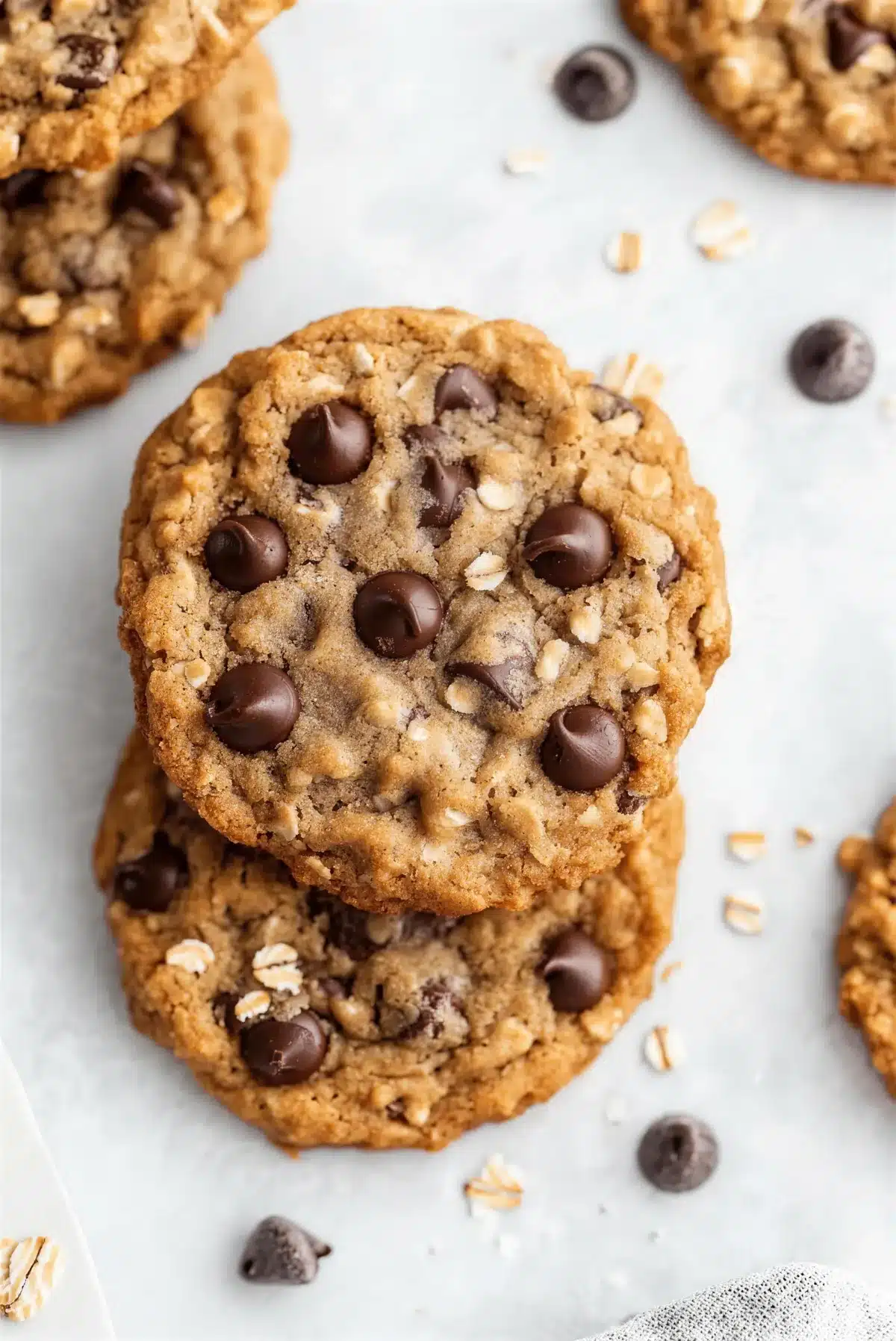
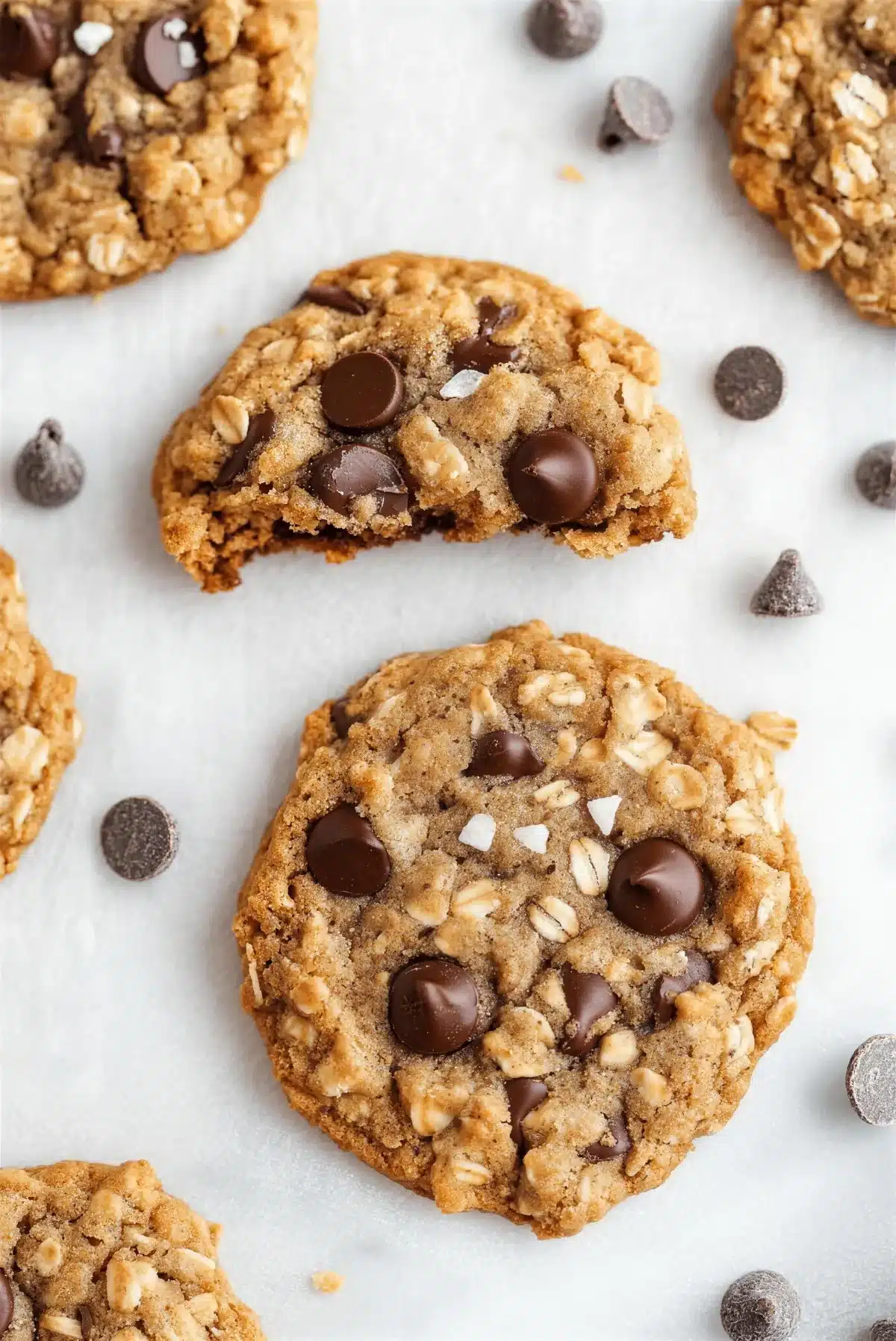
The edges should be visibly set and slightly darker than the middle. The center should still look damp and a little raw, and it should wobble if you nudge the tray.
That looks wrong, and it is the single most useful thing to learn about soft cookies. They keep cooking on the hot sheet for several minutes after the oven, and a cookie that looked done in the oven is dry by the time it cools.
Give them five minutes on the tray before moving them, because vegan oatmeal chocolate chip cookies are structurally fragile while the fat is still liquid and they tear if you lift them early.
If you want a number, 11 minutes for soft and 13 for a firmer, crisper cookie, on a light-colored sheet. Dark pans run hot and want the shorter end.
Make It Ahead
Raw dough is more useful than baked vegan oatmeal chocolate chip cookies, and freezing it is how I keep them in the house without eating fifteen at once.
Roll the whole batch into balls, freeze them on a tray until solid, then tip them into a bag. They keep three months and bake straight from frozen with two extra minutes, which means a warm cookie in fifteen.
Refrigerated dough holds two days in a covered bowl. Beyond that the flour picks up refrigerator smells and the raw taste creeps in.
Baked cookies also freeze well, cooled completely and layered with parchment. Thirty seconds in the microwave brings back the melted chocolate that makes a fresh one worth the trouble.
Storing Vegan Oatmeal Chocolate Chip Cookies
- Room temperature: 4 days in an airtight tin. They are at their best on day one and still genuinely good on day three.
- A slice of bread in the tin keeps them soft, since the cookies pull moisture out of it rather than out of the air.
- Freezer, baked: 3 months, layered with parchment in a rigid box so the edges do not snap.
- Freezer, raw: 3 months as balls, baked from frozen with 2 extra minutes and no thawing.
- Do not refrigerate the baked cookies. The starch firms up in the cold and they go hard and crumbly within a day.
Store vegan oatmeal chocolate chip cookies in a single layer if you can. Stacked while still warm, the chocolate welds them together into a brick.
Variations and Substitutions
In vegan oatmeal chocolate chip cookies the oats, the fat and the brown sugar are structural. The rest is yours.
- Gluten-free: a cup-for-cup blend with xanthan gum in it, plus certified gluten-free oats. Chill the dough an hour rather than thirty minutes.
- No flax: three tablespoons of aquafaba, the liquid from a can of chickpeas, whisked until foamy.
- Coconut oil: works in place of vegan butter, at three quarters of the volume, and adds a half teaspoon more salt.
- Raisins: half chocolate and half raisins is the version my grandmother would recognize, and the raisins want soaking in hot water first.
- Nuts: three quarters of a cup of toasted walnuts or pecans, folded in with the chocolate.
- Thin and crisp: skip the chill entirely and add two more tablespoons of oat milk, which is the opposite cookie and a good one.
What to Serve with Them
Vegan oatmeal chocolate chip cookies are soft, salty and chocolate-heavy, so they want either something cold or something bitter beside them.
- Cold oat milk, which is not a joke and is genuinely the best pairing on this list.
- Black coffee or a flat white, since the bitterness cuts through a full cup of brown sugar.
- A scoop of dairy-free vanilla between two of them, pressed gently into a sandwich.
- Alongside a naturally flourless bake for the gluten-free crowd, such as these almond butter cookies.
- On a cookie plate with butterscotch cookies and squares of carmelitas for anything resembling a party.
Here is what readers ask most often.
Vegan Oatmeal Chocolate Chip Cookies FAQ
Frequently Asked Questions
Why are my vegan oatmeal cookies dry?
Dry vegan oatmeal chocolate chip cookies usually mean too much flour or too long in the oven. Spoon the flour into the cup and level it rather than scooping, which can add a fifth again. Then pull the tray when the middles still look underdone, because they carry on cooking on the hot sheet. The third cause is granulated or coconut sugar in place of brown, which takes the molasses out and with it most of the moisture.
Can I use quick oats instead of rolled oats?
Yes, and the cookie will be softer and more uniform with less to chew on. Use the same weight rather than the same volume, since quick oats pack tighter into a measuring cup. Steel cut oats are the one to avoid completely: they never soften in twelve minutes and stay unpleasantly hard.
Do I have to chill the dough?
For this recipe, yes. Vegan butter is softer and wetter than dairy butter, so unchilled dough spreads into thin, greasy discs. Thirty minutes is the minimum and an hour is better. If you want a deliberately thin, crisp cookie, skip the chill and add a little more oat milk.
Are chocolate chips vegan?
Often, but not always. Many semisweet chips contain milk fat or milk solids, so read the label rather than assuming. Dark chocolate at 55 percent cacao or higher is usually safe, and several brands now label chips as dairy-free outright.
More Questions About Oats and Vegan Butter
Good to Know
Can I use oil instead of vegan butter?
Coconut oil is the closest, at about three quarters of the volume, since it is pure fat and vegan butter is not. Add another half teaspoon of salt, because vegan butter is salted and oil is not. Liquid oils such as canola work but give a flatter, greasier cookie with no snap at the edge.
How do I make them gluten-free?
Use a cup-for-cup blend that already contains xanthan gum, plus certified gluten-free oats, since ordinary oats are usually milled alongside wheat. Chill the dough for a full hour instead of thirty minutes, because gluten-free blends absorb water more slowly and the dough is slack until they do.
Why did they spread into one big cookie?
Warm dough, a warm tray, or both. Chill the dough, use a cool sheet for every batch rather than reusing a hot one, and leave a full three inches between balls. Reusing a hot tray straight from the oven is the mistake almost everyone makes on the second batch.
Can I halve the recipe?
Easily, and the only awkward part is the flax egg. Use two teaspoons of ground flaxseed with two tablespoons of water and treat it the same way. Everything else divides cleanly, and the bake time does not change at all.
Chill the dough, pull the vegan oatmeal chocolate chip cookies early, and bang the tray on the counter. If you want the same oats in a tray bake instead, my carmelitas use them beautifully, and my blueberry rhubarb pie is the summer end of the same craving.

Vegan Oatmeal Chocolate Chip Cookies
Save this recipe
Enter your email and I’ll send this recipe straight to your inbox.
Ingredients
Wet Ingredients
- 1 tablespoon ground flaxseed ground, not whole
- 3 tablespoons water for the flax egg
- 1/2 cup vegan butter 113 g, block style rather than a tub spread, softened
- 1 cup packed dark brown sugar 200 g
- 2 teaspoons vanilla extract
- 2 tablespoons oat milk or any unsweetened plant milk
Dry Ingredients
- 1 1/4 cups all-purpose flour 160 g, spooned into the cup and leveled
- 1/2 teaspoon fine sea salt
- 1 1/2 cups old-fashioned rolled oats 135 g, not instant
- 1 teaspoon baking soda
- 3/4 teaspoon ground cinnamon optional but recommended
To Fold In
- 1 cup dairy-free chocolate chips 170 g, check the label for milk fat
- 1 pinch flaky sea salt for the tops, optional
Equipment
- Mixing bowl
- Measuring cups and spoons
- Spatula or whisk
- Baking sheet
- Parchment paper
- Oven
Instructions
Mix the Dough
- First, stir the ground flaxseed into the water in a small cup and leave it for 10 minutes, until it thickens and turns slightly slippery.
- Next, beat the softened vegan butter and the dark brown sugar together with a spatula for a full minute, until the mixture looks like wet sand rather than two separate things. Stir in the flax mixture, the oat milk and the vanilla until the bowl looks smooth instead of curdled.
- Then add the flour, salt, oats, baking soda and cinnamon and fold just until no dry flour is left. Fold in the chocolate chips last, stopping while the dough still looks slightly streaky.
Chill and Shape
- After that, cover the bowl and refrigerate for at least 30 minutes and up to 2 days. This is not optional: vegan butter is soft and wet, and unchilled dough spreads into thin greasy discs.
- Heat the oven to 350 degrees Fahrenheit and line two light-colored baking sheets with parchment. Roll the dough into 15 balls of about 55 g each, flatten each one slightly with your palm and space them three inches apart.
Bake and Cool
- Bake for 11 to 13 minutes, until the edges are set and slightly darker and the middles still look damp and underdone. Rap the sheet flat on the counter as it comes out, which drops the puffed centers and gives the cookies their ripple.
- Finally, scatter a little flaky salt over the tops and leave the cookies on the hot sheet for 5 minutes before moving them, since they are fragile until the fat firms up. Cool the sheets between batches so the next tray does not spread.