Classic Waldorf salad is four ingredients and a dressing, which is exactly why it goes wrong so often. There is nowhere to hide a mushy apple, a limp stick of celery or a dressing that has gone thin and sweet, and there is no cooking step in which any of it can be rescued.
Done properly it is one of the best things you can put on a table in the cold months: crisp apple, snapping celery, cold grapes and toasted nuts held together by something tangy rather than cloying. The whole job takes fifteen minutes of chopping and an hour in the fridge, and almost all of the quality comes from how you cut and when you dress it.
- Fifteen minutes of knife work and no cooking at all
- Two apple varieties, so it is both tart and sweet in the same bite
- A dressing lightened with sour cream instead of straight mayonnaise
- Sturdy enough to sit on a holiday buffet for an hour without wilting
- Easy to turn into a full lunch with a cup of shredded chicken

- What Goes in a Classic Waldorf Salad
- Ingredient Notes
- Where the Classic Waldorf Salad Came From
- How To Make Classic Waldorf Salad
- Keeping the Apples From Browning
- How To Tell When It Is Properly Dressed
- Make It Ahead
- Storing Classic Waldorf Salad
- Variations and Substitutions
- What to Serve with Classic Waldorf Salad
- Classic Waldorf Salad FAQ
What Goes in a Classic Waldorf Salad
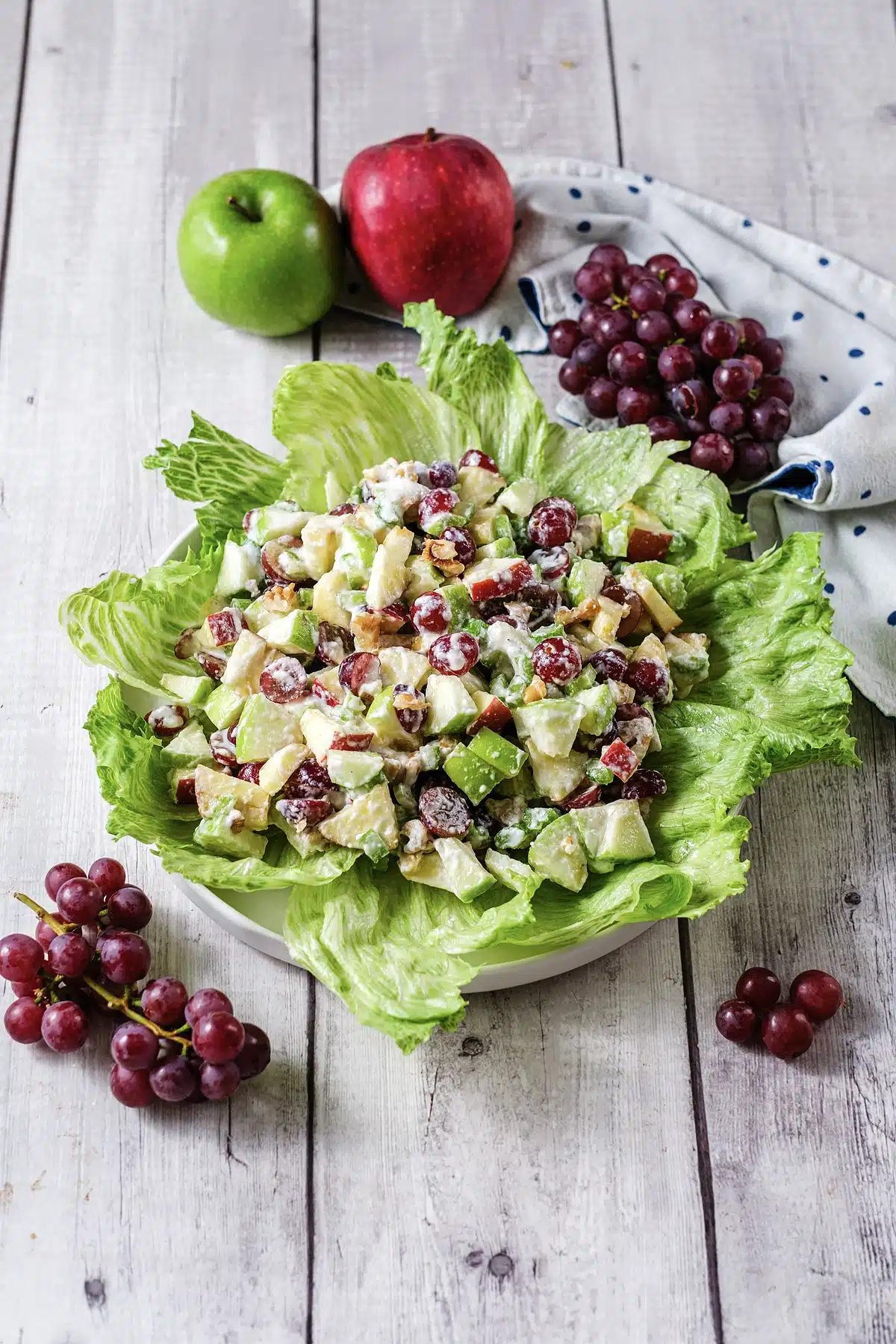
A classic Waldorf salad started life as apples, celery and mayonnaise. Nothing else. Walnuts were added a few years later by someone at the same hotel, and they have been non-negotiable ever since. Grapes came later still and are the one modern addition almost everybody keeps.
So the working definition of a classic Waldorf salad today is apple, celery, grapes and walnuts in a creamy dressing, served on lettuce. Everything past that is somebody’s family variation, and there are a great many of them: raisins, marshmallows, pineapple, dates, blue cheese, chicken. None of those are wrong, but they are not the thing itself.
The reason those four ingredients carry a classic Waldorf salad is textural rather than about flavor. Apple is crisp and wet, celery is crisp and dry, grapes burst, and walnuts are dry and slightly bitter. You get four different sensations from one spoonful, which is why a bowl of this holds your attention in a way a chopped fruit salad does not.
Save this recipe
Enter your email and I’ll send this recipe straight to your inbox.
Ingredient Notes
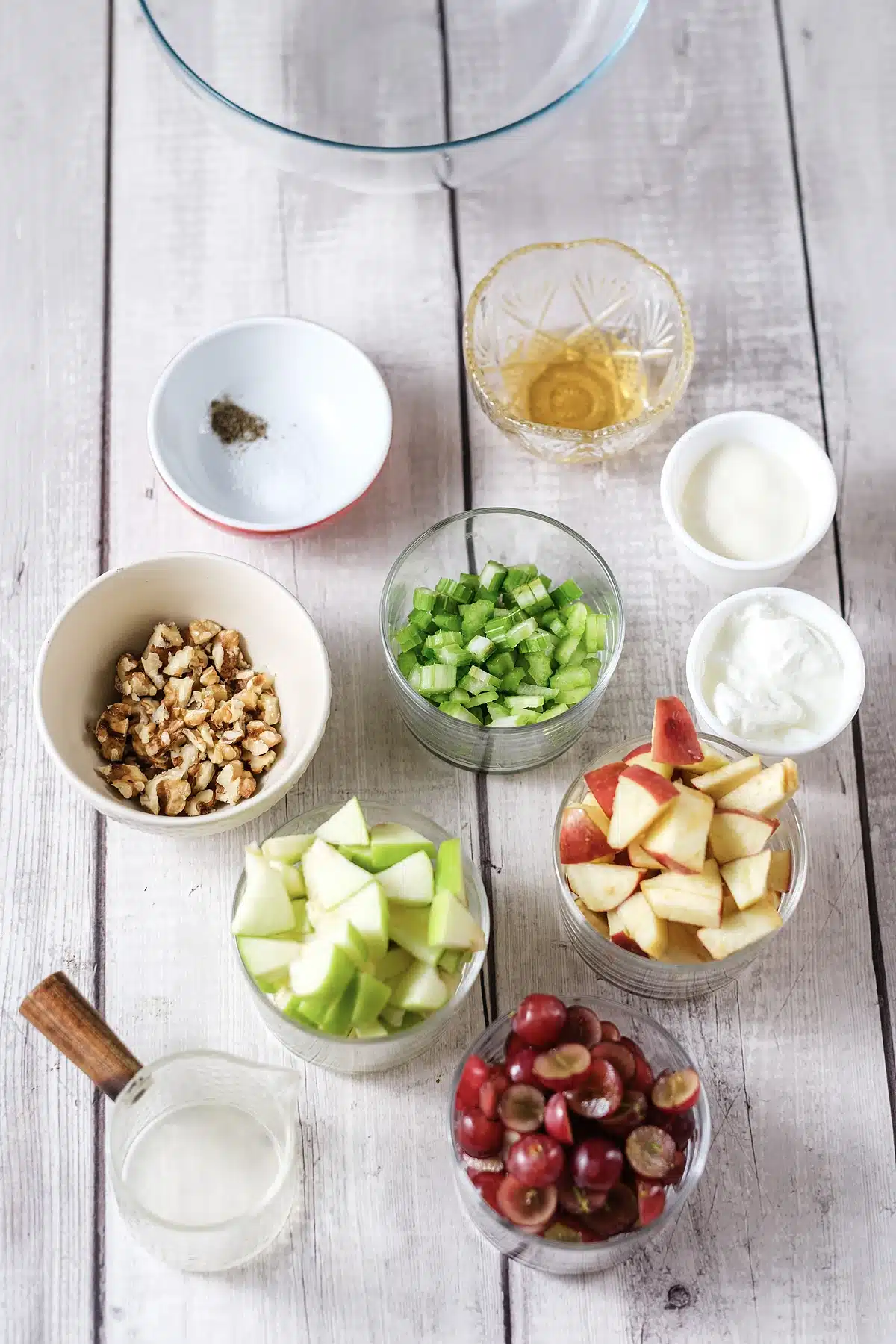
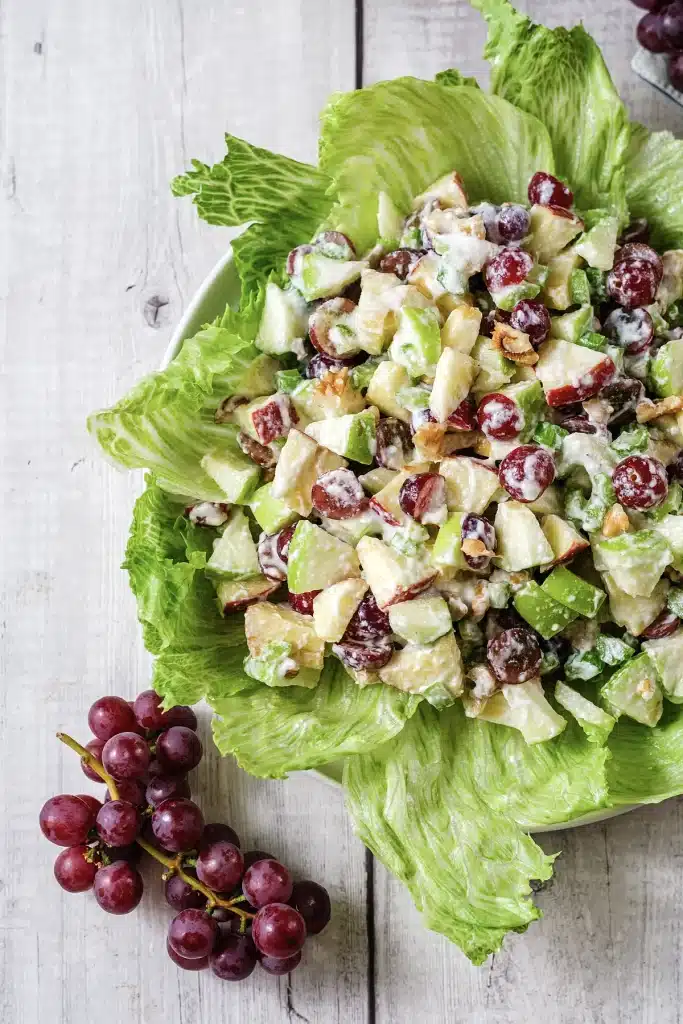
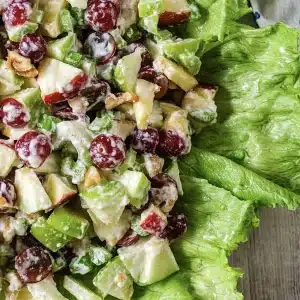
- Two apples, one tart and one sweet. Granny Smith for acidity and structure, Honeycrisp or Pink Lady for sweetness and snap. Using one variety for both jobs is the single most common reason a bowl of this tastes flat. Leave the skins on; they hold the dice together and give you the red and green flecks you can see in the photographs.
- Celery. The inner ribs, sliced thin on a slight angle. Outer ribs are stringy and take over. Peel them with a vegetable peeler if they are all you have.
- Red grapes. Seedless, halved rather than left whole. Whole grapes roll off the spoon and stay sealed, so you lose the burst that makes them worth including.
- Walnuts. Toasted, and cooled before they go in. Raw walnuts taste faintly of cardboard and turn soft within the hour. Seven or eight minutes in a 350 degree oven is enough. Pecans work if walnuts are a problem.
For the Dressing
- Mayonnaise and sour cream. A third of a cup of each. Straight mayonnaise is heavy and reads as a deli side dish; sour cream thins it and brings acidity. Greek yogurt does the same job with more tang and slightly less richness.
- Lemon juice. A tablespoon, freshly squeezed, and it earns its place twice. It brightens the dressing, and it slows the apples from browning while you finish chopping.
- Honey. A tablespoon, which sounds unnecessary next to sweet apples and grapes and is not. It rounds the acidity of the sour cream and keeps the dressing from tasting sharp.
- Salt and black pepper. A quarter teaspoon of each to start. Under-seasoning is what makes a creamy fruit dish taste like dessert by accident.
Where the Classic Waldorf Salad Came From
It was created at the Waldorf Hotel in New York in 1896 by Oscar Tschirky, the maitre d’hotel, for a charity ball. The first written version has three ingredients: apples, celery and mayonnaise, cut into pieces and mixed. That is the whole recipe as it was published.
What is interesting is how little the classic Waldorf salad has drifted in more than a century. Most dishes from that era are unrecognizable now or have disappeared entirely. This one picked up walnuts and grapes and otherwise stayed put, which suggests the original combination was close to right the first time.
The lettuce underneath is part of the original presentation rather than a garnish somebody invented later. It exists to keep the salad from sliding around the plate, and a crisp iceberg leaf still does that better than anything softer.
How To Make Classic Waldorf Salad
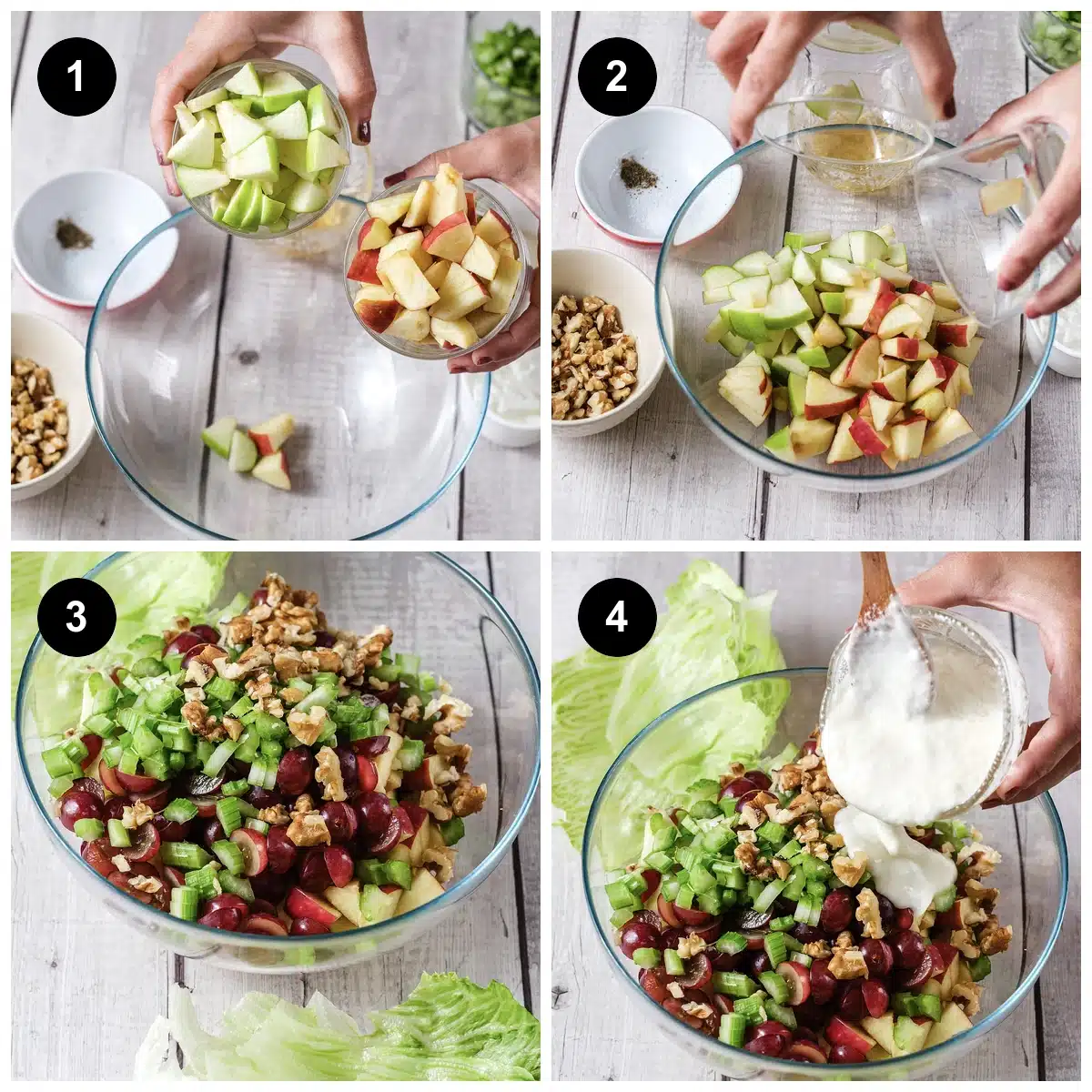
First, whisk the dressing. Mayonnaise, sour cream, honey, lemon juice, salt and pepper in a small bowl until smooth. Taste it now, on its own, and adjust before anything else goes near it. It should taste slightly too sharp, because the fruit will sweeten it.
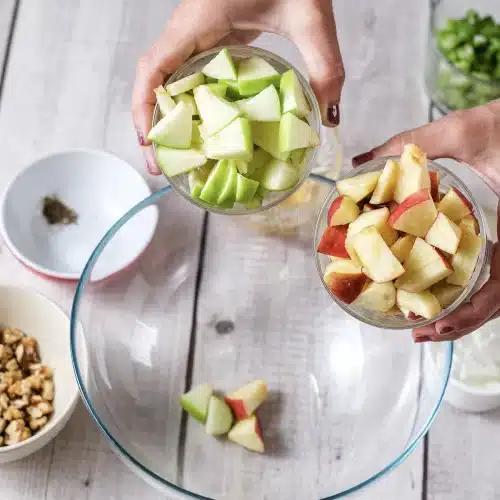
Next, dice the apples. Cut them into pieces about half an inch across, skins on, and tip them straight into your mixing bowl. Aim for even dice rather than perfect ones; uniform size matters far more than neat edges.
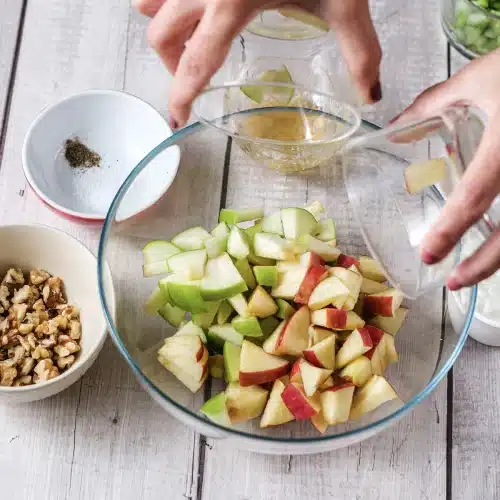
Then acidulate. Pour a little of the lemon juice over the apples and toss immediately, before you cut anything else. This is the step people skip, and it is the difference between white flesh and beige flesh forty minutes later.
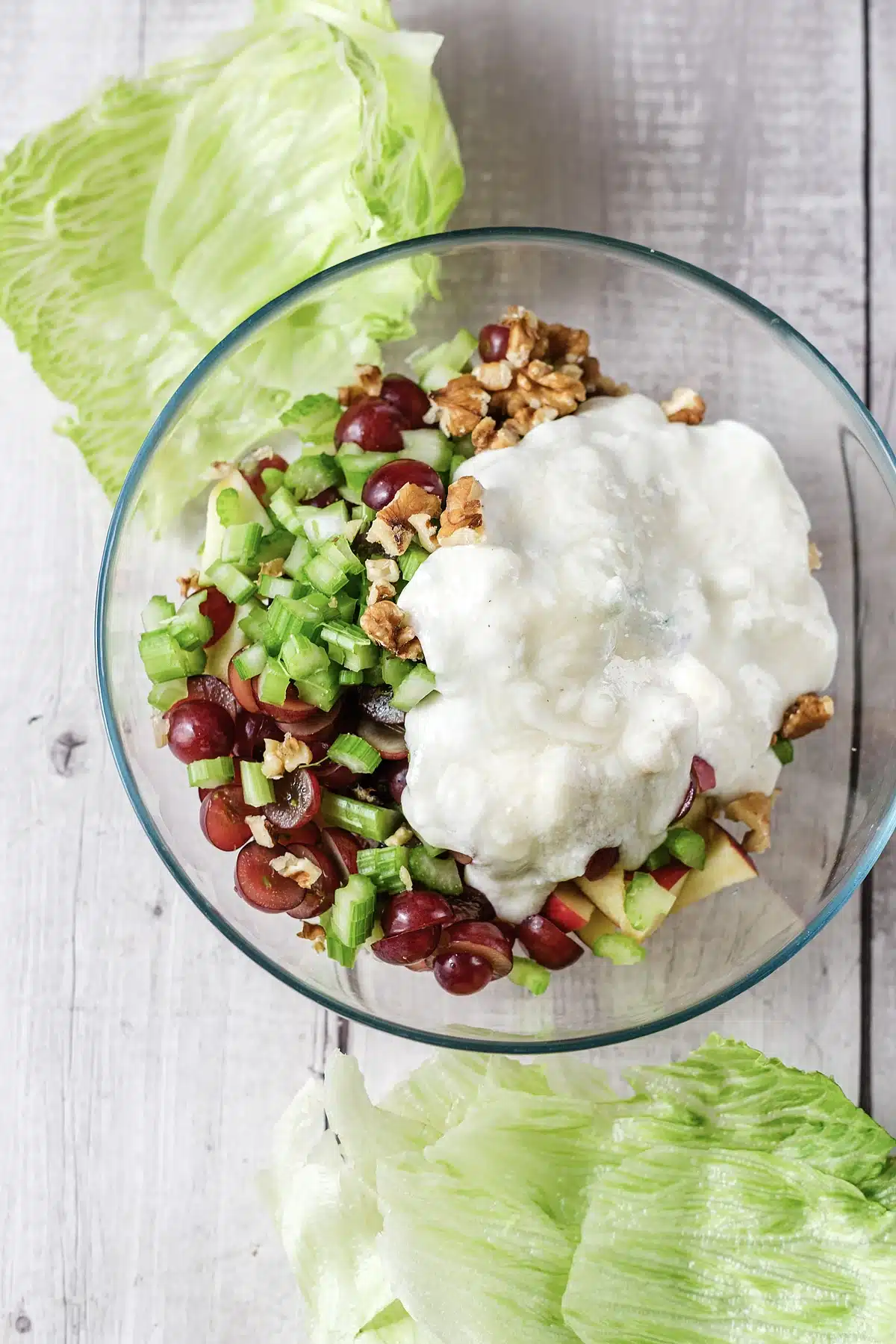
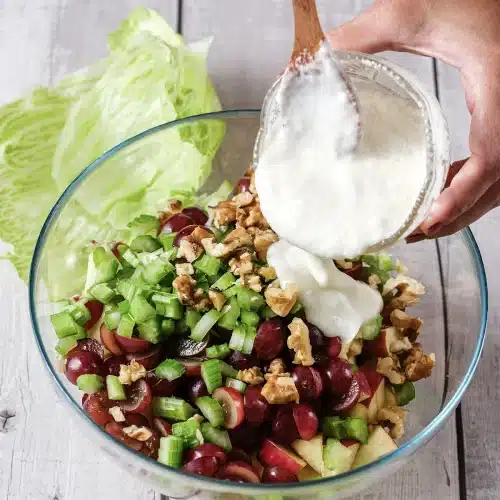
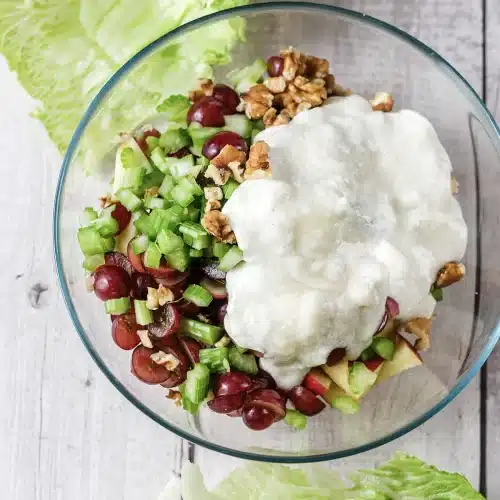
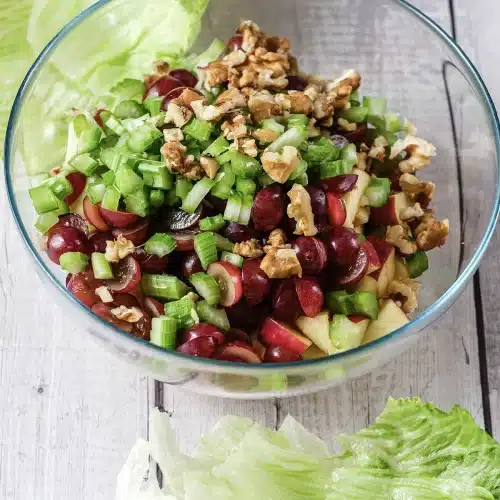
After that, add the rest. Halved grapes, sliced celery and toasted walnuts go in on top of the apples. Pour the dressing over the whole lot and fold gently with a spatula, turning the bowl as you go, until everything carries a thin coat.
Finally, chill and serve. Cover the bowl and refrigerate at least an hour so the flavors settle and the celery firms up in the cold. Spoon onto lettuce leaves and scatter a few more walnuts over the top just before it goes out.
Keeping the Apples From Browning
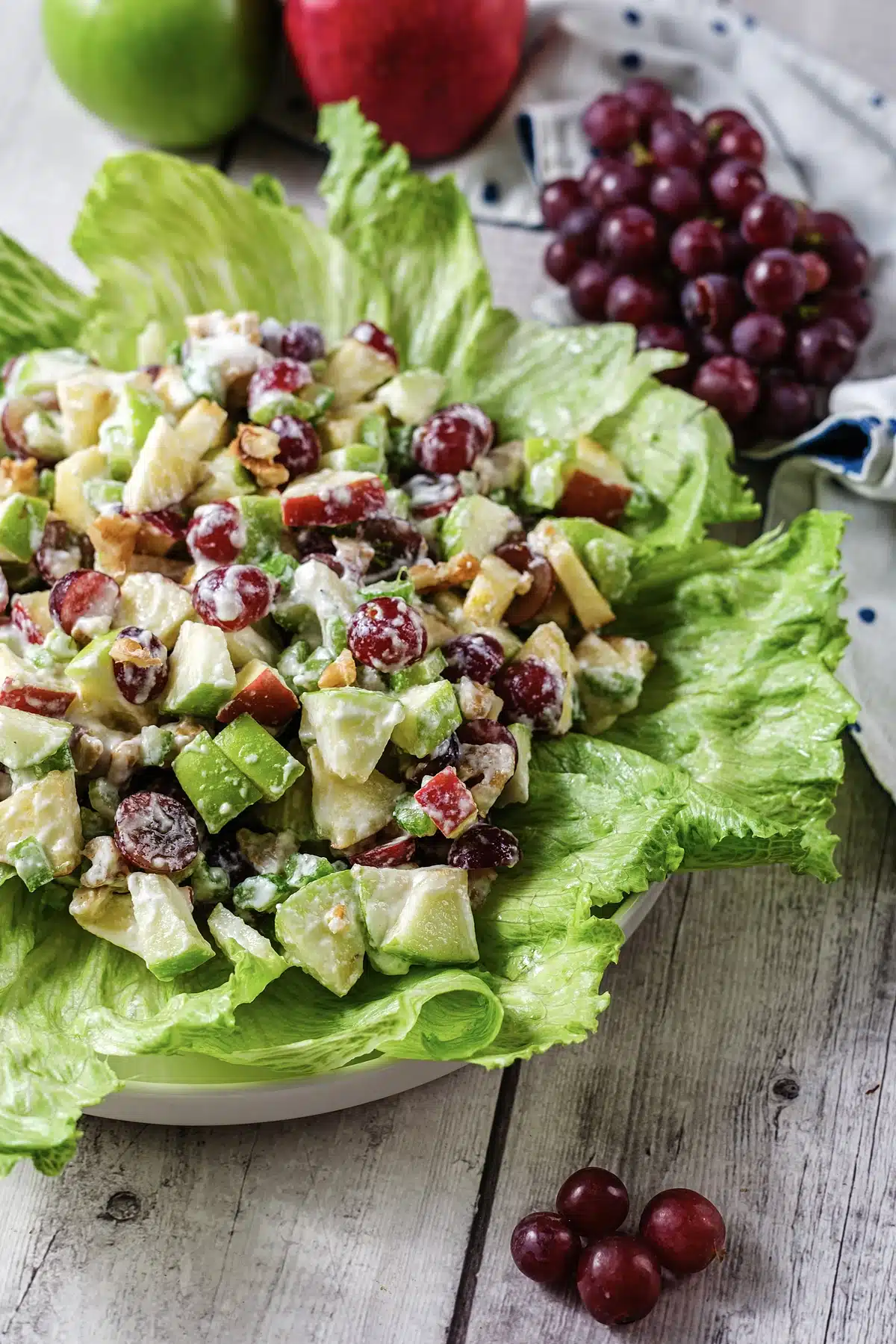
Cut apple browns because an enzyme in the flesh meets oxygen. Acid slows that reaction down considerably, which is why lemon juice is the standard answer and why it has to go on within a minute of cutting rather than at the end.
The dressing helps too. Once the dice are coated in something thick, the surface is largely sealed off from the air, so a fully dressed bowl holds its color much better than a bowl of plain cut apple sitting on the counter.
Variety matters as well. Granny Smith, Honeycrisp and Pink Lady all brown more slowly than a McIntosh or a Red Delicious, and they hold their shape in a dressing instead of going to mush. Illinois Extension keeps a useful summary of apple varieties and how they behave if you want to match a variety to the job.
How To Tell When It Is Properly Dressed
A properly dressed classic Waldorf salad carries a thin, even film on every piece, and there should be no pool of dressing at the bottom of the bowl when you push the salad to one side. If there is, you have either over-dressed it or stirred hard enough to break the apple and release its water.
The dressing should also be thick enough to cling when you lift a spoonful and tilt it. If it runs off in a stream, whisk in another tablespoon of sour cream and fold it through; a thin dressing pools in the bottom of the bowl and leaves the top layer dry.
Taste a piece of celery rather than a piece of apple when you check the seasoning. Celery is the blandest thing in the bowl, so if it tastes right on its own, the whole bowl is seasoned properly. Apple will always taste fine because it is sweet and acidic to begin with.
Make It Ahead
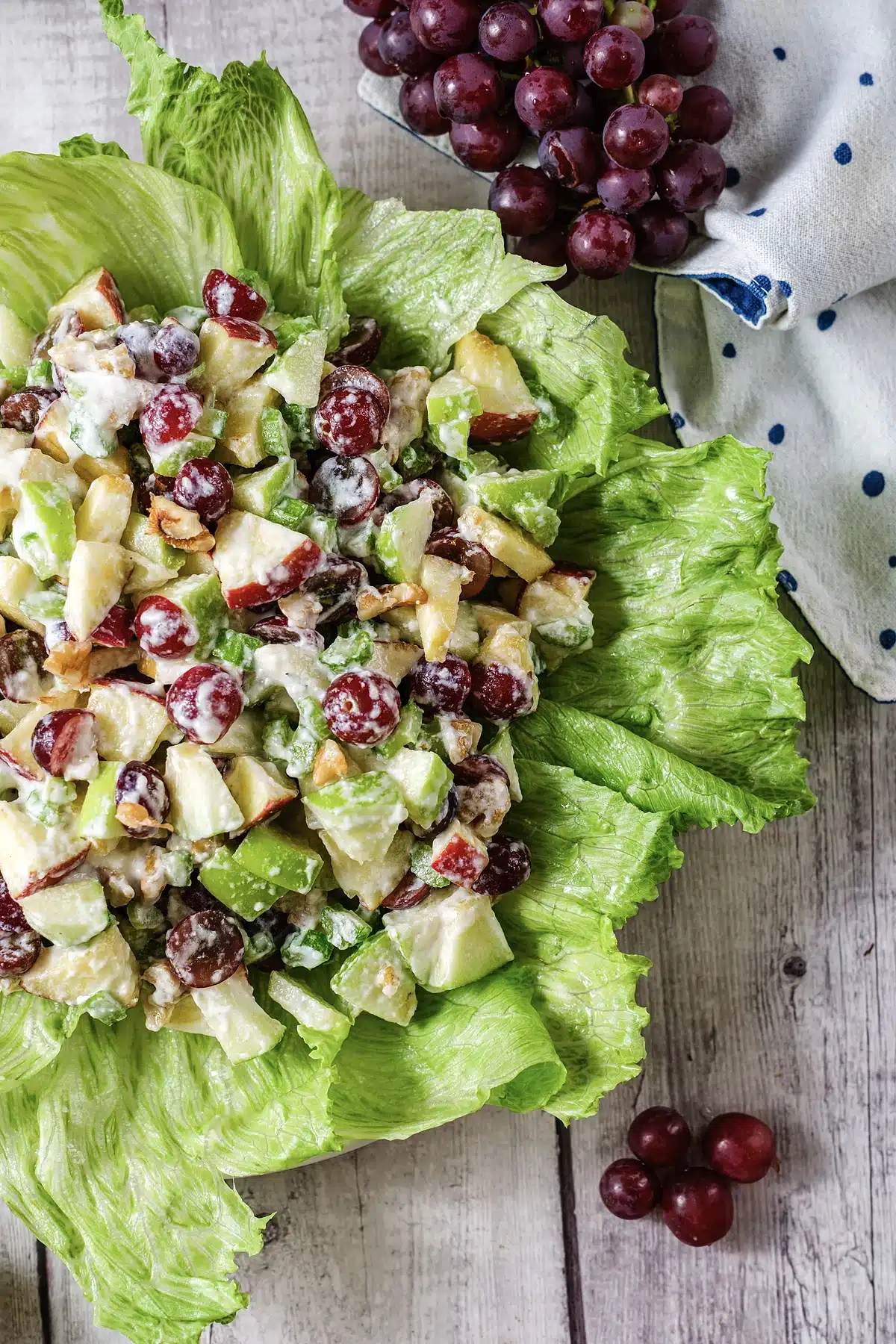
Classic Waldorf salad is at its best between one and four hours after it is made, which makes it a genuinely convenient dish for a party rather than a stressful one. Mix it in the morning for an early evening table and it will be better than it was at noon.
Beyond that window the celery starts to soften and the dressing thins as the fruit releases water. For a full day ahead, prepare the components separately: whisk the dressing and refrigerate it, slice the celery and keep it in cold water, toast the walnuts and leave them out. Cut the apples and combine everything an hour before serving.
The nuts are the other component worth holding back. Toasted walnuts stirred in early absorb dressing and go soft, so scatter at least half of them over the top at the last minute if the bowl has been sitting for more than an hour.
Do not add the lettuce until the moment it goes to the table. A leaf sitting under dressed fruit collapses within about twenty minutes.
Storing Classic Waldorf Salad
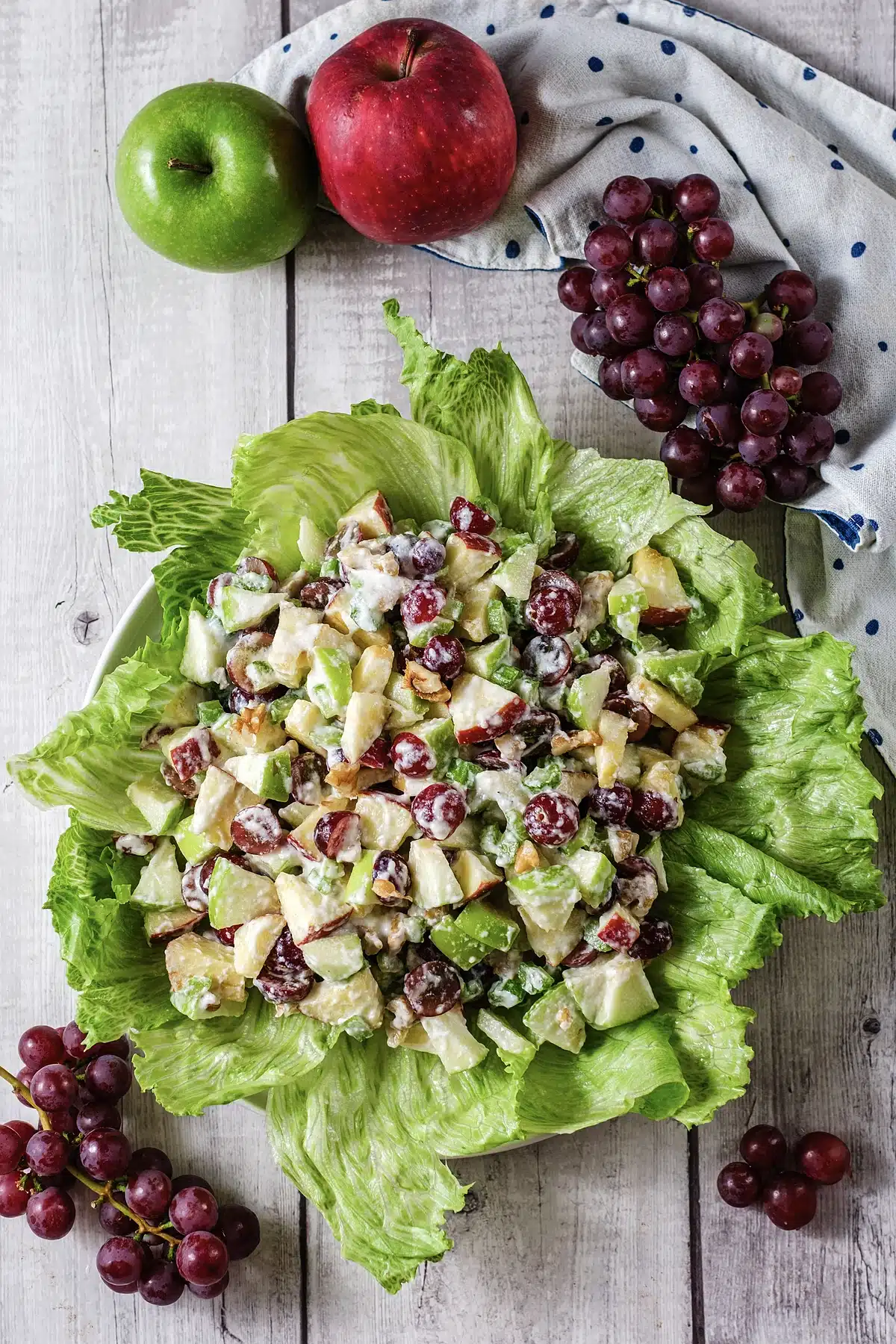
Covered in the refrigerator, a classic Waldorf salad keeps two to three days. Stir it before serving, because the dressing separates and settles, and expect the celery to have lost some of its snap by day two. The flavor is arguably better on the second day even as the texture slips.
It does not freeze. Apple, celery and a mayonnaise dressing all fail in different ways when frozen, and what you thaw is a gray, watery bowl that nobody will eat.
If leftovers have gone a little loose, drain off the liquid and stir in a fresh spoonful of sour cream and a squeeze of lemon. A handful of freshly toasted walnuts on top does more for a day-old bowl than anything else you could add.
Variations and Substitutions
Chicken Waldorf. Fold in a cup and a half of shredded roast or poached chicken and you have a full lunch. This is the version most delis sell.
Greek yogurt dressing. Replace the sour cream entirely, or replace both the mayonnaise and the sour cream for a much lighter bowl. Add an extra teaspoon of honey to compensate for the tang.
Dried fruit. Dried cranberries or chopped dates in place of half the grapes. Sweeter and chewier, and it holds up better on a buffet.
Blue cheese. A quarter cup crumbled in turns it savory and pairs unexpectedly well with the walnuts. Use a mild one; Roquefort takes over.
Nut-free. Toasted sunflower or pumpkin seeds give you the same dry crunch without the nuts.
Fennel instead of celery. Thinly sliced fennel bulb brings a faint anise note and the same clean snap. It is not traditional and it is very good.
What to Serve with Classic Waldorf Salad
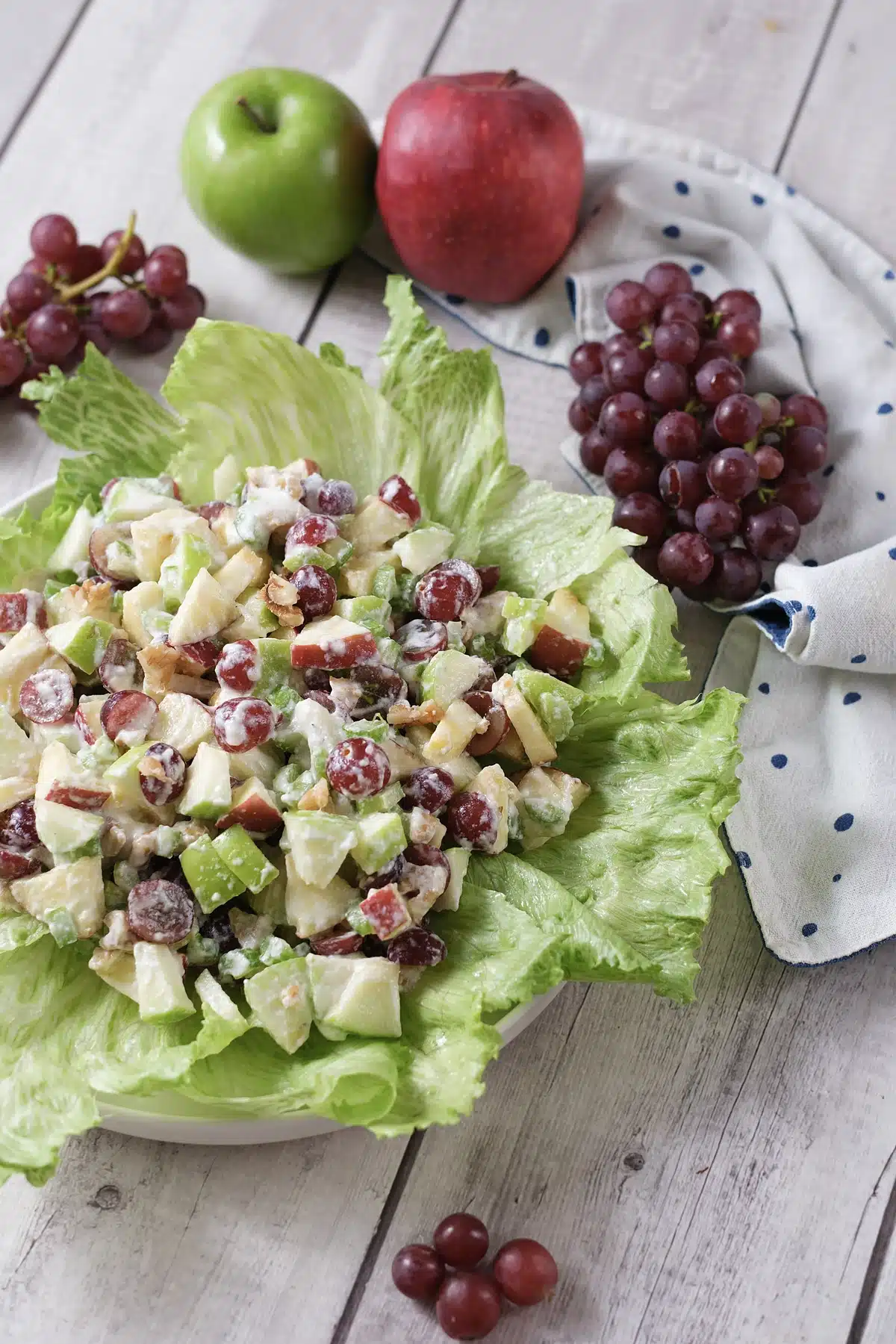
A classic Waldorf salad belongs next to roasted meat, and it is at its best on a holiday table beside turkey, ham or pork. The acidity cuts through fat the way a chutney would, and the cold crunch is a relief in the middle of a plate of soft, hot food.
As a lunch on its own it wants bread rather than more salad. A slice of toasted sourdough or a warm roll turns a bowl into a meal, and a cup of soup alongside makes it a proper one.
On a buffet, keep the other cold dishes in a different register so nothing competes. A creamy grape salad is too close and will read as the same thing twice, while an Ina Garten pasta salad sits happily beside it.
Classic Waldorf Salad FAQ
Frequently Asked Questions
Which apples work best?
Use two varieties. Granny Smith brings acidity and holds its shape, and a sweet, crisp apple such as Honeycrisp or Pink Lady balances it. Avoid soft varieties like Red Delicious, which go mealy in a dressing.
Can I make it without mayonnaise?
Yes. Use two thirds of a cup of Greek yogurt in place of both the mayonnaise and the sour cream, and add an extra teaspoon of honey. The result is tangier and noticeably lighter.
Do I have to peel the apples?
No, and I would not. The skin holds each dice together, adds color, and gives a little resistance that a peeled cube does not have.
How far ahead can I dress it?
Up to four hours comfortably. Past that the celery softens and the dressing thins as water leaches out of the fruit.
More Questions About Creamy Fruit Salads
Good to Know
Why did mine turn watery?
Usually over-mixing. Stirring breaks the apple dice and releases juice into the dressing. Fold gently with a spatula instead, and drain any liquid before serving leftovers.
Can I use pecans instead of walnuts?
Yes, and they are sweeter and less bitter. Toast them the same way. Some people prefer them, though walnuts are what the hotel used.
Is it served cold or at room temperature?
Cold. An hour in the refrigerator firms the celery and lets the dressing settle. Left out on a warm table it loses its snap within half an hour.
For something else cold and crunchy to put beside a roast, microwave baked apples use the same fruit in the opposite direction, warm and soft rather than crisp and cold.
Classic Waldorf Salad
Save this recipe
Enter your email and I’ll send this recipe straight to your inbox.
Ingredients
Dressing
- 1/3 cup (80 ml) mayonnaise full-fat preferred, but light can be used
- 1/3 cup (80 ml) sour cream or Greek yogurt either works
- 1 tbsp (15 ml) honey
- 1 tbsp (15 ml) lemon juice fresh-squeezed
- 1/4 tsp (1.5 g) salt to taste
- 1/4 tsp (0.5 g) black pepper freshly ground, to taste
Salad
- 1 tart green apple such as Granny Smith, diced (peel on)
- 1 sweet red apple such as Honeycrisp, diced (peel on)
- 1 cup (150 g) red grapes halved, seedless
- 2 ribs celery thinly sliced, inner ribs
- 1/2 cup (60 g) toasted walnuts or pecans chopped, plus extra for garnish
- lettuce leaves for serving, optional
Equipment
- Mixing bowl
- Whisk
- Knife
- Cutting board
Instructions
Whisk the Dressing
- Make the dressing first: Whisk the mayonnaise, sour cream, honey, lemon juice, salt and black pepper in a small bowl until smooth. Taste it on its own; it should read slightly too sharp, because the fruit will sweeten it.
Prep the Fruit and Celery
- Dice the apples: Cut both apples into pieces about half an inch across with the skins left on, and tip them straight into a large mixing bowl.

- Acidulate straight away: Pour a little of the lemon juice over the apples and toss immediately, before you cut anything else. This is what keeps the flesh pale.
- Add the rest: Halve the grapes, slice the inner celery ribs thin on a slight angle, and add both to the bowl with the toasted walnuts.
Dress and Chill
- Pour the dressing over: Spoon the dressing over the whole bowl rather than in one place, so you need fewer turns to coat everything.
- Fold, do not stir: Lift from underneath with a spatula and rotate the bowl a quarter turn between lifts, until every piece carries a thin coat. Stirring breaks the apple and thins the dressing.
- Chill and serve: Cover and refrigerate at least 1 hour. Spoon onto lettuce leaves and scatter a few more toasted walnuts over the top just before it goes to the table.