
Sweet, sharp and on the table in forty minutes, this balsamic pork tenderloin is glazed with apricot preserves reduced with balsamic vinegar, lemon and herbes de Provence.
Four ingredients make the glaze, and it does two jobs. First it lacquers the outside of the pork in a hot oven, and then a reserved portion goes on the table as a sauce. Because tenderloin is such a lean cut, it cooks fast and dries out faster, so the whole method is built around high heat and a thermometer rather than a long, slow roast.
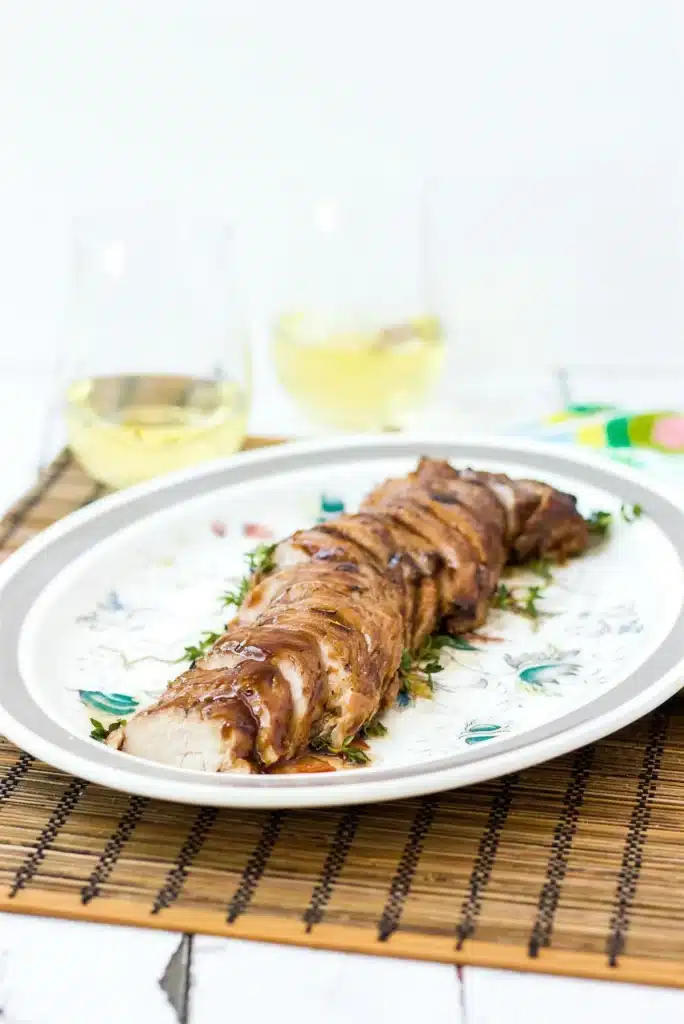
- Six ingredients total: four for the glaze, plus the pork and seasoning
- Fifteen minutes in the oven, because tenderloin is small and lean
- Sweet and sharp together, with balsamic and lemon cutting the apricot
- The glaze doubles as the sauce, so there is nothing extra to make
- One small pot and a lined baking sheet is the whole washing up
- Reliably juicy when you pull it at 140 degrees and let it rest

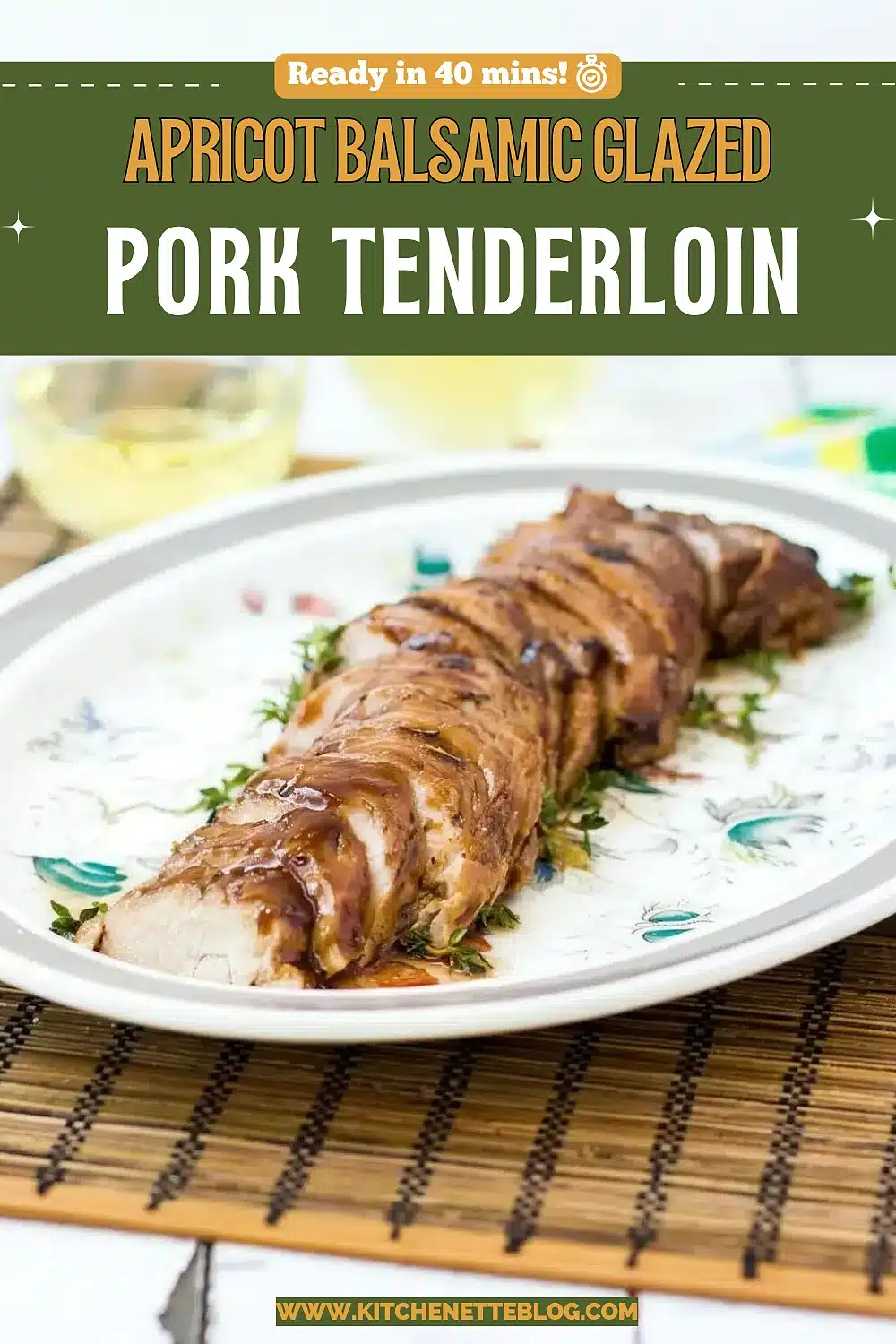
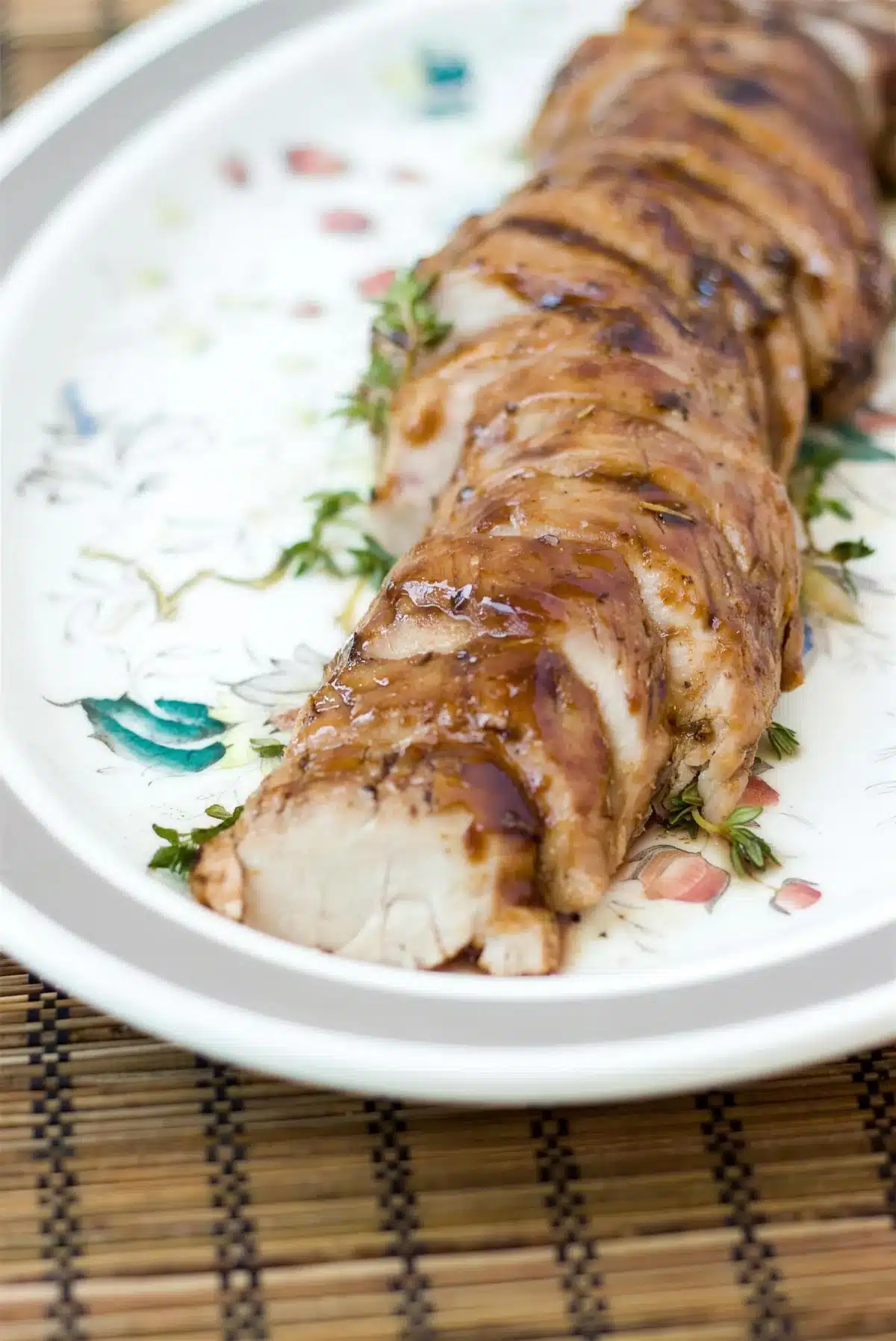
This is a weeknight dinner that looks like a Sunday one, and almost all of the work is stirring a pot. Honestly, the reason this balsamic pork tenderloin has stayed in my rotation for years is that it scales up without any extra effort. Two tenderloins fit on one sheet pan and take the same fifteen minutes.
- Pork Tenderloin vs Pork Loin
- Ingredient Notes
- The Best Glaze for Pork Tenderloin
- How To Make Balsamic Pork Tenderloin
- How To Tell When Balsamic Pork Tenderloin Is Done
- Make It Ahead and Marinate
- Storing Balsamic Pork Tenderloin
- Variations and Substitutions
- What to Serve with Balsamic Pork Tenderloin
- Balsamic Pork Tenderloin FAQ
Pork Tenderloin vs Pork Loin
Before you shop, get this one distinction right, because it is the single most common way this recipe goes wrong. They sit side by side in the case and their names are nearly identical, but they are different muscles that behave nothing alike.
Pork tenderloin is a narrow, tapered muscle that runs along the backbone. It weighs roughly one to one and a half pounds, measures about two inches across, and is the leanest cut on the animal. Consequently it cooks in fifteen minutes and turns dry the moment it goes past temperature.
Pork loin is a wide, thick roast that can weigh three to five pounds, often with a fat cap on top. It needs an hour or more at a moderate temperature. If you put a pork loin in a 425 degree oven for fifteen minutes, the outside will scorch and the middle will still be raw.
The packages help if you read them. Tenderloin is usually sold two to a vacuum pack, long and skinny. Loin is sold as a single thick roast, sometimes tied. So if what you brought home is wide enough to cut into chops, it is a loin, and this recipe is not written for it. Balsamic pork tenderloin depends on the small cut cooking through before the glaze burns, and a loin simply cannot do that.
Save this recipe
Enter your email and I’ll send this recipe straight to your inbox.
Ingredient Notes
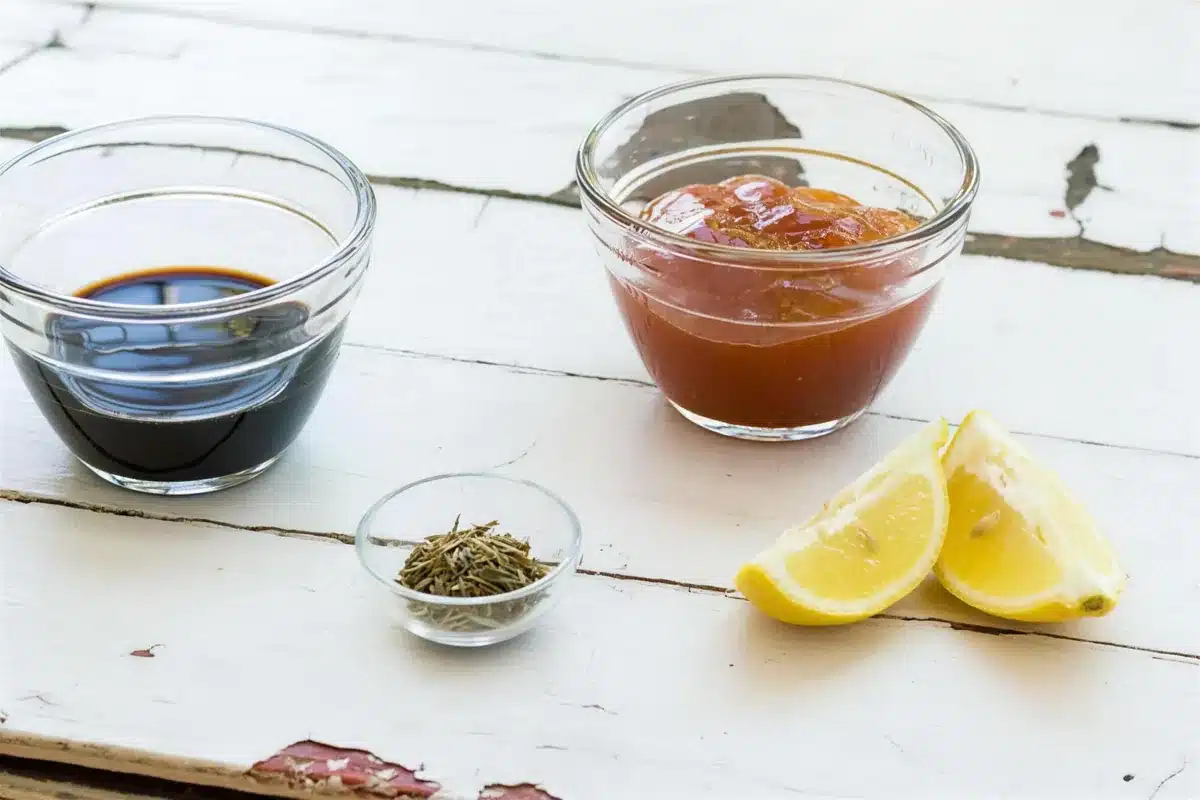
Short list, and the glaze is where all the character lives. Exact amounts are in the recipe card below.
- Pork tenderloin: Trim the excess fat and, more importantly, the silverskin. That silvery membrane will not render, and it shrinks and toughens in the oven.
- Smooth apricot preserves: Smooth rather than chunky, so the glaze brushes evenly. Preserves rather than jelly gives more actual fruit flavor.
- Balsamic vinegar: A quarter cup. It reduces alongside the preserves into something dark and syrupy. A mid-range supermarket bottle is fine here, since it gets cooked down anyway.
- Lemon juice: Freshly squeezed. It keeps the whole thing from tipping into dessert territory.
- Herbes de Provence: The herbal note that makes it taste considered rather than thrown together. Thyme and rosemary alone will do at a pinch.
- Salt and pepper: Season the glaze as well as the pork, because a sweet glaze needs salt to read properly.
You’ll also want a small pot, a parchment-lined baking sheet, a pastry brush and a meat thermometer. Of course the thermometer is the one piece of equipment I would not skip on this cut.
The Best Glaze for Pork Tenderloin
The best glaze for pork tenderloin follows a formula rather than a recipe, and once you see it you can build a new one from whatever is in the cupboard. It is jam, plus vinegar, plus citrus, plus a herb. That is the whole structure behind the glaze on this balsamic pork tenderloin.
- The jam supplies sugar and body. Sugar is what caramelizes against the meat and gives you that lacquered surface.
- The vinegar cuts the sweetness and adds depth. Balsamic in particular reduces into something almost savory.
- The citrus lifts everything and keeps the finish clean rather than syrupy.
- The herb stops it reading as a dessert sauce and ties it to the meat.
Ratios matter more than the specific ingredients. Two parts jam to one part vinegar is the balance I keep coming back to, with a splash of citrus and a light hand on the herbs.
The other thing that matters is how far you reduce it. Simmer until the glaze coats the back of a spoon and a line drawn through it holds for a second. Under-reduce and it runs straight off the meat into the pan. Over-reduce and it turns tacky as it cools, which makes brushing difficult and gives you a hard candy shell instead of a glaze.
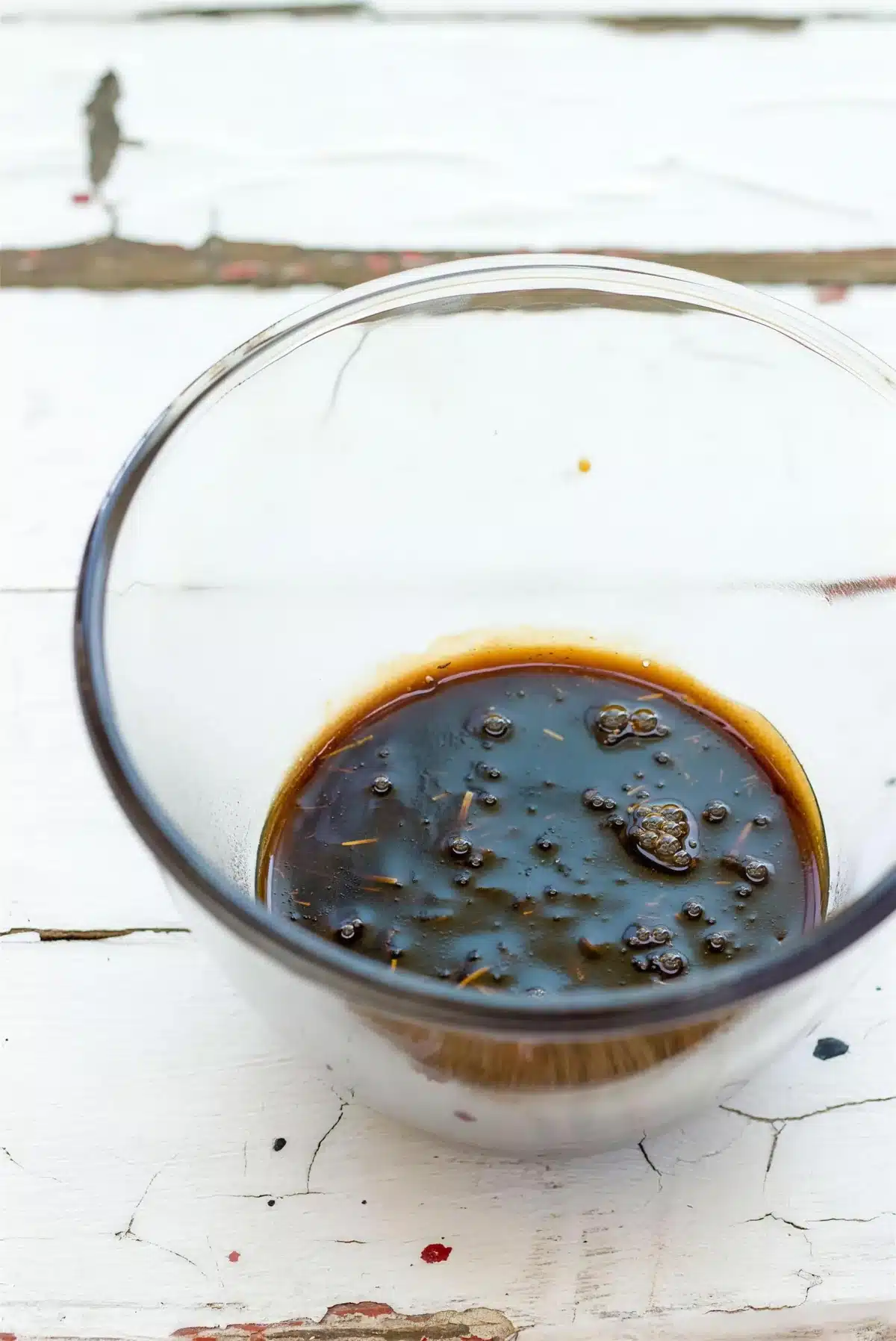
How To Make Balsamic Pork Tenderloin
Take the pork out of the fridge first. Letting it lose the chill means it cooks evenly in the short time it spends in the oven.
- First, take the pork out of the fridge and heat the oven to 425 degrees F.
- Next, combine the preserves, balsamic, lemon juice and herbes de Provence in a small pot.
- Then bring it to a simmer over medium heat and hold it at a hearty simmer for about 10 minutes, until thickened. Season to taste.
- After that, pour some glaze into a separate bowl for serving, so the brush never touches it.
- Put the pork on a parchment-lined baking sheet and season it all over with salt and pepper.
- Brush generously on all sides with the glaze and bake about 15 minutes, to 140 to 145 degrees F.
- Rest for at least 10 minutes before slicing, because the temperature climbs a few more degrees as it sits.
- Finally, slice and serve with the reserved glaze.
This serves 4. Splitting the glaze before you start brushing is a small step that matters more than it sounds. In other words, it is the difference between a sauce you can put on the table and one you have to throw away.
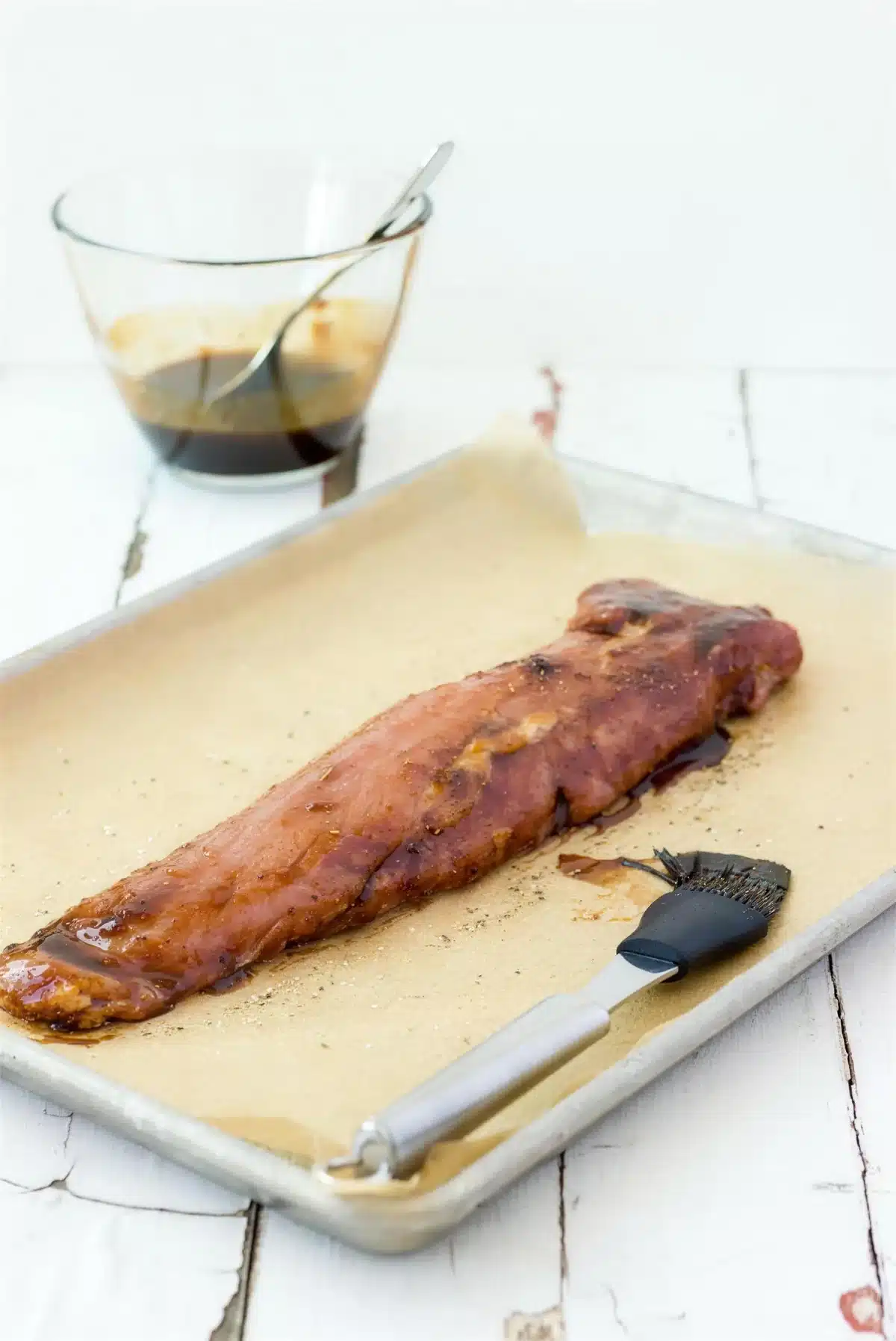
How To Tell When Balsamic Pork Tenderloin Is Done
There is no visual cue you can trust on this cut, and that is the honest answer. The glaze goes dark early, so color tells you nothing about the inside. Use a thermometer.
The National Pork Board puts the safe internal temperature for whole cuts at 145 degrees F followed by a three-minute rest. That recommendation replaced the old 160 degree advice years ago, and the change is precisely why lean pork no longer has to be dry.
In practice I pull this balsamic pork tenderloin at 140 degrees. Carryover cooking carries it the rest of the way while it rests, and a ten-minute rest lands it right at 145. Meanwhile the juices redistribute instead of running out onto the board the moment you slice.
Push the probe into the thickest part, angled along the length of the tenderloin rather than straight down through the thin end. A tenderloin tapers hard, so the narrow tail will always read higher than the middle. Go by the thickest reading.
Make It Ahead and Marinate
Both halves of this balsamic pork tenderloin can be moved to another day, which is what makes it useful for company.
The glaze keeps for up to two weeks in the fridge. Make it whenever you have ten spare minutes, then warm it gently before brushing so it flows again. Do not reduce it a second time or it will tighten past the point of being brushable.
For a balsamic marinade instead of a glaze, hold back the preserves and combine the balsamic, lemon juice, herbes de Provence and a spoonful of olive oil. Marinate the pork for two to eight hours, then pat it dry and roast as written, brushing with the cooked glaze in the last five minutes. That said, do not go past eight hours. The acid will start to break the surface down and the texture turns mealy.
You can also trim and season the pork a day ahead and keep it covered in the fridge. Consequently the whole thing becomes a twenty-minute job on the night.
Storing Balsamic Pork Tenderloin
Leftover balsamic pork tenderloin is excellent cold, which is not true of all roast meat.
- Fridge: sliced pork keeps for up to 3 days in an airtight container.
- Reheating: warm it gently, covered, at 300 degrees. High heat will dry out a lean cut that is already cooked through. Adding a spoonful of the reserved glaze before covering helps considerably.
- Glaze: keeps separately for up to 2 weeks refrigerated. Warm it to loosen before serving.
- Freezer: up to 2 months, wrapped tightly. However, the texture is better if you plan to use it cold in sandwiches rather than reheating it.
Variations and Substitutions
The glaze formula of jam plus vinegar plus citrus plus herb works with almost any combination, so treat the list below as a starting point for your own balsamic pork tenderloin.
- Use peach, fig or cherry preserves in place of apricot.
- Swap balsamic for sherry vinegar for something sharper and less sweet.
- Use the same glaze on chicken thighs or salmon, adjusting the cooking time accordingly.
- Add a minced garlic clove or a pinch of red pepper flakes to the pot for warmth.
- Finish under the broiler for a minute if you want the glaze more caramelized.
- Slow cooker: brown the tenderloin first, then cook on low for two to three hours and brush with the reduced glaze at the end. The glaze will not caramelize in a slow cooker, so it goes on afterwards.
- Instant Pot: sear on saute, pressure cook for four minutes with a natural release, then glaze under the broiler for two minutes.
- Grill: cook over indirect medium heat and brush during the last five minutes only, or the sugar will burn.
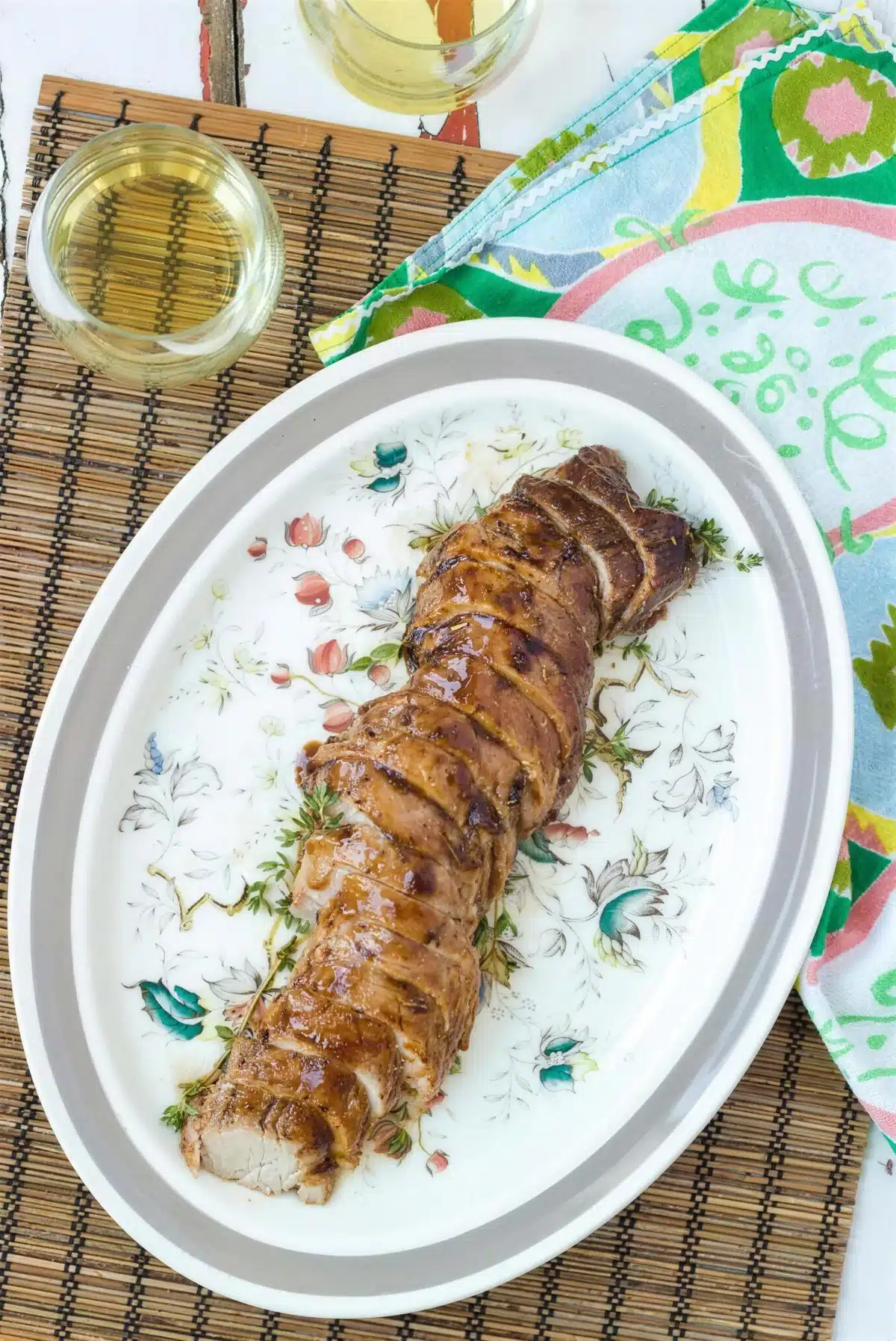
What to Serve with Balsamic Pork Tenderloin
Balsamic pork tenderloin is sweet on the surface, so lean savory and green with the sides.
- Something starchy to catch the extra glaze, like oven ranch roasted potatoes or a soft polenta.
- Green beans or asparagus with lemon.
- A sharp, crunchy salad. A classic wedge salad works particularly well against the sweetness.
- Something with a bitter edge, such as roasted fennel and white bean crostini.
- Roasted stone fruit alongside, echoing the apricot in the glaze.
- A medium-bodied red, or a dry rose in summer.
Here’s what people ask most often about this balsamic pork tenderloin.
Balsamic Pork Tenderloin FAQ
Frequently Asked Questions
Is pork tenderloin the same as pork loin?
No, and swapping them is the most common mistake with this recipe. Tenderloin is a small, narrow muscle weighing about a pound, while pork loin is a much larger, wider roast. A loin needs far longer at a lower temperature, so at 425 degrees for 15 minutes it would still be raw inside.
Is 145 degrees safe for pork?
Yes. The USDA lowered the recommendation to 145 degrees followed by a three-minute rest some years ago. The pork will be faintly pink in the center, which is exactly right. Cooking it to the old 160 degrees is what gave lean pork its reputation for being dry.
Do I need to sear the pork first?
Not with this method. The 425 degree oven browns the outside on its own, and the sugar in the glaze caramelizes quickly. Searing first would set the glaze in the pan rather than on the meat, and you would have a burnt-sugar skillet to scrub afterwards.
More Questions About Pork Tenderloin
Good to Know
Can I make the glaze ahead?
Yes, and it is a good way to split the work. Make it up to two weeks ahead and refrigerate it. It will set firm when cold, so warm it gently to a brushable consistency before you use it. Do not reduce it further on reheating or it will turn tacky.
Why is my pork tenderloin tough?
Almost always because it went past temperature. Balsamic pork tenderloin gives you very little margin here. This cut has very little fat and no connective tissue to break down, so unlike a shoulder it does not become tender with more time. It simply dries out. The other culprit is untrimmed silverskin, which stays chewy no matter how carefully you cook the meat.
Can I double the recipe?
Yes, and this is where the recipe earns its place. Two tenderloins fit on a single sheet pan with room between them, and the cooking time does not change, since each piece is still the same thickness. Make one and a half times the glaze so there is plenty for brushing and for the table.
Should I cover it while it roasts?
No. Covering traps steam, and steam is the enemy of a glaze. You want the surface dry enough for the sugars to caramelize, so leave it uncovered the whole time.
For another fast dinner where a sauce does the heavy lifting, try my miso blood orange scallops.
Apricot Balsamic Glazed Pork Tenderloin
Save this recipe
Enter your email and I’ll send this recipe straight to your inbox.
Ingredients
Apricot Balsamic Glaze
- 2/3 cup smooth apricot preserves smooth rather than chunky, so it brushes evenly
- 1/4 cup balsamic vinegar
- 2 tablespoons lemon juice freshly squeezed
- 1 teaspoon herbes de Provence or a pinch each of thyme and rosemary
For the Pork
- 1.25 pound pork tenderloin trimmed of excess fat and silverskin
- kosher salt and freshly ground black pepper to taste
Instructions
Make the Glaze
- First, take the pork out of the fridge and let it lose its chill while the oven heats. Preheat the oven to 425 degrees F.
- Next, combine the apricot preserves, balsamic vinegar, lemon juice and herbes de Provence in a small pot. Bring to a simmer over medium heat and hold it at a hearty simmer for about 10 minutes, until it thickens enough to coat the back of a spoon. Season to taste with salt and pepper.
- Then pour about half the glaze into a small bowl and set it aside for serving, so the brush never touches it.
Roast and Rest
- After that, place the pork on a parchment lined baking sheet and season it all over with salt and pepper. Brush generously on all sides with the remaining glaze.
- Bake for about 15 minutes, until the thickest part registers 140 degrees F on a meat thermometer. Because the tenderloin tapers, the narrow tail will read higher than the middle, so go by the thickest reading.
- Finally, rest the pork for at least 10 minutes before slicing. Carryover cooking brings it to 145 degrees F while it sits. Slice and serve with the reserved glaze.