Mashed rutabaga is the side dish for the night you want mashed potatoes with a little more character. Rutabaga is a sweet, slightly peppery root that boils soft in about half an hour and mashes into something golden and earthy, and with butter, garlic and a splash of cream it belongs next to any roast on the table. It also has about half the carbs of a potato, which is a nice bonus rather than the point.
- Six ingredients and one pot, ready in under an hour
- Sweeter and more interesting than plain mashed potatoes, with fewer carbs
- Butter and garlic do the seasoning, so it needs no gravy
- A half-potato version for anyone new to rutabaga
- Reheats well and can be made two days ahead
- Goes with pot roast, meatloaf, pork, sausages and Sunday chicken
This post has the classic all-rutabaga version in the recipe card, and a half-rutabaga, half-potato version in the Variations section. The second one is what is in the photographs. It is paler, milder and creamier, and it is the one to make for people who have never eaten a rutabaga and are not sure they want to.

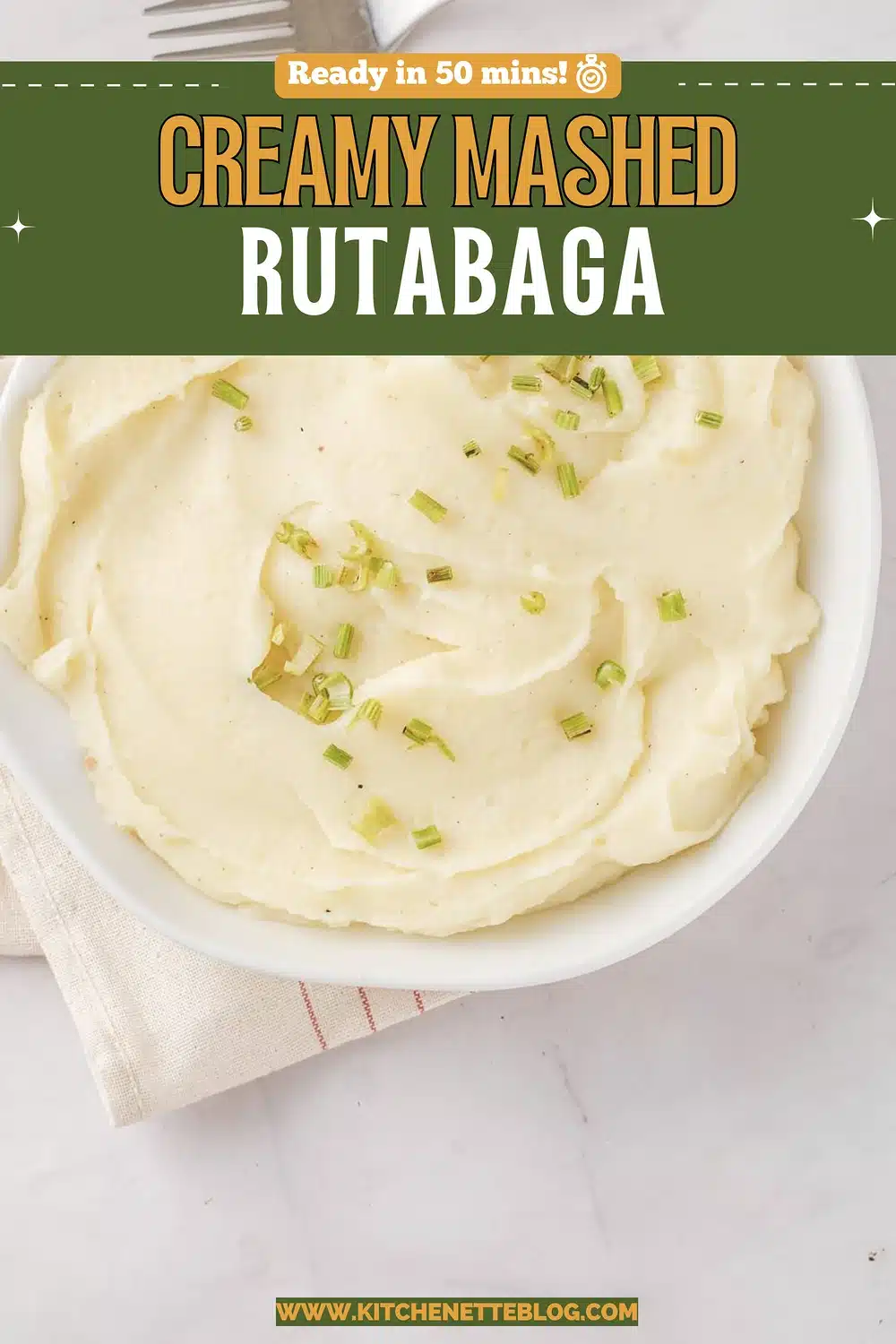
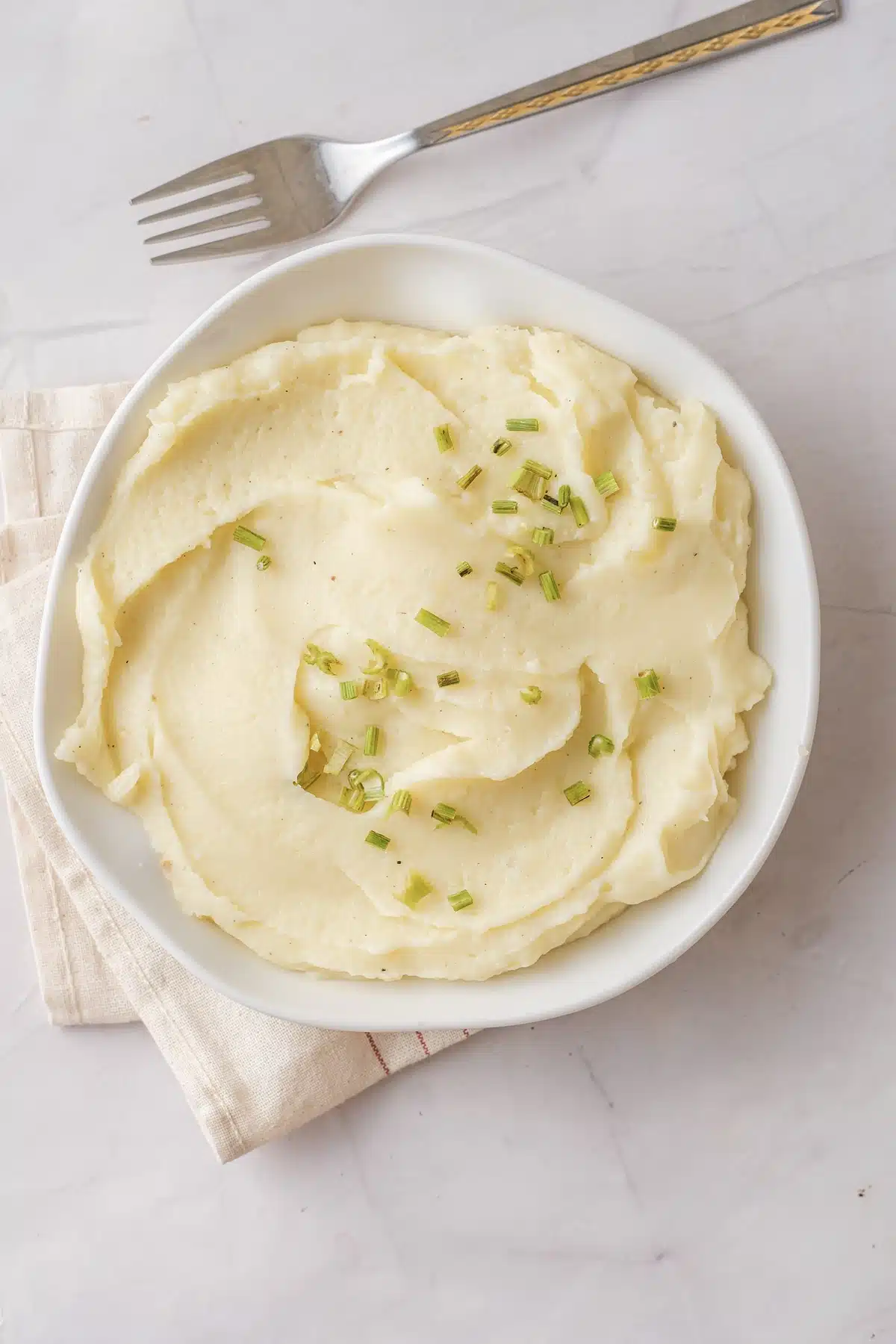
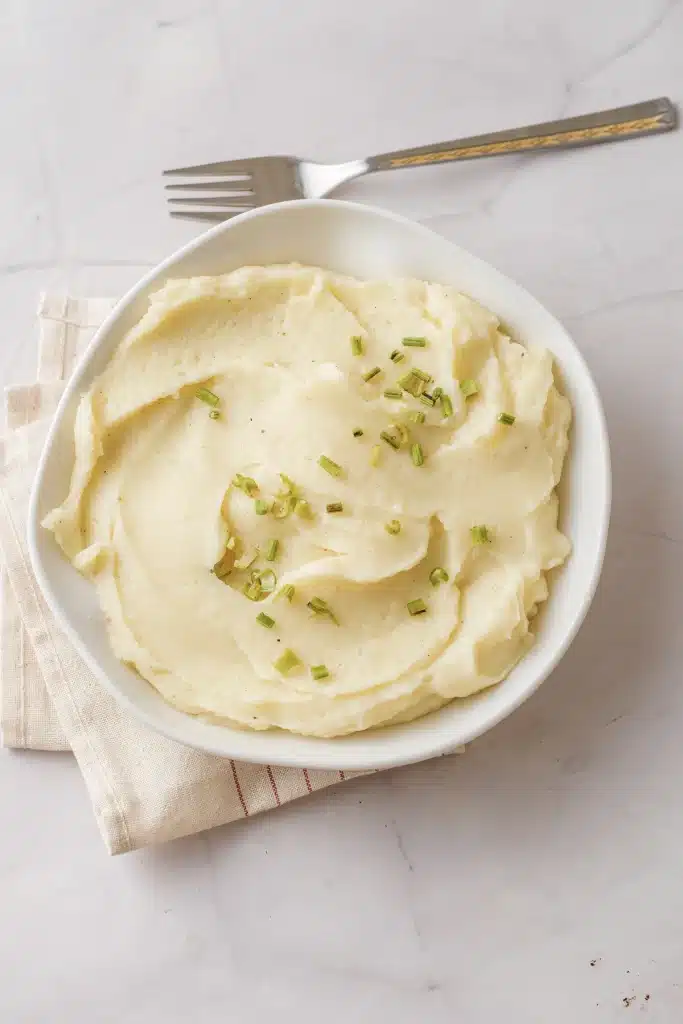
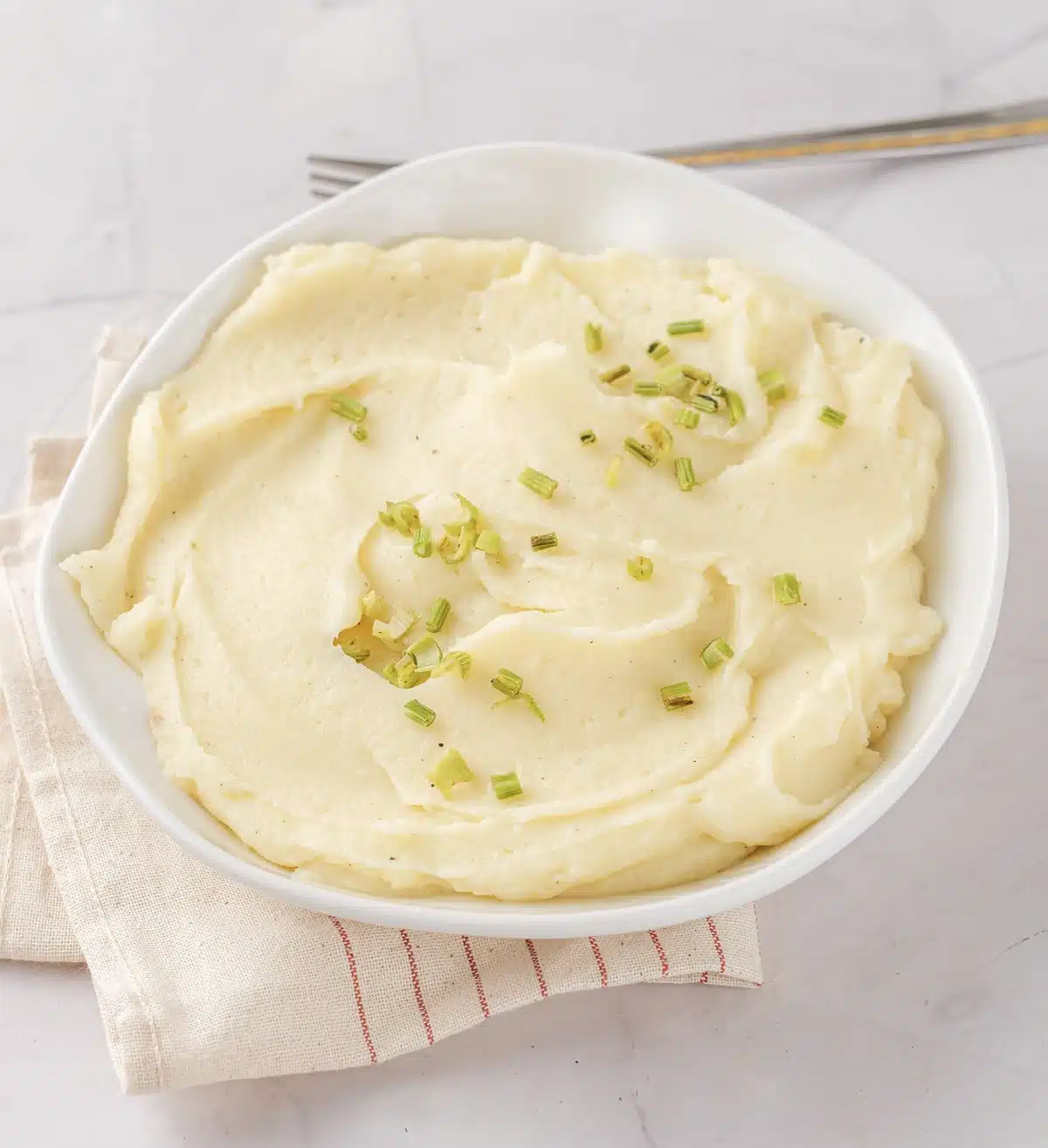
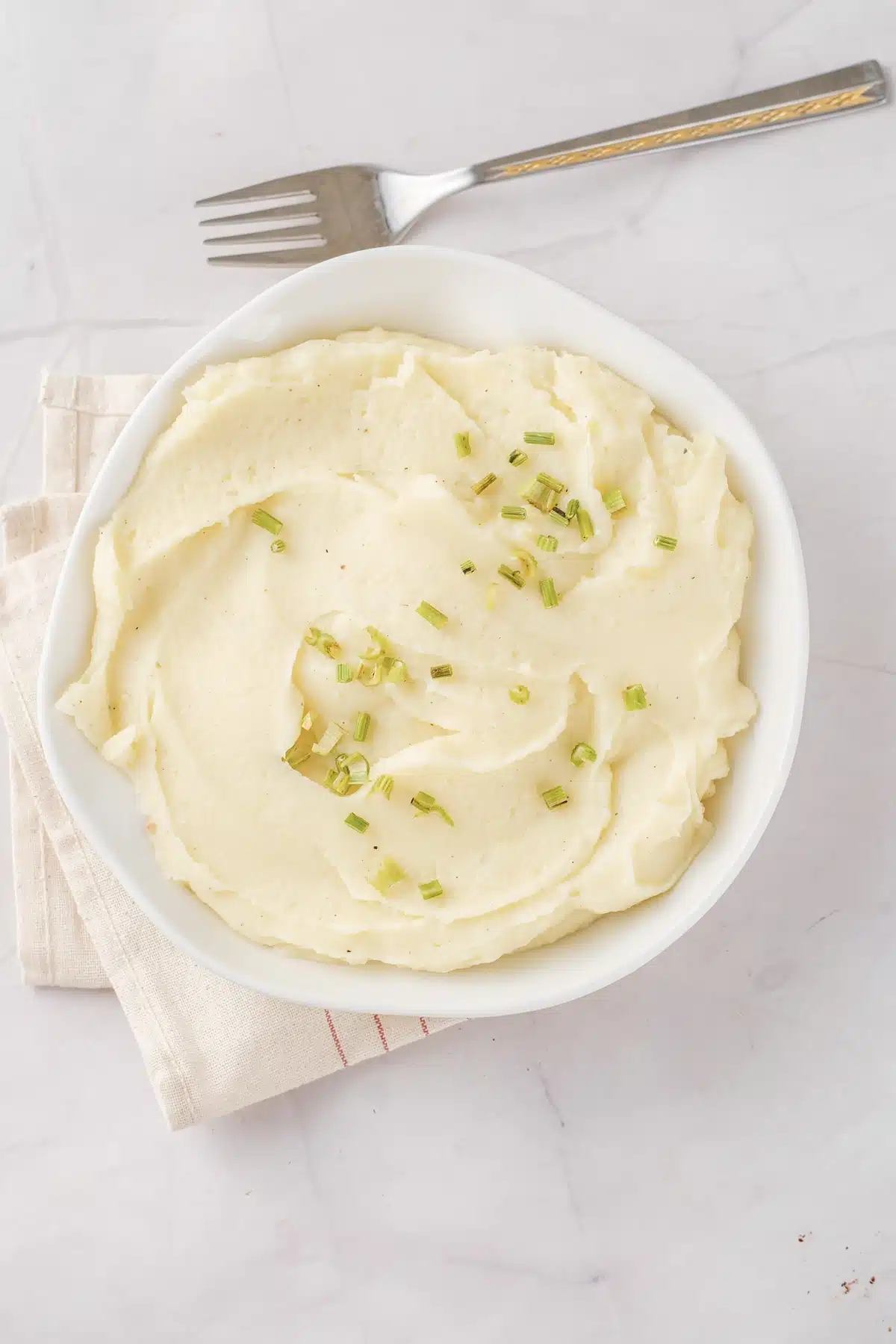
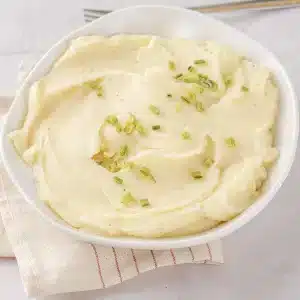
Pictured: the half-rutabaga, half-potato version from the Variations section, blended smooth in a food processor with butter, garlic and sour cream and topped with chives. It is milder, paler and creamier than the all-rutabaga recipe in the card, which comes out a deeper yellow.
What Is Rutabaga?
A rutabaga is a large, round root vegetable with a purple-tinged top, tan or yellow skin usually coated in wax, and pale yellow flesh. It is a cross between a cabbage and a turnip, and it tastes like that: sweeter and milder than a turnip, with a faint mustardy edge that cooking turns gentle. In Britain it is a swede, in Scotland it is neeps, and in Canada and the northern United States it is the root that shows up in stews and on holiday tables.
According to the Iowa State University Extension produce guide, you should pick rutabagas that feel heavy for their size with no soft spots or deep cuts, and they will keep for weeks in the refrigerator. That long shelf life is one reason they were a winter staple long before anyone called them a low-carb potato swap.
Rutabaga and turnip are cousins, not twins. Turnips are smaller, white with a purple shoulder, and sharper in flavor; they cook faster and mash wetter. Rutabaga is denser and sweeter and holds together better in a mash, which is why mashed rutabaga is a dish and mashed turnip is mostly a way to use up turnips.
Save this recipe
Enter your email and I’ll send this recipe straight to your inbox.
Ingredient Notes
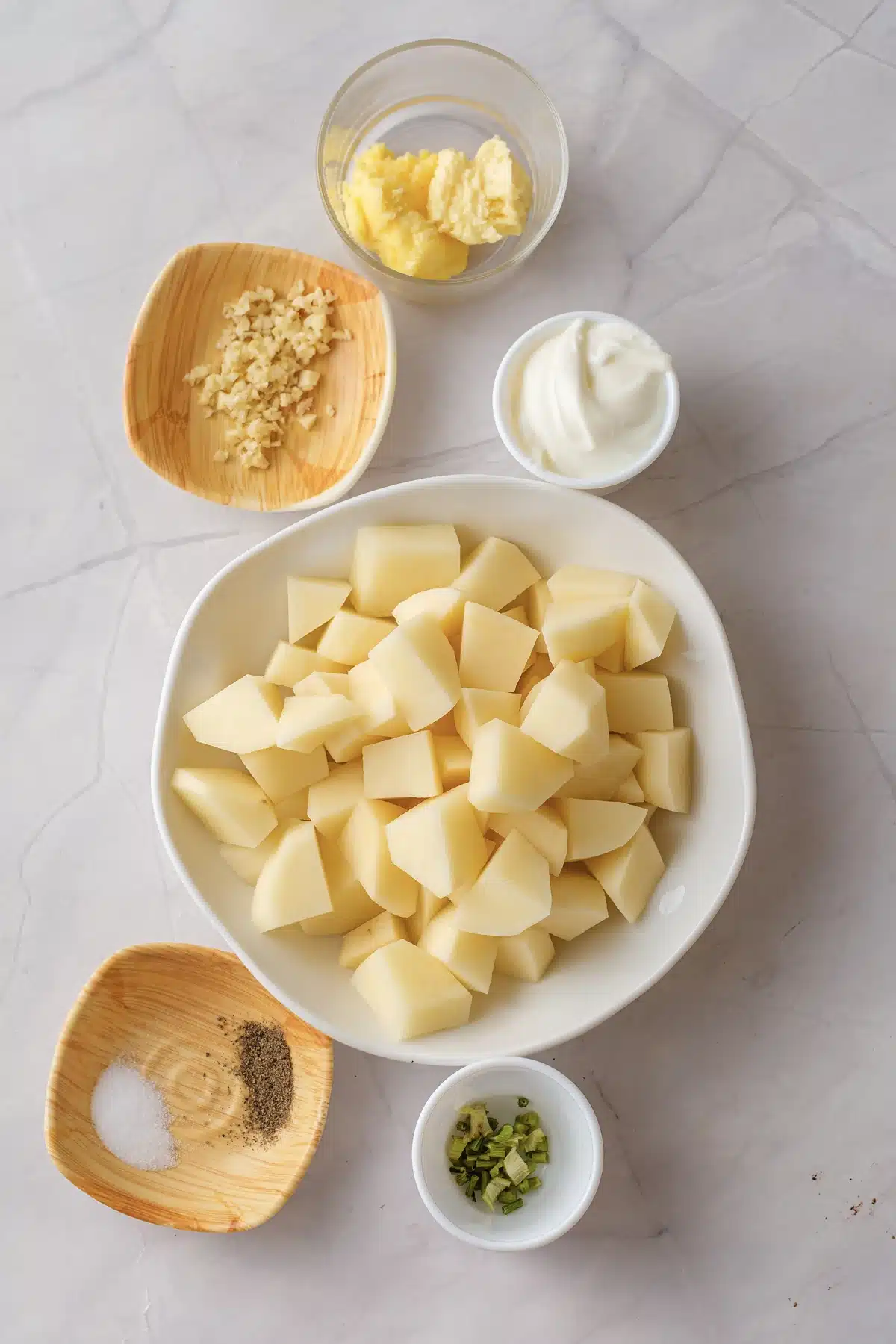
- Rutabaga. Two pounds, which is one large or two medium roots. Peel it with a sharp knife rather than a vegetable peeler, because the wax coating and the thick skin underneath it clog a peeler in seconds. Cut it into one-inch cubes so it cooks evenly. For the pictured version, use one pound of rutabaga and one pound of Yukon Gold potatoes.
- Butter. Three tablespoons, cubed, plus more for the top. Salted or unsalted both work; if salted, go lighter with the salt at the end.
- Garlic. Two cloves, minced. It goes into the hot mash raw, where the heat softens it, and it reads as savory rather than sharp. Roast the cloves first if you want it sweeter.
- Cream or sour cream. A quarter cup of heavy cream for the classic; the pictured bowl used sour cream, which adds a little tang and makes the mash whiter. Half-and-half, whole milk or plain Greek yogurt all work in the same amount.
- Salt and black pepper. A tablespoon of salt in the boiling water, then more to taste. Rutabaga needs more salt than potatoes do to taste seasoned.
- Chives. Two tablespoons, chopped, over the top. Scallion greens are what is in the photos and work the same way.
Mashed Rutabaga vs Mashed Potatoes
They are made the same way and look similar on the plate, but they behave differently in the pot. Rutabaga has less starch than a potato, so it takes longer to soften, thirty to forty minutes against fifteen to twenty, and it never gets quite as fluffy. A finished mashed rutabaga is dense and smooth with a slight bite, closer to a puree than a cloud, and it is golden yellow rather than white.
The flavor is the bigger difference. Potatoes are a blank canvas; rutabaga tastes of something on its own, sweet and a little peppery, and it can stand up to strong company like garlic, mustard and sharp cheese. On the nutrition side, a cup of mashed rutabaga has roughly half the carbohydrates of a cup of mashed potato and more vitamin C, which is why it is the usual swap on low-carb menus.
Because rutabaga has less starch, it also has less body, and that is where the potato in the pictured version earns its place. Half and half gives you the flavor of rutabaga with the creamy, holds-a-swirl texture of mashed potatoes, and it comes out pale enough to pass for the real thing at a table of skeptics.
How To Make Mashed Rutabaga
Peel the rutabaga with a knife, cutting the skin off in strips, then cut the flesh into one-inch cubes. Uneven pieces cook unevenly, so take a minute over it.
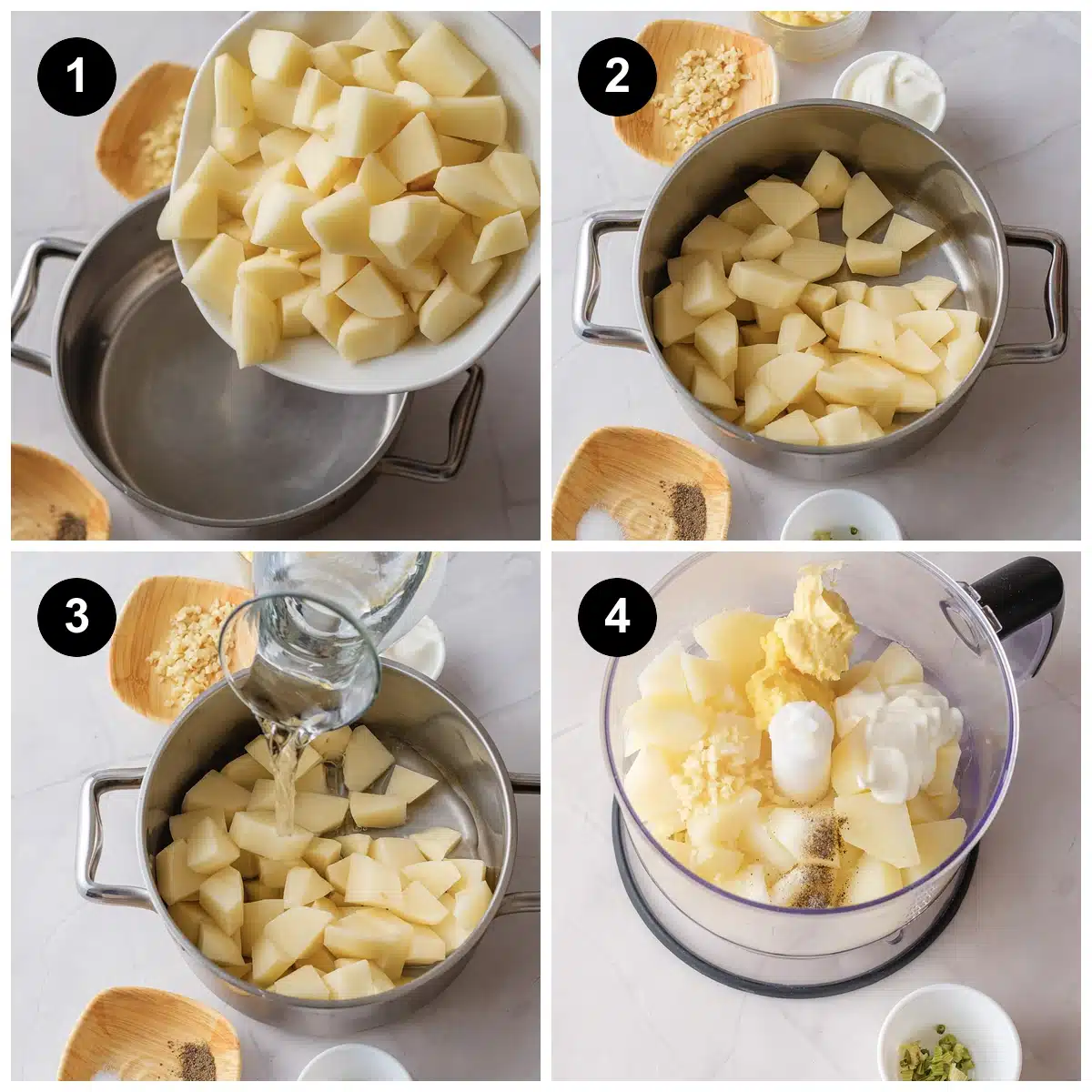
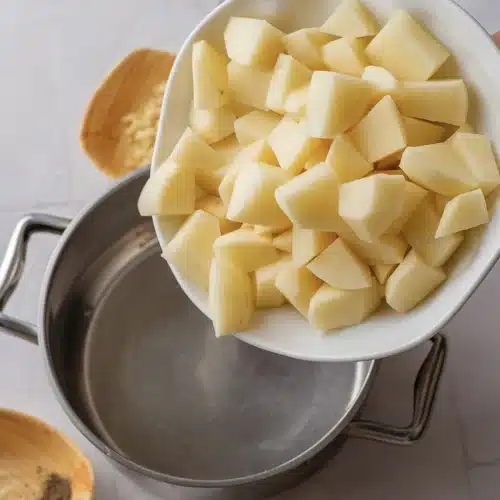
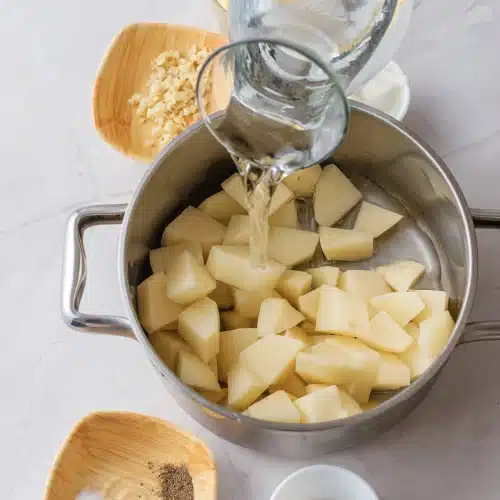
First, put the cubes into a large pot and cover them with cold water by an inch. Add a tablespoon of salt. Starting them in cold water lets the outside and the center cook at the same rate.
Next, bring the pot to a boil over high heat, then reduce it to a steady simmer and cook uncovered for thirty to forty minutes, until a fork slides through the largest cube with no resistance. Rutabaga takes longer than you think; an underdone cube makes a grainy mash.
Then drain the rutabaga well and return it to the hot pot off the heat for a minute or two, shaking it once or twice, so the excess water steams away. Wet rutabaga makes a watery mash, and this is the step that prevents it.
Mash and Season
After that, add the butter and the garlic and mash with a potato masher until it is as smooth as you can get it. For the smoothest texture, which is what the photos show, tip everything into a food processor with the cream and pulse until it is silky, scraping down the sides once. Do not overprocess potatoes if you are making the half-and-half version; a dozen pulses is plenty.
Finally, stir in the cream if you have not already, season with salt and plenty of black pepper, and taste. It usually wants more salt than you expect. Spoon it into a warm bowl, top with a pat of butter and the chives, and serve.
Getting It Smooth
A hand masher gives a rustic mash with some texture, which many people prefer with rutabaga. For the smooth, whipped look in the photographs, use a food processor or an immersion blender. Pure rutabaga is safe to process for as long as you like, because there is very little starch to turn gluey. If potatoes are in the mix, keep the pulses short and stop as soon as the lumps are gone. A ricer works beautifully for either version, and it is the tool to reach for if you want mashed rutabaga with no strings at all.
How To Tell When Mashed Rutabaga Is Done
The cubes are done boiling when a fork pushes through the biggest one with no resistance and the cube breaks apart if you press it against the side of the pot. If the fork goes in but the center still grips, give it five more minutes. Rutabaga does not fall apart the way potatoes do, so there is little risk in cooking it a few minutes longer than necessary.
The finished mashed rutabaga should be thick enough to hold a swirl from the back of a spoon and smooth enough that the fork in the photographs leaves a clean track. If it looks loose, put it back over low heat for two or three minutes and stir, which drives off extra water. If it is too stiff, add cream a tablespoon at a time. Taste it last; a properly seasoned bowl tastes sweet and buttery first and salty second.
Make It Ahead
Mashed rutabaga is a good candidate for cooking ahead, which makes it useful for a holiday table. Make it in full up to two days ahead, cool it, and refrigerate it covered. Reheat it in a covered dish at 350°F for twenty to twenty-five minutes, stirring once, or in a saucepan over low heat with a splash of cream, stirring often so it does not catch.
You can also boil and drain the cubes a day ahead and keep them in the fridge, then reheat them in a pot with a few tablespoons of water before mashing. The garlic and butter go in fresh, and the mash tastes as though it was just made.
Storing Mashed Rutabaga
Leftovers keep in an airtight container in the refrigerator for up to four days. Reheat in the microwave in one-minute bursts with a stir between each, or in a small pan over low heat with a little butter or cream.
Mashed rutabaga freezes better than mashed potatoes, again because of the low starch. Portion it into freezer containers with a little headroom, and freeze for up to three months. Thaw it overnight in the fridge and reheat gently, and expect to stir in a spoonful of cream to bring the texture back. The half-potato version freezes well too, though it may need a more vigorous stir after thawing.
Variations and Substitutions
Half Rutabaga, Half Potato (Pictured)
This is the bowl in every photograph on this page. Potatoes soften the flavor, lighten the color and add the starch that makes a mash hold together, so the result is paler, milder and creamier than pure mashed rutabaga, and it is the version we serve to anyone meeting rutabaga for the first time.
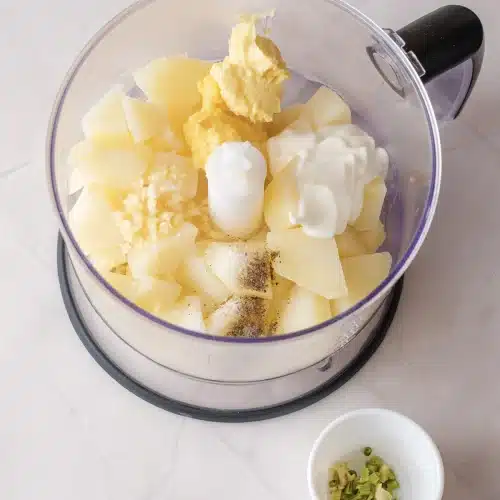
Ingredients. 1 pound rutabaga, peeled and cut into 1-inch cubes; 1 pound Yukon Gold potatoes, peeled and cut into 1-inch cubes; 1 tablespoon salt for the water; 3 tablespoons butter; 2 cloves garlic, minced; 1/4 cup sour cream, or heavy cream; salt and black pepper; and 2 tablespoons chopped chives or scallion greens.
Method. Put the rutabaga cubes into a large pot, cover with cold water by an inch, add the salt, and bring to a boil. Simmer for fifteen minutes, then add the potatoes and simmer for another fifteen to twenty minutes, until both are fork-tender. Drain well and let them steam dry in the hot pot for a minute. Transfer to a food processor with the butter, garlic and sour cream and pulse ten to twelve times, scraping down once, until smooth; or mash by hand with a masher or ricer. Season with salt and pepper, spoon into a bowl, and top with chives.
The staggered start matters. Rutabaga takes twice as long to cook as potato, and adding them together leaves you with mushy potato and firm rutabaga.
Other Ways to Change It
Brown butter and sage. Cook the butter in a small pan until it smells nutty and the milk solids turn brown, add six sage leaves for the last thirty seconds, and pour it over the finished mash.
Cheese. Half a cup of grated sharp cheddar or Parmesan stirred in while the mash is hot. Cheddar and rutabaga is an old Scottish pairing that deserves more attention.
Maple and nutmeg. A tablespoon of maple syrup and a grating of nutmeg lean into the sweetness and make it a Thanksgiving side.
Dairy-free. Olive oil in place of the butter and oat milk or unsweetened almond milk in place of the cream. Add a squeeze of lemon at the end for brightness.
Carrot or parsnip. Replace a third of the rutabaga with carrots for a sweeter, orange mash, or with parsnips for a nuttier one. Both cook in about the same time as rutabaga.
What to Serve with Mashed Rutabaga
It belongs under anything with a gravy. A classic pot roast is the obvious partner, and Cracker Barrel meatloaf with its ketchup glaze is close behind. In Scotland the traditional plate is neeps and tatties with sausages, and Swedish meatballs with cream gravy are the same idea with a Scandinavian accent.
It also works with lighter mains. Apricot balsamic pork tenderloin or a simple roast chicken both like the sweetness of mashed rutabaga beside them, and a pile of buttered green beans finishes the plate.
Mashed Rutabaga FAQ
Frequently Asked Questions
Does mashed rutabaga taste like mashed potatoes?
Not quite. It is sweeter and a little peppery, with a flavor somewhere between a turnip and a carrot, and it is denser than a potato mash. The half-rutabaga, half-potato version pictured in this post tastes much closer to mashed potatoes, with just a hint of that sweetness, and it is the one to make for anyone who is unsure.
Why is my mashed rutabaga watery?
Rutabaga holds a lot of water, and it was not dried after draining. Return the drained cubes to the hot, empty pot for a minute or two before mashing, and if the finished mash is still loose, stir it over low heat for a few minutes to drive off the extra moisture.
Do I have to peel rutabaga?
Yes. The skin is thick and bitter, and store-bought rutabagas are coated in food-grade wax to keep them from drying out. Cut off the top and bottom, stand it on a flat end, and slice the skin away in strips with a sharp knife.
How do I make rutabaga taste better?
Salt the cooking water well, add plenty of butter, and season with more salt and black pepper than you would use for potatoes. Garlic, sharp cheese, brown butter and a spoonful of sour cream all suit it, and a pinch of nutmeg or a little maple syrup plays up the natural sweetness.
More Questions About Rutabaga
Good to Know
Can I make mashed rutabaga in the Instant Pot?
Yes. Put the cubes on the trivet with a cup of water and cook on high pressure for ten minutes, then quick release. Drain, dry in the hot pot, and mash as usual.
Is rutabaga low carb?
Lower than potato, not carb-free. A cup of cooked rutabaga has around twelve grams of carbohydrate, compared with about thirty in a cup of mashed potato, and it has more fiber and vitamin C. The half-potato version lands in between.
Can I use turnips instead?
You can, but the mash will be sharper and wetter, and it will cook in about twenty minutes rather than thirty-five. Dry the cubes thoroughly before mashing and use a little less cream.
Make the classic version once and you will understand why rutabaga has stayed on winter tables for centuries, and make the half-potato version when there are guests who need convincing. Either way, put a bowl of mashed rutabaga next to a pot roast this weekend and see how fast it goes.
Creamy Mashed Rutabaga
Save this recipe
Enter your email and I’ll send this recipe straight to your inbox.
Ingredients
Mashed Rutabaga
- 2 lb rutabaga peeled with a knife and cut into 1-inch cubes
- 1 tbsp salt for the cooking water, plus more to taste
- 3 tbsp butter cubed, plus more for the top
- 2 cloves garlic minced
- 1/4 cup heavy cream or sour cream, as pictured, or half-and-half
- black pepper to taste
- 2 tbsp fresh chives chopped, or scallion greens
Equipment
- Large saucepan
- Colander
- Potato masher
Instructions
Boil the Rutabaga
- Peel and cube. Cut the top and bottom off the rutabaga, stand it on a flat end, and slice the waxed skin away in strips with a sharp knife. Cut the flesh into 1-inch cubes.
- Into the pot. Put the cubes into a large pot.

- Cover with water. Add cold water to cover by an inch and the tablespoon of salt.
- Simmer. Bring to a boil over high heat, then reduce to a steady simmer and cook uncovered for 30 to 40 minutes, until a fork slides through the largest cube with no resistance.
Mash and Serve
- Drain and dry. Drain well and return the cubes to the hot pot, off the heat, for 1 to 2 minutes so the excess moisture steams away.
- Mash. Add the butter and garlic and mash with a potato masher, or transfer to a food processor with the cream and pulse until smooth, as pictured.
- Season and serve. Stir in the cream if you have not already, season with salt and black pepper, and spoon into a warm bowl. Top with a pat of butter and the chives.