
Parmesan crisps are small mounds of shredded Parmesan baked at 400°F for four or five minutes until they melt, bubble and set into lacy, shatteringly crisp wafers. One ingredient, ten minutes from grater to plate, and they are a snack, a cracker for a cheese board and a crouton for soup all at once.
There is no trick to them beyond the cheese itself. A hard, aged cheese like Parmesan carries so little moisture that it cannot melt into a puddle; instead the fat renders, the proteins toast and the shreds fuse into a single crisp sheet. The details that matter are which cheese you buy, how you grate it, and pulling the tray at the right moment, and all three are covered below.
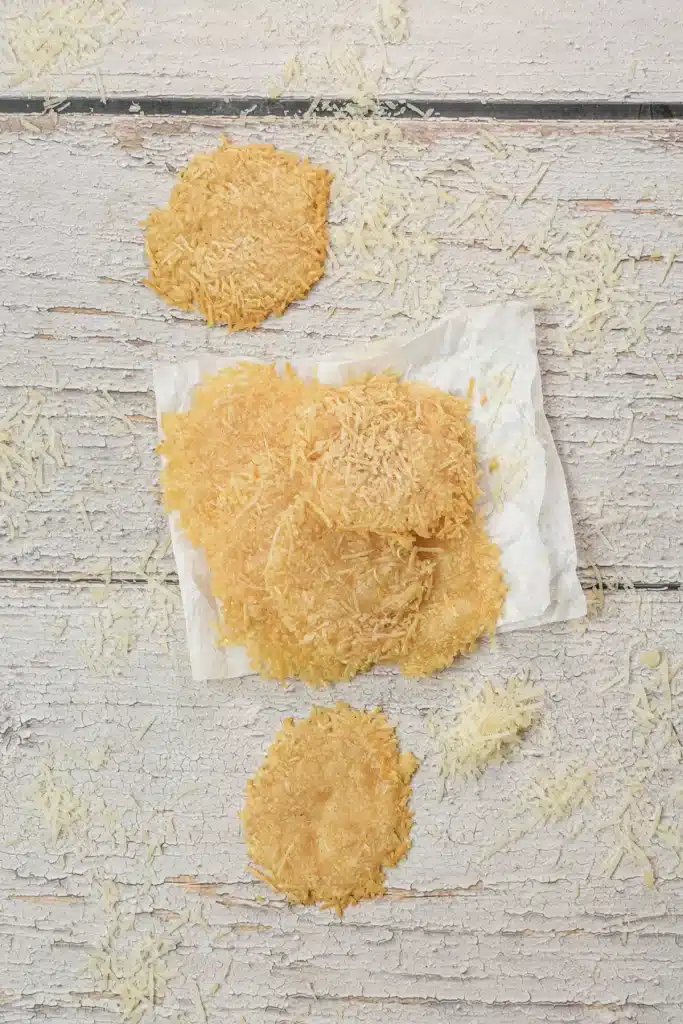
- Parmesan crisps made from one ingredient, and it is already in the fridge
- Ten minutes start to finish, five of them in the oven
- Naturally gluten-free, low-carb and keto, with two grams of protein per crisp
- Lacy and shattering from shredded cheese, or smooth and cracker-like from finely grated
- A crouton for soup, a cracker for a cheese board and a snack straight off the tray
- Twelve crisps from one cup of cheese, and the batch doubles without any change

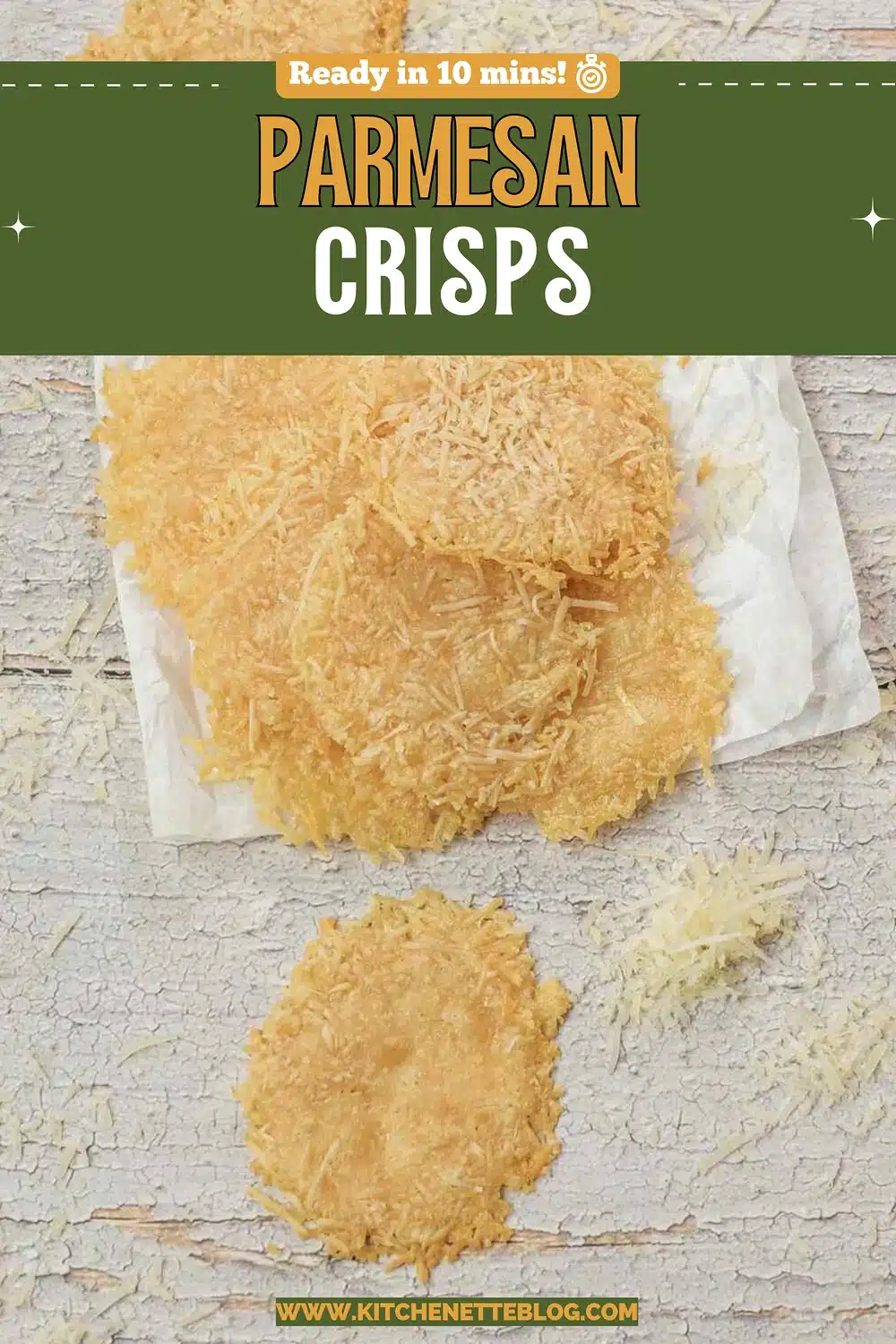
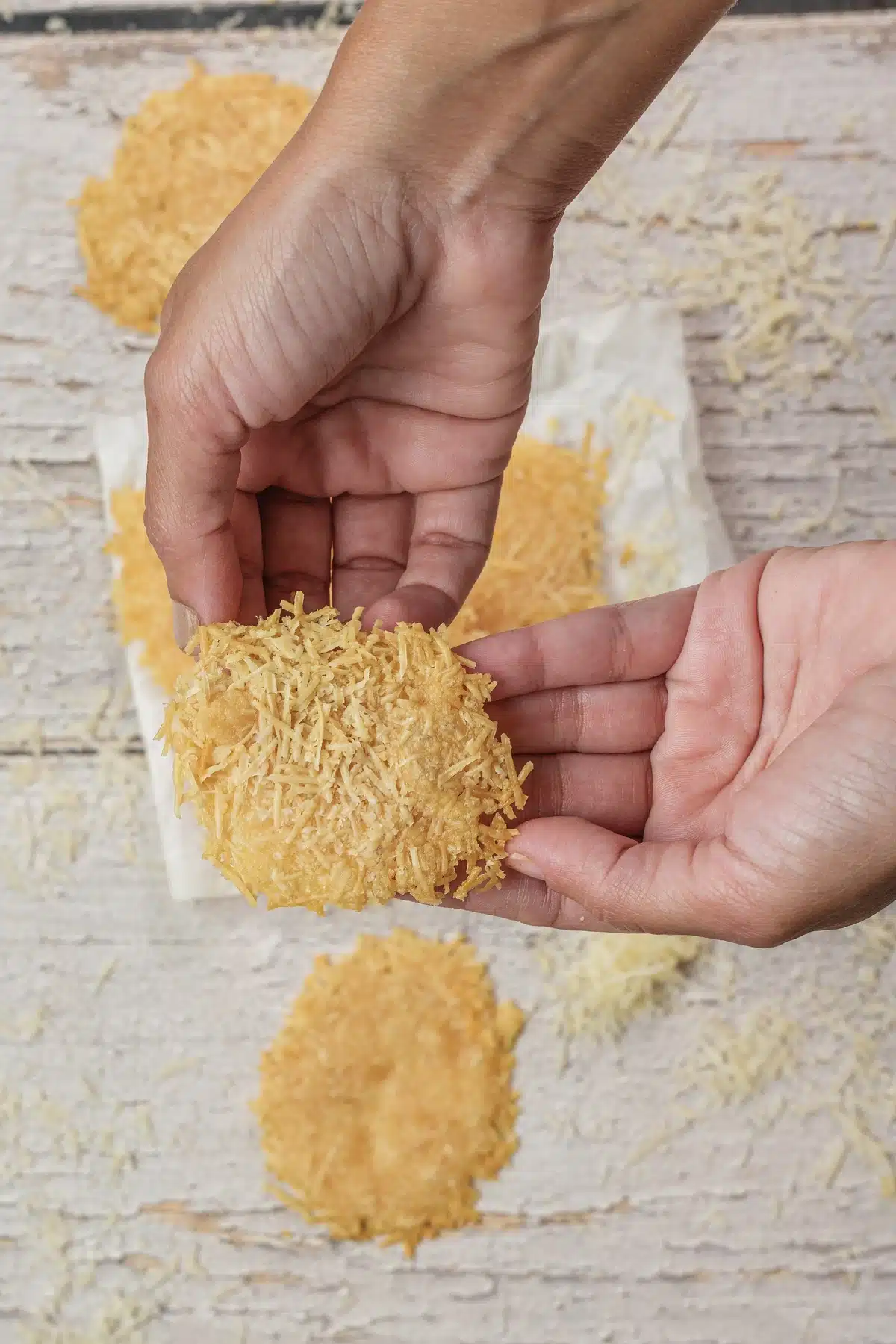
Pictured: the plain version, made from coarsely shredded Parmesan with no seasoning, which gives the open, lacy texture you can see through. Finely grated cheese makes a smoother, denser wafer, and both are covered below.
Why Parmesan Crisps Work with One Ingredient
Most cheeses melt into a pool because they hold a lot of water. Parmesan is aged for at least a year and has lost most of its moisture along the way, which is why it grates into dry shreds instead of smearing. Dairy Farmers of Wisconsin describe aged cheeses like Parmesan as drier, with a tighter protein structure that resists melting and turns crisp or oily under heat. That is a problem in a cheese sauce and exactly what you want on a baking sheet.
In a hot oven the little moisture left steams off, the fat melts and spreads the shreds into a thin round, and the proteins brown. Parmesan crisps come out of the oven soft and set hard as they cool, the same way a caramel or a tuile does. Give them five minutes on the tray and they lift off in one piece.
Salt is already built in, since Parmesan carries plenty, so nothing needs adding. The optional seasonings in the recipe card are for variety, not for making the crisps taste of something.
Save this recipe
Enter your email and I’ll send this recipe straight to your inbox.
Ingredient Notes
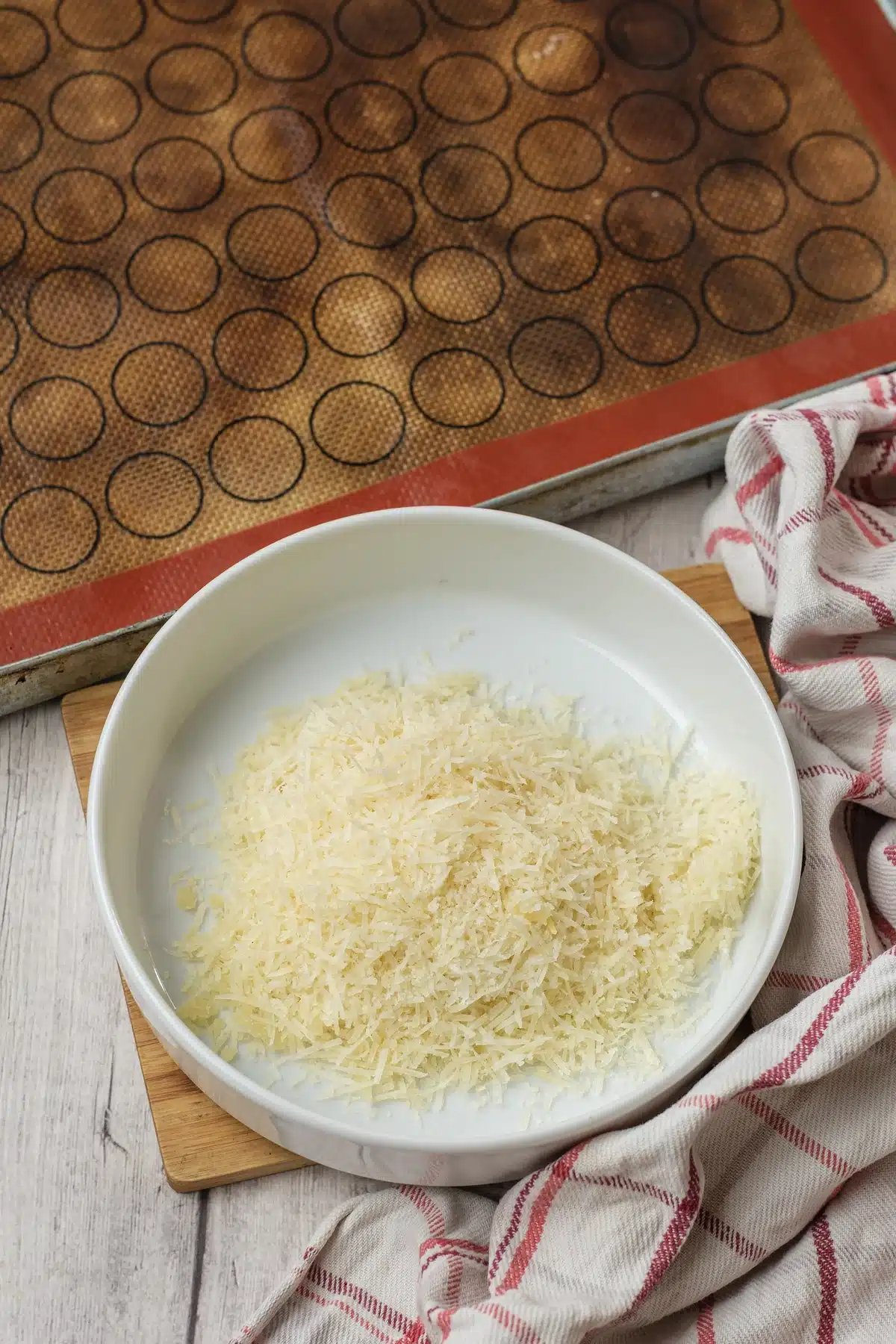
- Parmesan cheese. One cup, about three ounces, shredded from a wedge. Parmigiano-Reggiano is the best-tasting choice and a domestic Parmesan works nearly as well. Avoid the pre-shredded bags and the shaker cans: both contain cellulose or potato starch to stop clumping, and those additives keep the shreds from fusing, so the crisps come out crumbly.
- Black pepper. Optional, cracked coarsely over the mounds before baking. It is the one seasoning that improves the plain version rather than changing it.
- Dried herbs. Optional, a pinch of oregano, thyme or rosemary per crisp. Rosemary should be chopped fine or it stays woody.
- Red pepper flakes. Optional, a small pinch for heat. Aleppo pepper is gentler and prettier.
- Sesame or poppy seeds. Optional, for crunch and an everything-bagel look. Everything bagel seasoning itself works, but it is salty, so use a light hand.
Shredded or Finely Grated Parmesan?
Both work, and they make noticeably different crisps. Shredded on the large holes of a box grater, the cheese bakes into an open, lacy round with visible strands, like the ones in the photographs. It has more crunch and more air, and it is the better version for eating out of hand.
Finely grated on a microplane or the small holes, the cheese spreads into a smooth, thin, cracker-like disc with a more even color. It is neater, slightly sturdier, and the better choice when the crisps need to stand up in a bowl of soup or hold a spoonful of something on a cheese board. Finely grated cheese also bakes faster, so start checking at three minutes.
Whichever you use, grate it yourself from a wedge. The shreds from a bag are coated in anti-caking starch, and the result is a Parmesan crisp that crumbles instead of snapping. It is the single most common reason a batch disappoints.
How To Make Parmesan Crisps
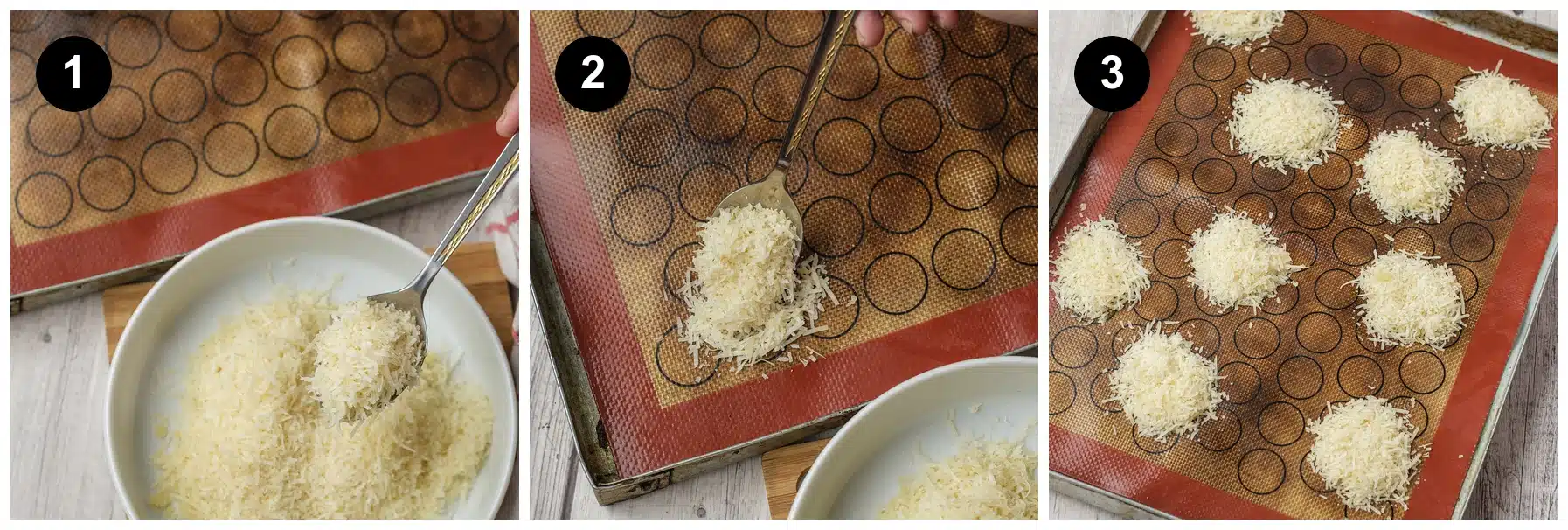
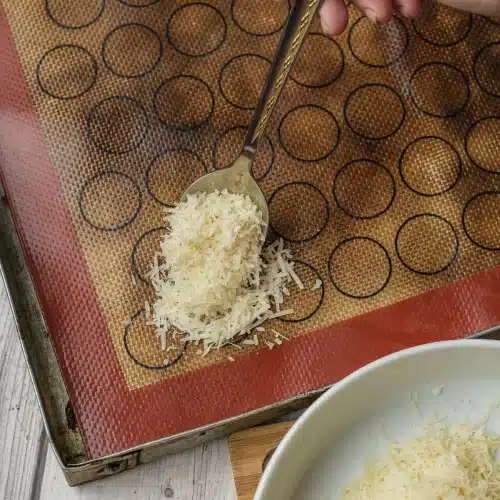
First, heat the oven to 400°F (200°C) and line a baking sheet with a silicone mat or parchment. Do not skip the liner; melted cheese welds itself to bare metal. Shred the Parmesan on the large holes of a box grater into a bowl.
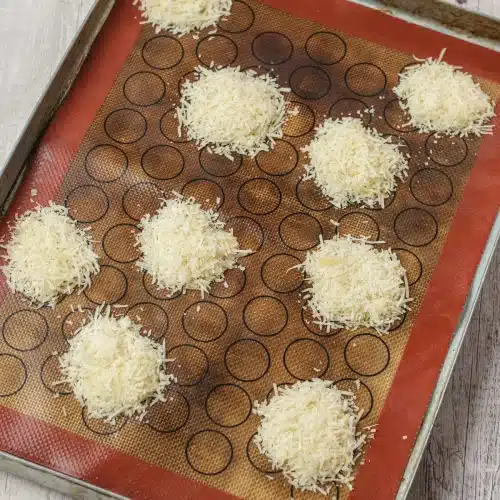
Next, spoon heaping tablespoons of cheese onto the liner, spacing them two inches apart. They spread as they melt, and crowded mounds run into each other and bake into one sheet. A tablespoon makes a crisp about three inches across; use a teaspoon for bite-size crisps to float on soup.
Shaping the Mounds
Then pat each mound gently into a round about a quarter-inch thick with the back of the spoon or your fingertips. Do not press hard; the cheese needs some air in it to bake lacy. An even thickness matters more than a perfect circle, because a thick center stays chewy while thin edges burn. Sprinkle on any seasoning now, so it bakes into the cheese instead of falling off later.
After that, bake for four to five minutes, until the crisps are bubbling all over and golden at the edges. Finally, leave them on the tray for five minutes. They come out of the oven soft and floppy and set hard as they cool, then lift off cleanly with a thin spatula.
How To Tell When Parmesan Crisps Are Done
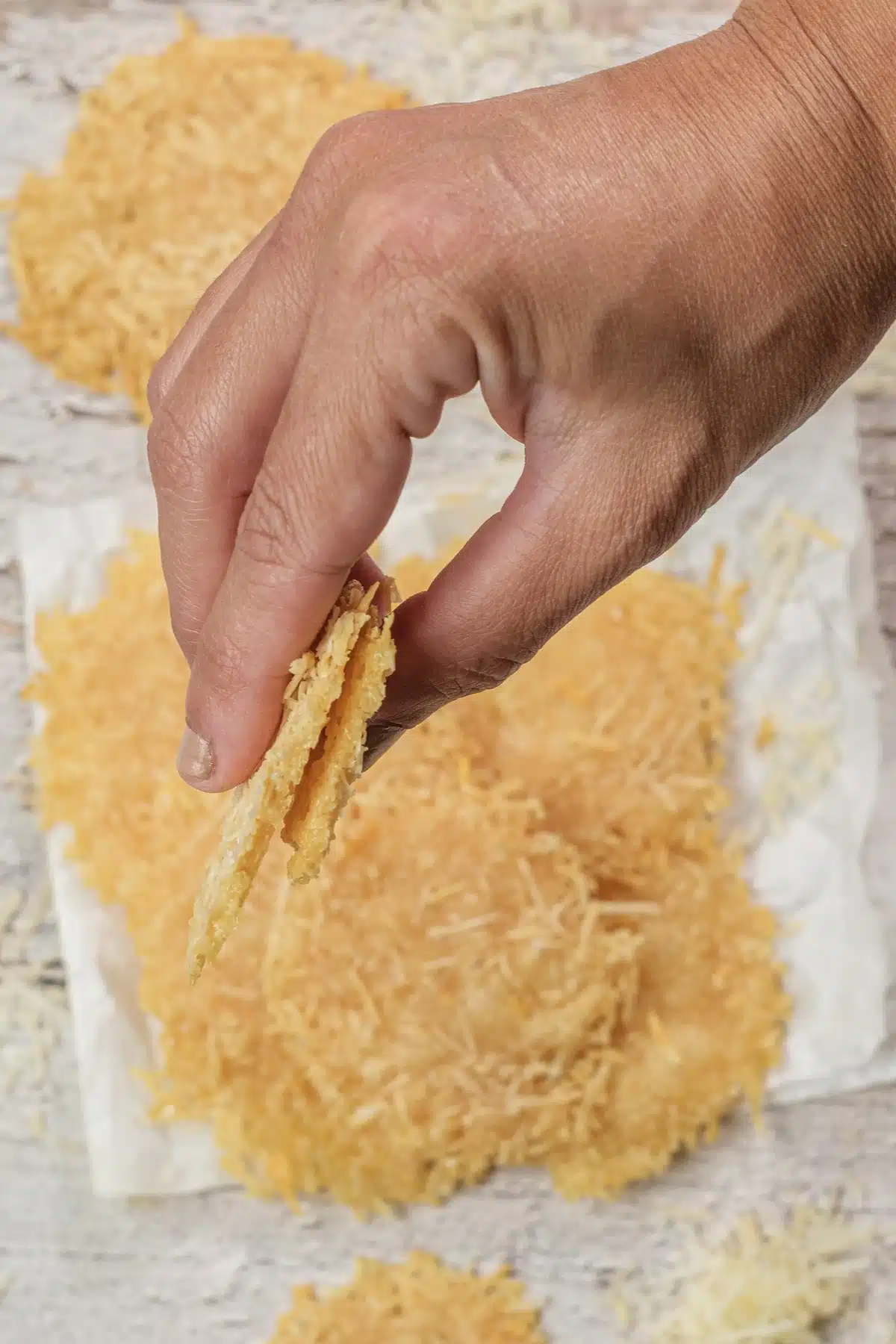
Look at the edges, not the middle. Parmesan crisps are done when the outer half inch has turned a deep golden brown and the whole surface has stopped bubbling vigorously and settled into a lacy, even texture. The centers will be a shade paler than the edges, and that is correct; they finish on the hot tray.
Under-baked crisps look pale yellow and still glossy with fat, and they cool into something chewy rather than crisp. If a batch comes out that way, put the tray back for another minute. Over-baked crisps are dark brown all over and smell sharp rather than nutty, and there is no rescuing them.
The final test is after cooling. A finished Parmesan crisp snaps cleanly in half with a clear crack. If it bends, it needed another minute, or it was made from pre-shredded cheese, or the mounds were too thick. Return bendy crisps to a 350°F oven for one to two minutes and cool again.
Make It Ahead
Parmesan crisps are at their best within a few hours of baking, but they can be made the morning of a dinner and kept in an airtight container on the counter. Slip a sheet of parchment between the layers so they do not scratch each other or stick where a spot of fat has softened.
For a party, bake them a day ahead and re-crisp them: spread the crisps on a lined tray and give them one to two minutes at 350°F, then cool again. They come back to full crunch. If you want to shape them into bowls or cups for a salad, do that while they are still warm from the oven, draping each one over an upturned muffin cup or a small glass, and store the set cups the same way.
Storing Parmesan Crisps
Store cooled crisps in an airtight container at room temperature for up to three days, with parchment between the layers. Humidity is the enemy; on a damp day they soften within hours if the container is left open. A small silica packet from a jar of vitamins, tucked in the container, keeps them crisp noticeably longer.
Do not refrigerate Parmesan crisps. The fridge is humid, and they turn leathery. The freezer is worse, because they weep fat as they thaw. If you need to keep them longer than three days, the honest answer is to bake a fresh batch; it takes ten minutes.
Soft crisps are not lost. One to two minutes on a lined tray at 350°F, then five minutes to cool, brings them back.
Variations and Substitutions
Seasoned Versions
Black pepper and rosemary. Cracked pepper and a pinch of finely chopped rosemary on each mound. The classic pairing for a cheese board.
Everything bagel. A light sprinkle of everything seasoning, pressed on before baking. Go easy, because the seasoning is salted and so is the cheese.
Garlic and herb. A pinch of garlic powder and dried Italian herbs mixed through the shredded cheese before spooning. Garlic powder, not fresh garlic, which burns.
Spicy. Red pepper flakes or a dusting of smoked paprika. Smoked paprika also makes the crisps a warmer color.
Other Cheeses and Shapes
Pecorino Romano. Works exactly the same way and is saltier and sharper. A half-and-half mix with Parmesan is very good.
Asiago or aged Gouda. Both are dry enough to crisp. Aged cheddar works but releases more fat, so blot the crisps on a paper towel.
Skillet method. Cook a mound in a dry nonstick skillet over medium heat for two to three minutes, until the edges brown, then lift it out with a spatula. It makes one crisp at a time and is handy when you need two for a soup.
Cups and bowls. Drape a warm crisp over an upturned muffin cup and let it set. A tablespoon mound makes a cup for a bite of salad; a quarter cup mound spread wide makes a bowl for a Caesar.
Air fryer. Line the basket with parchment, use teaspoon mounds, and cook at 375°F for four to five minutes. Small batches only.
What to Serve with Parmesan Crisps
The obvious pairing is soup. A crisp floated on a bowl of autumn squash soup or crumbled over pasta fagioli does what a crouton does with a great deal more flavor, and a stovetop potato soup gets a salty, crunchy top that it badly needs.
Salads are the other natural home. Tuck two or three into a lemony Caesar salad instead of croutons, or shape them into cups and fill them with the salad for a starter. On a cheese board they take the place of crackers, and they are the rare cracker that does not need cheese on it.
As a snack, Parmesan crisps sit next to a glass of something cold, and a bowl of them disappears at the speed of potato chips. Make two trays.
Parmesan Crisps FAQ
Frequently Asked Questions
Why did my Parmesan crisps come out chewy instead of crisp?
Three usual causes: pre-shredded cheese with anti-caking starch, mounds that were too thick, or pulling the tray too early. Grate from a wedge, pat the mounds a quarter-inch thick, and bake until the edges are deep gold. Chewy crisps can go back in the oven for another minute.
Can I use pre-shredded Parmesan?
You can, but the crisps will be crumbly rather than lacy and they will not snap. The cellulose or starch that keeps bagged cheese from clumping also keeps the shreds from fusing. Grating a wedge takes two minutes and is worth it.
Do Parmesan crisps need parchment or a silicone mat?
Yes. Melted cheese fuses to bare metal and to foil, and you will lose half of every crisp getting it off. A silicone mat gives the most even browning; parchment works nearly as well.
Are Parmesan crisps keto and gluten-free?
Yes. They are cheese and nothing else, so each crisp is about 22 calories with 2 grams of protein, 1.5 grams of fat and no carbohydrate. Check any seasoning blend you add, since some contain sugar or wheat.
More Questions About Cheese Crisps
Good to Know
Can I make them in a skillet or the microwave?
A dry nonstick skillet over medium heat makes one at a time in two to three minutes. The microwave works too: a tablespoon mound on parchment for 45 to 60 seconds on high, though the result is paler and less lacy than the oven version.
How do I make them into bowls?
Bake wider, thinner rounds from a quarter cup of cheese each, then drape each warm crisp over an upturned bowl or a large muffin cup within thirty seconds of leaving the oven. They set hard in a few minutes.
Can I double the recipe?
Yes. Two cups of cheese makes about 24 crisps on two trays. Bake the trays one at a time, because a crowded oven browns unevenly and the timing is tight.
Keep a wedge of Parmesan in the fridge and Parmesan crisps are ten minutes away whenever a soup needs a topping or a board needs a cracker. The pimento cheese makes a good partner on that board.
Parmesan Crisps
Save this recipe
Enter your email and I’ll send this recipe straight to your inbox.
Ingredients
For the Crisps
- 1 cup Parmesan cheese about 3 ounces, shredded from a wedge, not pre-shredded
Optional Seasonings
- cracked black pepper to taste
- dried oregano, thyme or rosemary a pinch per crisp
- red pepper flakes a small pinch per crisp
- sesame or poppy seeds a light sprinkle
Equipment
- Oven
- Baking sheet
- Parchment Paper or Silicone Mat
- Tablespoon or small scoop
Instructions
Prepare
- Heat the oven. Heat the oven to 400°F (200°C) and line a baking sheet with a silicone mat or parchment paper. Melted cheese welds itself to bare metal.
- Shred the cheese. Shred the Parmesan on the large holes of a box grater into a bowl, or grate it finely for a smoother, denser crisp.

Shape
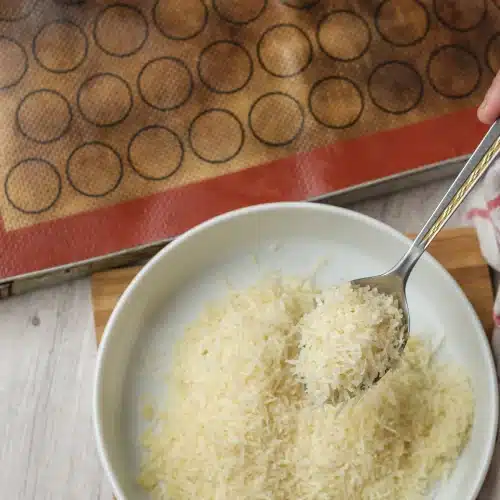
- Spoon the mounds. Drop heaping tablespoons of cheese onto the liner, spacing them about 2 inches apart so they have room to spread.
- Flatten and space. Pat each mound gently into a round about a quarter-inch thick with the back of the spoon. You should have about 12 mounds. Sprinkle on any optional seasoning now.
Bake and Cool
- Bake. Bake for 4 to 5 minutes, until the crisps are bubbling all over and deep golden at the edges. Watch the last minute; they go from golden to burnt quickly.
- Cool on the tray. Leave the crisps on the baking sheet for 5 minutes to set hard, then lift them off with a thin spatula and serve, or store airtight.