
Cranberry sauce made at home takes one pot, five ingredients and about fifteen minutes on the stovetop, and it tastes nothing like the can. Fresh cranberries simmer with sugar, water and orange juice until they burst and thicken into a glossy, tangy sauce that sets softly as it cools. It costs a couple of dollars, it keeps for well over a week, and it is the one Thanksgiving side that is genuinely better made days ahead.
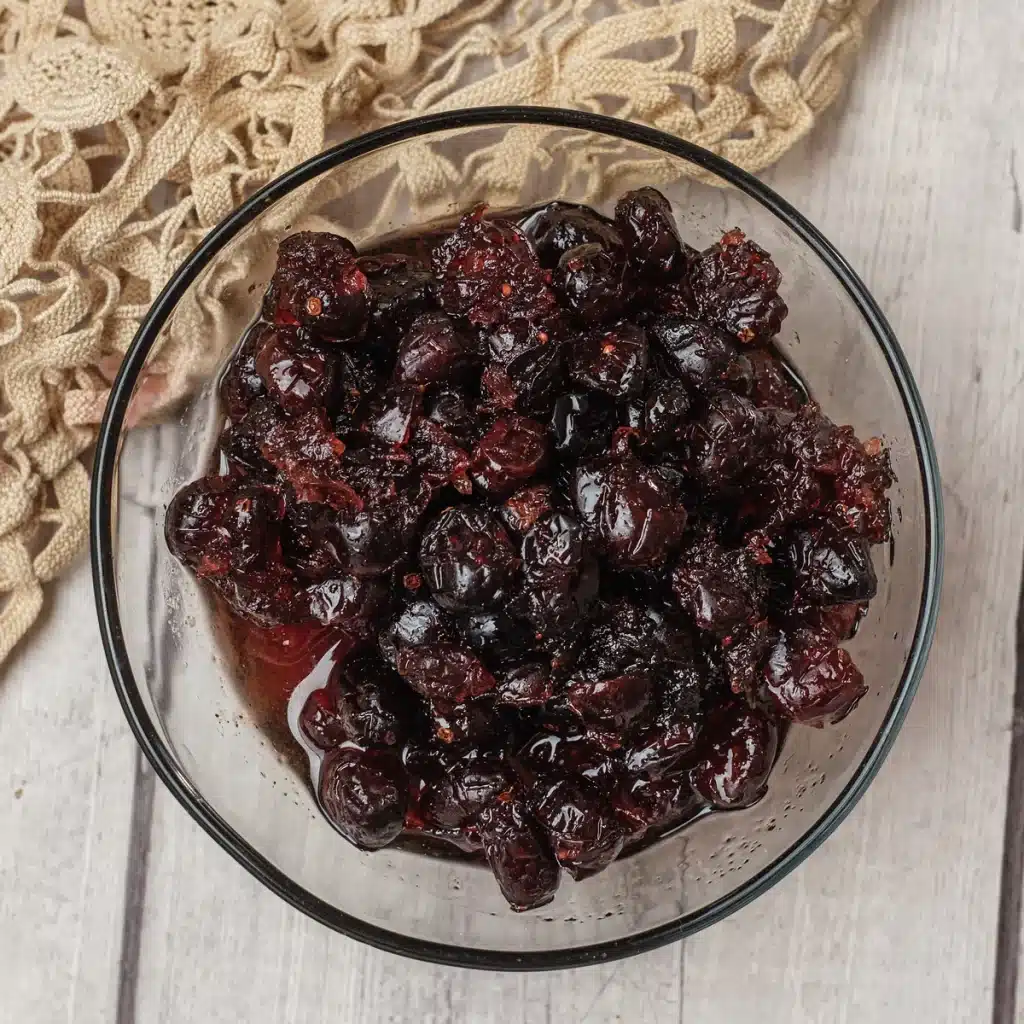
- Cranberry sauce with real fruit flavor, tangy first and sweet second, instead of the flat sweetness of the can
- Five ingredients, one pot and fifteen minutes of simmering
- Sets on its own as it cools, so there is no pectin, cornstarch or gelatin to add
- Keeps for ten days in the fridge, which makes it the easiest make-ahead dish on the holiday table
- A dried cranberry version for the rest of the year, when fresh berries are out of season
- Doubles or triples with no change to the method
There are two versions in this post. The recipe card is the classic homemade cranberry sauce with a bag of fresh berries, the one that gels as it chills. The bowls in the photographs are the dried cranberry version from the Variations section: sweetened dried cranberries plumped in orange juice and water, which stays whole-berry and loose and works any month of the year when fresh berries are nowhere to be found.


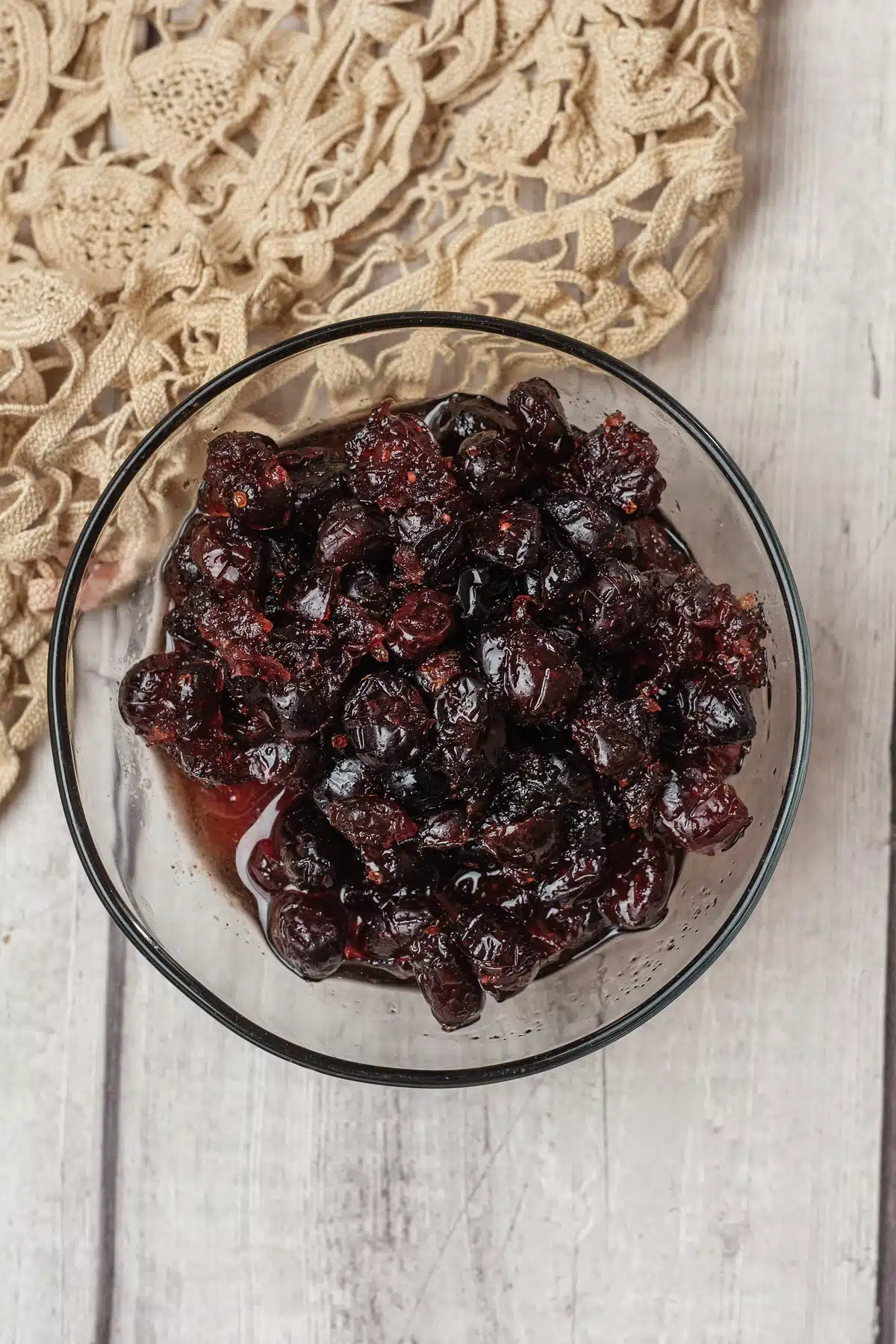
Pictured: the dried cranberry version, made with sweetened dried cranberries simmered in orange juice and water until plump. It stays whole-berry and loose rather than setting into a gel. The recipe card below is the classic fresh cranberry sauce.
What Makes Homemade Cranberry Sauce Better Than Canned
Canned cranberry sauce is cranberry juice concentrate, corn syrup and enough pectin to hold the shape of the can. It is sweet, it is smooth, and it tastes of very little. Homemade cranberry sauce starts with whole berries, and whole berries carry their own tartness, their own pectin and a slightly bitter edge from the skins that gives the sauce some backbone next to rich food.
The other difference is control. You decide how sweet it is, how much orange goes in, whether it stays chunky or cooks down smooth, and whether it gets a pinch of cinnamon or a splash of port. Once you have made cranberry sauce from scratch once, you will never look at the can the same way.
Cranberries grow on low vines in sandy bogs, and according to the Cape Cod Cranberry Growers’ Association, the berries ripen in the fall and are harvested from mid-September through early November. That is why fresh bags show up in stores just before Thanksgiving, and it is why the frozen ones, which are simply fresh berries frozen at harvest, work exactly as well.
Save this recipe
Enter your email and I’ll send this recipe straight to your inbox.
Ingredient Notes
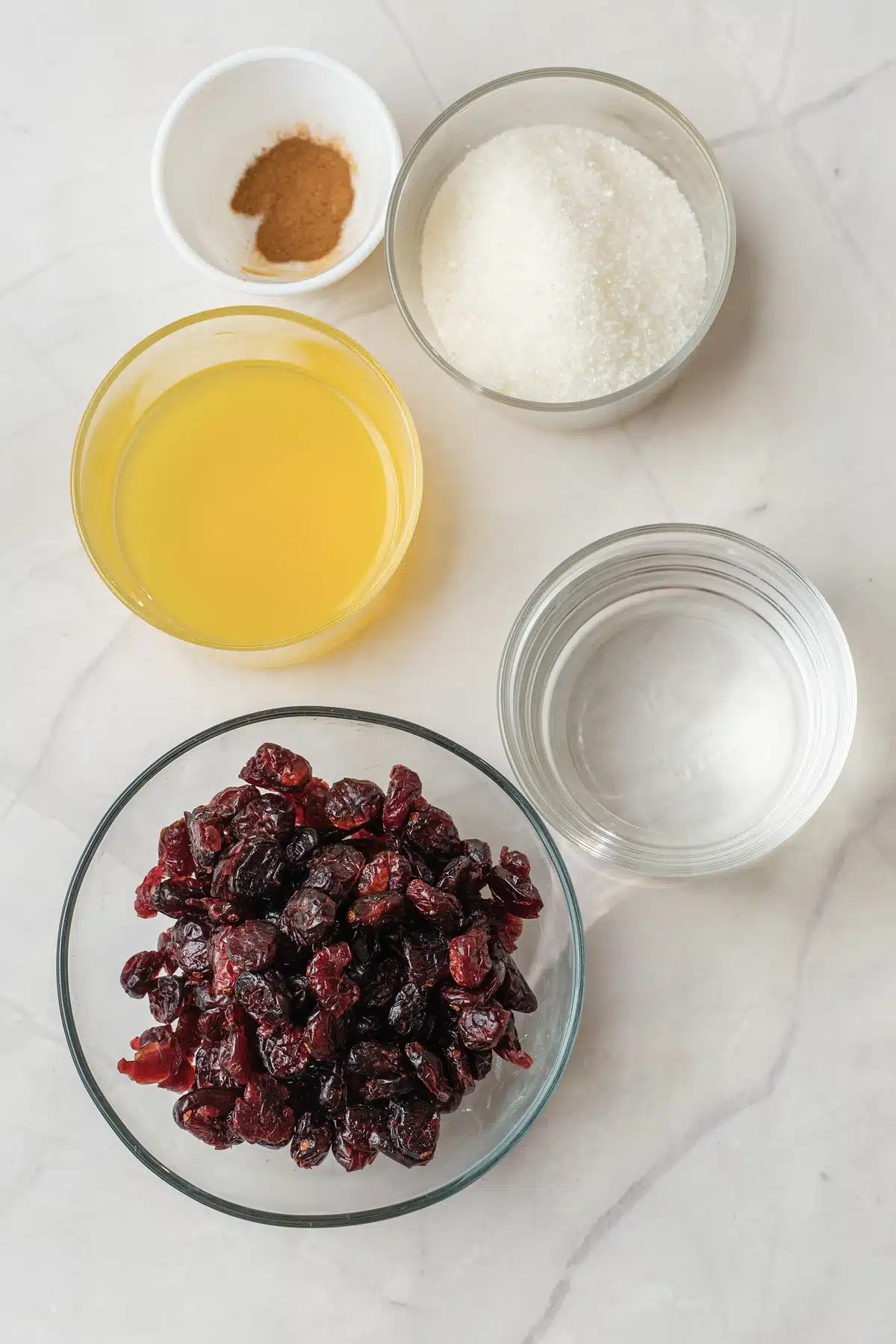
The flat lay above shows the dried cranberry version, so the bowl of berries is dried fruit. The classic cranberry sauce in the recipe card uses the same sugar, water, orange juice and cinnamon with a bag of fresh or frozen cranberries in their place. Amounts for the classic are in the card, and the dried version is written out in full under Variations.
- Fresh cranberries. One 12-ounce bag, about three cups. Rinse them and pick out any that are soft, wrinkled or pale. Frozen berries go straight into the pot without thawing and take a minute or two longer.
- Granulated sugar. Three-quarters of a cup makes a sauce that is tangy and sweet in that order. Go up to a full cup if you like it closer to the canned kind, or down to a half cup if it is going next to a sweet glazed ham.
- Water. A half cup. The berries release their own juice as they burst, so it does not need more than that.
- Orange juice. A half cup, fresh squeezed if you can. It softens the tartness and adds a fragrance the water alone cannot.
- Orange zest. A teaspoon, stirred in at the end so the oils stay bright. Zest the orange before you juice it.
- Ground cinnamon. A quarter teaspoon, and it is optional. It is a background note, not a cinnamon sauce.
For the Dried Cranberry Version
One and a half cups of sweetened dried cranberries replace the fresh berries, and because they are already sweetened, the sugar drops to a quarter cup. The orange juice goes up to a full cup so there is enough liquid to plump them. Everything else stays the same.
Fresh or Frozen Cranberries?
Both work, and in a blind tasting nobody could tell them apart. Fresh cranberries are sold in 12-ounce bags from October through December, and they keep in the fridge for a month or in the freezer for a year, so buy an extra bag in November and you can make cranberry sauce for Easter. Frozen berries are picked and frozen at peak ripeness, and they go into the pot straight from the bag.
The berries to avoid are the soft, shriveled or brown ones at the bottom of an old bag. A good cranberry is firm and bounces if you drop it, which is literally how growers sort them. Pick through the bag once and toss anything that has gone soft.
How To Make Cranberry Sauce on the Stovetop
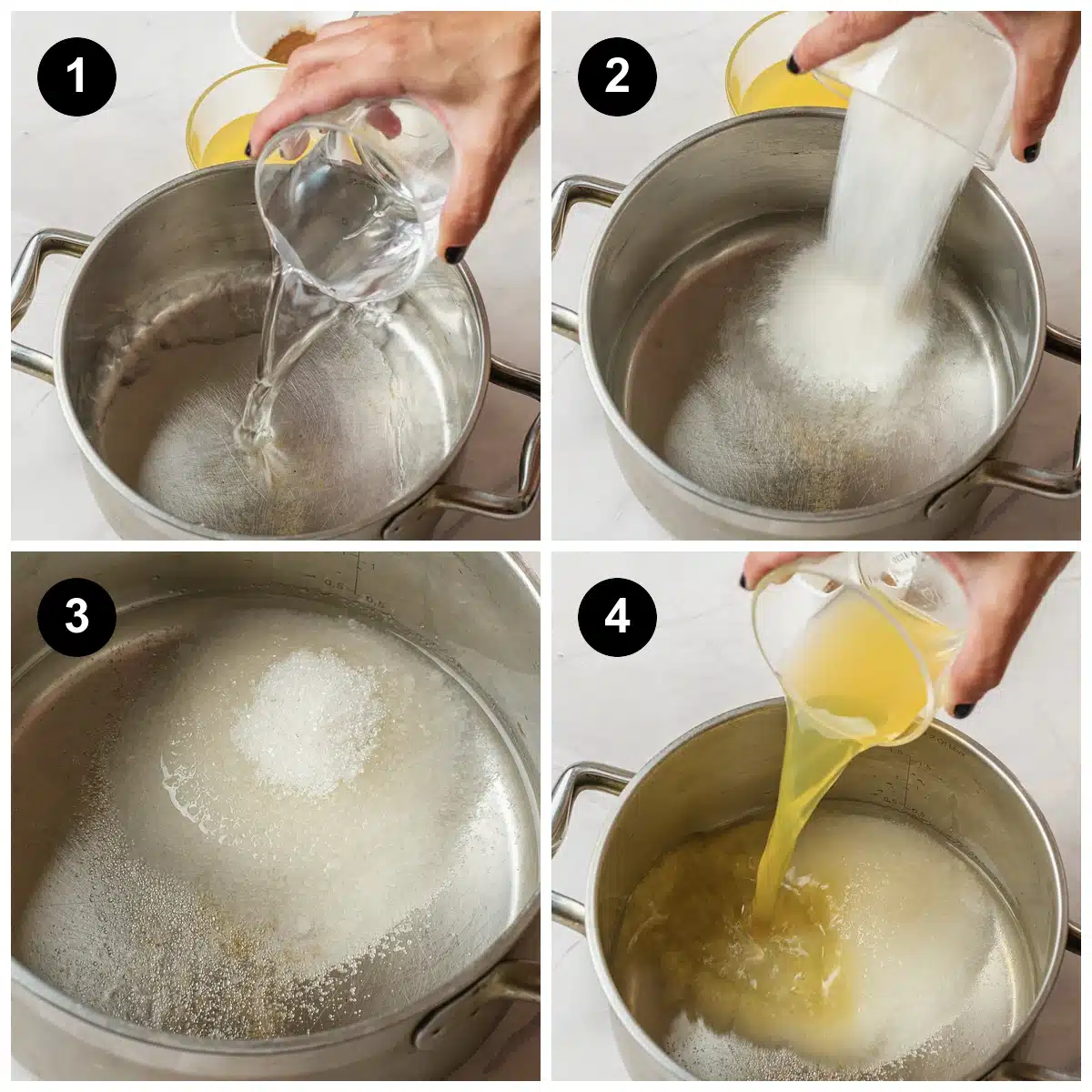
Zest and juice the orange first, and rinse the berries. From there the whole thing is one pot on medium heat.
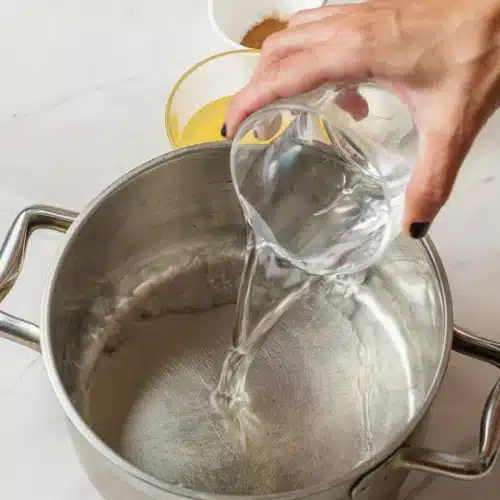
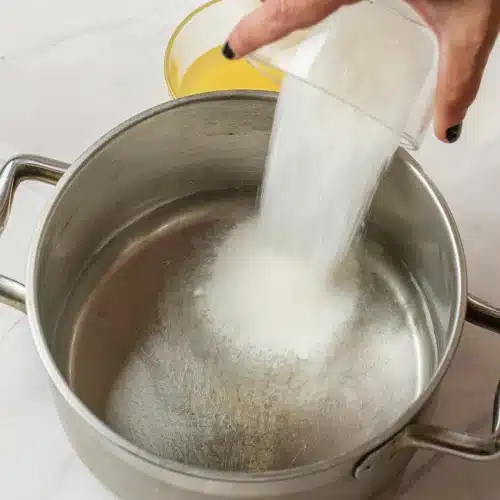
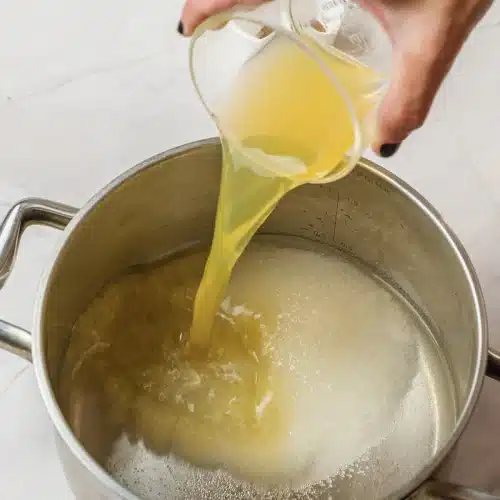
First, put the sugar, water and orange juice into a medium saucepan and set it over medium heat. Stir until the sugar has dissolved and the liquid looks clear and syrupy, which takes two or three minutes.
Next, add the cranberries and bring the pot to a gentle boil. Within four or five minutes you will hear the berries start to pop. That popping is the skins splitting, and it is the sound of the sauce beginning to thicken.
Then turn the heat down to medium-low and let it simmer for ten to fifteen minutes, stirring often so nothing catches on the bottom. Most of the berries will have burst by the end, and the liquid around them will have turned from watery to glossy and thick.
Finishing the Sauce
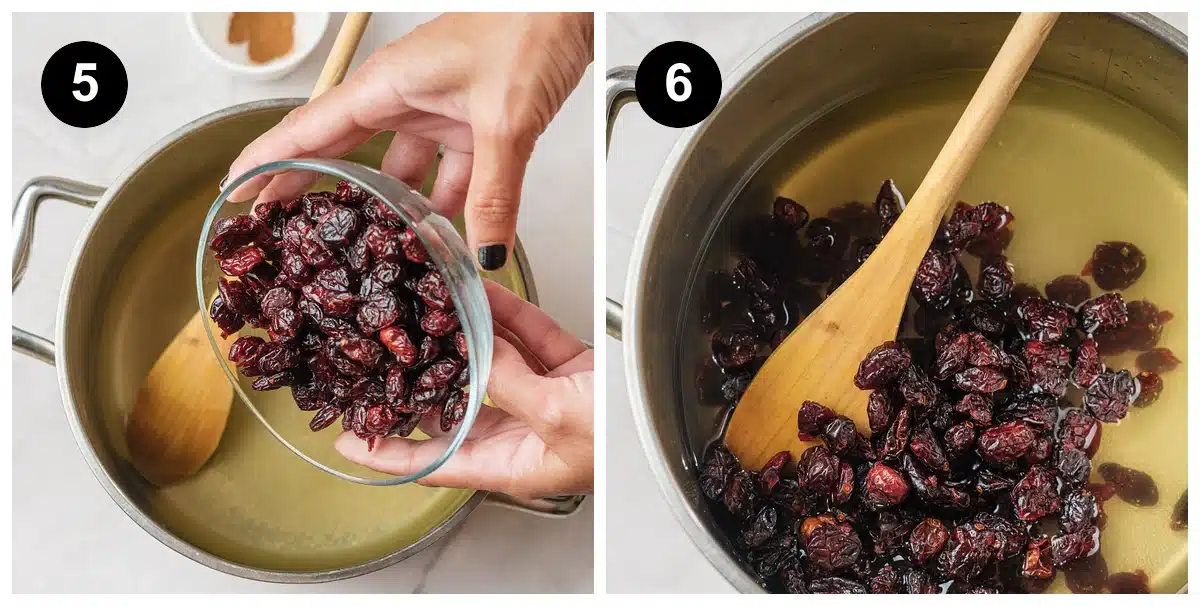
After that, take the pan off the heat and stir in the orange zest and the cinnamon. If you like a little texture, hold back a half cup of raw berries at the start and stir them in now; they soften in the residual heat without collapsing.
Finally, let the cranberry sauce cool in the pan for twenty minutes, then transfer it to a bowl and chill it. It thickens a great deal as it cools, so do not judge the texture while it is hot.
How To Tell When Cranberry Sauce Is Done
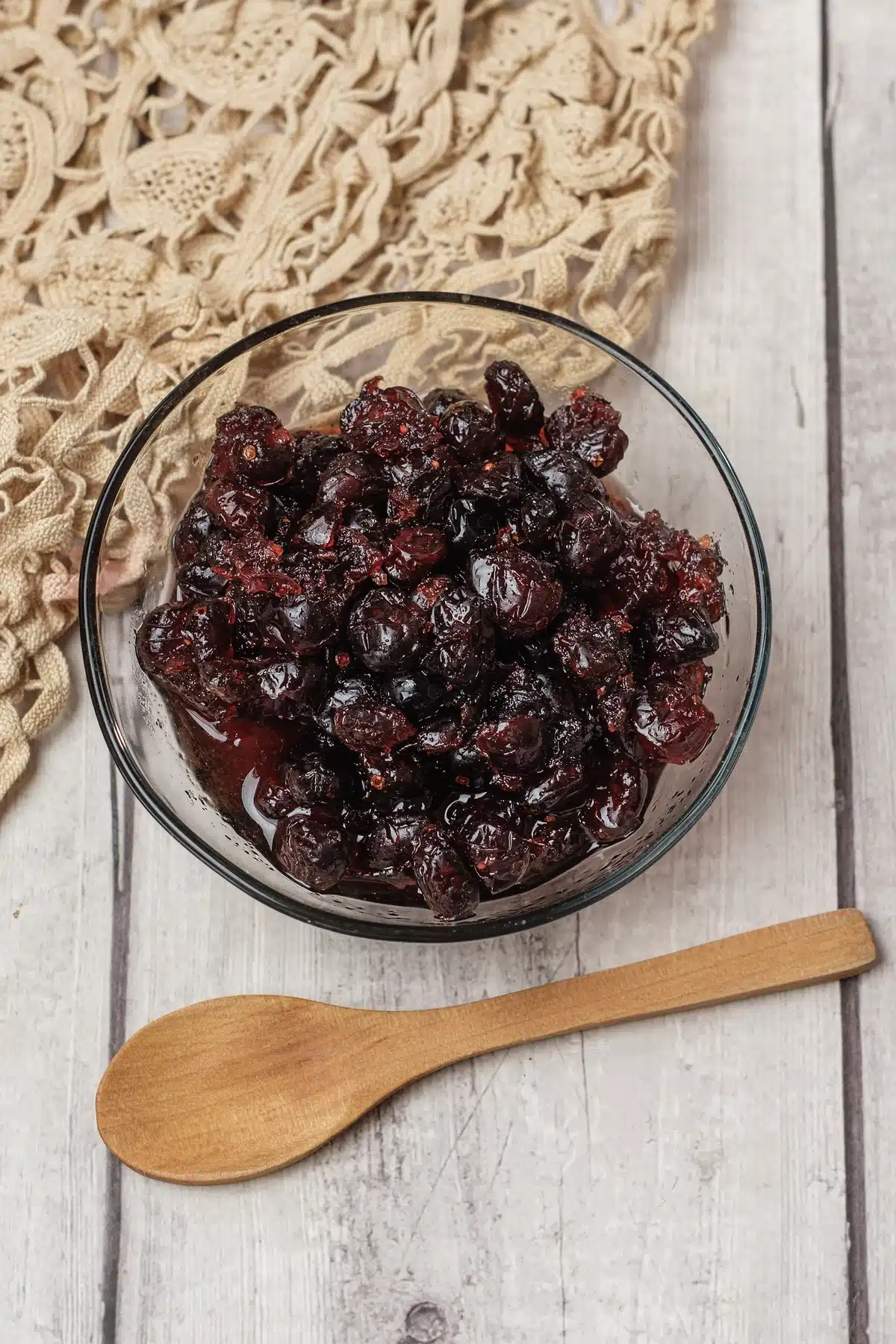
The berries are the tell. When most of them have burst and only a few whole ones are left, the sauce has released the pectin it needs to set. The liquid around the berries should look glossy rather than watery, and a spoon dragged across the bottom of the pan should leave a trail that closes slowly.
There is also a cold-plate test borrowed from jam making. Drop a spoonful onto a plate that has been in the freezer for ten minutes, wait thirty seconds, and push it with a fingertip. Cranberry sauce that wrinkles and holds is done. If it runs like juice, simmer for three more minutes and test again.
The dried cranberry version in the photographs is different. It never gels, because dried fruit has lost the pectin-rich juice that fresh berries hold, so it is done when the berries are plump and glossy and the liquid has reduced to a thin syrup, about ten minutes.
Make It Ahead
This is the easiest dish on the holiday menu to make early, and it is one of the few that improves for it. Make cranberry sauce three or four days before the meal, cover it and leave it in the fridge. The flavors settle, the orange works through the whole bowl, and the texture firms into a proper set. Take it out an hour before dinner if you like it at room temperature, or serve it cold straight from the fridge.
If it sets stiffer than you want, stir in a tablespoon of orange juice or water and it loosens right up.
Storing Cranberry Sauce
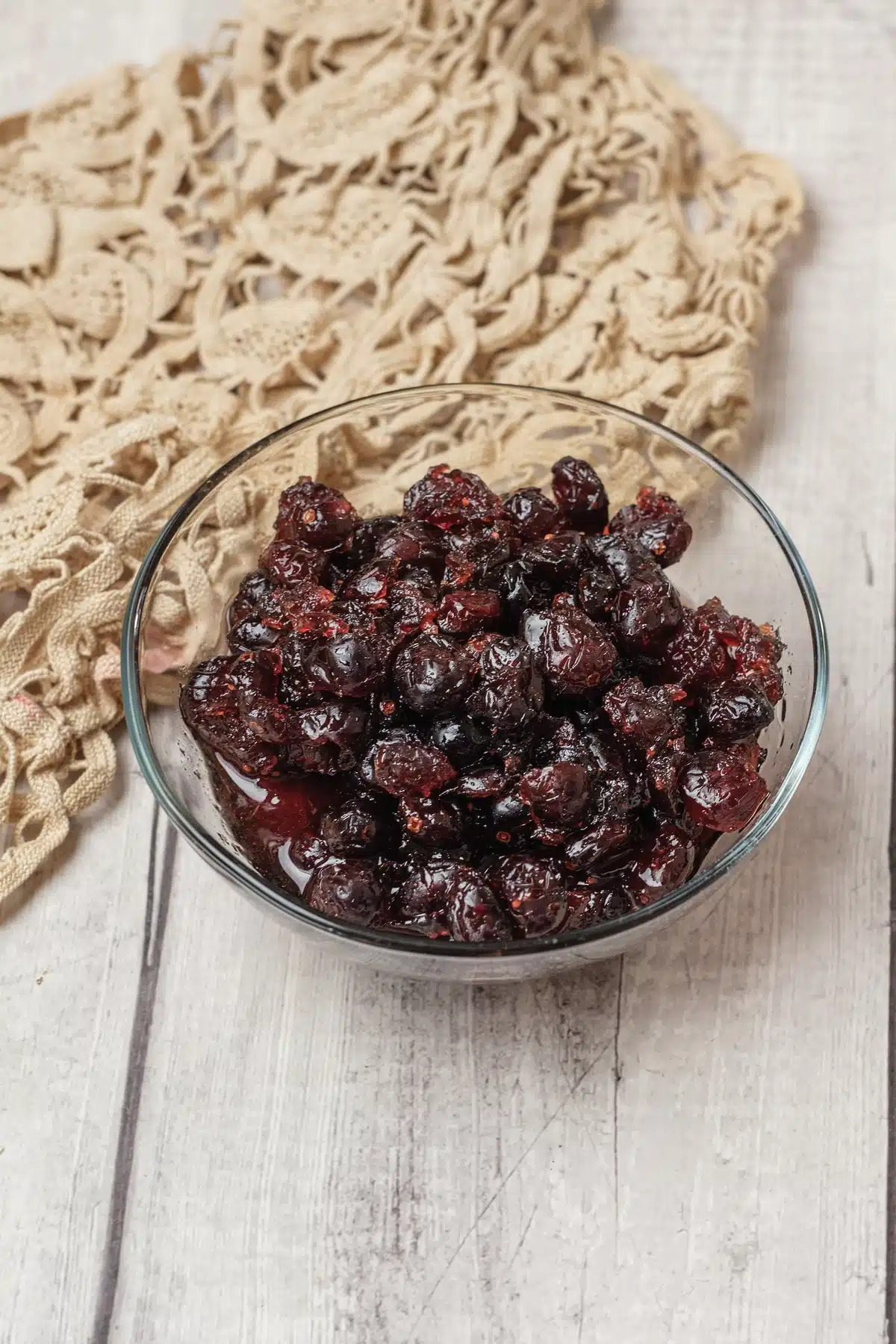
Cool it to room temperature, cover it and refrigerate it in an airtight container. Sugar and acid are both preservatives, and cranberry sauce keeps for ten days in the fridge without any change in flavor. The dried cranberry version keeps a week.
It freezes well too. Pack it into a freezer container with a half inch of headroom, or spoon it into an ice cube tray for single portions, and freeze for up to three months. Thaw it overnight in the fridge and give it a stir; the texture comes back with no separation.
If you have made a large batch, a hot water bath canner turns it into shelf-stable jars, but follow a tested canning recipe for that rather than this one, because the sugar ratio matters for safe storage.
Variations and Substitutions
The Dried Cranberry Version (Pictured)
This is the sauce in every photograph on this page, and it is the one to make in March when there is not a fresh cranberry in the state. Sweetened dried cranberries are simmered in orange juice and water until they swell up and turn glossy, and the result is a loose, whole-berry sauce that is sweeter and chewier than the classic. It does not gel, so serve it in a bowl with a spoon rather than sliced.
Ingredients. 1 1/2 cups sweetened dried cranberries; 1 cup orange juice; 1/2 cup water; 1/4 cup granulated sugar; 1 teaspoon orange zest; and 1/4 teaspoon ground cinnamon, which is optional.
Method. Put the water, sugar and orange juice into a medium saucepan over medium heat and stir until the sugar dissolves. Add the dried cranberries, bring the pot to a simmer, and cook for about ten minutes, stirring now and then, until the berries are plump and most of the liquid has cooked down to a thin syrup. Take it off the heat, stir in the zest and cinnamon, and let it cool. It thickens a little as it cools but stays loose. Makes about two cups.
Other Ways to Change It
Maple. Swap the sugar for a half cup of maple syrup. It makes a darker, rounder cranberry sauce that is very good with roast pork.
Port or red wine. Replace the water with port or a dry red wine and add a strip of orange peel while it simmers. The ginger cranberry relish on this site goes further down that road with fresh ginger and red wine.
Spiced. A cinnamon stick, two whole cloves and a star anise in the pot, all fished out before serving, give it a mulled flavor without any powder clouding the sauce.
Smooth. Cook it five minutes longer and push it through a sieve for a jellied sauce that slices like the canned kind, only better.
Less sugar. Half a cup of sugar makes a bracingly tart cranberry sauce that suits a sweet main like glazed ham. Taste it hot and stir in more sugar if you need to; it dissolves instantly.
What to Serve with Cranberry Sauce
Turkey is the obvious partner, and a spoonful next to a turkey pot pie the day after works just as well as it did on the roast. It is also the sauce for pork. Try it beside apricot balsamic pork tenderloin, where the tartness cuts straight through the glaze.
On the table, cranberry sauce belongs next to soft bread. A batch of Texas Roadhouse rolls with cinnamon honey butter is the classic, and leftover sauce spread on one of those rolls with sliced turkey is the best sandwich of the year.
Beyond the holiday, it is very good swirled into plain yogurt, spooned over cheesecake or a wheel of baked brie, and stirred into the pan juices of roast chicken for a quick sauce.
Cranberry Sauce FAQ
Frequently Asked Questions
Why is my cranberry sauce bitter?
Usually it was cooked too long. The skins turn bitter when the berries are simmered well past the popping stage, so pull the sauce ten to fifteen minutes after it comes to a boil. A pinch of salt and another tablespoon of sugar soften a bitter batch.
Why did my cranberry sauce not set?
Either it was not cooked long enough for the berries to burst and release their pectin, or you are judging it hot. Cranberry sauce is loose on the stove and sets in the fridge. If it is still runny after chilling, simmer it five minutes more.
Can I make cranberry sauce with dried cranberries?
Yes, and that is the version in the photographs. Simmer 1 1/2 cups of sweetened dried cranberries in orange juice and water with a little sugar for about ten minutes until they plump. It stays loose and whole-berry rather than gelling. The full method is under Variations.
Can I use frozen cranberries?
Yes, straight from the freezer with no thawing. Add a minute or two to the simmer. Frozen berries are picked at peak season, and the finished sauce is indistinguishable from one made with fresh.
More Questions About Cranberries
Good to Know
How far ahead can I make cranberry sauce?
Up to ten days. Three or four days ahead is the sweet spot, because the flavor improves for the first few days and then holds.
How do I thicken cranberry sauce?
Simmer it uncovered for a few more minutes, or mash some of the berries against the side of the pot to release more pectin. It also thickens as it cools, so chill it before deciding it needs more.
Can I double the recipe?
Yes, in a larger pot. Double everything and expect the simmer to take five minutes longer, because more liquid takes longer to reduce.
Make the classic a few days before the holiday, or make the dried cranberry version any night you want it, and either way there is a bowl of cranberry sauce in the fridge waiting for the turkey, the pork, or a warm roll and a slice of leftover turkey.
Cranberry Sauce with Orange
Save this recipe
Enter your email and I’ll send this recipe straight to your inbox.
Ingredients
Cranberry Sauce
- 1/2 cup water
- 3/4 cup granulated sugar
- 12 oz fresh or frozen cranberries about 3 cups, rinsed and picked over
- 1/2 cup orange juice fresh squeezed, from about 2 oranges
- 1 tsp orange zest from 1 orange
- 1/4 tsp ground cinnamon optional
Equipment
- Medium saucepan
- Spoon
- Colander
- Zester
Instructions
Make the Syrup
- Start with the water. Zest and juice the oranges and rinse the cranberries, setting aside a half cup of the firmest berries if you want extra texture at the end. Pour the water into a medium saucepan.

- Add the sugar. Tip the sugar into the water and set the pan over medium heat.
- Dissolve it. Stir for 2 to 3 minutes until the sugar has dissolved and the liquid looks clear and syrupy.
- Pour in the orange juice. Add the orange juice and stir it through the syrup.

Cook the Cranberries
- Add the cranberries. Tip in the cranberries and bring the pan to a gentle boil. Within 4 to 5 minutes the berries will start to pop.
- Simmer. Reduce the heat to medium-low and simmer for 10 to 15 minutes, stirring often, until most of the berries have burst and the liquid looks glossy and thick.
Finish and Cool
- Add the zest and cinnamon. Take the pan off the heat and stir in the orange zest, the cinnamon and the reserved raw berries, if using.
- Cool and chill. Let the sauce cool in the pan for 20 minutes, then transfer it to a bowl and refrigerate until set. Serve chilled or at room temperature.