
Most rice cooker recipes fail for the same reason: the machine was never allowed to do the one thing it is genuinely good at. A rice cooker is not a small slow cooker and it is not a hot plate with a lid. It is a pot with a thermostat that senses the exact moment free water disappears, and the rice cooker recipes below are all built around that single behavior.

- One pot, one switch, and nothing to drain or watch
- Steel-cut oats cook unattended while you get dressed
- The macaroni cooks in the sauce, so the starch stays where it belongs
- A sponge cake with no oven, useful in a dorm room or a heatwave
- Every quantity has been re-derived, including the ones the old version got badly wrong
- The doneness rules transfer to whatever you try next
Once you understand what the switch is measuring, the appliance stops being a one-trick box at the back of the cupboard. Steel-cut oats that would want half an hour of stirring cook themselves. Macaroni cooks in its own sauce with nothing to drain. A sponge cake bakes with no oven at all. The Wolfgang Puck cooker in these photographs is the plain, switch-and-warm machine these rice cooker recipes were written for.


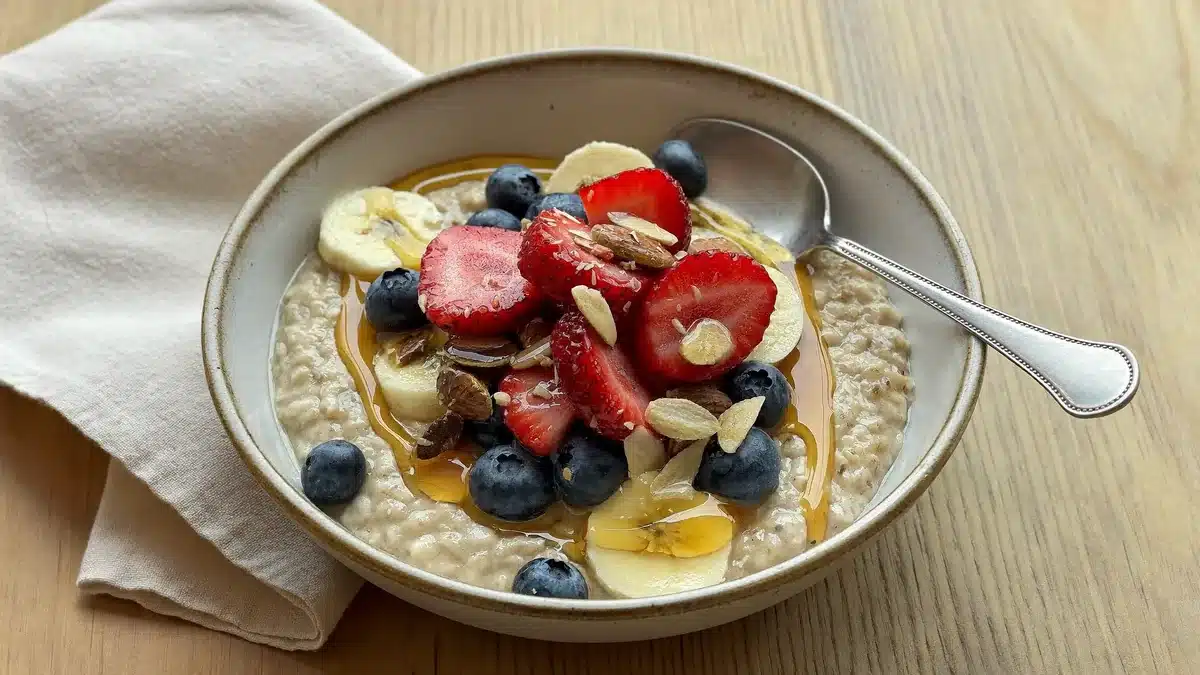
Everything below assumes a plain cooker with a Cook switch and a Keep Warm light, not a programmable multicooker.
- What the Cook Switch Is Actually Measuring
- Three Rice Cooker Recipes Worth Making
- Ingredient Notes for These Rice Cooker Recipes
- How To Make Rice Cooker Steel-Cut Oatmeal
- How To Tell When Rice Cooker Recipes Are Done
- Using a Wolfgang Puck Rice Cooker
- Make It Ahead
- Storing and Reheating Rice Cooker Recipes
- Variations and Substitutions
- What to Serve with These Rice Cooker Recipes
- Rice Cooker Recipes FAQ
What the Cook Switch Is Actually Measuring
There is one mechanism inside a basic rice cooker, and it explains every success and every failure you will have with it.
The thermostat watches for 212F, not the clock. While there is free water in the pot, the contents cannot climb past boiling point however much heat you pour in. The moment the last of that water is absorbed or evaporated, the temperature of the pot jumps, a spring-loaded magnet lets go, and the switch flips to Keep Warm. Nothing is timed. The machine is simply detecting dryness.
That is why the liquid ratio is the recipe. With rice you use the ratio to control texture. In every other kind of rice cooker recipe you use it to control cooking time, because more water means a longer run before the switch trips. Get it wrong and there is no dial to compensate with.
Keep Warm holds around 150F to 160F. Hot enough to finish softening a grain, melt cheese and set the last of a custard. Far too cool to brown anything or to rescue an underbaked cake. A great deal of bad advice about rice cooker recipes involves treating Keep Warm as a second oven. It is not one.
Foam is the enemy. Starchy liquids climb the sides and come out of the steam vent. This is the most common disaster in rice cooker recipes, and a teaspoon of butter or oil in the pot prevents almost all of it.
Hold those four facts and you can judge new rice cooker recipes before you try them.
Save this recipe
Enter your email and I’ll send this recipe straight to your inbox.
Three Rice Cooker Recipes Worth Making

Three rice cooker recipes, three different ways of exploiting the same switch. The oatmeal has a full recipe card at the bottom of this post; the other two are written out in full here.
Steel-Cut Oatmeal, the Easiest Win
Steel-cut oats are groats chopped into pieces rather than rolled flat, which is why Illinois Extension puts their stovetop time at twenty to thirty minutes against five for rolled oats. Half an hour of stirring is exactly the chore a machine should be taking off your hands, which is why this is the first of these rice cooker recipes anyone should try.
Use 1 cup steel-cut oats to 3 cups water, half a teaspoon of fine salt and a teaspoon of butter. The method, timings and finishing are in the recipe card. The old version called for 3/4 cup of oats to 2 cups of water and promised breakfast in ten minutes, which is roughly half the water and a third of the time these oats need.
Rice Cooker Mac and Cheese
This is the one people are most surprised by. The pasta cooks in seasoned liquid that becomes the sauce, so nothing is drained and none of the starch is thrown away.
- 1 1/2 cups dried elbow macaroni
- 1 1/2 cups chicken broth
- 1 cup heavy cream
- 3/4 cup coarsely grated sharp cheddar
- 4 ounces low-moisture mozzarella, grated (about 1 cup)
- 1/4 cup finely grated parmesan
- 1/2 teaspoon dry mustard
- 1/2 teaspoon smoked paprika
- 1 pinch cayenne, optional
- 1/4 teaspoon kosher salt, plus more to taste
- 1/4 teaspoon black pepper
Stir the macaroni, broth, cream, mustard, paprika, cayenne, salt and pepper together in the cold pot. Close the lid, press Cook, and stir every four or five minutes so the pasta on the bottom does not catch. The switch flips to Keep Warm in about fifteen minutes, when the pasta has drunk most of the liquid. Tip in all three cheeses at that moment, while the pot is at its hottest, and stir until the sauce is smooth. Let it stand five minutes on Keep Warm to thicken.
The version this post used to carry told you to press Cook a second time after the cheese went in, and described the layer forming on the bottom as browning. Cheese on a dry pot base at full power scorches; it does not brown. Do not run a second cycle.
Rice Cooker Sponge Cake
A Japanese trick, and the one that convinces people the appliance earns its counter space. The batter is a cream cheese base lightened with meringue, and the gentle heat of a single cook cycle sets it without a crust.
- 200 grams cream cheese, well softened
- 3 large eggs, separated
- 150 ml heavy cream
- 70 grams pancake mix
- 1/2 cup confectioners sugar, divided
- 2 tablespoons melted butter, for the pot
- 1 pinch fine salt
Beat the cream cheese until there is not a lump left, then beat in the yolks one at a time, the cream, and finally the pancake mix with 1/4 cup of the sugar and the salt. In a clean bowl whip the whites to soft peaks, add the remaining 1/4 cup of sugar, and whip to a glossy medium peak. Fold the meringue into the base in three additions, brush the pot generously with melted butter, and pour the batter in. Press Cook. When the switch trips, usually around fifty minutes, push a skewer into the middle; if it comes out wet, close the lid and run one more cycle. Cool in the pot for ten minutes before you invert it.
The old version listed a full cup of confectioners sugar and then used only half of it, and had you beating heavy cream into the finished meringue, which knocks the air straight back out. Both are corrected above.
Ingredient Notes for These Rice Cooker Recipes
Short lists, and in a sealed pot every item matters more than it would on a stove.
- Steel-cut oats: not rolled, not instant. Rolled oats at three parts water to one turn to glue. If rolled is all you have, drop to 2 1/2 cups of liquid and expect a softer porridge.
- Butter or a neutral oil: a teaspoon, purely to break the foam. This is the difference between breakfast and a starchy puddle under the machine.
- Chicken broth: the macaroni takes its whole seasoning from the cooking liquid, so a bland broth gives bland pasta. Water plus a good bouillon cube is genuinely fine.
- Cheese you grate yourself: bagged shreds are dusted with anti-caking starch, which turns the sauce grainy when it melts off the heat.
- Low-moisture mozzarella: the stretch. Fresh mozzarella releases water and thins the sauce.
- Pancake mix: it already carries the leavening, sugar and salt the cake needs, which is why 70 grams of it behaves better here than 70 grams of plain flour.
- Cream cheese at true room temperature: cold cream cheese leaves lumps that never disappear, and the batter is too loose to beat them out later.
A cooker, a spatula and one mixing bowl cover all three of these rice cooker recipes.
How To Make Rice Cooker Steel-Cut Oatmeal
Five minutes of work and about half an hour of leaving it alone.
- First, rub the inside of the cooking pot with the butter, right up the sides where the foam will want to climb.
- Next, add the oats, the water and the salt, and give it one stir. Do not fill the pot past a third of its depth, whatever you scale the recipe to.
- Then close the lid and press Cook. Leave it alone for 30 to 35 minutes, until the switch drops to Keep Warm.
- After that, stir in the raisins and let the pot sit on Keep Warm for 10 minutes. The oats keep absorbing and the raisins plump.
- Finally, stir in the vanilla and cinnamon off the heat, and loosen with a splash of milk if it has gone tighter than you like.
How To Tell When Rice Cooker Recipes Are Done
The switch is a dryness sensor, not a doneness sensor, and knowing the difference is most of the skill in rice cooker recipes.
Oatmeal: taste a grain, do not look at the pot. Steel-cut oats should be tender with a little chew at the center. If the switch has tripped and they are still hard, the ratio was short. Add half a cup of hot water, stir and press Cook again.
Macaroni: it should trip while the pasta is still just short of soft. The five minutes on Keep Warm after the cheese goes in finishes it. Pasta that is already soft when the switch trips will be mush by the time you eat.
Cake: a skewer, every time. A cake that tripped the switch early because the batter dried at the edges is still raw in the middle. One more cycle fixes it; Keep Warm never will.
Rice: let it rest ten minutes before the lid comes off. The grains at the top are drier than the ones at the bottom, and the rest evens them out.
Anything at all: if the switch trips within about eight minutes, something is wrong. Either the pot was barely filled or a stuck grain is fooling the thermostat.
Using a Wolfgang Puck Rice Cooker
The cooker in these pictures is the plain Wolfgang Puck model, and it is worth being clear about what it is, because much of what is written about it online describes a different appliance entirely.
It is a switch-and-warm cooker, not a pressure cooker. There is no yogurt mode, no porridge program and no multigrain setting. There is a lever that goes down for Cook and pops up for Keep Warm, which is all these rice cooker recipes need.
Use the plastic cup that came in the box. It holds about 180 ml, not a US cup of 240 ml. Every water mark inside the pot is calibrated to that cup, and mixing the two is the usual reason a first pot comes out wet.
Rinse white rice, then match the water line to the number of cups you put in. Press the lever, wait for it to pop, and rest the rice ten minutes with the lid shut.
Brown rice needs about 2 cups of water per cup of rice and often a second cycle, because there is no brown rice program to lengthen the first one. Give it ten minutes on Keep Warm in between.
The lid and the inner pot lift out and wash by hand. The base never goes near water, and the condensation cup at the back needs emptying more often than people expect.
Make It Ahead
Two of the three hold well and the third does not, which is worth knowing before you plan around them.
Oatmeal is the best batch-cooking candidate of the three rice cooker recipes here. Cook a full pot, cool it, and it portions into jars for four days of breakfasts.
Soak the oats overnight if you want it faster. Oats left in their measured water overnight trip the switch about ten minutes sooner and come out slightly creamier.
Macaroni should be eaten straight away. The sauce is emulsified rather than thickened with flour, and it tightens as it cools.
The cake is better on day two, wrapped and refrigerated once it is completely cool. It slices more cleanly cold.
Grate the cheese in advance. It is the only part of the mac and cheese that takes any real time.
Storing and Reheating Rice Cooker Recipes
- Oatmeal: up to 5 days refrigerated. Reheat with a splash of milk, because it sets firm and cold porridge will not loosen on its own.
- Mac and cheese: 3 days refrigerated. Reheat gently with a tablespoon of milk per portion; a hot pan splits the sauce.
- Sponge cake: 3 days refrigerated under a cover, or 2 days at cool room temperature.
- Freezing: oatmeal freezes for 3 months in portions and the cake freezes well wrapped twice. The macaroni does not freeze at all.
- Never store food in the cooking pot. The nonstick coating is thin, and cold food scraped out of it takes the coating with it.
Variations and Substitutions
The ratios are structural. Almost everything else in these rice cooker recipes can move.
- Savory oats: drop the raisins, vanilla and cinnamon, cook in broth instead of water, and finish with a soft egg and scallions.
- Apple pie oats: a diced apple in from the start, and the cinnamon doubled.
- Grown-up macaroni: swap half the cheddar for gruyere and stir a spoonful of dijon through at the end.
- Add protein to the pasta: shredded cooked chicken or chopped ham folded in with the cheese, which turns it into supper.
- Lemon cake: the zest of a whole lemon in the cream cheese base, and no sugar dusted on top.
- Dairy-free porridge: water and coconut oil in place of the milk and butter, finished with maple syrup.
Beyond these three, the same logic covers a pot of seasoned dirty rice or a long, slow rice pudding if you would rather hand the job to a different appliance.
What to Serve with These Rice Cooker Recipes
None of these rice cooker recipes is a whole meal on its own, and each wants something sharp or crunchy beside it.
- Yogurt and a spoonful of jam alongside the oatmeal, cold against hot.
- A green salad with a hard mustard vinaigrette next to the macaroni.
- Quick pickles or cornichons, which cut a cheese sauce better than anything else.
- Berries and softly whipped cream with the sponge cake.
- My baked mac and cheese for the days you want a crust, which no cooker will ever give you.
- Or a single-serving mug pancake, filed under the same idea: one appliance, one bowl, five minutes.
Here is what readers ask most often about rice cooker recipes.
Rice Cooker Recipes FAQ
Frequently Asked Questions
Can I cook brown rice in a Wolfgang Puck rice cooker?
Yes, but not on a single cycle. Use about 2 cups of water for every cup of brown rice, run the Cook cycle, and let it sit ten minutes on Keep Warm. If the grains are still firm, press Cook a second time; the water left in the pot keeps the switch down for another few minutes rather than scorching anything. A plain cooker has no brown rice program to lengthen the first cycle for you, which is the whole reason two cycles are needed.
Why did my rice cooker boil over?
Starch foam, almost always. Oats, pasta and unrinsed rice all throw it. Rub a teaspoon of butter or oil around the inside of the pot before anything else goes in, rinse rice until the water runs nearly clear, and never fill past a third of the depth for anything that foams. If it is already climbing, crack the lid for ten seconds rather than lifting it off.
Is Keep Warm safe to leave on for hours?
For rice, yes, for up to about four hours, though it dries and yellows at the edges after two. For anything with dairy or eggs in it, no. Keep Warm sits around 150F to 160F, which is fine for holding but is not a cooking temperature, and a cheese sauce held that long will split. Take the pot out and refrigerate it instead.
More Questions About Cooking in a Rice Cooker
Good to Know
Do I need the little plastic cup that came with the cooker?
You need to know that it is not a US measuring cup. It holds roughly 180 ml against a US cup’s 240 ml, and every water line marked inside the pot assumes it. If you have lost it, ignore the internal water lines altogether and measure both the rice and the water in ordinary cups, using the ratios rather than the marks.
Can I open the lid while it is cooking?
For rice, no. Steam is doing a share of the work and you lose it instantly. For the other rice cooker recipes on this page you not only can but should: the macaroni needs stirring every few minutes to stop it catching, and the oats want one look about halfway through. The switch does not reset when you open the lid.
Which of these should I make first?
The oatmeal, because it is the most forgiving and it teaches you what the switch feels like on your own machine. Once you know roughly how long a cycle runs with three cups of liquid in the pot, the other rice cooker recipes here stop being guesswork. That timing varies more between cookers than any recipe will admit.
Treat the machine as a dryness detector rather than a saucepan and rice cooker recipes stop being a novelty. If you want another one-appliance dinner with nothing to drain, my chicken and rice bake is the natural next thing to try.
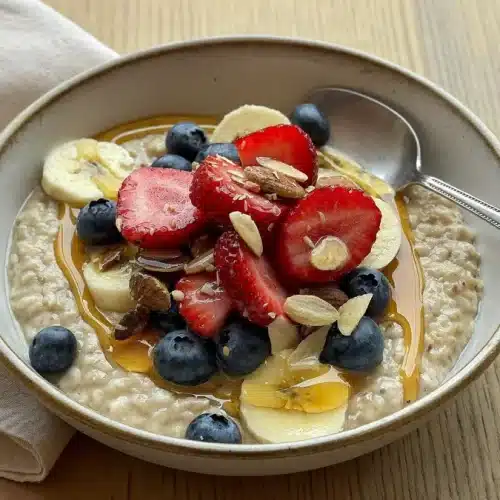
Rice Cooker Steel-Cut Oatmeal
Save this recipe
Enter your email and I’ll send this recipe straight to your inbox.
Ingredients
The Porridge
- 1 teaspoon unsalted butter for the pot walls, and it breaks the foam
- 1 cup steel-cut oats not rolled and not instant
- 3 cups water or 2 cups water and 1 cup whole milk
- 1/2 teaspoon fine sea salt
To Finish
- 1/3 cup raisins or chopped dried apricots
- 1/2 teaspoon pure vanilla extract stirred in off the heat
- 1/2 teaspoon ground cinnamon
- 2 tablespoons whole milk optional, to loosen
Instructions
Set Up the Pot
- Rub the butter around the inside of the cooking pot, right up the sides. Foam climbs the walls long before it reaches the steam vent, and a greased wall is what stops it getting there.
- Add the oats, the water and the salt and stir once. Do not fill the pot past a third of its depth, whatever you scale the recipe to.
Cook and Finish
- Close the lid and press Cook. Leave it entirely alone for 30 to 35 minutes, until the switch drops to Keep Warm on its own.
- Stir in the raisins and leave the pot on Keep Warm for 10 minutes. The oats keep absorbing in that time and the raisins plump.
- Switch the cooker off, stir in the vanilla and cinnamon, and loosen with the milk if it has set tighter than you want. Taste a grain before you serve: it should be tender with a little chew at the center. If it is still hard, add half a cup of hot water and run the Cook cycle again.