
Almost everyone searching for San Giorgio baked ziti is looking for one specific thing: the recipe that used to be printed on the back of the box, the one on the index card that got lost in a move.
Good news. It still exists, the brand still publishes it, and I have written out below both of the baked ziti recipes San Giorgio puts on its own website, because they are not the same dish at all. Then I have given you the San Giorgio baked ziti I actually make, which is the box recipe with the three things fixed that make a pan of it come out watery.
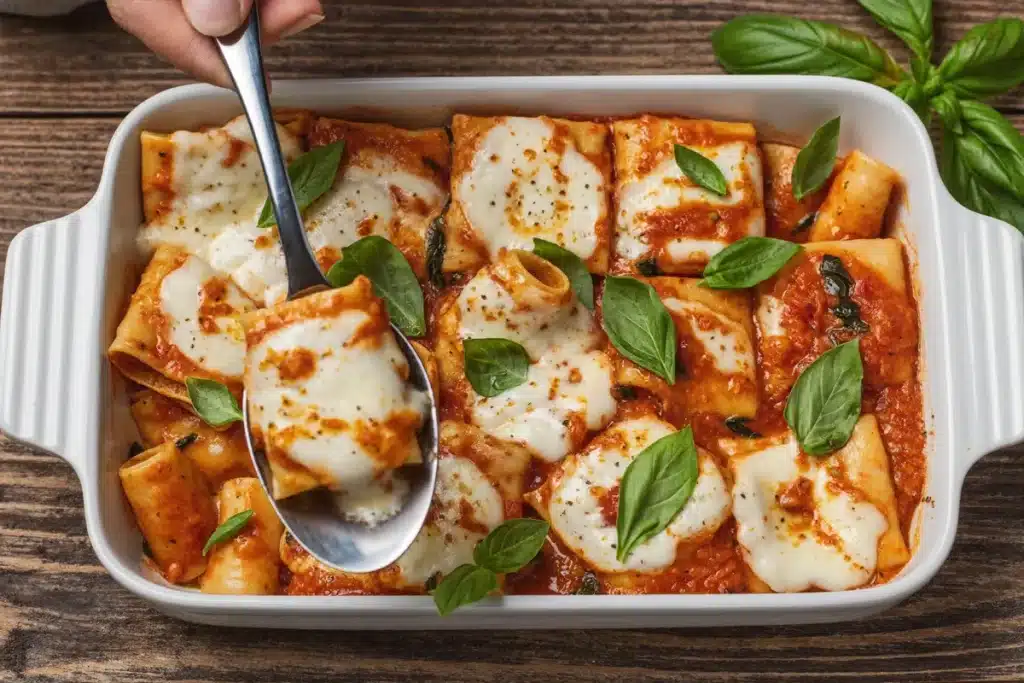
- The nostalgic box recipe, written out properly with weights and timings
- One pound of pasta feeds eight people for the price of a pizza
- Everything goes in a single 9-by-13 dish, so there is one pan to wash
- It assembles a day ahead and bakes straight from the refrigerator
- Freezes for three months, baked or unbaked, which is why it feeds new parents
- Ricotta bound with an egg means it slices instead of sliding apart

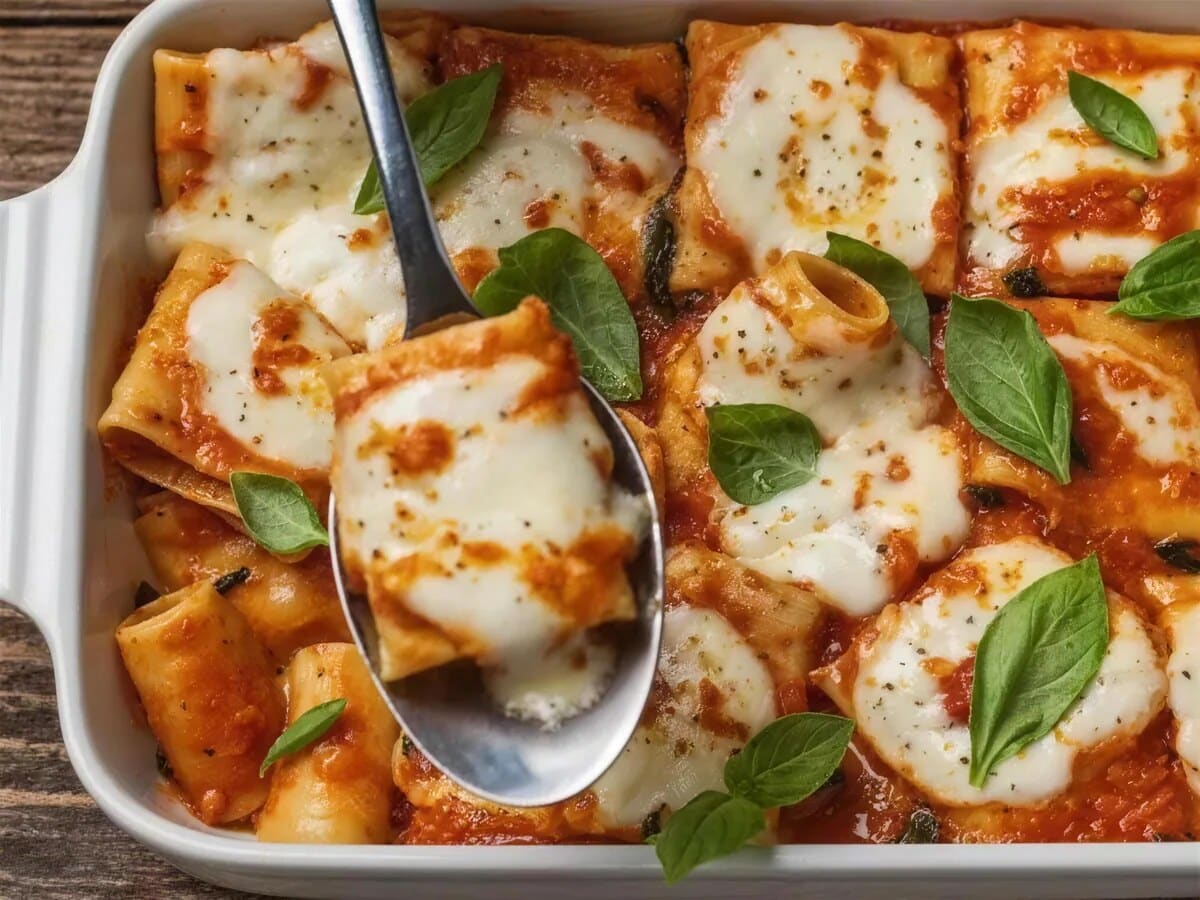
I am not affiliated with the brand. Any box of ziti works here; the name is simply what most people grew up buying.
- What San Giorgio Baked Ziti Actually Is
- The Box Recipe, and What It Leaves Out
- Ingredient Notes
- Ziti, Ziti Rigati or Penne?
- How To Make San Giorgio Baked Ziti
- How To Tell When San Giorgio Baked Ziti Is Done
- Make It Ahead
- Storing and Reheating San Giorgio Baked Ziti
- Variations and Substitutions
- What to Serve with San Giorgio Baked Ziti
- San Giorgio Baked Ziti FAQ
What San Giorgio Baked Ziti Actually Is
San Giorgio is a long-running American dry pasta brand with a deep following through Pennsylvania and the mid-Atlantic, and generations of families cooked from the recipes printed on its packages.
There are two different San Giorgio baked ziti recipes on the company’s website today, and people arguing on Facebook about the “real” one are usually arguing about these two.
The one everybody remembers is published as Meatless Baked Ziti. A pound of ziti rigati, a 24-ounce jar of pasta sauce, a 15-ounce tub of ricotta, shredded mozzarella, parsley, one egg, oregano, garlic powder, salt and pepper, all stirred together and spooned into a baking dish, topped with the rest of the sauce and grated Parmesan, covered with foil and baked at 375 degrees Fahrenheit for 30 minutes. That is the box recipe.
The newer one is simply called Baked Ziti and it is a different animal: spicy or sweet Italian sausage, crushed tomatoes, a full cup of heavy cream, pecorino Romano and fresh basil, layered with mozzarella and baked uncovered at 425 degrees for 15 to 20 minutes. No ricotta anywhere in it.
If you came here for the taste you remember, you want the first one. My recipe card below is that recipe, tightened up.
Save this recipe
Enter your email and I’ll send this recipe straight to your inbox.
The Box Recipe, and What It Leaves Out
The original San Giorgio baked ziti is a genuinely good weeknight formula, and it is also forty years old and written for speed. Three things get skipped.
The pasta cooks too long. Boiling ziti to the package time and then baking it for another half hour gives you soft tubes. The brand’s own newer recipe says it plainly: pull the pasta while it is very al dente, because it keeps cooking in the oven.
Nothing is layered. Stirring everything together in one bowl is fast, and it also means the ricotta ends up smeared thinly through the whole pan instead of sitting in a distinct band you can see.
It never browns. Thirty minutes under foil steams the top. Ten to fifteen minutes with the foil off is the difference between a casserole and the thing you remember from a church basement.
Everything else about it I would not touch. The egg in the ricotta, in particular, is not a mistake; it is what sets the cheese layer so a square holds its shape.
Ingredient Notes
San Giorgio baked ziti runs on nine ingredients, most of them already in the house. Exact amounts are on the recipe card.
- Ziti: one pound. Ziti rigati, the ridged kind, holds sauce noticeably better than smooth ziti.
- Jarred sauce: a 24-ounce jar. This is not the place for a four-hour Sunday gravy, and the brand’s own recipe calls for a jar too.
- Ricotta: whole milk, 15 ounces. Part skim weeps. If your tub looks wet, drain it in a sieve for twenty minutes.
- Egg: one, beaten into the ricotta. It sets the layer as it bakes and stops the cheese running out when you cut.
- Mozzarella: low-moisture, shredded from a block. Fresh mozzarella is delicious and releases a surprising amount of water.
- Parmesan: half a cup, in the ricotta rather than only on top, where it seasons the whole layer.
- Onion and garlic: softened in oil before the jar goes in. Five minutes of work that makes a supermarket sauce taste homemade.
- Pasta water: a cup, reserved. Starchy water loosens the sauce so the pasta has something to drink in the oven.
Season the ricotta before it goes anywhere near the dish. Unseasoned ricotta in the middle of San Giorgio baked ziti is the single most common reason a pan of it tastes flat.
Ziti, Ziti Rigati or Penne?
Ziti is a straight tube cut square at both ends. Penne is cut on the diagonal. Rigatoni is wider with deeper ridges. All three bake fine, and the shape matters less than the flour it is made from.
Dry pasta of this kind is made from durum, which the Wheat Foods Council describes as the hardest of the six classes of wheat, with the high gluten content that lets a tube hold its shape through boiling and then baking. That is the reason a cheap box of ziti survives an hour of cooking and fresh pasta would not.
Ziti rigati is my pick for San Giorgio baked ziti because the ridges trap sauce. Smooth ziti is more slippery and the sauce slides toward the bottom of the pan.
Whatever you use, buy a full pound. The dish is built around a 9-by-13 dish and a pound of pasta, and cutting it to twelve ounces leaves the ricotta layer too thick.
How To Make San Giorgio Baked Ziti
Put the water on first and season it properly. Everything else in San Giorgio baked ziti happens in the time it takes that pot to boil.
- First, boil the ziti in well salted water for about three minutes less than the package says, until it is still firm at the center, then reserve a cup of the water and drain.
- Next, soften the onion in olive oil, add the garlic and pepper flakes for a minute, pour in the jar of sauce and half the reserved pasta water, and simmer for five minutes.
- Then beat the egg into the ricotta with the Parmesan, parsley, oregano, garlic powder, salt and pepper until it is smooth and tastes seasoned.
- After that, toss the drained pasta with two thirds of the sauce, spread half of it in the dish, dollop and spread all of the ricotta over it, then add the rest of the pasta, the remaining sauce and the mozzarella.
- Finally, cover with foil and bake at 375 degrees Fahrenheit for 25 minutes, pull the foil off and give it 15 more, then rest it for 15 minutes before anyone touches it.
Cover It or Leave It Uncovered?
Both, in that order, and the two published recipes disagree precisely because they are doing different things. The meatless one is covered the whole time at 375, which steams it gently. The sausage and cream one goes uncovered at 425 for a short blast, because it is already hot when it goes in.
For San Giorgio baked ziti, foil on for the first stretch traps steam and heats the middle through. Foil off for the last stretch drives moisture out and browns the mozzarella. Do one without the other and you get either a pale wet pan or a crusty top over a cold center.
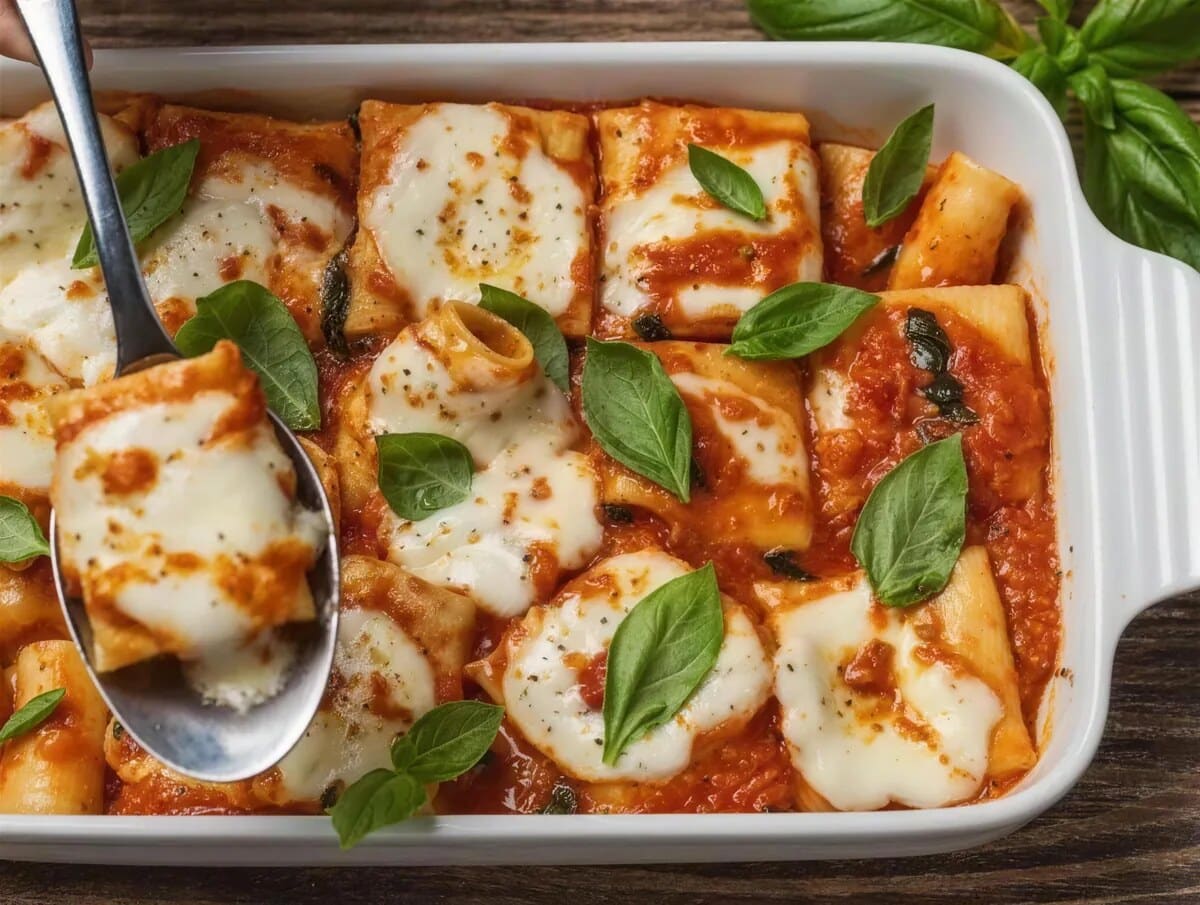
How To Tell When San Giorgio Baked Ziti Is Done
The sauce should be bubbling at the edges of the dish, not just steaming in the middle. That is the first sign, and it is worth waiting for.
The mozzarella should be brown in patches rather than evenly golden. Evenly golden usually means the broiler did it in two minutes and the middle is still lukewarm.
A knife slipped into the center should come out hot to the back of your hand. If you like numbers, a thermometer in the middle of the pan should read about 165 degrees Fahrenheit.
Baking straight from the refrigerator? Add 15 to 20 minutes with the foil on and check the center rather than the clock, because a cold pan of San Giorgio baked ziti heats from the outside in.
Make It Ahead
Make-ahead is where San Giorgio baked ziti beats almost anything else you can feed eight people.
Assemble the whole pan, stop before it goes in the oven, cover it tightly and refrigerate for up to two days. Hold back the mozzarella and scatter it on just before baking so it does not go rubbery against cold sauce.
For freezing, assemble it in a foil pan, wrap it in plastic and then foil, and freeze for up to three months. Thaw overnight in the refrigerator and bake as usual, or bake from frozen at 375 with the foil on for about 90 minutes.
Leftovers reheat better than most casseroles because there is enough sauce in there to keep the pasta from drying. A splash of water over the top before it goes back in the oven does the rest.
Storing and Reheating San Giorgio Baked Ziti
- Refrigerator: up to 4 days, covered, once it has cooled to room temperature within about two hours.
- Freezer: 3 months baked or unbaked. Portion it into meal-size containers rather than freezing the whole pan.
- Oven reheating: 350 degrees, covered, with a spoonful of water or sauce over the top, for 20 to 25 minutes.
- Microwave: fine for one plate. Cover it, use half power, and stop to stir the edges into the middle.
- What not to do: reheat the same portion twice. Take out what you plan to eat and leave the rest cold.
Cut the whole pan into squares before refrigerating it. Lifting a cold square out is far easier than digging a spoon into a set slab.
Variations and Substitutions
In San Giorgio baked ziti the pasta, the sauce and the ricotta are structural. Everything else is negotiable.
- With meat: a pound of Italian sausage or ground beef browned before the onion, which is closer to the newer published version.
- Spinach: ten ounces of frozen chopped spinach, thawed and squeezed hard, folded into the ricotta.
- Creamy: half a cup of heavy cream stirred into the sauce, borrowed from the brand’s sausage recipe and very good.
- Cottage cheese: a common substitute for ricotta and honestly not far off once it is blended smooth with the egg.
- Vegetarian and heartier: a pound of sliced mushrooms browned properly, which brings the savory weight the sausage was providing.
- Smaller pan: two 8-inch square dishes instead of one, so you can bake one and freeze one.
What to Serve with San Giorgio Baked Ziti
San Giorgio baked ziti is rich and soft, so everything around it should be sharp, green or crunchy.
- Garlic bread, obviously, and preferably the kind that is more crust than butter.
- A hard, acidic salad: romaine, red onion and a lemon dressing that can cut through cheese.
- Something roasted and slightly bitter, such as broccoli rabe or plain broccoli with lemon.
- A second Italian bake for a crowd, like this lazy lasagna or five-cheese ziti al forno.
- For a slower Sunday, chicken in pink peppercorn tomato sauce or a bowl of pumpkin risotto alongside.
Here is what readers ask most often.
San Giorgio Baked Ziti FAQ
Frequently Asked Questions
What is the original San Giorgio baked ziti recipe?
The one people remember from the box is published on the brand’s site as Meatless Baked Ziti. It calls for a pound of ziti rigati, a 24-ounce jar of pasta sauce, 15 ounces of ricotta, 8 ounces of shredded mozzarella, parsley, an egg, oregano, garlic powder, salt and pepper, stirred together with half the sauce, topped with the rest of the sauce and three tablespoons of Parmesan, covered with foil and baked at 375 degrees for 30 minutes.
Should I cover baked ziti in the oven?
For most of the time, yes. Foil for the first 25 minutes traps steam and heats the middle, and taking it off for the last 15 lets the top brown and some water evaporate. Covered the whole way and the top never colors; uncovered the whole way and the surface dries out before the center is hot.
Do you cook the pasta before baking ziti?
Yes, but stop early. Boil it about three minutes short of the package direction, so it is still firm in the middle when you drain it. It absorbs sauce and keeps cooking for the entire time it is in the oven, and pasta boiled to the full time comes out of the dish soft.
Can you freeze baked ziti?
Very well, for up to three months, baked or unbaked. Assemble it in a foil pan, wrap it in plastic then foil, and freeze. Thaw overnight in the refrigerator before baking, or bake straight from frozen at 375 degrees with the foil on for about 90 minutes and check the center.
More Questions About Ricotta and Sauce
Good to Know
Why is my baked ziti watery?
Watery San Giorgio baked ziti is usually one of three things: pasta boiled to the full package time, part skim or undrained ricotta, or fresh mozzarella instead of low-moisture. All three put water into the pan. The fourth cause is cutting into it straight from the oven before the sauce has had 15 minutes to set.
Do you have to put egg in the ricotta?
You do not have to, but it is the difference between a slice and a scoop. The egg sets as it bakes and holds the cheese layer together, which is exactly why the box recipe includes one. Leave it out and the ricotta stays loose and slides off the pasta on the plate.
Ricotta or cottage cheese?
Ricotta is finer and slightly sweet, cottage cheese is tangier and looser. Cottage cheese works if you blend it smooth first with the egg and Parmesan, which is what people in the Midwest have been doing for decades. Straight from the tub it stays lumpy and the texture reads as wrong.
How much does one pound of ziti feed?
Eight generous squares from a 9-by-13 dish, or ten if there is garlic bread and a salad on the table. That is the ratio the recipe was built on, and shrinking the pasta without shrinking the cheese throws the whole balance off.
Buy the ziti, season the ricotta, and let the pan of San Giorgio baked ziti sit before you cut it. If you want the restaurant version of the same idea, my five-cheese ziti al forno is the next thing to make.
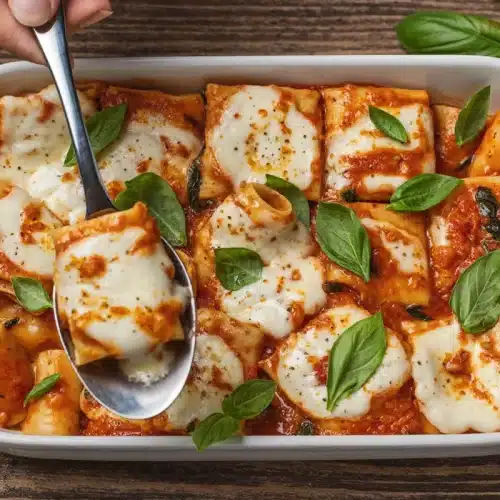
San Giorgio Baked Ziti
Save this recipe
Enter your email and I’ll send this recipe straight to your inbox.
Ingredients
For the Pasta and Sauce
- 1 pound San Giorgio ziti rigati or any ridged ziti
- 2 tablespoons olive oil
- 1 medium yellow onion finely chopped
- 4 cloves garlic minced
- 1/2 teaspoon crushed red pepper flakes optional
- 24 ounces jarred marinara sauce 1 jar
- 1 teaspoon kosher salt plus more for the pasta water
- 1 cup reserved pasta cooking water scooped out before draining
For the Ricotta and Cheese
- 15 ounces whole milk ricotta 1 tub, drained if it looks wet
- 1 large egg beaten
- 1/2 cup grated Parmesan cheese plus a little for the top
- 1/4 cup chopped flat-leaf parsley
- 1 teaspoon dried oregano
- 12 ounces low-moisture mozzarella shredded from a block
- 1/2 teaspoon garlic powder
- 1/4 teaspoon freshly ground black pepper
Instructions
Boil and Build the Sauce
- First, heat the oven to 375 degrees Fahrenheit and bring a large pot of well salted water to a boil. Cook the ziti about 3 minutes short of the package time, until it is still firm at the center, then scoop out a cup of the water and drain.
- Next, soften the onion in the olive oil over medium heat for 5 minutes, add the garlic and pepper flakes for one minute more, then pour in the jar of marinara, the salt and half the reserved pasta water. Simmer 5 minutes.
Season the Ricotta and Layer
- Then beat the egg into the ricotta with the Parmesan, parsley, oregano, garlic powder and black pepper. Taste it. It should taste seasoned on its own, because nothing else in the dish will season it later.
- After that, toss the drained pasta with two thirds of the sauce, adding the rest of the pasta water if it looks tight. Spread half of it in a 9-by-13-inch dish, spread all of the ricotta over that in an even band, then add the remaining pasta, the last of the sauce and the shredded mozzarella.
Bake and Rest
- Cover the dish tightly with foil and bake for 25 minutes, until the sauce is bubbling at the edges rather than only steaming in the middle.
- Finally, take the foil off and bake 15 minutes more, until the mozzarella is brown in patches. Rest the pan 15 minutes before cutting, which is what lets the cheese set and the sauce thicken.