
One can, one food processor and five minutes: black bean hummus is the dip you can put on a table between the moment people text that they are outside and the moment they knock.
It became my football season default years ago, when I got tired of arriving at other people’s houses carrying something beige and heavy. Black bean hummus is lighter than it tastes, it costs about a dollar fifty to make, and it looks like you planned it. The only thing standing between the can and a genuinely silky bowl is about three minutes of patience with the machine running.
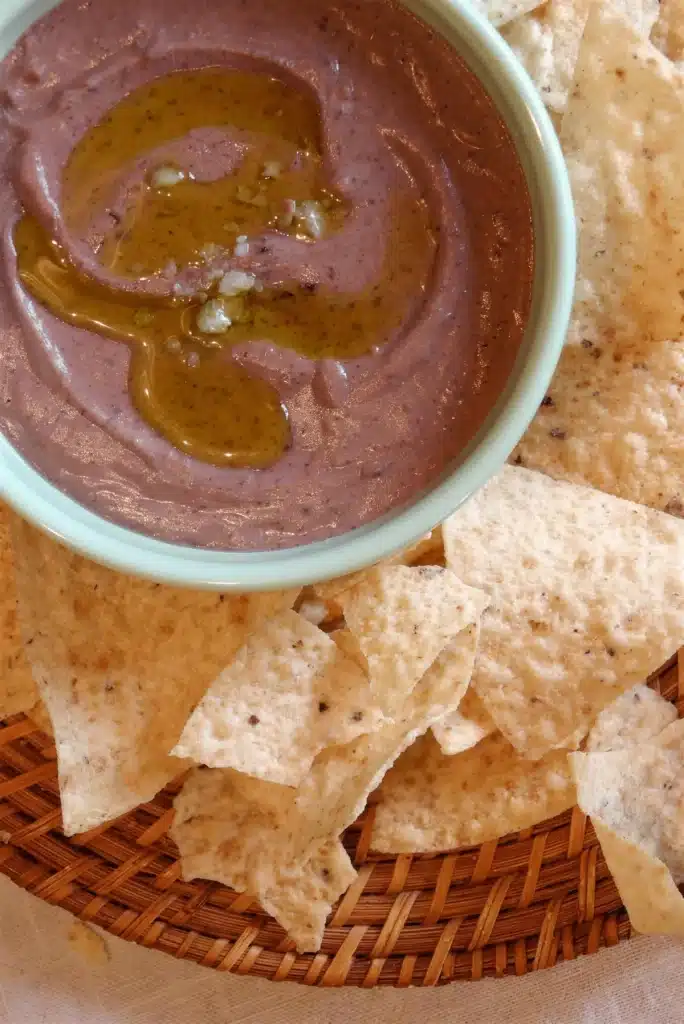
- Five minutes, one machine, and nothing to cook at any point
- Pantry ingredients, so it happens without a shopping trip
- Naturally vegan and gluten-free, which covers most of a mixed table
- About a dollar fifty a bowl against four for the supermarket tub
- Earthier and less chalky than the chickpea version, and darker on a board
- It keeps five days and freezes for three months, so nothing is wasted


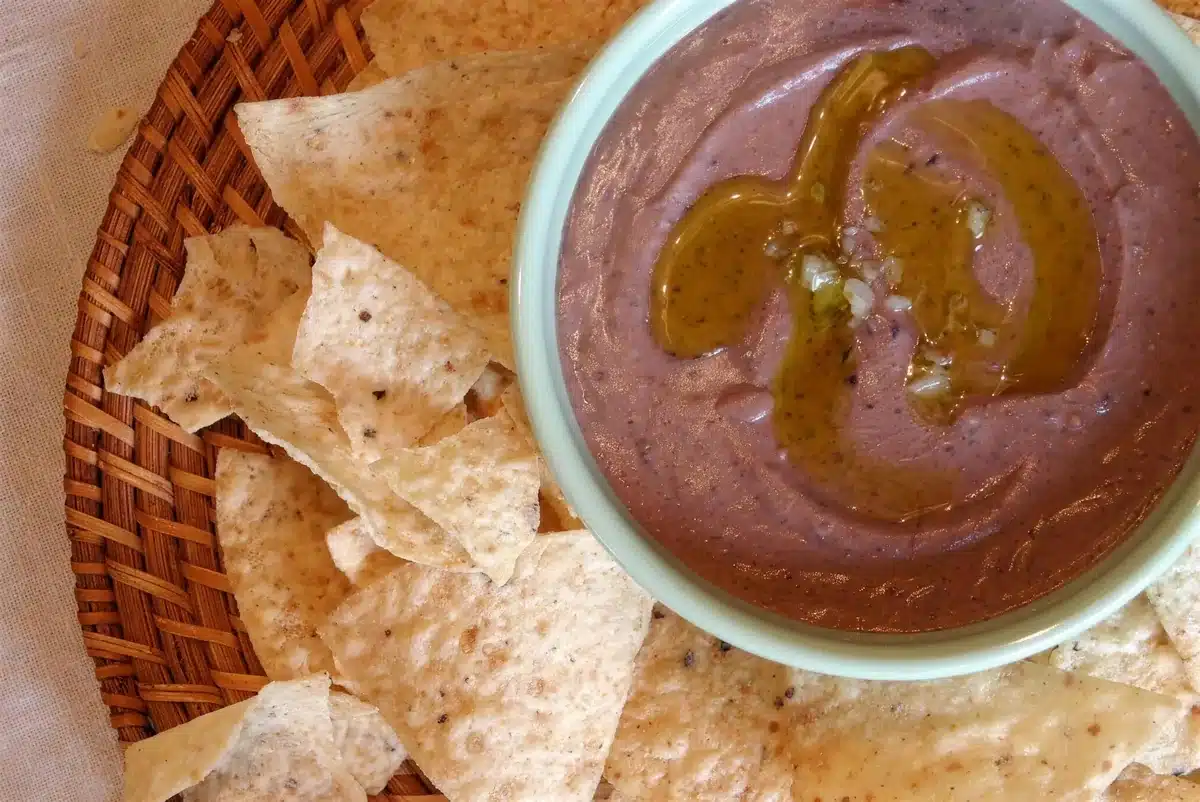
Two things decide whether black bean hummus comes out silky or gritty: how much fat and water go in, and how long you leave the machine running. Neither costs anything.
Black Beans or Chickpeas: What Changes
Hummus means chickpea, literally, so black bean hummus is a borrowed technique rather than a traditional recipe. That said, the swap changes more than the color.
Flavor. Chickpeas are nutty and mild. Black beans are earthier and slightly sweet, which is why cumin, lime and chile suit them better than the usual parsley and paprika.
Texture. Black beans have thinner, softer skins and break down faster, so black bean hummus goes smooth in less time than a chickpea batch and needs no peeling.
Color. Somewhere between deep purple and slate gray, which looks striking next to pale tortilla chips and slightly alarming next to anything beige.
Nutrition. Close enough to be a wash. Illinois Extension groups both under pulses, the dried seeds of legumes, and notes they are naturally low in fat, cholesterol and sodium while being high in protein and fiber. Black beans carry a little more fiber and more anthocyanins from the dark skins; chickpeas carry slightly more protein.
If you want the traditional thing, use chickpeas. If you want something that tastes like it belongs next to tortilla chips, this is the one.
Save this recipe
Enter your email and I’ll send this recipe straight to your inbox.
Ingredient Notes
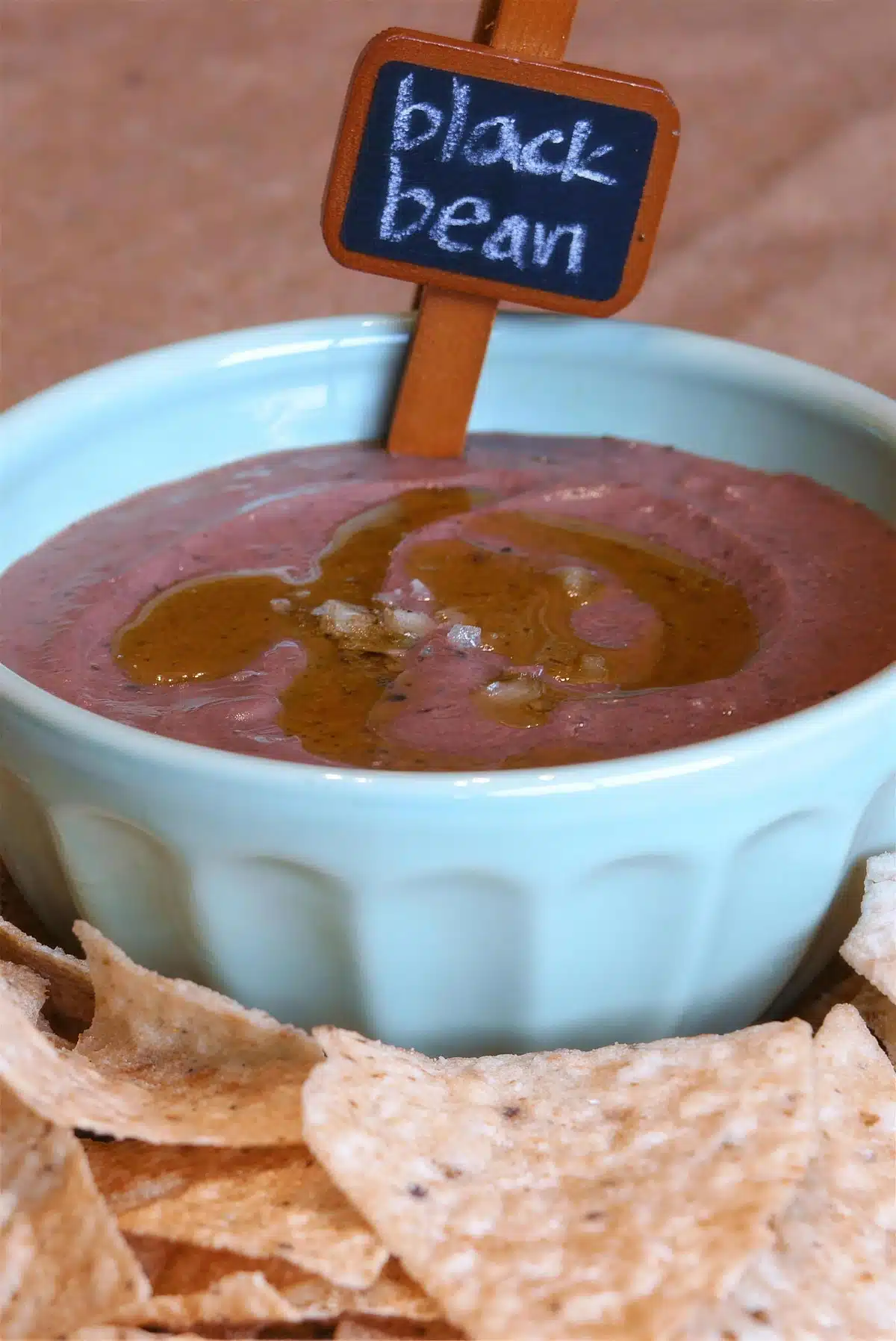
Black bean hummus is a seven-ingredient recipe and six of them live in the cupboard. Exact amounts are in the recipe card below.
- Canned black beans: one standard can, drained and rinsed until the water runs clear. The starchy liquid in the can tastes tinny and clouds the flavor.
- Tahini: two tablespoons. Buy a runny, pourable brand and stir the jar from the bottom, because separated tahini is bitter at the top and cement at the base.
- Garlic: two cloves, raw. Any more and it will be sharper tomorrow than it is today, since raw garlic strengthens in the refrigerator.
- Lemon juice: two tablespoons, squeezed. Bottled juice tastes flat here and there is nothing else to hide behind. Lime works and pushes the whole bowl toward Mexico.
- Ground cumin: a teaspoon, and it is not optional. It is the flavor most people identify as the reason this tastes better than plain mashed beans.
- Olive oil: two tablespoons blended in and one more on top. The blended oil is what makes it creamy rather than pasty.
- Ice water: three tablespoons, added at the end with the motor running. This is the single most underrated ingredient in any hummus.
- Salt: half a teaspoon to start. Canned beans vary enormously, so taste before you add more.
Use a food processor rather than a blender for black bean hummus. A blender needs so much liquid to move that you end up with soup, unless it is a small high-speed one.
How To Get It Really Smooth
Grainy black bean hummus is the most common complaint, and it is never the beans. It is one of three things.
Not enough fat. Two tablespoons of olive oil plus the tahini emulsify with the water and turn the purée creamy. A batch made with tahini alone is drier and reads as gritty even when the particles are fine.
Not enough water. Three tablespoons of ice water, poured in through the feed tube while the machine runs, lightens the color and the texture at the same time. Cold water helps the emulsion hold; warm water makes it slack.
Not enough time. This is the big one. Most people stop at forty seconds. Let it run for a full three minutes, scraping the bowl twice, and you will watch it change from stiff and pebbly to something that ripples.
The order helps too. Blend the tahini, lemon juice and garlic together first, before the beans go anywhere near the bowl. Tahini whipped with acid becomes pale and mousse-like, and it disperses far better than tahini stirred into a thick paste.
How To Make Black Bean Hummus
Drain the beans well and have the ice water measured before you start, because black bean hummus runs without a pause once the machine is on.
- First, drain and rinse the black beans thoroughly in a sieve, until the water running off them is completely clear rather than gray.
- Next, process the tahini, lemon juice and garlic together for 30 seconds, until pale and creamy. Scrape the bowl down.
- Then add the beans, cumin, olive oil and salt and process for 2 minutes, stopping once to scrape the sides and the bottom of the bowl.
- After that, pour the ice water in through the feed tube with the motor running and keep going for another minute, until it turns visibly lighter and starts to ripple.
- Finally, taste it and adjust. Expect to want more salt and more lemon than you think, then spread it in a shallow bowl, drizzle with oil and dust with smoked paprika.
Black Bean Hummus Without Tahini
Tahini is the one ingredient people do not keep, and black bean hummus without it is still very good. It just needs the fat replaced.
The simplest swap is three tablespoons of olive oil in total instead of two, plus a tablespoon of natural peanut butter or smooth almond butter. Both bring the sesame-adjacent richness that tahini was doing.
If you want no nuts and no seeds at all, use three tablespoons of oil and a tablespoon of plain yogurt, which is no longer vegan but is creamier than either. A quarter of an avocado works too, and the color hides it completely.
What does not work is simply leaving the tahini out and adding nothing. You get a thin bean purée that tastes exactly like refried beans without the lard.

How To Tell When the Texture Is Right
Black bean hummus should fall off a spoon in a slow ribbon and hold a shallow trough without the walls collapsing. That is the whole test.
Too thick and it will drag chips apart rather than sit on them. Add ice water a tablespoon at a time, still with the machine running, and it will loosen far more than you expect.
Too thin and it slides off. Add a couple more tablespoons of drained beans rather than more tahini, which would take over the flavor.
It also firms up in the refrigerator, noticeably, so make it a shade looser than you want it if it is going to sit for a few hours before anyone eats it. A tablespoon of water stirred through before serving brings it back.
Taste it cold, not warm from the machine. The friction of a food processor running for three minutes genuinely warms the bowl, and warm hummus tastes saltier and flatter than the same batch will at room temperature.
Make It Ahead
Black bean hummus is better made a few hours early, which is unusual for something that takes five minutes.
The cumin and the garlic need a little time to move through the beans, and a bowl made in the morning tastes noticeably rounder by evening. Overnight is fine too. Beyond two days the raw garlic starts to dominate.
Cover the surface with a thin film of olive oil and press plastic wrap right onto it. That stops the top drying into a skin, which is the only thing that goes wrong with black bean hummus in the refrigerator.
Hold the paprika, the oil drizzle and any herbs until you are actually serving it. Garnish put on early looks tired an hour later.
Storing Black Bean Hummus
- Refrigerator: up to 5 days, sealed, with a film of oil over the surface. The garlic strengthens each day.
- Freezer: up to 3 months. Freeze it in a tub with a finger of headspace, since it expands.
- Thawing: overnight in the refrigerator, then beat it hard with a spoon. It separates a little on thawing and comes straight back together.
- Loosening it: a tablespoon of water or lemon juice stirred in before serving, because it always sets firmer in the cold than you remember.
- When to throw it out: any sourness, any fizz, or liquid pooling that smells sharp. Bean purées spoil quietly and quickly at room temperature.
Variations and Substitutions
The beans, the acid and the fat are structural. Everything else in a bowl of black bean hummus is a suggestion.
- Chipotle: one canned chipotle in adobo plus a teaspoon of the sauce, which is the single best addition on this list.
- Roasted garlic: a whole head, roasted and squeezed in, instead of the raw cloves. Sweeter, rounder, and it does not sharpen overnight.
- Lime and cilantro: lime in place of lemon and a handful of cilantro blended in at the end, which turns it green-flecked and bright.
- Smoky: a teaspoon of smoked paprika blended in rather than dusted on top, plus an extra tablespoon of oil.
- Dried beans: a cup and a half of cooked-from-dried beans in place of the can. Better flavor, and worth doing if you were cooking a pot anyway.
- Extra hot: half a jalapeno with the seeds, or a spoonful of chile crisp swirled over the top at the table.
What to Serve with Black Bean Hummus
Black bean hummus wants anything sturdy enough to survive a scoop, which is most of what people already want to eat.
- Thick tortilla chips rather than thin ones, since this is heavier than salsa and snaps a delicate chip.
- On a board next to spicy guacamole and fresh peach salsa, for three colors and one shopping trip.
- Spread on a wrap in place of mayonnaise, with roasted vegetables and greens piled on top.
- Alongside something warm and garlicky, such as braised kale and cannellini beans, at a table that is mostly vegetables.
- Under a fried egg on toast, which sounds like a stretch and is the best use of the leftovers.
Here is what readers ask most often.
Black Bean Hummus FAQ
Frequently Asked Questions
Can black beans be used for hummus?
Yes, and they behave better than most substitutes. Hummus is chickpea by definition, so this is a borrowed technique rather than the traditional dish, but black beans have thin soft skins that break down quickly and need no peeling. That makes black bean hummus smoother in less time than a chickpea batch. What changes is the flavor, which is earthier and slightly sweet, and the color, which lands somewhere between deep purple and slate.
Is black bean hummus good for you?
It compares well with almost anything else on a snack table. A serving is beans, sesame and olive oil, which brings fiber, plant protein and unsaturated fat with no cholesterol. Illinois Extension notes that legumes are naturally low in fat, cholesterol and sodium while being high in protein and dietary fiber. The variables worth watching are the salt, which you control here and cannot control in a tub, and the oil, which is what makes it creamy.
Which is healthier black beans or chickpeas?
Close enough that it is not worth choosing on that basis. Chickpeas carry a little more protein per cup and black beans carry a little more fiber, along with anthocyanins from the dark skins that chickpeas do not have. Both are pulses, both are low in fat and sodium, and both are far better than the sour cream dip next to them. Pick on flavor instead.
More Questions About Beans and Tahini
Good to Know
Are there any downsides to eating black beans?
The usual one is digestive, from the oligosaccharides beans contain, and rinsing canned beans thoroughly removes a good deal of what causes it. Canned beans can also be high in sodium, so buy the low-sodium version or rinse well and salt the bowl yourself. Beyond that, they are one of the cheapest sources of fiber and plant protein there is.
Can I make it without tahini?
Yes. Use a tablespoon of natural peanut or almond butter and raise the olive oil to three tablespoons, which replaces both the fat and the sesame richness. Plain yogurt or a quarter of an avocado also work. What does not work is leaving the tahini out and adding nothing at all, which gives you a thin bean purée.
Why is mine grainy?
Almost always because the machine was not left running long enough. Give it three minutes with two scrapes, add the ice water through the feed tube while it turns, and make sure there is enough fat in there. If it is still grainy after all that, the beans were undercooked, which happens with cheap cans more often than you would expect.
Can I freeze it?
Yes, for up to three months. Leave a finger of headspace in the tub because it expands, thaw it overnight in the refrigerator, and beat it hard with a spoon when it comes out. It separates slightly on thawing and comes back together completely. Add the oil and paprika fresh rather than freezing them on top.
Keep a can of beans and a jar of tahini in the cupboard and you are never more than five minutes from something to put on a table. For the same beans in a warmer, slower form, try my Cuban black beans.

Black Bean Hummus
Save this recipe
Enter your email and I’ll send this recipe straight to your inbox.
Ingredients
For the Hummus
- 15 ounces canned black beans 1 can, drained and rinsed until the water runs clear
- 2 tablespoons tahini stirred smooth from the bottom of the jar
- 2 cloves garlic roughly chopped
- 2 tablespoons fresh lemon juice or lime, plus more to taste
- 1 teaspoon ground cumin
- 2 tablespoons extra-virgin olive oil
- 1/2 teaspoon kosher salt plus more to taste
- 3 tablespoons ice water added with the motor running
To Finish
- 1 tablespoon extra-virgin olive oil for drizzling
- 1 pinch smoked paprika
- 2 tablespoons chopped cilantro optional
Equipment
- Food Processor
Instructions
Whip the Tahini
- First, drain and rinse the black beans in a sieve until the water running off them is completely clear rather than grey. The starchy canning liquid tastes tinny.
- Next, process the tahini, lemon juice and garlic together for 30 seconds, until pale and creamy, then scrape the bowl down. Whipping the tahini with acid first is what lets it disperse properly.
Blend and Loosen
- Then add the beans, cumin, 2 tablespoons of olive oil and the salt, and process for 2 minutes, stopping once to scrape the sides and the bottom of the bowl.
- After that, pour the ice water in through the feed tube with the motor running and keep going for another minute, until the color lightens visibly and the mixture ripples rather than sitting in a stiff block.
Season and Serve
- Finally, taste and adjust. Expect to want more salt and more lemon than you think, and remember it will taste flatter warm from the machine than it will at room temperature.
- Spread it in a shallow bowl, push the back of a spoon through it in a spiral to make a trough, then pour the last tablespoon of oil into the trough and dust with smoked paprika and cilantro.