
These are flaky biscuits in the literal sense: split one open and it comes apart in sheets you can peel off with your fingers, each one flecked green with scallion and parsley. That structure is not luck. It comes from frozen butter grated straight into the flour and three letter folds before the dough is cut.
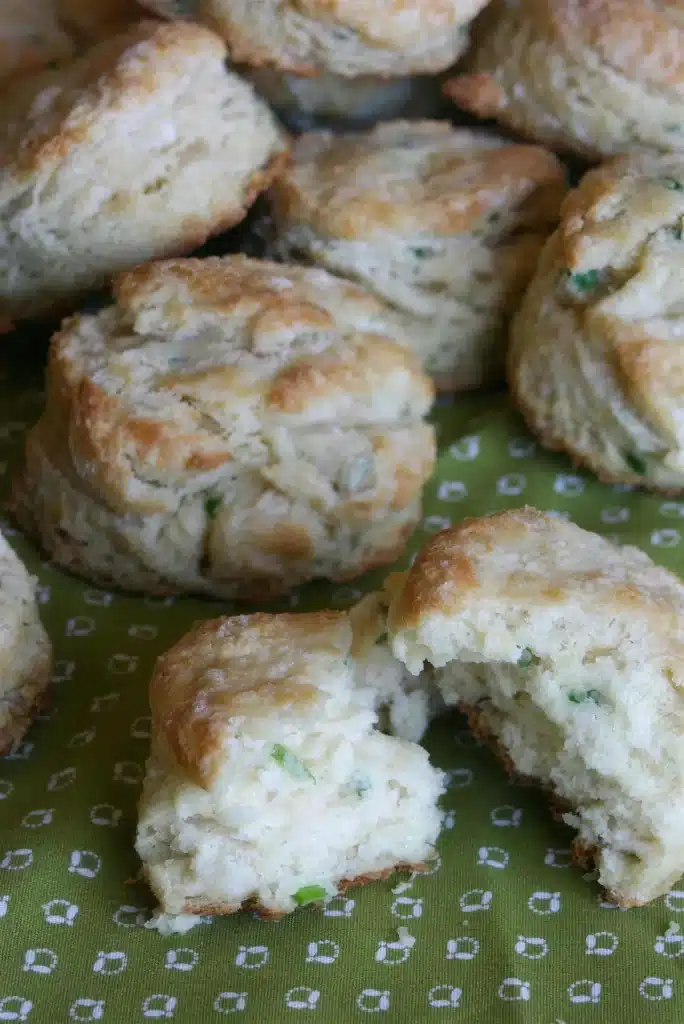
- Frozen butter grated on a box grater, which is faster and flakier than cutting in
- Three letter folds, about ninety seconds of work, for genuinely separable layers
- Three quarters of a cup of scallions, not three tablespoons
- Cut straight down and never twist, which is the rule that decides the rise
- Thirty five minutes start to finish, including the folding
- The dough rounds freeze raw and bake from frozen with four extra minutes
The herbs are the other half of it. The version I made for years used three tablespoons of scallion across four cups of flour, which you could not taste and could barely see. Three quarters of a cup is the amount that actually shows up in the crumb, and it is what makes these worth heating an oven for.

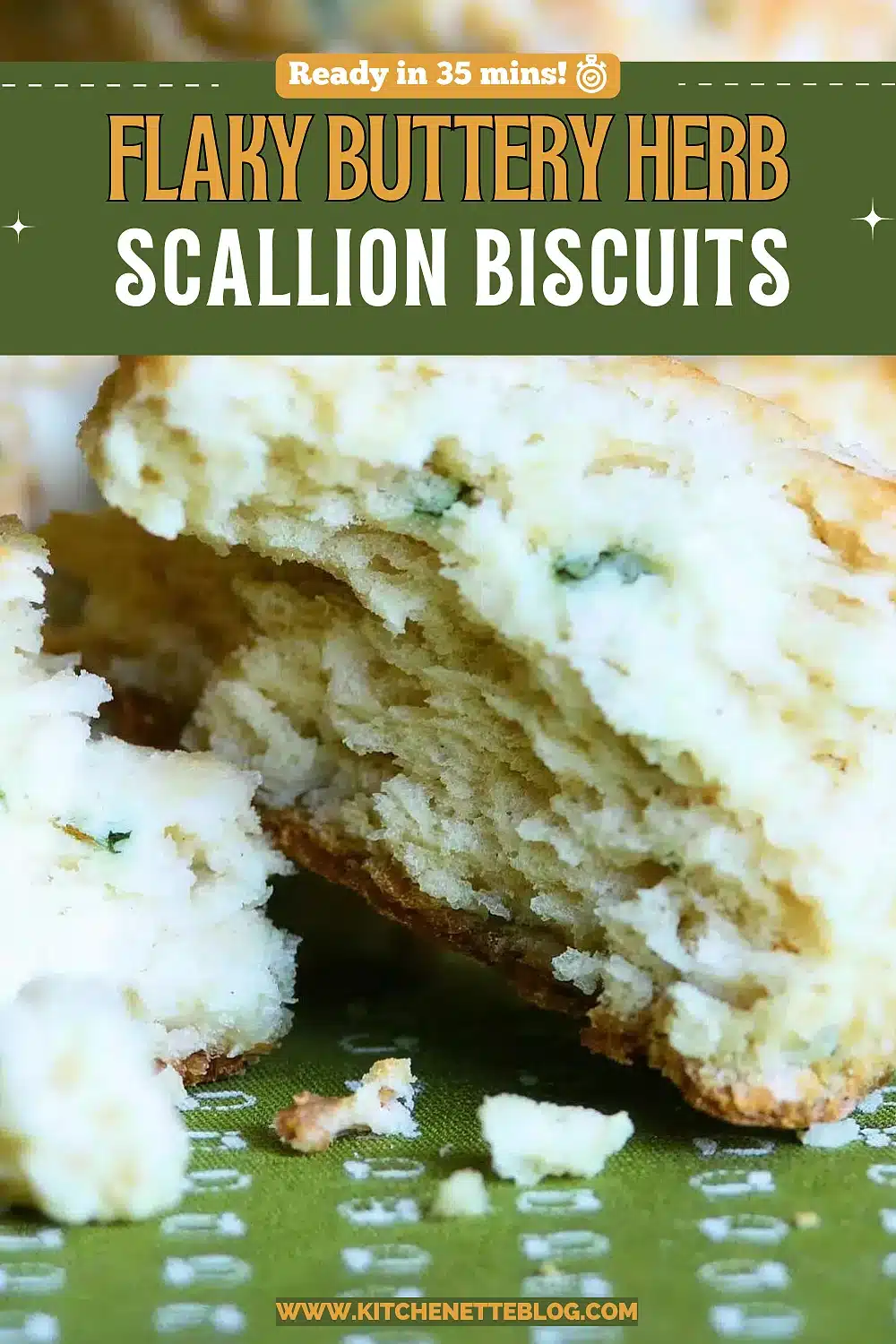
This started years ago as an adaptation of a Real Simple biscuit from November 2011. The butter, the herbs, the leavening and the folding have all moved since, and the notes below explain why each one did.
Why These Are Flaky Biscuits and Not Fluffy Ones
Biscuits split into two families and they are made differently on purpose, so it is worth knowing which one you are aiming at.
Fluffy biscuits are soft all the way through. Fat is rubbed in until the mixture looks like sand, the dough is barely handled, and the crumb comes out cakey and even. Very tender, no layers.
Flaky biscuits are built in sheets. The fat stays in visible flat pieces, and folding stacks those pieces between leaves of dough. In the oven the water in the butter turns to steam and pushes each leaf apart.
The size of the butter decides which one you get. Pea-sized or smaller gives you fluffy. Flakes the size of rolled oats, still cold, gives you flaky biscuits.
Folding is the other half. No amount of correct butter makes layers if the dough is never folded, which is exactly what was missing from the original.
Both need a hot oven. 400F, so the steam happens fast enough to lift the layers before the structure sets.
And both go stale the same way. Flaky biscuits are at their best within an hour of leaving the oven, which is an argument for freezing the raw rounds rather than baking the whole batch.
Everything below is aimed squarely at the second family.
Save this recipe
Enter your email and I’ll send this recipe straight to your inbox.
Ingredient Notes
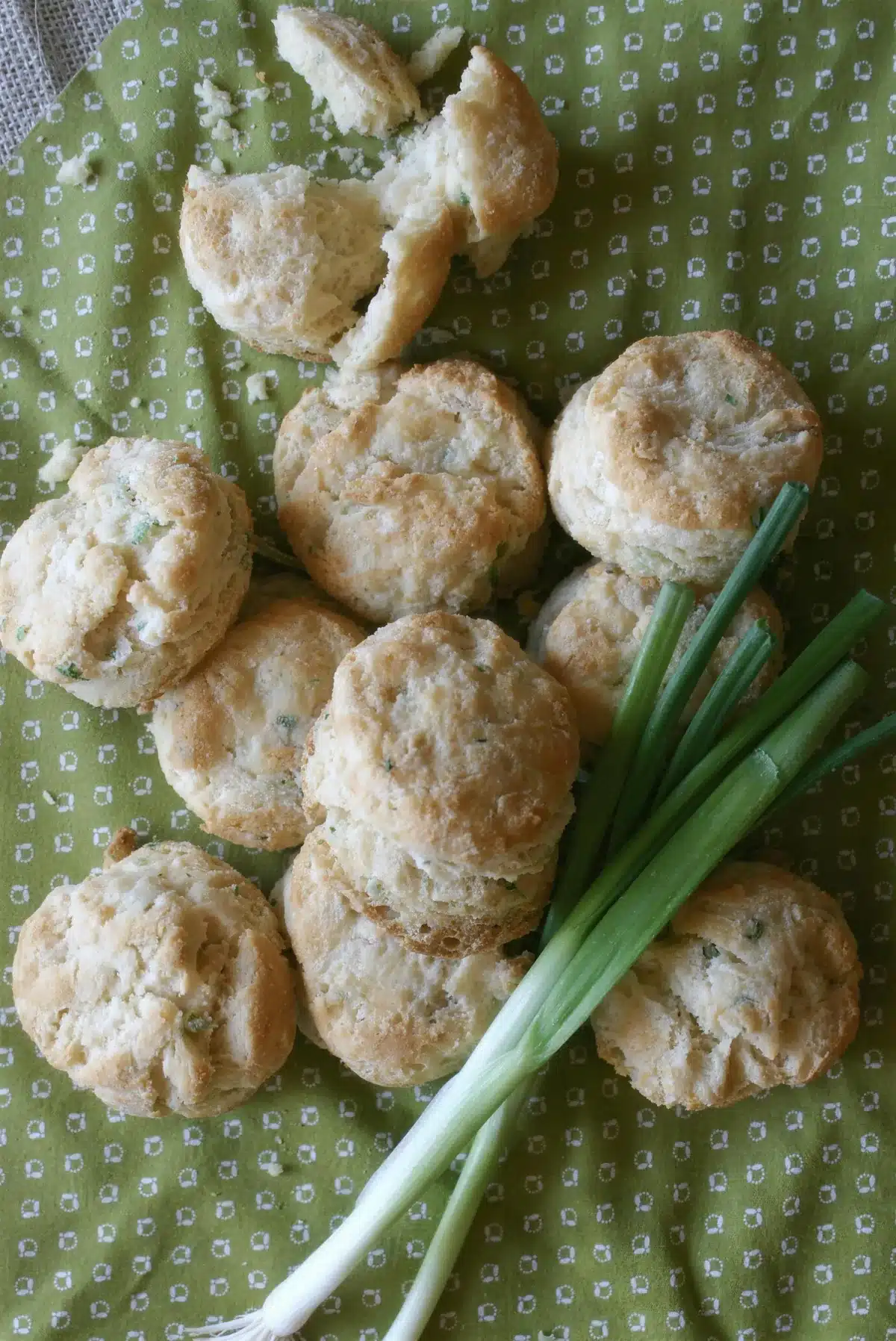
Flaky biscuits need eight things and all of them are ordinary. Exact amounts are on the recipe card.
- All-purpose flour: 4 cups, about 480 grams. The Wheat Foods Council explains that all-purpose is milled from a blend of hard and soft wheat, while soft wheat alone is what southern flours use, which is why a bag of White Lily gives a softer result.
- Butter: 2 sticks, frozen solid. The original called for two and a half, which is close to 60 percent of the flour weight and leaks out onto the pan. Two sticks is still very rich.
- Buttermilk: 1 1/2 cups, cold, plus a spoonful for brushing. Real cultured buttermilk, not milk with vinegar in it, if you can get it.
- Scallions: 3/4 cup sliced thin, which is about six of them. Slice the green and the white, since the white is where most of the flavor sits.
- Flat-leaf parsley: a quarter cup, chopped fine. Thyme, chives, sage and rosemary all work in the same quantity or in any combination.
- Baking powder: 1 tablespoon. Less than the original, because there is baking soda doing work here as well.
- Baking soda: 3/4 teaspoon. A cup and a half of buttermilk can neutralize about that much; a full teaspoon leaves a faint soapy edge.
- Kosher salt: 2 teaspoons. Biscuits with butter and scallion in them need real seasoning or they taste of nothing.
Flaky biscuits are a one-bowl recipe with no mixer, no rolling pin required and no resting time.
Getting the Butter Right
This is the step that decides whether you get flaky biscuits or merely good ones, and there is one shortcut that makes it easy.
Freeze the butter, then grate it. A box grater turns two sticks into perfect flat shreds in under a minute, which is faster than a pastry cutter and gives more even pieces than fingers do.
Toss as you go. Stop twice while grating and toss the shreds through the flour, or they clump into a single cold lump at the bottom of the bowl.
Aim for rolled oats, not breadcrumbs. If you can no longer see individual pieces of butter you have made fluffy biscuits by accident.
Work fast and stop early. Warm hands undo a minute of work in ten seconds. If the butter starts to look greasy, put the whole bowl in the freezer for five minutes.
Cold buttermilk, straight from the refrigerator. Room temperature liquid softens the butter you just spent the effort keeping cold.
How To Make Flaky Biscuits
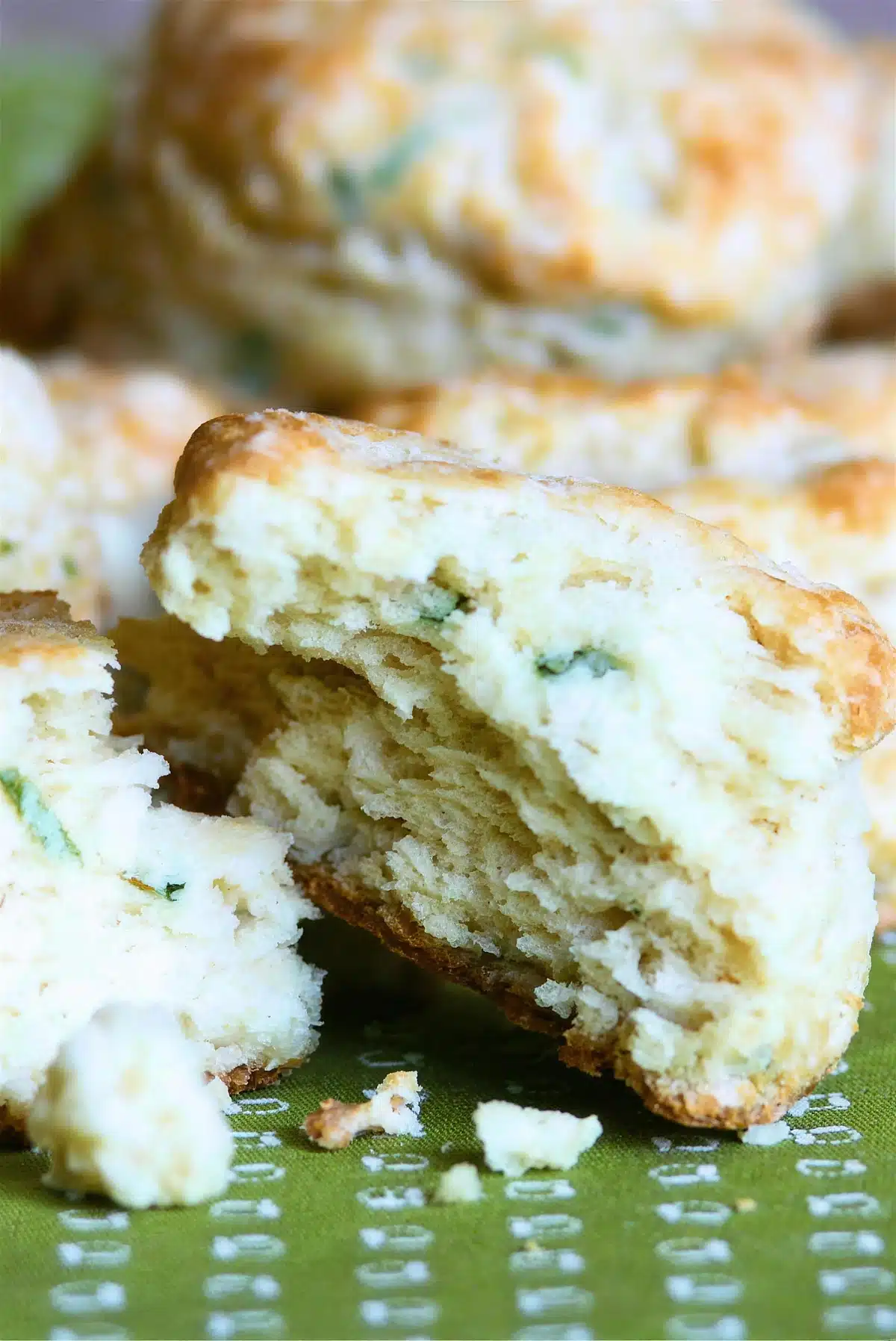
Thirty five minutes, and the folding accounts for about ninety seconds of it.
- First, heat the oven to 400F, then whisk the flour, baking powder, salt and baking soda together and toss the scallions and parsley through until every shred is coated in flour.
- Next, grate the frozen butter straight into the bowl on the large holes of a box grater, stopping twice to toss it through so the shreds stay separate.
- Then pour in the cold buttermilk and stir with a fork only until no dry flour is left. The dough should look rough and shaggy rather than smooth.
- After that, tip it onto a floured counter, pat it into a rectangle about an inch thick, fold it in thirds like a letter, and repeat twice more.
- Finally, cut straight down with a floured 2 1/2-inch cutter without twisting, set the rounds almost touching on one sheet, brush with buttermilk and bake 18 to 22 minutes.
The Fold That Builds the Layers
Three folds are the whole difference between a tall tender round and something you can peel apart, and they are why flaky biscuits are worth the extra ninety seconds.
Pat, do not roll. A rolling pin compresses the butter flat into the dough. The heel of your hand pushes it out sideways and keeps the pieces distinct.
Fold in thirds, like a letter. Bottom third up, top third down over it. Three of those gives you twenty seven notional layers, which is plenty.
Turn the dough ninety degrees between folds. It keeps the rectangle roughly square and the layers even across the batch.
Flour the counter lightly and often. A dough this wet sticks, and scraping torn dough off a counter destroys the layers you just built.
Stop at three. More folding starts developing gluten and the biscuits go from flaky to chewy.
Keep the slab thick. An inch is the final thickness, not half an inch. Flaky biscuits climb roughly double their raw height, and a thin round bakes through before the layers have finished separating.
Do not chase a neat rectangle. Ragged edges fold in perfectly well and fussing with the shape only warms the butter.
Make It Ahead
Very little about flaky biscuits benefits from resting, but the cut rounds freeze beautifully, which is the real make-ahead move here.
Cut rounds, frozen: 3 months. Freeze them solid on a tray, then bag them, and bake from frozen with about 4 extra minutes.
Dough in the refrigerator: 24 hours, wrapped, after the folds but before cutting. The soda loses a little power, so expect slightly shorter biscuits.
Dry mix with the herbs: 2 days, covered in the refrigerator, so all that is left is the butter and the buttermilk.
Slice the scallions the day before and keep them in a sealed container with a piece of paper towel.
Do not bake them ahead. These are worth eating within an hour and they are noticeably worse the next day.
Storing Flaky Biscuits
- Room temperature: 2 days in a paper bag or loosely covered. An airtight container softens the crust to leather overnight.
- Refrigerator: avoid it. Cold staling is fastest just above freezing and it turns flaky biscuits dense within a day.
- Freezer, baked: 2 months, wrapped in pairs.
- Reheating: 6 to 8 minutes in a 350F oven, split side up. A microwave makes them briefly hot and then rubbery.
- Best of all, keep raw cut rounds in the freezer and bake only what you need.
Variations and Substitutions
The frame is flour, cold fat, an acidic liquid and something green, and every part of it moves.
- Cheddar and scallion: add 4 ounces of sharp cheddar, grated, with the herbs.
- Black pepper and thyme instead of parsley, which is very good under a fried egg.
- Self-rising flour: use it and leave out the baking powder and salt entirely.
- No buttermilk: stir a tablespoon of lemon juice or white vinegar into a cup of whole milk and leave it ten minutes until it curdles.
- Drop biscuits: skip the folding, add another 1/4 cup of buttermilk and spoon the dough onto the sheet. Faster, softer, not flaky.
- Square biscuits: cut the folded slab into squares with a knife and you waste no dough and reroll nothing.
If you would rather have the shortcut version on a weeknight, my 7-Up biscuits get to the table in twenty minutes with four ingredients.
What to Serve with Flaky Biscuits
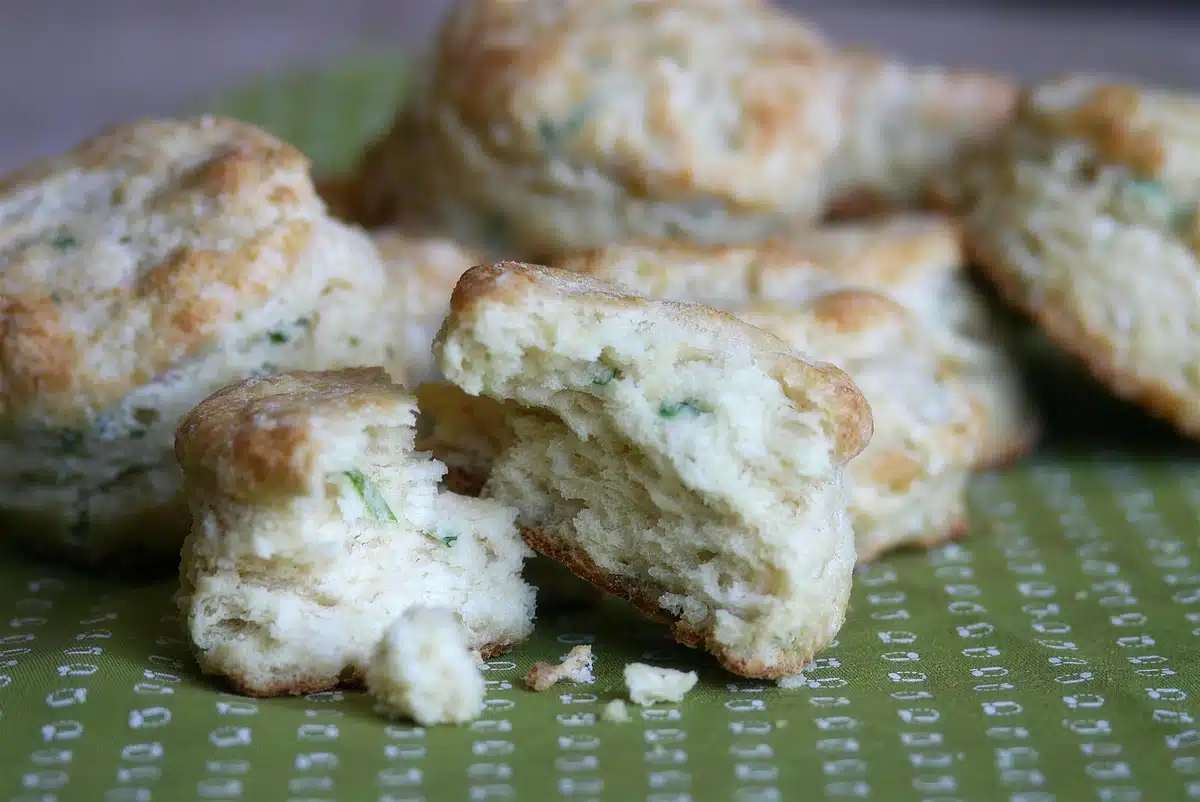
Savory and herby rather than sweet, so these belong beside dinner as often as beside breakfast.
- Split under a fried egg, which is what I make most often.
- Alongside my scotch broth, where they do the job bread usually does.
- With roasted carrot and parsnip soup, torn rather than sliced.
- Under sausage gravy, in which case leave the parsley out and double the black pepper.
- Beside a skillet of breakfast hash on a weekend morning.
- Or plain, warm, with cold salted butter, which is honestly the best of these options.
Here is what people ask me about them.
Flaky Biscuits FAQ
Frequently Asked Questions
Why did my biscuits come out short and squat?
Almost always the cutter. Twisting it as you press smears the cut edge closed and seals the layers together, so the steam has nowhere to push. Press straight down, lift straight up, and flour the cutter between each one. The other common cause is butter that warmed up during mixing, which means the fat melts into the dough in the oven rather than turning to steam between the layers.
Can I make these without a box grater?
Yes, though grating frozen butter is the fastest route to flaky biscuits by some distance. With a pastry cutter or two knives, use very cold rather than frozen butter and stop while the pieces are still the size of rolled oats. You can also cut each stick into thin slabs with a knife, toss them in the flour and then flatten each one between your fingertips.
How many biscuits does this actually make?
Fourteen at 2 1/2 inches, including two or three from the pressed scraps. The original said twelve, which undersells four cups of flour by a fair margin. If you cut the folded slab into squares with a knife instead, you get sixteen and nothing to reroll, and rerolled dough is always the toughest of the batch.
More Questions About Buttermilk
Good to Know
Does buttermilk really matter?
Yes, for two reasons. Its acid reacts with the baking soda for extra lift, and it tenderizes the crumb in a way plain milk does not. Cultured buttermilk from the carton is best. The lemon juice and milk trick works and is genuinely useful in a pinch, but it is thinner and gives you a slightly flatter biscuit, so use the full amount and do not skimp.
Can I use whole milk instead?
You can, but then drop the baking soda entirely and raise the baking powder to 4 teaspoons, since there is no acid left for the soda to react with. Leaving the soda in with plain milk is what gives biscuits that faint metallic, soapy taste. The result is decent, a little paler and slightly less tender than the buttermilk version.
My dough is too sticky to fold. What now?
Flour the counter more heavily and flour your hands, then work quickly rather than trying to dry the dough out with extra flour worked in. A wet dough is a good sign; it means plenty of steam later. If it is genuinely unmanageable, slide the whole slab onto a tray and put it in the freezer for five minutes, which firms the butter and makes it behave.
Grate the butter frozen, fold three times, and never twist the cutter. Do those three things and flaky biscuits stop being a matter of luck. If you have leftover buttermilk to use up, my chicken and lentil stew is what usually happens to the rest of the carton here.
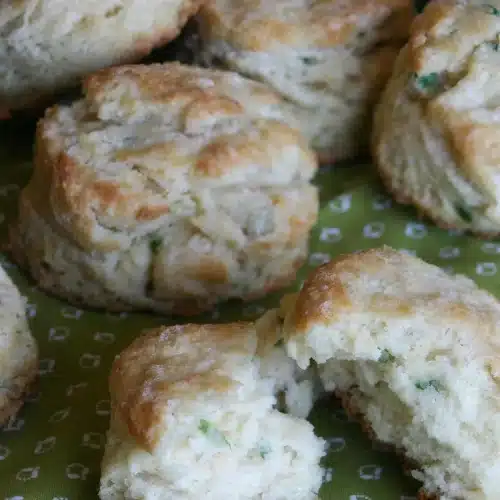
Flaky Biscuits with Scallions and Fresh Herbs
Save this recipe
Enter your email and I’ll send this recipe straight to your inbox.
Ingredients
Dry Ingredients and Herbs
- 4 cups all-purpose flour about 480 grams, plus more for dusting
- 1 tablespoon baking powder
- 2 teaspoons kosher salt
- 3/4 teaspoon baking soda
- 3/4 cup scallions about 6, sliced thin, white and green
- 1/4 cup flat-leaf parsley chopped fine, or thyme, chives or sage
Butter and Buttermilk
- 2 sticks unsalted butter 1 cup, frozen solid
- 1 1/2 cups buttermilk cold, cultured if you can get it
- 1 tablespoon buttermilk for brushing the tops
Equipment
- Large Bowl
- Pastry Blender or Fingers
- Baking Sheets
- 2½-inch Round Cookie Cutter or Glass
Instructions
Mix the Dry Ingredients
- Heat the oven to 400F and line a heavy baking sheet with parchment.
- Whisk the flour, baking powder, kosher salt and baking soda together in a wide bowl, then toss the sliced scallions and chopped parsley through until every shred is coated in flour.
Cut In the Frozen Butter
- Grate the frozen butter into the bowl on the large holes of a box grater, stopping twice to toss the shreds through the flour so they stay separate rather than clumping at the bottom.
- Rub any large pieces flat between your fingertips. You are aiming for flakes about the size of rolled oats, still cold and firm, not fine crumbs. If the butter starts to look greasy, put the whole bowl in the freezer for 5 minutes.
Mix and Laminate
- Pour in the cold buttermilk and stir with a fork only until there is no dry flour left. The dough will look rough and shaggy, which is correct; a smooth dough means it has been overworked.
- Tip it onto a lightly floured counter and pat it into a rough 1-inch-thick rectangle, then fold it in thirds like a letter.
- Repeat the pat and fold twice more, turning the dough 90 degrees each time, for 3 folds in total. This takes about 90 seconds and it is what builds the layers.
- Pat the folded dough out to a final thickness of 1 inch. Do not roll it, which flattens the butter into the dough instead of leaving it in sheets.
Cut and Bake
- Cut straight down with a floured 2 1/2-inch cutter and lift it straight out without twisting, which would seal the layered edge shut and halve the rise. Flour the cutter between each one.
- Set the rounds on the sheet with their sides almost touching, gently press the scraps together for the last few, and brush the tops with the spoonful of buttermilk.
- Bake for 18 to 22 minutes, until the tops are deep gold and the center of one reads about 205F. Cool for 5 minutes before splitting, and eat them within the hour.