
A celery salad sounds like something you make because there is nothing else in the drawer. Then you eat one, and the crunch is so clean and the dressing so savory that you start buying celery on purpose.
The trick is that celery is not lettuce. Dressed lettuce collapses within minutes. Dressed celery does the opposite: an hour in a sharp lemon dressing draws a little water out, firms the cell walls and leaves the stalks snappier than they went in. That single hour is the whole recipe, and it is also why this is one of the few salads you are supposed to make before your guests arrive rather than while they wait.
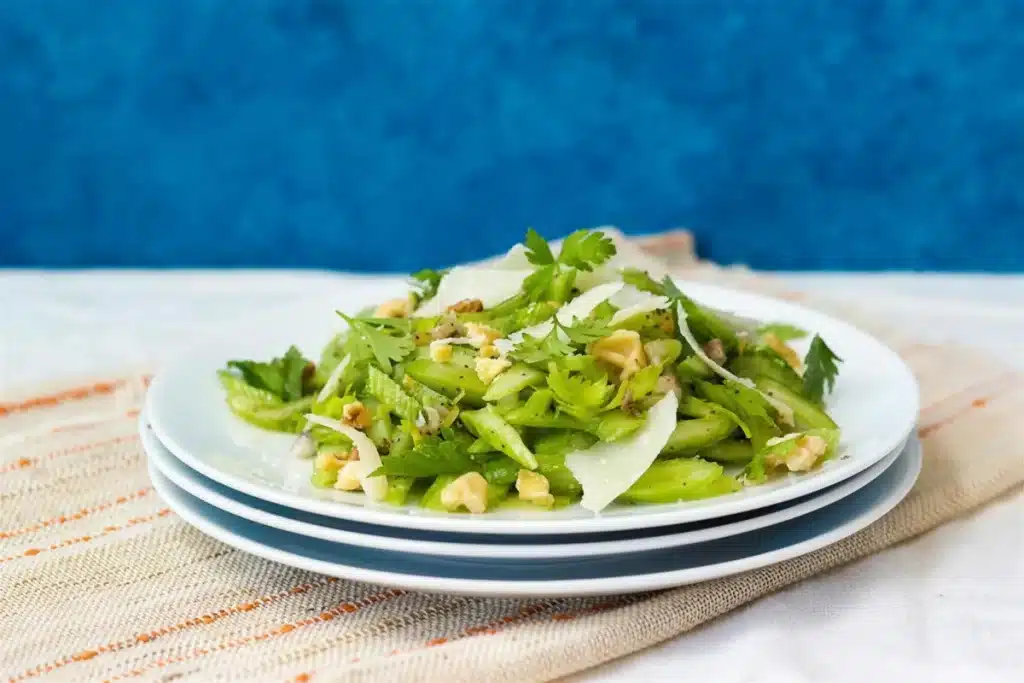
- It gets crunchier as it sits, which no leafy salad does
- Anchovy, lemon and parmesan give it a Caesar backbone with no cream and no egg
- Two heads of celery and a chunk of cheese, so it costs almost nothing
- You have to make it an hour ahead, which makes it ideal for entertaining
- Shaved parmesan, toasted walnuts and soft parsley leaves mean four textures in one bowl
- The inner leaves go in too, and they carry more flavor than the stalks

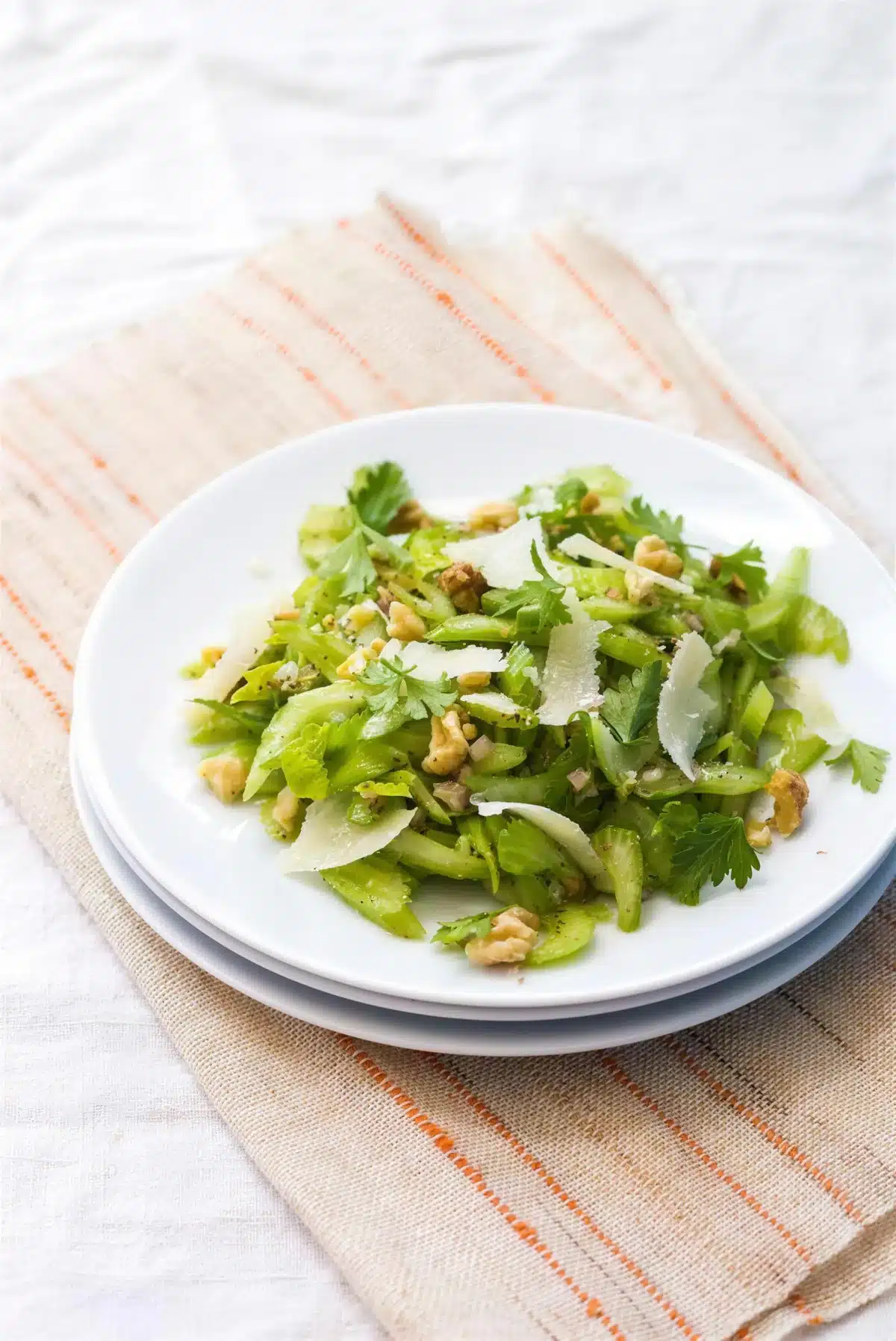
Everything below assumes you are treating celery as the main ingredient rather than as a filler.
What Makes This Celery Salad Work
Most raw celery is eaten as a vehicle. Here it is the whole dish, so three things have to be true.
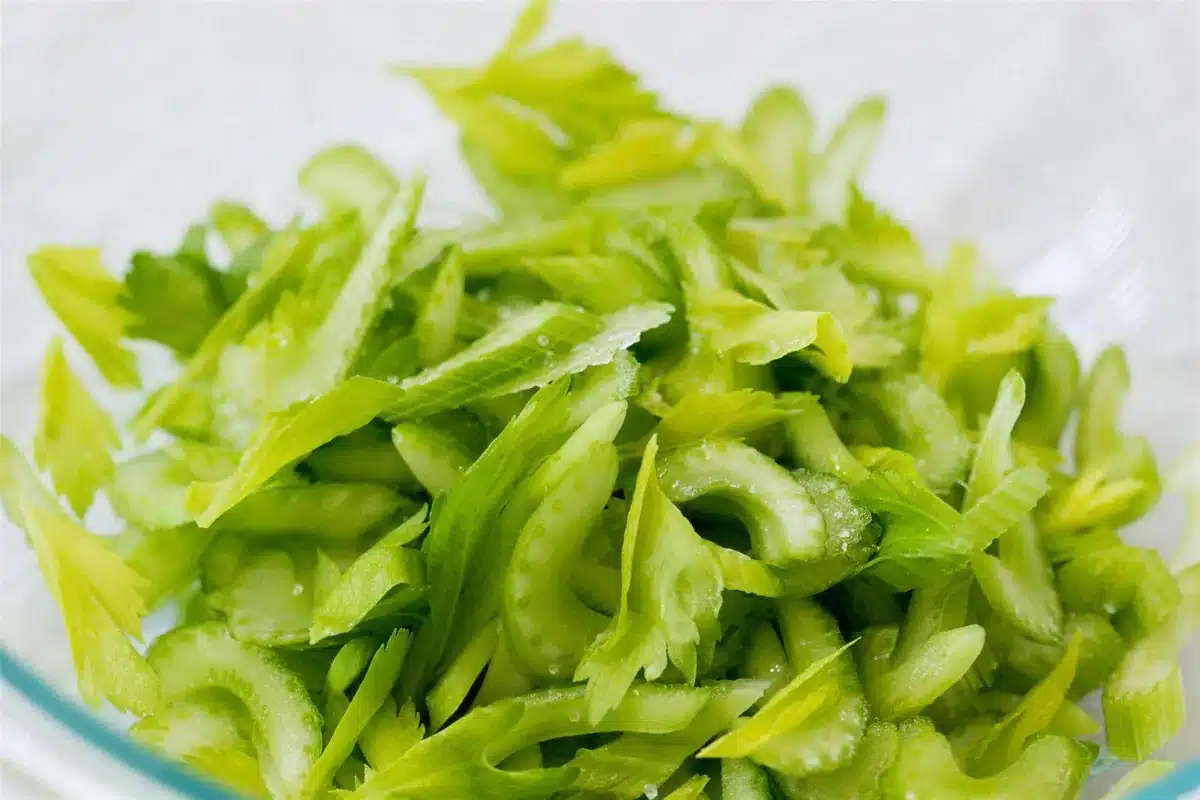
The cut has to be thin and on a steep bias. A long diagonal slice about 1/4-inch thick gives you a wide, shallow piece with plenty of surface for dressing and none of the stringy chew you get from a thick baton. Cross-cut chunks make a celery salad taste like crudites in a bowl.
The dressing has to be aggressive. Celery is around ninety-five percent water, and that water dilutes everything you put on it. The plant’s own smell comes mostly from butylphthalide, the compound responsible for the characteristic aroma of celery, and it is concentrated in the leaves rather than the stalks. A dressing that tastes correct on a spoon will taste of nothing on the celery. Lemon, anchovy, celery seed and celery salt all go in harder than seems reasonable.
The salad has to rest. Twenty minutes is not enough. An hour is the point at which the seasoning has moved into the stalks and the texture has tightened, and this celery salad is noticeably better at that mark than at any point before it.
Get those three right and the rest of the ingredients are garnish, in the best sense.
Save this recipe
Enter your email and I’ll send this recipe straight to your inbox.
Why the Hour in the Refrigerator Is Not Optional
Salt on a watery vegetable normally means limp. Celery is the exception, within a window.
The first hour firms it. Celery’s crunch comes from water pressure inside rigid cells. A light salting draws off the loose surface water without collapsing the structure, so what you get is a denser, crisper bite and a stalk that has actually absorbed some seasoning.
Past about four hours it turns. The cells give up, water pools in the bottom of the bowl and the salad goes slack and watery. One to four hours is the whole usable window, and two is comfortable.
Toss the celery with lemon and salt on its own first, before any dressing goes near it. It is a strange extra step and it is the difference between celery that is coated and celery that is seasoned. Two minutes of work.
Keep it covered and cold. Uncovered in the refrigerator the cut edges dry and turn faintly chalky.
Everything else waits. Cheese, nuts and parsley go on at the table, not into the bowl.
Ingredient Notes
Nine ingredients and two of them do the heavy lifting. Exact amounts are in the recipe card below.
- Celery hearts: about 1 1/4 pounds, which is two hearts or the pale inner two thirds of two large heads. Keep the tender yellow leaves and use them; discard the dark stringy outer ribs or save them for stock.
- Anchovy: two fillets mashed to a paste, or a rounded teaspoon of paste from a tube. Nobody will name it. Leave it out and the salad tastes thin.
- Celery seed and celery salt: the pair is what makes a celery salad taste emphatically of itself rather than merely containing celery. Celery seed is bitter and floral; celery salt is mostly salt, so they are not interchangeable.
- Lemon: zest and juice, about two lemons. Zest goes in the dressing, and a spoonful of juice is reserved for the celery on its own.
- Dijon mustard: a teaspoon. Not traditional here, and it holds the dressing together so it stops splitting in the bowl.
- Parmesan: a 3-ounce chunk, shaved with a vegetable peeler into wide sheets. Pre-grated cheese disappears into the dressing and adds nothing but salt.
- Walnuts: toasted, then chopped coarse. Eight minutes in a moderate oven roughly doubles what they contribute.
- Flat-leaf parsley: whole leaves, not chopped, so they read as a salad green rather than as a herb.
A sharp knife, a bowl and a vegetable peeler are the entire equipment list for this celery salad.
How To Make Celery Salad
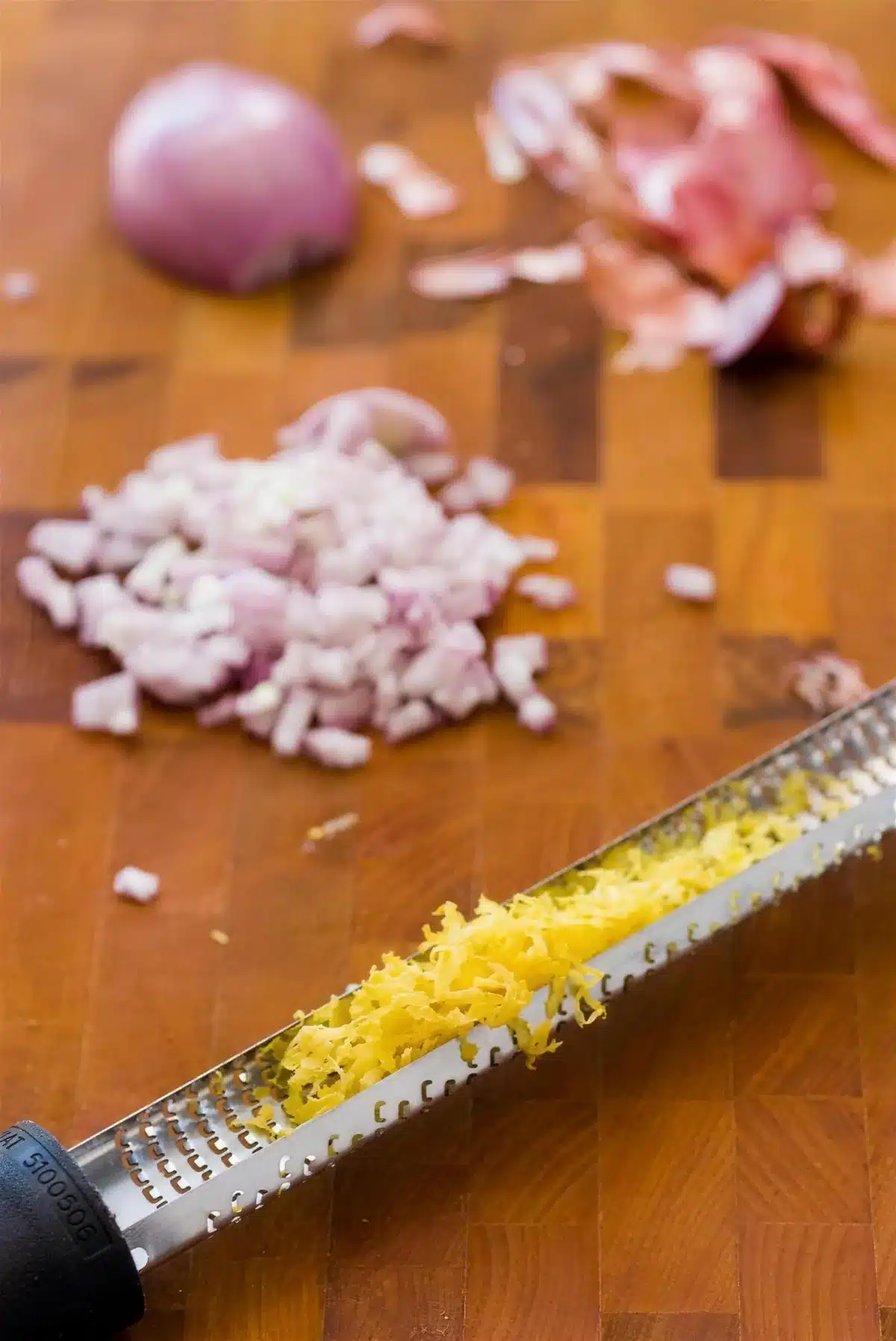
A celery salad has two stages with an hour between them, and the gap is the recipe.
- First, whisk the olive oil, lemon zest, lemon juice, shallot, mustard, celery seed, celery salt, mashed anchovy, salt and pepper into a dressing that tastes slightly too sharp on its own.
- Next, slice the celery hearts thin on a steep bias, leaves and all, and toss them in a bowl with the reserved 1 tablespoon of lemon juice and a pinch of salt, on their own.
- Then add about three quarters of the dressing, toss until every piece is coated, cover and refrigerate 1 to 4 hours.
- After that, toast the walnuts at 350F for 8 minutes and chop them coarse. Shave the parmesan into wide sheets with a peeler.
- Finally, pile the celery onto a platter, scatter the cheese, walnuts and parsley over it, grind on pepper and serve straight away.
Slicing and Prepping the Stalks
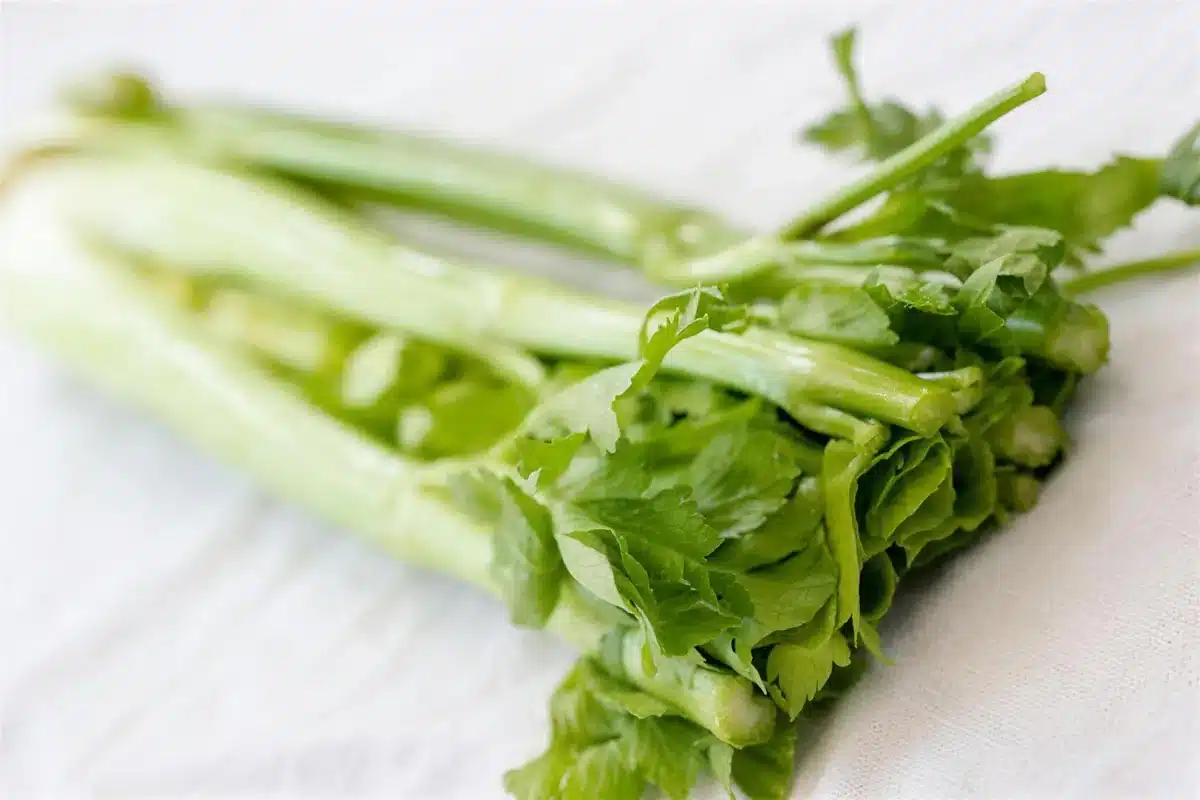
Knife work is most of what separates a good celery salad from a dull one.
Use the hearts, not the outer ribs. The outer stalks are dark, fibrous and stringy. Pull them off and keep them for stock. What you want is the pale inner section and the yellow leaves at the top.
Do not peel it. Peeling is often recommended for strings, and at heart-stalk thickness it removes more crunch than string. Slicing thin on the bias cuts the fibers short enough that they stop mattering.
Slice at a shallow angle, almost along the stalk. Each piece should be an inch or more long and no thicker than a quarter inch. A mandoline does it faster but a sharp knife is genuinely fine.
Wash and dry the leaves separately and add them whole. They are the most flavorful part of the plant and most people throw them away.
Slice at the last sensible moment. Cut celery held overnight dries at the edges before the dressing ever reaches it.
Make It Ahead
A celery salad is one of the very few salads that has to be made ahead, which makes it useful for a dinner party.
The dressing: up to one week. Refrigerate it in a jar. It separates; shake it hard and let it lose its chill before using.
The dressed celery: 1 to 4 hours, and that is the sweet spot rather than a compromise. Past four hours it starts to weep and soften.
The walnuts: three days. Toast them, cool them completely and keep them airtight at room temperature.
The cheese: shave it on the day. Shaved parmesan dries out and curls in the refrigerator overnight.
What you cannot do ahead is assemble it. The nuts go soft and the parsley wilts within about twenty minutes of hitting the dressing, so keep the celery in its bowl and build the platter as people sit down.
Storing Celery Salad
- Dressed celery, no toppings: up to 4 hours covered and refrigerated is ideal, and it is still pleasant at 24 hours, just softer and wetter.
- Fully assembled celery salad: eat it inside the hour. The walnuts soften and the parsley collapses.
- Leftovers keep two days refrigerated and are best drained and eaten cold as a relish next to something rich rather than served as a salad again.
- The dressing on its own: 1 week in a sealed jar.
- Never freeze it. Celery turns to string and water when it thaws.
Variations and Substitutions
The celery, the acid and the resting hour are structural. Everything else can move.
- Swap the nut: toasted hazelnuts, marcona almonds or pistachios all work, and pistachios look best.
- Add fruit: a chopped date or a few slices of green apple turn it sweet and sharp at once.
- Add fennel: half a bulb shaved thin, which doubles the crunch and adds anise, much as in my shaved fennel and melon salad.
- No anchovy: a teaspoon of white miso gets you most of the way to the same savory depth and keeps it vegetarian.
- Pecorino instead of parmesan for something saltier and sharper.
- Make it a main: shredded poached chicken or a tin of good tuna folded through turns this celery salad into lunch.
What to Serve with Celery Salad
Celery salad is sharp, cold and crunchy, so it belongs next to things that are rich and soft.
- Roast chicken or pork, where a celery salad does the job a sauce would.
- Anything fried, since a lemon dressing cuts fat better than a creamy one.
- A cheese board, where it works as the pickle course.
- Alongside my charred corn salad on a summer table, hot and sweet against cold and sharp.
- With parmesan crisps instead of croutons, which repeats the cheese in a crunchier form.
- Or as the light course before something substantial like my winter panzanella with roasted grapes.
Here is what readers ask most often.
Celery Salad FAQ
Frequently Asked Questions
How far ahead can I make celery salad?
Dress the celery 1 to 4 hours before serving and keep it covered in the refrigerator. That rest is what crisps the stalks and seasons them, so it is a requirement rather than a convenience. Past about four hours the cells start to give up and water pools in the bowl. Add the parmesan, walnuts and parsley at the table, never in advance.
Why does celery get crunchier in dressing instead of wilting?
Celery’s texture comes from water pressure inside stiff, fibrous cells rather than from the soft leaf tissue that makes lettuce go limp. A light salting pulls off loose surface water and firms what is left, so the bite tightens. Lettuce has no such structure, which is why a leafy salad has to be dressed at the last second and a celery salad does not.
Can I leave out the anchovy?
You can, and the salad will be noticeably flatter. Anchovy here is a savory backbone rather than a fish flavor, and two fillets across six servings is undetectable as fish. If you need it vegetarian, a teaspoon of white miso or a few drops of soy sauce gets you most of the way there. Adding more parmesan does not, since that only adds salt.
More Questions About Celery and Dressing
Good to Know
Which part of the celery should I use?
The hearts. Strip off the dark outer ribs, which are fibrous and bitter, and keep them for stock. What you want is the pale inner stalks and, above all, the yellow leaves at the top, which have more flavor than any other part of the plant and almost always end up in the bin.
Do I need to peel celery for a salad?
No, provided you slice it thin and on a steep angle. Peeling is standard advice for removing strings, but on the tender inner stalks it takes away more crunch than it saves you in chew. Cutting on a long diagonal shortens the fibers enough that they stop being noticeable.
How much does this make?
Six generous side servings, from about 1 1/4 pounds of celery hearts. It scales up cleanly for a crowd, and the only thing to watch is that a bigger bowl needs a little more dressing than the arithmetic suggests, because more of it clings to the sides.
Treat celery as the point rather than the filler and you get a salad that costs almost nothing, improves in the refrigerator and disappears faster than anything else on the table. For another cheap vegetable given the same treatment, try my charred corn salad.
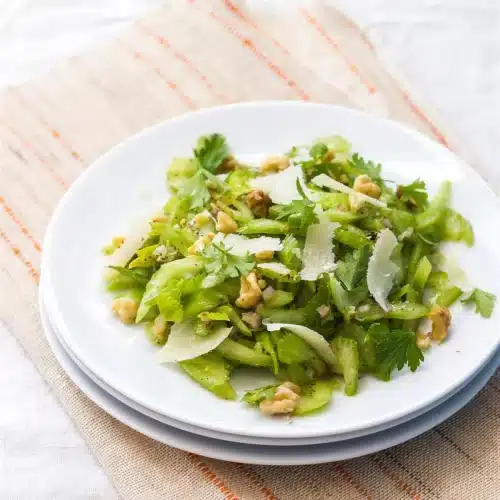
Celery Salad with Parmesan and Toasted Walnuts
Save this recipe
Enter your email and I’ll send this recipe straight to your inbox.
Ingredients
Lemon Anchovy Dressing
- 6 tablespoons extra virgin olive oil
- 3 tablespoons lemon juice from about 2 lemons
- 2 teaspoons lemon zest finely grated
- 2 tablespoons shallot minced fine
- 2 teaspoons dijon mustard
- 2 fillets anchovy mashed to a paste, or 1 rounded teaspoon anchovy paste
- 1 teaspoon celery seed
- 1/2 teaspoon celery salt
- 1 1/4 teaspoons kosher salt
- 1/2 teaspoon black pepper freshly ground
The Salad
- 1 1/4 pounds celery hearts about 5 cups once sliced, pale leaves included
- 1 tablespoon lemon juice reserved, for the celery on its own
- 1/4 teaspoon kosher salt for the celery on its own
- 3 ounces parmesan one chunk, shaved with a vegetable peeler
- 3/4 cup walnuts toasted and coarsely chopped
- 1/2 cup flat-leaf parsley leaves whole, loosely packed
Instructions
Make the Dressing
- Mash the anchovy fillets to a paste against the board with the flat of a knife. Whisk them into a bowl with the olive oil, the 3 tablespoons of lemon juice, the zest, shallot, mustard, celery seed, celery salt, kosher salt and pepper.
- Taste it. On a spoon it should read as too sharp and too salty, because the celery will dilute it by roughly half. Set it aside while you cut the celery.
Slice and Dress the Celery
- Pull the dark outer ribs off the heads and keep them for stock. Slice the pale inner hearts at a shallow angle into pieces about 1/4-inch thick, so each one is an inch or more long, and add the tender yellow leaves whole.
- Toss the celery in a bowl with the reserved tablespoon of lemon juice and the 1/4 teaspoon of salt on its own first. Then add about three quarters of the dressing, toss until every piece is coated, cover and refrigerate 1 to 4 hours.
Toast the Walnuts
- Spread the walnuts on a small tray and toast at 350F for 8 minutes, until they smell nutty and the skins darken slightly. Cool them completely, then chop coarse. Shave the parmesan into wide sheets with a vegetable peeler.
Assemble and Serve
- Pile the dressed celery onto a platter, taking any pooled liquid out with a slotted spoon. Scatter the parmesan, walnuts and whole parsley leaves over the top, add the rest of the dressing only if it looks dry, grind on pepper and serve immediately.