
A winter panzanella salad has to solve a problem the summer version never faces. Classic panzanella works because ripe tomatoes leak, and the bread drinks what they leak. In January there are no tomatoes worth using, so something else has to do the leaking.

- Uses stale bread on purpose, so the heel of last week’s loaf finally has a job
- Roasted grapes replace the tomatoes and give you the same sweet, acidic juice
- Forty minutes, and the oven does two of the three jobs at once
- The grapes and bread can both be done a day ahead
- Vegetarian as written, and vegan if you swap the honey for maple syrup
- Sturdy enough to sit on a buffet table for an hour without collapsing
Roasted grapes do it beautifully. Twenty minutes at 400F and they wrinkle, collapse and release a thin syrup that is sweet and faintly sharp all at once. Scrape that off the pan into the vinaigrette and you have the missing liquid, plus a flavor tomatoes cannot give you. Shaved fennel and arugula keep this winter panzanella salad from tipping into dessert, and the whole thing takes forty minutes.

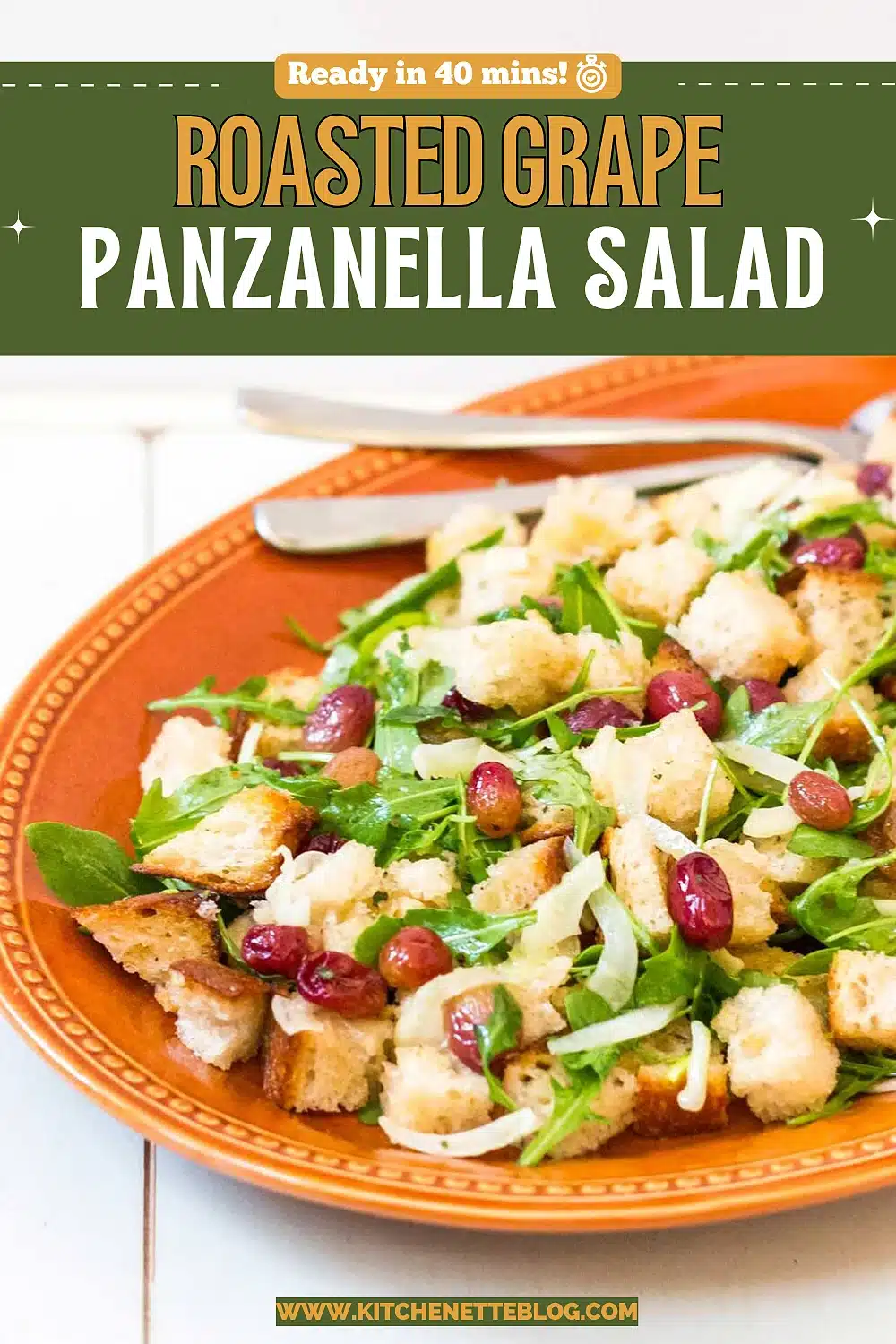
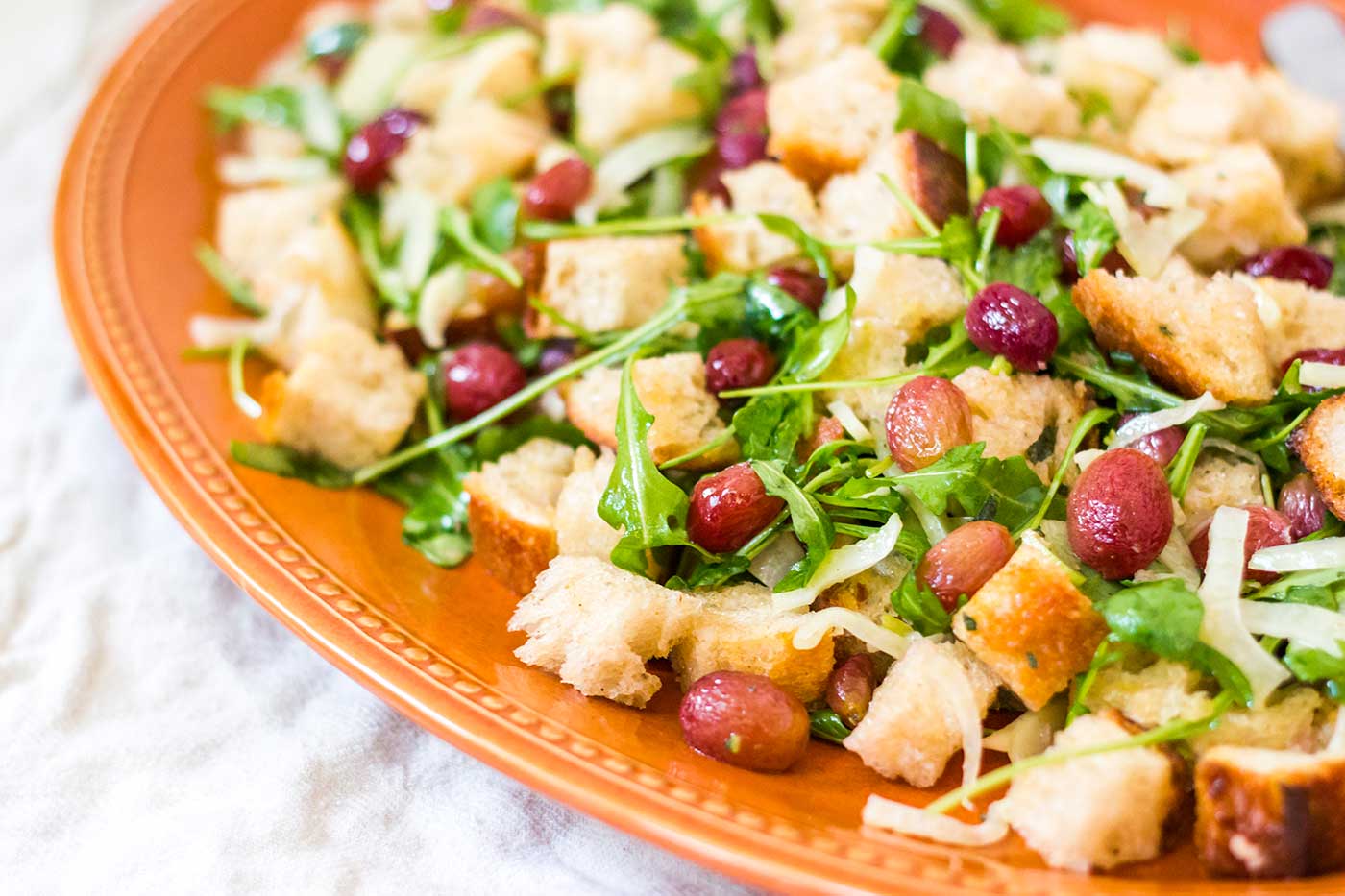
Two things decide whether a winter panzanella salad works: how you treat the bread, and when the arugula goes in.
- What Makes a Winter Panzanella Salad Different
- The Bread Is the Whole Argument
- Ingredient Notes
- How To Make Winter Panzanella Salad
- Roasting Grapes Without Turning Them to Raisins
- Why Winter Panzanella Salad Goes Soggy
- Make It Ahead
- Storing Winter Panzanella Salad
- Variations and Substitutions
- What to Serve with Winter Panzanella Salad
- Winter Panzanella Salad FAQ
What Makes a Winter Panzanella Salad Different
Panzanella is a Tuscan bread salad, and in its original form it is a way of using bread that has gone hard rather than throwing it out. Tomatoes, cucumber, onion, vinegar, oil. Nothing more.
A winter panzanella salad keeps the structure and replaces the summer produce, which means finding a substitute for two separate things the tomatoes were doing.
The juice. Tomatoes give up a startling amount of liquid once salted, and that liquid is what turns dry bread into something worth eating. Roasted grapes give up less, but what they give up is more concentrated. Roasted squash and beets, the usual winter choices, give up almost nothing, which is why those versions often taste dry.
The acid. Tomatoes are sharp. Grapes are not, so the vinaigrette in a winter panzanella salad has to work harder. Two tablespoons of red wine vinegar against a quarter cup of oil is a much sharper ratio than you would use on lettuce, and it is deliberate.
The other change is timing. Summer panzanella improves if it sits for half an hour. This one is best about ten minutes after it is tossed, because the arugula is fragile in a way that a wedge of tomato is not.
Save this recipe
Enter your email and I’ll send this recipe straight to your inbox.
The Bread Is the Whole Argument
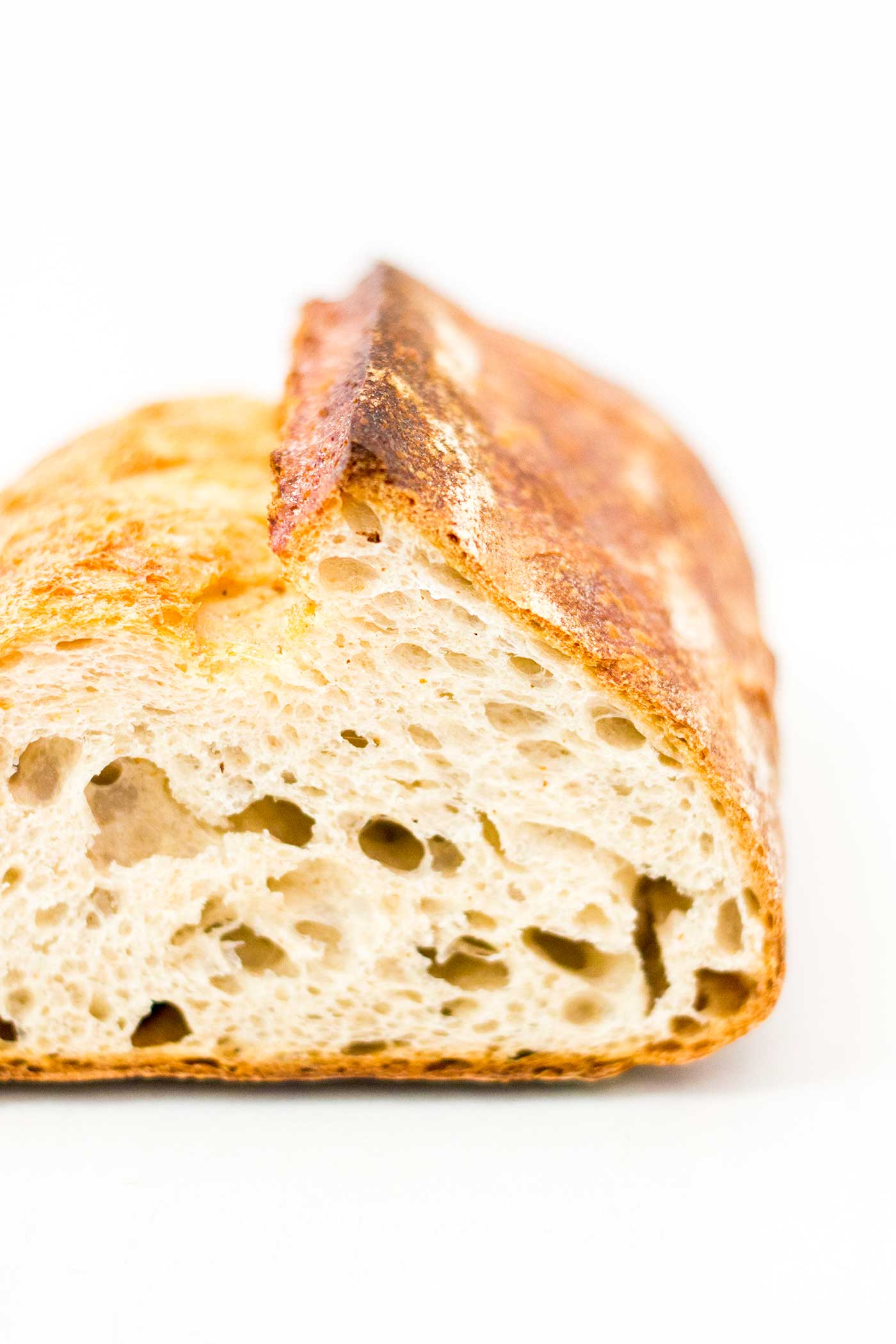
Get the bread right and the rest of a winter panzanella salad is assembly. Get it wrong and no dressing will save it.
You want an open, chewy crumb and a real crust. A country sourdough, a ciabatta, a rustic white loaf from a bakery. Flour is simply ground wheat kernels, and the miller separates the bran, the germ and the endosperm before recombining them in different proportions, which is why a bakery white loaf and a supermarket sandwich loaf behave nothing alike in a bowl of vinaigrette.
What does not work is soft sandwich bread. It has too fine a crumb and too much sugar and fat, so it collapses into paste the moment it is dressed. Brioche and challah fail the same way, faster.
Tear the bread rather than cutting it where you can. Torn edges are ragged and catch dressing; knife-cut faces are smooth and shed it. Cut the loaf into rough one-inch slabs first if tearing a whole loaf feels unmanageable, then pull those apart.
Stale, Fresh or Store-Bought Croutons
Stale is the ideal, and stale means dry rather than moldy. Two or three days on the counter under a cloth. The starch has retrograded and the crumb has firmed, so it takes on liquid without disintegrating.
Fresh bread can be faked into staleness. Tear it, spread it on a sheet pan and leave it uncovered for an hour, then toast it as the recipe says but for a couple of minutes longer.
Store-bought croutons do not work. They are seasoned, usually with garlic powder, and they are fried rather than dried, so they stay hard in a way that reads as wrong here.
Do not skip the oven step even with stale bread. Stale bread is dry on the outside and often still soft in the middle. Twelve minutes at 400F with oil and salt dries it all the way through and browns the edges, and those browned edges are half the flavor.
Ingredient Notes
A winter panzanella salad runs to nine ingredients, four of them pantry staples. Exact amounts are in the recipe card below.
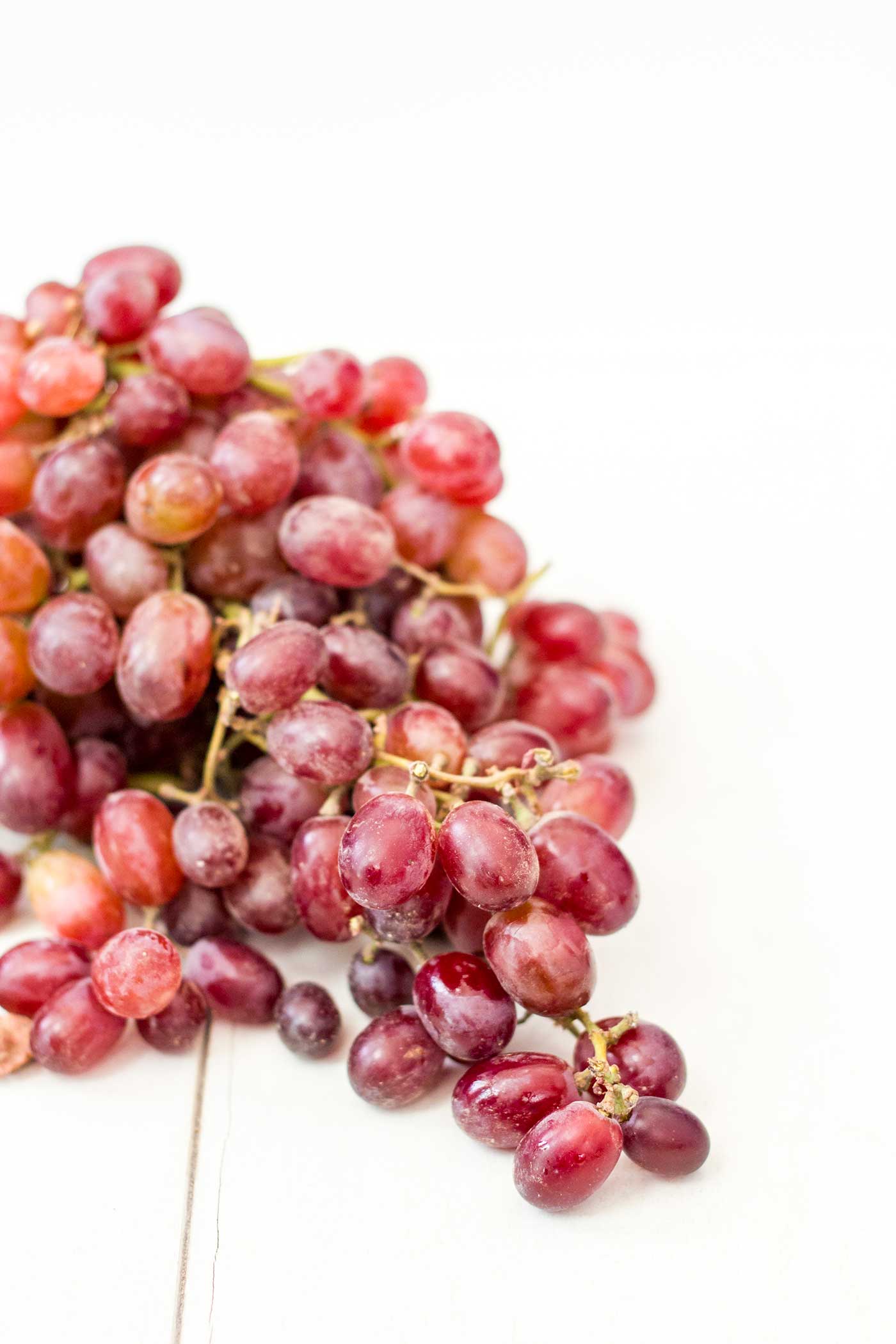
- Red seedless grapes: two cups, off the stem. Red or black rather than green, because green grapes are more acidic and less sweet and do not caramelize as well. Bigger grapes take longer and shrink more dramatically, which is not a bad thing.
- Rustic bread: six ounces, which is about five cups once torn into one-inch pieces. See above; this is the ingredient that matters most.
- Fennel: one small bulb, cored and shaved as thinly as you can manage. A mandoline is genuinely better than a knife here, and the thinner it is, the less it tastes of licorice. That flavor is anethole, the same compound that gives anise its character, and it fades fast on thin slices exposed to acid.
- Arugula: two cups loosely packed, and wild or baby rather than the large mature leaves, which can be aggressively bitter next to sweet grapes.
- Red wine vinegar: two tablespoons. Sherry vinegar is a fine swap and slightly rounder. Balsamic is too sweet against the grapes.
- Fresh sage: one teaspoon, minced to almost nothing. Sage leaves are furry and raw sage in a vinaigrette can be harsh, so mince it finer than feels necessary and let it sit in the vinegar for five minutes before the oil goes in.
- Honey: half a teaspoon, purely to take the edge off the vinegar. Maple syrup if you are keeping it vegan.
- Olive oil: a third of a cup in total, split three ways between the grapes, the bread and the vinaigrette.
How To Make Winter Panzanella Salad
Both trays for this winter panzanella salad go into the same oven, so start the grapes first and slide the bread in when they are about halfway.
- First, heat the oven to 400F. Toss the grapes on a sheet pan with a teaspoon of oil, a quarter teaspoon of salt and some pepper, and roast 20 to 25 minutes until they are wrinkled and deflated but not raisin-dry.
- Next, tear the bread into rough one-inch pieces, toss on a second pan with a tablespoon of oil and a quarter teaspoon of salt, and bake 10 to 12 minutes until dry all the way through and lightly browned.
- Then whisk the vinegar, minced sage and honey together and leave them five minutes. Whisk in the remaining quarter cup of oil in a slow stream, then the rest of the salt and the pepper.
- After that, scrape every bit of the sticky juice off the grape pan into the vinaigrette and whisk it in. This is the step nobody bothers with and it is the best part of the dressing.
- Finally, toss the warm bread, grapes and shaved fennel with about three quarters of the vinaigrette. Let it stand 5 minutes, then fold the arugula through with the rest and serve.
Roasting Grapes Without Turning Them to Raisins
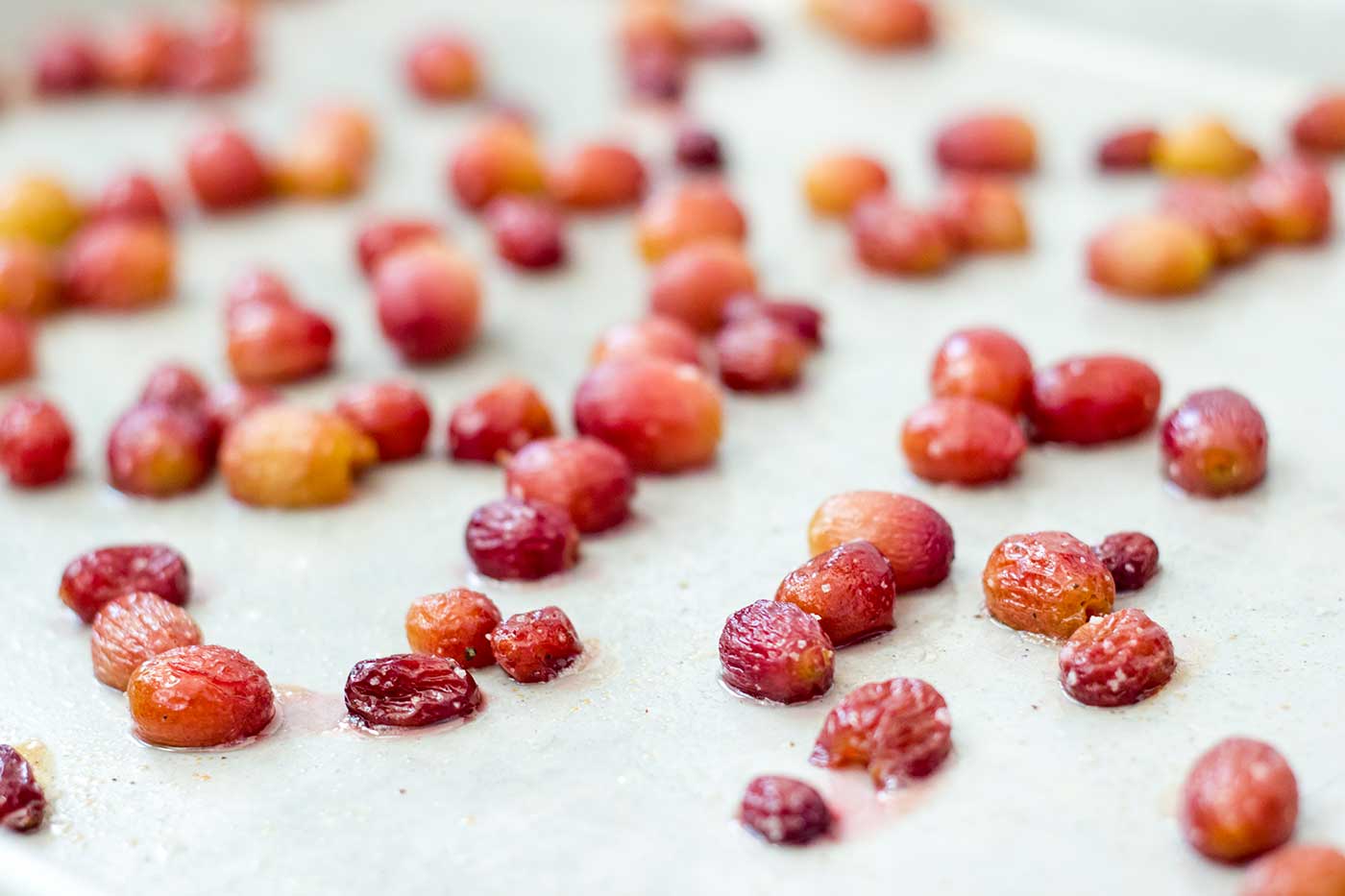
The window between roasted and shriveled is wider than people think, but a winter panzanella salad still depends on hitting it.
What you want is a grape that has collapsed on one side, gone slightly translucent and split its skin in a place or two. It should still be plump enough to burst when you bite it.
What you do not want is a raisin. A fully dried grape has lost its juice, which was the entire reason for roasting it, and it turns leathery and gets lost in the salad.
Timing depends on the grape. Small, thin-skinned grapes can be there in twelve minutes. Big supermarket ones take twenty-five. Look at them at fifteen and then every five minutes after that.
Spread them out. A crowded pan steams, and steamed grapes go soft without concentrating. Use a pan large enough that no grape touches another.
Do not line the pan. Parchment stops the sugars catching on the metal, and those catching sugars are exactly what you want to scrape into the dressing. A bare pan is easier to deglaze with a splash of the vinegar if the juices set hard.
Why Winter Panzanella Salad Goes Soggy
Every bad panzanella has the same problem, and it is almost never the dressing. Five things turn a winter panzanella salad to mush.
The bread was not dried through. This is the big one. Bread that is crisp outside and soft inside soaks unevenly, and the soft middles turn to paste within minutes while the crusts stay hard.
Too much vinaigrette went in at once. Dress it with three quarters and hold the rest back. You can always add; you cannot take it out.
It sat too long. A winter panzanella salad has a window of about half an hour. Beyond that the bread has taken all it can and starts breaking down.
The grapes were underroasted. Underdone grapes are still full of water, and they release it slowly into the bowl over the next twenty minutes.
It was refrigerated after dressing. Cold makes the olive oil cloudy and thick, and the bread firms into something unpleasantly dense. This salad wants to be at room temperature.
Make It Ahead
Split into components, a winter panzanella salad is a genuinely good make-ahead dish, which is not true of most salads.
The bread can be toasted two days ahead and kept in a paper bag at room temperature. Not plastic, which traps steam and softens it back down.
The grapes can be roasted a day ahead. Keep them and their juices together in a covered container in the refrigerator and let them come back to room temperature before using.
The vinaigrette keeps three days in a jar. It will separate; shake it.
The fennel can be shaved a few hours ahead if you drop it into cold water with a squeeze of lemon. Drain and dry it well before it goes in.
The arugula is the only thing that must be done at the last minute, and it does not need doing so much as adding.
Storing Winter Panzanella Salad
- Dressed, at room temperature: a winter panzanella salad holds about 1 hour before the texture starts to go. It is fine on a buffet table.
- Dressed, refrigerated: 1 day, and it will be a different and softer dish. Some people prefer it; most do not.
- Undressed components: 2 days for the bread, 3 days for the grapes and vinaigrette. This is the version worth planning for.
- Freezer: no. Bread salad does not survive it in any form.
- Leftovers: reheat them. Spread the lot on a sheet pan, warm at 375F for eight minutes and eat it as a warm bread salad with an egg on top.
Variations and Substitutions
In a winter panzanella salad the bread, the acid and the roasted fruit are structural. Everything else is negotiable.
- Shaved parmesan or pecorino: half a cup over the top, which adds the salt and fat the original Tuscan version got from nothing at all.
- Roasted grapes plus roasted shallots: four shallots halved and roasted alongside, for something deeper and less sweet.
- Radicchio instead of arugula: bitter rather than peppery, and it holds up better if the salad has to sit.
- Toasted walnuts or hazelnuts: half a cup, for crunch that outlasts the bread.
- Add a bean: a can of cannellini, drained, turns this from a side into lunch.
- Prosciutto or pancetta: four ounces crisped in the oven, which makes it a very good winter supper and no longer vegetarian.
What to Serve with Winter Panzanella Salad
A winter panzanella salad is a side dish that behaves like a starch, so plan the rest of the plate accordingly.
- Roast chicken, which is the obvious answer and still the right one. The pan juices and the grape syrup belong together.
- Pork loin or sausages, where the sweetness of the grapes does the job apple sauce usually does.
- Alongside roasted fennel and white bean crostini, which doubles down on the fennel and the good bread.
- On a holiday table next to my Waldorf salad, since both use fruit in a savory setting and neither needs reheating.
- With a simple soup, where it stands in for the bread you would otherwise serve on the side.
For two more ways with the same fruit, there is my creamy grape salad and the sharper Ina Garten Greek salad.
Here is what readers ask most often.
Winter Panzanella Salad FAQ
Frequently Asked Questions
What kind of bread is best for panzanella?
An open-crumbed, crusty loaf: country sourdough, ciabatta or a rustic bakery white. It needs a structure strong enough to take on liquid without collapsing, which soft sandwich bread does not have. Two or three days stale is ideal, and even then it should still be dried and browned in a hot oven, because stale bread is usually dry on the surface and soft in the middle.
Can I use fresh bread instead of stale?
Yes, with one extra step. Tear it up, spread it on a sheet pan and leave it uncovered on the counter for an hour to lose surface moisture, then toast it at 400F for twelve to fourteen minutes rather than ten to twelve. What you are after is bread that is dry all the way to the center, and fresh bread simply needs longer in the oven to get there.
How far ahead can I make it?
A fully assembled winter panzanella salad holds about half an hour before the bread starts to soften. As components, a full day: roast the grapes and keep them with their juices, toast the bread and store it in a paper bag, and make the vinaigrette in a jar. On the day it takes five minutes to shave the fennel, toss and fold in the arugula.
More Questions About Bread and Grapes
Good to Know
Do I have to roast the grapes?
Not strictly, but raw grapes make a much weaker winter panzanella salad. Roasting drives off water and concentrates the sugar and the acid, and it produces the sticky juice that goes into the vinaigrette and does most of the work. Raw grapes stay watery, taste flat against the vinegar, and leak into the bowl slowly rather than giving you anything useful up front.
Can I make it vegan?
Yes. Swap the half teaspoon of honey for maple syrup or agave and there is nothing else to change, since a winter panzanella salad has no dairy in it as written. If you were planning to add the shaved parmesan from the variations, a tablespoon of nutritional yeast whisked into the vinaigrette gets you somewhere in the same neighborhood.
Why is my fennel so strong?
It was cut too thick. Fennel’s anise flavor concentrates in thicker slices and mellows dramatically as they get thinner, which is why a mandoline is worth using. Trim the core out too, since it is the toughest and most strongly flavored part, and give the shavings ten minutes in the vinaigrette before serving to let the acid soften them.
What can I use instead of arugula?
Radicchio is the closest in spirit, bitter rather than peppery, and it holds up longer. Watercress works and brings the same pepper. Baby kale needs a minute of massaging with a little of the vinaigrette first or it stays tough. Ordinary spinach is the one to avoid, since it wilts on contact with the warm bread and adds nothing sharp.
A winter panzanella salad is proof that a bread salad does not need tomatoes, only something willing to leak. For another cold-weather side that improves on standing, try my white bean crostini.

Winter Panzanella Salad with Roasted Grapes
Save this recipe
Enter your email and I’ll send this recipe straight to your inbox.
Ingredients
The Salad
- 2 cups red seedless grapes pulled off the stem, red or black rather than green
- 6 ounces stale rustic bread about 5 cups torn into rough 1-inch pieces, crusts left on
- 1 small head fennel cored and shaved as thinly as possible, fronds saved
- 2 cups arugula loosely packed, baby or wild
The Sage Vinaigrette
- 1/3 cup extra-virgin olive oil divided: 1 teaspoon for the grapes, 1 tablespoon for the bread, the rest in the dressing
- 2 tablespoons red wine vinegar or sherry vinegar
- 1 teaspoon fresh sage minced as finely as you can manage
- 1/2 teaspoon honey or maple syrup to keep it vegan
- 1 1/4 teaspoons kosher salt divided between the grapes, the bread and the dressing
- 1/2 teaspoon freshly ground black pepper divided
Instructions
Roast the Grapes
- Heat the oven to 400F. Toss the grapes on an unlined sheet pan with 1 teaspoon of the olive oil, 1/4 teaspoon of the salt and a little pepper, spreading them out so no grape touches another.
- Roast 20 to 25 minutes, checking from 15, until the grapes are wrinkled and collapsed on one side but still plump enough to burst. Do not take them as far as raisins or you lose the juice you roasted them for.
Toast the Bread
- Tear the bread into rough 1-inch pieces. Toss on a second pan with 1 tablespoon of the olive oil, 1/4 teaspoon of the salt and a little pepper.
- Bake 10 to 12 minutes, alongside the grapes, until the pieces are dry all the way through and the edges are lightly browned. Soft centers are what turns a bread salad to paste.
Make the Vinaigrette
- Whisk the vinegar, minced sage and honey together and leave them to sit for 5 minutes so the acid softens the sage. Whisk in the remaining 1/4 cup olive oil in a slow stream, then the remaining 3/4 teaspoon salt and the rest of the pepper.
- Scrape every bit of sticky juice off the grape pan into the vinaigrette and whisk it in. If it has set hard, splash a little of the vinegar onto the warm pan first and it will lift straight off.
Toss and Serve
- Tip the warm bread, the grapes and the shaved fennel into a wide bowl and toss with about three quarters of the vinaigrette. Let it stand 5 minutes so the bread takes on the dressing.
- Fold the arugula through with the last of the vinaigrette and serve at room temperature within about half an hour, scattered with any fennel fronds.