
A chicken lentil stew should not need flour, cream or a slurry to hold itself together. Half a pound of red lentils dropped into good stock will collapse into it and thicken the whole pot on their own, which is the oldest trick in the book and still the best one.
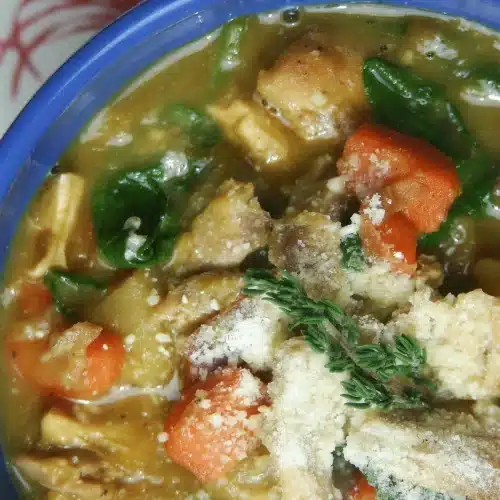
This chicken lentil stew is a one-pot January dinner: bone-in thighs seared hard, deglazed with marsala, then leeks, carrots and potatoes, and lentils that fall apart into the broth while the chicken finishes cooking in it. Spinach and a splash of vinegar at the end, parmesan over the top.
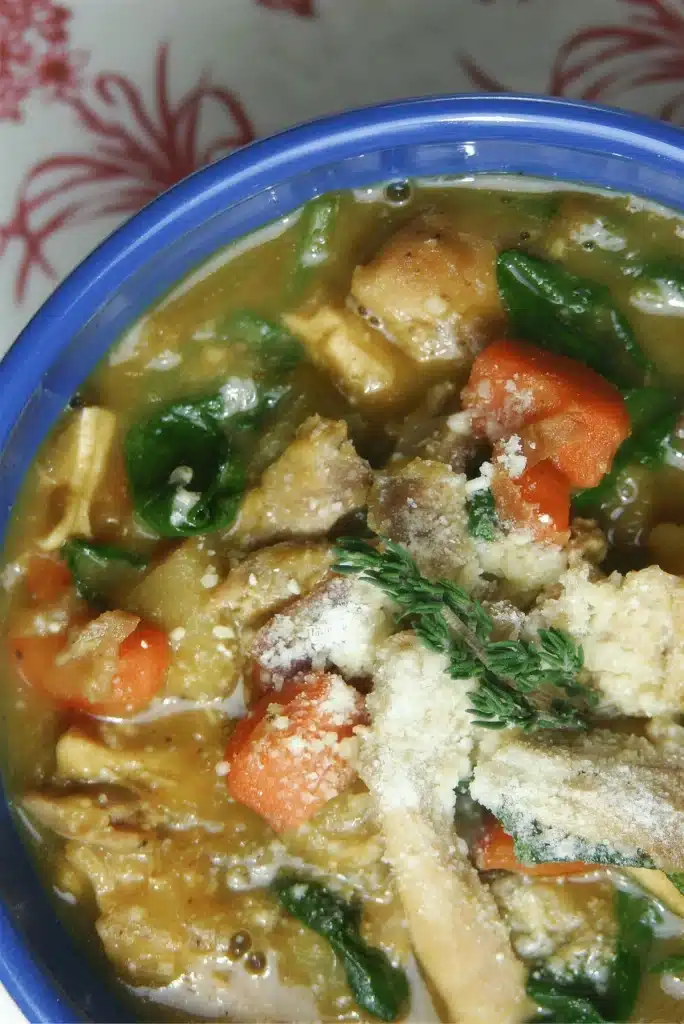
- One pot, one hour, and no thickener beyond the lentils themselves
- Bone-in thighs, which cost less than breasts and cannot be overcooked in a simmer
- Red lentils need no soaking and no separate pan
- It is better on the second day, so it is a genuine make-ahead dinner
- Freezes well for three months, which is not true of most stews with potatoes in them


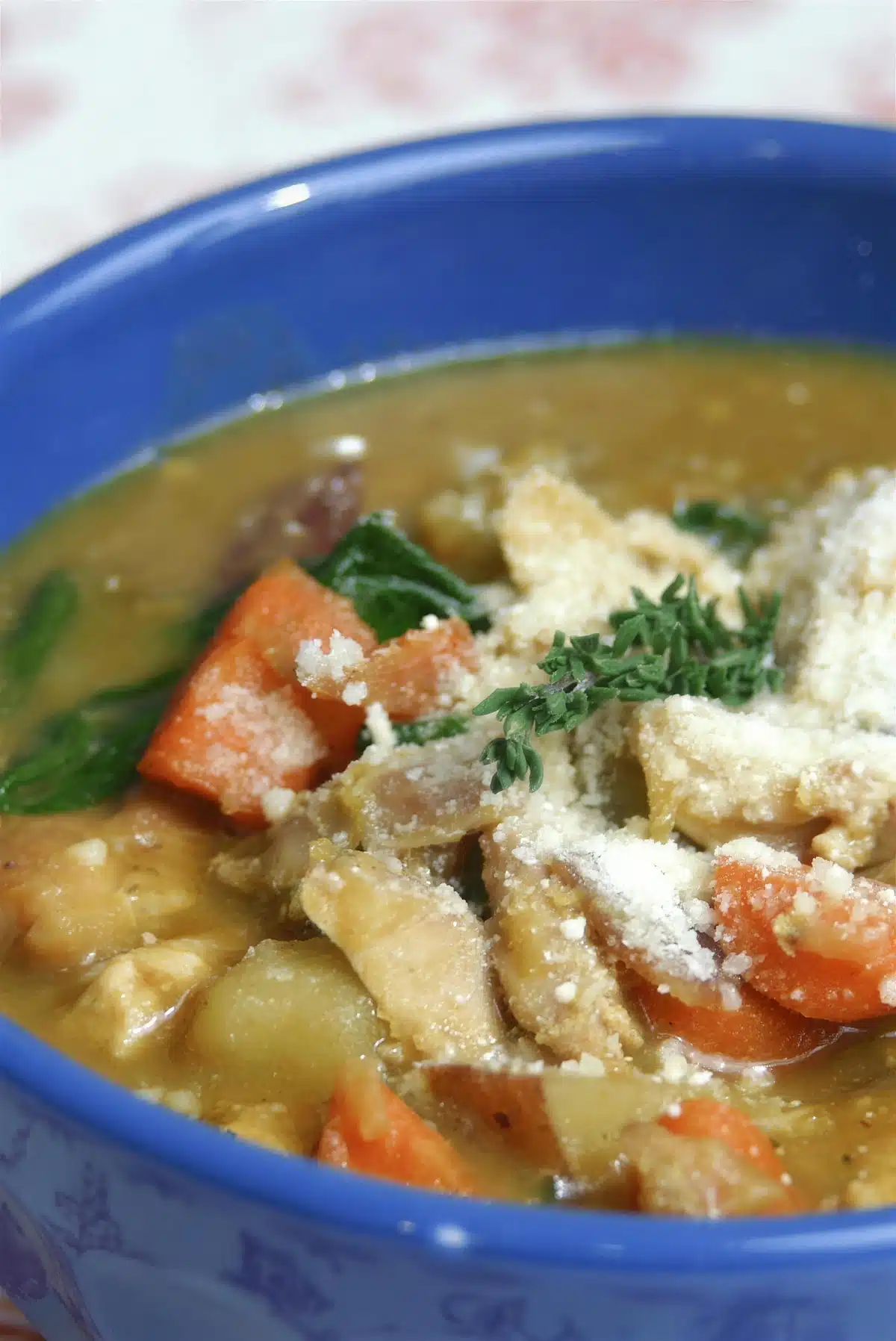
Two choices decide how a chicken lentil stew turns out: which lentil you buy, and how long the chicken stays in the pot.
- Which Lentils for Chicken Lentil Stew
- Ingredient Notes
- Bone-In Thighs Are the Whole Point
- How To Make Chicken Lentil Stew
- How To Tell When Chicken Lentil Stew Is Done
- Getting the Thickness Right
- Slow Cooker and Instant Pot
- Make It Ahead and Storing Chicken Lentil Stew
- Variations and Substitutions
- What to Serve with Chicken Lentil Stew
- Chicken Lentil Stew FAQ
Which Lentils for Chicken Lentil Stew
Lentils are not interchangeable in a chicken lentil stew, and the difference is structural rather than a matter of taste.
Red and yellow lentils are what this recipe uses. Illinois Extension puts it simply: red lentils break down quicker than other lentils and will also cook faster, which is exactly what you want when the lentil is doing the thickening. They dissolve into the broth in about twenty minutes and leave a golden, slightly velvety body behind.
Green and brown lentils hold their shape. They make a perfectly good chicken lentil stew, but a different one: distinct lentils suspended in a thin broth rather than a thickened pot. If you use them, allow thirty to thirty-five minutes and expect to reduce the liquid or add a spoonful of flour.
Black beluga and French green lentils hold their shape hardest of all. Excellent in a salad, wasted here.
Nothing needs soaking. Lentils are the one pulse you can cook straight from the bag, which is most of why this is a weeknight dish.
Save this recipe
Enter your email and I’ll send this recipe straight to your inbox.
Ingredient Notes
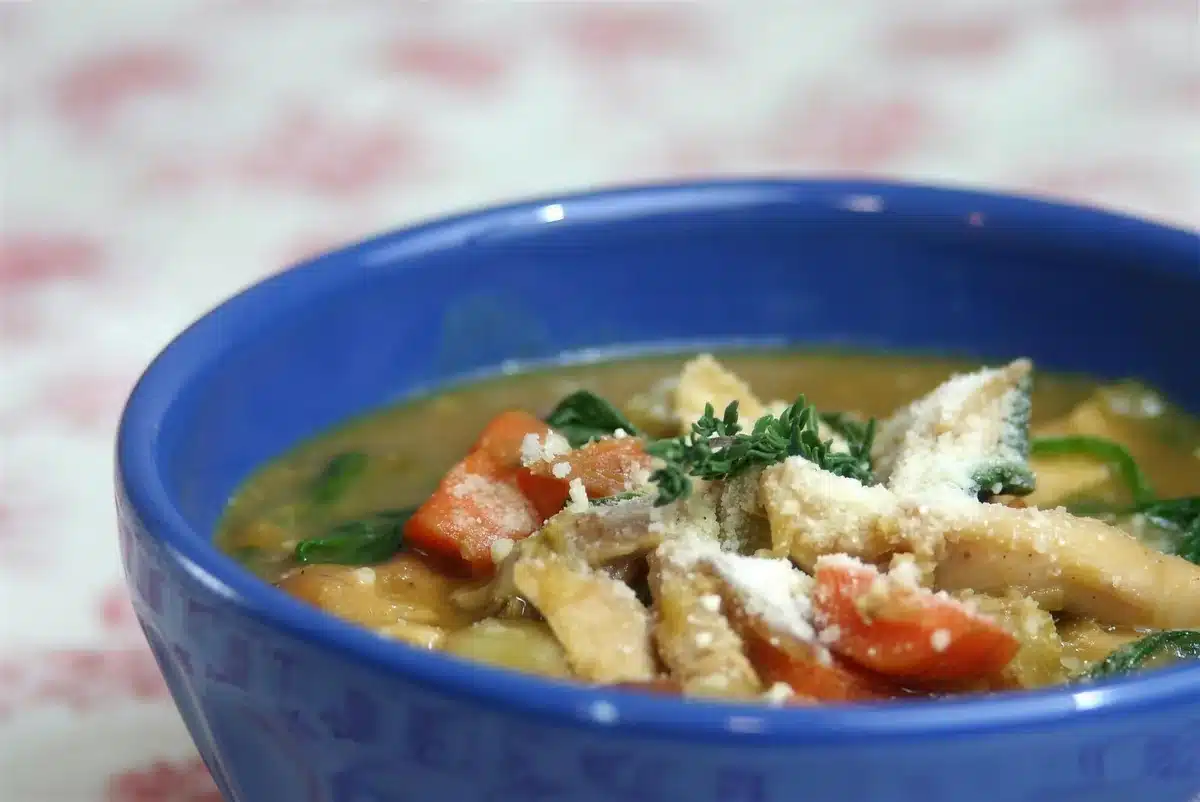
There are fourteen things in this chicken lentil stew and none of them are hard to find. Exact amounts are in the recipe card at the end.
- Chicken thighs: six small bone-in, skin-on, about two pounds. The skin renders and starts the whole pot; the bone goes into the broth for twenty-five minutes and is worth more than the stock is.
- Marsala: half a cup, dry rather than sweet. Dry white wine works. What it does is lift the browned material off the bottom of the pot, which is where most of the flavor in this chicken lentil stew is sitting.
- Leek and shallot: one of each. Sweeter and quieter than an onion, and they melt rather than staying in pieces. Rinse the leek properly, since grit in a stew is unrecoverable.
- Celery seed: half a teaspoon, ground. It gives the savory background that celery would, without adding another vegetable that goes stringy. Do not double it, because it turns bitter.
- Red potatoes: two medium, diced. Waxy, so they hold their shape while the lentils fall apart around them. Russets would disintegrate.
- Thyme: eight sprigs, whole, fished out later. Far better than dried here.
- Baby spinach: about three ounces, stirred in off the heat. Kale works if you add it fifteen minutes earlier.
- White wine vinegar: two teaspoons at the very end. This is the ingredient people skip and then wonder why the pot tastes flat.
Bone-In Thighs Are the Whole Point
Boneless breast in a chicken lentil stew is a compromise you can taste. It goes from raw to dry inside a couple of minutes and there is no window in which it is good.
Bone-in thighs do the opposite. Dark meat has enough connective tissue that twenty-five minutes of gentle simmering makes it softer rather than tougher, and the bones give up gelatin that turns a thin stock into something with weight to it. Six small thighs is about two pounds and yields plenty of meat once shredded.
The skin is there to render, not to eat. Sear it hard so the fat comes out and the pot browns, then pull the skin off before the chicken goes back in. Left on through the simmer it turns to slack rubber and greases the broth.
Boneless thighs work if that is what you have. Cut the simmer to fifteen minutes and accept a thinner broth.
How To Make Chicken Lentil Stew
A chicken lentil stew is one pot from start to finish, and the only thing that needs watching is the sear.
- First, season the thighs on both sides with salt, pepper and the celery seed, then brown them skin side down in oil in a dutch oven for about 5 minutes a side, with the thyme sprigs scattered around them.
- Next, pour in the marsala, let almost all of it cook away, then lift the chicken out onto a plate and fish out the thyme stems.
- Then add the butter, shallot and leek with a pinch of salt and cook until soft, add the carrots and potatoes and give them another 5 minutes.
- After that, add the stock, lentils and bay leaf, pull the skin off the chicken and return the thighs to the pot, and simmer partially covered for 20 to 25 minutes, until the lentils have collapsed and the chicken is cooked through.
- Finally, lift the chicken out, shred the meat off the bones, return it with the spinach, and finish off the heat with the vinegar, more salt and parmesan over each bowl.
How To Tell When Chicken Lentil Stew Is Done
There are three signals that a chicken lentil stew is ready, and they arrive at roughly the same moment.
The lentils have vanished. Drag a spoon through and you should see a thickened golden broth rather than individual orange discs. If you can still count them, give it five more minutes.
The chicken reads 175F at the thickest part. Thighs are safe at 165F, but dark meat is not pleasant to eat until closer to 175F, where the connective tissue has softened and the meat pulls away from the bone without a fight.
The potatoes give without falling. A knife tip should slide in with no resistance while the dice still has square corners.
If the chicken is ready and the lentils are not, take the chicken out and keep simmering. If the lentils are ready first, the chicken almost certainly needs longer, so leave it.
Getting the Thickness Right
A chicken lentil stew thickens twice: once while it simmers, and again as it cools. What looks slightly loose in the pot will be right in the bowl, and thick in the pot means solid in the refrigerator.
If it is too thin, simmer it uncovered for another five minutes, or mash a few of the potato dice against the side of the pot with a spoon. Both work better than flour.
If it is too thick, and by the second day it will be, thin it with stock rather than water. A quarter cup at a time, over low heat, stirring.
The vinegar at the end does something for the texture as well as the flavor. Acid makes a starchy broth taste lighter than it is, which is why two teaspoons at the finish is worth more than a whole extra cup of stock.
Slow Cooker and Instant Pot
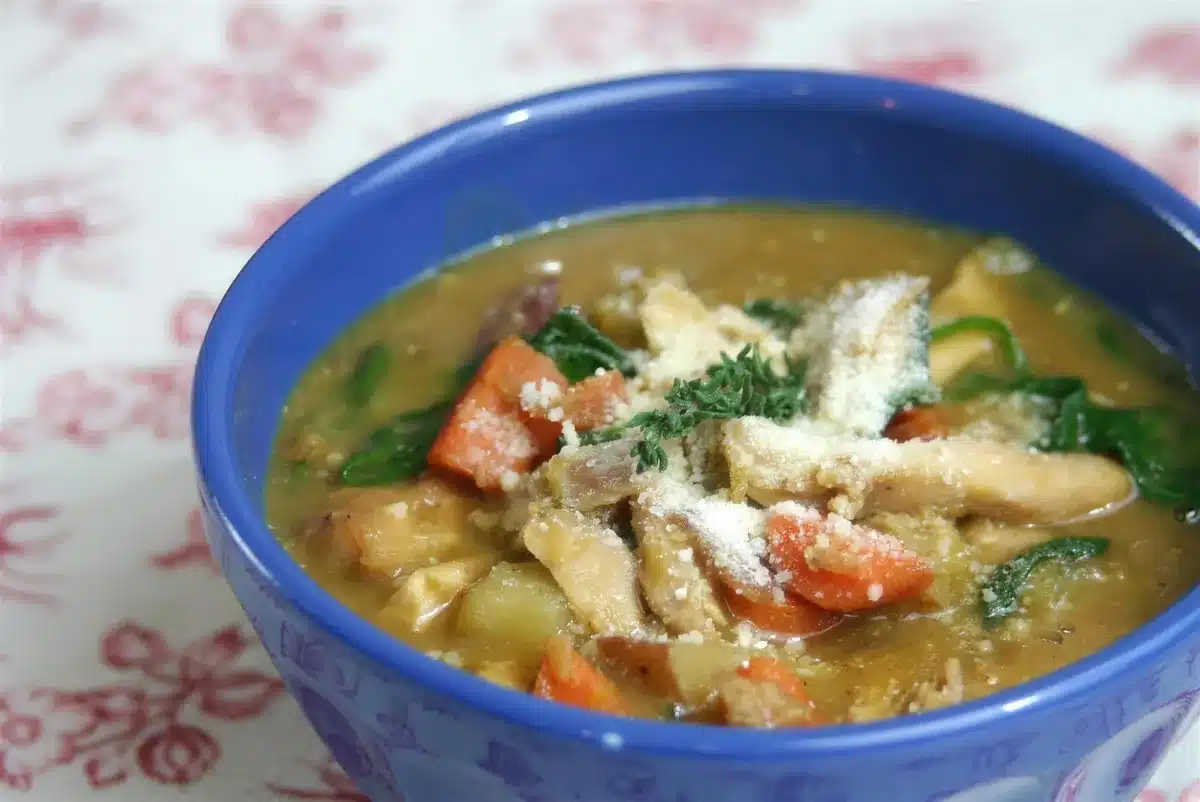
Both make a good chicken lentil stew, and both need the sear done in a skillet first. Skipping it costs you most of the flavor.
Slow cooker: sear the thighs, deglaze with the marsala and pour that into the cooker with everything except the spinach and vinegar. Low for 5 hours or high for 3. Red lentils will be completely dissolved either way, so use green lentils here if you want any texture left.
Instant pot: sear on saute, deglaze, then pressure cook on high for 8 minutes with a 10 minute natural release. Add the spinach and vinegar on saute at the end. Do not go past 8 minutes, since red lentils and potatoes both turn to paste under pressure faster than you expect.
Shred the chicken off the bone the same way in both.
Make It Ahead and Storing Chicken Lentil Stew
- Refrigerator: 4 days in a sealed container. It is better on day two, once the celery seed and thyme have settled into the broth.
- Freezer: 3 months. Waxy red potatoes survive freezing far better than floury ones, which is the main reason this stew freezes as well as it does.
- Reheating: gently on the stove with a splash of stock. Boiling it hard breaks the shredded chicken into threads.
- Made ahead deliberately: stop before the spinach and vinegar, cool and refrigerate, then add both when you reheat so the greens stay green.
- Parmesan: always at the table, never stirred into the pot, where it goes stringy and settles at the bottom.
Variations and Substitutions
The lentil and the acid are the fixed parts of a chicken lentil stew. Everything else is negotiable.
- Green lentils: a full cup, thirty-five minutes, and a thinner broth with distinct lentils in it.
- No marsala: dry white wine, dry sherry, or a quarter cup of stock with a teaspoon of vinegar stirred in.
- Sweet potato: in place of the red potatoes, which pushes the whole pot sweeter and suits a pinch of cumin.
- Bacon: two rashers rendered before the chicken goes in, then crumbled over at the end.
- Lemon instead of vinegar: the juice of half a lemon plus its zest, which is brighter and slightly less savory.
- Vegetarian: leave the chicken out, use vegetable stock, double the lentils to a full cup and add a parmesan rind to the pot while it simmers.
What to Serve with Chicken Lentil Stew
A chicken lentil stew is a whole dinner already, so what it wants beside it is something to mop with and something sharp.
- Crusty bread or a warm flatbread, which is non-negotiable in this house.
- A sharp green salad with a mustard dressing, to cut the richness the bones put into the broth.
- Before or after mulligatawny soup if you are cooking your way through the lentil bag.
- On a week when you also make lemon chicken artichoke soup, since both use the same stock and freeze the same way.
- With creamy wild rice and mushroom soup for a table of two pots and a lot of bread.
Here is what readers ask most often.
Chicken Lentil Stew FAQ
Frequently Asked Questions
Do I need to soak the lentils first?
No. Lentils are the one pulse that goes straight from the bag into the pot, which is most of the reason this is a weeknight dinner rather than a weekend one. Rinse them in a sieve and pick out any small stones, then add them dry with the stock. A chicken lentil stew is one of the few bean dishes you can start at six and eat at seven.
Why is my chicken lentil stew watery?
Almost always the wrong lentil. Green, brown, beluga and French lentils are bred to hold their shape, so they will not thicken anything. Red and yellow lentils collapse, and that collapse is the thickener. If you are already committed to green lentils, simmer uncovered for a further ten minutes and mash a few potato dice against the side of the pot.
Can I use chicken breast instead of thighs?
You can, and it is the one substitution I would argue against. Breast meat has no connective tissue to soften and no bone to give up gelatin, so it goes dry inside about two minutes and the broth stays thin. If breast is what you have, poach it whole in the finished stew for eight minutes off a bare simmer and shred it then.
More Questions About Lentils and Timing
Good to Know
Can I freeze it?
Yes, for three months. Waxy red potatoes hold up to freezing much better than floury ones, and the shredded chicken is protected by the thickened broth around it. Freeze it before the spinach goes in if you can, then stir fresh spinach through as it reheats. Thaw overnight and warm it gently rather than boiling.
How long does chicken lentil stew keep?
Four days refrigerated, and it improves for the first two. It thickens noticeably as it sits, because the lentil starch keeps setting, so thin each portion with a splash of stock as you reheat rather than adding water, which dilutes the seasoning along with the texture.
Can I make it in a slow cooker?
Yes, but sear the thighs in a skillet first and deglaze with the marsala, then tip everything into the cooker. Low for five hours or high for three. Red lentils will have dissolved completely by then, so switch to green lentils if you want any texture, and add the spinach and vinegar in the last five minutes.
What does the vinegar at the end do?
It makes everything taste like itself again. A pot that has simmered for half an hour goes round and slightly dull, and two teaspoons of acid off the heat sharpens the leek, the thyme and the chicken all at once. Add it after the heat is off, taste, and add a little more salt if it still seems flat.
A pot of chicken lentil stew on a Sunday is three dinners, and the third one is the best. For another bowl that thickens itself, try my easy chicken tikka masala.
Chicken Lentil Stew
Save this recipe
Enter your email and I’ll send this recipe straight to your inbox.
Ingredients
The Stew
- 1 tablespoon olive oil
- 6 small bone-in chicken thighs skin on, about 2 pounds
- 1 1/2 teaspoons kosher salt divided, plus more to taste
- 1/2 teaspoon freshly ground black pepper
- 1/2 teaspoon ground celery seed do not double it, it turns bitter
- 8 sprigs fresh thyme whole, fished out later
- 1/2 cup dry marsala or dry white wine
- 2 tablespoons unsalted butter
- 1 shallot minced
- 1 leek white and light green parts, sliced and rinsed well
- 2 large carrots chopped
- 2 medium red potatoes diced, waxy so they hold their shape
- 4 cups chicken stock low sodium
- 3/4 cup red lentils rinsed, no soaking
- 1 bay leaf
To Finish
- 3 ounces baby spinach about two large handfuls
- 2 teaspoons white wine vinegar off the heat, do not skip it
- 1/4 cup finely grated parmesan at the table, not stirred into the pot
Equipment
- Large pot or Dutch oven
Instructions
Sear the Chicken
- First, season the thighs on both sides with half the salt, the pepper and the celery seed. Heat the olive oil in a dutch oven over medium-high, lay the thighs in skin side down and scatter the thyme sprigs around them.
- Cook for about 5 minutes a side, until the skin is properly browned. Pour in the marsala and let almost all of it cook away, then lift the chicken onto a plate and pull out the thyme stems.
Build the Base
- Next, lower the heat to medium and add the butter, shallot and leek with a pinch of salt. Cook until soft and sweet, about 4 minutes, scraping the browned material off the bottom as they release their moisture.
- Add the carrots and potatoes with another pinch of salt and cook for 5 minutes more.
Simmer with the Lentils
- Then add the stock, lentils and bay leaf and bring to a boil. Pull the skin off the chicken and discard it, and return the thighs to the pot along with any juices from the plate.
- Lower the heat and simmer partially covered for 20 to 25 minutes, until the lentils have collapsed into the broth and the thickest part of a thigh reads 175F. Remove the bay leaf.
Shred and Finish
- After that, lift the chicken out with tongs and shred the meat off the bones into bite-size pieces, discarding the bones. Return the meat to the pot with the spinach and stir until the leaves have wilted, about 2 minutes.
- Finally, take the pot off the heat, stir in the vinegar and taste for salt. Ladle into bowls and grate the parmesan over each one at the table.