
Most chickpea patties fall apart in the pan, and the reason is almost never the binder. It is water. Canned chickpeas come out of the tin wet, they go straight into the food processor wet, and no amount of flour or egg will fix a mixture that was too loose before you added either.
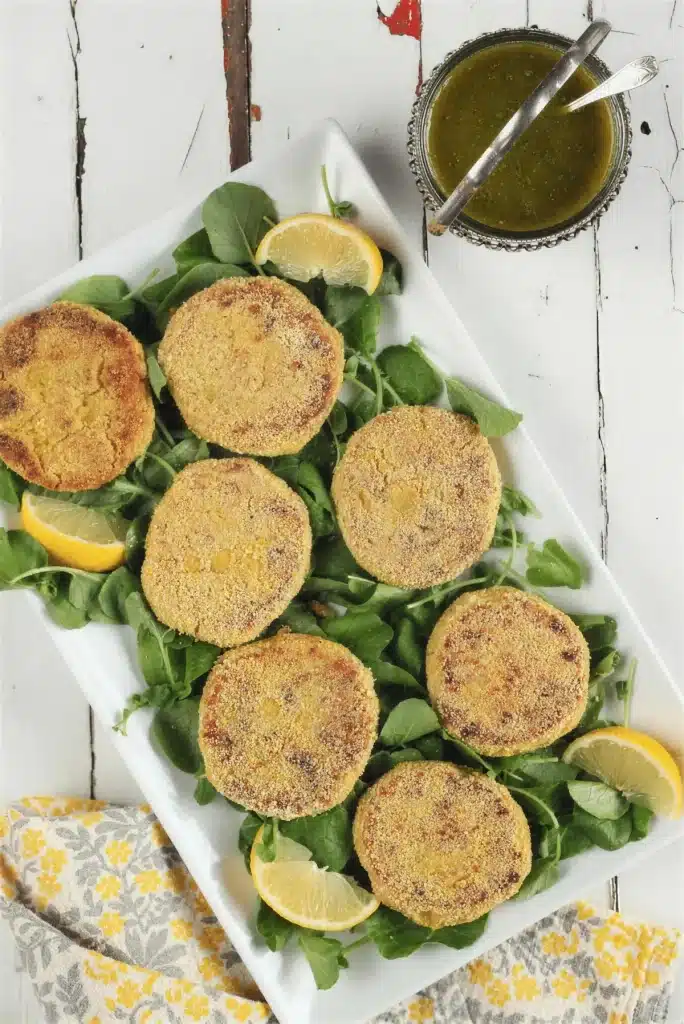
- They hold together, because the mixture is dried and chilled before it is shaped
- Two cans of chickpeas and a handful of herbs, which is about four dollars of food
- The cornmeal crust stays crisp under the sauce instead of dissolving into it
- Vegetarian without being apologetic, and easily made vegan
- Both the mixture and the sauce can be made a day ahead
- They reheat properly in an oven, which very few fried things do
These chickpea patties fix it at the source: the chickpeas get patted dry, chickpea flour goes in instead of breadcrumbs so the binder tastes like the thing it is binding, and the shaped rounds spend half an hour in the refrigerator before they see any oil. Then they are rolled in cornmeal, which gives a crust that stays crisp under the sauce for a good ten minutes. The sauce itself is a loose, raw, aggressively green thing with mint, parsley, chives and half a jalapeno in it.

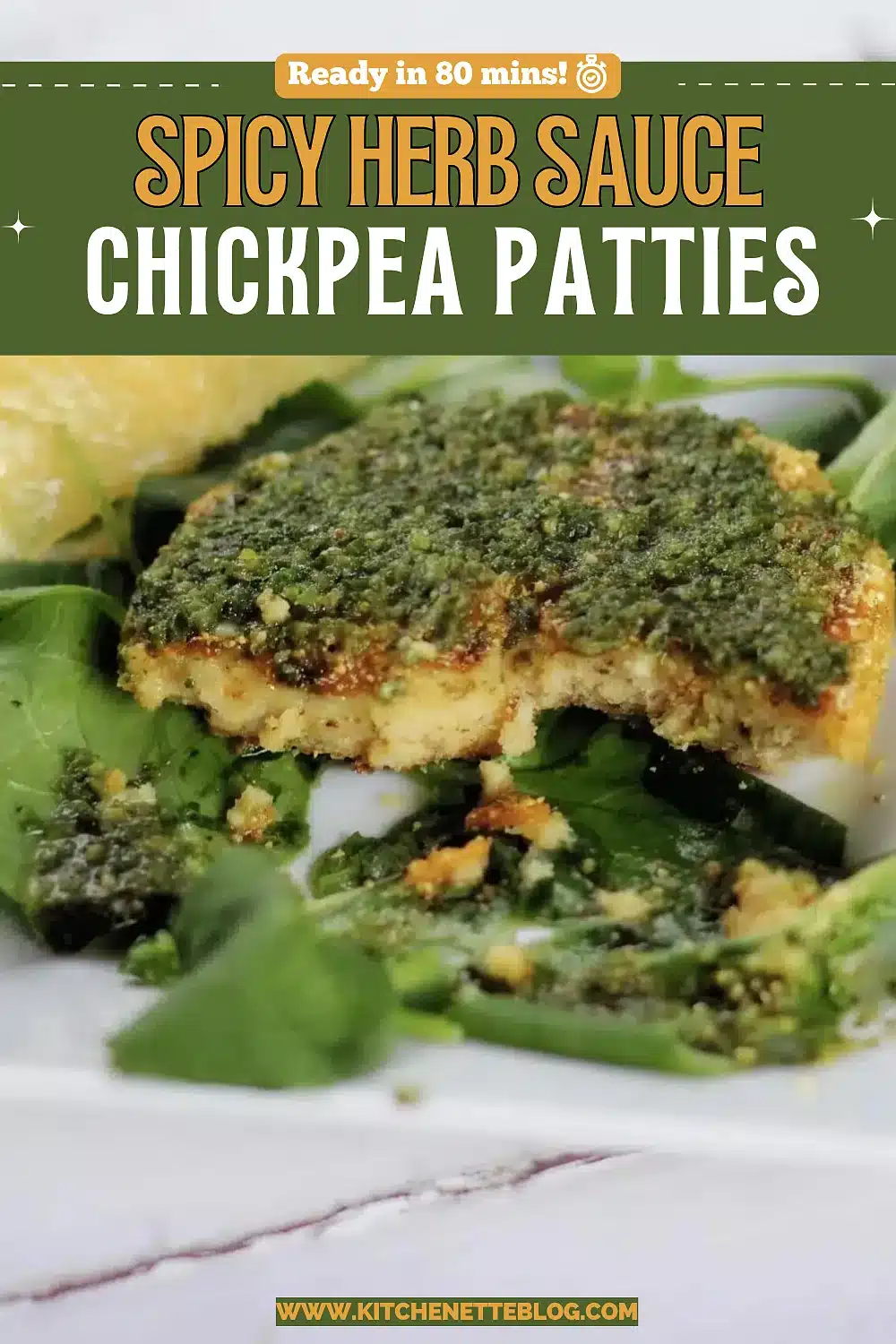
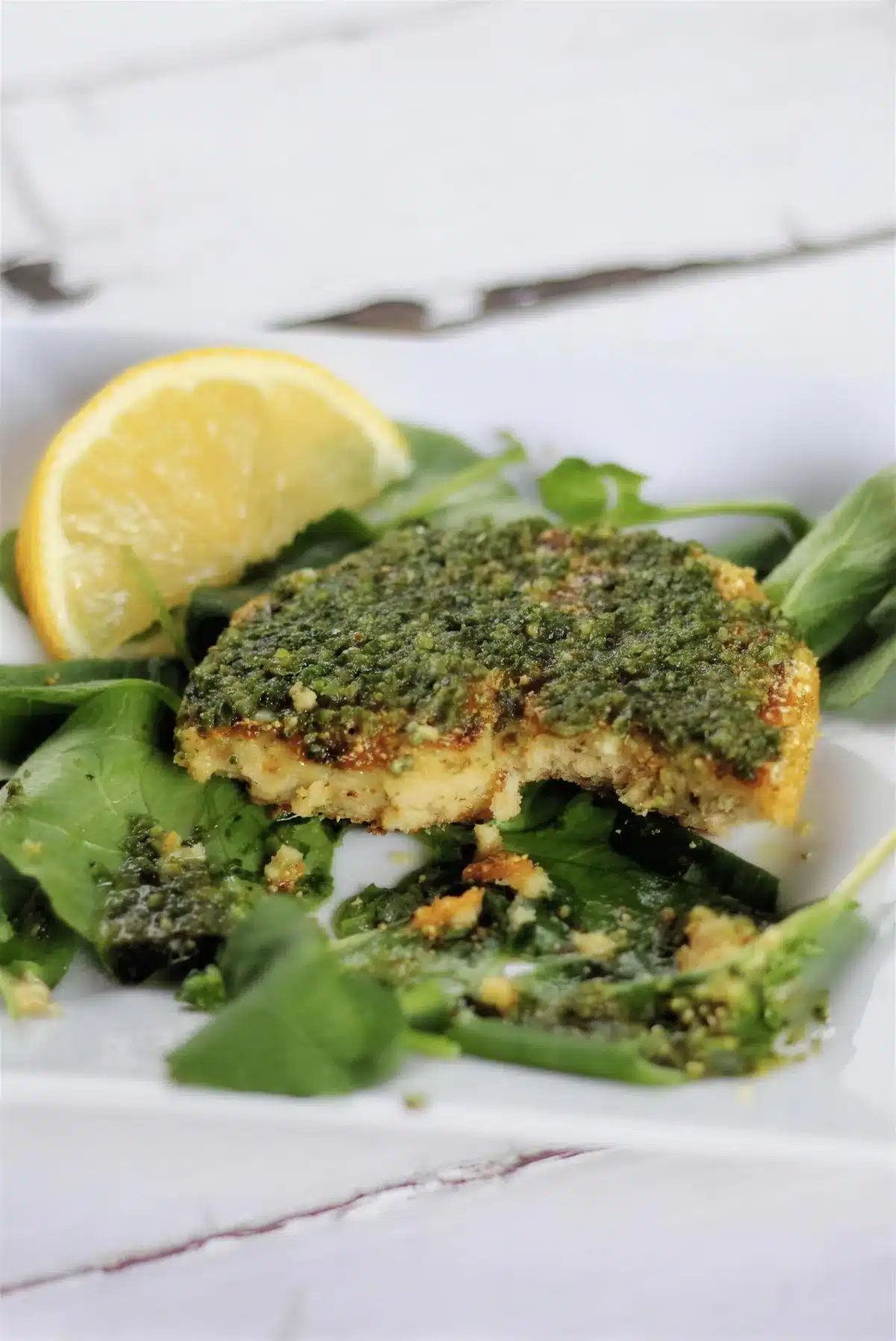
Everything below assumes you want chickpea patties with a crust that crackles and a middle that is soft without being wet.
What Makes These Chickpea Patties Hold Together
Every recipe for chickpea patties promises they will not crumble. Three things actually decide it, and only one of them is the binder.
Dry the chickpeas properly. Drain them, rinse them, then spread them on a clean towel and roll them around until the surfaces look matte rather than glossy. This takes two minutes and removes more water than any amount of extra flour can absorb.
Pulse, do not puree. You want a coarse mixture with recognizable pieces of chickpea in it. A smooth paste has had its structure broken down and it slumps in the pan. Ten to twelve one-second pulses is usually right.
Chill the shaped rounds. Thirty minutes in the refrigerator lets the chickpea flour hydrate and firms the fat, and it is the difference between a patty that keeps its edge and one that spreads into a puddle. An hour is better if you have it.
Do those three and the egg becomes insurance rather than the thing the recipe depends on.
Save this recipe
Enter your email and I’ll send this recipe straight to your inbox.
Ingredient Notes
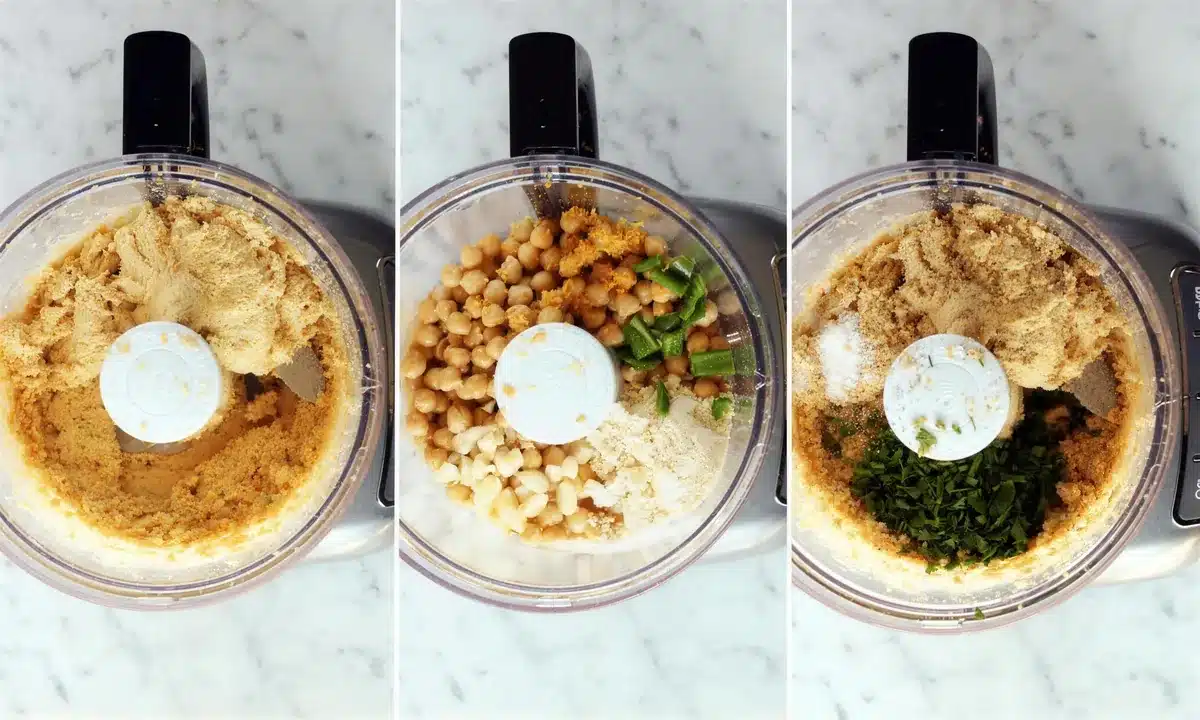
Nothing in these chickpea patties is unusual except the chickpea flour, and that is worth buying. Exact amounts are in the recipe card below.
- Canned chickpeas: two 15-ounce cans, drained, rinsed and dried. Cooked-from-dry chickpeas work and are firmer, which is an advantage here.
- Chickpea flour: also sold as gram flour or besan. It binds like a starch but tastes of chickpea, so it disappears into the patties instead of tasting of bread. Fine cornmeal is the closest substitute.
- Tahini: two tablespoons, which adds fat and a faint bitterness that keeps the mixture from tasting flat.
- Jalapeno: half a chile in the mixture and half in the sauce. Seeds and ribs removed for the patties, left in for the sauce if you want it hot.
- Herbs: mint, flat-leaf parsley and chives, in that order of importance. Mint is what makes these taste like something rather than like a health food.
- Cornmeal: fine or medium grind for the coating. Coarse polenta grind scratches rather than crisps.
- Kosher salt: 2 teaspoons of Diamond Crystal in the mixture. If you use Morton, use half again less by volume, because it is roughly twice as dense.
A food processor, a wide skillet and a sheet pan cover the equipment.
Why the Cornmeal Crust Matters
The coating is not a detail. It is what separates these chickpea patties from a bean burger.
Cornmeal fries dry. Flour and breadcrumbs both absorb oil and go greasy. Cornmeal has almost no gluten and very little capacity to soak anything up, so it crisps and stays crisp.
It gives you a heat barrier. The crust browns while the interior only warms through, which is exactly what you want when the inside is already cooked and just needs to set.
Coat cold, fry immediately. Cornmeal pulls moisture out of the surface if it sits, and a damp coating slides off in the pan.
Press, do not roll. Lay each round in the cornmeal and press gently so the grains embed rather than sitting loose on the surface.
Use enough oil to come a third of the way up. Shallow frying is what produces the crust. A dry pan gives you a pale, tough exterior and a chalky middle.
How To Make Chickpea Patties
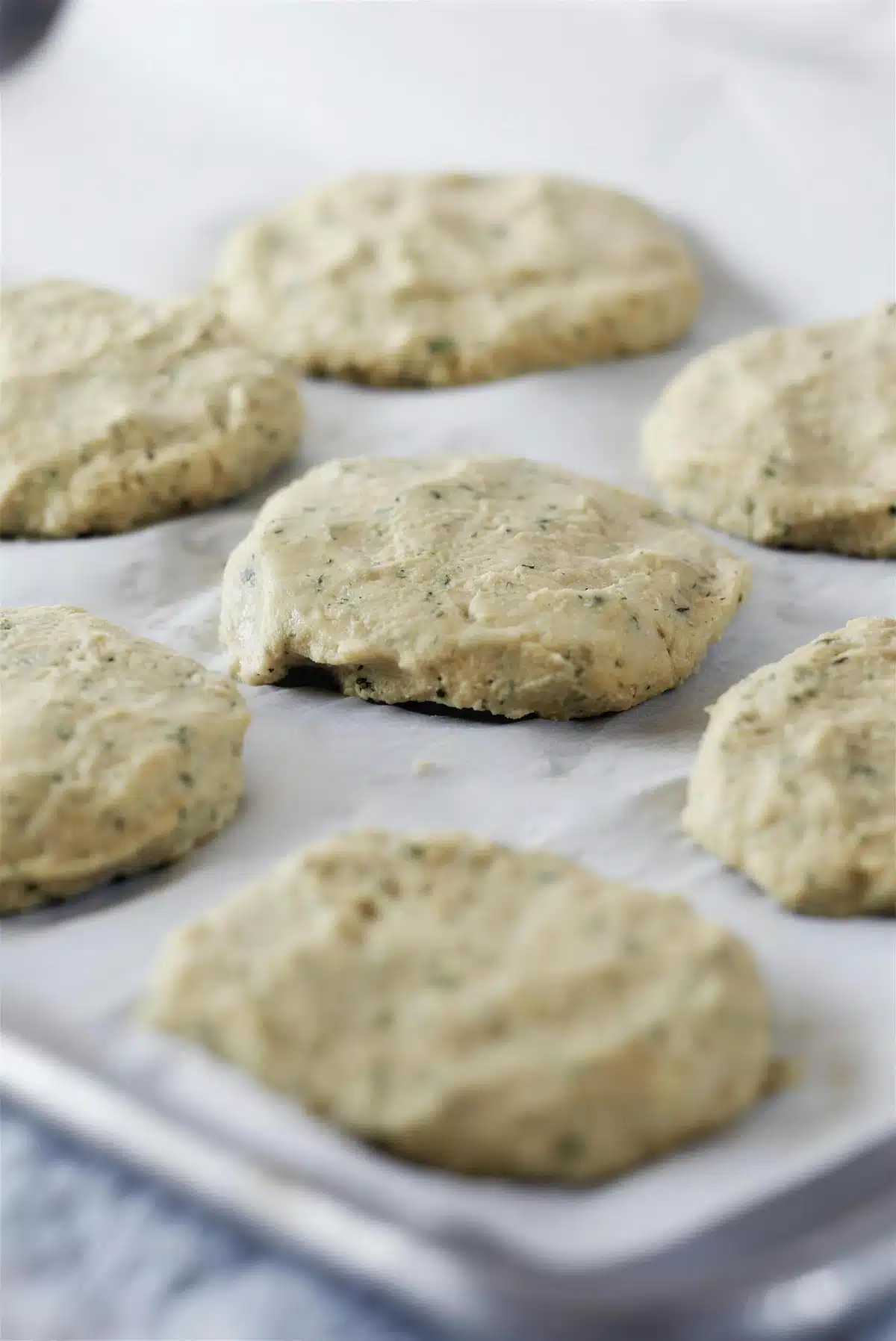
Chickpea patties come together in four movements, and the sauce is the first of them. It needs the food processor and it is far easier to blend green things in a clean bowl than after the chickpeas.
- First, blend the parsley, mint, chives, jalapeno, lemon juice, olive oil, salt and pepper into a loose, bright green sauce and scrape it into a bowl. Rinse the processor bowl.
- Next, pulse the dried chickpeas with the chickpea flour, garlic, jalapeno, tahini, olive oil, egg, lemon zest and juice until coarse, then add the herbs, salt and pepper and pulse twice more.
- Then shape the mixture into ten rounds about 3-inch across and 3/4-inch thick with wet hands, lay them on a parchment-lined tray and refrigerate for 30 minutes.
- After that, press both sides of each cold round into fine cornmeal and fry in a wide skillet over medium heat for 4 to 5 minutes a side, until deeply golden.
- Finally, drain them on a rack rather than paper, keep the finished ones warm in a 200F oven, and spoon the herb sauce over at the table.
The Spicy Herb Sauce
The sauce is a salsa verde in everything but name, and it is not optional. Chickpea patties on their own are pleasant and slightly dull.
Keep it raw. Nothing is cooked, so the herbs stay green and the jalapeno keeps its brightness. Cooked herb sauces go khaki within the hour.
Blend it briefly. Twenty seconds is plenty. Over-blending bruises the mint and turns the whole thing bitter and slightly gray.
Let the oil stay loose. This is not an emulsion and it should not look like pesto. It should pour off a spoon and pool around the patties.
Salt it harder than seems right. It is going onto something starchy and mild, so it needs to arrive with more seasoning than it would need on its own.
Make it first. Twenty minutes of sitting improves it, and it saves washing the processor twice.
Make It Ahead
Chickpea patties are one of the more forgiving make-ahead dishes, provided you stop at the right point.
The mixture: two days. Blend it, cover it and refrigerate. It firms up further and shapes more cleanly on day two than on day one.
The shaped rounds: one day. Lay them on a tray, cover loosely and refrigerate. Do not coat them in cornmeal until the moment they go into the pan.
The sauce: three days. It darkens a little at the surface. Stir it and it comes back.
Frozen, uncooked: three months. Freeze them shaped and uncoated on a tray, then bag them. Fry from frozen over lower heat for about seven minutes a side.
What you should not do is fry them and then hold them for hours. The crust survives about twenty minutes in a low oven and then starts to soften from the inside out.
Storing Chickpea Patties
- Cooked, refrigerated: up to 4 days in a sealed container, with a sheet of paper between the layers.
- Reheating: 375F for 8 to 10 minutes on a rack. They come back genuinely crisp, which is rare for anything fried.
- Never the microwave. It turns the cornmeal crust to wet sand in about forty seconds.
- Cooked and frozen: 2 months, reheated from frozen at 375F for about 15 minutes.
- The sauce: 3 days refrigerated, and it does not freeze usefully. The herbs collapse.
Variations and Substitutions
In chickpea patties the beans, the drying and the chilling are structural. The rest is negotiable.
- Make them vegan: leave out the egg and add 2 more tablespoons of chickpea flour plus a tablespoon of water. The chill becomes mandatory rather than advisable.
- Change the herb: cilantro and lime instead of mint and lemon takes the whole thing toward a Mexican register.
- Add warm spice: a teaspoon of ground cumin and half a teaspoon of coriander makes them read as falafel adjacent.
- Bake instead: 425F for 25 minutes, flipping once, on an oiled tray. Less crisp, much less oil.
- Serve them small: shape twenty little ones and pass them as canapes with the sauce as a dip.
- Swap the bean: the same method works with white beans, along the lines of my braised kale and cannellini beans.
What to Serve with Chickpea Patties
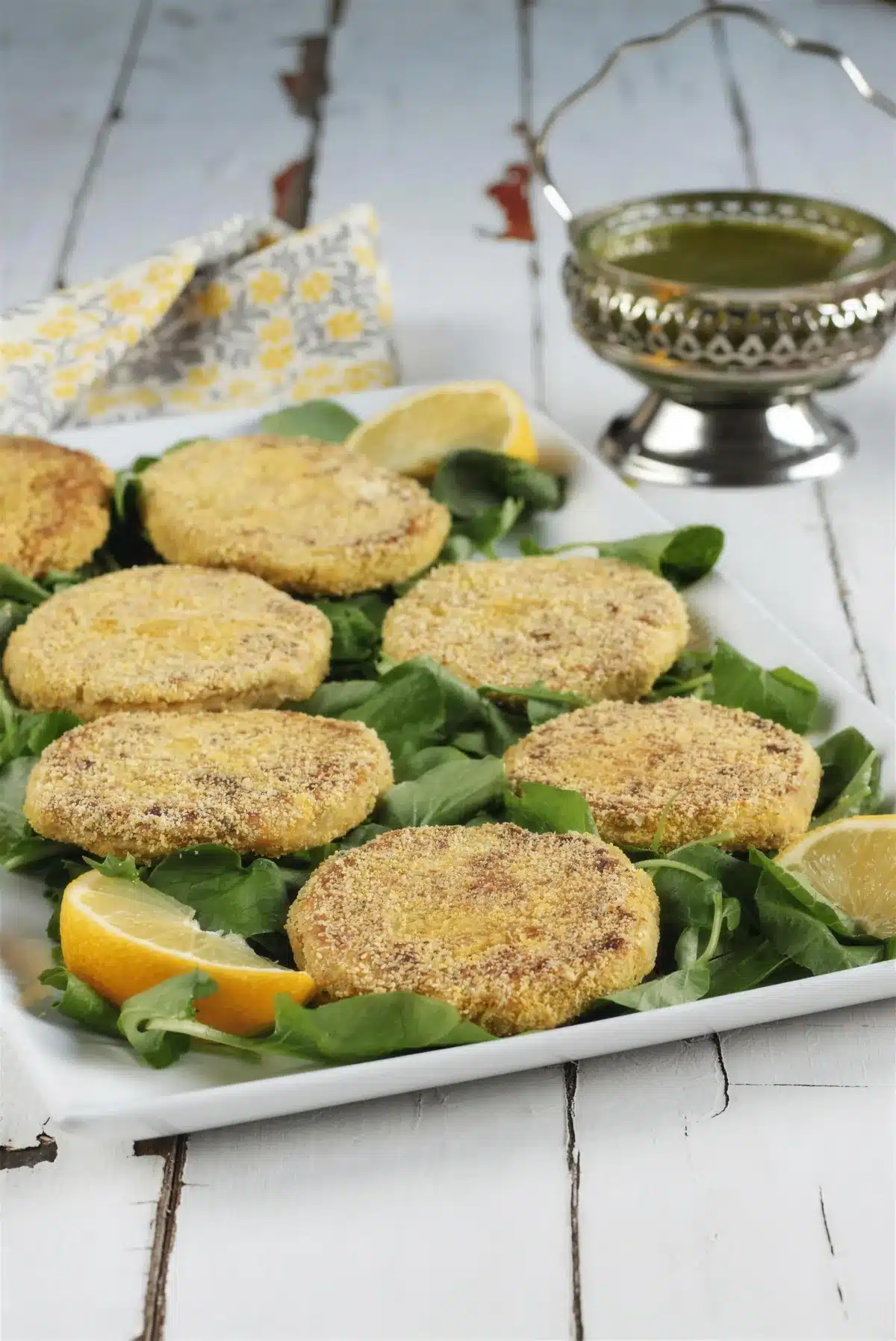
Chickpea patties are rich and starchy at once, so they want acid and something green underneath.
- Watercress or mache dressed with nothing but lemon, which is what the photographs show.
- A tomato salad in high summer, salted twenty minutes ahead so it makes its own dressing.
- Black bean hummus and flatbread, if you want to make a whole mezze of it.
- A bowl of something warm alongside, like my curry lentil soup, for a proper vegetarian dinner.
- Beet and lentil salad with feta, which repeats the earthiness and adds sweetness.
- Or split them and put them in a pita with pickled onion and more of the sauce.
Here is what readers ask most often.
Chickpea Patties FAQ
Frequently Asked Questions
Why do my chickpea patties fall apart in the pan?
Nearly always because the mixture was too wet, not because it needed more binder. Drain and rinse the chickpeas, then dry them on a towel until the surfaces look matte. Pulse the mixture coarse rather than smooth, and chill the shaped rounds for at least thirty minutes before they touch oil. If they still spread, add a tablespoon of chickpea flour and chill for another twenty minutes rather than adding a second egg.
Can I bake these instead of frying them?
Yes, and baked chickpea patties are a genuinely good version. Brush both sides with oil, bake at 425F for about 25 minutes and flip them once at the halfway point. You lose the shattering cornmeal crust and gain a drier, more uniform exterior. The mixture and the chilling stay exactly the same, and baked chickpea patties reheat slightly better than fried ones because there is less oil in them to go stale.
What is chickpea flour and do I have to use it?
It is dried chickpeas milled fine, sold as gram flour or besan in Indian and Middle Eastern shops. It binds like starch while tasting of the bean, so nothing tastes of raw flour. If you cannot find it, fine cornmeal is the best substitute, breadcrumbs are acceptable, and all-purpose flour is the one to avoid because it makes the middle pasty.
More Questions About Chickpeas and Frying
Good to Know
Canned or dried chickpeas?
Canned are what these chickpea patties were written for and they are perfectly good, provided you dry them. Chickpeas cooked from dry are firmer and hold their shape better in the food processor, so if you have them, use them slightly undercooked. Illinois Extension notes that half a cup of chickpeas carries around 6 grams of fiber and 7 grams of protein, which is most of why a plate of these eats like a meal.
How hot should the oil be?
Medium, not medium-high. You want a steady bubble around the edge of the patty rather than a violent one. Too hot and the cornmeal darkens in two minutes while the middle is still cold; too cool and the crust absorbs oil instead of sealing. If the first one browns in under three minutes a side, turn the heat down before you cook the rest.
How many does this make?
Ten chickpea patties about 3-inch across, which is four servings as a main with a salad, or ten small plates as a starter. The mixture doubles cleanly. The sauce is generous on purpose because people always want more of it than the arithmetic suggests, and any left over is very good on a fried egg the next morning.
Chickpea patties have a reputation for being worthy and dull, and they earn it when they are underseasoned and served naked. Dry the beans, chill the rounds, and put a genuinely spicy raw sauce on top, and they stop apologizing. For the same trick applied to bread rather than beans, try my herb and scallion biscuits.
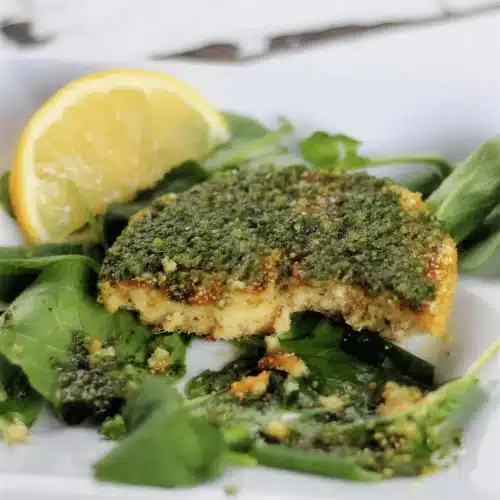
Chickpea Patties with Spicy Herb Sauce
Save this recipe
Enter your email and I’ll send this recipe straight to your inbox.
Ingredients
The Chickpea Patties
- 2 cans chickpeas 15-ounce cans, drained, rinsed and rolled dry on a towel
- 1/2 cup chickpea flour also sold as gram flour or besan
- 4 cloves garlic roughly chopped
- 1/2 medium jalapeno seeds and ribs removed, roughly chopped
- 2 tablespoons tahini well stirred
- 1 large egg
- 2 tablespoons extra virgin olive oil
- 1 teaspoon lemon zest finely grated, from 1 lemon
- 2 tablespoons lemon juice
- 1/4 cup mint leaves loosely packed, chopped
- 1/4 cup flat-leaf parsley loosely packed, chopped
- 2 tablespoons chives chopped
- 2 teaspoons kosher salt Diamond Crystal, or 1 1/4 teaspoons Morton
- 1/2 teaspoon black pepper freshly ground
- 2/3 cup fine cornmeal for coating
- 1/3 cup olive oil for frying, plus more as needed
The Spicy Herb Sauce
- 1/2 medium jalapeno roughly chopped, seeds left in for heat
- 1 cup flat-leaf parsley leaves loosely packed
- 1/2 cup mint leaves loosely packed
- 2 tablespoons chives chopped
- 3 tablespoons lemon juice from about 1 lemon
- 1/2 cup extra virgin olive oil
- 1 teaspoon kosher salt Diamond Crystal
- 1/4 teaspoon black pepper freshly ground
Equipment
- Food Processor
- Large skillet
- Oven
- Sheet Pan
Instructions
Make the Herb Sauce First
- Put the parsley, mint, chives and jalapeno in a food processor with the lemon juice, olive oil, salt and pepper. Blend for about 20 seconds, until it is bright green and loose enough to pour off a spoon. It should taste sharper and saltier than seems reasonable, because it is going onto something starchy. Scrape it into a bowl and rinse the processor bowl.
Blend and Shape the Patties
- Drain and rinse the chickpeas, then spread them on a clean towel and roll them around until the surfaces look matte rather than glossy. This is the single most important step and it takes two minutes.
- Pulse the dried chickpeas in the food processor with the chickpea flour, garlic, jalapeno, tahini, olive oil, egg, lemon zest and lemon juice, about ten one-second pulses, until coarse with recognizable pieces of chickpea. Add the mint, parsley, chives, salt and pepper and pulse twice more.
- Scrape the mixture into a bowl and stir it once by hand so nothing is left unmixed at the bottom. With wet hands, shape it into 10 rounds about 3-inch across and 3/4-inch thick and lay them on a parchment-lined tray. Refrigerate uncovered for at least 30 minutes, or up to a day.
Fry and Serve
- Heat the oven to 200F and set a rack over a sheet pan. Spread the cornmeal on a plate. Working with the cold rounds one at a time, press both sides into the cornmeal so the grains embed, and fry straight away rather than letting them stand.
- Pour enough olive oil into a wide skillet to come about a third of the way up the patties and set it over medium heat. Fry in batches for 4 to 5 minutes a side, until deeply golden and firm to the touch. Keep the heat steady: if the first one browns in under three minutes a side, turn it down.
- Move each batch to the rack in the low oven rather than to paper towels, which steam the crust. Serve on dressed greens with the herb sauce spooned over and lemon wedges alongside.