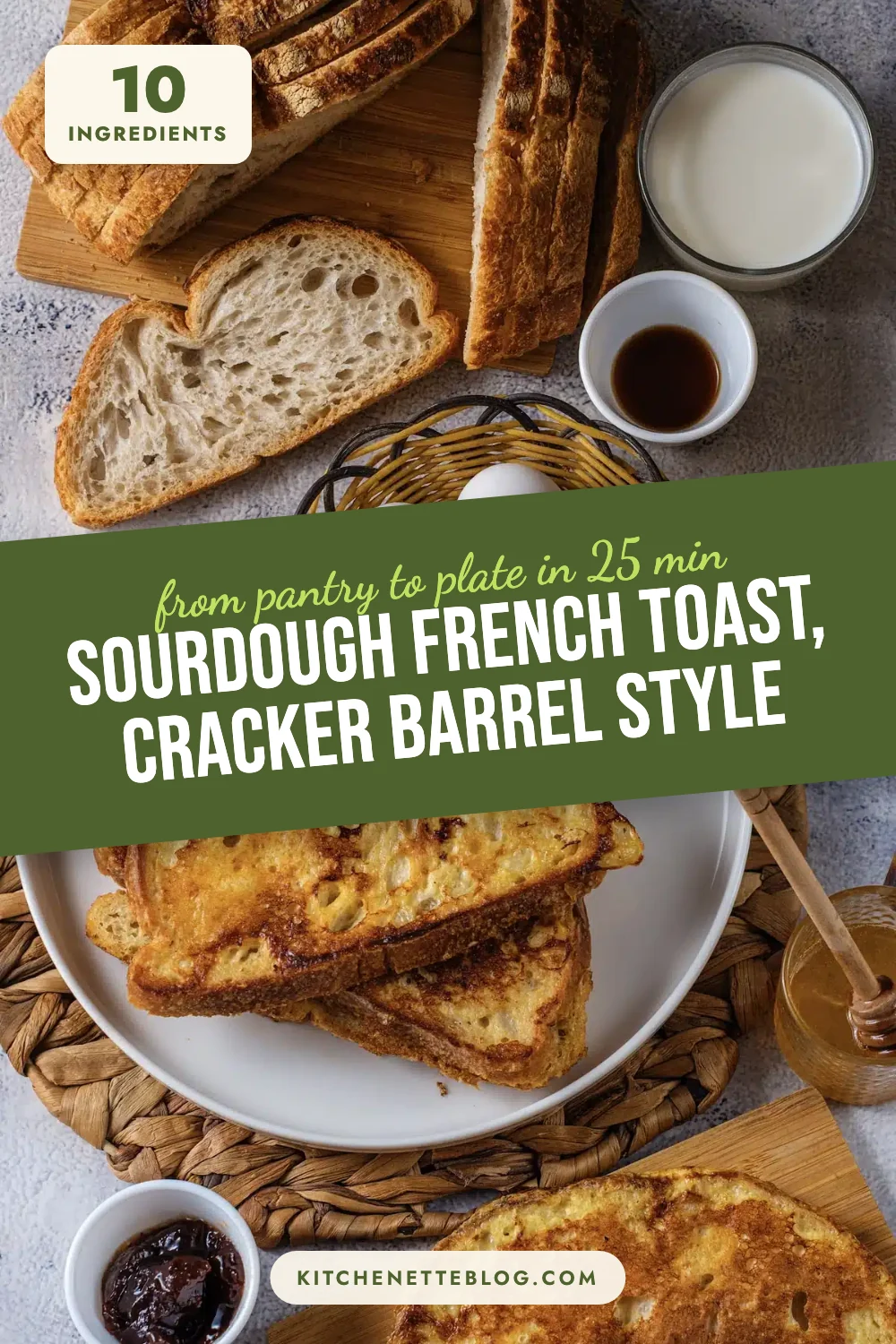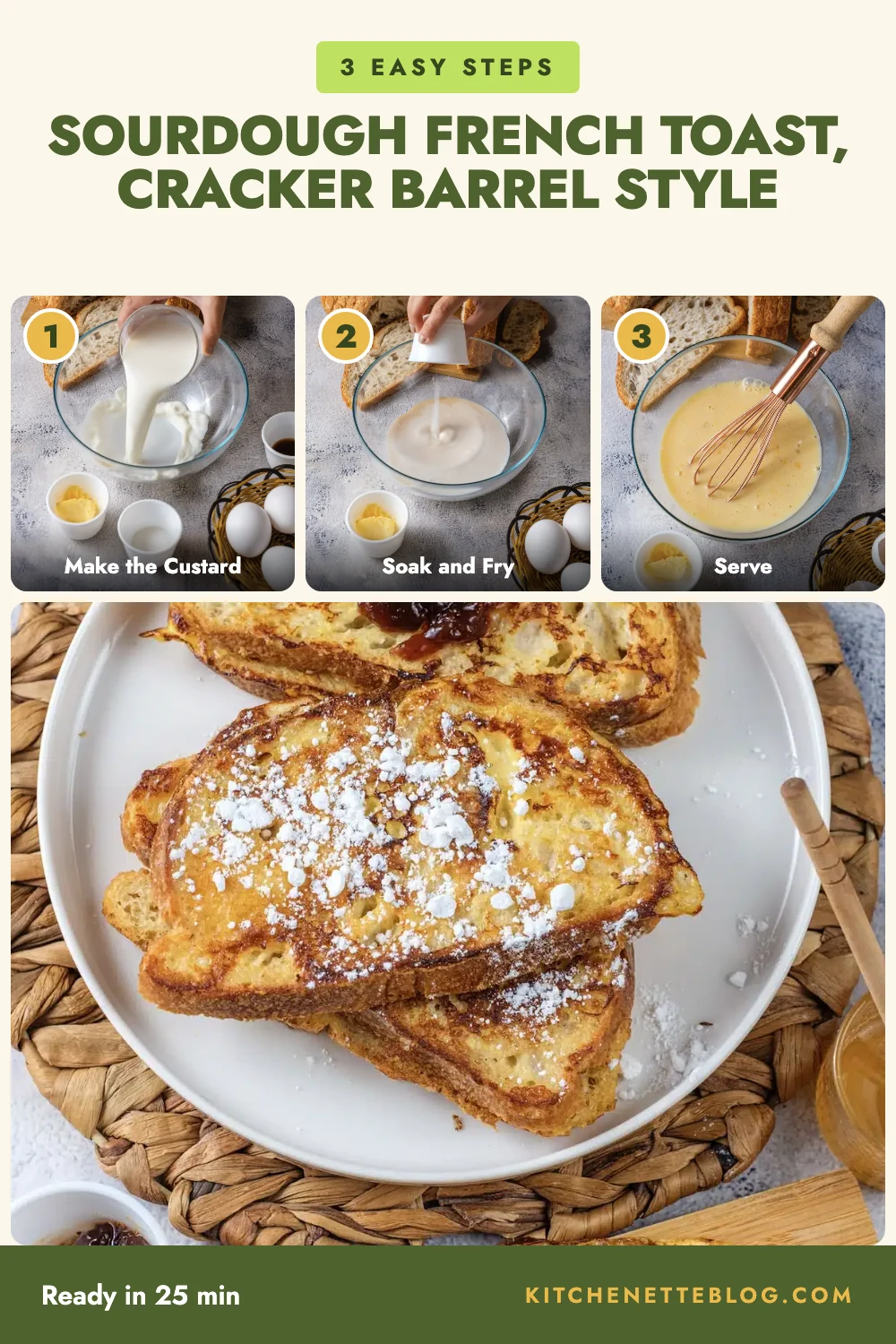
Sourdough french toast is the Cracker Barrel breakfast that people drive out of their way for: thick slices of sourdough soaked in a vanilla egg custard, fried in butter until the edges crisp and the middle stays soft, then served with powdered sugar, more butter and a little bowl of jam. Eight slices take 25 minutes from one bowl and one skillet.
In short, sourdough french toast is thick slices of day-old sourdough soaked in a vanilla egg custard and fried in butter for 2 to 3 minutes a side. It takes 25 minutes, makes 8 slices for 4 servings, and works out at about 420 calories per serving.
- Tastes like the Cracker Barrel plate, down to the jam on the side
- Five custard ingredients you already have, plus one loaf of sourdough
- Thick slices that stay crisp outside and custardy inside
- Ready in 25 minutes with one bowl and one skillet
- The custard can be whisked the night before
- Leftover slices freeze well and reheat in the toaster
The restaurant version works because of the bread, not because of a secret custard. Sourdough has a tight, chewy crumb and a sturdy crust, so a thick slice can sit in the egg mixture long enough to soak through without collapsing the way sandwich bread does. Everything else is a plain custard, which is why this copycat is so easy to get right at home: buy the right loaf, cut it thick, and do not rush the pan.


- What Makes Cracker Barrel's French Toast Different
- Ingredient Notes
- The Best Bread for Sourdough French Toast
- How To Make Sourdough French Toast
- How To Tell When Sourdough French Toast Is Done
- Make It Ahead
- Storing Sourdough French Toast
- Variations and Substitutions
- What to Serve with Sourdough French Toast
- Sourdough French Toast FAQ
What Makes Cracker Barrel’s French Toast Different
Three things set it apart: thick-cut sourdough, a plain vanilla custard with no cinnamon, and the jam served alongside. Most diner French toast is made from soft white bread or Texas toast, and it eats like a sweet sponge. Cracker Barrel sourdough french toast is a different thing, because the restaurant uses sourdough, cut thick, and the difference is obvious on the first bite. The crust fries up crisp and a little chewy, the inside turns into something close to bread pudding, and the faint tang of the sourdough keeps the whole plate from tasting like dessert. It is the same reason sourdough makes the best grilled cheese.
The second difference is restraint. There is no cinnamon in the restaurant custard and no sugar crust on the outside, just eggs, milk, vanilla and a touch of sugar, so the bread is the flavor you taste. The sweetness comes at the table, from powdered sugar, a pat of butter, syrup if you want it, and the fruit jam that comes alongside. That jam is the part people forget, and it is the part that makes it taste like the restaurant.
The third difference is the cut. Cracker Barrel slices run close to an inch thick, which is why they stay soft in the middle. Thin slices dry out in the time it takes the outside to brown. If you take only one thing from this post, take the thick cut.
Save this recipe
Enter your email and I’ll send this recipe straight to your inbox.
Ingredient Notes
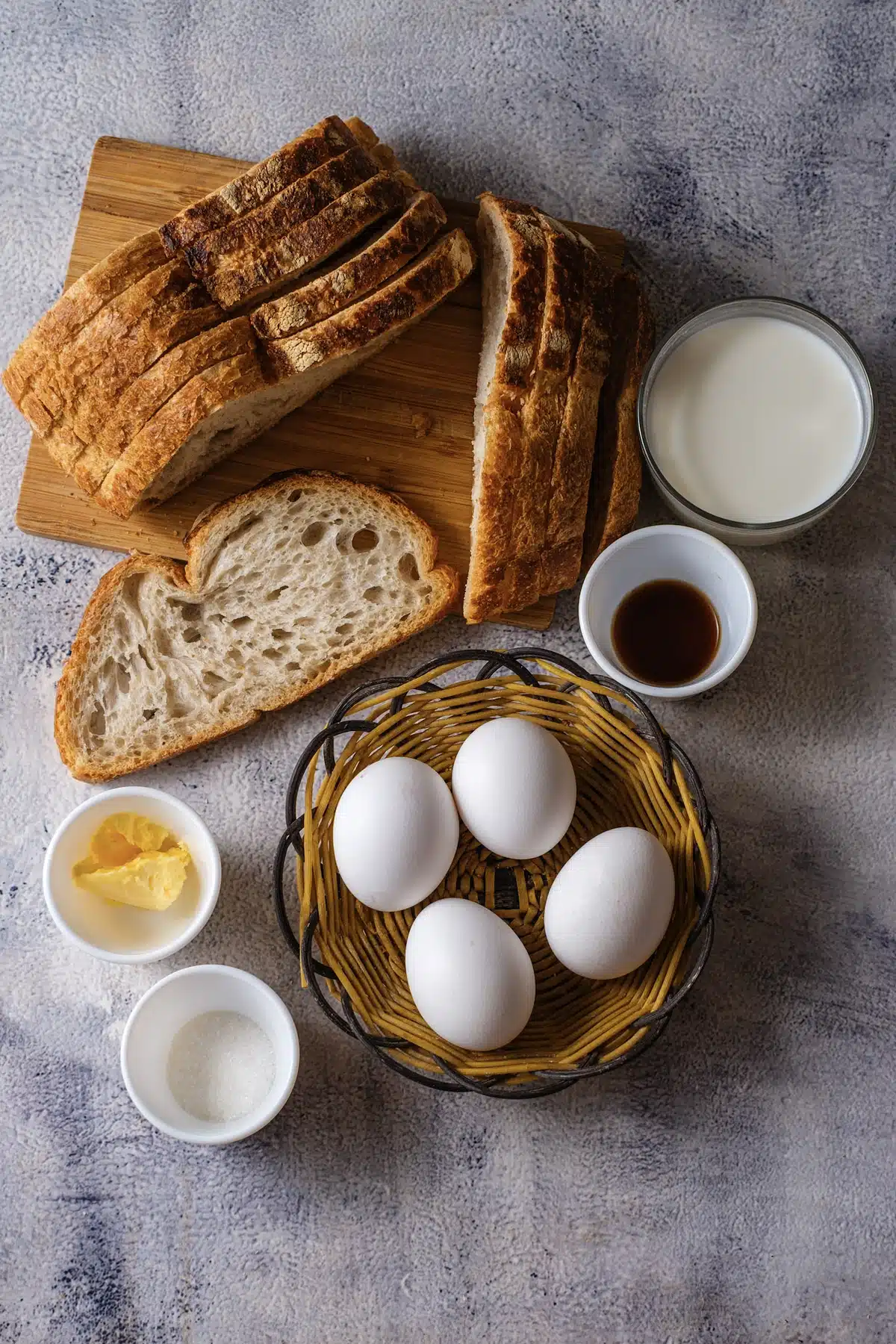
The flat lay above is the whole list for sourdough french toast. Exact quantities are in the recipe card at the bottom of the post.
- Sourdough bread. One loaf, sliced about three-quarters of an inch thick, eight slices in all. A day or two old is better than fresh, because slightly dry bread drinks up more custard without going soggy. A bakery loaf with a real crust beats the soft sliced sourdough sold in bags.
- Eggs. Four large eggs, which is enough custard for eight thick slices with a little to spare. Beat them well so no streaks of white end up fried onto the bread.
- Milk. Three-quarters of a cup of whole milk. Two percent works, and half-and-half makes a richer slice. Skim milk gives a thin custard that soaks in unevenly.
- Sugar. One tablespoon of granulated sugar. It is there to help the surface brown rather than to sweeten, so do not be tempted to add more.
- Vanilla extract. One teaspoon of real extract. It is the only flavoring in the custard, so the imitation kind shows.
- Salt. A quarter teaspoon of fine salt. A custard with no salt tastes flat however much syrup goes on top.
- Butter. About three tablespoons for the pan, a tablespoon per batch, plus more for serving. Butter browns the surface and gives the crust its flavor. Oil fries cleaner but tastes of nothing.
- To serve. Powdered sugar, soft butter, maple syrup and a small bowl of jam. Strawberry or mixed berry is closest to the restaurant.
The Best Bread for Sourdough French Toast
A country-style sourdough loaf with an open, chewy crumb and a firm crust is the one to buy for sourdough french toast. Cut it yourself, because pre-sliced loaves are rarely thicker than half an inch, and the thick cut is the whole point. A serrated knife and a steady hand will give you eight even slices from a standard loaf, with the heels left over for croutons.
Stale is a feature here. Bread that is a day or two old has lost some moisture, which means it can absorb more custard before it turns to mush, and it holds its shape in the pan. Fresh sourdough still works, but soak it for a shorter time, closer to fifteen seconds a side, so the center does not collapse. If your loaf is very fresh, leave the slices out on a rack for an hour before you start.
Brioche and challah make a softer, richer slice, and that is the style of an IHOP french toast. They are good, but they are not this. Sourdough french toast is lighter, tangier and crisper, and it holds up under syrup for longer than any enriched bread.
How To Make Sourdough French Toast
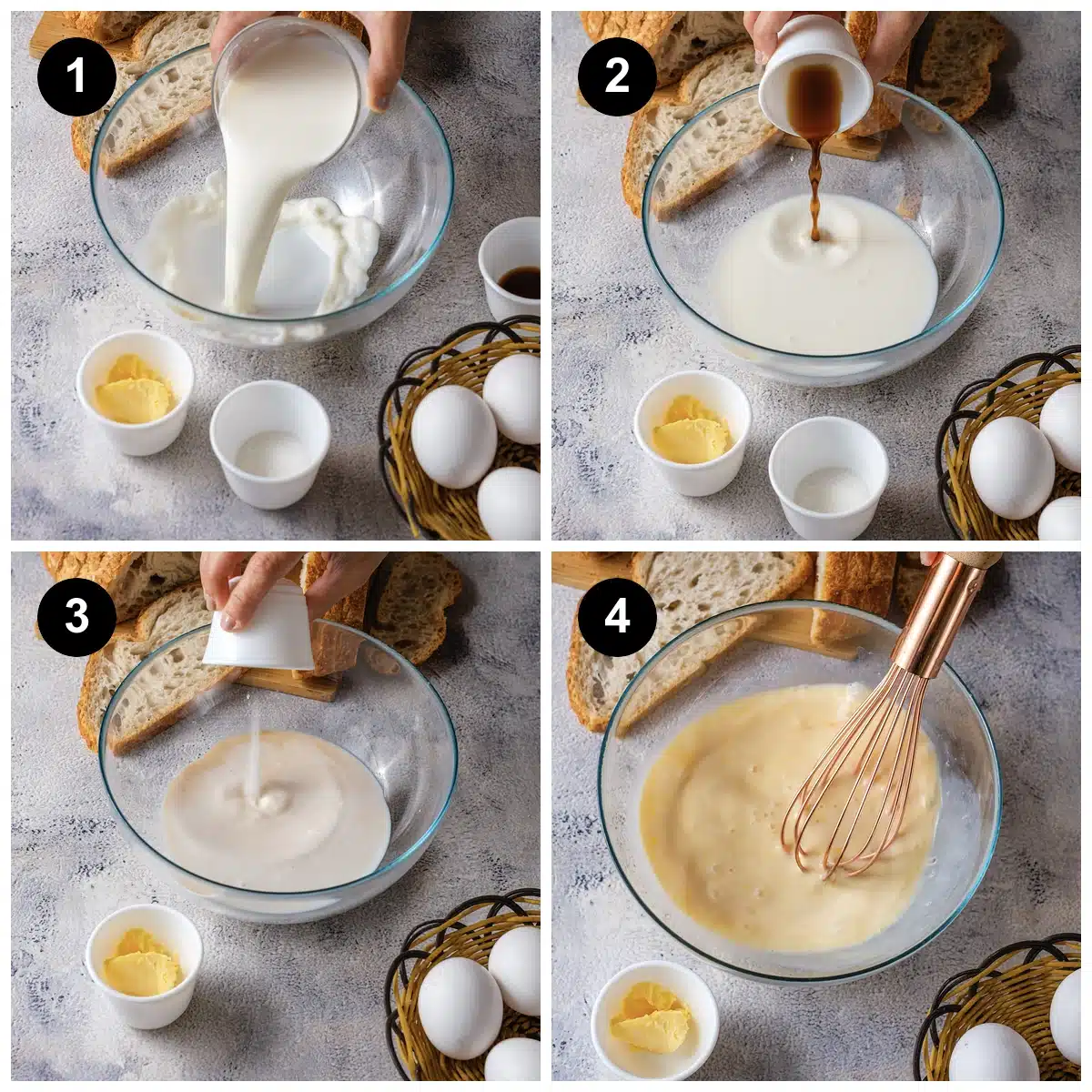
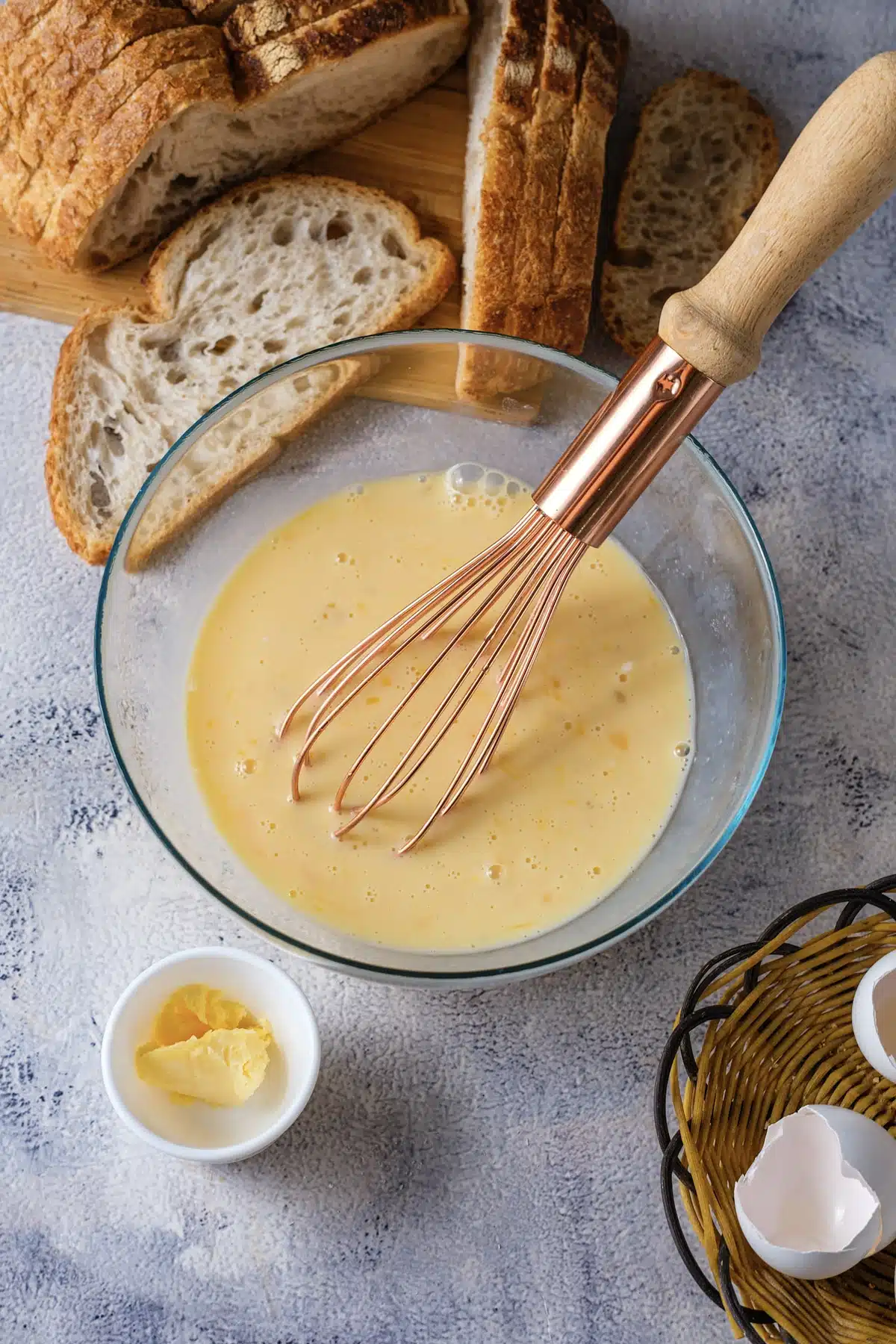
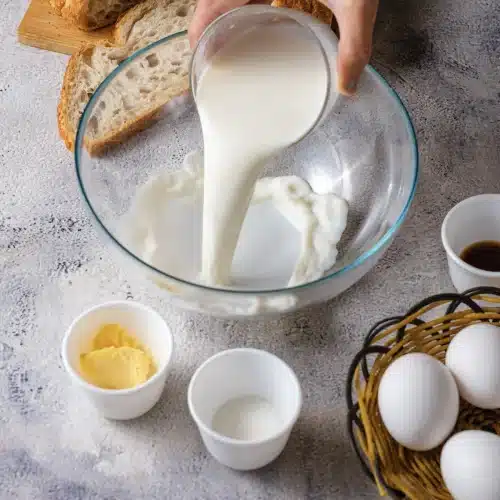
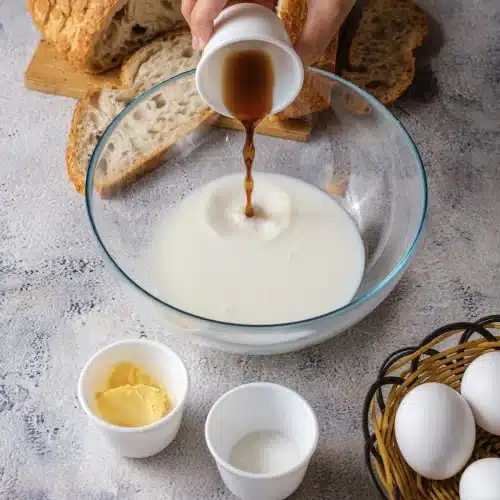
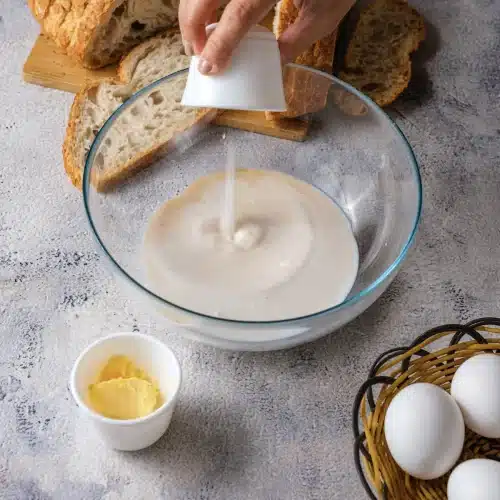
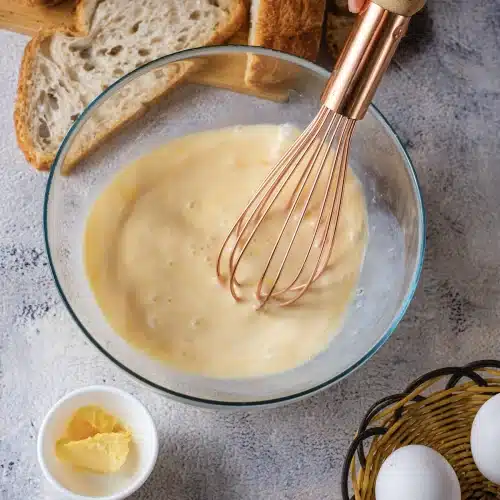
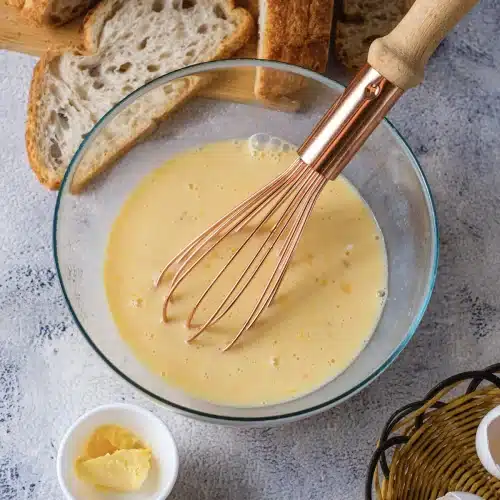
First, crack the eggs into a wide, shallow bowl and beat them lightly with a whisk. Pour in the milk, then the vanilla, then the sugar and salt, and whisk until the custard is an even pale yellow with no streaks of white. A shallow dish matters more than it seems, because a thick slice needs to lie flat to soak evenly.
Next, set a large skillet or griddle over medium heat and let it warm for a couple of minutes. Add a tablespoon of butter and swirl it until the foam settles. If the butter browns instantly, the pan is too hot; pull it off the heat for a moment and turn the dial down.
Soaking and Frying
Then lay a slice of sourdough in the custard and count to twenty, flip it, and count to twenty again. The surface should be wet and the slice should feel heavy, but the center should not be dripping. Lift it, let the excess run back into the bowl for a second, and set it straight into the pan. Work in batches of two or three slices, with space between them, and soak each slice just before it goes in rather than all at once.
After that, cook for two to three minutes, until the underside is deep golden brown and the edges look set, then flip with a spatula and cook the second side for another two to three minutes. Add a little more butter between batches so the pan never goes dry.
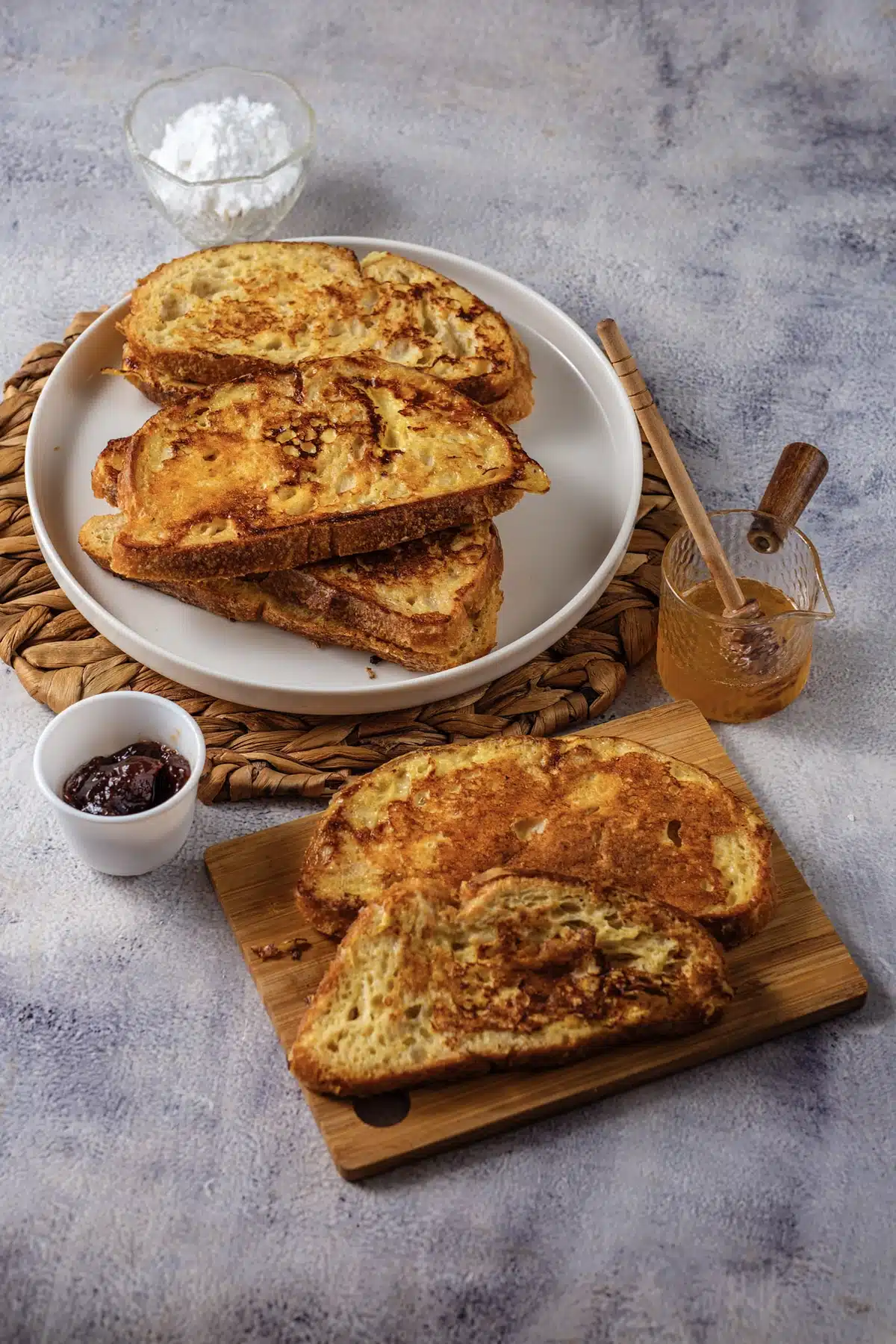
Finally, move the finished slices to a rack set on a baking sheet in a 200°F oven while you fry the rest. A rack keeps the undersides crisp; a plate steams them. Serve two slices per person with a pat of butter, a shake of powdered sugar, syrup and the bowl of jam.
How To Tell When Sourdough French Toast Is Done
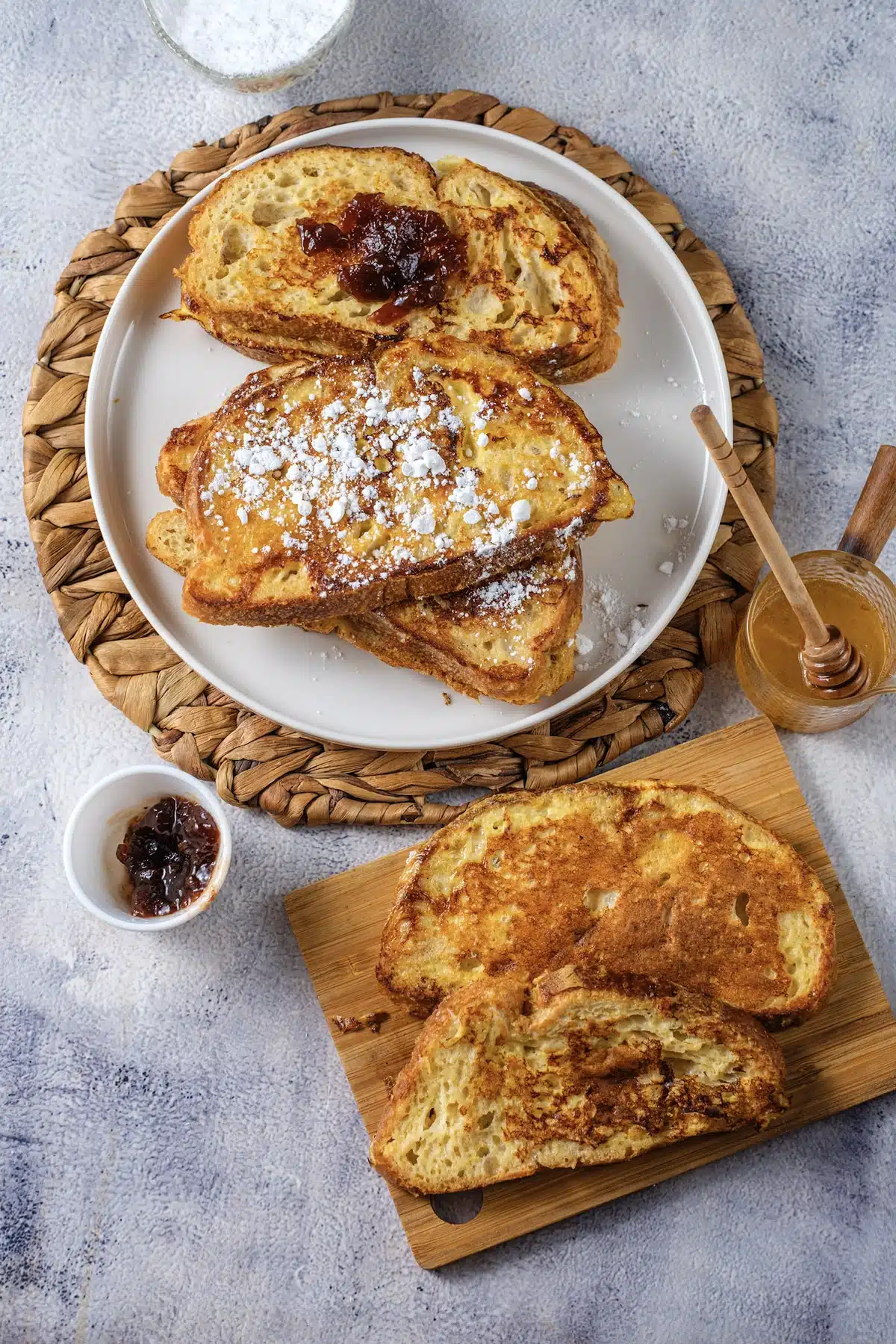
Sourdough french toast is done when both sides are deep golden brown and the center springs back when pressed, which takes 2 to 3 minutes per side over medium heat. Look at the color first. A finished slice is deep golden brown across the whole surface, with darker lacing where the custard caramelized against the pan, and the edges have turned crisp. Pale yellow means it needs another minute; patches of dark brown mean the heat is too high.
Then press the center with a fingertip or the back of a spatula. Done sourdough french toast springs back and feels firm, like a baked custard. If it gives and feels wet, the egg in the middle has not set, and the slice needs more time on a lower heat. Because the custard is mostly egg, the safe internal temperature for egg dishes is 160°F according to the American Egg Board, and a thick slice cooked for three minutes a side over medium heat gets there with room to spare. Cut one open the first time you make it; the inside should look like soft bread, not like scrambled egg.
Black specks on the second or third batch are usually not a heat problem. They are milk solids from the earlier butter, burned onto the skillet, and they stick to every slice that follows. Wipe the pan with a folded paper towel between batches before the fresh tablespoon of butter goes in.
Give the custard a quick whisk at the same time. The egg settles to the bottom of the shallow bowl, and without a stir the last slices soak up mostly milk.
Nayla — kitchen note
Make It Ahead
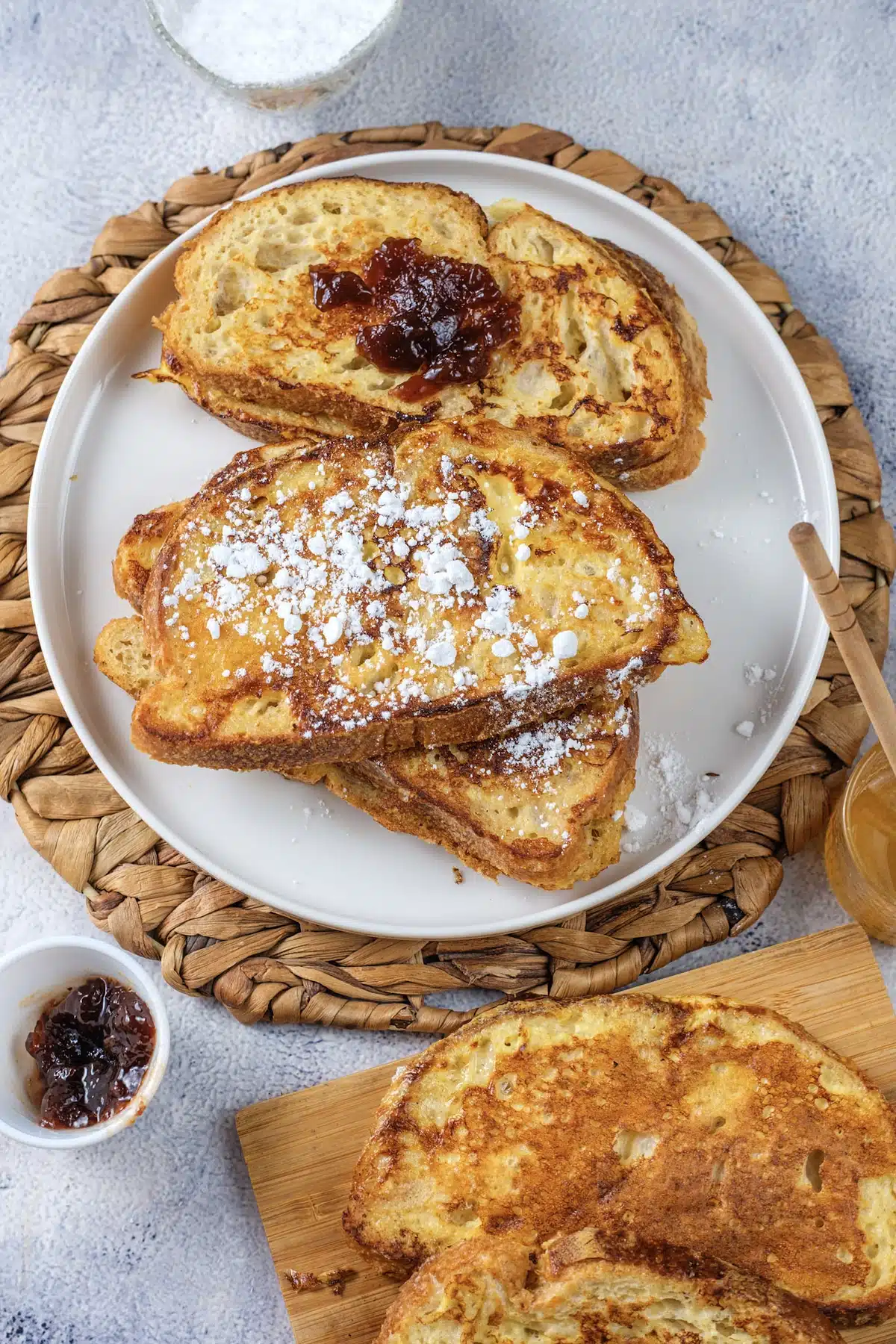
The custard for sourdough french toast can be mixed the night before. Whisk it, cover the bowl and refrigerate it, then give it a quick stir in the morning before the bread goes in. The slices can be cut the night before too, and leaving them out on a rack overnight is the easiest way to get them to the slightly stale stage that soaks best.
For a crowd, fry the slices up to an hour ahead and hold them on a rack in a 200°F oven. They stay crisp for that long without drying out. Beyond an hour, the better option is to fry, cool and freeze them, then reheat from frozen as described below.
If you would rather bake than stand at the stove, the same custard and bread make a very good overnight casserole. The method is the same as the blueberry french toast casserole, with the berries left out and the sourdough cubed instead of sliced.
Storing Sourdough French Toast
Cool leftover slices on a rack, then refrigerate them in an airtight container with parchment between the layers for up to three days. Reheat in a toaster or toaster oven rather than the microwave, which turns the crust soft. Two to three minutes in a toaster on a medium setting brings a slice back close to fresh.
Sourdough french toast freezes better than almost any other breakfast. Freeze the cooled slices flat on a baking sheet until firm, then stack them with parchment between and bag them for up to two months. Reheat straight from frozen in the toaster, or on a baking sheet at 375°F for eight to ten minutes, flipping once. The texture is nearly identical to freshly made, which makes a double batch on Sunday worth the extra loaf.
Variations and Substitutions
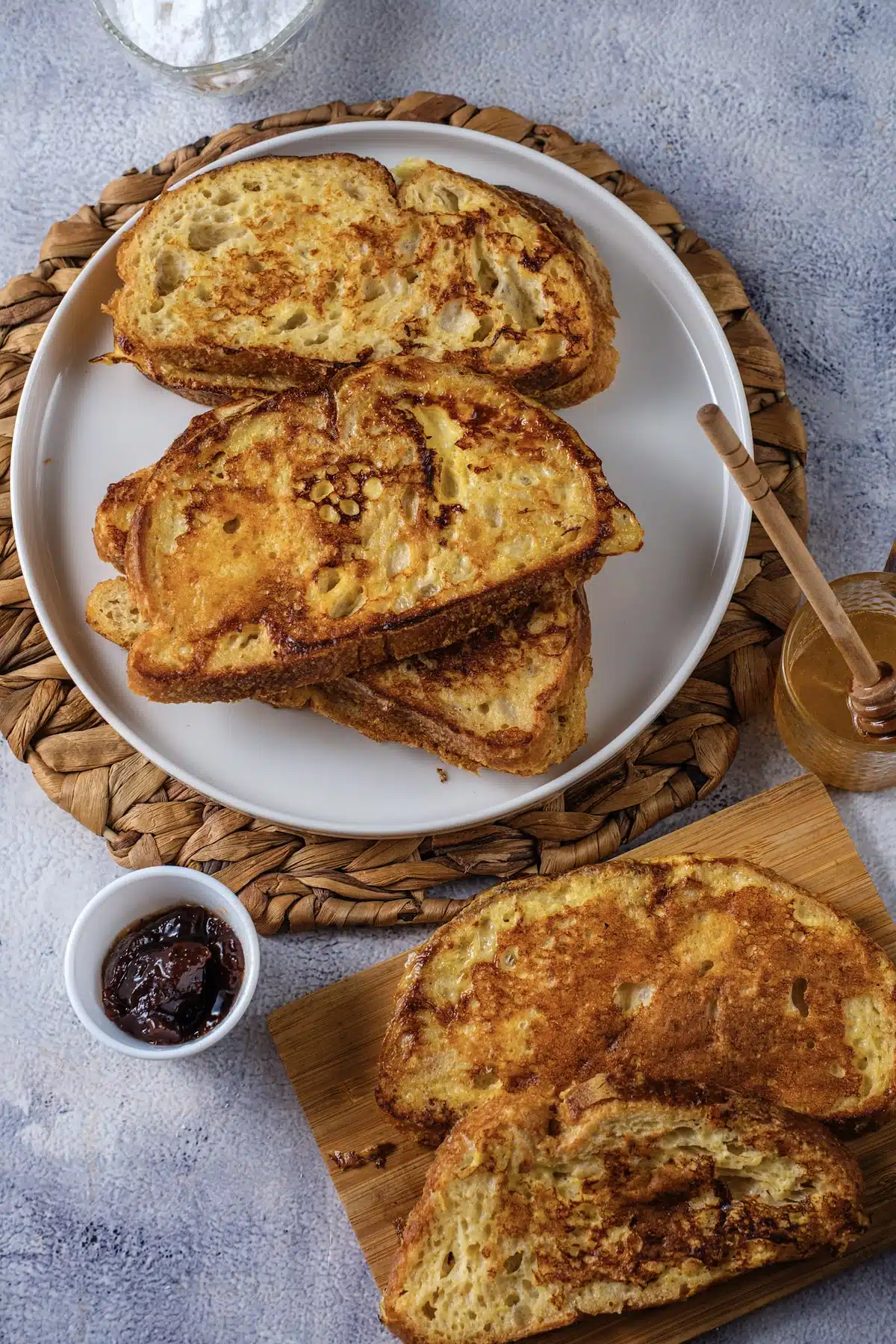
Toppings
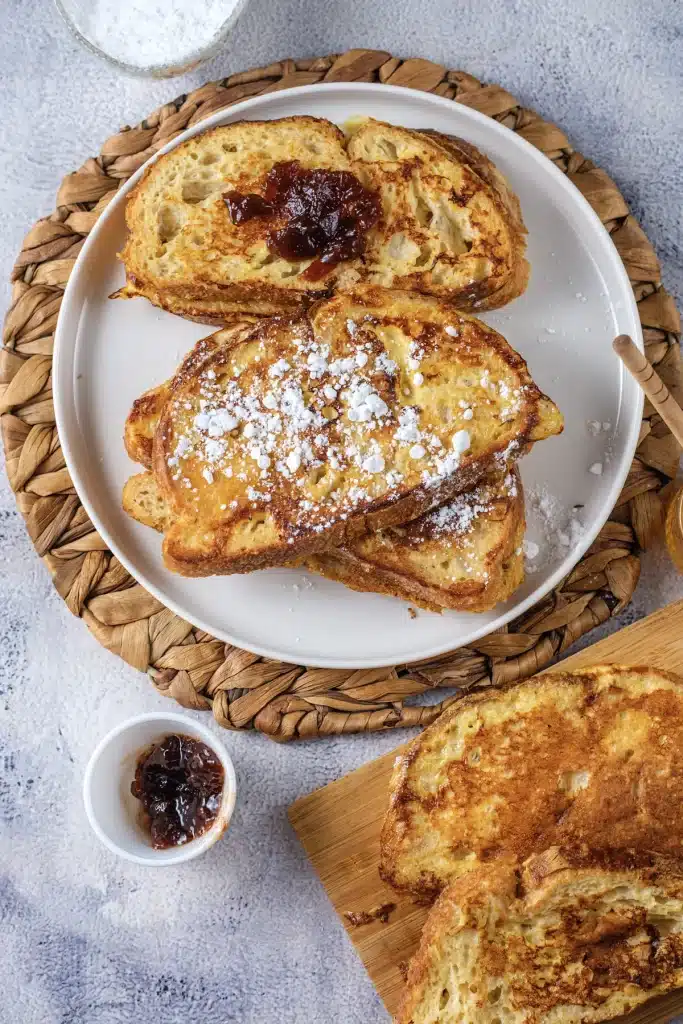
The restaurant plate. Powdered sugar, a pat of butter, warm syrup and a bowl of strawberry jam. Spread a little jam on the hot slice before the syrup goes on and you will understand why it is on the plate.
Fresh fruit. Sliced strawberries, blueberries or banana in place of the jam. A spoonful of the warm berry topping from the sheet pan pancakes is good here as well.
Whipped cream and cinnamon sugar. For a sweeter plate, dust the slices with cinnamon sugar instead of powdered sugar and add whipped cream. It moves away from the Cracker Barrel version, but nobody complains.
Other Breads and Flavors
Cinnamon custard. Half a teaspoon of ground cinnamon and a pinch of nutmeg whisked into the custard. This is the most common request and it costs nothing to add.
Brioche or challah. Both work with the same soak time and give a softer, richer slice. Cut them thick as well, and watch the heat, because the extra sugar in the dough browns faster.
Dairy-free. Oat milk or almond milk in place of the whole milk, and a neutral oil or plant butter in the pan. The custard is a touch thinner, so soak for a few seconds less.
Savory. Leave out the sugar and vanilla, add a pinch of black pepper, and serve with bacon and a fried egg. Sourdough suits a savory plate better than any sweet bread does.
What to Serve with Sourdough French Toast
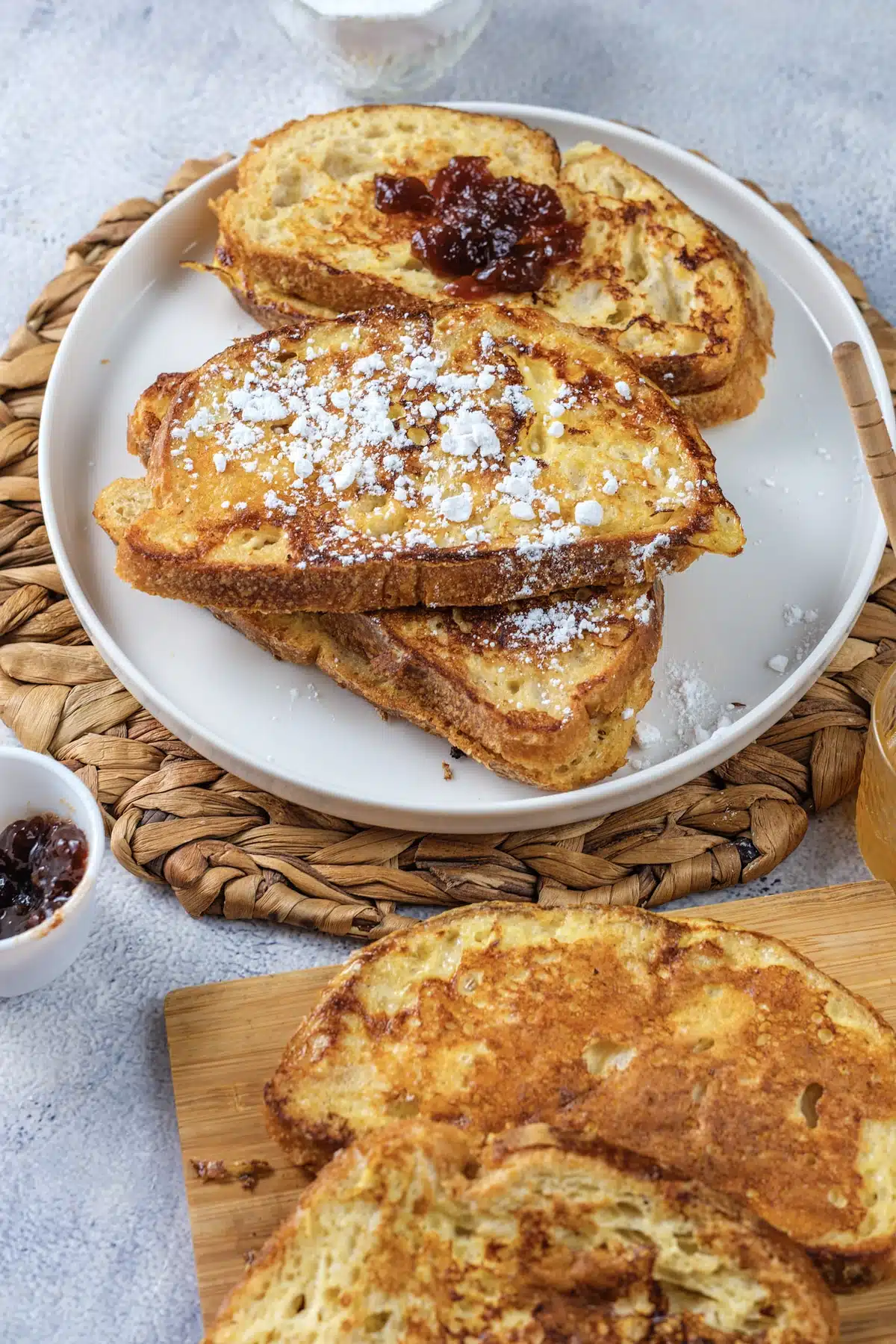
At the restaurant, sourdough french toast comes with bacon or sausage and a side of fruit, and that is still the right call. Thick-cut bacon, breakfast sausage or a few pancake sausage balls give you something salty against the syrup. A bowl of sliced strawberries or orange segments keeps the plate from being all bread and butter.
For a bigger brunch, put the sourdough french toast at the center and add scrambled eggs and a potato dish. A pan of potatoes O’Brien feeds a table, and so does a tray of lemon ricotta pancakes for the person who wants both.
To drink, coffee and cold orange juice. A glass of milk is the proper companion to a syrupy breakfast, and there is no shame in it.
Sourdough French Toast FAQ
Frequently Asked Questions
What kind of bread does Cracker Barrel use for French toast?
Sourdough, cut thick. The restaurant has used sourdough for its french toast for decades, and the thick slice is what gives it a crisp crust and a soft, custardy center. A bakery sourdough loaf sliced about three-quarters of an inch thick is the closest match at home.
Is sourdough good for French toast?
Yes, and many cooks think it is the best bread for the job. The sturdy crust and chewy crumb let a thick slice soak up custard without falling apart, and the slight tang balances the syrup and sugar. It also stays crisp under toppings for longer than soft breads like brioche.
How long should sourdough soak for french toast?
About twenty seconds per side for a three-quarter-inch slice of day-old sourdough. Very fresh bread needs closer to fifteen seconds, and very stale bread can take thirty. The slice should feel heavy and look wet on the surface, with no custard pooling out of the center.
Why is my sourdough french toast soggy in the middle?
Either the slice soaked too long or the pan was too hot. Over-soaked bread holds more custard than the heat can set, and a hot pan browns the outside before the middle cooks. Soak for twenty seconds a side, cook over medium heat for a full three minutes per side, and press the center before serving; it should spring back.
More Questions About French Toast
Good to Know
Can you make sourdough french toast without vanilla?
Yes. The custard still works, it just tastes plainer. A teaspoon of maple syrup or a little grated orange zest in the eggs gives it some character if the vanilla bottle is empty.
Can you cook sourdough french toast on a griddle?
Yes, and it is faster for a crowd because all eight slices fit at once. Set an electric griddle to 325°F to 350°F, butter it between batches, and cook for the same two to three minutes a side.
What jam does Cracker Barrel serve with french toast?
The restaurant serves fruit preserves on the side, usually strawberry, and the little bowl in these photos is strawberry jam. Any berry jam works. Warm it for ten seconds in the microwave so it spreads over the hot slices.
Can you freeze sourdough french toast?
Yes. Cool the fried slices, freeze them flat until firm, then bag them with parchment between for up to 2 months. Reheat from frozen in the toaster, or at 375°F for 8 to 10 minutes.
How many calories are in sourdough french toast?
About 420 calories for a serving of two thick slices, with roughly 15 g protein, 52 g carbohydrates and 16 g fat before toppings. The figures are estimates and change with the loaf and the amount of butter.
Buy the thick loaf, cut it yourself and keep the heat at medium, and the plate that comes out of your kitchen will match the one from the restaurant. Make a double batch of sourdough french toast and freeze half, and a Cracker Barrel meatloaf for dinner finishes the copycat day.
Sourdough French Toast, Cracker Barrel Style
Save this recipe
Enter your email and I’ll send this recipe straight to your inbox.
Ingredients
Custard
- 4 large eggs
- 3/4 cup whole milk or 2 percent, or half-and-half
- 1 tbsp granulated sugar
- 1 tsp vanilla extract real extract
- 1/4 tsp fine salt
Bread and Butter
- 8 slices sourdough bread cut 3/4-inch thick, a day or two old
- 3 tbsp butter for the pan, plus more for serving
To Serve
- powdered sugar for dusting
- strawberry jam or any berry jam, pictured
- maple syrup optional
Equipment
- Shallow Bowl
- Whisk
- Large Skillet or Griddle
- Spatula
- Baking Sheet (optional)
Instructions
Make the Custard
- Beat the eggs. Crack the eggs into a wide, shallow bowl and beat them lightly with a whisk.
- Add the milk. Pour the milk into the eggs.

- Add the vanilla. Pour in the vanilla extract.
- Add the sugar and salt. Tip in the sugar and the salt.
- Whisk. Whisk until the custard is an even pale yellow with no streaks of egg white.
- Check it. The finished custard should be smooth and pourable. Leave it in the shallow bowl so a slice can lie flat in it.
Soak and Fry
- Heat the pan. Set a large skillet or griddle over medium heat. Add 1 tablespoon of butter and swirl it until the foam settles.
- Soak. Lay a slice in the custard for about 20 seconds, flip it and soak the other side for 20 seconds. It should feel heavy and look wet, with no custard pooling out of the center. Let the excess drip off.
- Fry. Cook 2 or 3 slices at a time for 2 to 3 minutes, until the underside is deep golden and the edges look set. Flip and cook the second side for 2 to 3 minutes more. Add more butter between batches.
- Keep warm. Move finished slices to a rack on a baking sheet in a 200°F (95°C) oven while you fry the rest.
Serve
- Serve hot. Dust with powdered sugar and serve two slices per person with butter, the jam and syrup if you like.