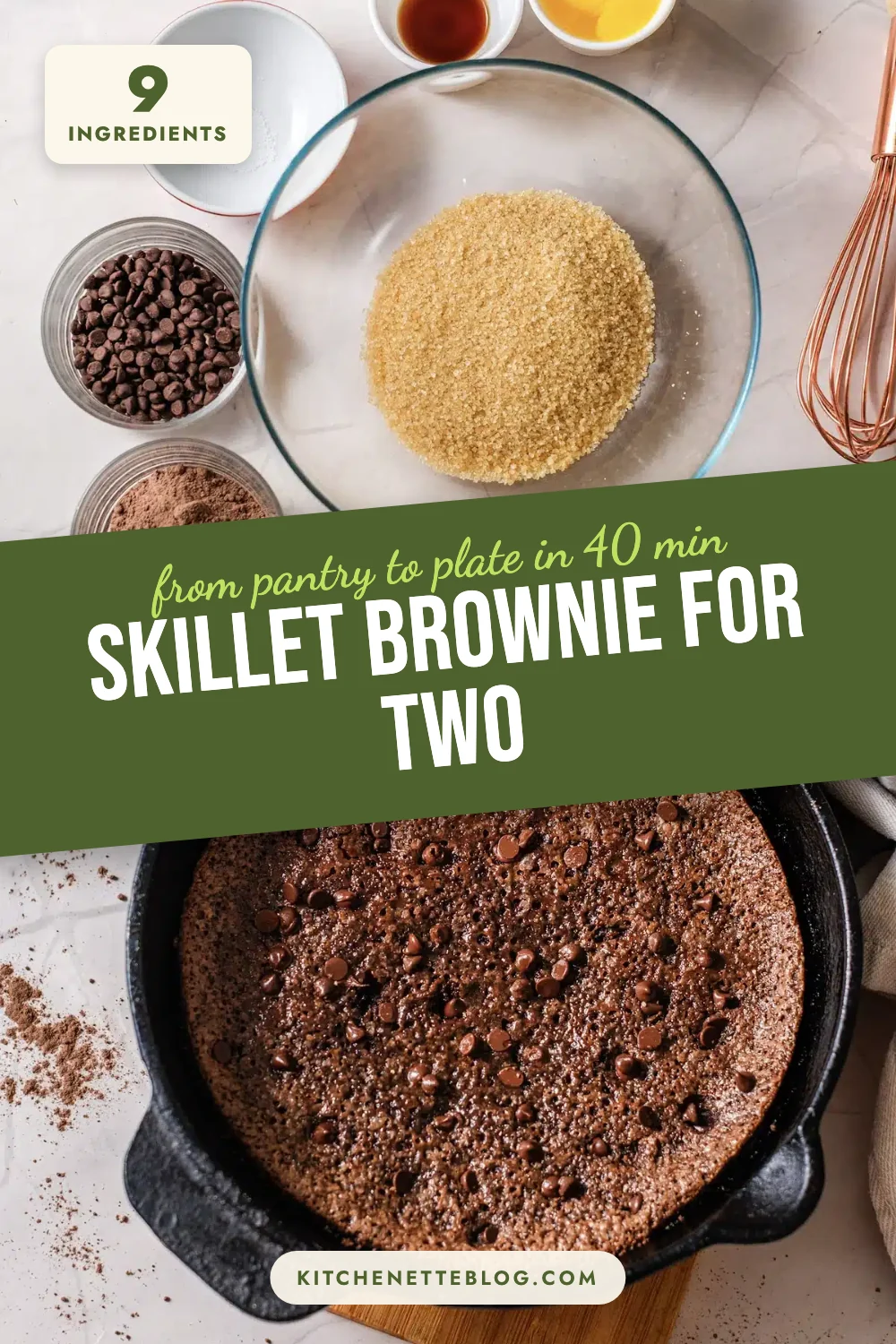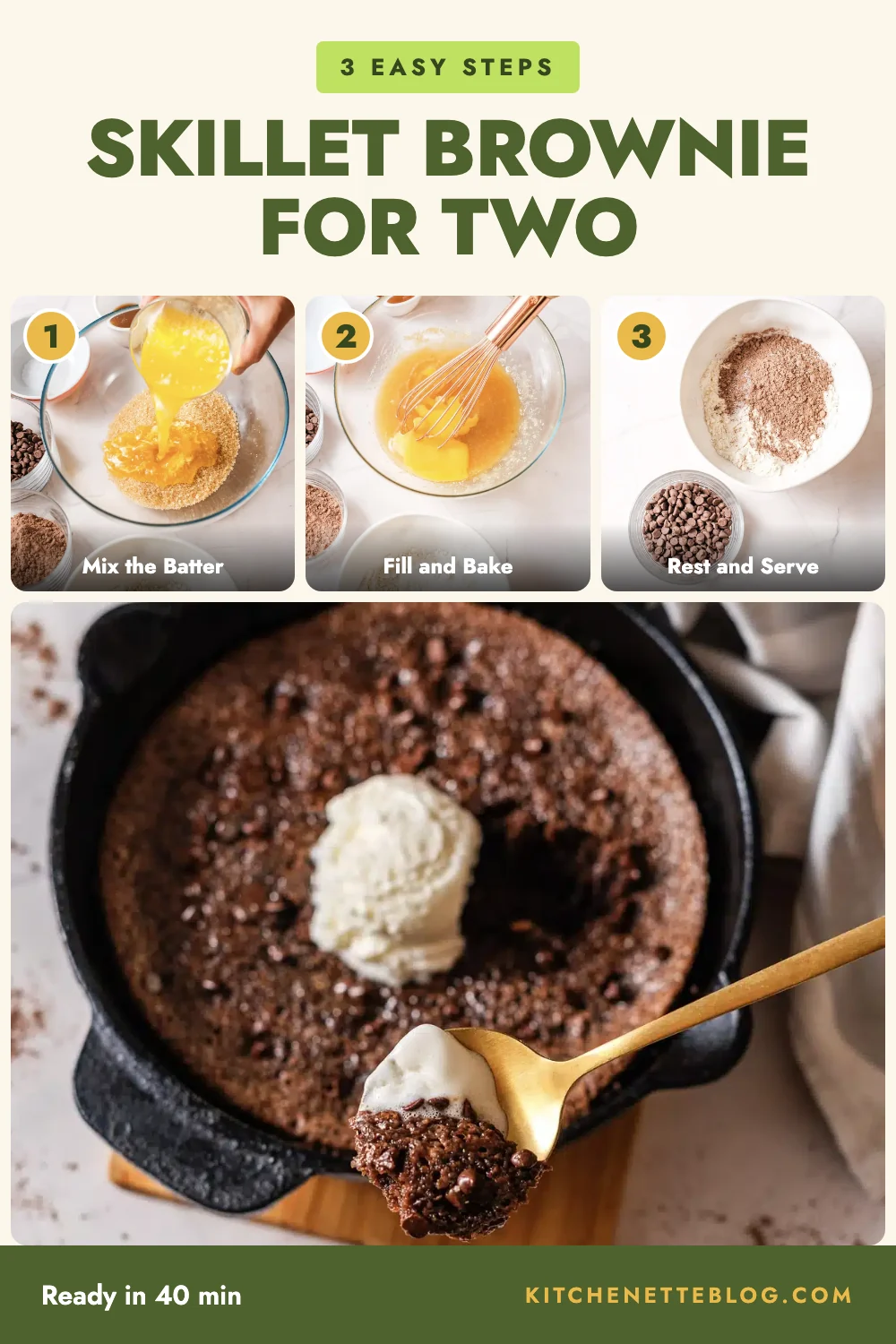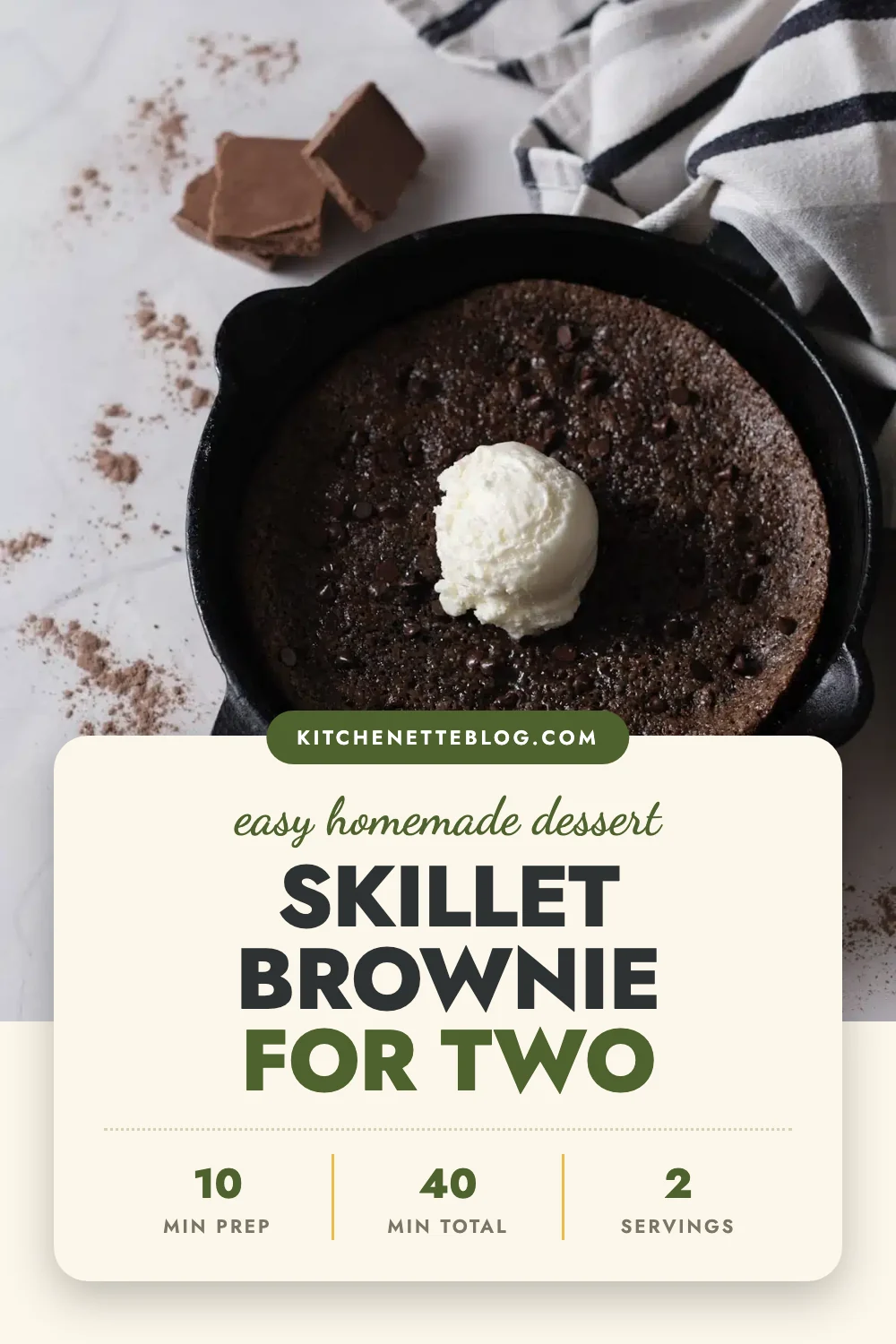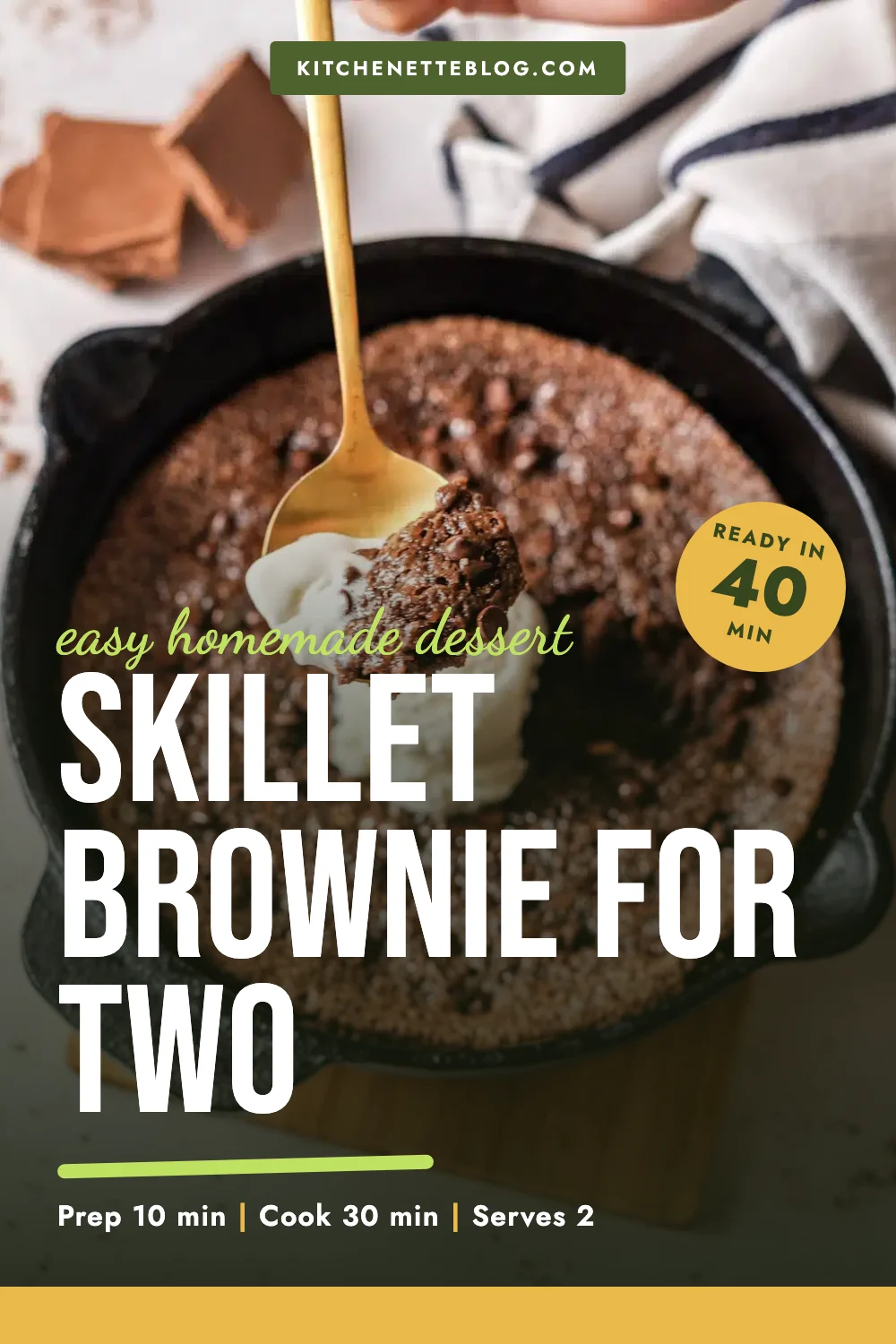
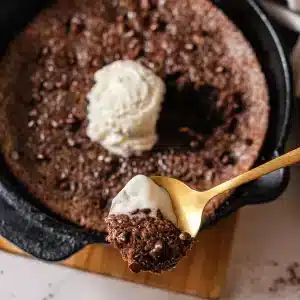
A skillet brownie is a single thick brownie baked in a small cast-iron skillet and eaten warm from the pan, usually with a scoop of vanilla ice cream melting into the middle. This one is built for two: melted butter, brown sugar, one egg, cocoa and a handful of chocolate chips, stirred together in one bowl and baked in a 6.5-inch skillet at 350°F for 30 to 35 minutes. It is ready in about 40 minutes and makes two generous servings.
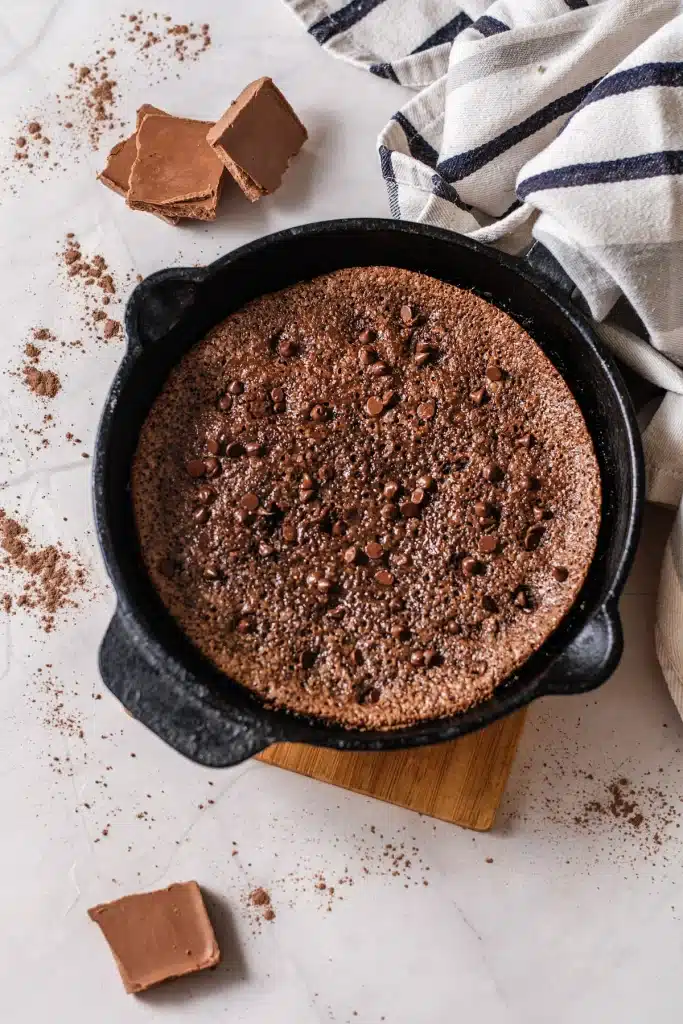
- One bowl, one small pan and no cutting, cooling or frosting
- Skillet brownie edges that bake chewy and crisp against the cast iron while the middle stays fudgy
- Two servings, so there is no tray of leftovers tempting you all week
- Brown sugar and cocoa give deep chocolate flavor from pantry staples
- Serve it warm from the pan with ice cream melting into the center
- Ready in 40 minutes, and the batter can be mixed hours ahead
The appeal is the edge. Cast iron holds heat, so the rim of the brownie bakes into a chewy, slightly crisp crust while the center stays fudgy, and because nobody cuts it into squares, you get the corner-piece texture all the way around. It is the dessert for a night when a whole tray of brownies would be a bad idea and a single warm one with a spoon is exactly the right one.

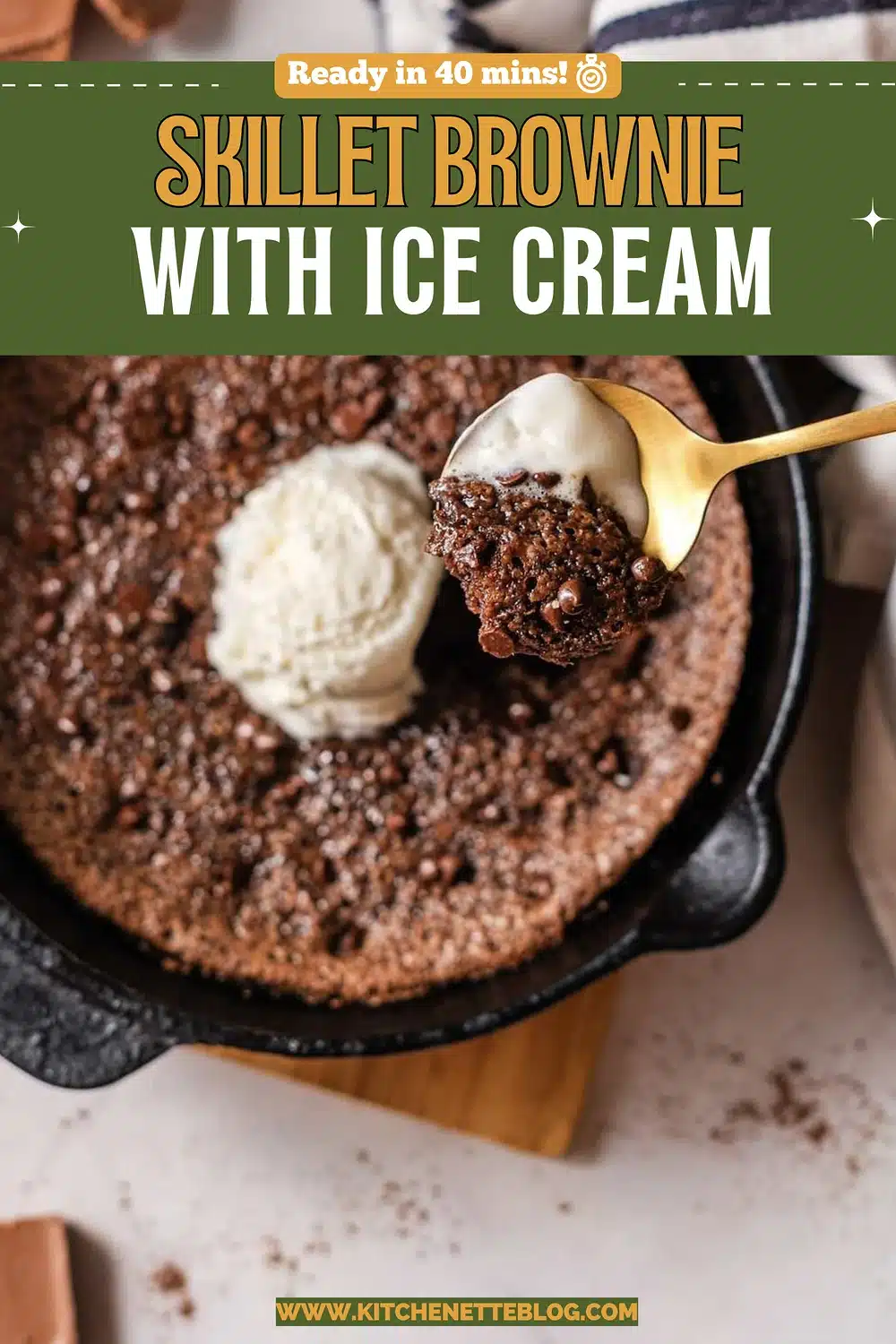
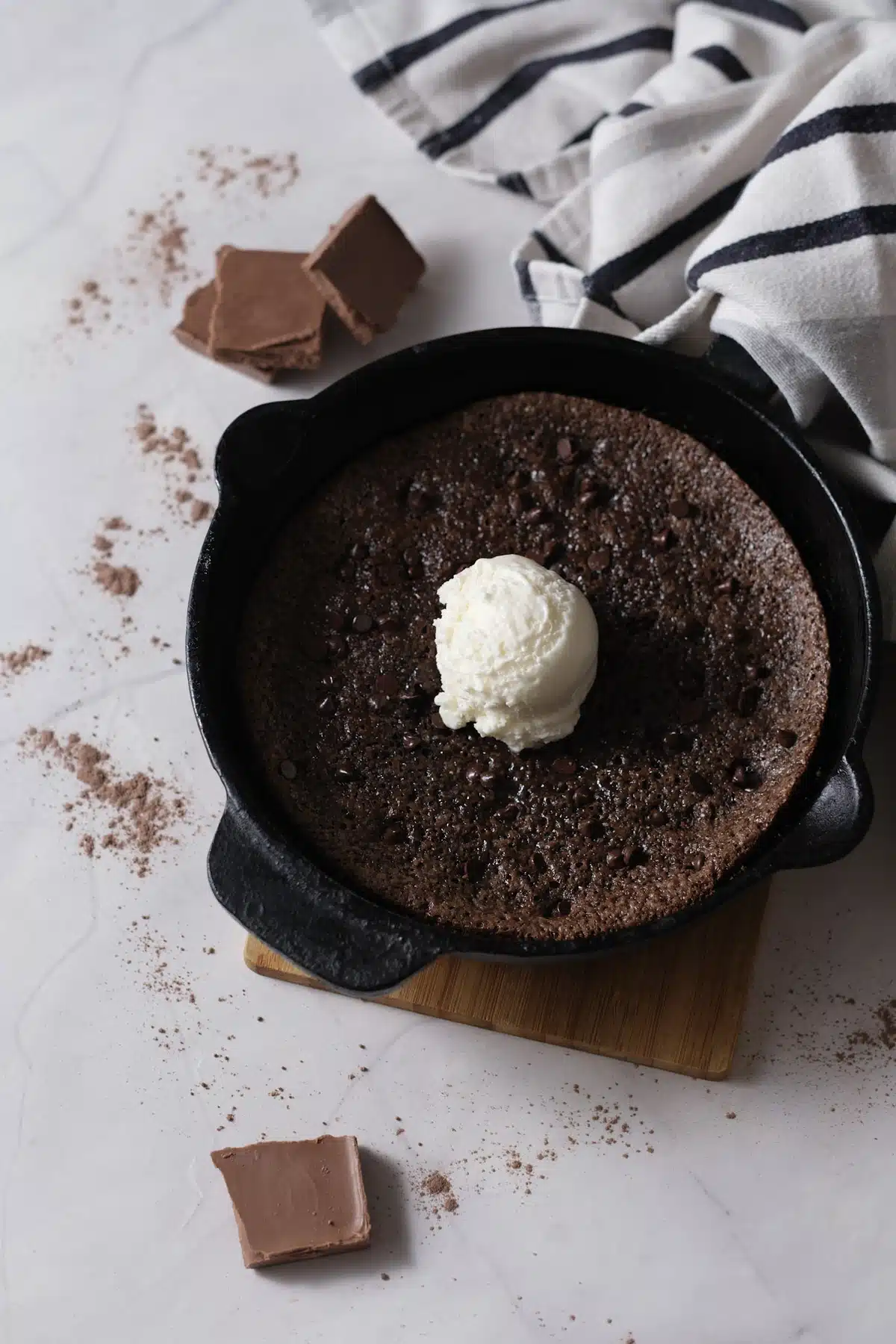
What Makes a Skillet Brownie Different
A brownie baked in a square pan is cut after it cools, so the edges and the middle are different experiences and everyone fights over the corners. A skillet brownie flips that. The pan goes to the table while the brownie is still warm, the edges are crisp all the way round, and the center is soft enough to eat with a spoon. Cast iron does most of the work, because it holds far more heat than a thin metal pan and keeps cooking the rim after the oven is off.
The batter is also a little different. It leans on brown sugar rather than white, which keeps the crumb moist and adds a caramel note, and it uses cocoa powder plus chocolate chips instead of melted bar chocolate, so there is no double boiler and no cooling step before the egg goes in. The Wheat Foods Council describes all-purpose flour as a mid-protein blend of hard and soft wheats, and a third of a cup of it is enough to hold the brownie together without turning it cakey.
Finally, the size. A 6.5-inch skillet makes a brownie about an inch and a half thick, which is deep enough for a real fudgy middle and small enough that two people finish it. Scaling it up to a 10-inch pan works, and the FAQ below covers the timing.
Save this recipe
Enter your email and I’ll send this recipe straight to your inbox.
Ingredient Notes
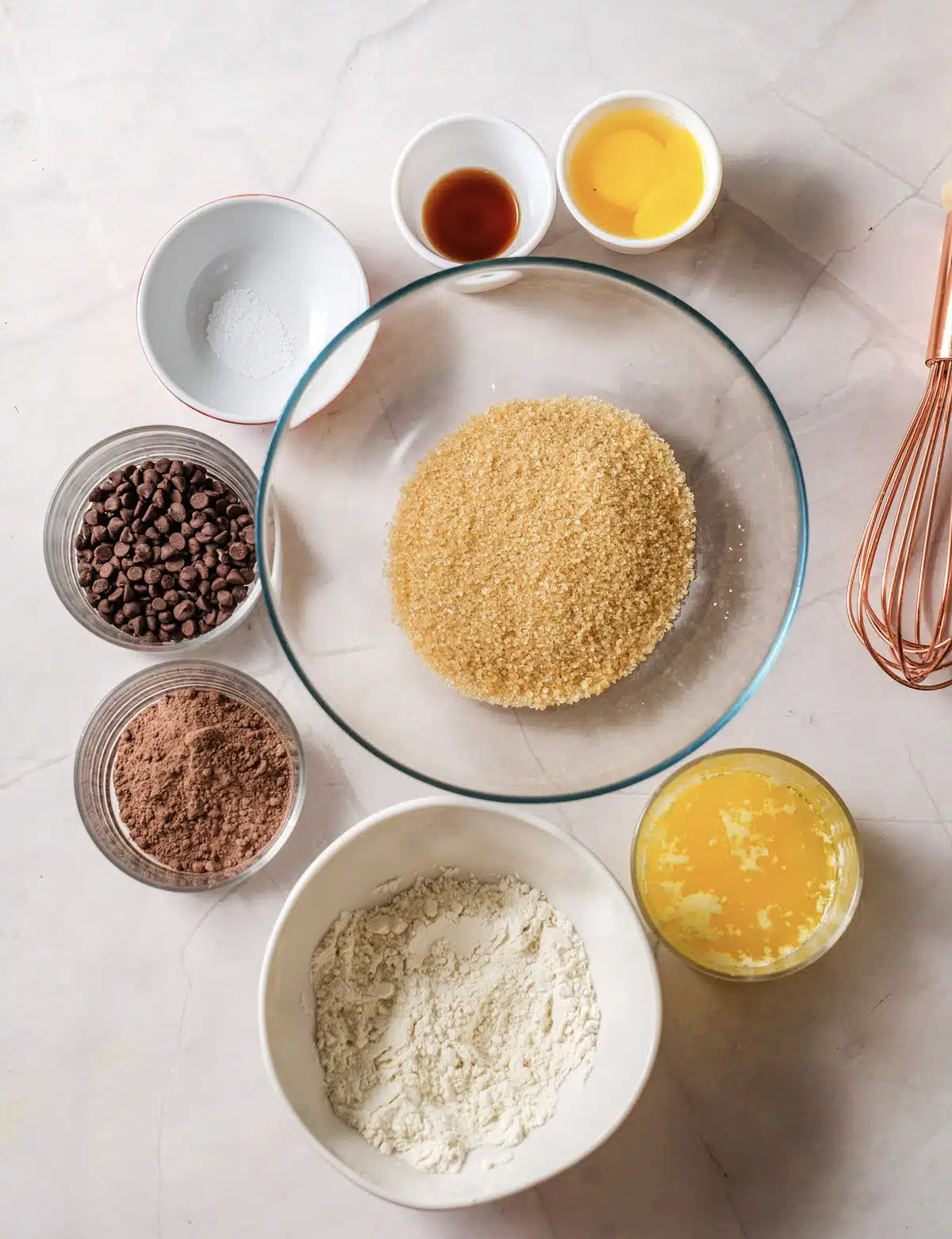
- Unsalted butter. Four tablespoons, melted. Melted rather than creamed butter is what gives a brownie its dense, fudgy texture. Salted butter works if you halve the added salt.
- Brown sugar. Half a cup, packed. Light or dark both work; dark gives a deeper molasses note. White sugar makes a drier, crisper brownie.
- Egg. One large, at room temperature so it beats into the warm butter without seizing.
- Vanilla extract. One teaspoon. It rounds out the cocoa and makes the brownie taste more like chocolate, not more like vanilla.
- All-purpose flour. A third of a cup, spooned and leveled. Too much flour is the fastest way to a cakey brownie.
- Unsweetened cocoa powder. A quarter cup. Natural cocoa gives a sharper chocolate flavor; Dutch-process gives a darker, smoother one. Either works here because there is no leavening to balance.
- Salt. Half a teaspoon. It sounds like a lot for a small brownie, and it is what keeps it from tasting flat and sweet.
- Chocolate chips. A third of a cup, semi-sweet or dark, plus a few extra for the top. They melt into pockets that stay soft after the brownie cools.
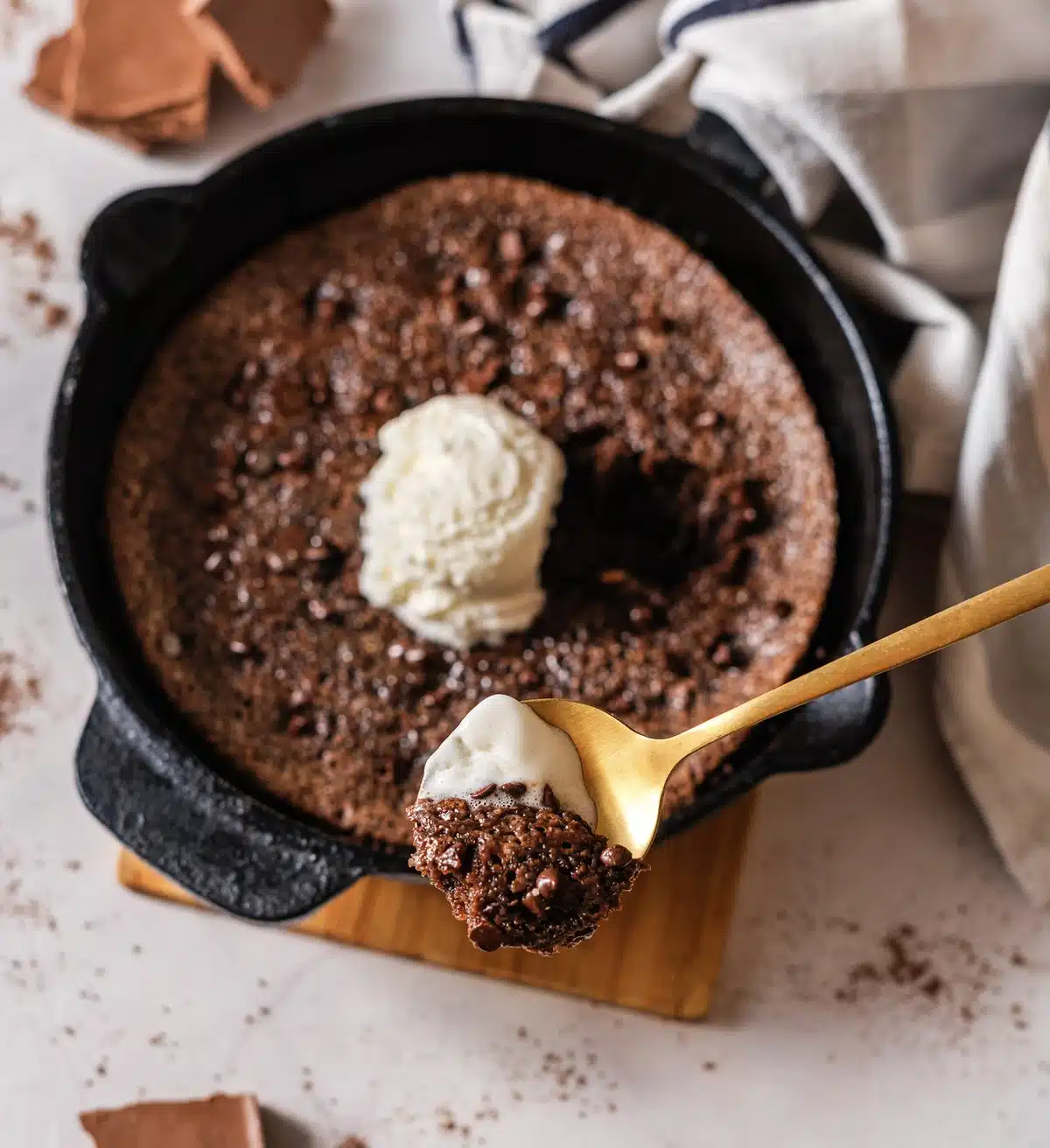
- To serve. Vanilla ice cream, which is what the photos show, or whipped cream, salted caramel or a handful of berries.
Which Pan to Use
A 6.5-inch cast-iron skillet is the right pan for this amount of batter. It is the small size sold for single servings and sides, and it gives the brownie the thickness that makes it fudgy in the middle. An 8-inch skillet spreads the same batter thinner, so it bakes in 20 to 25 minutes and comes out chewier throughout, more like a brownie cookie than a brownie.
If you do not own cast iron, any oven-safe dish of a similar size works: a small ceramic baker, a 6-inch cake pan or two 4-inch ramekins for individual portions. Grease it well, because there is no parchment to lift the brownie out, and expect the edges to be softer than they would be in iron, which holds heat and crisps them.
Whatever you use, grease the pan with butter right to the rim. The batter rises slightly as it bakes and sticks where it meets bare metal, and a skillet brownie that releases cleanly at the edge is the one that looks right when the spoon goes in.
How To Make a Skillet Brownie
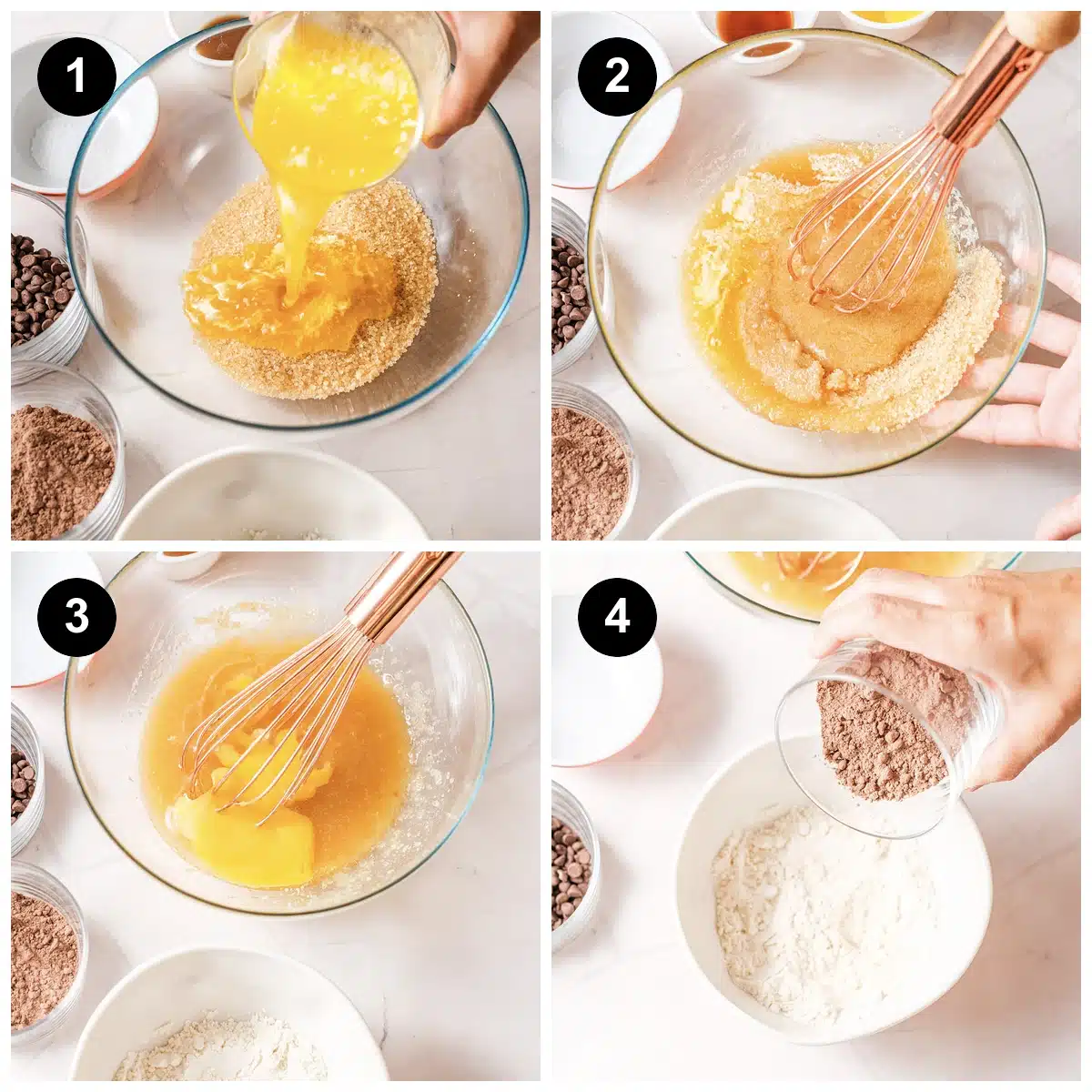
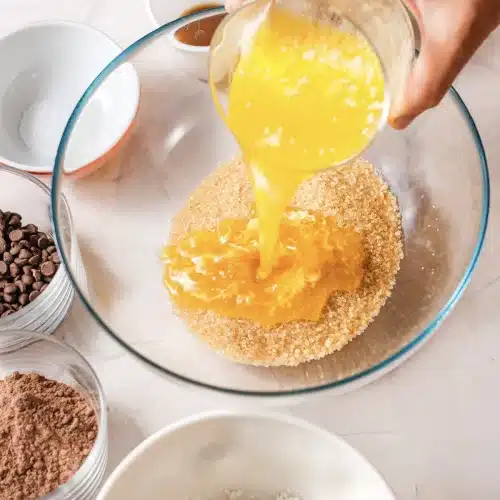
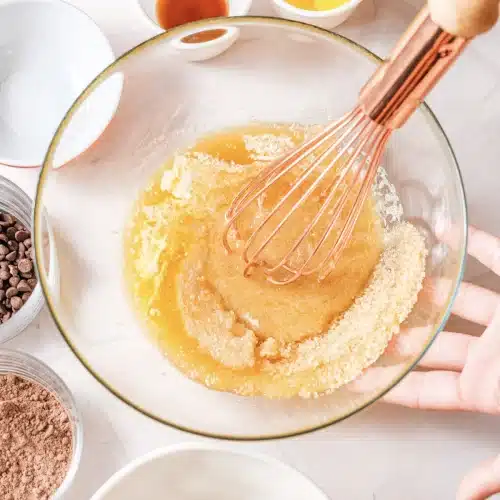
First, heat the oven to 350°F (177°C) and butter a 6.5-inch cast-iron skillet generously, including the sides. Pour the melted butter over the brown sugar in a medium bowl and whisk until the mixture is glossy and no lumps of sugar remain.
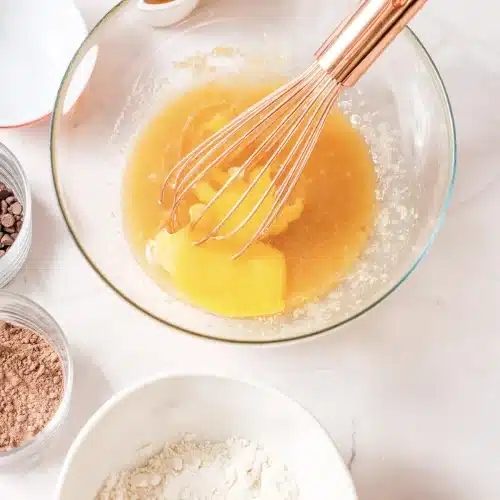
Next, add the egg and the vanilla and beat for about a minute, until the batter lightens a shade and turns smooth and shiny. That minute of beating dissolves the sugar and is what gives the top its thin, crackly crust.
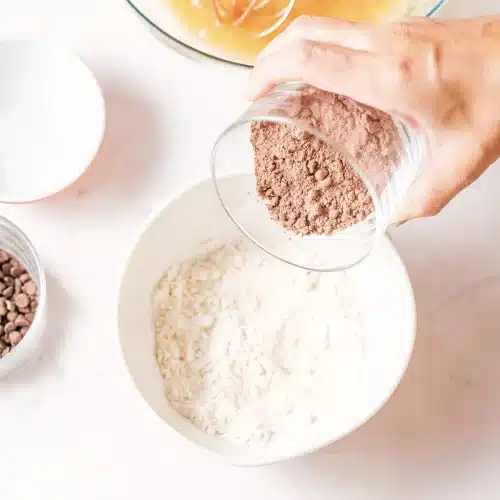
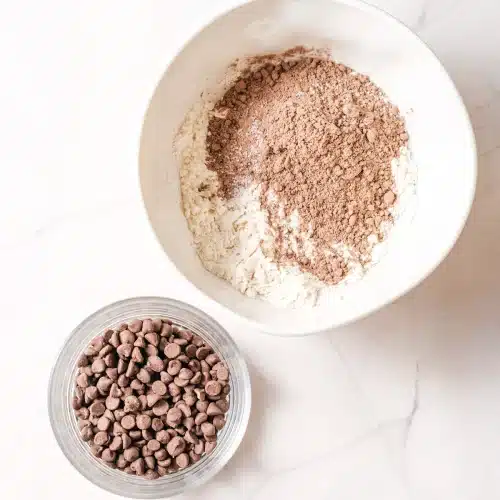
Then, in a second small bowl, add the cocoa and the salt to the flour and whisk until the dry mix is an even brown with no pale streaks. Cocoa clumps, and whisking it with the flour first means it blends into the batter without lumps.
Filling the Pan and Baking
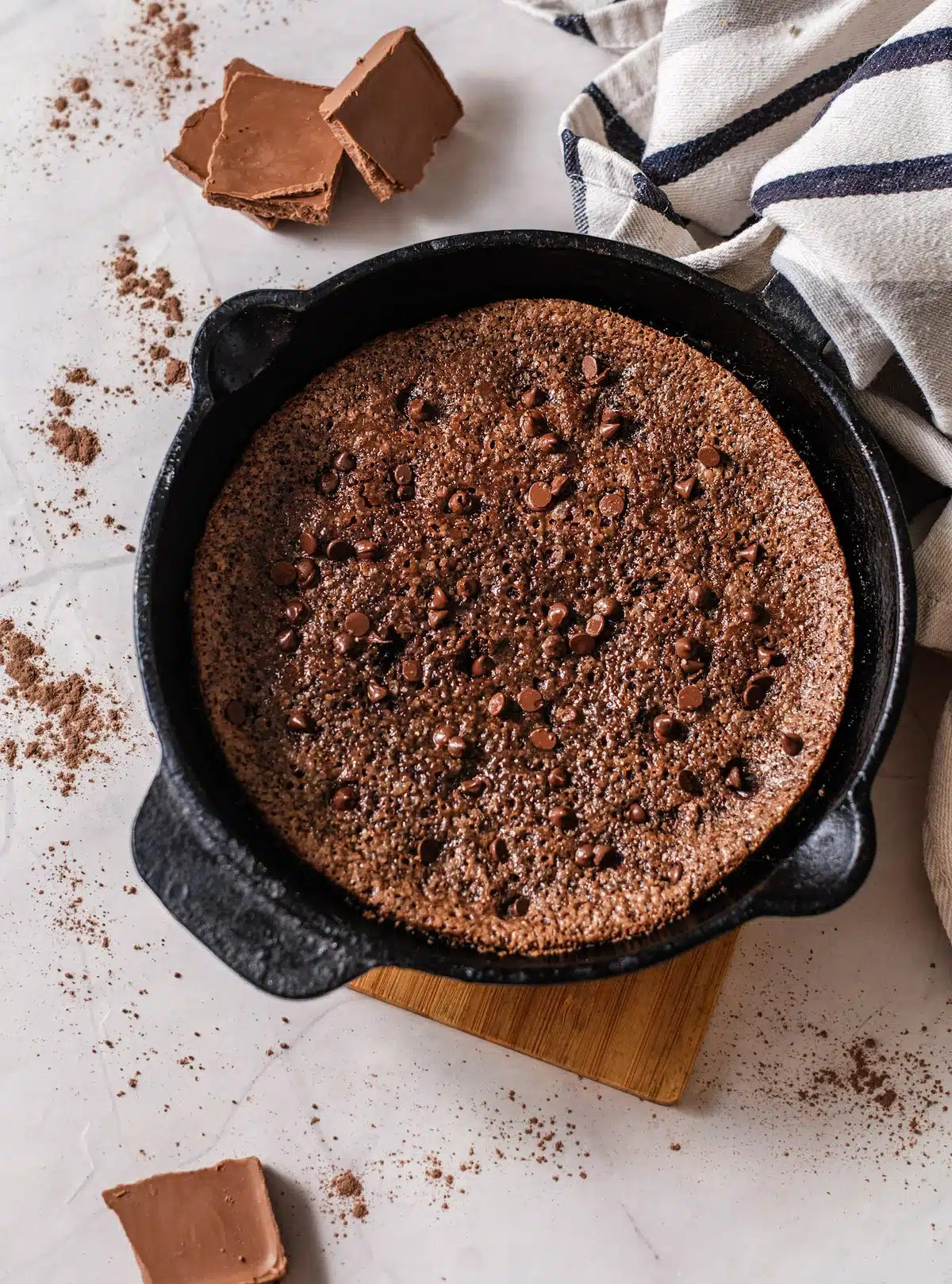
After that, tip the dry ingredients into the wet and stir just until no dry flour shows. A few streaks are fine; over-mixing develops the flour and toughens the brownie. Fold in the chocolate chips, scrape the batter into the skillet, smooth the top and scatter a few more chips over it.
Finally, bake for 30 to 35 minutes, until the edges are set and pulling slightly from the pan and a toothpick in the center comes out with moist crumbs rather than wet batter. Let the skillet brownie rest for 5 to 10 minutes, then top it with ice cream and eat it straight from the pan with two spoons.
How To Tell When a Skillet Brownie Is Done
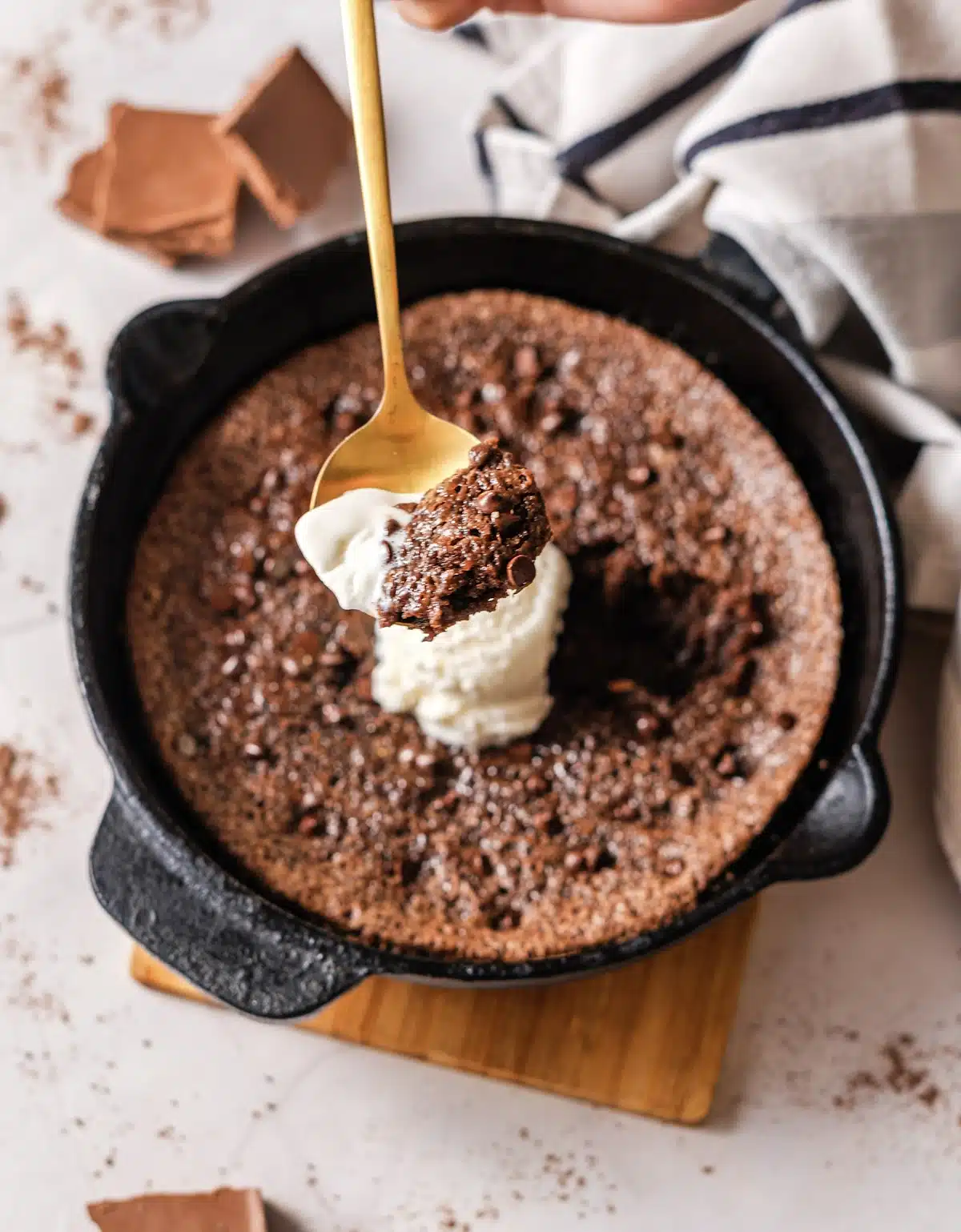
A skillet brownie is done when the edges have set and pulled away from the pan by a hair, the top has a dull, crackled surface instead of a wet shine, and a toothpick pushed into the center comes out with a few moist crumbs clinging to it. If it comes out clean, the brownie is already past fudgy; if it comes out coated in batter, give it 3 more minutes and test again.
The center will jiggle slightly when you nudge the pan, and that is correct. Cast iron keeps baking the brownie for 5 minutes or more after it comes out, so a center that looks fully set in the oven will be dry by the time it is served. For a brownie you want to eat with a spoon, pull it at 30 minutes; for one you can slice into wedges, go to 35.
If you have a thermometer, the center of a fudgy brownie reads about 180°F when it comes out, and the egg in it is fully cooked by that point. There is no reason to take it higher.
Make It Ahead
The batter can be mixed up to 24 hours ahead. Cover the bowl and refrigerate it, then scrape it into the buttered skillet and bake straight from cold, adding 3 to 5 minutes to the time. The top crust is a little less crackly from chilled batter, but the inside is just as good.
A baked skillet brownie can also wait. Bake it in the afternoon, leave it in the pan at room temperature, and warm the whole skillet in a 300°F oven for 8 to 10 minutes before dessert. The edges crisp up again and the chocolate chips go molten, which is almost better than the first time.
Storing Skillet Brownie Leftovers
Leftovers are rare with a two-serving brownie, but when they happen, cover the cooled skillet with foil or move the brownie to an airtight container and keep it at room temperature for up to 2 days. Refrigerating it is not necessary and makes the texture firm and waxy.
To freeze, cut the cooled brownie into wedges, wrap each one in plastic, and store them in a freezer bag for up to 3 months. Thaw at room temperature for an hour, or microwave a wedge for 15 to 20 seconds straight from frozen. A splash of cream or a spoonful of ice cream on top hides any dryness from the freezer.
Reheat a wedge in the microwave for 10 to 15 seconds, just until the chips soften, or put the whole skillet back in a 300°F oven for 8 minutes.
Variations and Substitutions
Chocolate and Mix-In Swaps
Different chips. White chocolate, peanut butter chips or chopped dark chocolate from a bar, in the same third of a cup. Chopped bar chocolate melts into bigger, softer pockets.
Nuts and crunch. A quarter cup of chopped walnuts or pecans folded in with the chips, or a handful of crushed pretzels on top before baking for salt and crunch.
Espresso. Half a teaspoon of instant espresso powder whisked into the dry ingredients deepens the chocolate without tasting of coffee.
Salted caramel. Drop three or four teaspoons of thick caramel onto the batter and swirl them with a knife before baking, then finish with flaky salt. A spoonful of caramel fudge melted on top after baking does the same job with less effort.
Scaling Up and Dietary Swaps
For a 10-inch skillet. Double everything and bake for 35 to 40 minutes. It serves four to six and the center takes longer to set, so trust the toothpick rather than the clock.
Gluten-free. A one-to-one gluten-free flour blend works in this small amount with no other change. Check the chocolate chip label, because some brands are processed with wheat.
Dairy-free. Melted coconut oil in place of the butter and dairy-free chocolate chips. The brownie is a little denser and tastes faintly of coconut, which suits it.
What to Serve with a Skillet Brownie
Vanilla ice cream, straight onto the warm brownie so it melts into the middle, is the serving in the photos and the one that needs no improvement. Homemade chocolate ice cream with smoked salt is the double-chocolate version for people who do not believe in restraint, and a cold glass of milk is the version for children.
For a dinner party, bake one skillet brownie per two guests and send them to the table with spoons, or make a chocolate spread of it: a pot de creme for the person who wants something cool and silky, a salted toffee cookie for the one who wants crunch, and the skillet for everyone who wants warm.
If you are baking for a crowd rather than two, a Texas sheet cake feeds twenty with the same fudgy, warm chocolate idea, and a tray of almond joy cookies covers the coconut lovers.
Skillet Brownie FAQ
Frequently Asked Questions
Can I bake brownies in a cast-iron skillet?
Yes, and it is the best pan for the job. Cast iron holds heat evenly, so the edges bake chewy and crisp while the center stays fudgy, and the brownie can be served straight from the pan. Grease it well with butter, because there is no parchment to lift the brownie out.
Can you make a skillet brownie on the stovetop instead of in the oven?
No, not as written. Brownie batter needs all-around oven heat to set the egg and form a crust, and a burner heats only the bottom, so the base scorches first. Without an oven, a covered skillet over the lowest heat for 25 to 30 minutes sets the batter, but the top stays pale and soft.
Why is my skillet brownie dry?
It was baked too long or the pan was too wide. Pull it when a toothpick shows moist crumbs, not when it comes out clean, and remember that cast iron keeps baking it for 5 minutes after. In a wider pan the same batter is thinner and needs 10 fewer minutes.
Do I need a cast-iron pan for a skillet brownie?
No. Any oven-safe dish about 6.5 inches across works: a small ceramic baker, a 6-inch cake pan or two ramekins. The edges will be softer, because iron is what crisps them, and the bake time stays about the same.
How long does a skillet brownie keep?
Up to 2 days covered at room temperature, or up to 3 months frozen as wrapped wedges. Reheat a wedge in the microwave for 10 to 15 seconds, or warm the whole skillet in a 300°F oven for 8 minutes.
More Questions About Brownies
Good to Know
Can I double the skillet brownie recipe?
Yes. Double every ingredient for a 10-inch skillet and bake for 35 to 40 minutes, testing the center with a toothpick. It serves four to six. In a 9-inch skillet, double the batter bakes in about 32 minutes and comes out a little thicker.
Can I use oil instead of butter in a skillet brownie?
Yes. Four tablespoons of neutral oil or melted coconut oil in place of the butter gives a slightly denser, chewier brownie with less flavor from the fat. Add a pinch more salt to make up for it.
Why did my skillet brownie top not get crackly?
The egg and sugar were not beaten long enough. Whisk the egg into the butter and sugar for a full minute, until the batter is glossy, because the dissolved sugar is what forms the thin, shiny crust on top.
How many calories are in a skillet brownie?
About 320 calories per serving when the 6.5-inch brownie is split in two, with roughly 4 g protein, 41 g carbohydrates and 16 g fat, before the ice cream. These figures are an estimate from the recipe card.
Keep a small cast-iron pan in the cupboard and dessert for two is 40 minutes away any night of the week. A warm skillet brownie, a scoop of ice cream and two spoons is the whole plan, and on the nights that calls for more chocolate, a pot de creme in the fridge finishes it.
Skillet Brownie for Two
Save this recipe
Enter your email and I’ll send this recipe straight to your inbox.
Ingredients
Wet Ingredients
- 4 tbsp unsalted butter melted, plus more for the pan
- 1/2 cup brown sugar packed, light or dark
- 1 large egg at room temperature
- 1 tsp vanilla extract
Dry Ingredients
- 1/3 cup all-purpose flour spooned and leveled
- 1/4 cup unsweetened cocoa powder
- 1/2 tsp salt use 1/4 teaspoon with salted butter
- 1/3 cup chocolate chips semi-sweet or dark, plus a few for the top
To Serve
- vanilla ice cream or whipped cream, salted caramel or berries
Equipment
- 6.5-inch cast iron skillet (or oven-safe baking dish)
- Mixing bowl
- Spoon or spatula
- Small bowl (for dry ingredients)
Instructions
Mix the Batter
- Heat the oven. Set the oven to 350°F (177°C) and butter a 6.5-inch cast-iron skillet generously, including the sides.
- Pour the butter over the sugar. Put the brown sugar in a medium bowl and pour the melted butter over it.

- Whisk until glossy. Whisk the butter and sugar together until the mixture is shiny and no lumps of sugar remain.
- Beat in the egg and vanilla. Add the egg and vanilla and beat for about 1 minute, until the batter lightens a shade and turns smooth and shiny.
- Add the cocoa to the flour. In a separate small bowl, add the cocoa powder and the salt to the flour.
- Whisk the dry ingredients. Whisk until the mixture is an even brown with no pale streaks, and have the chocolate chips ready beside it.
Fill and Bake
- Combine and add the chips. Tip the dry ingredients into the wet and stir just until no dry flour shows; a few streaks are fine. Fold in the chocolate chips.
- Fill the skillet. Scrape the batter into the buttered skillet, smooth the top and scatter a few extra chips over it.
- Bake. Bake for 30 to 35 minutes, until the edges are set and pulling slightly from the pan and a toothpick in the center comes out with moist crumbs, not wet batter.
Rest and Serve
- Rest and serve. Let the skillet stand for 5 to 10 minutes, then top with vanilla ice cream and serve warm from the pan with two spoons.