
Olive Garden lasagna is the dish people order when they want the restaurant version of what a grandmother used to make: a tall square of pasta, meat sauce and cheese that holds its shape on the plate and arrives bubbling at the edges. The menu calls it Lasagna Classico, and the description is short. Layers of pasta, meat sauce and mozzarella, ricotta, Parmesan and Romano. That is the whole brief, and it is not hard to hit at home.
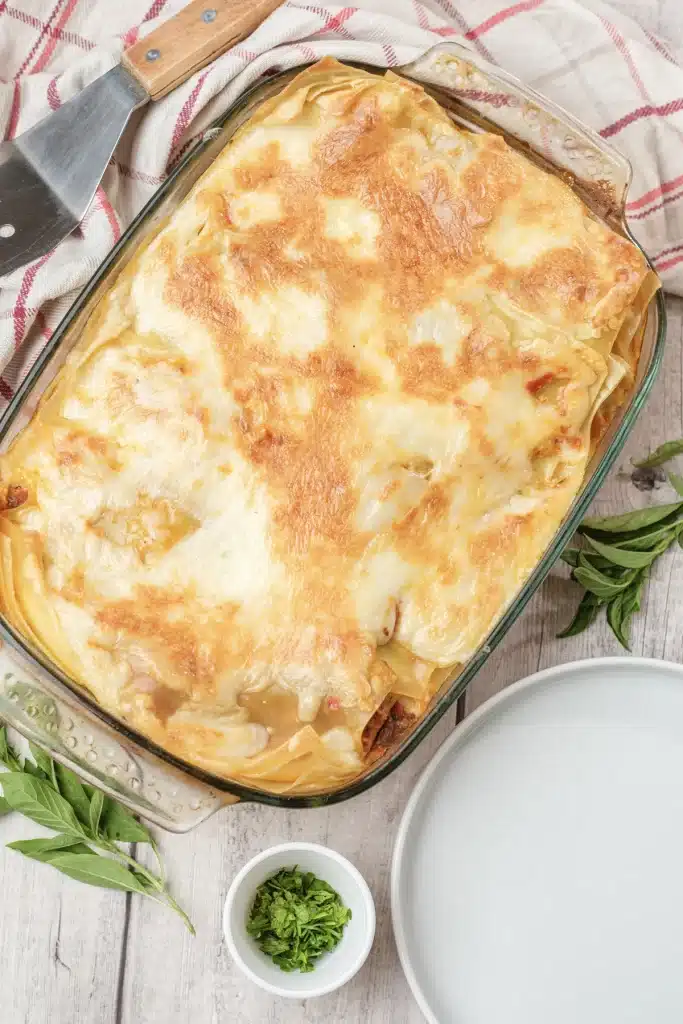
- Olive Garden lasagna from one pot of sauce and one 9-by-13-inch dish
- Beef and Italian sausage together, which is the flavor the restaurant has and most home versions miss
- Four cheeses in the right places: ricotta in the layers, mozzarella and Parmesan on top, Romano if you have it
- Assembles a day ahead and bakes straight from the fridge, so it is a real dinner-party dish
- Freezes whole or by the square for up to three months
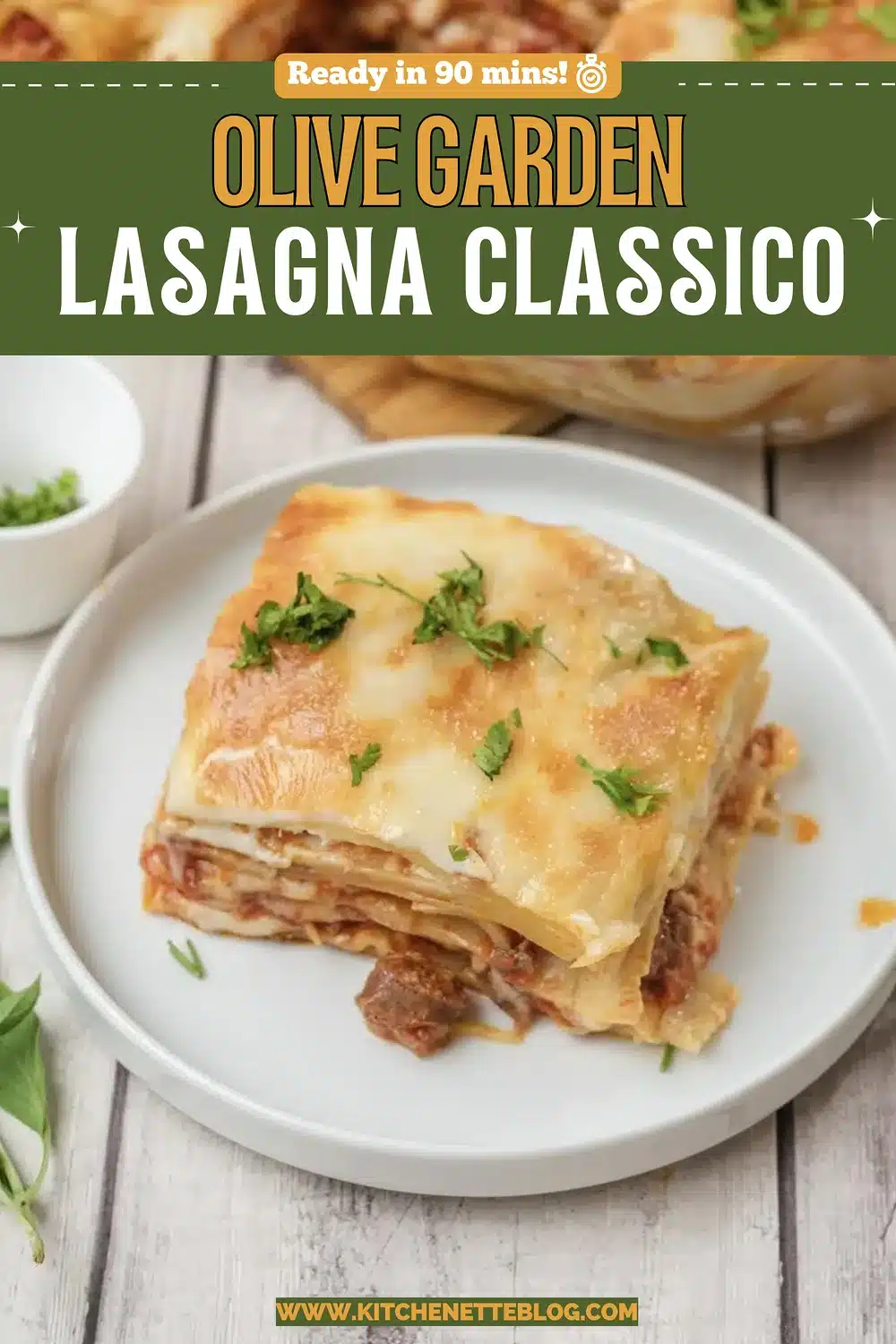
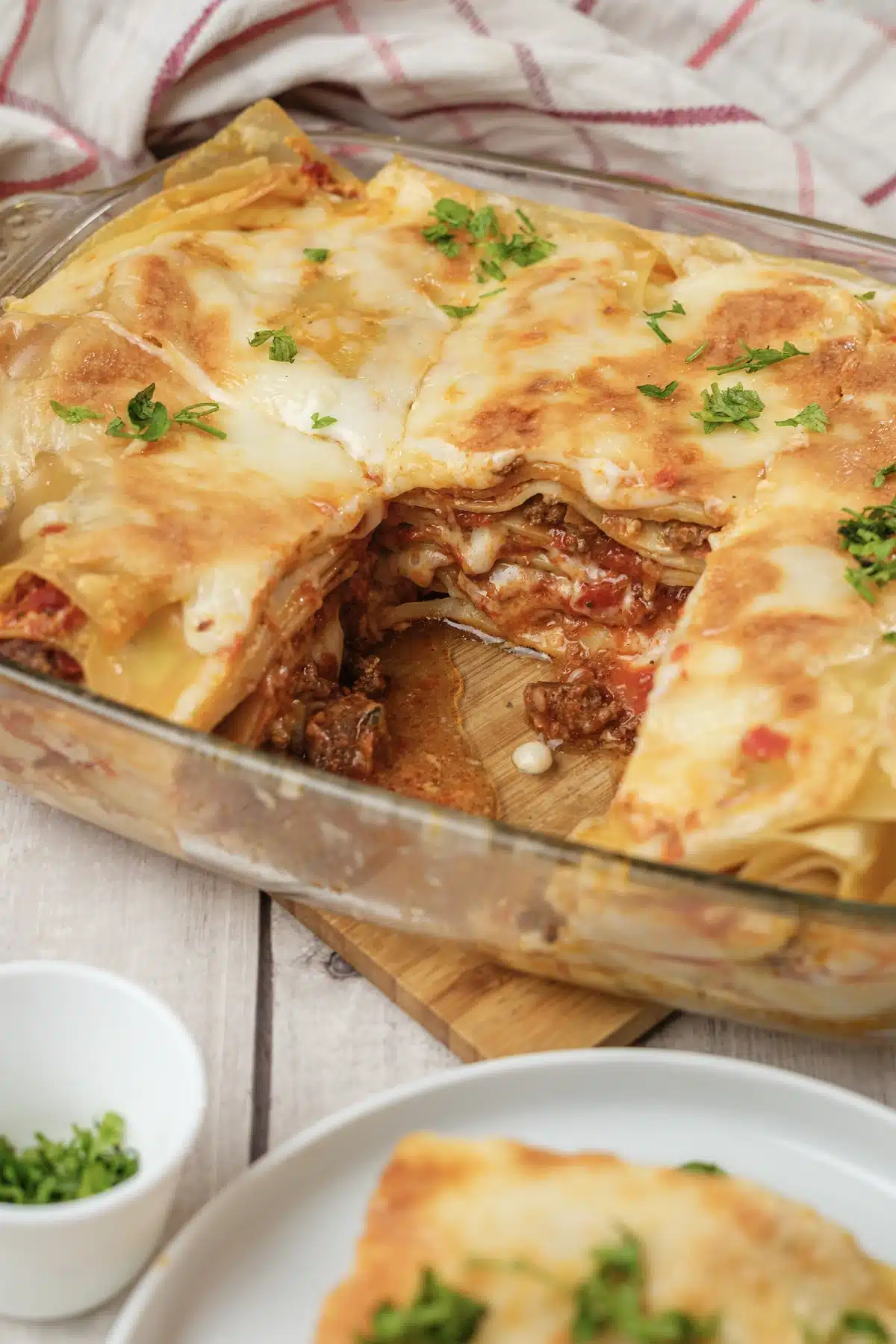
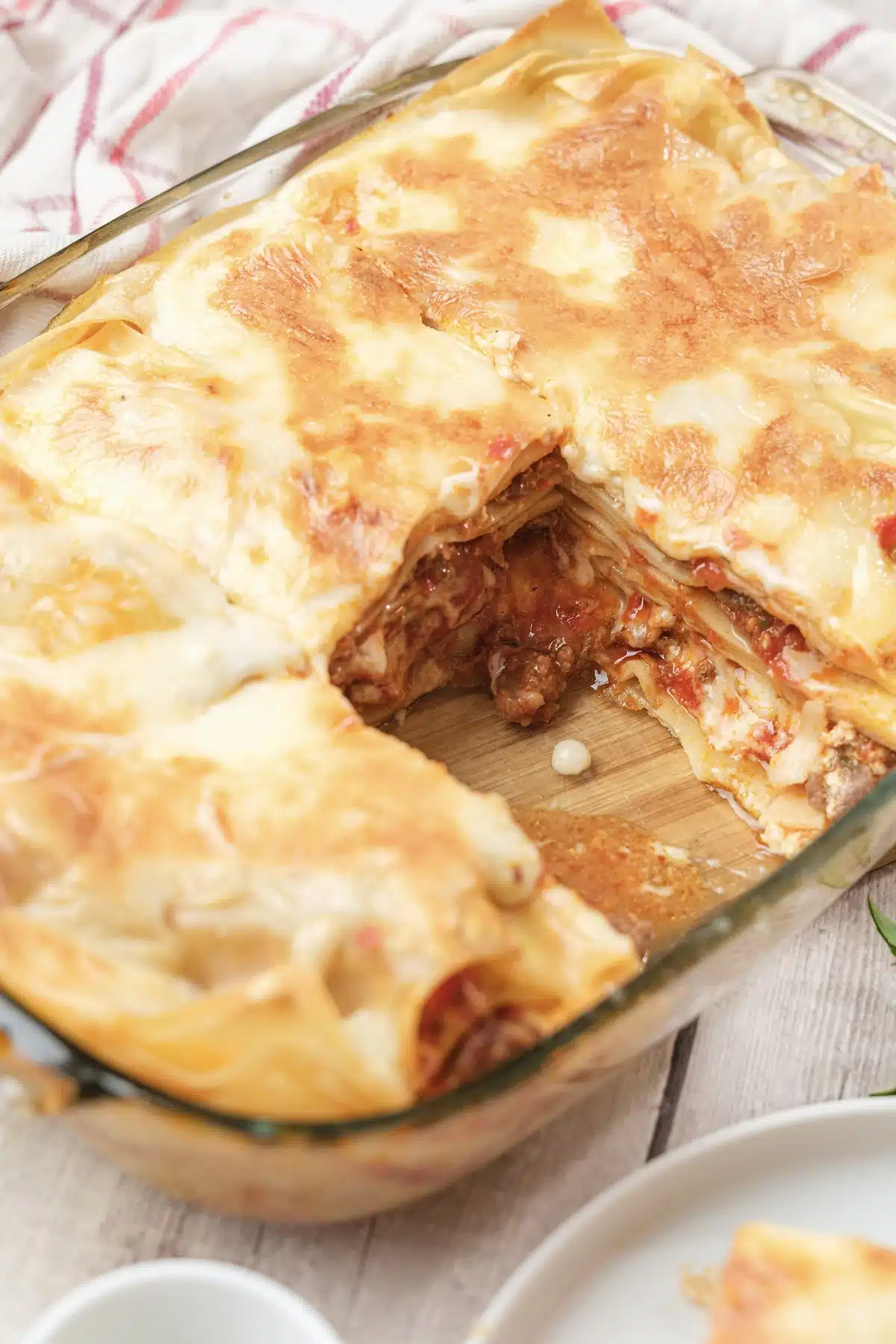
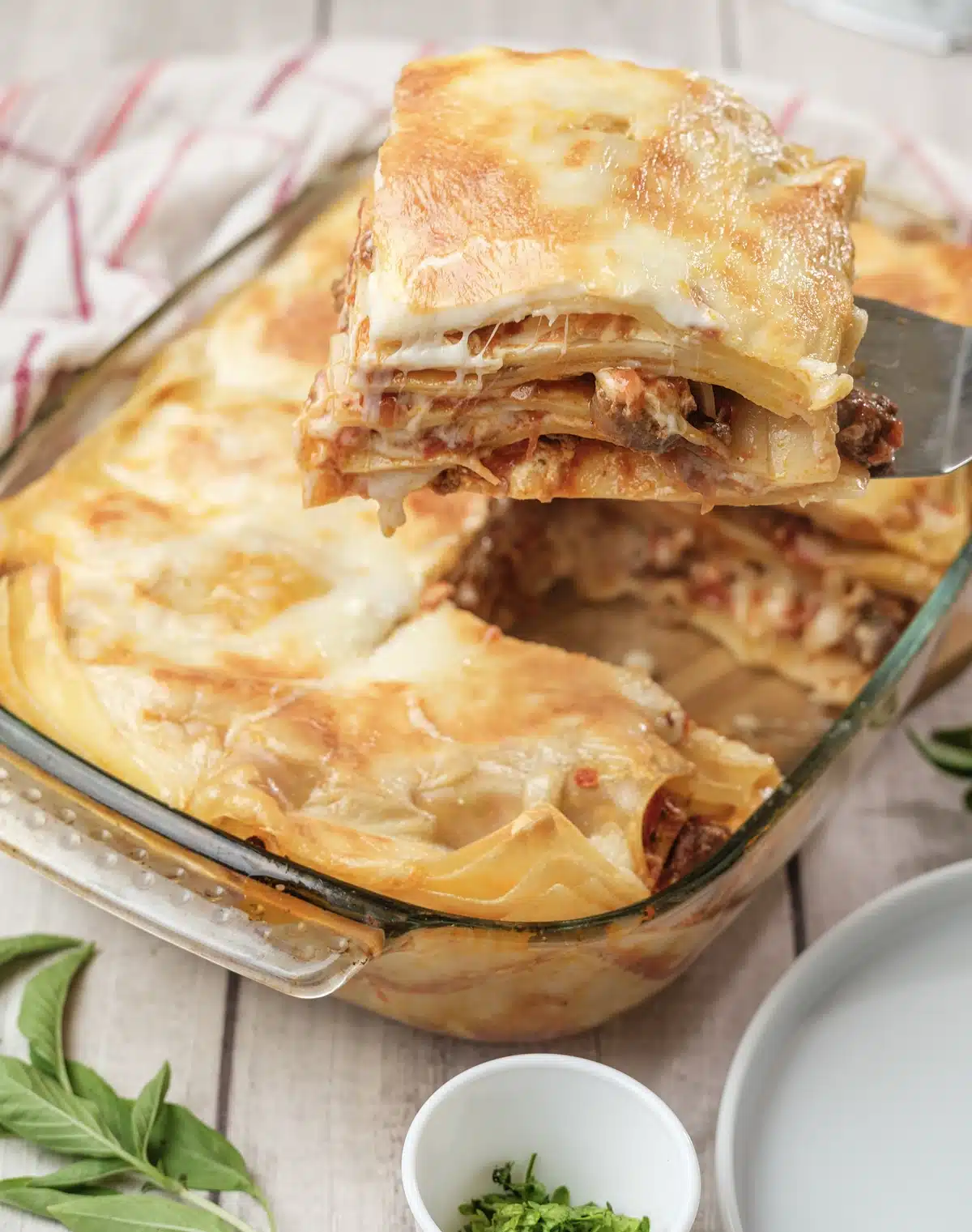
The thing that separates it from an average weeknight lasagna is the sauce. Beef and Italian sausage are cooked down together with crushed tomatoes and tomato paste until the sauce is thick enough to hold a spoon upright. A wet sauce slides out between the noodles, and the square collapses the moment you cut it. A thick one bakes into the layers, and you get the clean, upright slice in the photos. Everything after that is assembly.

- What Is in Olive Garden Lasagna Classico?
- Ingredient Notes
- Why the Sauce Uses Two Meats and Tomato Paste
- How To Make Olive Garden Lasagna
- How To Tell When Olive Garden Lasagna Is Done
- Make It Ahead
- Storing Olive Garden Lasagna
- Variations and Substitutions
- What to Serve with This Lasagna
- Olive Garden Lasagna FAQ
What Is in Olive Garden Lasagna Classico?
The restaurant describes its Lasagna Classico as layers of pasta, meat sauce and mozzarella, ricotta, Parmesan and Romano cheese, and that list is accurate. The meat sauce is the part worth paying attention to. It is not a plain ground beef ragu. It has the sweetness and fennel note of Italian sausage running through it, which is why it tastes richer than a beef-only lasagna. So yes, Olive Garden lasagna does contain pork, in the sausage.
The cheeses do three different jobs. Ricotta, whisked with an egg, is spread thin between the noodles and sets into a soft, sliceable layer rather than a loose puddle. Mozzarella melts into strings and browns on top. Parmesan and Romano are there for salt and sharpness, and a little of each goes into every layer so the middle of the square is not bland. Most copycats skip the Romano. It is optional here too, but it is the difference between close and exact.
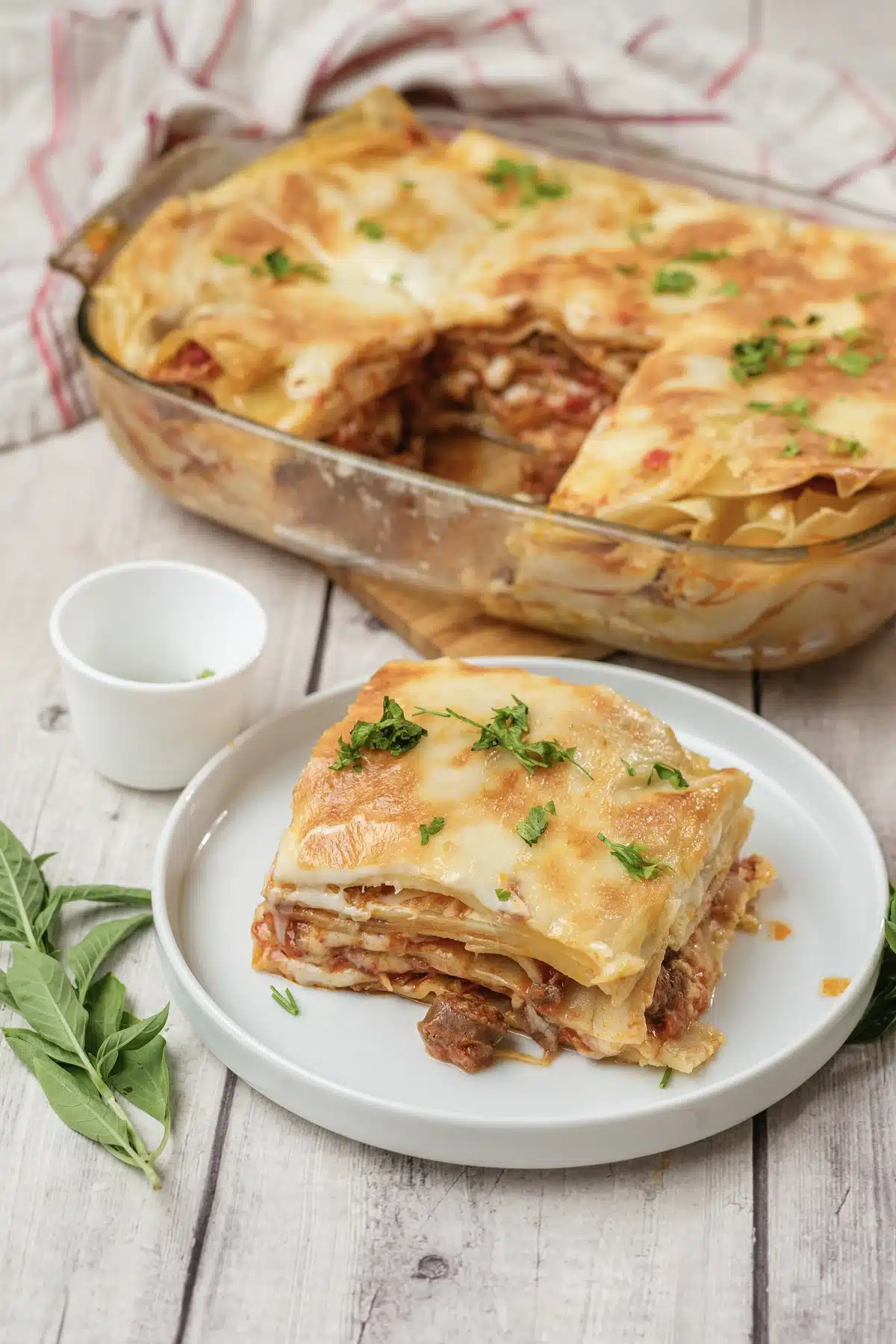
The last thing to get right is the shape. The restaurant serves a tall slab with at least four layers of noodles. A 9-by-13-inch dish with twelve noodles gives you four layers of three. Cut it into eight and each square stands about two and a half inches high, which is what a serving of Olive Garden lasagna should look like.
Save this recipe
Enter your email and I’ll send this recipe straight to your inbox.
Ingredient Notes
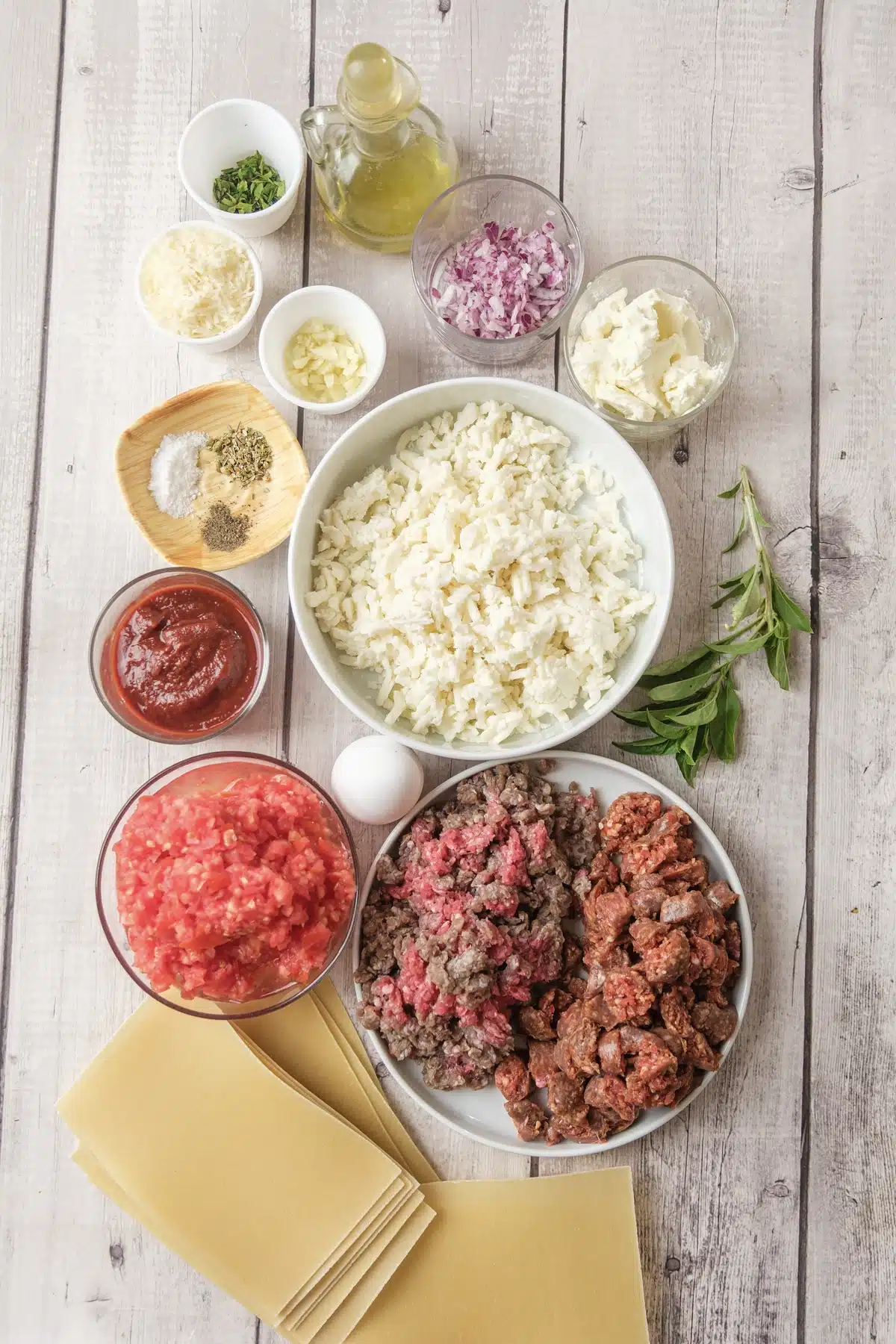
- Ground beef. One pound of 85 percent lean. Leaner beef turns mealy in a long simmer, and fattier beef leaves a slick on the sauce that has to be spooned off.
- Italian sausage. One pound, casings removed, mild or hot. This is where the restaurant flavor comes from. If you can only find links, slit them lengthwise and push the meat out.
- Red onion and garlic. One medium onion, diced, and four cloves. A yellow onion works, but the red one is slightly sweeter, which suits a baked tomato sauce.
- Crushed tomatoes. One 28-ounce can. Crushed, not diced and not puree. Diced tomatoes stay in cubes and puree is too smooth to read as a meat sauce.
- Tomato paste. Two tablespoons, cooked with the meat for a minute before the tomatoes go in. It thickens the sauce and deepens the color, and it is the reason the sauce stays put between the layers.
- Dried oregano and fresh basil. A teaspoon of oregano, split between the sauce and the ricotta, and half a cup of chopped basil stirred in at the end. A tablespoon of dried basil is fine instead.
The Cheeses and Noodles
- Ricotta. One 15-ounce tub of whole-milk ricotta. Part-skim is watery and bakes into a grainy layer. If the tub looks wet, set it in a sieve over a bowl for twenty minutes first.
- Egg. One large, beaten into the ricotta. It binds the filling so the square holds together when it is cut.
- Mozzarella. Three cups, shredded from a low-moisture block. Pre-shredded bags are coated with starch and melt in a stiff, matte sheet. Fresh mozzarella in water makes the top soggy.
- Parmesan and Romano. A cup of finely grated Parmesan, divided, plus half a cup of Pecorino Romano if you want the full four-cheese blend. Grate it yourself; the shelf-stable kind does not melt.
- Lasagna noodles. Twelve regular noodles, boiled until just short of tender. Oven-ready noodles work with a change to the sauce, which is covered under Variations.
- Parsley. Two tablespoons, chopped, for the top. It is the only green on the plate.
Why the Sauce Uses Two Meats and Tomato Paste
Beef alone gives you a sauce that tastes like a burger simmered in tomatoes. Sausage alone is too salty and too heavily spiced to carry a dish. Half and half is the ratio Olive Garden lasagna tastes like, and it is the ratio here. The sausage brings fennel, black pepper and enough fat that you do not need to add any oil after the onion is cooked.
The paste is the other half of the story. Two tablespoons cooked on the hot meat for a minute lose their tinny edge and turn a shade darker, which makes a 20-minute sauce taste like it has been on the stove for two hours. It also pulls the sauce together so it clings to the noodles instead of pooling underneath them.
Simmer with the lid off. The sauce should lose about a quarter of its volume, and it is ready when a spoon dragged across the bottom of the pot leaves a trail that stays open for a second. A thinner sauce makes a good spaghetti dinner and a watery lasagna.
How To Make Olive Garden Lasagna
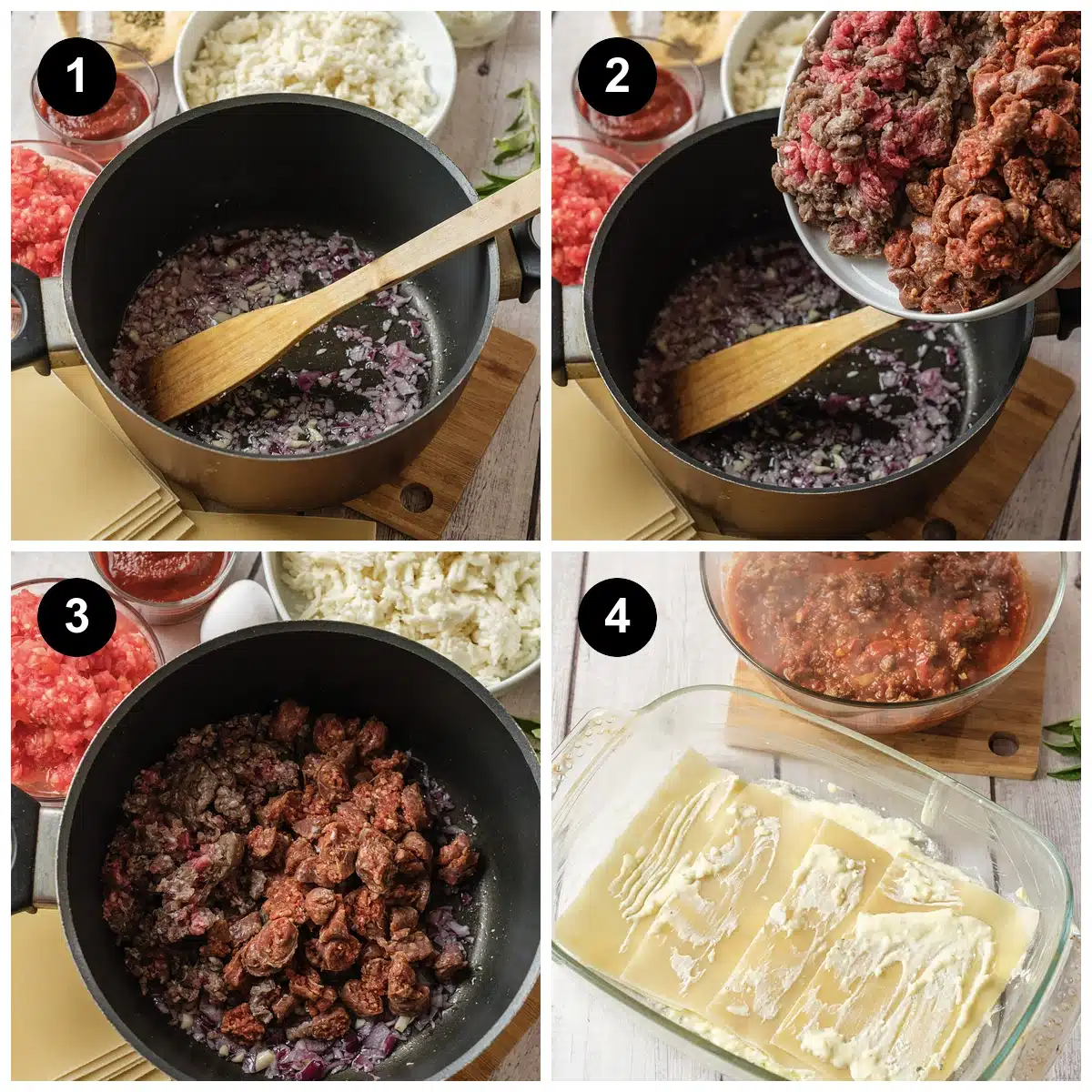
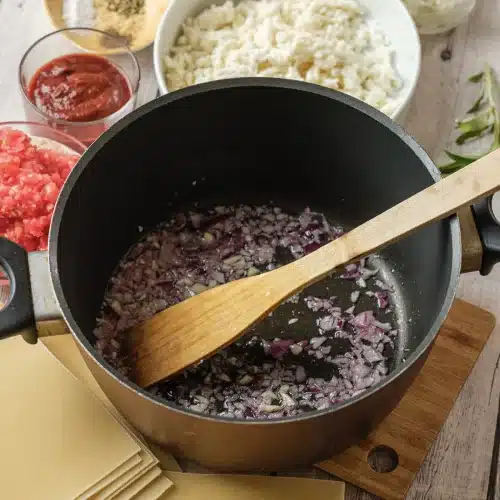
First, set the oven to 375°F (190°C) and lightly oil a 9-by-13-inch baking dish. Heat two tablespoons of olive oil in a large pot over medium heat and cook the diced red onion for five minutes, until it is soft and starting to turn translucent. Add the garlic and give it one minute more.
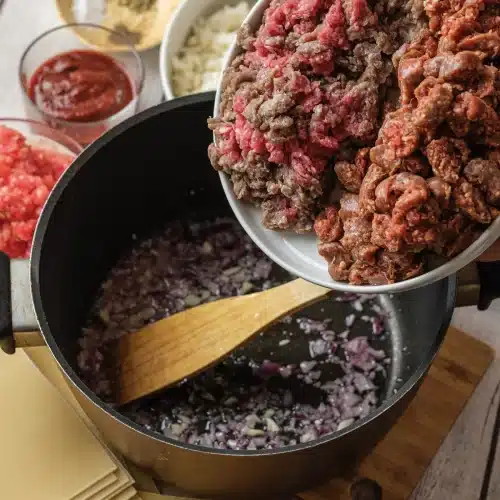
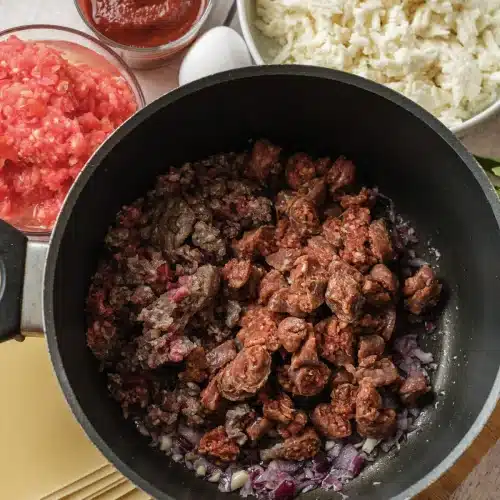
Next, add the ground beef and the sausage. Break them up with a wooden spoon and cook for ten to twelve minutes, until there is no pink left and the bottom of the pot has browned bits stuck to it. Tip the pot and spoon off all but a couple of tablespoons of fat. Stir in the tomato paste and cook it for one minute against the hot metal.
Then, pour in the crushed tomatoes with half a teaspoon of the oregano, a teaspoon of salt and a good grind of pepper. Scrape the bottom of the pot clean and simmer uncovered for twenty minutes, until the sauce is thick, stirring in the basil for the last five. While it simmers, boil the noodles in well-salted water for two minutes less than the package says, drain them and lay them flat on a towel. Whisk the ricotta with the egg, the remaining oregano, half the Parmesan and a pinch of salt.
Layering It So the Square Stands Up
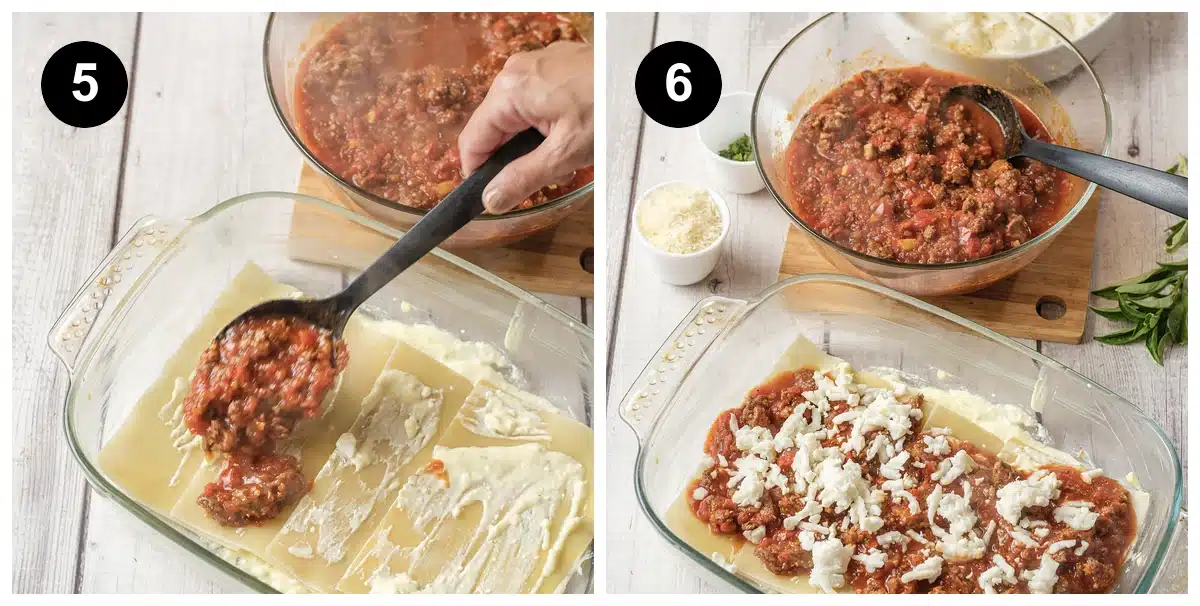
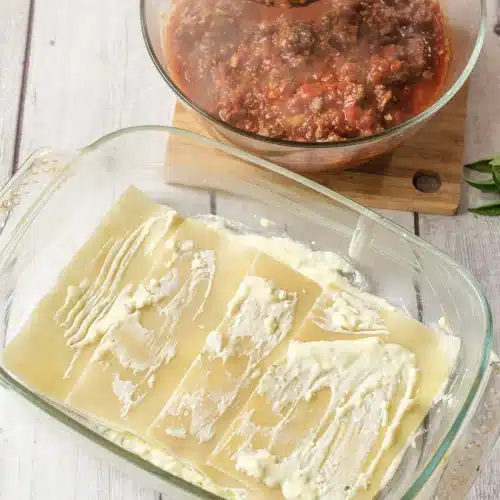
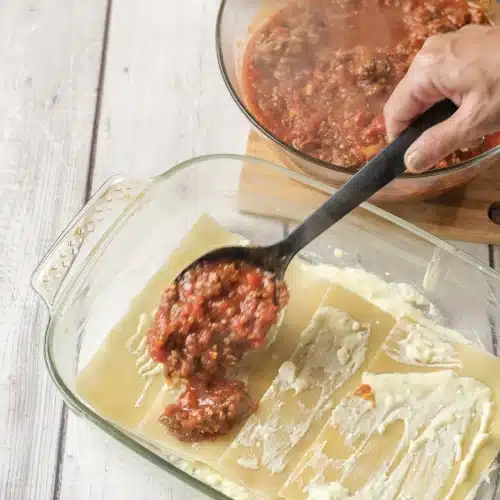
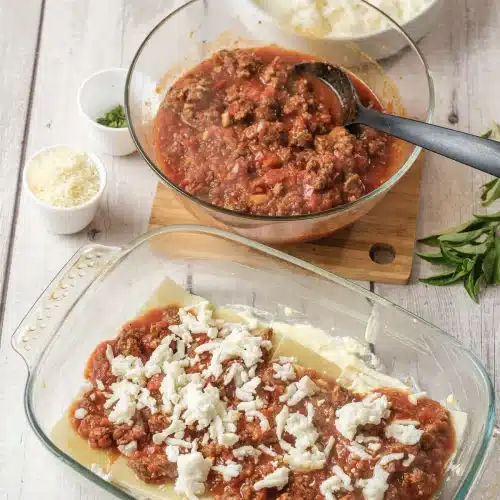
After that, spread a thin smear of the ricotta mixture over the base of the dish and lay three noodles side by side on top. Spread a quarter of the remaining ricotta over the noodles, then a quarter of the meat sauce, then a scattering of mozzarella and a spoonful of Parmesan or Romano. Repeat that three more times: noodles, ricotta, sauce, cheese. Finish the top layer with a thin coat of sauce, the last of the mozzarella and the rest of the Parmesan, so it bakes to a golden crust rather than a red one.
Finally, cover the dish with foil and bake the Olive Garden lasagna for 25 minutes. Take the foil off and bake for 15 minutes more, until the edges are bubbling hard and the top has browned in patches. Let it rest for 15 minutes before you scatter the parsley over and cut it, or the layers will slide.
How To Tell When Olive Garden Lasagna Is Done
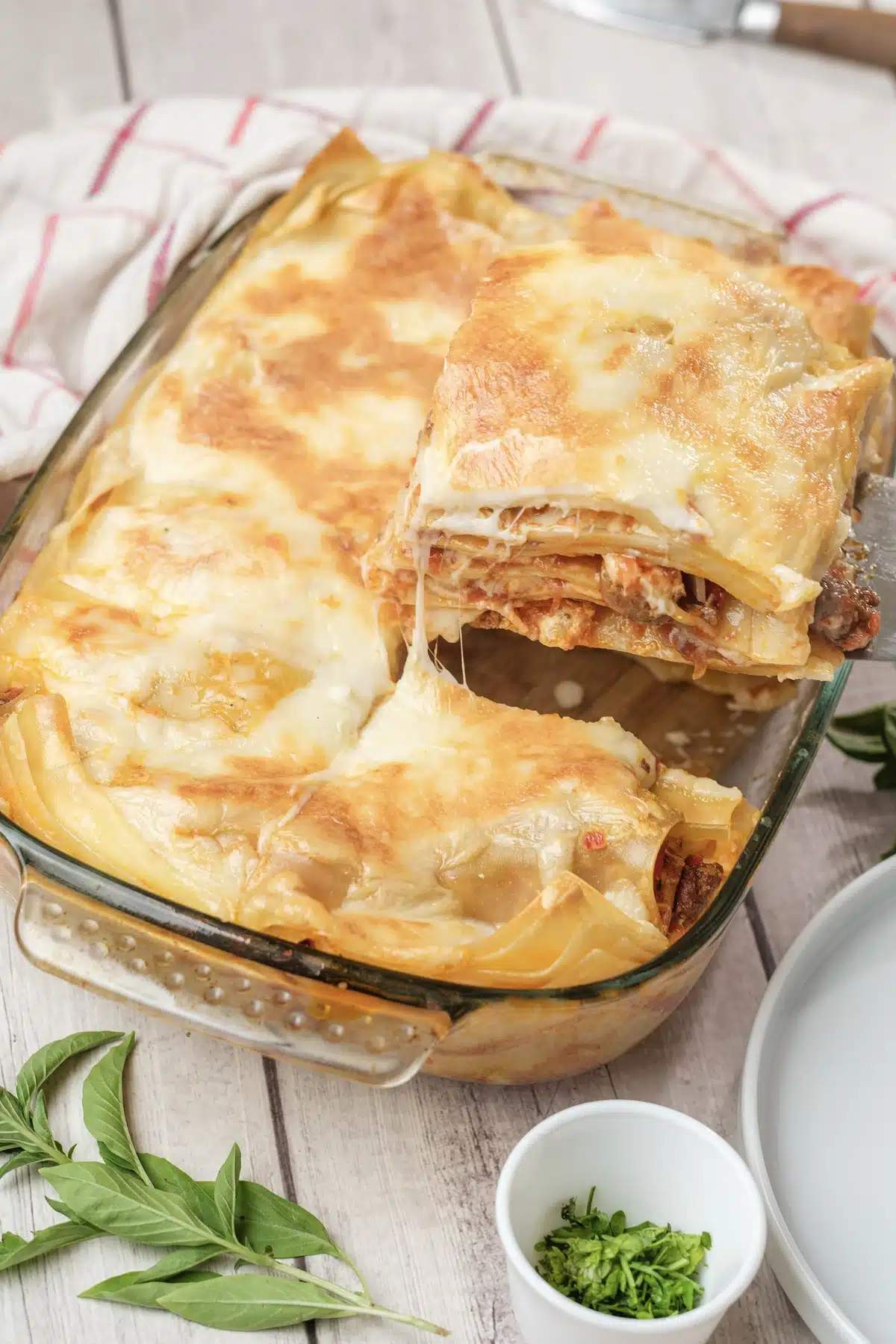
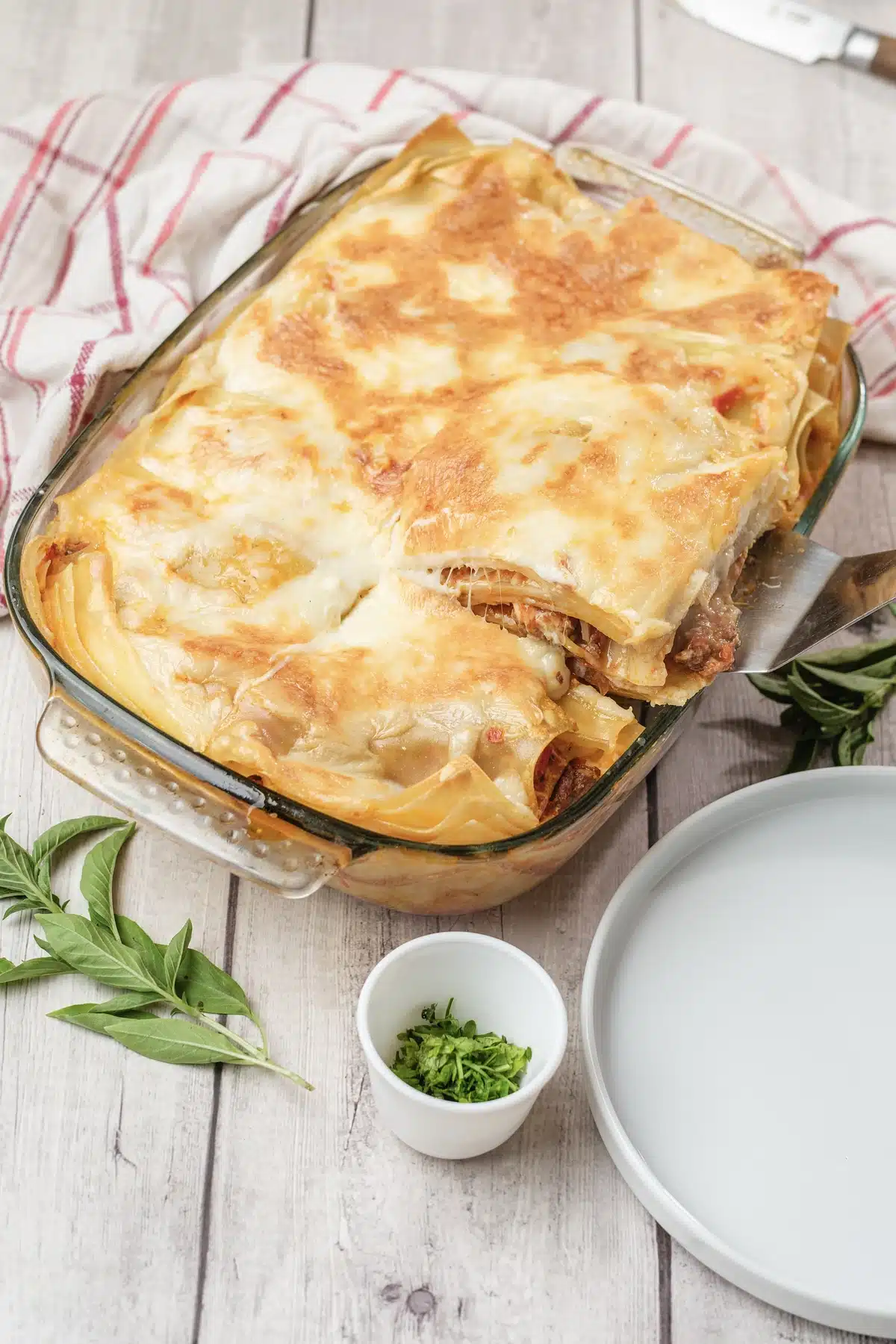
Look at the edges of the Olive Garden lasagna first. The sauce should be bubbling steadily all the way around the dish, not just in one corner, and a few of the noodle edges should have gone crisp and brown against the glass. The top should be golden in patches with the mozzarella fully melted and starting to blister. If the top is brown but the edges are quiet, the middle is still cold.
If you want a number, an instant-read thermometer pushed into the center should read at least 165°F. That matters most if you baked it from cold, because the top can brown a good ten minutes before the center is hot.
The rest is the part people skip and regret. Straight out of the oven the ricotta is loose and the sauce is liquid, and a square cut then will spread across the plate. After fifteen minutes on the counter, a cut square of Olive Garden lasagna stands on its own with nothing leaning on it.
Make It Ahead
Olive Garden lasagna is one of the best make-ahead dinners there is. Assemble the whole thing up to 24 hours ahead, cover it tightly and refrigerate it unbaked. Bake it from cold with the foil on for 40 minutes instead of 25, then uncover it for the last 15 as usual. Give it the full 15-minute rest afterward.
The sauce can be made three days ahead and refrigerated, or frozen for three months. It thickens as it sits, so loosen it with a splash of water if it has turned into paste. The ricotta filling can be mixed the day before as well.
For a frozen unbaked lasagna, assemble it in a foil pan, wrap it twice in foil and freeze for up to three months. Thaw it in the refrigerator overnight, then bake as if from cold. Baking straight from frozen is covered in the FAQ.
Storing Olive Garden Lasagna
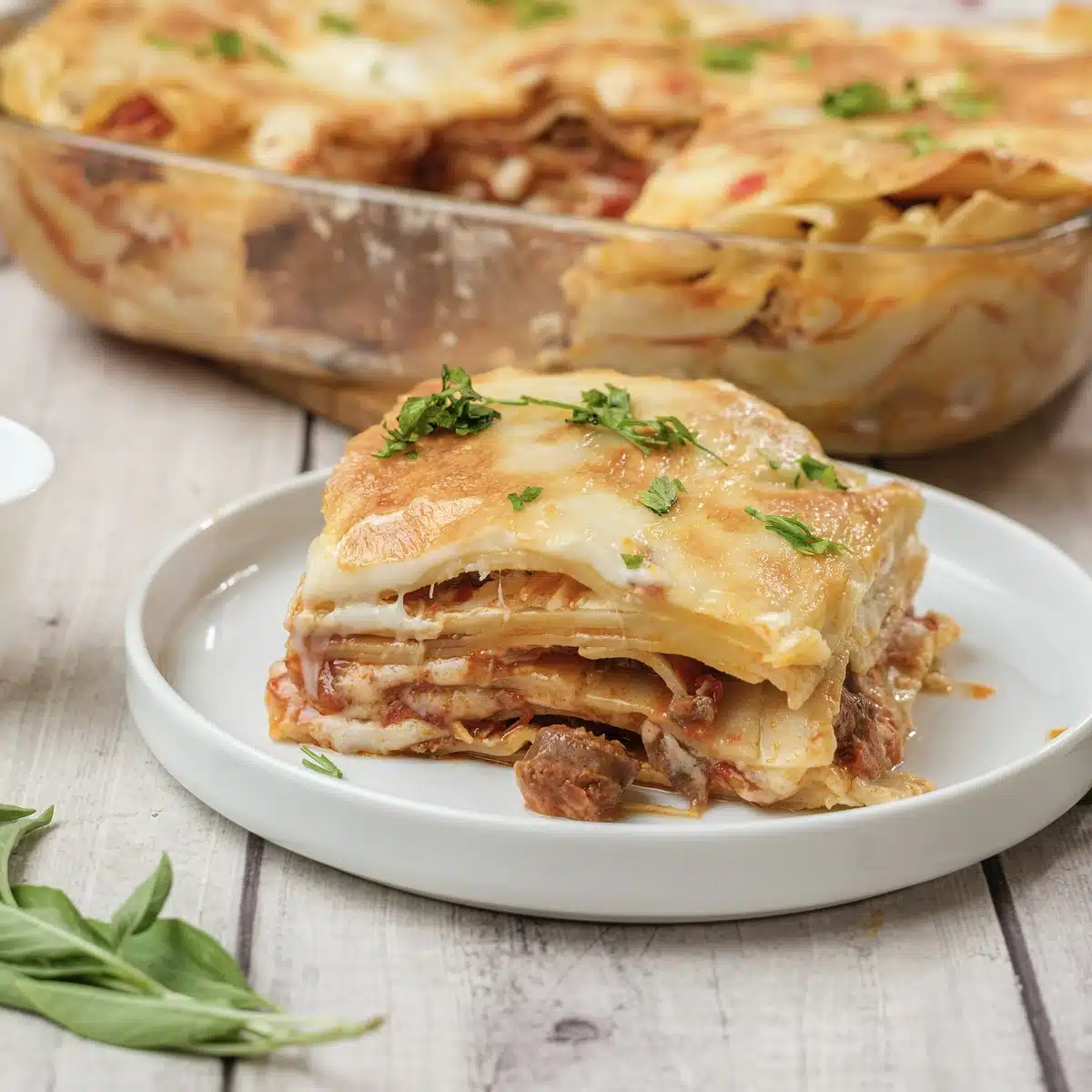
Let the baked lasagna cool, then cover it and get it into the refrigerator within two hours of coming out of the oven. Illinois Extension’s guidance on leftovers is to eat them within three to four days and to freeze casseroles for no more than two to four months, and a baked lasagna behaves like any other casserole. It is honestly better on the second day, once the layers have fully set.
To freeze baked leftovers, cut the cooled lasagna into squares, wrap each in plastic and then foil, and freeze for up to three months. Squares thaw overnight in the refrigerator and reheat one at a time, which is the most useful form Olive Garden lasagna can take.
Reheat squares in a 350°F oven, covered, for 20 to 25 minutes, or in the microwave in one-minute bursts with a damp paper towel over the top. A whole dish goes back into a 350°F oven, covered, for 30 to 35 minutes.
Variations and Substitutions
All beef. Use two pounds of beef and add a teaspoon of fennel seed and a pinch of red pepper flakes to the onion. It gets you most of the way to the sausage flavor without the sausage.
Ground turkey. Swap the beef for turkey and keep the sausage, or use turkey Italian sausage for both. Add a tablespoon of olive oil back in when you brown it, because turkey has almost no fat to render.
Spinach. Squeeze a 10-ounce box of thawed frozen spinach bone dry and fold it into the ricotta. The bake time does not change.
Oven-ready noodles. They work, but they drink liquid from the sauce as they cook. Add a cup of water to the thickened sauce, use nine noodles instead of twelve, and keep the foil on for 35 minutes instead of 25.
Cottage cheese. Small-curd cottage cheese, drained and pressed through a sieve, is a fair stand-in for ricotta. It is a touch tangier and a touch saltier, so cut the salt in the filling.
Spicier. Use hot Italian sausage and add half a teaspoon of red pepper flakes to the sauce. The cheese takes the edge off, so the Olive Garden lasagna ends up warm rather than hot.
What to Serve with This Lasagna
The restaurant serves it with salad and breadsticks, and there is no reason to do anything else. A batch of Olive Garden breadsticks made at home takes about the same time as the lasagna and can share the oven at the end. For the salad, a lemony Caesar salad with sourdough croutons is sharp enough to cut through all that cheese.
For a crowd that wants a second Italian dish on the table, a pan of baked manicotti uses the same sauce, and a pot of pasta fagioli makes a light first course. Keep the rest of the meal simple. Olive Garden lasagna is heavy enough that nobody needs a rich side beside it.
Olive Garden Lasagna FAQ
Frequently Asked Questions
Does Olive Garden lasagna have pork in it?
Yes. The meat sauce in Olive Garden lasagna is made with Italian sausage as well as beef, and this recipe does the same. For a pork-free version, use two pounds of beef with a teaspoon of fennel seed, as described under Variations.
Do I have to boil the noodles first?
Regular noodles, yes, for two minutes less than the package says. They finish cooking in the oven. Oven-ready noodles skip the boil but need a thinner sauce and a longer covered bake; see Variations before you swap them in.
Why did my lasagna come out watery?
Three usual causes for a watery Olive Garden lasagna: the sauce was not simmered long enough to thicken, the ricotta was part-skim or wet from the tub, or the lasagna was cut without resting. Any one of them will do it. Thicken the sauce until a spoon leaves a trail, drain wet ricotta in a sieve, and give the baked dish a full 15 minutes before you cut it.
Can I use cottage cheese instead of ricotta?
Yes. Drain small-curd cottage cheese and push it through a sieve so it is smooth, then use it exactly like the ricotta. Reduce the salt in the filling, because cottage cheese is saltier.
More Questions About Making Lasagna
Good to Know
How many layers should a lasagna have?
The sweet spot in a standard dish is four layers of noodles. Fewer and the square is squat and sauce-heavy; more and the dish overflows during baking. Twelve regular noodles, three per layer, give you four.
Can I double the recipe?
Yes. Double everything and build two dishes rather than one deep one, because a deeper lasagna overcooks on top before the middle is hot. Two dishes bake side by side in the same time.
Can I bake it straight from frozen?
You can. Keep it covered at 375°F for about 90 minutes, then uncover it for 15 minutes and check the center with a thermometer for 165°F. Thawing it overnight first gives a more even bake and cuts the oven time by more than half.
What size dish do I need?
A 9-by-13-inch dish at least two and a half inches deep. Four layers fill it to the rim, so set it on a baking sheet in case it bubbles over.
Once you have made Olive Garden lasagna at home, the restaurant version starts to seem like a long drive for something already in your freezer. If the two-meat sauce becomes a habit, it is just as good in a million-dollar spaghetti casserole.
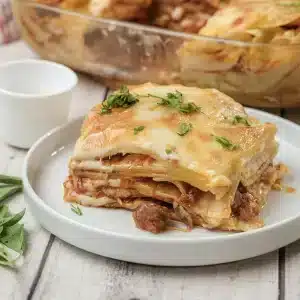
Olive Garden Lasagna Classico
Save this recipe
Enter your email and I’ll send this recipe straight to your inbox.
Ingredients
Meat Sauce
- 2 tbsp olive oil
- 1 medium red onion diced
- 4 cloves garlic minced
- 1 pound ground beef 85 percent lean
- 1 pound Italian sausage casings removed, mild or hot
- 28 ounces crushed tomatoes one large can
- 2 tbsp tomato paste
- 1 tsp dried oregano divided
- 1/2 cup fresh basil chopped, or 1 tablespoon dried
- 1 tsp salt plus black pepper to taste
Ricotta Filling
- 15 ounces whole-milk ricotta one tub, drained if wet
- 1 large egg lightly beaten
Noodles and Cheese
- 12 lasagna noodles regular, not oven-ready
- 3 cups mozzarella cheese shredded from a low-moisture block
- 1 cup Parmesan cheese finely grated, divided
- 1/2 cup Pecorino Romano grated, optional
- 2 tbsp fresh parsley chopped, for the top
Equipment
- 9x13 inch Baking Dish
- Large skillet
- Saucepan
- Mixing bowls
- Aluminum foil
Instructions
Make the Meat Sauce
- Heat the oven and soften the onion. Set the oven to 375°F (190°C) and lightly oil a 9-by-13-inch baking dish. Heat the olive oil in a large pot over medium heat and cook the red onion for 5 minutes, until soft. Stir in the garlic and cook 1 minute more.

- Tip in the meats. Put the ground beef and the sausage into the pot and break them up with a wooden spoon.
- Brown them. Cook for 10 to 12 minutes, until no pink remains and browned bits have formed on the bottom of the pot. Spoon off all but a couple of tablespoons of fat, then stir in the tomato paste and cook it for 1 minute.
- Simmer the sauce. Pour in the crushed tomatoes with 1/2 teaspoon of the oregano, the salt and a good grind of pepper. Scrape the bottom of the pot clean and simmer uncovered for 20 minutes, until thick enough that a spoon dragged across the pot leaves a trail. Stir in the basil for the last 5 minutes.
Noodles and Filling
- Boil the noodles. While the sauce simmers, boil the noodles in well-salted water for 2 minutes less than the package says. Drain and lay them flat on a clean towel so they do not stick together.
- Mix the filling. Whisk the ricotta with the egg, the remaining 1/2 teaspoon of oregano, half the Parmesan and a pinch of salt until smooth.
Layer the Lasagna
- Start the layers. Spread a thin smear of the ricotta filling over the base of the dish and lay 3 noodles side by side on top. Spread a quarter of the remaining filling over the noodles.
- Add the sauce. Spoon a quarter of the meat sauce over the ricotta and spread it to the edges.
- Cheese, then repeat. Scatter over a handful of mozzarella and a spoonful of Parmesan or Romano. Repeat noodles, ricotta, sauce and cheese three more times, finishing the top with a thin coat of sauce, the last of the mozzarella and the remaining Parmesan.
Bake and Rest
- Bake. Cover with foil and bake for 25 minutes. Remove the foil and bake 15 minutes more, until the edges bubble hard and the top is browned in patches.
- Rest and serve. Let the lasagna stand for 15 minutes so the layers set, then scatter the parsley over and cut it into 8 squares.