Dijon salmon is a salmon fillet baked under a glaze of Dijon mustard, honey, lemon, olive oil and garlic, and it is the fastest way I know to make fish taste like a restaurant cooked it. The glaze takes two minutes to whisk, the oven does the rest in fifteen, and the whole thing is on the table in twenty minutes with one small bowl to wash.
In short, Dijon salmon is salmon fillets baked at 400°F under a honey, Dijon, lemon and garlic glaze. It takes 20 minutes, makes 4 fillets and runs about 335 calories per fillet.
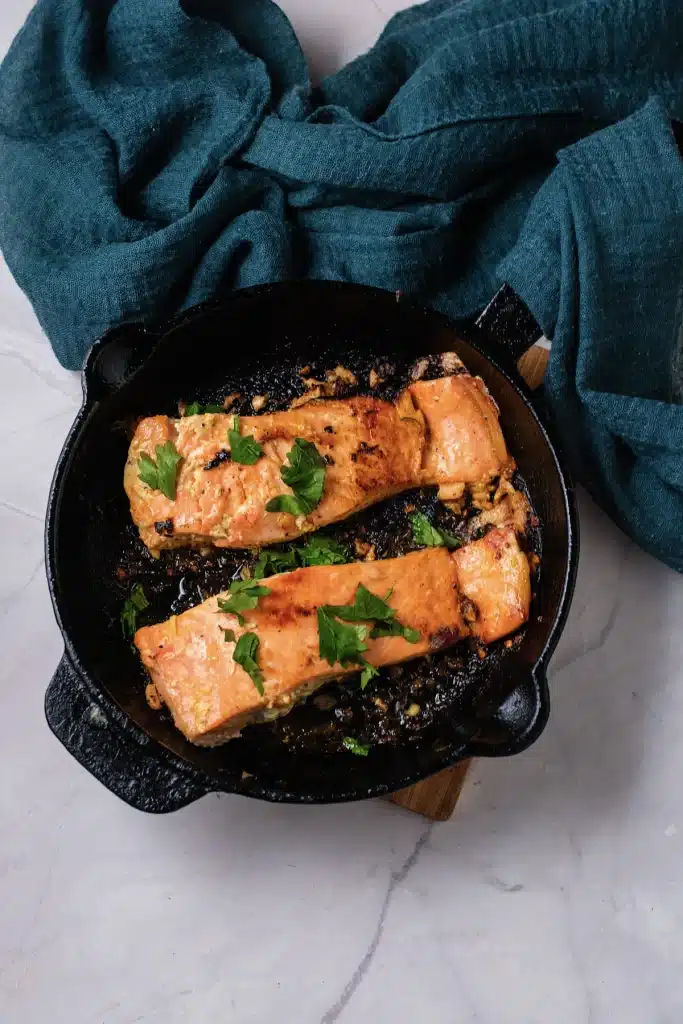
- Dijon salmon that tastes like a bistro dish from a glaze you whisk in two minutes
- Twenty minutes start to finish, with five minutes of prep
- Six pantry ingredients, nothing to chop except two cloves of garlic
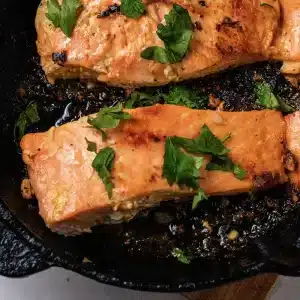
- Bakes in a cast-iron skillet (pictured) or on a sheet pan
- The honey in the glaze caramelizes at the edges while the fish stays moist
- Leftovers flake cold over salad the next day
The mustard is the point. Dijon is sharp enough to stand up to the richness of salmon, the honey rounds it off and caramelizes at the edges, and the garlic and lemon keep it from tasting like a sandwich spread. Bake it in a cast-iron skillet, as in the photographs, or on a sheet pan; the glaze works the same either way.

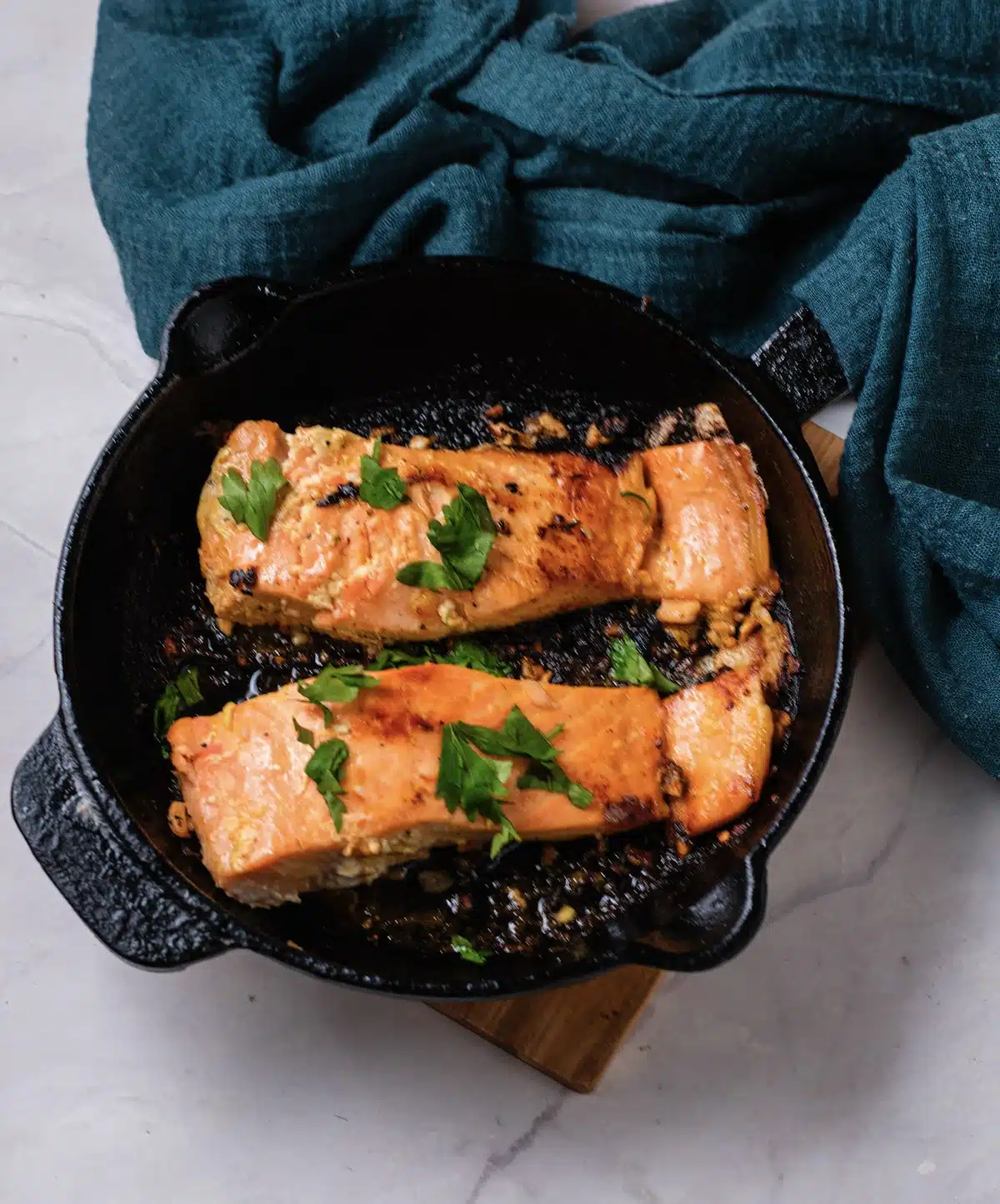
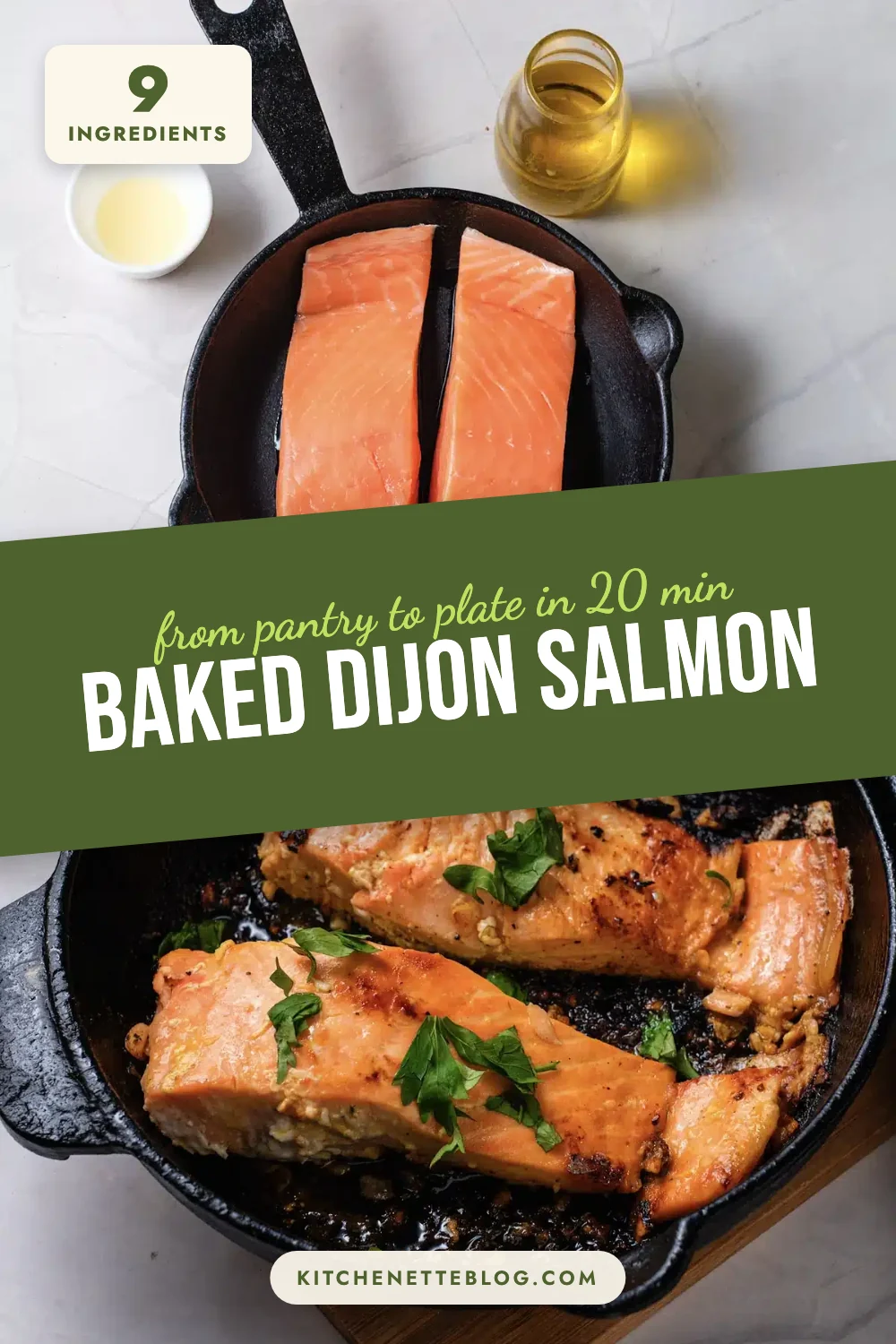
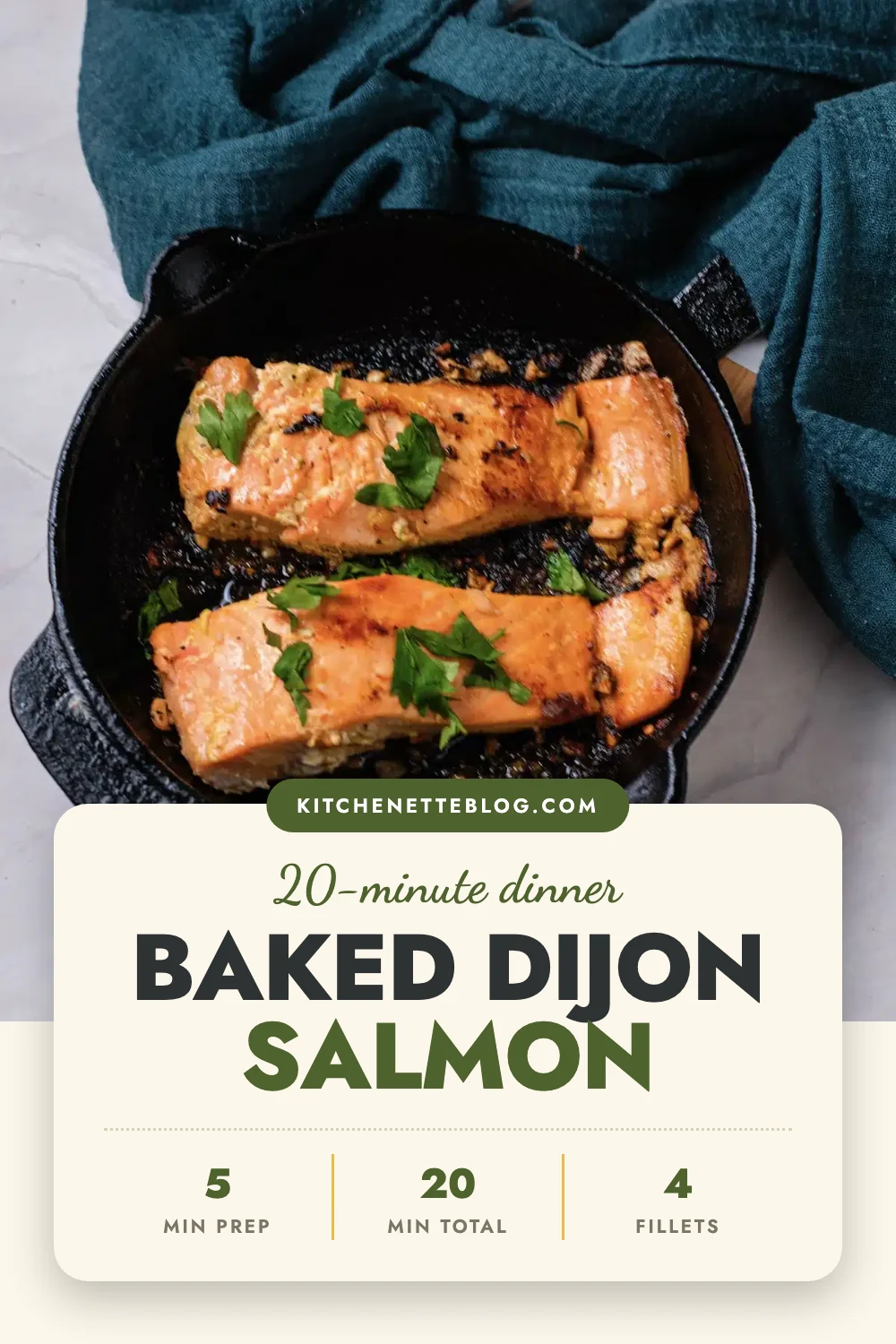
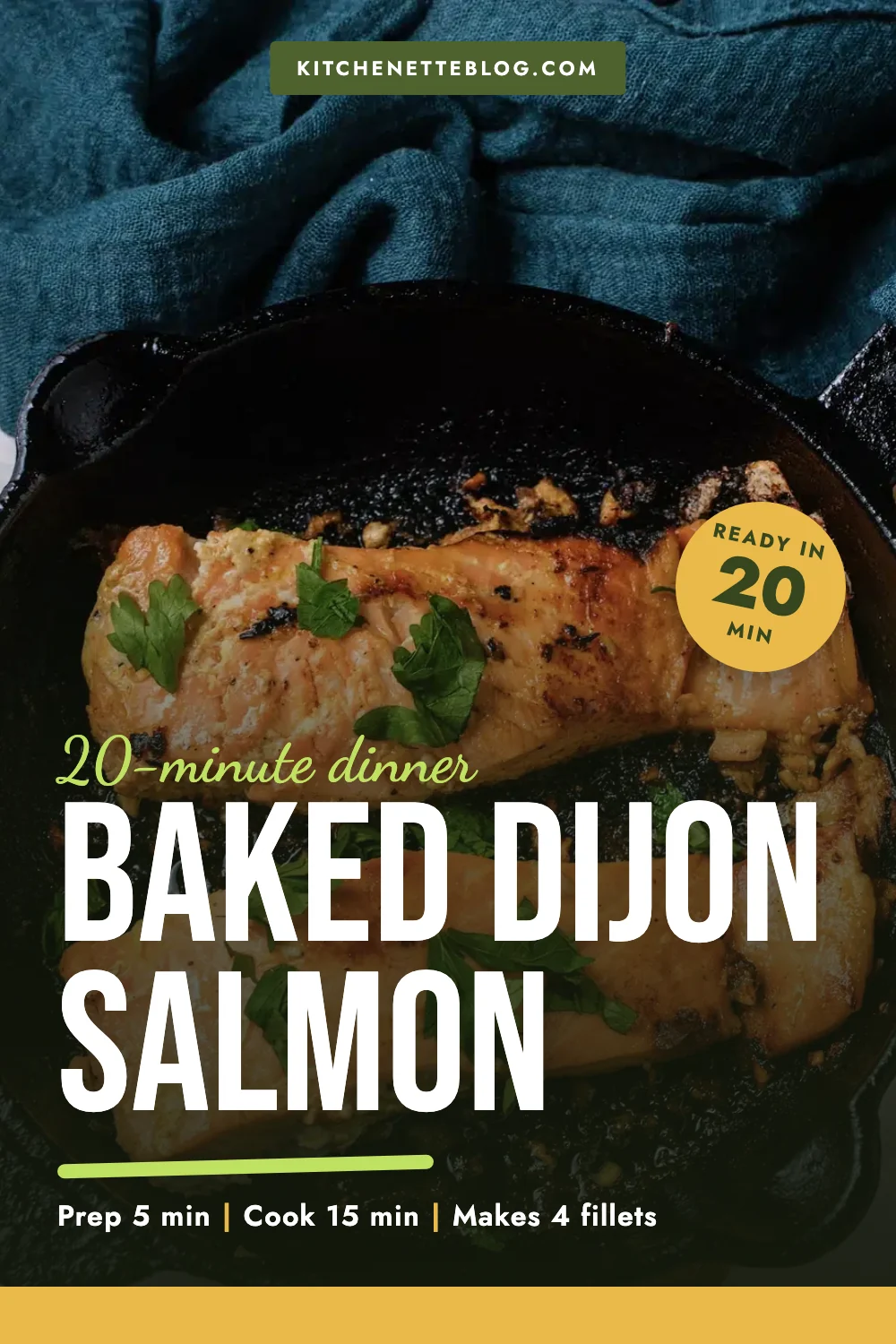
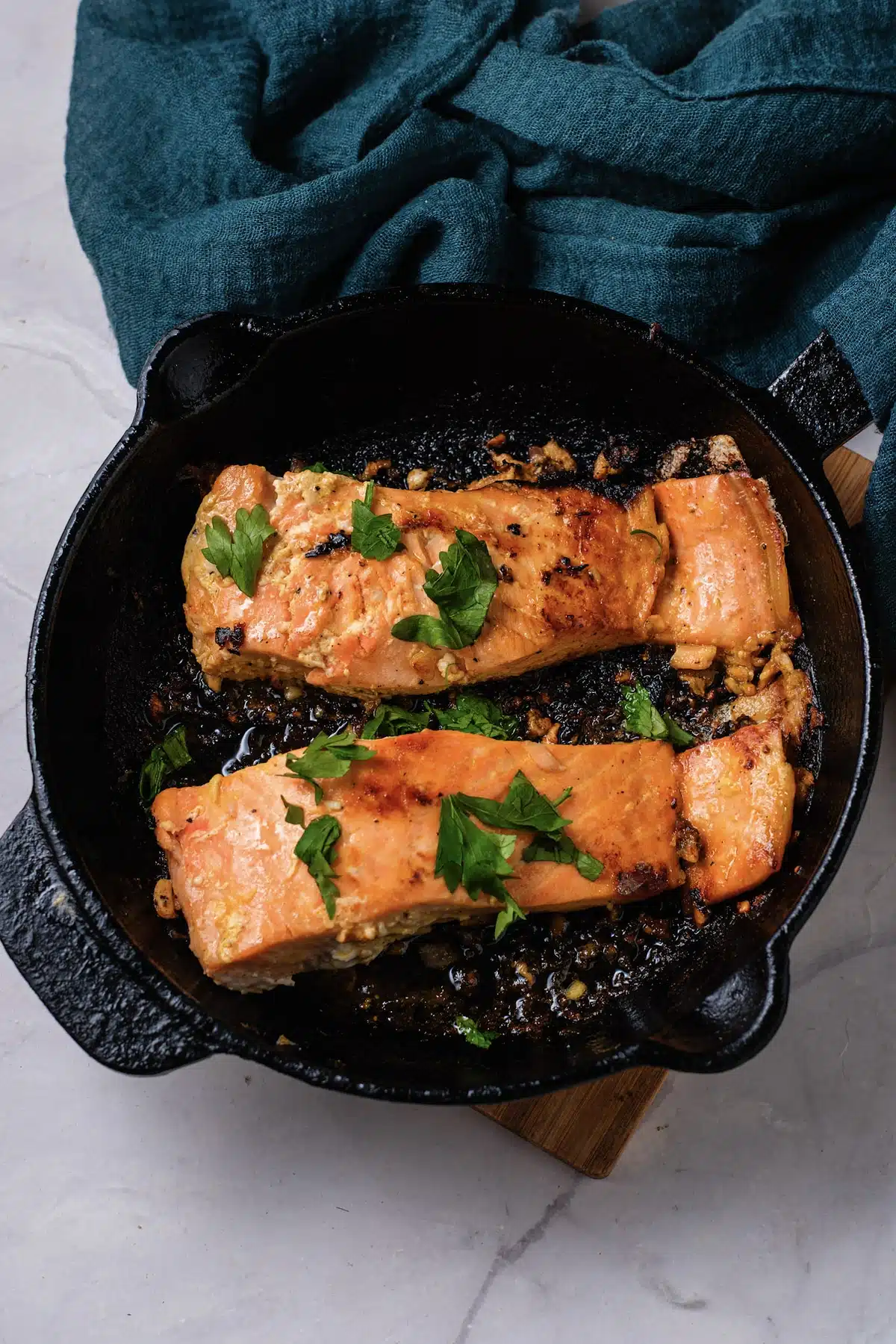
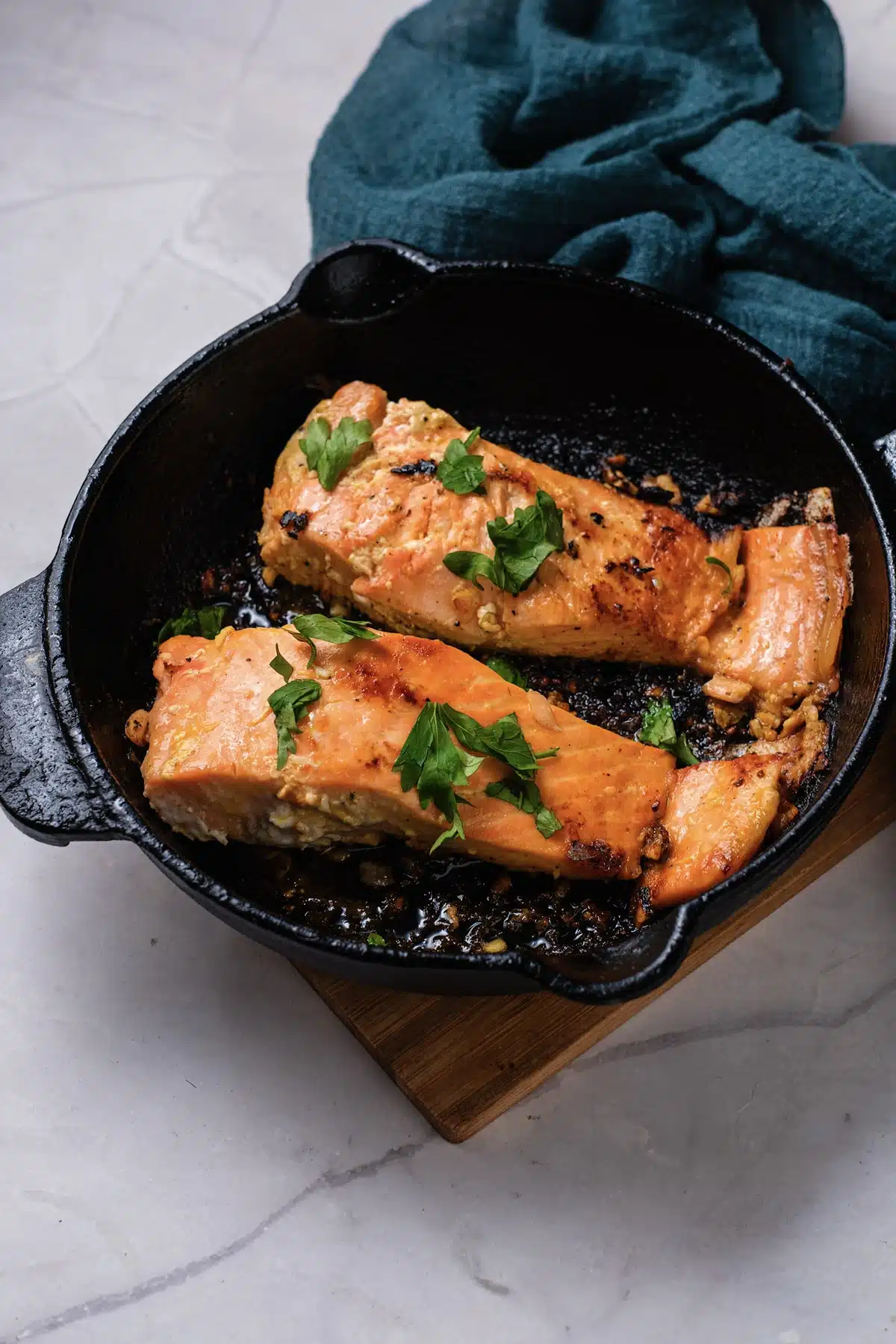
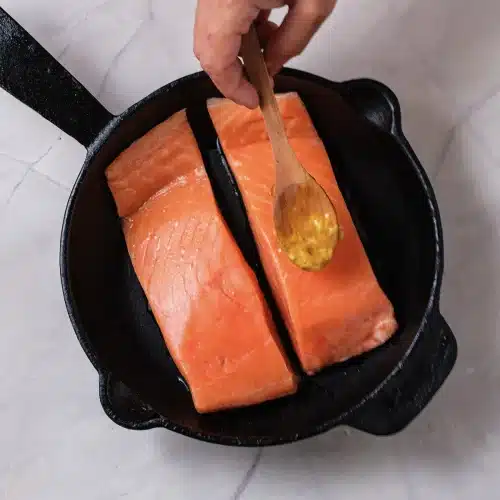
Pictured: two fillets baked in a 10-inch cast-iron skillet, which holds the glaze that runs off and turns it into a pan sauce. The recipe card makes four fillets on a sheet pan or in a 12-inch skillet; both methods are below.
What Makes Dijon Salmon Work
Salmon is a fatty fish, and fat wants acid and sharpness beside it. Dijon brings both at once: vinegar for the acid and mustard seed for the bite, with none of the sugar that yellow mustard carries. Spread over a fillet, it seasons the surface the way a marinade would, without the hour of waiting, and under the dry heat of a 400°F oven it sets into a thin, savory crust.
Honey does two jobs. It balances the mustard so the glaze tastes rounded rather than harsh, and its sugars brown in the oven, which is where the caramelized patches on the fillets in the photographs come from. Lemon juice sharpens everything, olive oil keeps the glaze from drying out, and the garlic turns sweet and toasty in the fifteen minutes it spends on top of the fish.
The ratio matters more than the amounts. Two parts Dijon to one and a half parts honey is the balance that reads as savory first, with the sweetness coming in behind. Tip it toward the honey and you have a honey mustard salmon, which is also good but is a different dish. This one keeps the mustard in front.
Save this recipe
Enter your email and I’ll send this recipe straight to your inbox.
Ingredient Notes
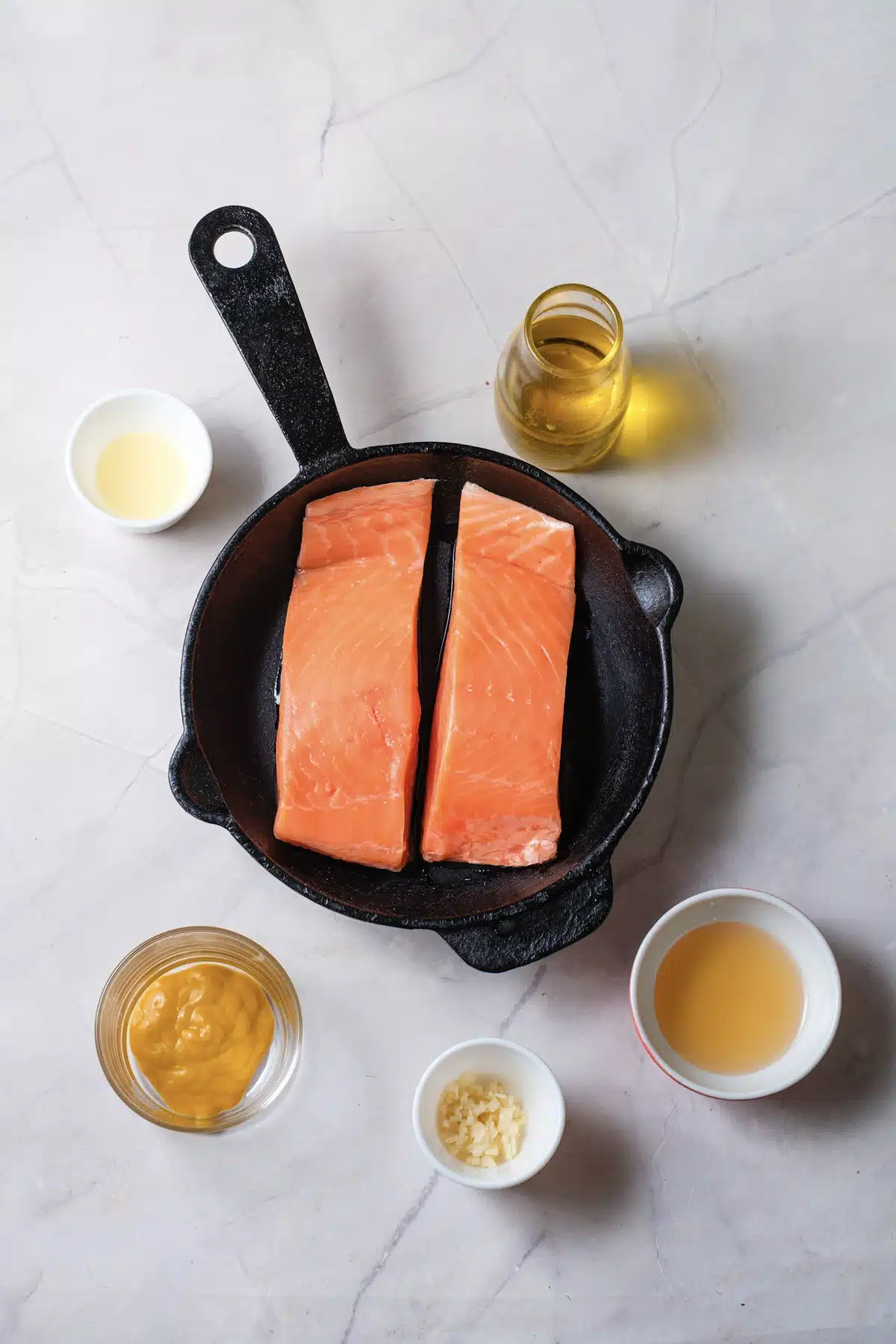
Six ingredients plus salt and pepper, all in the flat lay above. Exact quantities are in the recipe card.
- Salmon fillets. Four pieces of about six ounces each, skin on or off, fresh or fully thawed. Center-cut pieces of an even thickness cook evenly; tail pieces are thinner and finish a few minutes sooner.
- Dijon mustard. Two tablespoons of smooth Dijon. Whole-grain mustard works and looks pretty, but it is milder, so add an extra teaspoon. Yellow mustard is too sweet and vinegary for this.
- Honey. One and a half tablespoons. Maple syrup swaps in one for one with a deeper, slightly earthy sweetness.
- Lemon juice. One tablespoon, freshly squeezed if you can. It brightens the glaze and keeps the honey from tasting heavy.
- Olive oil. One tablespoon, to loosen the glaze so it spreads and to keep the surface of the fish from drying out.
- Garlic. Two cloves, minced fine so no piece is big enough to burn. Garlic powder, half a teaspoon, is the pantry fallback.
- Salt and black pepper. A pinch of each in the glaze. Dijon is already salty, so go lightly.
- Parsley and lemon wedges. To finish. Dill is the classic alternative with salmon and works just as well.
Which Salmon to Buy
Any salmon works under this glaze, but the kind changes the timing. Farmed Atlantic salmon is fattier and more forgiving, and it is the one in the photographs; it stays moist even if you run a minute or two long. Wild sockeye and coho are leaner and deeper in color, with a stronger flavor that the mustard matches well, but they cook faster and dry out sooner, so start checking at ten minutes.
Skin on or off is a matter of preference in the oven. Skin on holds the fillet together and protects the underside from the hot pan; skin off lets the glaze run all the way around. Either way, run your fingers over the flesh and pull any pin bones with tweezers before glazing.
Frozen salmon is fine as long as it is fully thawed first, overnight in the fridge or in a sealed bag in cold water for about thirty minutes. The FDA’s guidance on selecting and serving seafood safely is to cook fish to 145°F, and a thawed fillet gets there evenly where a frozen one leaves the center behind.
If a fillet has a thin tail end, fold that end under itself before you spoon on the glaze, so the whole piece sits at roughly the same thickness. Left flat, the tail is dry and the honey on it has scorched by the time the thick end reaches 145°F.
Do the same with any mismatched pieces: set the thinner fillets toward the center of the skillet or sheet pan and start checking them at 10 minutes, rather than baking all four on one clock for the full 15.
Nayla — kitchen note
How To Make Dijon Salmon
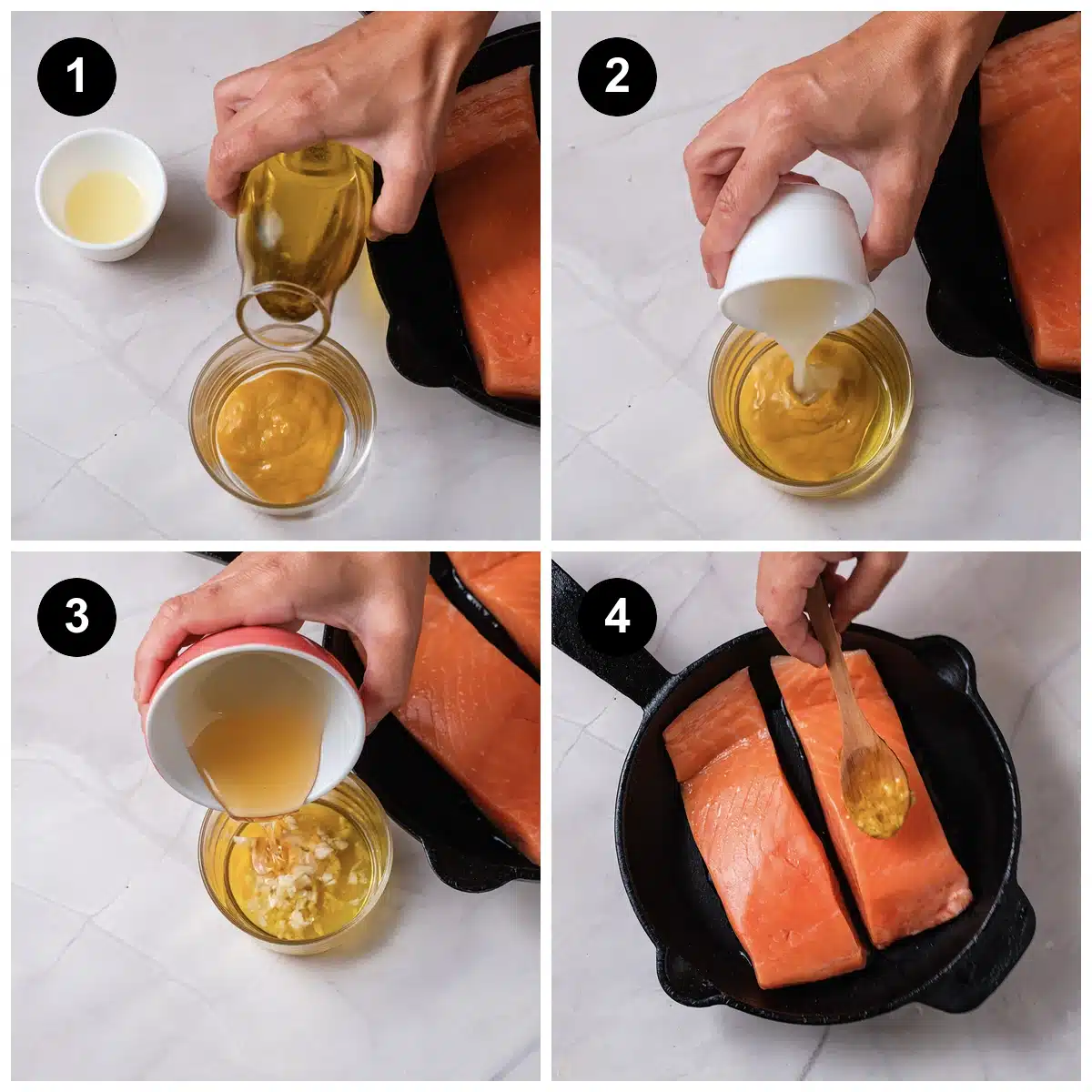
Heat the oven to 400°F. If you are using a sheet pan, line it with parchment; if you are using a cast-iron skillet, give it a light film of oil. Pat the salmon dry with paper towels, because a wet surface stops the glaze from clinging.
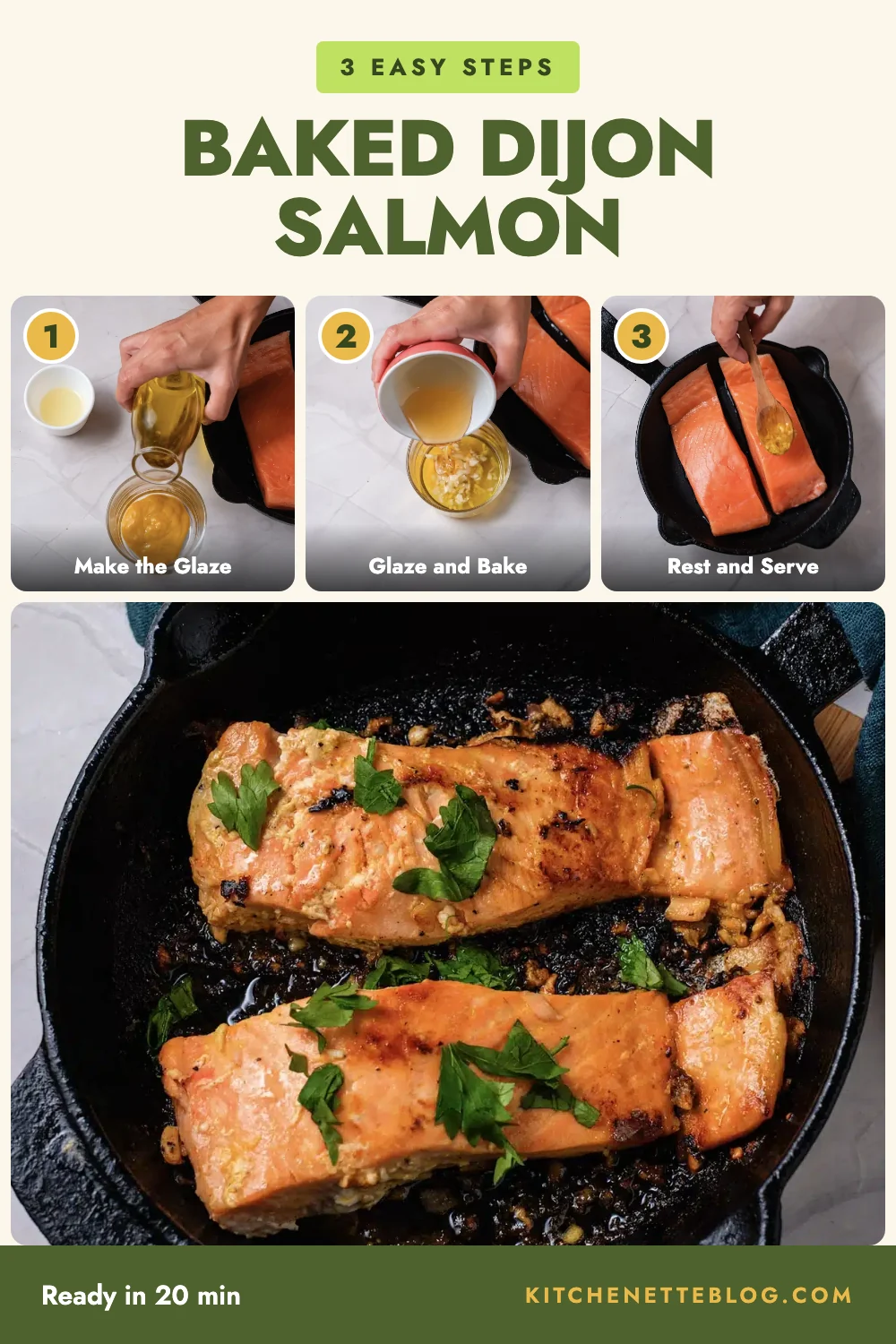
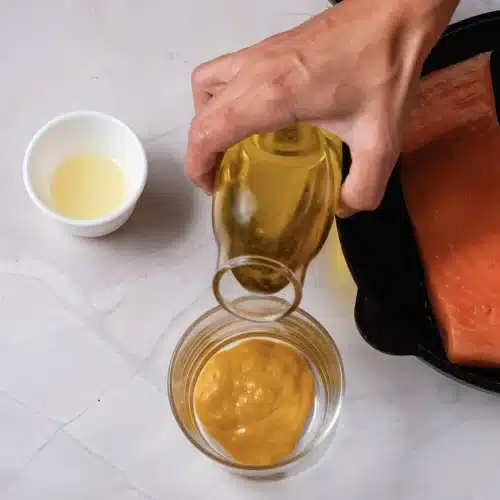
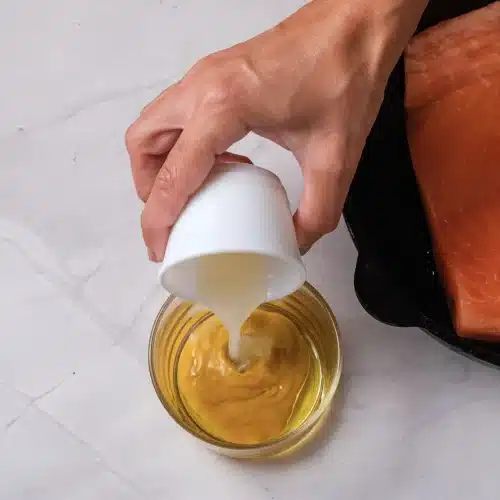
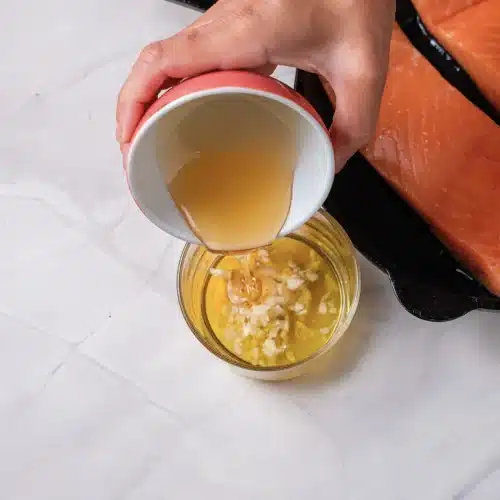
First, spoon the Dijon into a small bowl and pour in the olive oil. Next, add the honey. Then add the lemon juice, the minced garlic and a pinch of salt and pepper, and whisk until the glaze is smooth and glossy. Taste it: more honey if it is too sharp, more mustard if it is too sweet.
After that, set the fillets skin-side down in the skillet or on the sheet pan, leaving a little space between them. Spoon the glaze over the top of each one and spread it right to the edges, using all of it. Finally, bake for 12 to 15 minutes, until the fish flakes when you press it with a fork and the glaze has darkened at the edges.
Skillet or Sheet Pan (Pictured in a Skillet)
The photographs show two fillets in a 10-inch cast-iron skillet, and the skillet has one advantage: the glaze that slides off pools around the fish and reduces into a sticky pan sauce you can spoon back over the top. Four fillets need a 12-inch skillet or a sheet pan, where the glaze spreads thinner and bakes into darker, crisper patches. The timing is the same for both, and so is the result on the plate.
Let the fillets rest for two minutes, scatter the parsley over, and serve with lemon wedges and a spoonful of whatever glaze is left in the pan.
How To Tell When Dijon Salmon Is Done
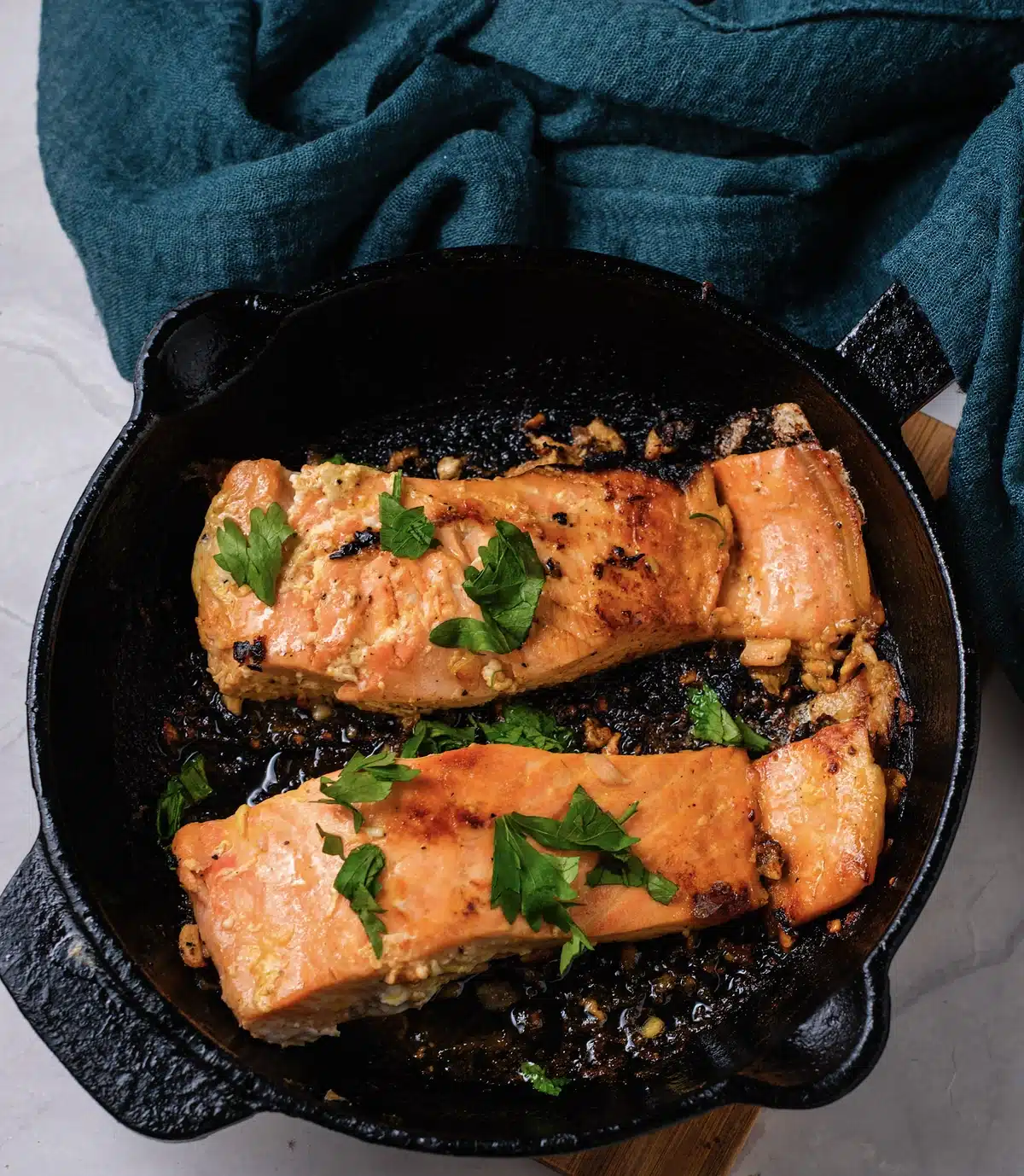
Dijon salmon is done when the thickest part flakes under a fork and reads 145°F, which takes 12 to 15 minutes at 400°F. Press the thickest part of a fillet with a fork: a done fillet separates into flakes with a gentle push and looks opaque most of the way through, with just a hint of translucent pink at the very center. If the fork meets resistance and the center is still glassy, give it two more minutes.
A thermometer is more reliable than a fork. The FDA’s safe temperature for fish is 145°F, which gives a fully opaque, firm fillet. Many cooks pull salmon at 125°F to 130°F for a softer, medium center and let it climb as it rests; that is a preference, not the safety guideline, so choose knowingly. Either way, take it out a few degrees early, because the fish keeps cooking in the hot pan.
The glaze tells you too. When it is done, it has gone from a wet yellow coating to a set, darker crust with browned spots where the honey has caramelized, and the garlic in the pan is golden rather than raw.
Make It Ahead
The glaze keeps for three days in a jar in the fridge, and whisking it in the morning cuts dinner prep to zero. Keep it separate from the fish until the oven is hot, for the reason in the tip above. The salmon itself can be portioned, dried and set on its pan in the fridge, covered, for a few hours.
Cooked Dijon salmon is one of the better fish for meal prep, because the glaze keeps the surface from drying out. Bake it in the evening, cool it, and refrigerate it in portions for lunches; it is good cold and flaked over greens, which saves reheating it at all.
Storing Dijon Salmon
Cool leftovers within two hours and refrigerate them in an airtight container for up to three days. A glass container stops the fish from picking up other smells. Reheat gently: 10 minutes in a 300°F oven, covered with foil, brings a fillet back without drying it, and the microwave works at half power in short bursts with a damp paper towel over the top. Or skip the reheating and flake it cold into a salad, which is honestly how most of the leftover Dijon salmon in this house gets eaten.
Freezing works but costs some texture. Wrap cooled fillets tightly in foil, bag them and freeze for up to two months, then thaw overnight in the fridge and warm them in a low oven. Thawed salmon is better flaked into pasta, fried rice or a chowder than served whole.
Variations and Substitutions
Other Mustards and Sweeteners
Maple Dijon. Maple syrup in place of the honey, one for one. It is darker and a little smoky, and it is the version to make in fall.
Whole-grain mustard. Swap it for the Dijon, adding an extra teaspoon because it is milder. The seeds pop under the fork.
Brown sugar. A tablespoon of brown sugar instead of the honey gives a thicker, more caramelized crust. Mix it in well so it dissolves.
Spice. A pinch of red pepper flakes or a teaspoon of hot sauce in the glaze adds a slow warmth that the honey tames.
Herbs. A tablespoon of chopped dill or thyme whisked into the glaze, or scattered over at the end. Dill and Dijon salmon are an old pairing for good reason.
Lime and shallot. Lime juice for the lemon and a minced shallot for the garlic, for a sharper, sweeter glaze that suits a rice bowl.
What to Serve with Dijon Salmon
Something green and a little bitter is the natural partner. Broccoli with a hoisin glaze leans the plate toward the honey in the mustard, and roasted green beans or asparagus with lemon keep it simple. A lemony Caesar salad turns it into a light dinner that still feels complete.
For a starch, Benihana-style fried rice catches the glaze that runs off the fish, and a baked potato with sauteed arugula is the cozier choice. Buttered couscous or herbed rice work just as well and take less time.
If salmon is the mood for the week, bang bang salmon bites use the same oven and the same fish in a completely different direction, and pan-seared salmon with pomegranate reduction is the stovetop version for a dressier night.
Dijon Salmon FAQ
Frequently Asked Questions
Can I use frozen salmon for Dijon salmon?
Yes, as long as it is fully thawed first. Thaw it overnight in the fridge, or in a sealed bag in cold water for about 30 minutes, then pat it dry. Glaze on a frozen fillet slides off and the center cooks unevenly.
What temperature should Dijon salmon be cooked to?
145°F at the thickest part is the FDA’s safe temperature, and it gives a fully opaque fillet. Many cooks pull it at 125°F to 130°F for a softer center and let it rest, which is a preference rather than the guideline. At 400°F, a 6-ounce fillet takes 12 to 15 minutes.
What can I use instead of Dijon mustard for Dijon salmon?
Whole-grain mustard is the closest swap, with an extra teaspoon because it is milder. Spicy brown mustard works for a sharper glaze. Yellow mustard is too sweet and vinegary, and the result tastes more like a hot dog than a bistro.
Can I make the Dijon salmon glaze ahead of time?
Yes. Whisk it and keep it in a jar in the fridge for up to 3 days. Keep it off the fish until the oven is hot, because the lemon juice starts to cure the surface of the salmon if it sits.
More Questions About Baked Salmon
Good to Know
Should I bake salmon skin-side up or down?
Skin-side down. The skin shields the underside from the hot pan and holds the fillet together, and the glaze sits on the flesh where it can brown. Skinless fillets go flesh-side up the same way.
Can I cook Dijon salmon in an air fryer?
Yes. Glaze the fillets, set them in the basket skin-side down and cook at 400°F for 8 to 10 minutes, checking at 8. The glaze browns faster in the air fryer, so watch the honey at the edges.
How many calories are in Dijon salmon?
About 335 calories per 6-ounce fillet, with roughly 34 g protein, 8 g carbohydrates and 19 g fat. These are estimates and vary with the size and fattiness of the salmon.
How long does Dijon salmon last in the fridge?
Up to 3 days in an airtight container, refrigerated within 2 hours of baking. Reheat it covered in a 300°F oven for about 10 minutes, or eat it cold, flaked over a salad.
Whisk the glaze, spoon it over the fish and give the oven fifteen minutes; that is the whole recipe. Dijon salmon is a weeknight dinner that looks like it took effort, and a plate of glazed broccoli alongside finishes it.
Baked Dijon Salmon
Save this recipe
Enter your email and I’ll send this recipe straight to your inbox.
Ingredients
Honey Dijon Glaze
- 2 tbsp Dijon mustard smooth, not yellow mustard
- 2 cloves garlic finely minced
- 1 tbsp olive oil
- 1 1/2 tbsp honey or maple syrup
- 1 pinch salt and black pepper each
- 1 tbsp lemon juice freshly squeezed
Salmon
- 4 fillets salmon about 6 oz each, skin on or off, fresh or fully thawed
- 1 tbsp fresh parsley or dill chopped, to finish
- lemon wedges for serving
Equipment
- Baking sheet
- Parchment paper (optional)
- Mixing bowl
- Whisk
Instructions
Make the Glaze
- Heat the oven and start the glaze. Heat the oven to 400°F (200°C). Lightly oil a cast-iron skillet or line a baking sheet with parchment. Spoon the Dijon into a small bowl and pour in the olive oil.

- Add the honey. Pour the honey into the bowl.
- Add the lemon and garlic, then whisk. Add the lemon juice, minced garlic and a pinch of salt and pepper, and whisk until smooth and glossy.
Glaze and Bake
- Glaze the fish. Pat the fillets dry and set them skin-side down in the skillet or on the sheet, with a little space between them. Spoon the glaze over each fillet and spread it to the edges, using all of it.
- Bake. Bake for 12 to 15 minutes, until the fish flakes easily with a fork, reads 145°F at the thickest part and the glaze has darkened at the edges.
Rest and Serve
- Rest and serve. Let the fillets rest for 2 minutes, scatter the parsley over, and serve with lemon wedges and any glaze left in the pan spooned over the top.