
The blackberry sangria served at Carrabba’s is darker and less sweet than most restaurant sangria, and the reason is that it is built on three separate sources of fruit rather than one. There is a blackberry syrup, an unsweetened cranberry juice, and a vanilla-scented Italian liqueur, and the wine sits underneath all of it.
Most copies of it circulating online skip the cranberry juice and lean on a bottled syrup to carry the whole drink, which is how you end up with something that tastes like cordial. Making the syrup yourself takes ten minutes and is the difference between a purple sugar drink and something you would order twice.
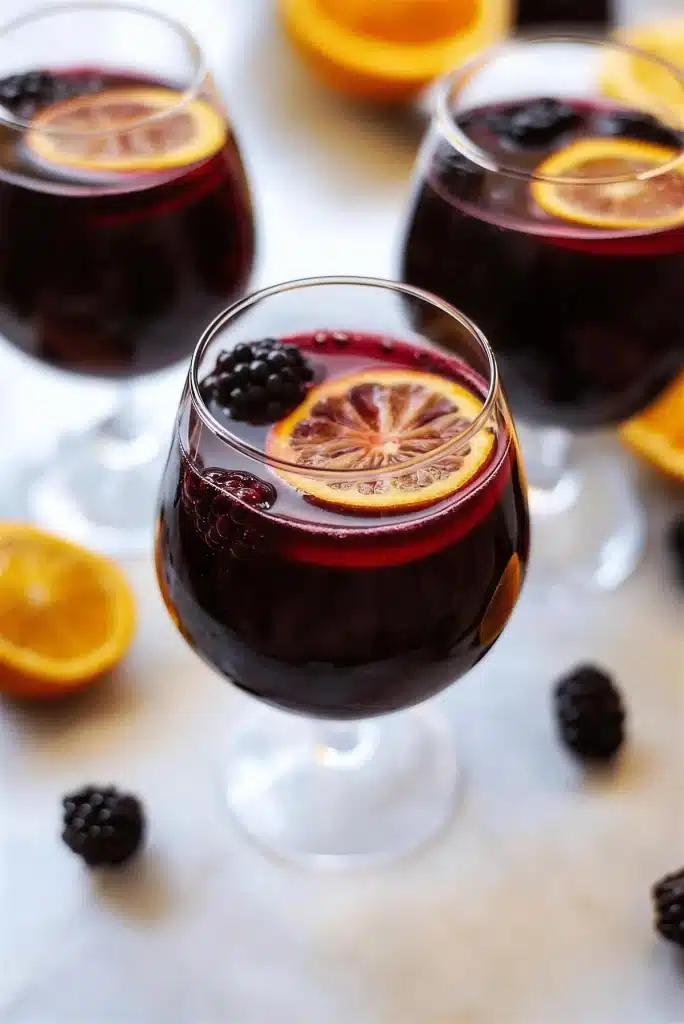
- A homemade blackberry syrup that takes ten minutes and tastes of fruit rather than of sugar
- Unsweetened cranberry juice for the tartness that keeps the whole pitcher from cloying
- Two hours in the refrigerator is the minimum, and it is better still built the night before
- One bottle of wine makes eight generous glasses, so it is cheap for a crowd
- The lemon-lime soda goes into the glass rather than the pitcher, so the last serving fizzes as much as the first
- It works with an inexpensive supermarket red, which is the entire point of a sangria

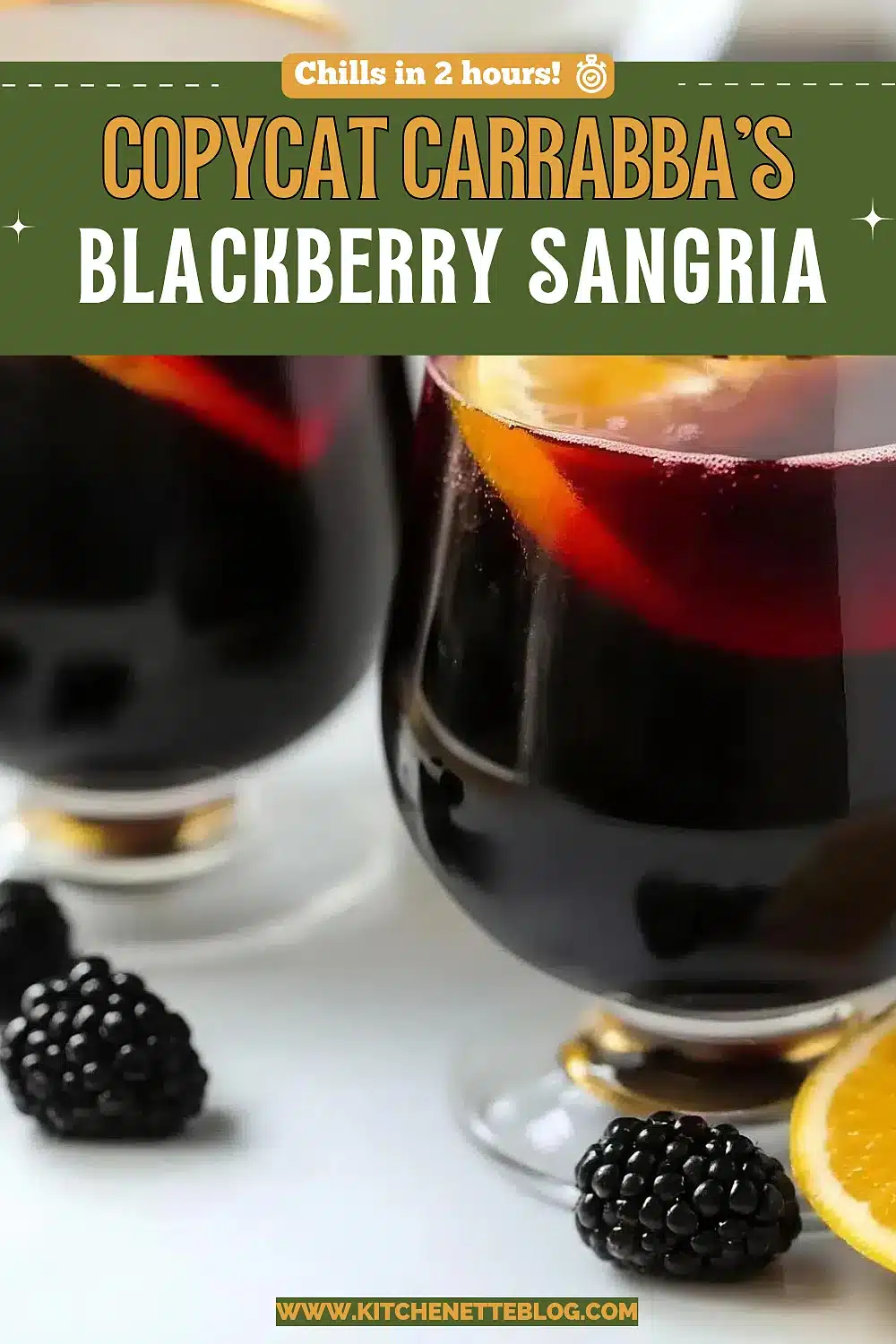
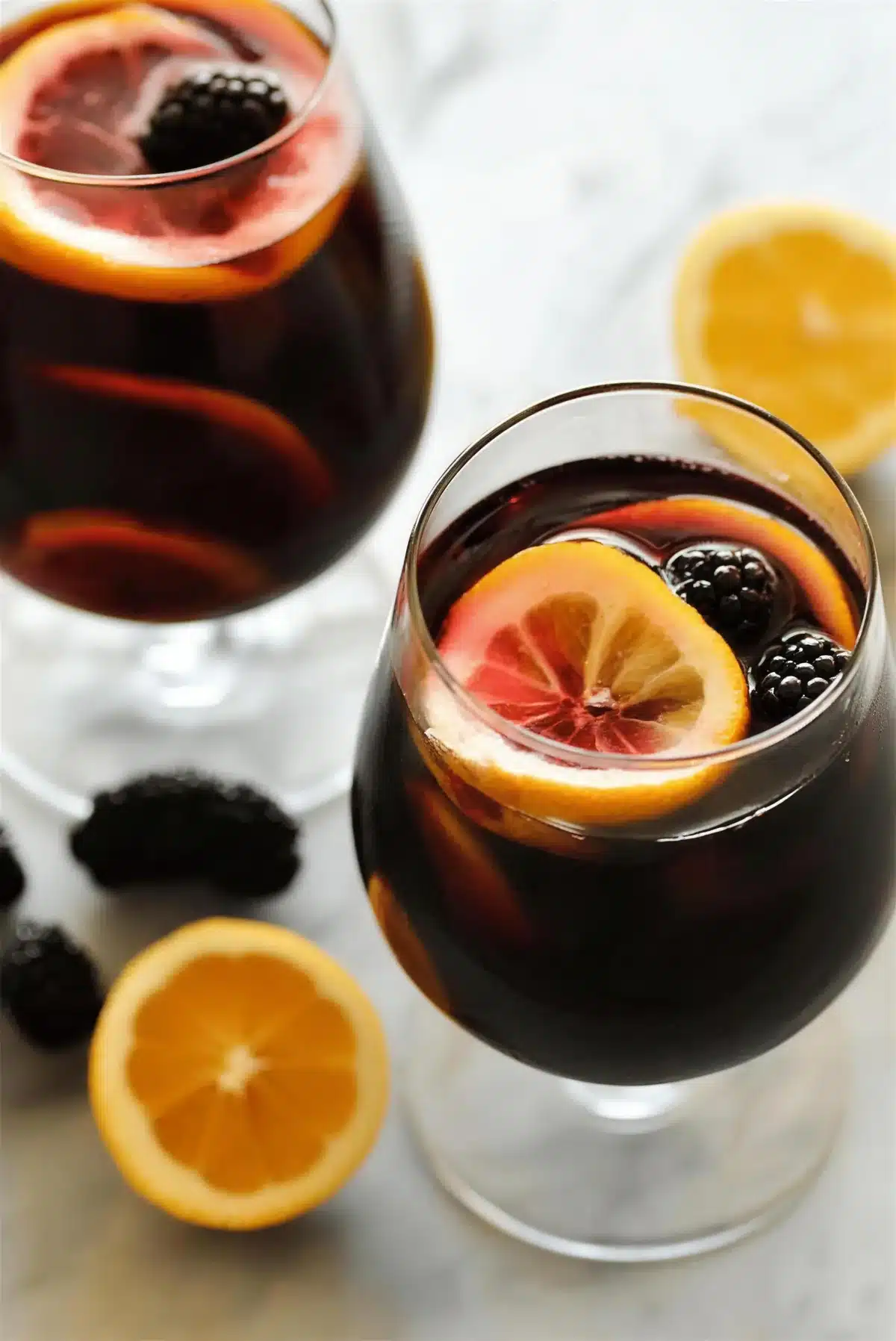
The pitcher itself is a five-minute job. The syrup and the chill are what actually make a blackberry sangria worth pouring twice.
What Is in Carrabba’s Blackberry Sangria
The restaurant version is a red wine sangria with a berry syrup, and the copycat that circulates most widely names a specific bottle of Italian red, a bottled blackberry syrup and Tuaca, a vanilla and citrus liqueur from Tuscany.
The bones of it are right. Sweet-leaning Italian red, blackberry, cranberry, a vanilla liqueur, and lemon-lime soda added at the glass rather than the pitcher.
The proportions that circulate are not. The version this post used to carry called for a full bottle of wine but only half the syrup and liqueur to go with it, and left the cranberry juice out of the ingredients entirely while still telling you to pour it in. It has been rebuilt from scratch here.
The soda belongs in the glass. Two ounces per serving, poured over ice before the sangria goes in. Put it in the pitcher and it is flat within an hour, which is why restaurant blackberry sangria is assembled to order.
Tuaca is worth buying once. Vanilla and orange over brandy, and it is what makes the drink taste faintly of dessert without any extra sugar. Brandy plus a strip of orange zest is the substitute.
It is stronger than it tastes. A seven-ounce glass carries roughly one and a quarter standard drinks by the NIAAA definition of a standard drink, because the liqueur is doing work the fruit hides.
Save this recipe
Enter your email and I’ll send this recipe straight to your inbox.
Ingredient Notes
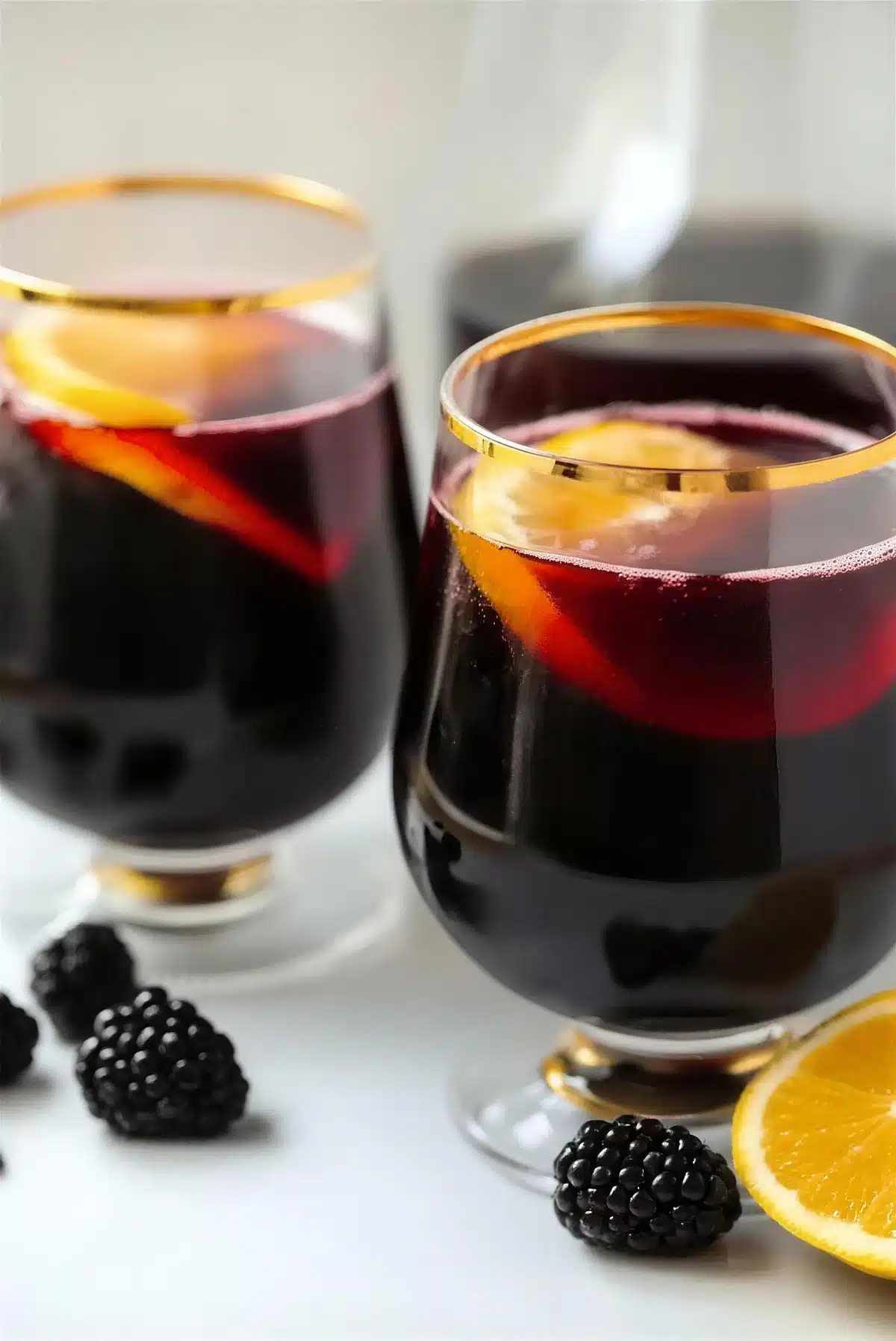
Blackberry sangria runs to ten items, most of them already in the house. Exact quantities are in the recipe card below.
- Blackberries: eight ounces for the syrup and another cup for the glasses. Frozen berries are perfectly good in the syrup and often better in winter, since they are picked riper.
- Italian red wine: one 750-milliliter bottle. Soft and fruit-forward rather than tannic. See the section on wine below.
- Cranberry juice: a cup of the unsweetened kind, labeled 100 percent juice. Cranberry cocktail is mostly sugar and it makes the pitcher flabby.
- Tuaca: three ounces. Any vanilla-forward Italian liqueur works, and brandy with a strip of orange peel is close enough.
- Lemon and orange: one of each, in thin wheels. Wash them, since the peel sits in the wine for hours.
- Lemon-lime soda: sixteen ounces, chilled hard, opened at the last moment. Ginger ale is a good swap and reads spicier.
- Sugar and water for the syrup, plus two wide strips of lemon zest, which is a small thing that lifts the whole drink.
The Blackberry Syrup, and Why Homemade Is Better
This is the one part of a blackberry sangria worth not buying, and it takes ten minutes of actual work.
Bottled syrups are built for coffee shops. They are shelf-stable, heavily sweetened and usually carry a flavoring rather than fruit. In a drink where the syrup is the loudest ingredient, that is what you taste.
Eight ounces of berries, half a cup of sugar, a third of a cup of water. Simmer for eight to ten minutes, crushing the fruit against the side of the pan, then strain. You get about three quarters of a cup of deep purple syrup with real acidity in it.
Press the solids hard. Most of the color and a good deal of the flavor is in the pulp clinging to the seeds. A ladle pressed against a fine sieve gets it out.
Two strips of lemon zest go in with the sugar. Oil from the peel is what stops the syrup tasting flat, and it is why this version of blackberry sangria does not need extra lemon juice later.
Cool it completely before it meets the wine. Warm syrup poured into a bottle of red drives off the aromatics you just paid for. Fifteen minutes in a shallow bowl is enough.
It keeps two weeks refrigerated, so it is worth doubling. The leftovers are good over soda water or on ice cream.
How To Make Blackberry Sangria
Blackberry sangria comes together in five minutes once the syrup is cold. Make it first and let it cool while you slice the citrus.
- First, simmer the blackberries, sugar, water and lemon zest for 8 to 10 minutes, crushing the fruit as it softens, then strain it into a jar and cool it completely.
- Next, pour the wine, cranberry juice, liqueur and cooled syrup into a two-quart pitcher and stir until the syrup has fully dissolved into the wine.
- Then add the lemon and orange wheels, pressing them under the surface, and cover the pitcher.
- After that, refrigerate for at least 2 hours and no more than 8 with the fruit in. Beyond that the citrus pith turns the whole pitcher bitter.
- Finally, fill each glass with ice, add 2 ounces of chilled lemon-lime soda, pour the sangria over it and drop in fresh blackberries and a citrus wheel.
Choosing the Wine
Sangria was invented to make ordinary wine drinkable, so a blackberry sangria is not the place for anything you would want to drink on its own.
Soft, fruity and low in tannin. Tannin turns astringent against sugar and fruit acid, which is why an expensive Cabernet makes a worse sangria than a cheap Sangiovese.
Bisanzio is the bottle the copycat names, a soft Italian red blend. If your shop does not carry it, a young Sangiovese, a Lambrusco Rosso or a Montepulciano d’Abruzzo all work.
Garnacha and Merlot are safe outside Italy. Both are round and low in tannin. Rioja works but is oakier than this drink wants.
Avoid oak and avoid anything old. Vanilla and smoke from a barrel fight the fruit, and an aged bottle has lost the primary berry character you are buying it for.
Spend eight to twelve dollars. Below that the wine is thin enough that the syrup runs the show; above it you are throwing money into a punch bowl.
White or rosé is a real option. A blackberry sangria made with pinot grigio comes out bright pink and noticeably lighter, and it suits a hot afternoon better than the red does.
How Long To Chill It
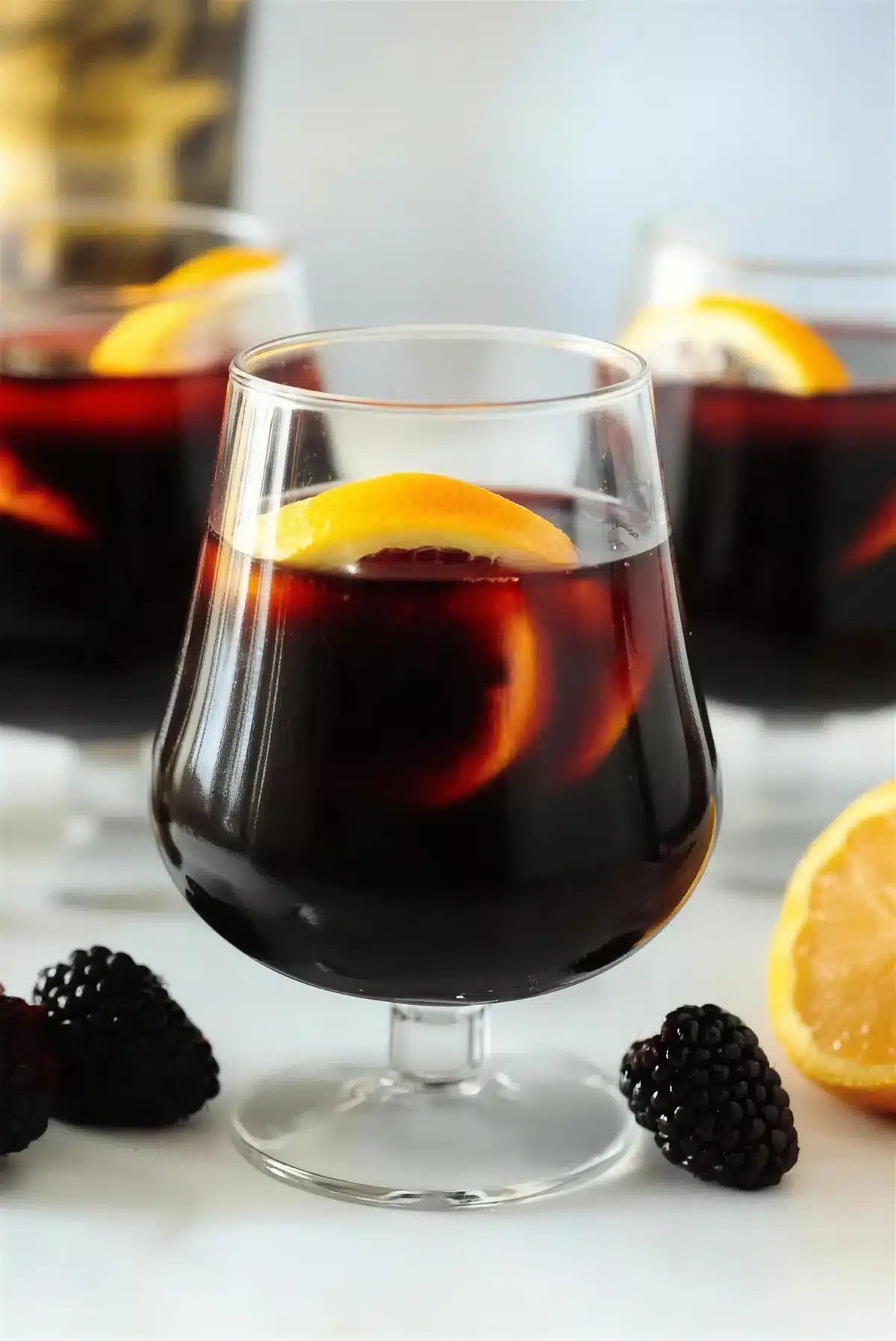
For a blackberry sangria two hours is the minimum and eight is the ceiling. The window matters more than people expect.
Under an hour and it tastes like wine with syrup in it. The components have not married and the alcohol is still sharp on top.
Three to four hours is where it really settles. The syrup has fully dissolved, the citrus oil has spread through the wine, and everything is properly cold.
Six to eight hours is arguably the peak, and it is why building it the night before a party works so well.
Past eight hours with the fruit in, bitterness from the pith starts to show. Remove the wheels at that point and the pitcher keeps improving for another day.
Chill the soda separately and hard. Adding room-temperature soda to a cold pitcher kills the fizz instantly, which is half the reason it goes in the glass.
Make It Ahead
Almost all of this is better done in advance, which makes blackberry sangria a genuinely good party drink rather than merely an easy one.
The syrup keeps two weeks in a sealed jar in the refrigerator. Make it whenever, double it, use the rest on ice cream.
Build the pitcher the night before and pull the citrus wheels out before you go to bed. It will be better in the morning than it was when you made it.
Slice the fruit for the glasses on the day. Cut wheels dry out and curl within a few hours in the refrigerator.
Do not add the soda until you pour. There is no version of this where soda in the pitcher survives a party.
Scale it by the bottle. Two bottles of wine, two cups of cranberry, six ounces of liqueur and a double batch of syrup fills a punch bowl and serves sixteen.
Storing Blackberry Sangria
- Refrigerated, fruit removed: blackberry sangria keeps 3 days covered and is best on days one and two.
- Refrigerated with the citrus left in: 8 hours before the pith starts to turn it bitter.
- The blackberry syrup alone: 2 weeks in a sealed jar, or three months frozen in an ice cube tray.
- Never freeze the finished pitcher. The alcohol keeps it slushy rather than solid and the texture on thawing is unpleasant.
- Once soda has gone in, drink it. A poured glass is flat within twenty minutes and there is no recovering it.
Variations and Substitutions
In a blackberry sangria the wine, the syrup and the chill are the structure. Everything else moves.
- Ginger ale instead of lemon-lime soda, which is spicier and slightly less sweet, and the better choice in autumn.
- Brandy instead of Tuaca, with a wide strip of orange peel dropped into the pitcher to make up the citrus note.
- White or rosé wine for a lighter, pinker drink. Use pinot grigio and cut the syrup by a tablespoon.
- Raspberry or blackcurrant syrup made the same way, both of which behave almost identically.
- Non-alcoholic: unsweetened cranberry juice, an equal volume of red grape juice, the syrup, and sparkling water in the glass. It is genuinely good rather than merely tolerable.
- More fruit in the pitcher: sliced peaches or halved cherries suit this, and they are worth eating afterward.
What to Serve with Blackberry Sangria
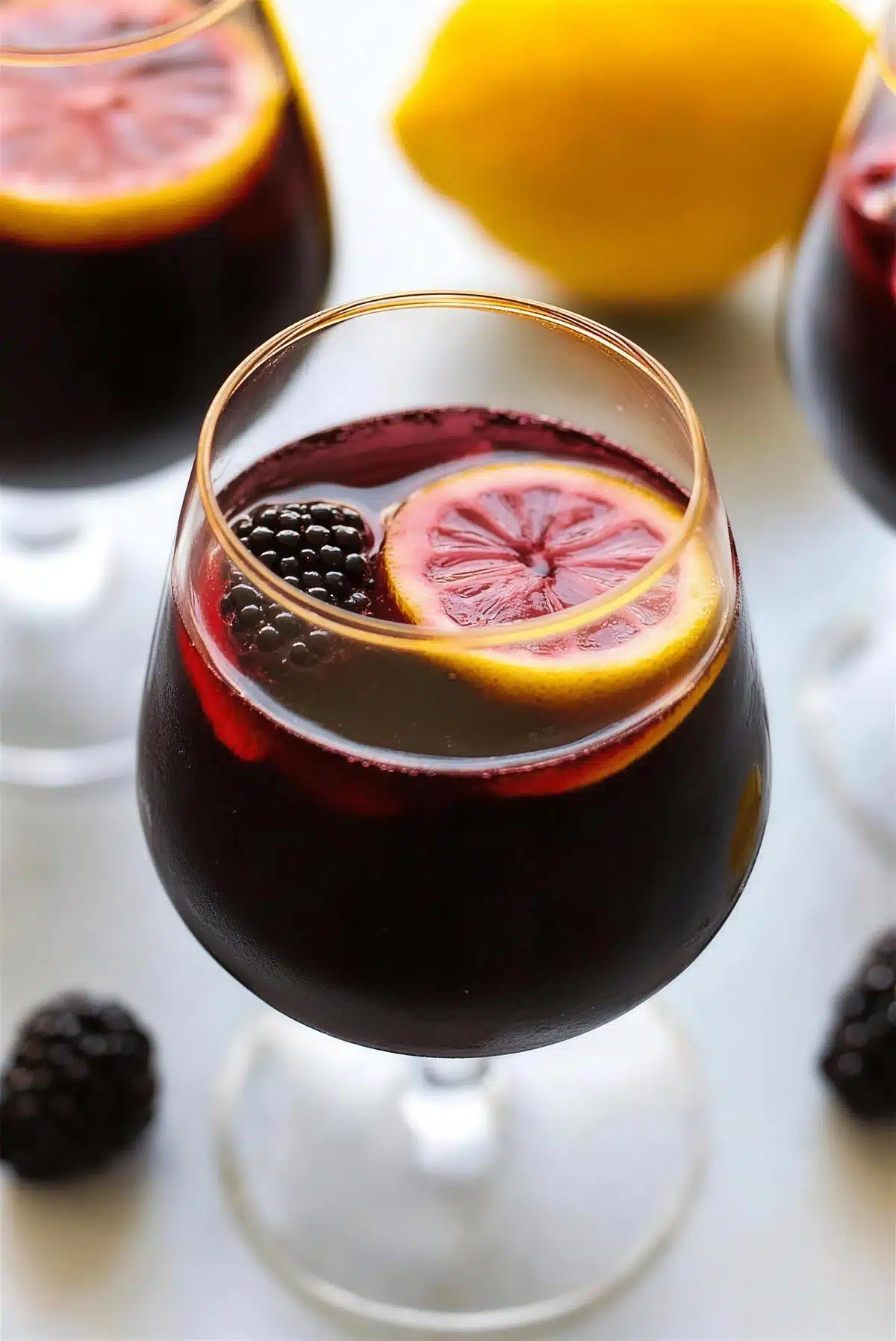
Blackberry sangria is sweet and cold, so it wants salt and fat opposite it.
- A board of salumi and hard cheese, which is what the restaurant serves it alongside.
- Marinated olives and salted almonds, the two cheapest things that make a drink taste better.
- Grilled bread rubbed with garlic and tomato.
- Anything off a charcoal grill, since the smoke suits the berry.
- A jug of boozy mint lemonade on the same table for people who want something paler.
If you are building a drinks list, there is my strawberry rose water fizz for something floral, a mulled pineapple cocktail for when the weather turns, and white Christmas punch for the end of the year.
Here is what readers ask most often.
Blackberry Sangria FAQ
Frequently Asked Questions
What wine does Carrabba’s use in its blackberry sangria?
The copycat that circulates most widely names Bisanzio, a soft Italian red blend, and that is a reasonable guess at what is poured. What matters more than the label is the style: low tannin, fruit-forward, unoaked and young. A young Sangiovese, a Montepulciano d’Abruzzo or a Lambrusco Rosso will all give you the same result, and so will a Garnacha if Italian bottles are hard to find where you shop.
Can I make blackberry sangria without the liqueur?
Yes, though it loses the vanilla note that makes the drink distinctive. Brandy with a wide strip of orange peel is the closest substitute and is usually already in the house. Leaving the spirit out altogether gives you a lighter drink at about half the strength, in which case add a tablespoon of the syrup back to compensate for the lost body.
How far ahead can I make it?
Build the pitcher up to a day ahead, but take the lemon and orange wheels out after eight hours. The fruit has given up everything useful by then and the pith carries on releasing bitterness for as long as it sits. With the citrus removed, blackberry sangria holds three days refrigerated and is at its best on the first two.
More Questions About Wine and Fruit
Good to Know
Can I use frozen blackberries?
Yes, and for the syrup they are often better than fresh. Frozen fruit is picked at full ripeness and the freezing ruptures the cells, so it breaks down faster in the pan and gives up more color. Use the same weight and expect the simmer to take a minute or two less. For the berries that go into the glass, use fresh, since thawed ones collapse.
Why is my sangria bitter?
Almost always the citrus. White pith releases bitter compounds slowly and steadily, so a pitcher left with lemon and orange wheels in it overnight tastes noticeably harsher than one strained at eight hours. The other cause is an oaky or tannic wine, which turns astringent against the sugar. Neither is fixable after the fact, so strain early and buy soft wine.
How strong is a glass of this?
A seven-ounce serving works out at roughly one and a quarter standard drinks, since a bottle of wine and three ounces of liqueur are being split eight ways. It tastes considerably milder than that because of the fruit and the soda, which is worth mentioning to guests.
Can I use a bottled blackberry syrup instead?
You can. Use about half a cup and add a squeeze of lemon, since coffee syrups are sweeter than a homemade one. Taste before it goes in the refrigerator.
Made with its own syrup and real cranberry juice, this tastes of fruit rather than cordial. For another pitcher drink, try my boozy mint lemonade.
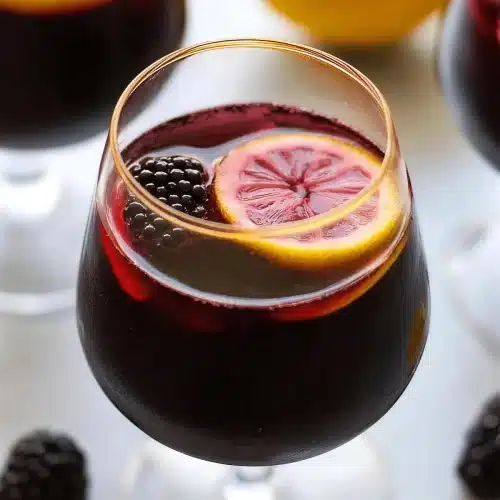
Blackberry Sangria, the Carrabba's Copycat
Save this recipe
Enter your email and I’ll send this recipe straight to your inbox.
Ingredients
Blackberry Syrup
- 8 ounces blackberries about 1 1/2 cups, fresh or frozen
- 1/2 cup granulated sugar
- 1/3 cup water
- 2 strips lemon zest wide, taken off with a vegetable peeler
The Pitcher
- 750 milliliters Italian red wine one bottle, soft and fruit-forward, such as Bisanzio or a young Sangiovese
- 1 cup cranberry juice 100 percent juice, not cranberry cocktail
- 3 ounces Tuaca or another vanilla-forward Italian liqueur, or brandy
- 1 medium orange washed, cut into thin wheels
- 1 medium lemon washed, cut into thin wheels
To Serve
- 16 ounces lemon-lime soda chilled hard, 2 ounces per glass
- 1 cup blackberries fresh, for the glasses
- 4 cups ice cubes
Equipment
- Small saucepan
- Fine mesh sieve
- 2-quart pitcher
Instructions
Make the Blackberry Syrup
- Put the 8 ounces of blackberries, the sugar, the water and the lemon zest strips in a small saucepan. Bring to a simmer over medium heat and cook 8 to 10 minutes, crushing the berries against the side of the pan as they soften, until the fruit has collapsed and the liquid is deep purple.
- Strain through a fine sieve into a jar, pressing hard on the solids with a ladle to get the pulp out, then discard the seeds and zest. You should have about 3/4 cup. Cool it completely, about 15 minutes in a shallow bowl, before it goes anywhere near the wine.
Build the Pitcher and Chill
- Pour the wine, cranberry juice, Tuaca and the cooled syrup into a 2-quart pitcher. Stir for a good 20 seconds, until the syrup has dissolved evenly into the wine rather than sitting at the bottom.
- Add the orange and lemon wheels and press them under the surface with a spoon, then cover the pitcher.
- Refrigerate at least 2 hours and up to 8 with the fruit in. If you want to hold it longer than that, lift the citrus wheels out at 8 hours, since the white pith keeps releasing bitterness for as long as it sits.
Pour
- Fill each wine glass about half full with ice and pour in 2 ounces of very cold lemon-lime soda.
- Pour roughly 5 ounces of the chilled sangria over the soda, stir once, and finish with a few fresh blackberries and a wheel of lemon or orange. Serve straight away.