Lemon poppy seed scones are the scones to make when you want something bright rather than heavy: a buttery, tender crumb with a crunch of poppy seeds, enough lemon zest to perfume the whole kitchen, and a sharp lemon glaze over the top. The dough takes fifteen minutes with your hands and a fork, and there is no mixer, no rolling pin and no cutter involved.
There are two ways to bake them here. The recipe card gives the classic method: a round cut into wedges and baked on a sheet so every wedge gets crisp edges. The scones in the photographs were baked as one scored round in a cast-iron skillet, which gives soft pull-apart sides and a crisp bottom. Both methods are written out, and the skillet version is under Variations.

- Lemon poppy seed scones with crisp edges, a soft buttery middle and real lemon in every bite
- Fifteen minutes of hands-on work, and no mixer, rolling pin or cutter
- A fifteen-minute freezer rest makes them rise tall instead of spreading
- The three-ingredient lemon glaze sets in minutes and can be tinted pale pink
- Bake them as eight wedges on a sheet, or as one round in a skillet to pull apart at the table
- The unbaked wedges freeze for two months and bake straight from frozen



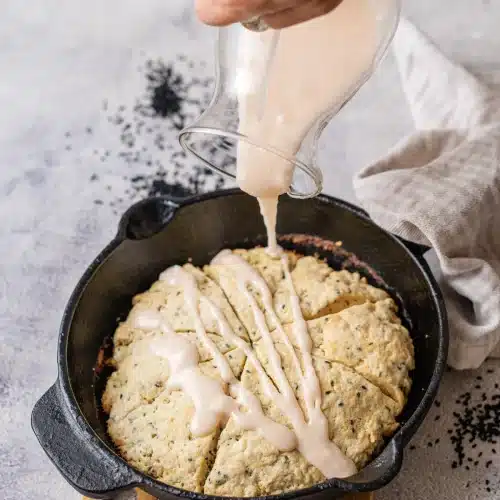
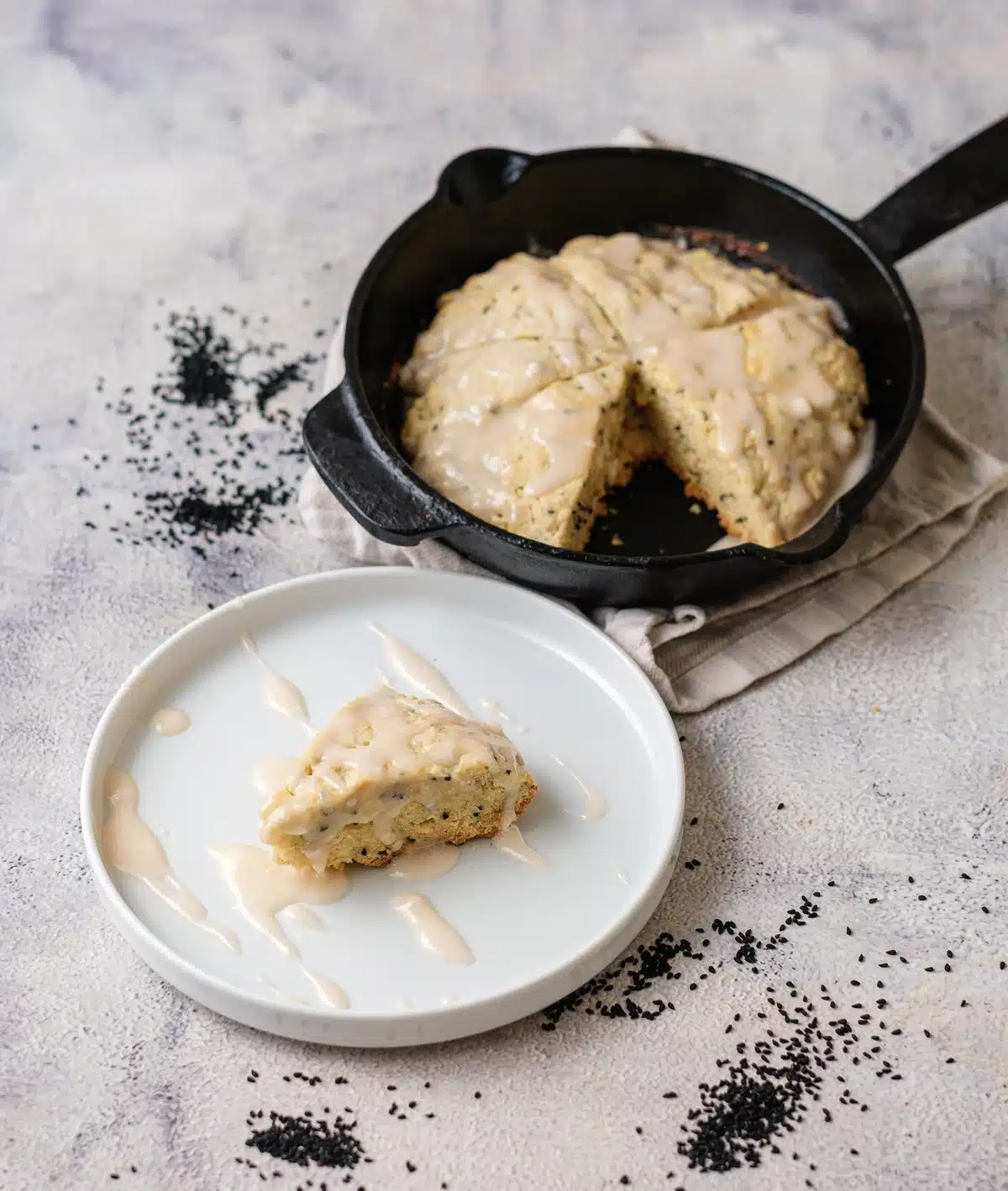
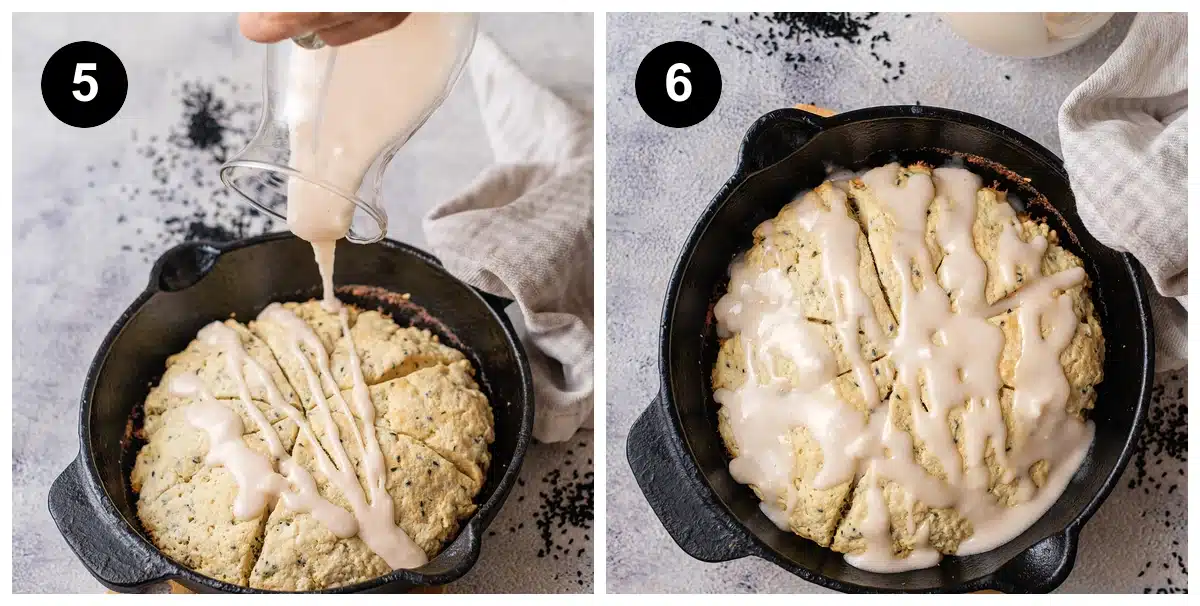
Pictured: the skillet-round version. The dough was pressed into an eight-inch cast-iron skillet, scored into eight wedges, baked as one round and glazed from a jug with a lemon glaze tinted pale pink with a drop of red food coloring. The recipe card gives the classic separate wedges on a baking sheet; the skillet method is under Variations.
- What Makes These Lemon Poppy Seed Scones Tender
- Ingredient Notes
- Cold Butter and a Light Hand
- How To Make Lemon Poppy Seed Scones
- How To Tell When Lemon Poppy Seed Scones Are Done
- Make It Ahead
- Storing Lemon Poppy Seed Scones
- Variations and Substitutions
- What to Serve with Lemon Poppy Seed Scones
- Lemon Poppy Seed Scones FAQ
What Makes These Lemon Poppy Seed Scones Tender
A scone is a quick bread, and the difference between a tender one and a tough one comes down to two things: the butter stays cold and in pieces, and the dough is handled as little as possible. Cold butter melts in the oven and leaves small pockets of steam behind, which is what gives lemon poppy seed scones their flaky, layered crumb. A dough that is kneaded like bread develops gluten and bakes up dense.
The other trick here is the egg yolk. Most scone recipes use cream or milk alone; this one adds a whole egg and an extra yolk to the milk, which makes the crumb richer and a little more cake-like without losing the flaky edges. A short spell in the freezer before baking firms the butter back up, so the wedges rise tall in the hot oven rather than slumping.
The lemon comes from zest in the dough and juice in the glaze. Zest carries the aroma, juice carries the sharpness, and the two together are what makes lemon poppy seed scones taste like lemon rather than merely yellow.
Save this recipe
Enter your email and I’ll send this recipe straight to your inbox.
Ingredient Notes
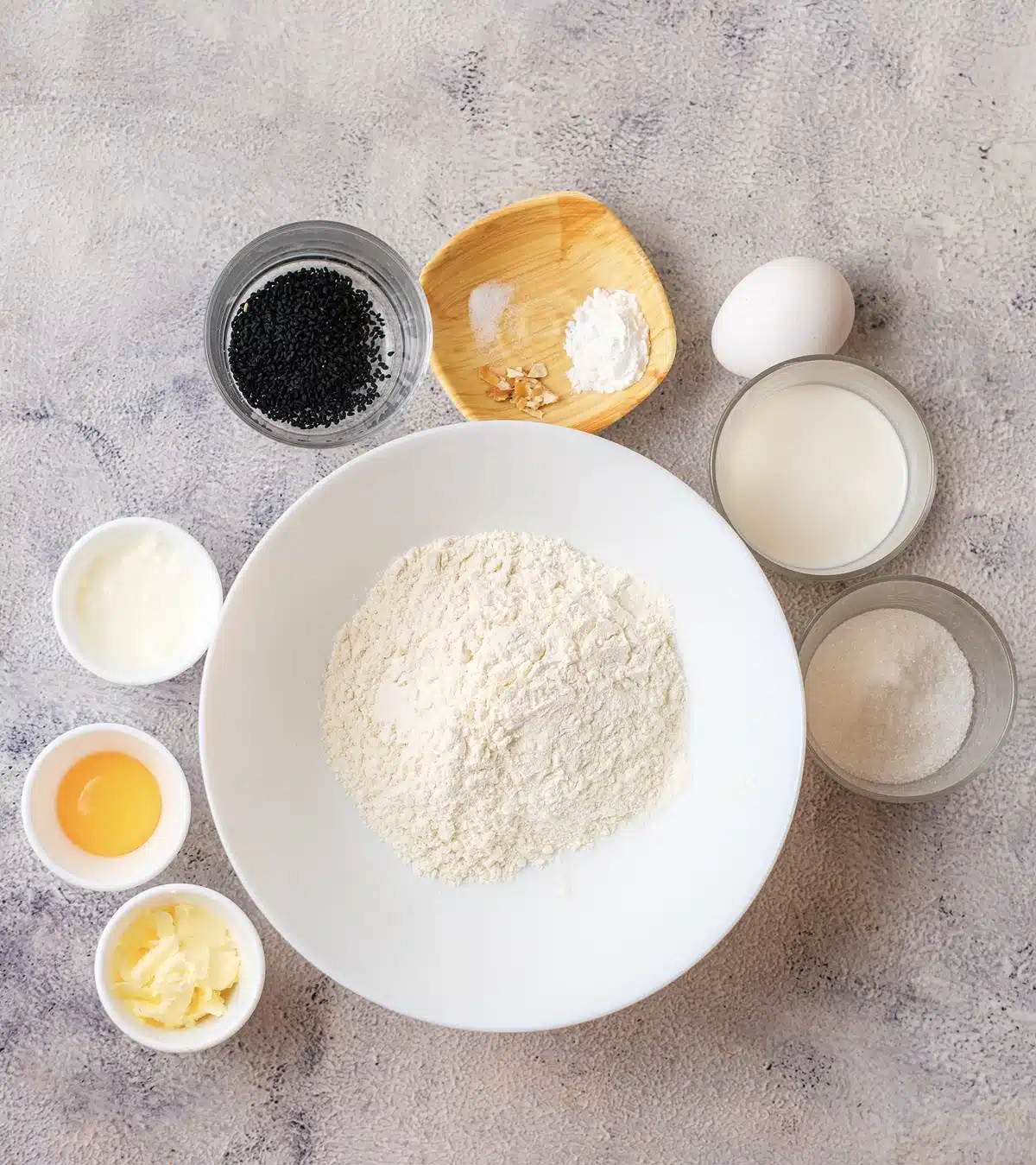
- All-purpose flour. Two cups, spooned into the measuring cup and leveled. Too much flour is the most common reason for dry scones.
- Granulated sugar. Half a cup. These are sweet enough to eat plain, but the glaze does most of the sweetening.
- Poppy seeds. One and a half tablespoons. They add crunch and a faint nuttiness, and they show as dark specks through the crumb. Buy them from a store with good turnover, because stale poppy seeds taste bitter.
- Baking powder. One tablespoon. That sounds like a lot, but it is what lifts a dough this rich.
- Salt. Half a teaspoon, to keep the lemon and sugar honest.
- Lemon zest. Two tablespoons, from about two lemons, grated finely on a microplane. Rub it into the sugar with your fingers first and the whole batch tastes more of lemon.
- Cold unsalted butter. Half a cup, cut into small cubes and kept in the fridge until the moment it goes in.
- Egg and egg yolk. One whole egg plus one extra yolk, for richness and color.
- Whole milk. Half a cup. Buttermilk works and gives a slight tang; a plant milk works too.
- Heavy cream. Two tablespoons, brushed over the tops before baking for a golden finish.
- Powdered sugar, lemon juice and vanilla. For the glaze: one cup of sifted sugar, two to three tablespoons of fresh juice, and half a teaspoon of vanilla to round it off.
Cold Butter and a Light Hand
Butter is about eighty percent fat and the rest is mostly water, as the U.S. Dairy explainer sets out, and that water is what turns to steam in the oven and lifts the layers apart. If the butter softens and smears into the flour before baking, there are no pockets to lift and the scones bake up flat and bready.
Work the butter in with your fingertips or a pastry cutter until the mixture looks like coarse crumbs with some pea-sized pieces left, and stop there. Add the liquid and stir with a fork only until the dough comes together in shaggy clumps. Any dry flour left in the bowl gets pressed in on the counter, not stirred in.
If your kitchen is warm, chill the cubed butter in the freezer for ten minutes and the flour mixture in the fridge while you zest the lemons. Warm hands are the enemy of a good scone.
How To Make Lemon Poppy Seed Scones
Line a baking sheet with parchment and set an oven rack in the upper third. Everything else takes about fifteen minutes.
First, whisk the flour, sugar, poppy seeds, baking powder, salt and lemon zest together in a large bowl until the zest is evenly spread and the flour smells of lemon.
Next, add the cold cubed butter and work it into the flour with your fingertips or a pastry cutter until it looks like coarse crumbs with a few pea-sized pieces. In a separate bowl, whisk the egg, yolk and milk together until smooth.
Then pour the wet ingredients over the dry and stir with a fork just until the dough comes together in shaggy clumps. Turn it out onto a lightly floured counter, press and fold it over itself three or four times until it holds together, and pat it into a round about eight inches across and an inch thick.
After that, cut the round into eight wedges with a sharp knife, space them on the prepared sheet and brush the tops with heavy cream. Put the whole tray in the freezer for fifteen minutes while the oven heats to 425°F.
Baking and Glazing
Finally, bake the cold wedges for fifteen to eighteen minutes, until they are golden on top and around the edges. Cool them on the sheet for five minutes, then move them to a rack. Whisk the powdered sugar with two tablespoons of lemon juice and the vanilla, add more juice a teaspoon at a time until it drizzles from the whisk, and pour it over the scones once they are cool enough that it sets rather than soaks in.
How To Tell When Lemon Poppy Seed Scones Are Done

Color is the first tell. The tops should be a deep golden brown, and the edges a shade darker, with the cut sides looking dry and matte rather than shiny. Pale scones are underbaked scones, and they will be gummy in the middle however long they cool.
The second tell is the feel. Press the top of a wedge gently. Done lemon poppy seed scones spring back and feel firm; an underdone one leaves a dent. For the skillet round, push a skewer into the center of the round, where the wedges meet, and it should come out clean with no wet dough clinging to it.
Take them out on the early side of the range if your oven runs hot. The bottoms brown fastest, especially in cast iron, and a scone that is perfect on top can be scorched underneath two minutes later.
Make It Ahead
Scone dough is at its best baked the day it is made, but the wedges can be shaped, brushed with cream and frozen on the tray, then bagged once solid. Bake them from frozen at 425°F, adding two to three minutes, and glaze as usual. They keep in the freezer for two months, which means fresh lemon poppy seed scones on a weekday morning with no mess.
The dry ingredients, zest included, can be whisked together the night before and kept in the fridge, with the cubed butter in a separate container. In the morning, cut in the butter, add the wet ingredients and bake. The glaze can be mixed ahead too; it keeps covered in the fridge for a week and just needs a stir.
Storing Lemon Poppy Seed Scones
Once cool, keep the scones in an airtight container at room temperature for up to two days. They soften as they sit, and a few minutes in a 300°F oven brings the edges back. If the glaze has set, it will melt a little when reheated, which is not a problem.
Baked scones also freeze well for two months, ideally before they are glazed. Thaw them at room temperature or reheat straight from frozen in a 300°F oven for ten to twelve minutes, then glaze while warm. The fridge is the one place not to keep them; it dries them out fast.
Variations and Substitutions
Skillet Lemon Poppy Seed Scones, Baked as One Round (Pictured)
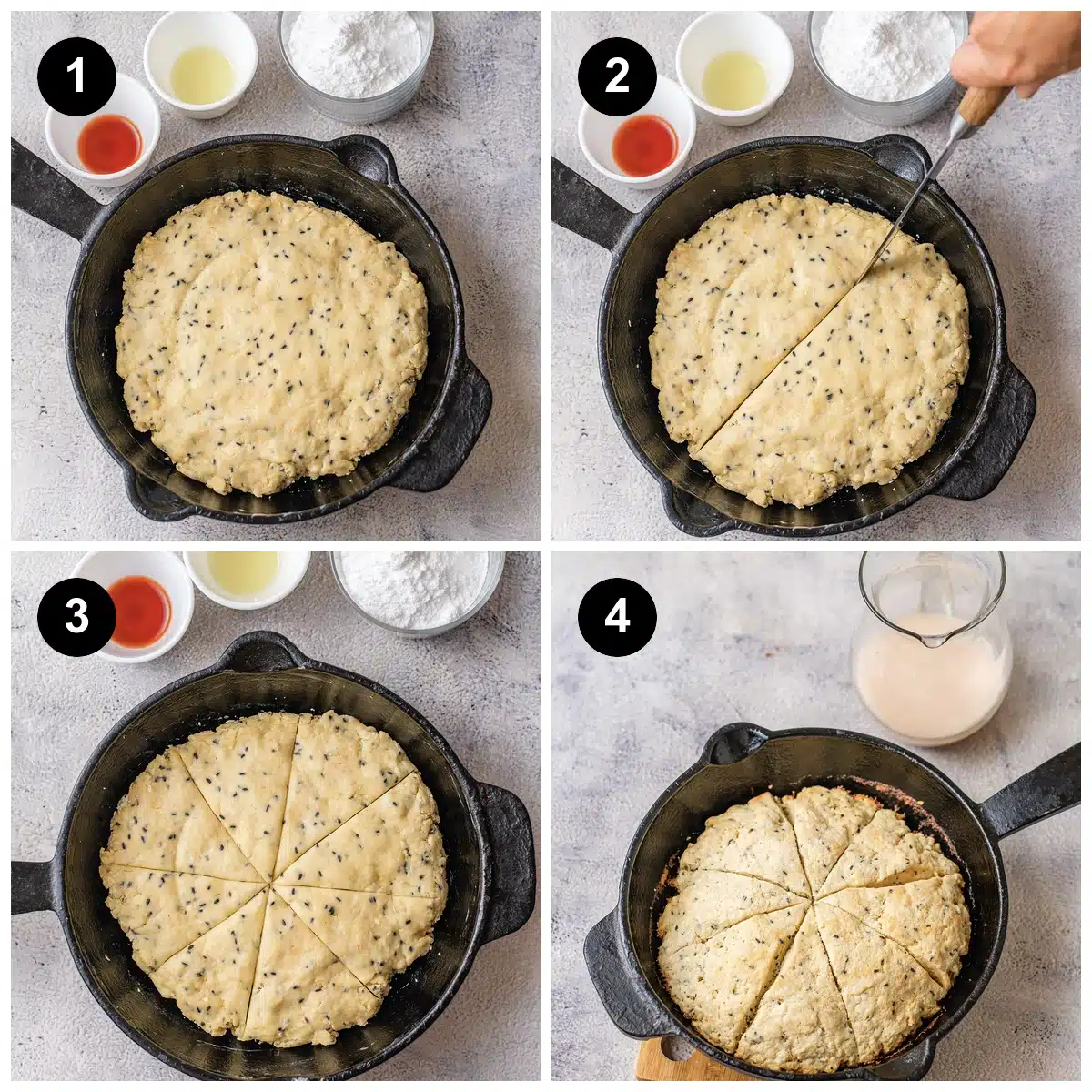
This is the version in every photograph on this page. The dough is baked as a single round in a cast-iron skillet and scored rather than separated, so the wedges rise against each other and stay soft on the sides while the skillet gives them a crisp, deeply browned bottom. It comes to the table in the pan and pulls apart along the score lines, which makes it the better choice for a brunch crowd.
Ingredients. The same dough and glaze as the recipe card, plus a teaspoon of butter for the skillet and, for the pale pink glaze in the photos, a single drop of red food coloring. A teaspoon of raspberry jam whisked into the glaze does the same job with a hint of fruit.
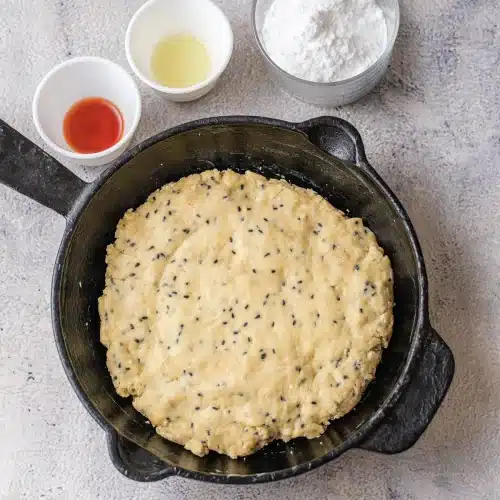
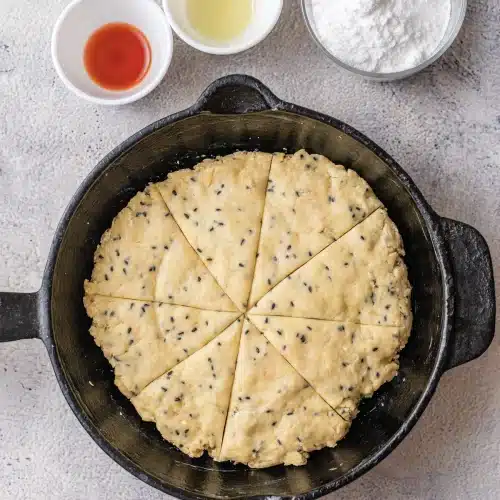
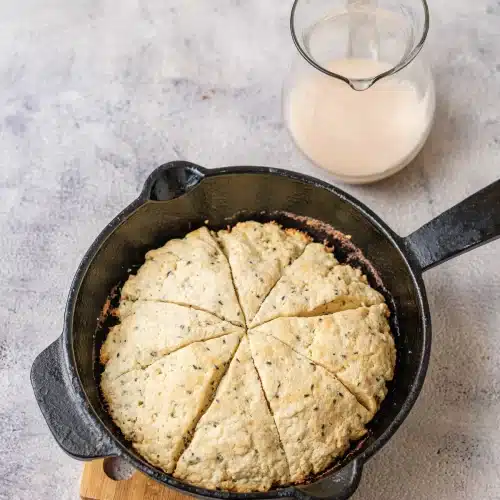
Method. Butter an eight-inch cast-iron skillet. Make the dough as directed, then press it into the skillet in an even round about an inch thick. With a sharp knife, score the top into eight wedges, cutting about halfway down. Brush with cream and freeze the skillet for fifteen minutes while the oven heats to 400°F. Bake for twenty-two to twenty-six minutes, until the top is golden and a skewer pushed into the center comes out clean. Cool in the skillet for ten minutes, then pour the glaze over the top so it runs into the score lines, and cut through them fully to serve.
The lower oven temperature matters. A whole round is thicker in the center than a single wedge, and 425°F would brown the top long before the middle bakes through. A nine-inch skillet also works; the round comes out a little thinner, so start checking at twenty minutes.
Other Ways to Change Them
Orange or grapefruit. Swap the lemon zest and juice for either, measure for measure. Orange makes a sweeter, softer scone; grapefruit is pleasantly bitter.
Blueberries. Fold three quarters of a cup of fresh or frozen blueberries into the dough with the wet ingredients, the way the blueberry scones on this site do, and skip the poppy seeds.
White chocolate. A half cup of white chocolate chips turns these into a dessert scone. Use the glaze sparingly.
Almond. A quarter teaspoon of almond extract in the glaze is a classic pairing with lemon and poppy seed.
Dairy swaps. Buttermilk or a plant milk in place of the whole milk; a plant-based butter that comes in a block, kept very cold, in place of the dairy butter.
What to Serve with Lemon Poppy Seed Scones

These are a breakfast or brunch scone first, and they want something to balance the sweetness of the glaze. Plain Greek yogurt with a little honey, a bowl of berries, or a soft-boiled egg all work. Strong coffee or black tea is the classic drink, and the tea is better.
On a brunch table, put them next to something savory and something with fruit: a pan of breakfast burritos for the savory side, and lemon ricotta pancakes if you want to lean into the lemon. For an afternoon, a plate of these with almond biscotti and a pot of tea covers everyone.
Lemon Poppy Seed Scones FAQ
Frequently Asked Questions
Why are my scones dry and crumbly?
Too much flour, or too long in the oven. Spoon the flour into the cup and level it rather than scooping, and pull the scones as soon as the tops are golden. Dry dough that will not hold together can take another tablespoon of milk.
Can I make lemon poppy seed scones without an egg?
Yes. Replace the egg and yolk with a quarter cup more milk or heavy cream. The scones will be a little less rich and slightly paler, but the texture holds up.
Do I have to use the freezer step?
You can skip it if the dough is still cold, but fifteen minutes in the freezer is cheap insurance. It is the difference between tall wedges and spread-out ones, and it lets the oven come fully to temperature.
Can I bake the scones in a skillet instead of on a sheet?
Yes, and that is the version pictured in this post. Press the dough into a buttered eight-inch cast-iron skillet, score it into eight wedges, and bake at 400°F for twenty-two to twenty-six minutes. The full method is in the Variations section above.
More Questions About Scones
Good to Know
Why is my glaze pink?
Because a drop of red food coloring went into it. The glaze in the photos was tinted on purpose; leave it out and the glaze is white. Raspberry jam does the same thing naturally.
Can I use bottled lemon juice?
In the glaze, in a pinch. The zest in the dough has to come from fresh lemons, and since you are zesting them anyway, use their juice too.
How do I keep poppy seeds fresh?
Poppy seeds are high in oil and go rancid at room temperature. Keep them in the freezer, where they last a year, and taste one before baking if the jar has been open a while.
Bake the wedges on a sheet for the crisp edges, or press the whole round into a skillet and let everyone pull off their own. Either way, a batch of lemon poppy seed scones takes under an hour, and a cinnamon roll coffee cake beside them makes the brunch.

Lemon Poppy Seed Scones
Save this recipe
Enter your email and I’ll send this recipe straight to your inbox.
Ingredients
Scone Dough
- 2 cups all-purpose flour spooned and leveled
- 1/2 cup granulated sugar
- 1 1/2 tbsp poppy seeds
- 1 tbsp baking powder
- 1/2 tsp salt
- 2 tbsp lemon zest finely grated, from about 2 lemons
- 1/2 cup cold unsalted butter cut into small cubes
- 1 large egg
- 1 large egg yolk
- 1/2 cup whole milk or buttermilk
To Finish
- 2 tbsp heavy cream for brushing the tops
Lemon Glaze
- 1 cup powdered sugar sifted
- 2 to 3 tbsp fresh lemon juice plus more to adjust
- 1/2 tsp vanilla extract
- 1 drop red food coloring optional, for the pale pink glaze pictured
Equipment
- Baking sheet
- Parchment paper
- Mixing bowls
- Whisk
- Pastry Cutter or Fork
Instructions
Make the Dough
- Get ready. Line a baking sheet with parchment and set an oven rack in the upper third of the oven.
- Whisk the dry ingredients. In a large bowl, whisk together the flour, sugar, poppy seeds, baking powder, salt and lemon zest until evenly combined and fragrant.
- Cut in the butter. Add the cold cubed butter and work it into the flour with your fingertips or a pastry cutter until it looks like coarse crumbs with some pea-sized pieces.
- Add the wet ingredients. Whisk the egg, egg yolk and milk together in a small bowl. Pour over the dry mixture and stir with a fork just until the dough comes together in shaggy clumps.
Shape and Bake
- Shape the round. Turn the dough out onto a lightly floured surface and press and fold it over itself a few times until it holds together. Pat it into a round about 8 inches wide and an inch thick. (For the pictured skillet version, press the round into a buttered 8-inch cast-iron skillet instead; see the notes.)

- Cut the wedges. Cut the round into 8 wedges and space them on the prepared sheet. In the skillet, score the top into 8 wedges about halfway down and leave the round whole. Brush the tops with heavy cream.
- Freeze briefly. Put the tray (or skillet) in the freezer for 15 minutes while you heat the oven to 425°F (220°C), or 400°F (200°C) for the skillet round.
- Bake. Bake the wedges for 15 to 18 minutes, until golden on top and around the edges. A skillet round takes 22 to 26 minutes, until a skewer in the center comes out clean. Cool on the pan for 5 minutes, then move the wedges to a wire rack.
Glaze
- Mix the glaze. Whisk the sifted powdered sugar with 2 tablespoons of lemon juice and the vanilla until smooth, adding more juice a teaspoon at a time until it drizzles from the whisk. Add the drop of red food coloring for a pale pink glaze, if using.
- Glaze and serve. Pour the glaze over the cooled scones, or over the skillet round so it runs into the score lines, and let it set for a few minutes before serving.