
A gin lemonade is not lemonade with a shot tipped into it. It is a proper sour scaled up to a pitcher, and the difference is that the sweetener and the citrus are measured against each other rather than poured by eye.
This one runs on a honey and lemon zest syrup steeped with mint, with thin cucumber slices muddled into the base and sparkling water added at the last second. It fills eight tall glasses, it can sit in the refrigerator most of the afternoon, and the only part that needs a stove takes five minutes.
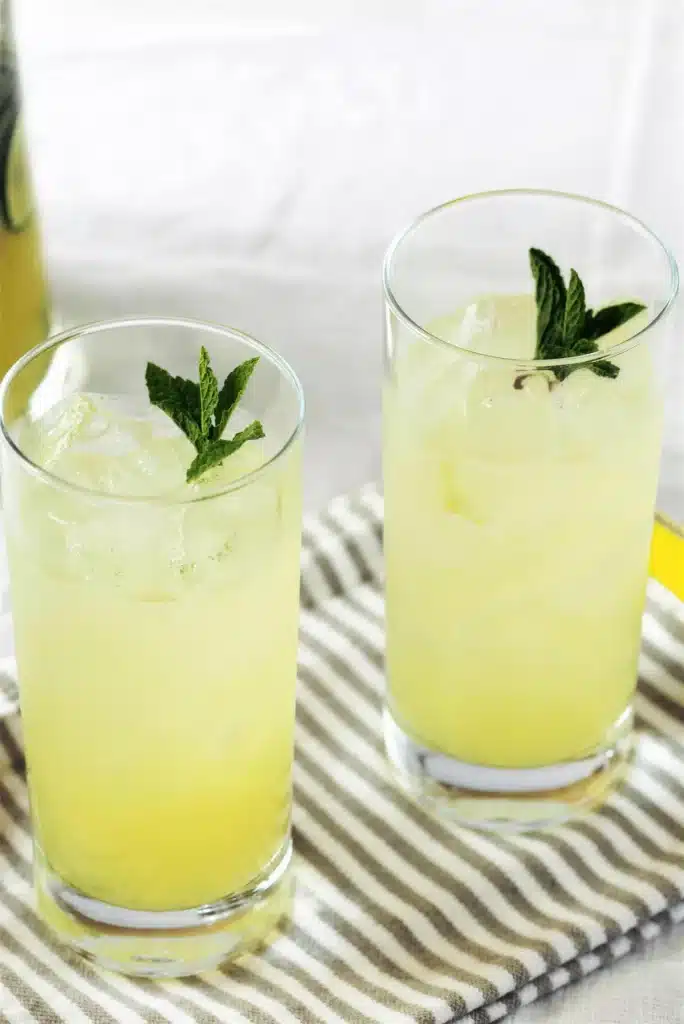
- One pitcher fills eight tall glasses, so nobody is stuck mixing drinks all afternoon
- The syrup and the base can be built the night before and topped at the table
- Honey in the syrup gives it a rounder base than plain sugar water
- Cucumber muddled into the bottom keeps a gin lemonade from tasting only of lemon
- Mint steeps in the warm syrup as well as being muddled, so the flavor is in the liquid rather than floating on top
- It works with any London dry gin you already own

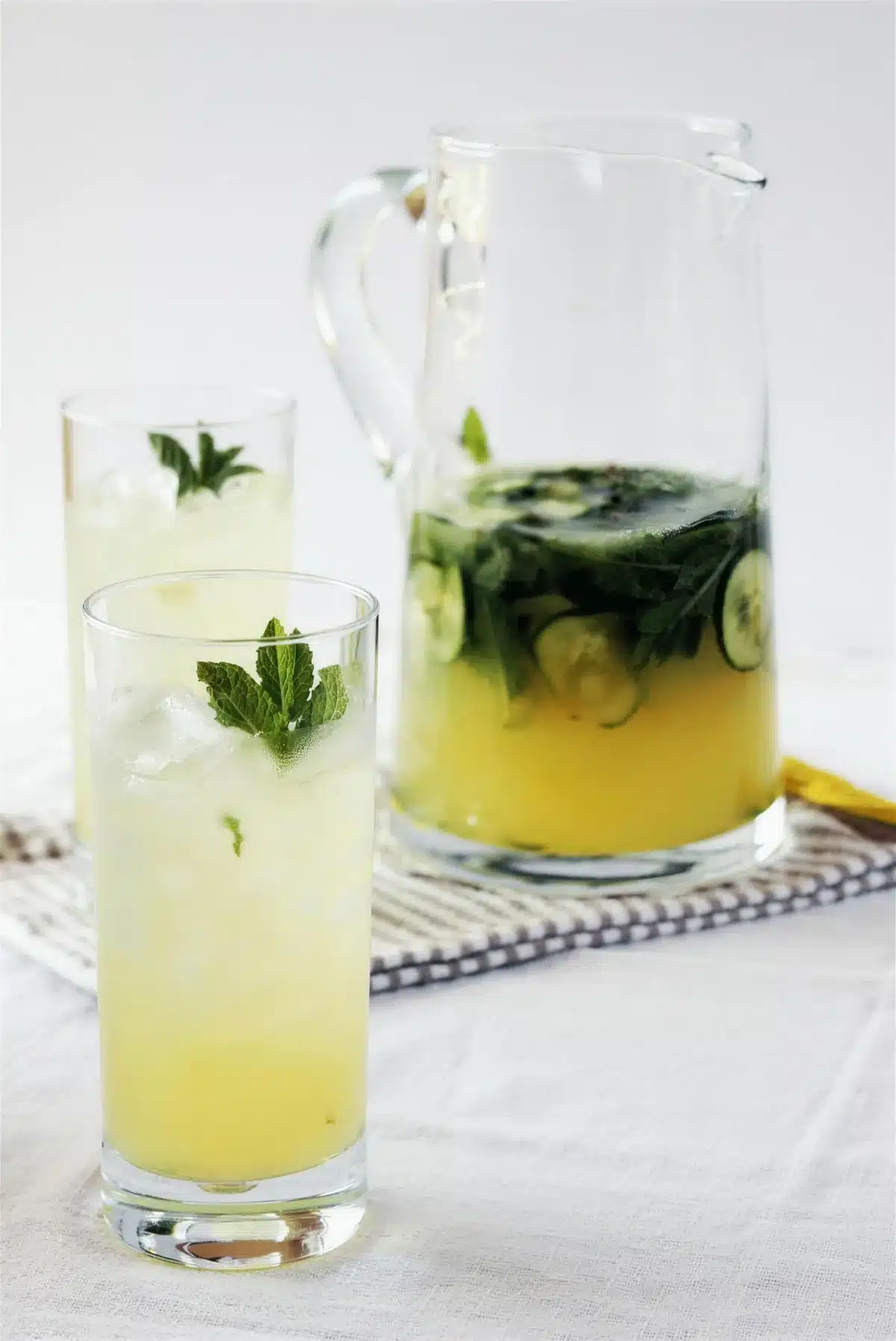
Two decisions make the difference here, and both happen before anyone pours a drink.
- What Makes a Gin Lemonade Different From a Gin Fizz
- Ingredient Notes
- The Honey and Lemon Zest Syrup Does the Work
- How To Make Gin Lemonade
- Getting the Balance Right in a Gin Lemonade
- Which Gin To Use
- Make It Ahead
- Storing Gin Lemonade
- Variations and Substitutions
- What to Serve with Gin Lemonade
- Gin Lemonade FAQ
What Makes a Gin Lemonade Different From a Gin Fizz
Both are gin, lemon and bubbles, and they taste nothing alike.
A gin fizz is shaken and single. Gin, lemon juice, sugar syrup and often egg white go into a shaker with ice, get beaten into a foam and are strained into one glass, topped with soda. It is made to order, it arrives cold and aerated, and it collapses within minutes.
A gin lemonade is stirred and communal. The same three components sit together in a pitcher for an hour or more, which is long enough for the mint and cucumber to actually flavor the liquid. Nothing is aerated, so nothing collapses. The bubbles arrive at the end, from a bottle, not from a shaker.
The ratios diverge too. A fizz is roughly two parts gin to one part lemon. Scale that to a pitcher and it is undrinkable across a long afternoon. This gin lemonade sits closer to one part gin to one part citrus, with the syrup carrying the difference, which puts each glass at roughly the strength of a glass of wine.
The practical upshot: if you want one perfect drink, shake a fizz. If eight people are arriving at four o’clock, build this.
Save this recipe
Enter your email and I’ll send this recipe straight to your inbox.
Ingredient Notes
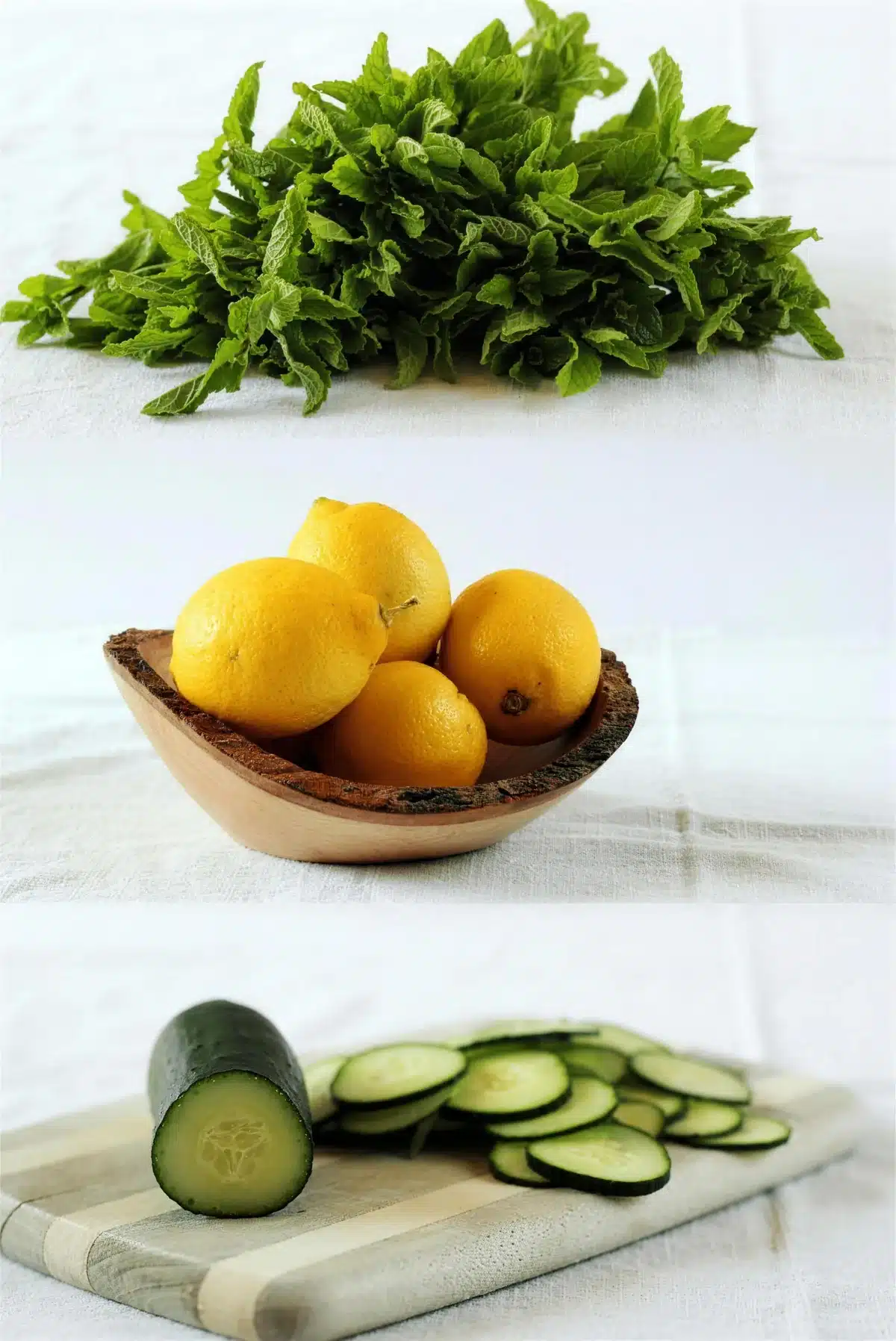
Eight things, and only two of them need any thought. Exact amounts are in the recipe card below.
- Gin: two cups of a London dry. Beefeater, Tanqueray and Gordon’s all work and none of them is wasted here. Save the expensive botanical gins for something that is mostly gin.
- Lemons: about ten, squeezed fresh, for fourteen ounces of juice. Bottled juice tastes of the bottle and there is nowhere for it to hide in a drink this plain.
- Honey: half a cup, dissolved into the syrup while it is warm. A mild clover or wildflower honey is right. Buckwheat or manuka will take the drink over entirely.
- Sugar: a cup and a quarter alongside the honey. Honey on its own reads as a honey drink rather than a gin lemonade.
- Mint: spearmint, not peppermint. Eight to ten sprigs, with the leaves torn off for the pitcher and whole sprigs going into the hot syrup. Illinois Extension’s guide to growing and using mint is a good primer on the difference between the two, which matters more here than people expect.
- Cucumber: six ounces of English cucumber, about half a large one, sliced as thin as you can manage. Thin slices give up their flavor in minutes; thick coins just sit there.
- Sparkling water: two and a half cups, cold, opened at the table. Club soda, seltzer or a plain mineral water all work.
- Lemon zest: four wide strips pared with a vegetable peeler, into the syrup. The oil in the peel is a different flavor from the juice and it is what makes the syrup smell like lemon rather than taste sour.
The Honey and Lemon Zest Syrup Does the Work
This is the only cooked step and it takes five minutes plus cooling time.
Water, sugar and honey go in cold together with the pared zest, and come up to a simmer over medium heat. Two minutes at a simmer is enough to dissolve everything and to pull the oil out of the peel. Longer just reduces it.
The mint goes in off the heat. Boiling mint turns it grassy and slightly bitter, the way overcooked spinach goes. Dropped into hot syrup and left to cool, it gives up its aroma without any of that.
Let it cool to room temperature before straining. The steeping happens during the cooling, not during the simmering, and rushing it in an ice bath costs you most of the flavor.
It makes about two and a half cups and the recipe uses two, which leaves a little over. It keeps two weeks refrigerated and is worth having around for iced tea.
Strain it, and press the solids gently. Wringing the mint out hard puts the bitter compounds back in.
How To Make Gin Lemonade
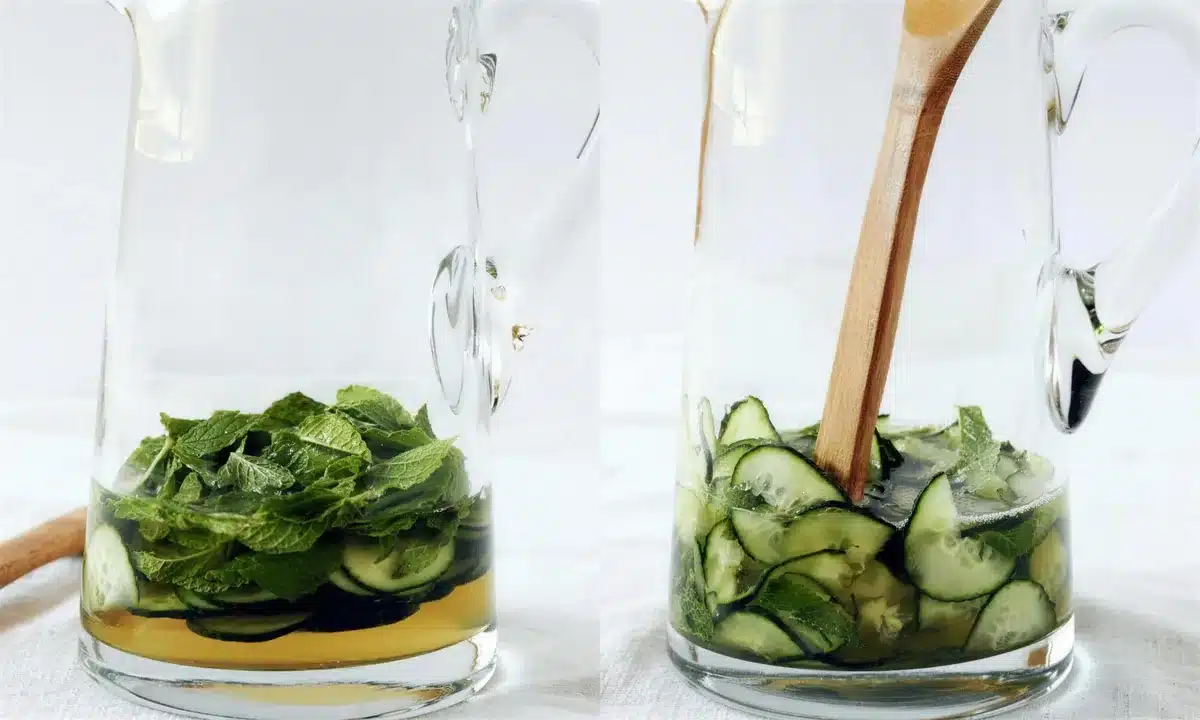
Nothing here is difficult. The order is what matters, because the bubbles have to go in last.
- First, pare four wide strips of lemon zest, then simmer them with the water, sugar and honey for 2 minutes. Off the heat, add the mint sprigs and let the syrup cool to room temperature.
- Next, strain the syrup and set two cups of it aside. Squeeze the lemons while you wait, which is most of the twenty minutes of work in this recipe.
- Then put the torn mint leaves and the cucumber slices in the bottom of a large pitcher with the syrup, and press them with a muddler about ten times. You want them bruised, not shredded.
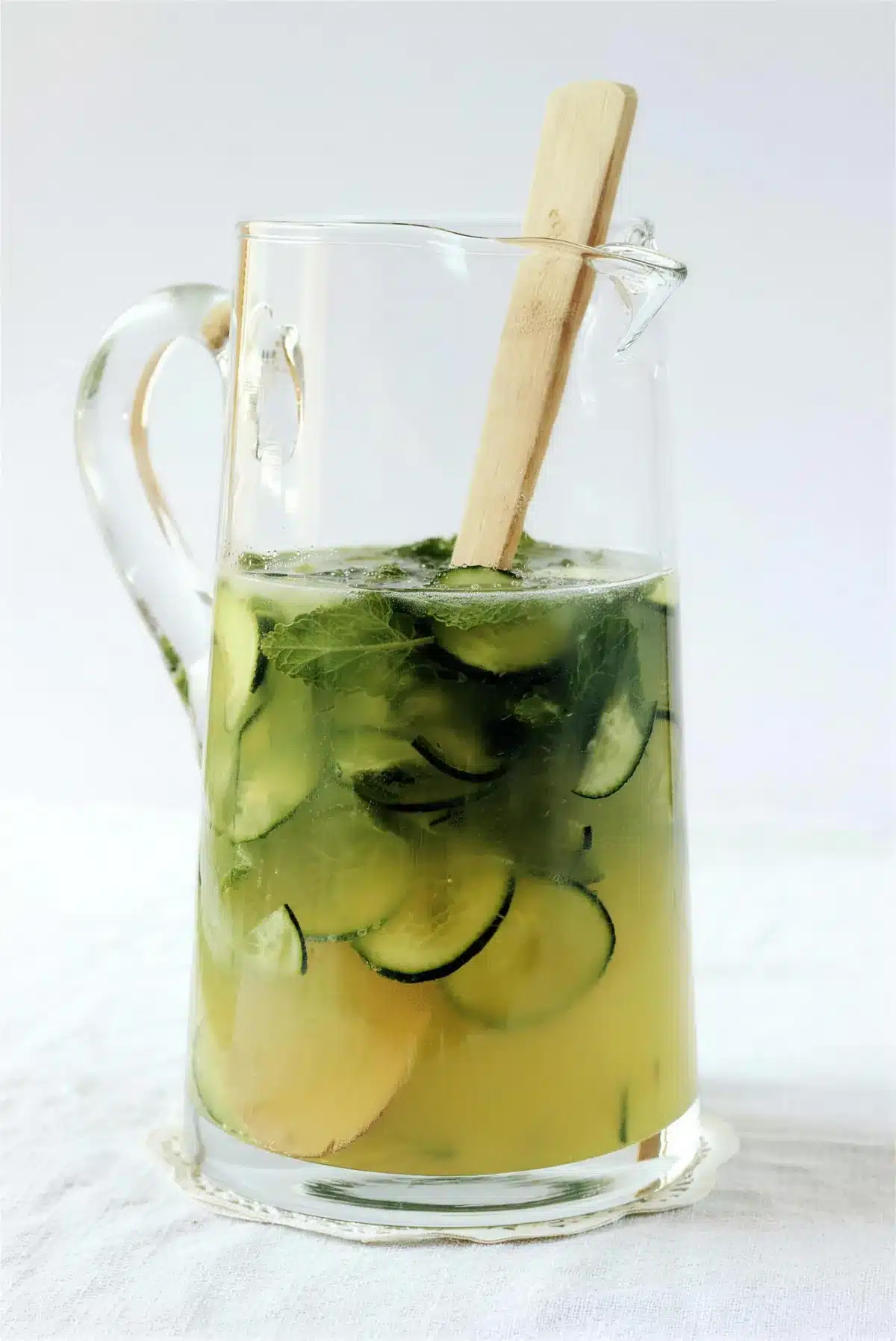
- After that, pour in the lemon juice and the gin and stir well. Refrigerate for up to 6 hours. An hour is enough for the cucumber to come through.
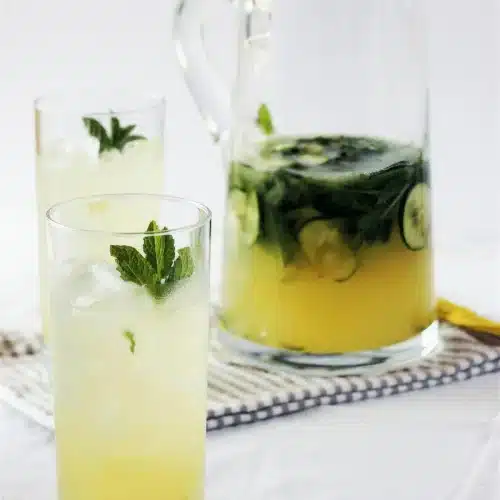
- Finally, add the cold sparkling water at the table, stir once gently, and pour over ice into eight tall glasses with a sprig of mint in each.
Getting the Balance Right in a Gin Lemonade
This is where most pitcher drinks fail, and the original version of this recipe was a good example: it carried two and a half cups of raw lemon juice against roughly a cup and a half of sweetener. That is about five tablespoons of neat lemon juice per glass, which is more than twice what a sour normally holds, and no amount of ice rescues it.
The working ratio for a gin lemonade is close to one to one. Fourteen ounces of lemon juice against two cups of a rich honey syrup, with the gin and the sparkling water as the long part of the drink. It reads tart rather than sour.
Taste it after the gin goes in and before the bubbles. This is the only moment when adjusting anything is easy. Too sharp, add syrup a tablespoon at a time. Too sweet, another squeeze of lemon.
Lemons vary a great deal. A February lemon can be half again as acidic as an August one, so treat the numbers as a starting point and trust your mouth.
Remember the ice. Every glass gains an ounce or so of water in the first ten minutes, so a drink that tastes exactly right in the pitcher will taste slightly thin in the glass. Aim a shade stronger than you want it.
Which Gin To Use
Juniper-forward is the answer, and it does not need to be expensive.
London dry is the default and the right one here. Its juniper and coriander sit behind the lemon rather than arguing with it, and there is enough of it in the pitcher that a soft, floral gin simply disappears.
Plymouth is rounder and slightly sweeter and makes a gentler version, which suits a hot afternoon.
Old Tom is sweetened, so cut the syrup by a quarter cup if you use it.
Modern citrus-led gins are the one category to avoid, not because they are bad but because the drink is already carrying ten lemons.
Vodka works if gin is genuinely not welcome, though what you get is a mint and cucumber lemonade with alcohol in it rather than a gin lemonade.
Make It Ahead
Almost all of this is better done in advance, which is the point of a pitcher.
The syrup: up to two weeks ahead, refrigerated in a sealed jar. It is the most make-ahead part of the whole recipe.
Squeeze the lemons the night before and keep the juice covered in the refrigerator. It loses a little aroma overnight and none of its acidity.
Build the pitcher up to six hours ahead, everything except the sparkling water. Past about eight hours the cucumber starts to taste of the refrigerator and the mint darkens.
What cannot wait is the sparkling water and the ice. Both go in when people are standing there.
Chill the glasses if there is room. It costs nothing and it buys about five minutes of proper coldness.
Storing Gin Lemonade
- The undiluted base, refrigerated: a gin lemonade base keeps 2 days covered, though it is at its best in the first six hours.
- Strain out the cucumber after the first day. Left in, it goes soft and gives the pitcher a vegetal edge.
- The syrup on its own: 2 weeks refrigerated in a sealed jar.
- Never keep it topped. Once the sparkling water is in, a gin lemonade is finished within the hour and flat by the next day.
- Freeze leftovers into ice cubes and use them in the next pitcher, so melting does not dilute it.
Variations and Substitutions
The syrup and the ratio are structural. Everything else is open.
- Basil instead of mint: steep it the same way and it becomes a completely different and slightly peppery drink.
- Add a rosemary sprig to the syrup along with the zest, for a version that suits early autumn.
- Swap half the lemon for lime and the whole thing goes sharper and more tropical.
- Prosecco in place of the sparkling water turns it into something closer to a punch. Cut the gin to a cup and a half if you do.
- Alcohol-free: leave the gin out, add another cup of sparkling water and a few juniper berries to the syrup, and the drink still tastes deliberate.
- Muddled strawberries or raspberries with the cucumber, about a cup, which also turns the pitcher pink.
What to Serve with Gin Lemonade
It is sharp and herbal, so it wants salt and fat next to it rather than more sweetness.
- Salted almonds or olives, which is all a gin lemonade really needs.
- A bowl of cheesy lemon thyme popcorn, which picks up the lemon and adds the salt.
- Cold poached shrimp, or anything else you would eat with a squeeze of lemon.
- Goat cheese on toast with black pepper.
- Sharp cheddar and green apple, which handle the sweetness better than a soft cheese does.
For the rest of the afternoon there is a pitcher of blackberry sangria for the wine drinkers, and spicy coconut lime popsicles for anyone who has had enough to drink. In colder weather, the same approach turns into a ginger blood orange cocktail.
Here is what readers ask most often.
Gin Lemonade FAQ
Frequently Asked Questions
How strong is each glass?
Each of the eight glasses holds two ounces of gin in roughly eight and a half ounces of liquid before the ice melts, which works out at about ten percent alcohol, or a little stronger than a glass of wine. A gin lemonade tastes far milder than that because the citrus and the bubbles hide it, so it is worth saying out loud when you hand the first one over. Cutting the gin to a cup and a half makes a genuinely long afternoon drink.
Can I make it in advance?
Yes, and it is better for it. Build everything except the sparkling water up to six hours ahead and keep the pitcher covered in the refrigerator. The cucumber and mint need at least an hour in there to come through at all, so a gin lemonade made and served immediately is missing half the point. The syrup on its own can be made two weeks ahead.
Why did my drink turn bitter?
Two usual causes. Either the mint was boiled rather than steeped off the heat, which pulls out the bitter compounds along with the aromatic ones, or the zest was pared with pith attached. Take only the yellow layer with a vegetable peeler and the white will stay on the lemon. Muddling too hard does it too; ten gentle presses is enough.
More Questions About Mint, Syrup and Scaling It Up
Frequently Asked Questions
Spearmint or peppermint?
Spearmint, which is what supermarkets sell as plain mint. Peppermint carries far more menthol and reads as toothpaste in a drink like this. If the leaves smell cooling rather than sweet, you have peppermint. Chocolate mint and apple mint are both fine and both make a noticeably different pitcher.
Can I double it for a party?
It doubles cleanly, and the only limit is the pitcher. Two batches in two vessels beats one enormous jug, because you can top the second one when the first runs dry and everybody still gets bubbles. Squeezing twenty lemons is the real work, so borrow a press.
Do I have to use honey?
No. Replace it with another half cup of sugar and a splash more water and you have a straightforward simple syrup version. It is cleaner and slightly flatter. Maple syrup works too and pushes the drink toward autumn, and agave keeps it neutral if you want the mint and cucumber entirely in front.
What size pitcher do I need?
Something that holds at least two and a half quarts. The finished volume is a little over two quarts and you need room to stir without slopping. If yours is smaller, hold back the sparkling water and top each glass individually instead.
A gin lemonade is one of the few drinks that genuinely rewards being made early, so build it before anyone arrives and keep the bottle of sparkling water closed until they do. For the same trick in cold weather, try my ginger blood orange cocktail.
Gin Lemonade with Mint and Cucumber
Save this recipe
Enter your email and I’ll send this recipe straight to your inbox.
Ingredients
Lemon Mint Honey Syrup
- 1 1/2 cups water
- 1 1/4 cups granulated sugar
- 1/2 cup honey mild clover or wildflower
- 4 strips lemon zest pared wide with a peeler, no white pith
- 4 sprigs mint added off the heat
For the Pitcher
- 1 cup mint leaves loosely packed, torn from 8 to 10 sprigs
- 6 ounces English cucumber about half a large one, sliced very thin
- 2 cups lemon mint honey syrup from above, cooled and strained
- 14 ounces fresh lemon juice about 1 3/4 cups, from roughly 10 lemons
- 2 cups London dry gin
- 2 1/2 cups sparkling water cold, opened at the table
- 1 quart ice cubes for the glasses
- 8 sprigs mint for garnish
Equipment
- Large Pitcher
- Muddler
- Medium Pot
Instructions
Make the Lemon Mint Syrup
- Pare four wide strips of zest from a lemon with a vegetable peeler, taking as little of the white pith as you can. Put them in a small saucepan with the water, sugar and honey.
- Warm over medium heat, stirring until the sugar has dissolved, then simmer for 2 minutes. Take the pan off the heat, drop in the 4 mint sprigs and leave them to steep as the syrup cools to room temperature, about 15 minutes. Boiling the mint turns it grassy and bitter, so keep it off the heat.
- Strain the syrup, pressing the zest and mint gently rather than wringing them out. You should have about 2 1/2 cups. Refrigerate in a sealed jar until needed.
Build the Pitcher
- Put the torn mint leaves and the cucumber slices in the bottom of a pitcher that holds at least 2 1/2 quarts, and add 2 cups of the cooled syrup. Press with a muddler or the end of a wooden spoon about ten times, enough to bruise the mint and release the cucumber, not enough to shred either.
- Pour in the lemon juice and the gin and stir well. Taste now, while adjusting is still easy: add syrup a tablespoon at a time if it is too sharp, another squeeze of lemon if it is flat. Refrigerate for at least 1 hour and up to 6.
Top and Serve
- Add the cold sparkling water just before serving and give the pitcher one slow turn with a long spoon, so the bubbles survive.
- Fill eight tall glasses with ice, divide the drink between them and drop a mint sprig into each. Strain the cucumber out if any of the base is going back in the refrigerator overnight.